Transcript
0:00 Hello everyone and welcome to attention span. Since I'm kind of of a commentator on dwares recently and many of my new subscribers came from my analysis of the statuten and dwares interview. I feel obliged to analyze Karpath's conversation as well and I think this interview already circulating widely through quotes is a very important from two points of view. The AI bubble and the AI aristocracy. Let me unfold [Music] first. Thank you, Andre, for the speed of your talking. I actually enjoyed it.
0:36 I didn't need to put 2x speed on the YouTube videos that I usually do. So, that was perfect. Andre Karpathy is an amazing thinker, not only because he comes up with the terms that steer up the whole community and then stick forever, but he is an extremely knowledgeable computer vision specialist with a deep understanding of deep learning as well. He possesses a higher percentage of real AI knowledge that not many people have out there. Also because he has a luxury of being extremely wealthy, fully independent and endlessly curious. I even have a recurring monthly topic in my newsletter called what does Karpathy see? Because he often describes, analyzes, and philosophizes about AI on a level that not many people can do. Okay. Now to the AGI bubble.
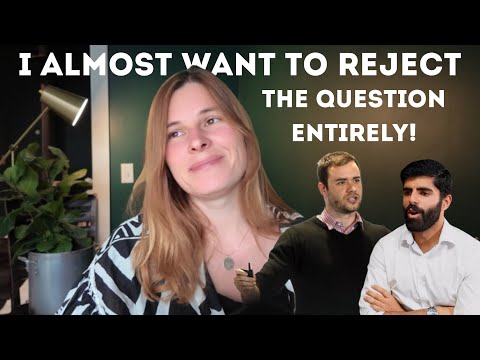
1:26 Well, Dwaresh Patel is famous for pushing the AGI narrative. Even during this interview, he asked Andre Karpathy at least three times in different wordings about AGI in the timelines. Karpathy's entire framing of the current moment is that it's early, impressive, and cognitively deficient. He repeatedly says during the interview, they just don't work. they cognitively lacking and it's still the decade of agents not a year at some point he even says I almost want to reject the question entirely >> I'm almost tempted to like reject the question entirely because again like I see this as an extension of computing have we talked about like how to chart progress in computing or how do you chart progress in computing since 1970s or whatever what is the x-axis so I kind of feel like the whole question is kind of like funny from that perspective a little bit >> and since currently we are entering another wave of oh no this is AI bubble I think this interview proves the opposite. What it actually shows is that we should stop with the AGI narrative maybe altogether because if there is any bubble at all it's an AGI bubble. Too much promise around a vague concept we still don't know how to define. Even Sam Alman who first pushed the AGI and then the super intelligence narrative recently said I think the point of all of this is doesn't really matter. It's just this continuing exponential of model capability that we rely on for more and more things. Karpath's own definition goes back to the original OpenAI definition that they came up back then and it says >> AGI was a system you can go to that can do any task that is economically valuable any economically valuable task at um human performance or better. And the important word here is any like picking up the phone and actually calling someone and actually standing up and you know pick up the trash and taking it to the garbage bin. Not there yet. And this definition is a perfect way to see why we're not there yet because most economically valuable tasks are not being done by AI today. And what's happening is automation of fragments. We do code suggestions, text generation, image synthesis, summarization. These are tools but not general minds as if in general intelligence. And Karpathy calls these current system ghosts, digital spirits imitating humans. He says they talk like us, sound like us, and even appear to reason like us, but they don't remember, they don't reflect, and they don't actually know anything. And I think the better name for them is mirroros or avatars, not ghosts since it assumes some spirituality. And all of it is fine because that's AI. As Karpathy many times said during the interview, AI is a powerful continuation of computing. It's a new form automation, one that rewires human work, but not one that replaces human cognition. And he explains very interestingly how in terms of how brain works we might need a little bit of how brain works but there is so much more to explore and we even don't know how our own brain works. So we not even close to building it and the whole cognition part. And when people look at these tools and say we are close to AGI, they're making the same mistake we've made before confusing the first 90% of a demo with the last 10% of a product. And it was funny that Karpathy says that he hates demos and I totally agree with him because they not representative. They do not actually tell you if the product will work. Karpathy calls it the march of nines and he says that every new nine like 99% 99% 99 and 99% cost the same amount of work as all the previous progress combined. So it's still a huge amount of work. That's why self-driving took decades and still taking time to build. It's not there yet also. That's why agents will too take a lot of time to be fully autonomous if ever. At some point he calls reinforcement learning terrible and that line went viral. But he later clarified he wasn't dismissing reinforcement learning entirely just pointing out that it's one layer of a multi-layered solution base model out to complete then fine-tuning for style then reinforcement learning for behavior and then as he said we'll still need layers four five six and so on. The same as with the analogy of brain. There is one layer we uncovered and did try to replicate.
6:06 There is another layers. There's so much more. There are new ideas that we need to be able to build the better AI and to understand our brains better. So that's his point. We're not done. We're layering cognition, not discovering it. This is another way of saying that the process we're betting the entire AGI narrative on the self-improving loop of intelligence building intelligence still doesn't work. So where we are actually we are in what Kafi says the decade of agents and not the year 10 years of hard engineering iteration data refinement memory systems multimodel cognition and safety alignment. At some point he says that data sets are absolutely terrible still and that will require a lot of work to make data sets much more accurate and precise because now all the models are built on the whole internet and is just as noisy as hell. So AI is still a myth. We keep redrawing on the horizon every few years and if the AI bubble narrative misunderstands progress the AI bubble misunderstands intelligence. Karpath's version of the future is not one of a sen singularity basically all very close to what Yamikun thinks but it's a slow continuous automation curve the same exponential that began with steaming engines electricity extended through computers and now continues through language models he even says that he tried to find iPhone or computer in GDP but he couldn't find it the same way he couldn't find AI and I I think we might see it now, but it's still it's still to be proven. Yeah, I would just do exactly that. Quietly emerging into everything.
7:50 This is the truth that Silicon Valley doesn't like because it's not cinematic. Sorry, Dark Cesh and the crew. But it doesn't end with a sentient assistant or a conscious cluster. It's a technology. It's an algorithm. Layers of different algorithms. Some of them we still didn't know, we still didn't invent, we still didn't discover. and it's just ends up with a lot of hard work, better infrastructure, and smarter tools. So, yes, it's an AGI bubble. We've inflated it too much, meaning into an unfinished mirror. But AI itself, AI is fine. AI is exactly what it's supposed to be. It's evolving. It's diffusing. It's blending into the economy, massively blending into economy and our daily workflows.
8:34 It's not breaking reality. It's upgrading it one auto complete at a time. What Karpathy actually worries about, what does concern him is not that AI fails, but that it succeeds too invisibly. He says the most likely future is not a sudden takeover, but a gradual loss of understanding. We'll keep layering automation until the systems run faster than our comprehension. And that's a little scary because people just can get lazy and the only way to deal with it is education.
9:08 He currently works on his educational project called Eureka, Eureka Labs. Uh, and he wants to create some sort of a Starfleet Academy. But the point is that I actually think this is the part of an interview that starts around 1 hour 58 minutes, which is the most important part of the interview because there he talks about how education is transforming, how important and crucially vital it is for the future society with evolving AI. And here comes the concept of AI aristocracy. I've been thinking about this concept for a while.
9:42 At some point, Aron Andre Karpathy mentions that if we think about aristocrats or romance, they had these pockets of time where they could evolve their knowledge, dedicated things. I just go back a little bit historically because I think this is a very important point. And historically, the aristocrat was defined by the absence of necessity. Freed from physical labor. Aristocrats cultivated what they considered higher human faculties. Education, rhetoric, governance, aesthetics and philosophy.
10:14 Leisure was not idleness. It was a technology of reflection. The ruling class was trained to think because others were compelled to work. I don't want to idolize it. That structure produced the birth of civilizations, high culture, but also the moral corruption of privilege. Later with industrialization that dynamic inverted. Education was democratized but reduced to function. Reading, arithmetic, functionality, compliance. Mass schooling replaced the tutors. Curiosity gave way to curriculum. The goal is no longer cultivation but coordination creating workers for the machine age.
10:50 And there is the aristocratic ideal for learning for life became a luxury. Even today the system remains built to feed production not introspection. AI returns us to the condition of abundance but with a crucial difference. The servants are not scented. And when machines perform manual and cognitive labor the human role cannot remain economic. It must become philosophical. Also to have control over this evolving AI. Humans need knowledge. They need curiosity.
11:25 They need understanding how the things work. So in a sense what we have now completes a historical loop. For thousands of years education was a privilege. The aristocrats studied because others worked. The industrial worker was educated only to function. Now AI automates necessity again. At least this is a hope. And the vacuum that opens must be filled by meaning by learning that it's not instrumental but existential. Karpuffy mentions Wall-E a cartoon where you know people are on this spaceship and they fed they don't even know what to wish for. They don't know who they are. They're just fed by robots. This laziness should be fought with education and knowledge. This is we're just in the very very beginning of it. But this is a crucial point to start building the system to start building this understanding that we need new education. We soon will have this abundance of workers that free our time and this time can be used as other privileged group used before for education. Because we think about aristocracy, nobles were expected to cultivate themselves so they could govern others. And that's exactly the same point with AI. We humans will need to cultivate ourselves in the very different educational paradigm in the very different educational approach that will boost our curiosity to cultivate ourselves to be able to govern AI. So such change is needed and will be a civilizational alignment. It's a big thing that Maybe almost no one even think about it, but people like Karpathy and that's why he's so important. He's such a great thinker because he looks ahead. He looks a few decades further and we just need to listen to people like this and start re channeling our resources and our attention to that. So yeah, going back to AGI, it's a bubble.
13:32 We are overpricing the idea of general intelligence, but there is no AI crash coming. It's still a lot of work to do. And while we're doing that, we need to understand how we catch up education wise. It's not a super intelligence emerging. It's a super educated civilization we need to become. Thank you for listening. I hope to see your comments. I'm ready to continue this discussion and I keep working on the educating about AI because I think this is a crucial part of our future success as humans and as in civilization. Every subscription and share is noticed and thank you for your support.
14:15 [Music]
Summary
- Karpathy views the current state of AI as impressive but still cognitively deficient, emphasizing that we are not close to achieving AGI.
- He critiques the AGI narrative, suggesting it may be an inflated bubble, as most AI today automates fragments of tasks rather than performing them holistically.
- Current AI systems are described as "ghosts" or "avatars," imitating human behavior without true understanding or cognition.
- Karpathy highlights the need for significant work in data refinement and understanding cognitive processes to advance AI.
- He warns that the future of AI may lead to a gradual loss of understanding among humans as automation increases.
- Education is positioned as crucial for humanity to adapt and thrive alongside AI, with a call for a new educational paradigm focused on curiosity and philosophical understanding.
- The historical context of education is discussed, suggesting that AI may return society to a state where knowledge is a privilege, similar to the aristocratic ideal of the past.
- The conversation concludes with a focus on the need for a super-educated civilization rather than a super-intelligent AI, stressing the importance of cultivating understanding to govern AI effectively.