Section Insights
Evolution of Data and AI
How has the shape of data changed and what does context mean versus data of the old days?
Data usage has evolved significantly, with AI enabling automation of unstructured data, which was previously difficult to manage. This shift allows AI agents to process data more like humans, but it also introduces challenges in providing the necessary context for these agents to operate effectively.
- AI has transformed the ability to automate unstructured data.
- Context is crucial for AI agents to perform tasks efficiently.
- The evolution of data requires a new approach to context management.
Context Engineering for AI Agents
What is the challenge of providing context to AI agents?
AI agents can access technology and data at speeds far exceeding human capabilities, but they require precise context within a limited timeframe to perform tasks effectively. This presents a significant challenge in context engineering, which is often the core issue in AI discussions.
- AI agents need timely and relevant context to function optimally.
- Context engineering is a critical challenge in AI implementation.
- Most AI conversations are fundamentally about data and context.
AI's Impact on the Economy
How does AI deployment relate to the broader economy?
While AI technology is advancing rapidly, the rest of the economy, particularly in sectors like drug development, cannot keep pace. AI's impact will be felt in productivity gains across various industries, but the speed of change will vary significantly.
- AI advancements are faster than changes in traditional industries.
- Real-world applications of AI will still require human involvement.
- Silicon Valley's pace of innovation often outstrips the broader economy.
The Future of Software and Agents
How will the rise of AI agents affect software development?
As the number of AI agents increases, software must evolve to accommodate this shift. The prediction is that agents will soon outnumber human users, necessitating a redesign of software to ensure it meets the needs of both agents and humans effectively.
- The number of AI agents is expected to surpass human users significantly.
- Software development will need to adapt to a new landscape dominated by agents.
- Headless applications will become increasingly important in this context.
The Role of Specialists in AI Implementation
What is the importance of specialists in the deployment of AI agents?
Specialists will play a vital role in ensuring that AI models are effectively integrated into business processes. They will assist with change management, data system integration, and maintaining the functionality of AI models as they evolve.
- Specialists are essential for successful AI implementation in enterprises.
- Change management and data integration are critical components of AI deployment.
- The complexity of AI models requires ongoing support and adaptation.
Transcript
0:00 How has the shape of data changed and what does context mean versus data of the old days? >> Agents use data much more like people do than what computers used to be able to do with data. 10, 15 years ago, the only thing you could really automate in your enterprise was something where you had structured data in a database and the computer could analyze the data, calculate it, move it through a workflow or use it to power a workflow process.
0:22 That was really the only part of the data estate that you could really bring the full power of compute to. unstructured data, the stuff that's inside of your PowerPoint files and research documents and log files and all of that unstructured data which just sits inside of files and we have traditionally been able to automate the least amount about it for obvious reasons and so AI kind of creates this incredible breakthrough where we can bring automation to all of the unstructured data. AI is basically a compute and energy play essentially.
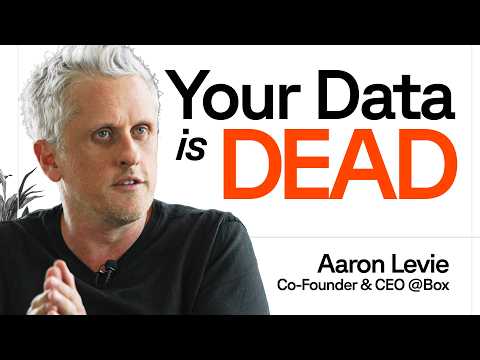
0:50 What's the last thing that needs to be solved for AI agents to really proliferate? Like job number one is >> Hey everybody, welcome to Navigators, our conversations with AI leaders about what's next and how they're building it. I'm Paul, founder of Browserbase. I'm here with Aaron Levy, founder of Box. Aaron, thanks for taking the time today. I'm super excited. >> Thanks for for coming to our our office. Makes it very easy. >> Yeah, it's it's rare to have a trip down to beautiful Redwood City.
1:17 >> People People are starting to figure out this place. So we it's like there's construction everywhere. We have startups moving in. So, we welcome anybody listening to to join us in Redwood City. >> Are there GPUs around too? Cuz I'm I'm trying to move near the GPS. >> I think one of those buildings has a like it's always humming. So, so probably >> is Redwood City the new AI hub of America. Some people are saying it is.
1:39 >> I think you're going to hear it first today. And no, there is the robotics company. Do you know do you know Sunday Robotics? >> Heard of it? >> Redwood City. >> This is definitely the epicenter. >> This is the epicenter. And in box is at the epicenter. Well, we were here first. Yeah. >> Yeah. So, me meet the creators of the epicenter. I I have to ask, I mean, Erin, you are like the Tom Brady of CEOs here. You've been doing this for so long, so many different transitions. 20 years. Congratulations on that. You know, over a billion dollars of revenue.
2:06 You've gone through three different technology changes, right? You know, the the shift to cloud, the shift to mobile, and now the shift to AI. What has kind of been the throughine for that for you as you've been building this company? Because you've almost maybe had to reinvent box a little bit along the way every single time. I'm just going to extend the Tom Brady analogy. which is great. I haven't gotten that much in my life. but but I think I only know one thing which is enterprise software and technology. And so you just you just keep doing it. I think like like you know there's all these jokes that would happen like 3 four years ago like you know B2B SAS became this funny kind of like tagline and in Twitter banter and and for me it's like you know what could be more important than the technology that powers how life sciences companies develop new drugs?
2:49 how NASA goes to space, how films get produced and and delivered to market, how you know, how we have, you know, breakthroughs that happen in in the research community in you know, major universities. And so what all those things have in common is they're they're using software, they're using data, they're using in this case, they're using our platform to to go and do that. And so that that kind of just makes it continues continues to make it fun at every single change in the in the technology landscape. and we happened to get very lucky. We didn't anticipate any of this when we started the company. We got lucky that we we started creating a platform that that can kind of compound in value as each of those phases, you know, kind of played out. So, the cloud meant you got all the data into a into a place where you could actually kind of make it usable. Things like mobile made it so we could use our our data in lots of new ways and in more places. And now AI is just like the final frontier of of you have all this information and now you can throw compute at at all this data and answer any question in your business and automate almost any workflow in your enterprise. and every every AI model, every agent needs access to information to to make it useful. So we're having you know easily the most fun we've ever had. It's obviously the most stressful time as well just given how fast everything's changing. But it's we're having a blast.
4:05 >> Yeah. the multi-deade bet on data and the accumulation of data over time has really given you know a compounding advantage to box and serving its customers well I think we're calling data something differently now we call it context this whole thing around context engineering and context graphs like how has the shape of data changed and how you think about it for building for AI and what you advise your customers are we have to throw away all our data and and rejoin new new data like what does context mean versus data of the old days >> this sort of plays into our hand quite a bit which is- which is agents use data much more like people do than like what computers used to to be able to do with data. So 101 15 years ago the only thing you could really automate in your enterprise was something where you had structured data in a database and the computer could you know analyze the data you know calculate it move it through a workflow or use it to to power a workflow process. That was really the only part of the data estate that you could really you know actually bring the full power of compute to. but that's actually the smallest portion of data we have in the world. Unstructured data, the stuff that's inside of your PowerPoint files and research documents and log files and marketing assets and contracts, all of that unstructured data, which just sits inside of files, it's actually the the vast majority of data we generate on the planet. And we have traditionally been able to automate the least amount about it for obvious reasons. It's sort of, you know, it you very hard to compute things in unstructured environments. And so AI kind of creates this incredible breakthrough where we can bring automation to all of the unstructured data. And that's about, you know, 90 plus% of data that most enterprises have. So the the the cool thing is we don't have to throw away any of our data. and in fact, the data that we've been working with as people now becomes extremely useful in a world of agents. And so you're having this almost kind of rebirth of of the file system is important and agents need access to a file system. And the more that you have agents that have their own computers, the more that they also need an environment to be able to store data often and be able to read data from.
6:06 and so those are the things that we've been working on. We we've primarily been working on those for people, but agents are are commonly accessing technology and tools and and you know data assets in the same way that a person did. the one benefit and the X factor is they can do it at a thousand times the speed of a person. The one limiter is you have a very brief moment and a very brief window to give them the context they need to go do their task. And so that's sort of this massive context engineering problem which is like in a very limited window both in time and space. How do you give the agent the information it needs to work with to find the right data or answer the right question or or pull in all of the documents that it needs to be able to do its work? So it's a really really hard problem, but it's one that that like we're incredibly excited by. We're in an era where where I think you're going to be able to finally transform the the the data that we we use in the organization. And the big problem that everybody has is effectively a context problem. So when you go to most organizations and enterprises, you think you're having an AI conversation when really you're having a data/context conversation.
7:07 the problem really is just like how do I get the AI agent the right access to the information it needs to be able to do its work. That kind of is basically 90% of the conversation we have with customers. >> Yeah. It's funny. I asked Fable the other day like what can I do to make AI better and it said have a journal every night of the three things that are problems and write it down. It's asked me to label my day a little bit, right?
7:27 Create more data, more context, make the models better. >> Right now models are getting incredibly good and we're solving a lot of engineering problems and we have a lot more data. What's the last thing that needs to be solved for AI agents to really proliferate? I think that everything is solved. It's just like a diffusion issue. What problems have to be solved? >> I think there's still lots of technology problems. I mean each of the each each of the models kind of capabilities that that you you see improve you know unlock another trunch of use case so even fable you know there'll be a new set of legal financial services healthcare life sciences use cases that get opened up but there's no question that that that sort of fable 7 or fable 8 will unlock another you know 70% of of of the next you know sort of trunch of use cases so I think that there's no we we continue to need all the the model progress that that's possible at the same time. and these two things can be true at once. You have a model overhang which is basically the models are really powerful. they can do a tremendous amount of work. They can do far more work than than they're they've actually been implemented for. And so the big question is what is the sort of gap between the models capability and the real real world adoption. And that gap ironically actually probably continues to be widening over time because the pace of the model progress is so fast and the rate of diffusion doesn't really change with model capability progress. It's like it's it's human based and it's it's process and systems and bureaucracy based and so that hasn't actually sped up at all. So weirdly we're actually increasing the gap between model capability and sort of how have you upgraded all of your systems to be able to support that. And the big challenge is it's it's kind of like 10 issues, but it is a mix of can agent get access to the right data.
9:11 That's sort of a security, you know, kind of question and it's an access controls question and it's a data formatting question. Does the does the underlying system that it's using have the right APIs and tools to access? you know, that that's a that's a big question. Things like, you know, browser use ends up being this great sort of, you know, kind of escape hatch for all that long tail. you have you have a big issue which is is the user on the other end are knowledgeable enough about the system and what it's capable of and how to prompt it properly and how to give it the right context of the work to do. Is the work itself you know kind of verifiable or do you need to go and review it? So that you have all of these issues that that kind of are the real the real world limitations of or the the maybe the rate limiters on the rate of adoption. And in Silicon Valley, we have a little bit of a strong bias because most of the value creation in Silicon Valley is done through engineering and through kind of developing products. And so we get to see the benefits of these AI kind of coding gains very very quickly. And engineers are able to deploy AI coding agents just incredibly rapidly.
10:17 And and think about AI coding has all these great properties. It's like the codebase is already text. Most developers have access to most of the relevant code that they need to be able to work with. The models are trained on on code just at a tremendous level. The work itself you can kind of verify through a QA process and testing the code. and and then we're all kind of connected online. So we're like seeing the best practices much more quickly. Take all of that. That's what's causing us to sort of experience this incredible fast vertical takeoff of AI in in the tech industry and in Silicon Valley. Now go to the real world with a less technical user with legacy systems with data fragmented you know through a bunch of environments with access controls that you can't just give the agent to to let them go roam around in all these systems with with kind of security regulatory compliance challenges that the enterprise maybe hasn't kind of quite resolved. So you have all of these issues that the real world faces for AI adoption. And I I think we're in for a 5 to 10 year period of effectively bridging the way that we're using AI out here and then how the rest of knowledge work will experience AI. and the good thing is that in that time AI capability will only continue to progress. So so by the time that that you know in two years from now when you're when you know X company's finally rolling out their full agentic strategy you know the models will be another 4x or 5x better than they are today which will make them even more productive and and effective when they deploy it. It's almost like the the real economy isn't yet seeing the benefits of AI as much as the Silicon Valley economy because there's less guard rails. It's maybe a little bit more flexible.
11:52 >> I think I think it's probably going to be the case also that the real economy minus a couple areas I'm thinking like life sciences, maybe some areas in finance, some deep research spaces, I think I think the valley will actually almost always have an advantage over the rest of the economy because our our economy is digital. So, so like AI right now is it's really effective at doing digital things and we have no we I mean like short of like complete optimist robots in maybe 20 years or something the the rest of the economy they have to make things that those things have to get deployed and sold and and instrumented and there's lots of people that are involved in that and so there was a great piece from Enthropic around the various kind of AI takeoff scenarios and and it was interesting because the AI takeoff scenario that they perceived I think the most likely sort of at least underscored this point but but they probably underweighted the significance of the point. They basically said that that the rest of the economy of you know real world drug development and manufacturing and all of these kinds of real real world world tasks are not as as they can't change at the rate that compute can can change and so AI is basically a compute and energy play essentially like at the at the end of the day is like AI takeoff will happen at the rate that compute and and we can you know do the energy side but there's a lot of the world that that doesn't move any faster as a result of those things like like And the examples they gave were like you still have to test the drug in real experiments and see how it handle how it deals with our biology. No amount of compute other than simulating you know the the outcomes is going to change that. So so I think the thing that we have to realize is Silicon Valley will probably always be moving faster than the rest of the economy. AI will help most of the economy get new forms of productivity gain. They'll be able to understand their customers better.
13:41 They'll market their products better. They'll onboard onboard clients faster. they'll they'll be able to design products much more much more quickly. but we will always have this Silicon Valley versus the rest of the world divide simply because our business models are digital by nature. >> And that kind of segus nicely into Box's business and your customers because you know there's what a huge percentage of the Fortune 500 uses Box. those are large companies with a lot of real economy impact. How has you seen Box and the AI stuff that Box is working on apply to those companies and actually create impact? is is that helping you know some of these real economy or is that still very digital for you?
14:18 >> We impact the digital parts of of the real economy you know businesses. So it's it's the jet engine maker that needs to do R&D and collaborate across their supply chain. It's the commercial real estate firm that has lots of contracts and they want to be able to use AI to accelerate, you know, all getting the data from all those contracts and putting that into a system that lets them analyze their customer base and give them the right, you know, sort of insights at the right moment.
14:45 it's the law firm that wants to be able to look through due diligence documents and, you know, discover risks for a client. So that's the the way that we're seeing AI show up across across the the real world and and that is used for everything from how do we like accelerate a business process so we can just do that thing far faster. the part that I'm probably more excited by is when customers and we hear use cases where customers are using AI to do things that they just didn't do before.
15:13 So they're they're throwing agents at problems that a person never could have done. It's the CPG company that is doing brand asset sort of verification and quality checks in a way that that people just never had the time to review everything going on in the business or the life sciences firm that's trying to deploy agents across all of their research or the recruiting you know agency that is you know sort of better aligning talent to jobs much faster.
15:39 these are all things that like it's not replacing what a person did. It's just actually magnifying what the what the ultimate work is that that the person's doing. So we get to hear all of those use cases and these are the kind of real world ways that AI is showing up in the enterprise. I mean again the exciting thing is that they all relate to how much you know how much data do you have, how well organized is that data, can AI agents access the right information.
15:59 so that's where we we kind of get most of our lessons from. >> Yeah. And I'm sure you're aware that many people look at your tweets every day and try and use it as a almost a bit of an oracle of how how you how Aaron is thinking about what's going to happen for these businesses. >> I mean these are very small data points we're operating off of. So trade it your your >> somehow they get a lot of likes I guess.
16:18 So yeah I'll have to do the poly market for the next tweet. I I'm curious you know knowing that you know CEOs and founders you know looking to your takes on on AI. you talked a lot about you know rebuilding your business be AI native internally and I'm curious about what's been working for Box as you've taken on a lot more AI issues like have you changed your operating model cuz it's been working for 20 years. Why mess it up?
16:39 >> Your goal is not to mess it up. So so that would be kind of job number one is don't screw anything up. We are changing our operating model, but I'm probably a little bit more due to just again kind of the being on the enterprise side, I'm probably a little bit more pragmatic than not like we're not trying to just kind of recreate everything in the business. I really think about it as as just accelerate everything. So, u obviously like we're all doing the same thing on product development. So, accelerate all engineering, you know, with with the power of of AI agents.
17:09 and so that that's like check that box that that's quite straightforward. I think we all understand how that works. Then the next thing is like where are you know we kind of think about it as like what parts of our business are some mix of kind of like compute and information limited where where if you could apply more computed a problem with access to any amount of information. What parts of our business would go faster and would be able to do way more?
17:34 And so that leads you to things like, okay, well, you know, some basics like we could onboard employees far faster because they could just instantly get the intelligence of the entire organization at their disposal for any topic that they're running into. Okay, that that's straightforward. That takes all of our intelligence and knowledge internally and lets you have agents on that and we we do that, you know, natively within Box. Then there's use cases, which is okay, well, how do you use compute to an agents to be able to say, okay, we're in front of this customer. What's exactly the right thing to pitch them? or something's going on in this customer environment. We have an agent that looks at a bunch of signals from the customer and we say, "Okay, this is exactly the right moment to reach out to them with this particular message." So we kind of think about it as like where in the business would if you could throw more capacity at a problem would you get a better result as measured by more deals, better deals, more you know larger deals, better you know employees that we can kind of attract, easier ways to onboard them, better better ways to ramp them to get to productivity. that's kind of how we think about the problem. Then we kind of rank order the areas where where then we should be deploying and working on agents. Some of those are things that we kind of get off the shelf from from partners. Some of them we're building within Box and then some of those you know we will we'll go and create kind of custom agents using a a mix of solutions.
18:51 >> Yeah. And I imagine that not only is like the internal functionality of Box evolving, but the way that you ship your products or show your products customers is evolving. You've talked a lot about like the headless applications or headless SAS. How how do you make something like Box headless or customers consume via agents in the future? >> Yeah. So the the thing that I think is pretty like a very easy prediction at this point is you know at each year going forward there's probably going to be some doubling of the the amount of internet users you probably 10xing of of internet users that are agents over people. So you know Matthew Prince from from Cloudflare I think just announced we just crossed over in agents over human users on the internet. It would be easy to think about that as again kind of two five 10x more in a year from now and so on. And so you've got this kind of Moors law of how many agents versus humans are on the internet. And so then it stands to reason well if you have 100 times more agents than people you know on the internet or or or using tools then those will also that will also be true within an enterprise. So if you have 100 times more agents than people in an enterprise then that means that you have to ensure that your software is built in an API first way that works you know with with those agents and that has a series of interesting questions. There's some kind of emotional questions which is like well what about my UI and what happened to that and then there's some very real just business model questions which is you know most software in the SAS you know kind of ecosystem is priced on a kind of per user basis and we give you kind of you know near unlimited usage of of software per user like you can't log into workday that many times and get banned as a user like there's no way to like get rate limited as a as a regular person using workday but what what if an agent you know bangs against workday 10,000 times. Probably that's something that like exceeds some threshold that they were, you know, sort of not anticipating from a business model standpoint. The big thing that everybody is is trying to figure out is okay, we all get it. We're going to have APIs that are really really good. In our case, we're lucky because we've been, you know, doing APIs since nearly day one of the company. And so headless boxes already existed. It was just machines were were accessing us, not not sort of agenting users. and then the question is what's the business model of this? I think that leads you obviously to more of a consumption based approach on top of seats where I think Wall Street and some other, you know, ecosystems get it wrong is like these things are not binary. A person using your software probably still should be a seat. It's just like a predictable model. It sort of there's no reason to kind of blow that up. But agent users have a kind of unbounded scale potential. Like they could be, you know, again, they could be using it one one agent could use it a couple times and another agent could use it 10 million times. And so you obviously need more of a consumption model for for that kind of dynamic. and then we just all have to have our business models kind of get upgraded to support that.
21:32 >> You you recently been talking a lot about the labs and the applied layer and the different challenges and tensions between the two. What what's going to happen there and what do you think the point for those types of companies to think about? >> Yeah. I would say fully hard to know what what kind of completely happens in the context of time. I think maybe a couple quick things. one I think actually history is pretty instructive on the hyperscalers actually as an example the hyperscalers we always had this this interesting dynamic which was the hyperscalers sort of started at core infrastructure and then built services more and more over time and you would have looked at that and said well well then they should just gobble up all of technology and and then it turns out that you fast forward 1015 years later and data bricks is $175 billion company snowflake is a $90 billion company is a 20 30 billion company. Cloudflare is a hundred billion company. Twilio is a 2030 $30 billion company. Like and I mean the list goes on. So how is it that that in this world where in the infrastructure was so so abundant they had they had tons of of incentive to create commoditized versions of everything possible? Why is it that there's still, you know, half a trillion dollars of market cap just in, you know, the kind of most obvious, you know, 10-15 names, probably a trillion dollars in total once you add the longtail of companies that basically ride on top of this infrastructure and and add sort of value to it. It's because the applied layer of technology is sort of always the last mile thing that is needed between you know the the core raw materials that are being produced and the ultimate implementation for for for customers. You know there's this sort of idea that that you know if you're bitter less impilled then you would believe that that the model will just get so so much more capable over time that it eats into that entire applied layer to the point where the model is just so powerful that you need nothing else. And the in the real world there's just you know back to the earlier part of the conversation like the real world has so many things that it needs to get right between compliance and security and data access and the context that the model gets. the the language itself of the product to the end user. All of those things are basically what needs to happen to make these agents or models get applied to real world use cases. And so then the real question is okay do the frontier labs do that in a very deep way for every single vertical for every single domain and I think I think there's a a real chance that they try and there's a real chance that actually in two three four verticals they like they'd totally crush it and and that will be the the proof point that everybody uses to think that like okay well then it's it you know it favors the Frontier Labs but I would generally bet that we have this really healthy ecosystem of yes there'll be horizontal technology from Frontier Labs labs and some of that will get kind of tuned to different environments by the customer. But then there's going to be a tremendous amount of opportunity on these kind of vertical applications.
24:29 maybe they're in a line of business, maybe they're in a specific industry, maybe they just handle one of the task types or job functions that actually go and apply the underlying model capabilities to the the job to be done by that customer. And they will have the right kinds of specialists. They'll have the right kinds of FTEEs. They'll actually be able to go help the customer with the change management. they can make sure the right data systems are plugged into the agent. As soon as a model kind of upgrades, they can make sure that upgrade doesn't sort of break the underlying wiring so they can kind of handhold the customer through that journey. so you're going to you're going to see just a tremendous amount of opportunity at that applied layer. So I think the debate has been sort of wrong because it sort of you really thinks about this as well it's just all the model and as soon as the model gets good enough it wipes everything else out when actually you need far more than the model to to really be able to pull off a lot of the use cases that we're that that are these real world use cases in the enterprise. It's also there's like verticalized infrastructure stacks where someone can build deeply into a type of agent and select the right models and provide the right primitives to make sure that you're getting the most token efficiency out of that model for that use case.
25:34 >> This maybe wouldn't have mattered like a year ago as much, but especially right now when you can see how expensive the the tokens are getting and and rightfully so because they're solving just harder and harder problems and they're and they're more powerful than ever before. you do actually end up at a point where where the cost of of sort of the the very edge of the frontier versus the cost of like what the frontier was three months ago like you could actually have like a 10x spread in that cost at this point and maybe even 50x spread if you know if you go to a really kind of you know kind of tailored open open weights model and so in a world where you have a 10 to 50x spread in frontier and kind of frontier minus one then actually like the ability to route tasks to different tiers of models becomes is really important. And so who's going to be both incentivized the most to route effectively but also capable of rout routing effectively?
26:25 It's going to be the companies that understand the tasks at hand. You really can't do like intentbased routing on a contract review process in a in an M&A, you know, transaction if you don't understand that use case well enough to know at what point should I be using Fable or GPT 5.5 or 5.6, whenever that comes, versus when I should go to Neotron for that task. So the applied layer is sort of in the best position.
26:50 So it's actually a really interesting argument which is actually you could be super bitter lesson and and purely just for economic rationality believe that the applied layer is still going to be in this very strategic position because they are not wedded to you know burning down a certain amount of compute on the frontier model only. They they are actually just they are only wedded to solving the task for the customer in the most efficient way possible. So I think there's multiple reasons at this point where the bet has shifted and the applied layer is is is going to be you know very much in favor and again because everybody kind of treats all these things as binary that can both be true and you should still expect the frontier labs to you know triple and quintuple and you know you know grow revenue at at an incredible pace because it's going to still be the frontier models that are that are performing the best at those top tier tasks. It seems like the way that you build an enterprise company is changing. And I actually, you know, when I first started browser base, I saw a lecture from you on YouTube, it was like you at Stanford is with A6 andZ and it was like building enterprise software and you come out blaring music with this slide deck.
27:55 and you talk about how Box started out not trying to be enterprise company. when you think about the founders starting companies today, they're going to have to go through so much more uncertainty and unpredictability. If you had to start over today, what are some of the principles that you'd want to carry over with you into the next company you build? >> There's a lot of commentary on this right now that that is insightful around, you know, we we have to assume that the cost of building something is going down by 10x. You still have to build amazing products. You have to have a a high degree of taste of like how does the thing get configured and how do you make it, you know, easy to use and how do you have the right features show up in the right places. There's gonna be a lot of slop software that gets built and so and so like job number one is separate yourself from the slop and that means build just high quality software really robust technology make it look amazing make it easy to use. So that's like task number one. But I do think a lot of companies sort of stop at task number one and then they think okay well if we if we build this thing and then it's it's got high taste and and it and it and it kind of feels great then you know all the users will show up. And I do think that we're in an environment where because the cost of developing the software has dropped tremendously. Now really the new problem is can you get to customers? Can you engage with them? Can you build can you actually like understand their problems deeply and support their their their usage of your your product and get in front of them in the right ways. So coincidentally in a world of abundant engineering you know one of the new forms of scarcity is going to be really really high quality go to market as an example and so companies that kind of you know start to understand how important that's going to be as a variable I think will we'll we'll be in a better position.
29:27 interestingly, you know, it was probably more subtle than whatever talk I was giving, but like this is actually something that like we identified pretty early on, which was which was, you know, there were a lot of startups in early kind of SAS waves that were that were like, okay, we'll just build this product and everybody will figure it out. And it's like, no, like the companies that win are those that can get in front of the customer, deliver them their unique value proposition, you know, work with them in a in a constitive fashion. I think this this idea of the FTE is is a very real trend that is sort of is not going to go away because companies in the real world are going to need a lot of support to be able to go and deploy agents within their environments. They often aren't going to have all the technical expertise necessary to go do that. So you're going to see a huge need for for companies that like like I would automatically bet on the startup that like invests deeply in FTE and go to market and builds the sales team because these are in a world where the software is easier to replicate. It's going to actually be how customercentric can you be? That would be probably my my kind of most generic advice I could give any any off the street startup right now.
30:29 >> Well, if you do ever start a second one, I'd love to invest. So let me know. Okay. Well, and I appreciate the time. I super conversation. So thanks for having us. We appreciate it.
Summary
- AI has transformed data usage, allowing automation of unstructured data that was previously difficult to manage.
- The concept of "context" is crucial for AI agents to access and utilize information effectively within enterprises.
- Companies do not need to discard existing data; instead, they can enhance its value through AI and context engineering.
- The gap between AI model capabilities and real-world adoption is widening due to bureaucratic processes and legacy systems.
- Silicon Valley is likely to maintain an advantage in AI adoption due to its digital economy, while traditional sectors will face more challenges.
- Box leverages AI to enhance business processes and create new capabilities that were previously unattainable.
- The future of enterprise software will involve headless applications and consumption-based pricing models to accommodate the rise of AI agents.
- Successful startups will prioritize high-quality software development and effective go-to-market strategies to engage customers and support their needs.
Questions Answered
How has the shape of data changed and what does context mean versus data of the old days?
Data usage has evolved significantly, with AI enabling automation of unstructured data, which was previously difficult to manage. This shift allows AI agents to process data more like humans, but it also introduces challenges in providing the necessary context for these agents to operate effectively.
What is the challenge of providing context to AI agents?
AI agents can access technology and data at speeds far exceeding human capabilities, but they require precise context within a limited timeframe to perform tasks effectively. This presents a significant challenge in context engineering, which is often the core issue in AI discussions.
How does AI deployment relate to the broader economy?
While AI technology is advancing rapidly, the rest of the economy, particularly in sectors like drug development, cannot keep pace. AI's impact will be felt in productivity gains across various industries, but the speed of change will vary significantly.
How will the rise of AI agents affect software development?
As the number of AI agents increases, software must evolve to accommodate this shift. The prediction is that agents will soon outnumber human users, necessitating a redesign of software to ensure it meets the needs of both agents and humans effectively.
What is the importance of specialists in the deployment of AI agents?
Specialists will play a vital role in ensuring that AI models are effectively integrated into business processes. They will assist with change management, data system integration, and maintaining the functionality of AI models as they evolve.