Section Insights
Introduction to Breathing Exercise
What is a fun breathing exercise for children?
The speaker introduces a fun breathing exercise suitable for children of all ages, from toddlers to teens, emphasizing that younger children are more likely to enjoy it.
- Breathing exercises can be enjoyable for children.
- The exercise is designed for a wide age range.
- Engagement is key, especially with younger children.
Chugga Chugga Breathing Technique
How do you perform the breathing exercise?
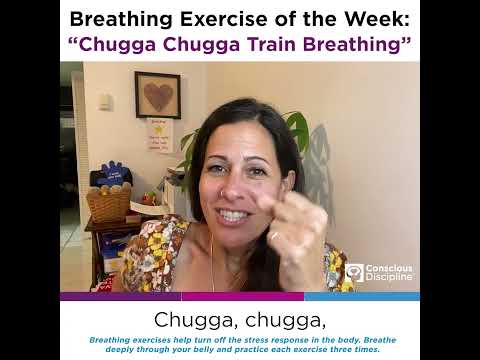
The exercise involves inhaling through the nose while mimicking a train sound, 'chugga chugga,' and repeating the process multiple times.
- The exercise incorporates playful sounds to make breathing fun.
- Repetition is a key component of the exercise.
- Physical movement can enhance the breathing experience.
Variations and Fun with Breathing
How can the breathing exercise be varied?
The speaker suggests starting the exercise slowly and then increasing the speed, encouraging fun and creativity in practicing breathing.
- Varying the speed of the exercise keeps it engaging.
- Fun is an essential element of practicing breathing.
- Daily practice helps children develop coping skills.
Integrating Breathing into Daily Life
How can breathing exercises be incorporated into daily routines?
The speaker encourages integrating breathing exercises into everyday activities like commuting, bath time, and before meals, making it a regular part of life.
- Breathing exercises can be easily integrated into daily routines.
- Consistency helps children learn to manage their emotions.
- Making it fun encourages children to participate willingly.
Transcript
0:00 Hi there. Here is a fun breathing that you can do with your children, toddlers all the way to teens. I don't know if your teens will be that willing to do train breathing, but I am positive your toddlers and your preschoolers will love it. So we inhale through our nose like this. And then we get our arms going and we say, chugga, chugga, chugga, chugga, chugga, chugga. Again, inhale, choo choo. And we do it three times.
0:27 So you're inhaling and exhaling. Going to do it again. Inhale, exhale as you say. Chug, chug, chug, chug, chug, chug. Inhale again, choo choo. And last time, inhale, chugga, chugga, chugga, chugga, chugga, chugga, chugga, chugga, chugga, chugga, choo choo. It's fun for all. I even enjoy it. And you can have the train start off slow and then get fast, faster.
0:59 Just have fun with it. Teach your children about breathing. Practice it daily so that when things are not going their way, they can have that skill there for them to help them through whatever's going on, whatever big feelings they may be feeling. It all starts with breathing. So have fun. Do breathings on the way to school. Do breathings before bath time. Do breathings on the way home from school. Just make it part of your routine. Even before dinner, you can do a breathing.
1:26 Just have fun. Remember, do it at least three times. I wish you well.
Summary
- Breathing exercise suitable for toddlers to teens.
- Involves inhaling through the nose and exhaling with "chugga, chugga" and "choo choo" sounds.
- Can be repeated three times for effectiveness.
- Encourages parents to incorporate breathing exercises into daily routines.
- Aims to help children manage big feelings and stress.
- Suggests practicing breathing before various daily activities like school, bath time, and dinner.
- Emphasizes the importance of making breathing exercises fun and engaging.
Questions Answered
What is a fun breathing exercise for children?
The speaker introduces a fun breathing exercise suitable for children of all ages, from toddlers to teens, emphasizing that younger children are more likely to enjoy it.
How do you perform the breathing exercise?
The exercise involves inhaling through the nose while mimicking a train sound, 'chugga chugga,' and repeating the process multiple times.
How can the breathing exercise be varied?
The speaker suggests starting the exercise slowly and then increasing the speed, encouraging fun and creativity in practicing breathing.
How can breathing exercises be incorporated into daily routines?
The speaker encourages integrating breathing exercises into everyday activities like commuting, bath time, and before meals, making it a regular part of life.