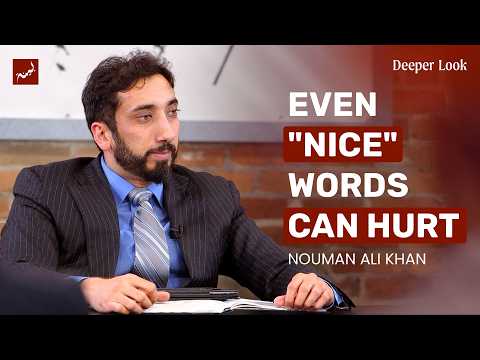
Section Insights
Avoiding Hurtful Nicknames
Why should we avoid using hurtful nicknames towards others?
Using hurtful nicknames or pointing out flaws directly can lead to negativity and conflict. It is important to treat others with respect and avoid assumptions that can harm relationships.
- Avoid calling out flaws directly to others.
- Assumptions about others can lead to punishment.
- Insulting someone to their face is still harmful.
- Strive to communicate positively and constructively.
The Impact of Criticism
What are the consequences of pointing out others' flaws?
Pointing out flaws can lead to retaliation, where the criticized person may respond by highlighting your own flaws. This cycle of blame can create a toxic environment.
- Criticism can provoke defensive reactions.
- Pointing out flaws does not solve problems.
- Encouraging a supportive atmosphere is crucial.
- We should reflect on our own flaws before criticizing others.
Understanding Derogatory Nicknames
What is the difference between derogatory and harmless nicknames?
Derogatory nicknames are harmful and based on negative traits, while harmless nicknames can be terms of endearment. It is important to avoid using any names that could hurt others.
- Derogatory nicknames can stem from prejudice or past mistakes.
- Harmless names should uplift rather than demean.
- Avoid using names that may trigger negative feelings.
- Language reflects our values and beliefs.
The Connection Between Faith and Speech
How does one's speech reflect their inner faith?
The words we use reveal what is in our hearts. If we have faith, our speech will be positive and uplifting, while negative speech indicates a lack of purity in our hearts.
- Our speech should reflect our inner beliefs.
- Filthy words indicate a troubled heart.
- Maintaining a pure heart leads to positive communication.
- Faith and language are interconnected.
The Dangers of Assumptions
Why should we avoid making assumptions about others?
Assumptions often lead to misunderstandings and can result in sin. It is important to be cautious and avoid jumping to conclusions about others' intentions or actions.
- Most assumptions are harmful and lead to conflict.
- We are not punished for unexpressed bad intentions.
- Strive to understand others before making judgments.
- Assumptions can create unnecessary barriers in relationships.
Transcript
0:00 Don't throw nicknames that hurt against each other. Means that you call someone out on their flaws to their face. You know, by the way, you really are very short. And then you you're proud of yourself. Look, at least I'm not talking behind your back. Make a great deal of effort as much as you possibly can to get away from assumption. The only other crime I can think of that Allah says, Allah says that thinking is punishable is assumptions, bad assumption towards another believer.
0:35 >> This clip is from our longer deeper look of a series which is now being released exclusively on Bayena TV. Begin your Quran journey now by visiting bayatv.com to watch the fulllength episodes in this series along with dozens more taught by Ustadman. >> Okay, so we'll keep moving on. And don't point out your own flaws. That's how I'll translate it first. Don't point out your own flaws. Now we're going to dig in.
1:14 means that you call someone out on their flaws to their face. You know, by the way, you really are very short. I mean, it's incredible how short you are. You're not that good at Arabic, are you? You're not doing this. Just pointing it out. I'm just speak. And then you you're proud of yourself. Look, at least I'm not talking behind your back. I'm so proud of you. You didn't do but you just did.
1:45 It's not an accomplishment to insult someone to their face and say, "At least I'm not doing that." - This is also a a problem. If it's true, it's still ugly. True and ugly. And if it's a lie, then you're lying on top of that and it's ugly. This also pointing out somebody's flaws is done with the hands, with the with the eyes, with the tongue, and by gestures.
2:19 Just like the pointing out somebody's flaws, you just want them to sit over there. Rude gestures. Don't be rude and condescending. I love this hadith. It's narrated. I love when narrates a hadith that incriminates herself. Our mother is amazing.
2:58 Safia is a woman a little short. But she didn't say short. She just did this. Just that how does the prophet respond? It means that she's short. You have contaminated your words with a word. And he it wasn't a word. He just said she said if you look at the language is a woman.
3:33 She he said you have contaminated the word you used with with a kind of contamination that if it was thrown into the ocean the entire ocean would be contaminated. Narrated by her herself. Incredible. Muslim.
4:04 It is Allah. In fact, he doesn't look at your faces and your bunnies. He looks at your hearts and your deeds. In other words, believers should only dignify what is in the heart and what people do. And they should not judge others from what Allah doesn't judge. Allah doesn't judge, you know, faces and and wealth. They say could be with very low language. Stupid idiot that it could be low, you know, under your breath kind of language.
4:43 It's actually not name calling and it's not. It's actually pointing out somebody's flaws. They're so incompetent. You know, like you, let me tell you, you're waiting at a long for a long time in the restaurant. The guy, you know, failed to bring your food quickly. You know, you really need to learn to do your job. Say something like that. That's you made you pointed out a flaw to them. I mean, okay, they took a long time. You're upset. I get it. But the guy's working there for 10 hours. Can you give him a break?
5:12 What is it? You saying that, what good did it do? Your food is still late. All it did was he's going to go back with like dua against you or something or your food is going to have flavors you don't want in there, you know, don't do that. Just don't don't open your mouth if there's nothing good coming out. It's not far-fetched to think that the meaning should be don't don't put down others, but he said don't put down yourselves. Don't point out the flaws of yourselves.
5:53 He's saying that when you point somebody else's flaws out, what is their reaction? They point out your flaws and then they end up calling your your flaws out. And when they do so as a reaction, it is actually you that caused your own self to be criticized. That's the meaning. The first meaning I already gave you because we're one blaming someone else in the or pointing out their their flaws is the same as our own, right? We should be a mirror to each other.
6:25 So you you're all going to be blaming each other or pointing out each other's flaws. And this is actually similar to what Allah's prophet mentions in in the interesting one of the greatest sins is that a person should curse both his parents. They said, "Messenger of Allah, who curses their parents? Who's ever done that?" And the prophet responds, Yes, you curse somebody's father and they turn back and curse your father and you curse someone's mother and they turn back and curse your mother. You actually cursed your mother. You actually curse your father. You should have, what is this ayah and this hadith teaching us?
7:19 Emotional intelligence. Guys, remember this term emotional IQ. You when you talk to people, you should have the sense to know what reaction they're going to have. Both alooi in light of this ayah and this hadith are teaching us you should know that when you point somebody's flaws out what reaction will they have and what is what comments will that lead to especially when you know your own people you know how they tend to become parents years and years and years of pointing out their children's flaws.
7:48 When has it ever ended well? Why don't you learn like you've you've been doing this you've been running yourself into a wall for years and it's never produced results and yet you do it again and say why does he get upset? Why does she get upset? Spouses for years and years pointing the flaws out like it's done some good. It doesn't do any good. Why are you doing this? Why are you, you know, just banging into the same wall over and over again?
8:13 Understand that they will react and then you're the only one to blame cuz cuz you started it. you started a chain reaction. It's better, you know, regretting that you stayed quiet is way better than regretting that you said something. That's what we're learning here. Then my favorite one in this ayah, the third one, don't throw nicknames that hurt against each other.
8:45 is actually someone who is considered blamew worthy, faulty in the way they're made up, like they've got a faulty body part, they're too fat, they've got a bloated belly, something, you know, they've got an ugly birthark or something or their family is not of great descent, like they don't come from a noble lineage. The word So there's two words I need you to understand to understand the wisdom and beauty of this ayah. very beautiful. There's the word nbuz and there's the word. So if you understand this comparison, you'll get it. Nabuz is actually a bad nickname, a derogatory nickname. It's a nickname based on somebody's skin color. It could be based on their physical appearance.
9:32 It could be based on their intelligence. It could be based on something that happened in their life. you know, somebody who stole a long time ago and you're calling them criminal, you know, or you're calling them cellmate or something, you know, and they they've already done their paid their dues. Or somebody who had committed, you know, a zena or something and they were already punished for it and now you're calling him zani or somebody who used to be Christian became Muslim and you're still saying, "Hey, Jesus guy, something like that, you know, or you know, Muslims do this in India. Mus Hindu becomes Muslim still call him Hindu. Disgusting.
10:08 This is This is to call someone with a name they know will hurt. This is now what's that's the other word was right. Yeah. Is actually not a bad thing. Mariam is a for who? Mustafa is a for who? Mustafa is a Mariam is a you know and and Abu Hur is a you know these are all a title describes qualities as they are or they're a term of endearment you know is not something condescending.
11:00 So now we've got two words. One is a bad word. Which one? And one's a good word which is or harmless. At least Allah says instead of saying don't call each other nicknames using hurtful nicknames. He says don't call each other hurtful names even using harmless names. Why would he say that? Because the other one's obvious. It's obvious that when you call someone short, fat, stupid, ugly, that that's painful. But sometimes you use words that are not hurtful and that hurts even more.
11:42 The guy fails the test, walks into class, teacher says, " a star student, please come here. Good words. She alama star student. All men sarcastically. Yes. You are so smart it's not even funny. You're so intelligent. What? I called him intelligent. What you mean to say is he's so ridiculously stupid.
12:15 That's everybody knows that's what you mean to say. Somebody's got a weight problem. Hey skinny. What's going on? What? I thought he lost an ounce, you know. Nope. Nope. This is why Allah says, "Don't be smart with him. Don't try to pull one on Allah. Don't try to pull one on Allah." You know, we don't get to use harmless words sarcastically.
12:46 Not that even not even that. So, obviously, the obvious one's out of the question, you know. So I I should actually translate this two ways. How terrible is corrupt naming? Corrupt kinds of naming and corruption itself. Al is supposed to be the the grammar was supposed to be and the ayah says would have been a an adjective. A corrupt name is terrible after you have faith. Corrupt naming is terrible. These are ugly names that come out. This is not the next time we're using the word.
13:29 By the way, now who else is a fask? Now the definition of fask is evolving. Aik is someone who talks down to people, who pokes fun at people, who calls them nicknames, who points out their flaws because they're using they become. So if they come to you with news they've made their obvious now Allah has actually let us know what kind of people can be considered. But the thing is by saying let me see if I can explain this to you in easy language. It's actually Allah saying these terrible names are corruption itself.
14:06 The this is corruption manifest in these names. How terrible can they be after im? And where's Allah has already explained where is how can you have the beautiful the the beautiful pure thing called iman in your hearts and these ugly words on your tongue. You know a container can only give out what it contains. What is in your heart will come out on your tongue. When you have iman in your heart comes out of your tongue. Alhamdulillah comes out of your tongue. Subhan Allah. Comes out of your tongue. When you have filth inside your heart, filthy words come out of your tongue. Dirty words come out of your tongue. Insults come out of your tongue.
14:49 If you had for your brother in your heart, then you wouldn't have these words coming out of your tongue. That's why he says after iman, after the heart being clear, how can these words be so dirty? How's that even possible? This tongue and this heart are connected to each other. The second translation of this is said listen end of ayah end of statement. What terrible names what a terrible word what a terrible way to name somebody corruption after faith. Sep se separate sentence. It's like a question.
15:25 Even after you've got faith you end up in this kind of corruption. Shame on you. And whoever did not make then those are the ones that are ultimately wrongdoers. Now is kind of Allah is saying whoever does not repent from this kind of name calling. Three three crimes have been mentioned. Putting people down with ridicule and in humor. That's the first one. Pointing out people's flaws and saying at least I do it to your face. Man stay away from that guy. He will not be shy from telling you what's wrong with you. He tells it like it is. is he's a straight shooter. Yeah, he's a straight shooter. He's shooting himself in the foot. That's not a good thing.
16:05 And then and then there are people who just they you know you're these are friends and I I should mention this you know among friends joking around is okay, right? And we often call each other silly names out of a joke and it's all good at the end. Okay, there's a limit to that. But you know one day your friend is just really tired. They've just had a long day. They're they've got a short tolerance meter and the same joke you make about them all the time does not sit well with them today. You made the same joke you've always made.
16:34 You didn't say anything new, but you notice their face changed today. They are mad. And there is now a rift between you and them. And that rift if you don't fix it's going to keep growing and growing and growing. I will actually tell you these ayat are for a larger purpose. Why should the Muslim community hold together like this? Why why should we not make fun of each other like this? These things brew hatred. They end friendships. And when hatred brews long enough, this can grew hatred between two people. This can brew hatred between nations. When one ethnicity makes fun of an they have an entire list of jokes about that village. They have an entire list of jokes about that language, about those people. Isn't that what what we do? It's part of so many cultures. And when that happens, you dehumanize the other group. And when that happens, it's easy to say that they're the enemy. And it's not too far-fetched that one day you'll be fighting them.
17:36 These ayat are being given. So you avoid that situation. These are the root problems that lead eventually to that problem. So this is this is one ayah. Now the next ayah after By the way, Toba usually a great sin committed against Allah. And here Toba, sins committed against each other. Words we didn't even realize. I take you back to what I said in the beginning of this this long day that we've had. There are going to be things in this surah where Allah says Allah hears. Allah knows, right? And Allah is hearing the words that we say to each other and he knows the words we're saying to and we don't realize it.
18:10 We have to have extra tawa in these things. We have to have tawa when we're hanging out having some pizza. We're just joking around. That is exactly what it is. We actually think it's just joking around. You know, we were just chilling with the people who chilling. We weren't doing anything wrong. And now on the other side, those of you who have im make a lot of effort to get away from from assumption. make a lot of effort and I'm saying is a lot and as opposed to you know is also to avoid it's hyperbolized make a great deal of effort as much as you possibly can to get away from assumption after assumption no some assumptions definitely lead to sin and the word for sin here is which means a penalty it's going to be something you'll pay for heavily Now in this ayah there are two things I'd like you to note. First of all has two translations. Avoid as much as you can assumption. The other meaning is avoid most kinds of assumption.
19:31 Most kinds of or much many different kinds of assumption. In other words, there are some kinds of assumption that are good but most of them aren't. Assumptions tend to be bad. You see someone, you assume, you suspect there's something going on. Now, you know, the first thing I want to tell you about assumptions, please remember this. You know that generally in Islam, we are not punished for what we don't do. Like if you had a bad intention or you intended to do a sin but you didn't do it, you're not punished, right? You had a bad word you were going to say and you didn't say it and you're not punished.
20:19 There's only a very small list of exceptions. Very small list of exceptions. If you don't believe in Allah and his messenger truly, it's in your heart that you have, you never said it, but it's in your heart. Is that punishable? Yeah, that's punishable. The only other crime I can think of that Allah says, Allah says that thinking is punishable is assumptions, bad assumption towards another believer.
20:49 Just the assumption. Do you know that a great number of scholars in Islam called assumptions it's backbiting of your own heart? It is the only one we're held accountable for. Did you know for example remember the whole story of it's about assumption it's about suspicion that's the story Allah says how come the second you heard it you didn't think better.
21:25 He criticizes us for thinking the wrong thing. He didn't criticize us for saying the wrong thing or doing the wrong thing. The ayah is a criticism of what you thought. When it comes to suspicion towards another Muslim, suspicion towards another Muslim is a crime. I hope you guys enjoyed that video clip. My team and I have been working tirelessly to try to create as many resources for Muslims to give them first steps in understanding the Quran all the way to the point where they can have a deep profound understanding of the Quran. We are students of the Quran ourselves and we want you to be students of the Quran alongside us. Join us for this journey on beayatv.com where thousands of hours of work have already been put in. And don't be intimidated.
22:08 It's step by step by step so you can make learning the Quran a part of your lifestyle. There's lots of stuff available on YouTube, but it's all over the place. If you want an organized approach to studying the Quran beginning to end for yourself, your kids, your family, and even among peers, that would be the way to go. Sign up for bayunatv.com.
Summary
- Avoid calling out others' flaws directly; it can lead to a cycle of negativity.
- Insulting someone to their face is not commendable; it can still harm relationships.
- Emotional intelligence is crucial; consider how your words may affect others.
- Assumptions about others can lead to sin and should be minimized.
- Using hurtful nicknames or sarcasm is condemned, even if the words themselves seem harmless.
- The connection between one's heart and speech is emphasized; what is in your heart reflects in your words.
- Negative communication can lead to broader societal issues, including division and conflict.
- The importance of fostering a supportive community through positive interactions is highlighted.
Questions Answered
Why should we avoid using hurtful nicknames towards others?
Using hurtful nicknames or pointing out flaws directly can lead to negativity and conflict. It is important to treat others with respect and avoid assumptions that can harm relationships.
What are the consequences of pointing out others' flaws?
Pointing out flaws can lead to retaliation, where the criticized person may respond by highlighting your own flaws. This cycle of blame can create a toxic environment.
What is the difference between derogatory and harmless nicknames?
Derogatory nicknames are harmful and based on negative traits, while harmless nicknames can be terms of endearment. It is important to avoid using any names that could hurt others.
How does one's speech reflect their inner faith?
The words we use reveal what is in our hearts. If we have faith, our speech will be positive and uplifting, while negative speech indicates a lack of purity in our hearts.
Why should we avoid making assumptions about others?
Assumptions often lead to misunderstandings and can result in sin. It is important to be cautious and avoid jumping to conclusions about others' intentions or actions.