Transcript
0:01 - You are a political commentator. - Yes. - And then you even built your, a lot of your base of your fan base that came to you and said, "Oh, you're starting a comic book company, I'm in." A lot of them were probably like, they were people that came to know you from your perspective on the world. - [Eric] Yeah. - Tell me that, how did your perspective now come about? Start from where you first became politically interested, engaged, like caring about issues, to the world you're at now where you're geeking out about praxeology.
0:31 - Yeah, right, right. No, I mean, I started as, I was a leftist for sure. In some old, like you probably can find me, right, wearing shake shirts. I was bad, but I didn't know anything. I was very young. I didn't know anything about anything. So that's how I started, like when I was gettin' like, it was just straight up leftism. Like socialistic line of thinking. What changed for me, and what did it for me was economics.
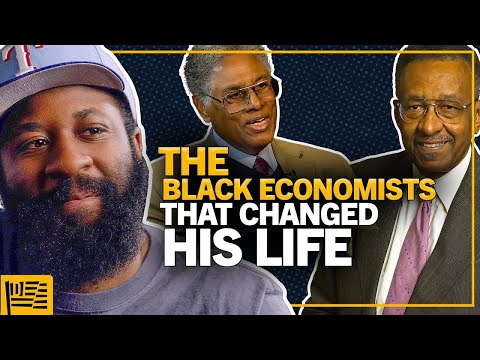
0:56 Like that, that subject matter, right? As a subject matter. And I remember still being stuck in this box. I tell the story all the time, you know, I was still stuck in this hyper-racialized sort of box. And I was like, even when I learned about kind of this concept, I wanted to, I was intrigued by economics. I was like, "I wanna learn about, I wanna know what the black economists, what they gotta say." Right. Thank the Lord Jesus that the ones that I encountered that I resonated with, was Dr. Thomas Sowell, as well as Dr. Walter E. Williams.
1:27 - Why do you think that they resonated with you? - Well, because they would talk about- - 'Cause they're, I mean, they're titans, especially, I mean, well we were talkin' about Walter Williams earlier, but Thomas Sowell is just like, - [Eric] He is. - He's just a beast. - [Eric] Yeah. He's, - And he's still going strong. - He's still 90 years old, still going like, it's like it's nothing. - But he's hardcore. He's like, he doesn't, he's not foot pussy footin' around his worldview.
1:50 - Nah, nah, he's unapologetic. That's what I love about 'em. But even on the sub, that, what I loved about 'em so much, or why I think it resonated with me when I was younger, and still like into that, into definitely (indistinct) that hyper-racialized box, is that they were entertaining those ideas, right? So they were saying, okay, look at this problem of like, okay, poverty or something like that. And thinking about it in a way that, that was, yeah, okay, it's a problem.
2:19 But instead of looking at it like a white man bad, or the man bad, they were looking at it more so from, "Okay, how do we get into this position?" So let's acknowledge this, this thing that maybe you don't like. Okay, let, let's go through it. And, you know, you got like Thomas Sowell, and his economic facts and fallacies. You got obviously basic economics is like number one for me, but with him. But even like with Dr. Walter E. Williams, the state against blacks, it's genius.
2:47 That genius. He talks about like something, something as simple as like minimum wage, right? And how that has historically hurt young, particularly young black, young black men. So he wasn't afraid and they were, neither one of them were afraid to talk about some of those issues that are just general talking points. But they were coming from a place of like, okay, it was very informative, and, you know, getting me to sort of understand why things are the way that they are right now.
3:13 - Let's, I know I've seen you out there talking about the minimum wage issue. So you're, so what, what was Walter Williams talking about? So what did you learn from him about, about the history of the minimum wage? - So, and how it has historically been used, and always been used to price people out of the market. Right? So what Walter E. Williams would talk about was that, look, think about it. You are in some busted up neighborhood, busted up area.
3:40 You're going to a busted up school. It's crap, right? Top to bottom. He's saying that most of those types of people, or those young people that are in those situations, the place that they're going to learn the most about the world, and provide value to it is in the workplace. - Yeah, I totally agree. - Right? - My son's been gettin' working a job since seventh grade. - Period, right? That's where they're gonna learn a lot of that, especially under those conditions where they're not going to the best, best schools and all that.
4:14 And he was saying, you look at minimum wage as a means to say, okay, well let's say that someone is, they are willing to give you that experience. Maybe they say, "Hey man, I'll give you five bucks to just to mop the floor." That's all. That's all. And that'll come with its set of experiences and all that. What the minimum wage unfortunately does is say that, well, for one, it's illegal for them to to hire you.
4:41 Right? So you can't do it. You literally, even if you're willing. - [John] It better be 15. - Yeah. But it has to be that. And they're not gonna hire you for that amount at all. So what's happening is you're going, you have these able-bodied people, young people, that would be better suited to learn about the world, right, structure, everything, especially if they're coming from these broken homes, right, learning about the world in the workplace. And the government has made it illegal for them to do so.
5:08 And that has hurt generations of young black, of young black people. Which is why even if you talk about that, and Walter E. Williams would talk about this all the time, you know, you look at the, the like minimum wage in the areas where it gets raised, and then you look at like the demographics that are impacted in terms of the unemployment. And it's always young, black, young black boys all, all the time. All the time. It's always, that's always been the case.
5:35 Like even from talking about latter half of the teenage years, that's what's young, it's young black men in that case, minimum wage is impacting 'em the same way. So it was so insightful to hear that talked about, and discussed in the way that he, that he does. So he takes like, "Hey, this is a legitimate problem that even people on the quote unquote left may can agree with in terms of the situation it is that they're in.
5:58 But they're being crippled by their own government. And unfortunately a lot of people are advocating for that, and it's their own destruction. - I know even in the early days, like in the 1930s, the labor unions were explicit about this. They would say, "Oh, we don't want this generation of black workers coming up to the north from the south to compete with us." - That was literally why I was first implemented in America. That is a, that is a absolute fact.
6:26 It was to price black people particularly, but also women, and young people out of the markets by predominantly, actually exclusively white labor unions. That's a fact. That's not my opinion. Go research the Bacon Davis Act for anybody that wants to look at, this is not, and it's funny, because it's worked that way in other countries as well. Australia, South Africa, or you look at these places where they were, they were literally implementing those minimum wage laws, to price people out of the market.
6:59 That's how it historically has worked, and that's how it was originally implemented across various spots. No matter what people may think that it is now, when it was first implemented, that was why. It was the price. And then I'm glad that you brought that up. That's, that's just, that's not an opinion. They were pretty open about it. Like, we don't want these people. We don't wanna have to compete with these people in their labor. - When, so you encounter these ideas.
7:24 And they're radical, 'cause they're, I mean, you're not turning on TV at the time. Or even now, and hearing anybody whose claims to care, say that. - Right. - And then Walter Williams, and Thomas Sowell, and others, but especially those two, as far as like prominent black intellectuals. - [Eric] Yes, yes. - Are, are, are just, they're saying it, they're saying this is the reality. And, and what does that start to do in your mind? Does that open doors?
7:52 Are you, you know, I think there's some people, some people they, they get this one door open, and like the dominoes. - That was, that's what it was for me. It was the rabbit hole. Once I learned about them, one thing turned into another. So you go from reading about them, and definitely the concept of economics. And definitely when you're floating around Sowell, you're just talking about like more Chicago economics. So that leads me into the Milton Freemans of the worlds, the Hayeks.
8:22 Well, let's say start with Milton Freeman, and then we go to more on the Austrian side of things, maybe even Mil Freeman's son, David. - Yep. Yep. Or, you know, definitely once you go Austrian, you're talking, you know, the Hayeks of the world, Mesus, again, that's why I kept bringing up human action because of, of that. And that's just a rabbit hole. So literally was, it was one thing that's, that was my entry, entry level, and then all that.
8:48 And I went full blown rock bar by the end of it. But it all started with Sowell, and Dr. Walter E. Williams. That's how, that's how that was for me. You know. - What about those ideas changed for you in terms of how you live your life, or how you think about your daily choices? - I would say everything. Look, I was very much, again, a socialistic collectivistic. That was kind of my line of thinking when I was young.
9:16 I became a lot more individualistic, which doesn't mean that like, "Hey, I don't care about anybody." I actually looked at it more in a positive light in that, well, my world only moves if I move it type of situation. - Taking responsibility. - That's what, and accountability. Those were, I think what came from my, just learning about economics, that's what came from that, is that individuality and, you know, less excuses. Definitely once you read, I mean, it's hard to, you read some of this stuff by Sowell, and it's like, you feel like you can conquer the world, and you really want to take like responsibility for yourself.
9:53 Definitely when you realize just how people that in previous generations had it way better than I ever had, including them, right? Or like in previous generations, I had it better than them. And, and like, what excuses do I have to be making here? I have, I mean, in comparison to the previous generation, my mother's generation, my grandmother's generation especially, I have access to things that they never would've been able to even conceptualize in terms of opportunity.
10:24 So I need to be taking advantage of it. So I would say that that's what economics, and learning that, again, the more Chicago and Austrian economics, not this Kasian nonsense, I learned more about that. And because I learned more about that, it impacted my daily life, because it allowed me to understand that again, the world moves. If I, if I move it for, it's not gonna move if someone else moves it for me. And there's a lot of, that's a liberating thing, I think.
10:51 - If you like this clip, we've got more where that came from. Be sure to watch the full video, and don't forget to subscribe to the channel so you won't miss our new videos as they come out each week. (bright music)
Summary
- The commentator began as a leftist but shifted to a focus on economics, which reshaped their worldview.
- Influential figures include Thomas Sowell and Walter E. Williams, whose works challenged the commentator's previous beliefs.
- Sowell and Williams provided insights on poverty and minimum wage, highlighting how these issues are often misrepresented.
- Minimum wage laws are discussed as historically detrimental to young black workers, limiting their job opportunities and learning experiences.
- The commentator emphasizes personal responsibility and accountability, moving away from collectivist thinking.
- Learning about economics fostered a sense of empowerment and the belief that individual actions can drive change.
- The conversation highlights the importance of understanding historical context in economic policies and their societal impacts.