Section Insights
Trust in Technology vs. Human Systems
What is the role of trust in the development of stable coins?
The speaker emphasizes the importance of encoding trust in technology rather than relying solely on human systems and legal contracts. Different businesses have varying perspectives on trust, which influences their approach to stable coins and financial systems.
- Trust should be embedded in technology to enhance reliability.
- Different businesses have contrasting views on trust and its implementation.
- Stable coins represent a shift towards technology-driven trust mechanisms.
Sequencing in Payment Systems
What is the relationship between payment systems and broader financial services?
The speaker discusses the sequencing of payment systems and other financial services, noting that B2B transactions and treasury management often precede consumer retail commerce in the adoption of automated systems. This highlights the evolving use cases for stable coins beyond simple payments.
- B2B transactions are currently more prominent than retail in automated payment systems.
- Treasury and liquidity management are key initial use cases for stable coins.
- The promise of stable coins includes facilitating global dollar transfers at low costs.
Identity and Agentic Payments
How does identity impact the use of agents in payment systems?
The discussion revolves around the importance of identity for agents interacting outside their organizations. Understanding the identity of these agents is crucial for secure transactions with third parties, and there are challenges in managing this identity as agents move beyond internal systems.
- Identity management is critical for agents making external payments.
- There are complexities involved when agents operate outside their organizational boundaries.
- The analogy of intranet versus internet highlights the evolution of agentic systems.
Value Creation in Protocol Layers
Where does value accrue in the context of digital protocols?
The speaker reflects on the historical context of value creation, suggesting that while there was once a belief in value at the protocol layer, it is now seen as accruing at higher layers. Open standards are necessary for building effective protocols, but there is disagreement among major players on the best approaches.
- Value is likely to accrue at higher layers rather than the protocol layer.
- Open standards are essential for collaborative development of protocols.
- Current disagreements among major players complicate the establishment of unified protocols.
Challenges in Automated Payment Systems
What challenges do organizations face when implementing automated payment systems?
The speaker identifies integration issues as a significant challenge for organizations building automated payment systems. These systems must navigate multiple currencies and ensure compliance with various policies, which complicates the management of agentic workflows.
- Integration challenges are a major hurdle for automated payment systems.
- Organizations must manage multiple currencies and payment mechanisms.
- Effective policy enforcement is crucial for the safe operation of automated systems.
Transcript
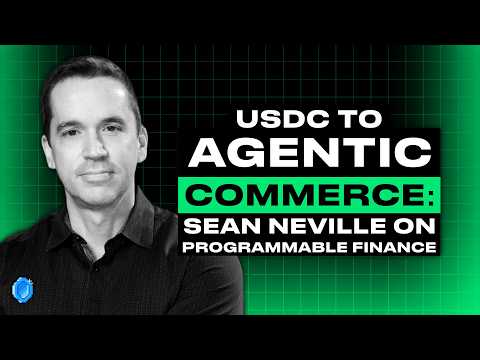
0:00 It's ultimately to me it's a trust problem. I think you know where I would see and it is why I was so excited about you know building circle and creating stable coins. I would like to see trust encoded in technology rather than be left to humans and the businesses that that humans create. but certainly not all businesses have the same view. Some have the complete opposite view and would rather trust the sovereign and legal contracts written in English enforced by judges. And so it's both and trust gets distributed across them all. Welcome to Tokenized, the show focused on stable coins and the institutional adoption of realworld assets. My name is Kai Sheffield. I'm the head of crypto at Visa. Welcome to another episode of our Agentic Commerce series. Back again stepping into the co-host seat, the CEO and founder of Mesh, Bam Azizi. Good to see you, Bam. How have you been?
0:50 >> Thank you, Kai. I think it's been a while, but excited for this episode with Sean. Sean, thank you for taking the time. >> Yes. Joining us today is Sean Neville, CEO and co-founder of Katana. >> Yeah, my pleasure. >> And so, two quick bits before we get into content. I need to remind you that the views or opinions of our contributors today are their own and do not necessarily reflect those of the companies they represent. Nothing we say should be taken as tax, financial investment, or legal advice. Do your own research. And a reminder, this podcast series is made possible by Mesh and Visa. All right, we've got an absolute legend in Sean here today. I learn a ton every time we we talk and and get to Rift. So, why don't we just jump into it? Tell the audience a little bit more about your background, you know, some of the the founding story of of Circle and and USDC before we get into to what you're doing today.
1:40 >> Sure. Yeah. So, my background is in software engineering. and prior to Circle, I built a bunch of things. when you know we were starting our first companies back in the circle is actually the third company that my co-founder Jeremy and I have you know been associated with together in our early days we were building out you know early companies in the early days of the web which I know ages me a bit but and then subsequently built some you know products for companies like Macromedia, Adobe protocols, languages, mobile apps but really gravitated toward you know what can we do to make finance run more like everything else on the internet and that's what ultimately led to circle. We found a circle in 2013. we didn't create USDC in 2013. Probably should have been more obvious in retrospect but it took us 4 years to realize that we needed to put dollars on blockchains and so did that in 2017 and yeah I guess the company is is 13 years in which is like 130 years in crypto years or something like that. but it's been, you know, quite a journey and then and then obviously have gotten very excited about what's next in finance with AI, which is what we're focused on at Kana.
2:50 >> But before we get to Katana, take take us back to 2017 and like I believe you wrote the first USDC smart contract. I think you were telling me you wrote it on a plane or there there was some story like you actually you created you what was what became USDC. How did things differ from what you thought at the time? Like you know looking back you know when you were launching this into the world like what were some of the surprises and ways that USDC grew and played out you know that were different than you expected? Well, when we started circle even before USCC, I think we had conviction around you know broadening access to the global financial system and that money is just data now. It should be able to run on open rails and and then specifically with USDC the form that money would take would be you know programmable dollars on on these underlying rails. But we thought both in 2013 we founded the company and we started working on USDC.
3:45 We thought for sure the first use case that would be tackled would be payments. and it obviously is happening, but it's not happening at scale even yet. It's we're still, it still feels like we're fairly early days. and so I think we were right about the overall vision, but in terms of how the vision played out and what the sequence is, we weren't right about everything. you know, the dominant use case for stable coins has still been crypto capital markets. and so that was one thing. Also, I think for USDC specifically, it was important to us to not create like a vendor coin like a circle dollar. but that this would be approached more like a like an open standard that multiple companies could build on.
4:27 and that meant founding a consortium. You may remember, of course, you remember you were involved in a lot of those discussions. and the idea was that let's just agree on a standard way of putting dollars on the internet and then we can all compete with each other in the market a higher level of value and grow the pie if we're not competing at just the the foundational level. And and there shouldn't be 20 different versions of dollars on internets that all trade against each other, but there should just be dollars on it on on the internet that we can all build products and businesses with. and so and so that you know that was the take. I still very much believe in open standards and approaching these things through you know through that lens. but and then the other thing of course is if it's a if it's a dollar on internet rails then that means that ultimately the United States government needs to weigh in on on how they define a dollar running on on these blockchain rails.
5:20 And so there was a policy initiative that started very early on. Thought it might take 10 years to sort of enshrine in public policy what a dollar running on blockchain rails would be. It took about seven years with Genius Act last year. so actually ahead of a schedule. but I think we did to our credit realize early on that there was a policy piece of this that was that was critical to invest in. But you have to remember too at the time the business model for the stable coin was a little questionable because interest rates were not super great. You know, we thought maybe it takes seven 10 years for those to turn around. and so it was a lot of conviction early on when we were writing you know the first white paper the first code kind of thinking through right partnerships and how distribution would work at a time when there wasn't really clear public policy huge regulatory hurdles to invest in clearing and then also you know the this fundamental business model associated with it and so all those things were challenges at the time I don't know if you can say hey we were right about this and wrong about as he can if you go into the details but ultimately I think you know we're pretty happy with the trajectory that it's taken.
6:28 >> Yeah, it's it's it's been you amazing to to see the success of the product and and I feel like people forget that like Genius Act happens much faster than most people in the industry expected like if if you would have told me you know 3 years ago that like we would have a federal law around stable coins like it's it's a dream for many people who were were building early on. what was the the founding story of of Katana then and kind of your journey you know post you know circle you know what was the initial problem you're trying to solve and like how did you first just go down the AI and energetic rabbit hole kind of what what pulled you into that space >> yeah I mean it's it's funny at that time AI did not nec did not yet mean large language models and so our we had pretty deep backgrounds in AI but it was from the ML side and you know building out risk infrastructure that is suitable to manage sort of conversion of all the fiat monies into stable coin monies and other things and you know not large language model AI.
7:26 But we did develop conviction that in the future you know stable coins made dollars programmable and AI actors ultimately make finance on the whole programmable and that we can sort of see a world where if we get it right if we get AI right generally speaking and sort of aligned with with our business interests then we could unlock a new kind of prosperity the likes of which we just haven't seen where most of the economic actors if not all the economic actors executing the mechanics of transactions would be some form of automated system.
8:00 and then of course as we started believing this large language model the whole world sort of embraced LLM I wouldn't call them agents necessarily but workflows with increasingly with large language models in involved in you know decision-m and so as that began to happen it sort of moved from thesis could you could you is it possible to connect an agentic actor or an AI workflow to a bank account or to a wallet or to a card and and now it's sort of progressed test where it's no longer a thesis. You can actually that turns out to be the easy part to really connect it. Doing it reliably in a governed way that's fully auditable and really controlled across multiple layers. That's that's a hard problem. And that's really the problem that we've zoomed in on with Kana is making it possible for for businesses, enterprises of all sizes who are building these agentic workflows to move money safely across multiple rails.
8:55 Of course, including stable coins, but not limited to stables. And then what's like what's your kind of starting framework for like the state of of Agentic today? And like how do you separate out I feel like when we've talked you know before like we spent a bunch of time on like the concept of a gentic treasury and like aentic treasury versus agentic commerce like you know a lot of people you know they think about a shopping assistant you know buying shoes. It seems like, you know, you've been focused on other use cases, you know, that you see as kind of more, you know, near-term or or you more productive like how do you look at the use cases that agents can then become economic actors around and then what was the process of narrowing down which of those use cases you you really start to to go after?
9:41 >> Yeah. I mean, I think ultimately AI actors you know, they'll certainly need to pay they'll need to pay each other. That's not happening today at scale. They're mostly paying for resources, access to resources, paying through API gateways and sometimes paying out to humans, things like this. Sometimes accepting Kins from humans, but they're not really agent to agent commerce yet is so early. but I think, you know, conviction is they will be doing that. They'll need to get paid for the value that they bring.
10:09 they'll need to to earn a return on the assets that they're managing. They'll need to handle fax. They'll need to handle clearing of sweeps across rails. they'll basically need to do all the things that a business relies on a bank to do for them. and so that's that's almost the easier picture to see in a way that they will need to have access safe access to all of these things. And that does imply in our view that things like compliance and risk infrastructure needs to be rethought.
10:34 Not not sort of tacking on an agentic API or an MCT server onto a a fundamental like ledger and compliance system built for human businesses because a lot of the agentic traffic looks like fraud or layering in the traditional sense. but really rethinking the fundamentals and in order for all of these things to be possible. But then the harder question is well what comes first like what's the sequencing? Does payments come before does this kind of payment say real-time payments for access to services come before you know more broader based say you know AP or you know legal agents paying human lawyers for reviewing the data sets well what happens first and what's the sequencing look like I think we made the same we sort of had the same view in the early days of this that we had with USDC which it'll be payments you know whether it's consumer retail commerce or whether it's B2B and you know we were sort of surprised to find that in terms of the automated systems where where Lolins are really involved in moving the money and not just sort of participating in the decision-m process but actually moving the money it was not retail commerce it was more B2B and the immediate use cases that we began to see were not so much payment flows but other things such as such as treasury management sort of liquidity management risk management you know yield you know these sorts of things and so it's similar on the way to what we saw with stable coins and that stable coins became very very useful as a way to say not just hedge risk but get out of crypto capital markets and but stay in dollars and so that you could get back into to crypto.
12:09 certainly a very valid use case but you know the real promise of the dollars was something more like global transfer of dollars around the world you know borderlessly for practically no money. which is a huge value prop but that wasn't the immediate wedge use case that we saw. was more like a a risk management instrument. And so similarly with AI you know the initial use cases and I think we just again take a very broad broad view of this but the initial use cases were more you know more in the the realm of sort of treasury management but it already expand from there. I do see more you know a lot more discussion. It could be a little bit of bias based on the lens that we have but I do see more movement on the business side than on the retail consumer side. I think there are a lot of challenges on the retail consumer side, but the common thread across all of them is really how do you clear trust? How do you make these things actual actually trustworthy and reliable and what happens if they escape their guard rails or their policy constraints like you know what does that what does that look like somebody underwriting that risk? and you know these are all the questions whether on the retail side or on the some of the enterprise money movement side that are the hardest problems to clear especially for stable coins now that we have genius. Used to be the regulatory piece was really the hardest to clear and now it's really on the AI side it's it's clearing the trust hurdle more than anything else. Stablecoin still has other issues. Liquidity is a big one. you know we get into the whole discussion of will there be 2,000 stables under Genius or will they be still be only two that have any meaningful liquidity. That's a whole other thing. but in AI, it's mostly about you know, it's mostly about trust.
13:47 >> Bam. How do you think about this particularly on the like yield optimization side? It feels like crypto and DeFi and like the ability to have many different liquidity pools and sources of yield. Like even before aentic was, you know, a buzzword, there were, you know, vaults that were enabling you to automatically rebalance and earn. like are there elements of of crypto today that kind of give a view in towards what more institutional treasury management that's automated could look like in the future?
14:18 >> I'm like I really love the way Sean framed it. They said like stable coin is basically pro basically a programmable version of money but agentic commerce or AI in general is going to program the entire make the entire finance ecosystem programmable. like the only part that I'm like I'm not 100% agreeing with Sean is like I believe like in near future 99% of transactions of agent e-commerce happens on blockchain. So maybe it's because like I'm very bullish on on blockchain technology. but I in in the interim would be like a hybrid situation that we will have like traditional rails and also stable coins for the settlement and payment and and whatnot. what I am interested because my background is identity like Sean I'm also a computer and data scientist and like like my my first focus was identity is still like today mesh as an identity play from from our perspective what I'm interested to see how it basically works out or plays out in the agentic commerce side is the identity side or as Sean mentioned the trust aspect of agentic commerce we have a traditional term in identity called AAA authentication, authorization and accounting. so the way I think about it is like the user or an enterprise or business would authent like authentic allow the agent to authenticate on their behalf to have access to their wallet or their bank account. And then the authorization is the level of access, right? So like you can spend like $100 or $1,000 and then this the accounting is the session, right? for how long you're going to have this authorized access to my account. what I think blockchain can do for agentic commerce beyond the stable coin is building that that decentralized smart contract that enables agents to be able to spend money on top of that smart contract. Meaning like they don't get like a blank check. They can spend money as much as they want. like that I think that part of identity or authorization will happen on chain which is not related to stable coin but that's something that blockchain can offer to the gentic world.
16:40 >> Yeah. You've Sean, you were working on decentralized identity in what 2019 and you know verifiable credentials and like all these like interesting approaches like do do you agree with that? Like is is this does this need to be a like global standard that is decentralized that is kind of an onchain identity solution for agents or is it more it's inside individual platforms where you're setting the rules and the policies and the controls and you don't necessarily need to have you know a blockchain that's enabling the identity like what is is there a role for decentralized identity in your you know initial implementation of agent spending? Yeah, I mean absolutely there is you're also reminding me that you know my past the internet is internet is littered with the corpses of dead identity companies. but but I I you know I do I do feel I do feel like a lot of the fundamental components that that you know we are excited about with identity I mean the to the concept just to recap for for people the concept of something like a verifiable credential or various ways of pointing to decentralized identifiers is just that I don't have to I don't have to rope in like a Google or or a deacto identity owner in order for me to prove certain things about myself. and and so we've had the we've had standardsbased approaches to leveraging cryptography to do those things. So we have the tech and we have a general set of approaches to it. Now there's debates about how the format that those approaches can take, you know, one way or another, but generally we have the tech to do it. I think that the the notion of identity and AI is a catalyst to leveraging some of those things because the other the the sort of traditional identification mechanisms we have for humans and businesses is not a really clean fit. And so so cryptography and decentralized identity primitives are certainly you know very useful.
18:34 that doesn't necessarily mean that they're all on chain. because then there's a separate piece where it makes a lot of sense for them to be on chain. and then you know the but I think there's somewhat of a hybrid view in that you know one of the hurdles to getting this more broadly adopted in the enterprise is getting a CFO to say yes and getting a compliance department to say yes and IT to say yes and so on.
18:53 and some of the things that that are necessarily in order to get them to say yes are kind of like the unsexy things that that are just, you know, required to to get into an enterprise. Things like, you know, permission management, but in a certain way and auditability, but with certain kinds of reporting capabilities and you know, things of this nature. And so satisfying some of those does mean that you need to take a little bit of a hybrid approach.
19:16 And so there's multiple kinds of systems to integrate. Over time though, I think that the value prop of some of these these identity primitives will become more obvious as we go and some of them you know even people who aren't like identity geeks like we are can can sort of intellectually grasp you know so today if I spawn an agent and I use ooth and I you know I log in with you know what and I'm not picking on it sounds like I'm picking on Google but most people do at least you know in the states they'll use Google as their login provider. So now Google knows every place that I'm logging in. which has always been, you know, one issue. Bigger issue is that as I'm spawning agents, they're all pretending to be me.
19:56 there is they don't really have their own identifier. and so if I'm spawning multiple agents, you you as someone interacting with my agents, you just see me as the identifier. You don't see this particular agent. This agent may have too many permissions for what it really needs to do. it may may have too few. if I need to re if sort of reject or you need to reject access based on identity kind of shut them all off at once there isn't this notion of you know sort of fine grain permissions attached to individual automated systems and again we have the tech to solve these problems it's been complex for humans to manage but I can manage these very very effectively so that's a long-winded answer but I do agree that this is a pretty key component in making this ultimately safe and clearing the trust the trust hurdle so Yeah. So, is is it fair to to say to me it feels like the state of the market that we're in right now and that you're you focused on and operating in it's it's almost like single player agents that sit inside an existing org and how do you give them the trust and the policy for me to meet? You're moving your own money inside of the org. And so you want to make sure that they're doing it the the right way, but it's kind of within a bounded environment that they're just they're employees that are working for the company that are doing back office treasury optimization, you know, instead of someone having to to track liquidity and kind of move it across different providers. And so the identity there, it's like it's it's an employee. They're never leaving the boundary. And so it's less of a like critical thing to be solved. Then the next step would be does an agent that you give you know some authority and ability to spend interact outside of your company and are they going to be paying third parties or interacting in other environments where it's you moving money from you to somebody else and there it's really important of okay well what's the identity of you know that agent as they're perceived by whoever the counterparty is and how is that shared if are going to you know operate. Is is that the right way to think about it that it's like you know internal in-house is like the first use case but then what is the kind of path for those agents to leave the walls you know of that treasury organization and start to make payments to third parties and like what challenges and complications that that enables.
22:18 >> I mean I think that's a valid way to look at it and that's similar to the intranet versus internet sort of analog. but I I think ultimately like intranet and internet it'll ultimately converge from the same tech stack and we'll be using the same fundamentals. So you know there is a lot of consultation now is like inside my business if I have marketing team running their work streams with AI and I have software engineers and I have finance and I have all these what am I allowing them to do?
22:44 What am I allowing them to access? What am I allowing them to do? And can I control the agents? you know, is there for like how do I get my arms around the shadow AI that's running inside my own business and apply controls to them? and then that's a separate but related problem to once I can get a handle on my own agents, how do I allow them to interact with your agents? like how do I and how do we discover each other?
23:07 How do I verify it's actually Visa's agents that I'm talking to? What am I what are we allowed to do? How can we look back and see what we did in a reportable way? which is a separate and harder problem because we're missing some of the basic fundamentals around just basic agent tech discovery and communication. There are lots of protocols that have sort of emerged as a protocol soup to potentially solve some of these issues but it's such early days that there isn't a common agreement on those. And so right now I think it is very much in this sort of intranet inside my business. How can I allow my you know my human capital to access my kind of token capital effectively and safely? But the the much larger and I think related but ultimately more valuable unlock is how do I do that that's in a way that spans enterprise boundaries across businesses and you know we have solutions for this on the web obviously we we all agreed ultimately not initially but we all agreed ultimately on what HTTPS is and we don't even think about it anymore we just you can build e-commerce sites and just your browser understands SSL in the background and has rooterts and understands what certificate authorities are you it used to be you'd have a little lock in your browser in the old days. So you at least get some visual signal and now we take it so for granted we don't even like look at those things but those things don't exist for agentto agent communication yet. and so there's just you know let alone for payments but if if payments are a subset of communication then there's some just cross enterprise boundary communication you know sets of agreement related to identity and also other things that need to be I think all these things will be resolved very quickly. I'm super optimistic about this. and it doesn't necessarily need to be an academic standard, you know, sort of endorsed by a standards group. It could just be a deacto standard that gains momentum and that that we, you know, that we begin to embrace. But but yeah, I think your framing of it in terms of internal versus cross enterprise lines is a really good one.
24:59 >> This episode, if it isn't already obvious, is sponsored by our friends at Visa, the leader in digital payments. Visa's tokenized asset platform or VTAP uses smart contracts and cryptography to help banks bring fiat currencies onchain. Whether it's launching a stable coin or deposit tokens or something else, VAP allows financial institutions to issue fiatbacked tokens, improving financial efficiency and enabling programmable finance. Check out the links in this episode's description to express your interest in VAP.
25:37 This episode is brought to you by Mesh, the first global crypto payments network. Connecting over 300 wallets, exchanges, and payments platforms. Mesh enables anyone to pay and get paid instantly anywhere in any asset. Mesh makes digital transactions seamless, secure, and universal, fueling the next era of agentic commerce. Learn more at meshpay.com/ai. It's it's really hard to talk about agentto agent commerce without talking about agent-to-ag communication. Like, it's just you can't just go straight to commerce. It's like right now as far as I'm concerned, I see very few examples of agents talking to other third party agents. Like when I use Claude or Codeex and I put a prompt in, you know, Claude is then spinning up other sub agents who are then kind of talking to each other.
26:32 But that's all like within that single environment. The thing that I'm excited about is, you know, I have a Hermes agent. Like I assume you have a Hermes or OpenClaw agent. How can those two talk to each other? And it feels like there's both like the underlying what is the protocol and the communication standard by which they interact and HTTPS doesn't really seem like the right you know thing for it. and then there's like, well, what is the interface? And I don't know about you and in in BMA, but like I've been doing a bunch of experiments like putting two agents into a Telegram group and having them like talk to each other >> and it's just so hard to follow cuz it's like you're a whole stream of like, you know, there's all of this conversation happening back and forth and then it's okay, how do you bound, well, how many turns are they going to take back and forth? like, you know, if it just runs away and like talks for hours, that's just going to burn a bunch of inference.
27:26 And then if you can't read every message, how do you actually confirm what they agreed on? And so it feels like there all these challenges to solve in just how two agents representing different entities or individuals can communicate. And however that challenge is solved, payments and commerce will be the easy part cuz it's like you know then it's if you have trust and you have them in the same place and you have an interface to control like you said commerce will just be like another form of communication. BAM how do you think about that? Have you guys done any interesting experiments around two agents talking to each other and kind of leaving the boundary of like one organization that that they're in? Yeah, it sounds dangerous to leave two agents to talk.
28:10 >> the infinite back rooms. That was like the the crypto concept from years ago. They would just like talk and invent new things together. >> That's right. So I I like I think there would be protocols to basically set those boundaries for sure. I think we'll have the problem is not like will we have a protocol, the problem is how many protocols we will have. Okay. How we can consolidate them. like it reminds me of like the the charger issues like every phone had a different charger. So at some point we had to kind of consolidate all of them to one protocol one type of like hardware.
28:46 So I think we will have we will have some consolidation similar to early internet as Sean mentioned that we had like many different form of internet and then they all like merge and then the protocol that everyone is using right now is HTTP. We used to have like many different protocols for communication. I think we'll have like you have one protocol that wins like 98% of the use cases and that protocol happened to support commerce as well. so like #x42 or whatever you want to say but that's I think where we are heading.
29:22 and I think agents are going to communicate over HTTP. So I think there would be some sort of like protocol or amendment that will be added to the CB. That's my bet. But I think some sort of consolidation needs to happen otherwise it would be a wide west. Sean, you you've seen this over decades. There's the the meme of you know you there are 14 protocols you know we need we have one more to unify them. Now there are 15 protocols like what what actually how do you think about the interplay between the application layer you and the protocols and you know if you are trying to solve problems you know for your businesses and you're an application you know for agents like is that you support all of the protocols and go like a multi-protocol approach is it the successful protocol emerges from the successful application or like what are some of the lessons in in like internet history that you draw on as you think about that interplay as you build an application for agents that someday will need protocols if you're going to, you know, go to outside the boundaries.
30:23 >> Yeah, that's a big question. I think, you know, it's interesting because I think it's actually more fragmented now than it was a year ago. meaning there were fewer threeletter protocols to look at a year ago that were all focused on the same space. I think the thing that might be different this time and and I I hope that it's not but I think the thing that might be different relative to the the earlier playbooks is companies large or small so incumbents as as well as startups that are really focusing more on protocols and application space are not really sure where the value was going to occur. and I think there was you know there was a sense not unified but there was a sense that you know in building out things like web standards for for how HTTPS HT and HTTPS could work. This was in the days of like, you know, when America online seemed to have more content for the average person than the entire internet did because the internet was, you know, mostly for academics and and but you know, sort of having a vision for what the open internet would look like for content and for people expressing their views without gatekeepers and so on and so forth. I think there was ultimately a bringing together at the table a bunch of key parties that normally didn't like talk to each other like Microsoft and IBM and Sun and you know the the sort of incumbents in the space who had different views on what the protocols should be and in some cases even implemented different levels of support for the protocols that were meant to be implemented in a standard way. but ultimately came to realize that agreeing on this protocol layer the foundational layer will unlock a new kind of business opportunity for all of us to compete headto-head. but we don't necessarily see value occurring at the protocol layer. there was a time when we thought value would occur at the browser layer and that's what the browser wars were about. Like this would be the unified whoever won the browser war would be a winner or take most if not take all to who controls the customer relationship with the with the internet. And now there's there's practically no value at all in the browser. It's a it's a layer higher. And so I think that the question with this is where does the value really crew?
32:24 is it will it be the case that there's actually value at the protocol layer for owning you know agentic identity and commerce protocols. my belief is it needs those things need to be built on open standards that we can all contribute to and support and that the value would occur at a higher layer but that's not necessarily agreed upon by say you know major players who are one you know a cloudflare might support 12 different things and a Google won't agree with any of them or you know whatever whatever it may be and so we're kind of in this early stage where you know the question is how do you resolve that I think that it will be use case and and application driven and and it is the case in the early days in order to realize those you do end up needing to support multiple things as well as possible which makes it hard to enforce safety and policy across all the rails.
33:13 but that's where that's the world that we're in right now. >> But then with within that framework like it feels like what's different this time is you've got the model and the intelligence layer which is just this this massive space that you know today that's that's where the value is is acrewing in terms of open AI and anthropic. How do you interact with like the model labs and models themselves and like what what's your thesis on like the role that they will play you know when you're building on top of them to some extent of I I assume that you know agents that you're going to enable you know for your clients are going to be multimodel like how how do you how do you see the role of of models you know going forth >> yeah I mean I think there's even a discussion on the model layer like does the model sit in the front this is an extreme example example, but does it sit in the front or does it sit in the back?
34:03 you know does using cloud desktop for knowledge workers replace all usage of web browsers and SAS dashboards and they could just build their own dashboards and co-work now and and Excel which has had a crazy resurgence now as well and sort of tabular input alongside text and voice and so is it like front and center and all the things are visible in this this very dynamic fluid sort of LM space or is it the other way around that things begin to get unbundled and we see different kinds of experiences and the LM is really more in the background ground and I don't know the answer to that. I there's a lot of a lot of discussions that you know where it goes but might might be all of the things. in terms of our usage of models I I'll tell you where we started and I'm not going to go so far as to say it was wrong yet but where we started was this idea that what you really want from a set of models is kind of like a kitchen full of precision tools. And so if you're going to cook a gourmet meal or bake a cake or whatever you're going to do, you have the right tool for the right job and you don't really want a Swiss Army knife to bake the entire meal. And so the a single like powerful large language model is like a giant Swiss Army knife. And so it makes sense to be able to choose the right tools for the job for economic and and speed reasons as well as capability reasons. And so orchestration between those becomes really powerful that diminishes the value of any one LLM provider because you then you have an assortment. and u so that was our original thesis. I think today the general consensus is that's not right because you could point to Fable well used to be able to point to Fable. I don't know when this will come out but but you know Fable was on the table briefly where Opus 48 or GPT55 and they will do everything and it's really just a matter of processing power and so if you can afford it and you can throw the processing power at it then that that Swiss Army knight is your kitchen full of precision tools. and so I'm I'm not willing to say that we were outright wrong, but that's the way things look today is that these models are like so incredibly powerful that you don't necessarily need that level of you know there's a time when we were fine-tuning the early, you know, the early models and that proved to be mostly a waste of time and money because of the advancements in these other models. But I would imagine more a world where you know if we're doing specific things like setting up a harness with all the data and all the context and and all of the proper you know connectivity to tools and the light for say investment management well that's a very different structure compared to things like executing effects markets. and so those things require certainly different kinds of ways of looking at data and putting them into the right context to be effective and reliable. But it it is is also even though it looks like today that the intelligence is not the the bottleneck and that you can just rely on the intelligence that's available that it will be the case that you'll want to you there'll be the advantages in choosing a tuned model at the intelligence layer as well.
37:02 >> Yeah. Super super interesting. So it's almost like that the harness in in that scenario what I hear is like the harness is actually you know creating the most value and the difference between >> and I think absolutely. Yeah. >> Yeah. the difference between using just one model to try and run your treasury management strategy versus using a harness that has the right model with the right tools with the right data sources and then it feels like isn't there also a big cost consideration bam I feel like you know a month or two months ago people were in this honeymoon phase of oh like these models are super powerful I could build anything and then now all of a sudden it's model orchestration token ROI like people burning through their budgets like how how do you see that you know playing out and like you know if you're building use cases for aentic commerce or a gentic treasury like do you need the most super powerful frontier intelligence you know to tell you when to move you know $100,000 from this pool to this pool you know when the rates go up like is can can you do that at like a a better cost per token bam how do how do you think about that >> they call it token hangover right so drink so much of token and then now you're hangover. So I think as far as agent eiccommerce less concerned because the the level of like intelligent you need to transact when it comes to like the final like or the last mile delivery is not that much.
38:30 So like whether the agent is super intelligent or just a normal agent you want the rail to be there to enable them to be able to pay or do things or transact the way that they want. but I think it would be important from u that perspective that this agent be able to communicate with one another in the most efficient way. So the way that you mentioned that like if you just leave two agents without any boundaries so they start talking and spending a ton of tokens for just like spending like two cents. you really want to kind of have those boundaries to make sure that they're not like there is no diminishing marginal return on those transactions. so that's that's from financial perspective. From like intelligence perspective, I think I I agree with Sean that we will have like the thesis still holds water that we'll have different agents. so for instance, I'm seeing a lot of agent to agent transaction is because one agent for instance wants to buy a pair of shoes. So it's basically built the way or the most efficient way to transact but also is not the best agent to read all the reviews like what type of shoes should I buy, right? So, they would go and pay another agent and they spend like $10 or maybe a fraction of a dollar to read all the reviews and come up with an idea like what is the best shoes for for this specific agent. and if that similar general like purpose model like agent wants to do the same thing, it has to burn more than like $10 token or a $100 token. So it makes sense for that agent to just go and buy that versus just basically do it itself even though it has the capability. But from ROI perspective, it doesn't make sense to burn all the tokens to just buy like a $10 or $20 shoes, right? So that's that's how I think it will basically force us toward not having one general purpose model agent. we'll have like multiple agents that they're good at what they're doing. And it's basically traditional like buy versus build, right? So buy versus do. So instead of us me doing it, which cost me under dollar, I would go and then pay $2 to this specific agent and that agent will do that for me. and that that will basically increases the number of transaction we'll have on the agent commerce. so it forces us toward that that work. I think first time Jeremy co-founder of circle the other co-founder told that they like the agent eiccommerce is important because humans they do two transaction a day agents can do 2,000 transaction a day or a second and we have 5 billion human being connected to internet we'll have hundreds of billions of agents connected to internet so that's that's where the the agent commerce boom will happen from my perspective I I want to come back to the the Agentic Treasury use cases of of just kind of where the market is today. Like who are the the types of companies that you see as like the ideal customer for this that should be experimenting and using it right now?
41:46 Like you isn't a prerequisite that they start with they already have stable coins on their balance sheet and so it's it's a function of you have stable coins and then now you're trying to optimize the yield in those stable coins. Is it a company that has a fiat treasury that wants to optimize the fiat treasury and you're doing it in fiat or you're taking a fiat treasury converting into stable coins and optimizing like what give me a sense of like what what is the type of business that should be working with you all to implement and start to use aic treasury you know that you think it's going to be the first wave of success cases that then you know make this a real category that more CFOs and treasurers you know start to gravitate towards >> yeah I mean a lot of the so ultim imately I would say we think our end users will be agents themselves.
42:32 We're just not there for all the reasons we've been talking about. We're not there yet today. My agent can't even find your agent and safely talk to it. let alone let you KYA and onboard to a bank. but we do think that's where we're going. I mean that's why we're pursuing the the regulation that we're you know we're pursuing at the same time we're building out the product. But today for those who are beginning to build these agents and be beginning to build these automated systems it's it's either the case that we sort of found they're either there's there's kind of two axes stable coin native and AI native and the mixture of both is perfect for us but usually are more one than the other and so on on the agentic side there are people that are beginning to connect automated workflows for various use cases but you just say maybe it's for things like you paying suppliers for instance in kind of a general use case and they have a number of underlying rails and accounts and existing mechanisms for paying their suppliers in different currencies and as they begin to automate it they run into you know problems around just integration how they connect it. How does an agent manage all these things? How does an agent turn dollars into euros and you know euros potentially into back into stable coins and then you know and so on and so forth. and and so a lot of it is being able to do that and then being able to do it safely so that the policies that they that they enforce and policies meaning things like counterparty rules or trading window rules or or timing and velocity and and you know you know these sorts of things could be sweep rules as well in the treasury case. So how do they do that effectively? And then in those sorts of cases we are able to answer them agentically. So agentic workflows are able to handle all the integrations including clearing and sweeping between different stables and on and off ramps into fiat and and understanding how a particular payment needs to be made in including currency conversion. But really the layer that we're focused on most is how do you do that safely in an auditable way across all the rails stable coin included.
44:30 On the stable coin native side, it's more that companies have kind of leaned into stables, usually one of two that have, you know, sort of significant liquidity today. and and so they find themselves kind of an idle flow, an idle cash flow problem. which is that if you have dollars typically sitting on in a corporate treasury then you at least invested in short-term treasuries but if you have USDC for instance it's unclear if you're traditional in the tra traditional treasury function what you do with that you're not trying to get ven returns you're not looking for you know like how do I optimize across all my vaults it's more like how do I get just the equivalent of my 90-day treasuries that I used to have so they get my three and a half% or whatever it is today and so in that case because we are able our in sort of agentic framework is able to handle multiple rails. It's a combination of crypto you know lending vaults but also treasuries and money market funds and traditional assets. It's a blend of of the assets.
45:29 and so so yeah, I don't know if that exactly answered the question, but usually it's companies are not really AI native and also stable coin native. If they're AI native, they often don't even want a stable coin. They just want a dollar to work effectively. And so stable coins are the solution for that in many cases. but they just want to view that as a dollar. And so then the clearing capability becomes really important. So if Tyler and USC are trading against each other and one's 98 cents and one's a dollar one, they don't want like marktomarket mechanics. They just want to look at it as a dollar. And so we can solve the sort of singleness of money problem for them on the back end. and on the other hand, if people are looking more like I'm trying to automate the system, but I really needed to be auditable in this way and handle hand report to my board so it understands the intents that were executed by this. How do I do that? We can solve that problem too with the governance the governance plane.
46:18 >> Then how how is it different between like fiat only versus let's say stable coin only to just like make it yeah you very simplistic cuz in a stable coin context you can give the agent a wallet and then you can create a set of policies around you know what that wallet can do and and enforce those policies you know which feels like that that's one of the coolest things that that stable coins have. What's the equivalent of that with traditional fiat accounts? Yeah. And how how do you manage like is it just for you all it would be much more convenient and more flexible and there's a lot more that you can do if it's onchain which seems like that's Bomb's thesis or is there a world where even if a company says I refuse to have any exposure to any stable coin I just want to do everything in fiat but have the policies and the auditability you know for my agents to move money. Is that like okay we we could solve that too but it's harder like where where does the the kind of unique aspect of of stable coins come in at the the policy layer?
47:20 >> Yeah it's the concentration of trust answer really. So so you think about four layers where policies are enforced one is just AI guardrails which are almost like suggestions frankly because there they can be escaped so easily but I think that that space will mature as well. So there's an AI guardrail layer. there's a policy engine layer where if you put all the capabilities in the policy engine, you're trusting whoever runs that engine. In reality, there may be multiple engines, but then still it's a federation of of vendors you trust. So so there's that layer. Then there's the cryptographic layer on the wall.
47:54 It's like if you can encode policies in a TE, which is how we manage our underlying stable coin infrastructure, then we can't possibly move that. Our policy engine can't possibly move those funds, but neither can your agent. They have to they have to agree. There has to be, you know, based on how you define your policies. They sort of enforce this cryptographically at the wallet level. So, you don't actually have to trust your policy engine because of the way crypto the cryptography works. And then the fourth layer is on chain itself. So, there may be rules that are encoded in a certain kind of transaction that your agent is attempting to execute. Even if the the policy check is done, your agent says yes, the guardrail says yes, it may still be that with this kind of what you're trying to do on chain. So, you know this is kind of programmable onchain representation, it still is not permitted. So there's if you kind of look at those four layers, if you if you take off the onchain and the cryptography layer and you're looking more at like custody, you're just concentrating trust in two layers, the guardrail and the policy whoever's running the policy engines. And so and you know varying various enterprises may have different views on that.
48:56 typically the way that things like how do you how do you trust a policy engine is sort of like well they're regulated the same way. And so there's a regulatory framework to say if they if they violate their fiduciary duty then they're their implications for that that are enforced by the sovereign who has ultimately the ability to carry guns. and so it's it's ultimately to me it's a trust problem. I think you know where I would see and it is why I was so excited about you know building circle and creating stable coins. I would like to see trust encoded in technology rather than be left to humans and the businesses that that humans create. but certainly not all businesses have the same view. Some have the o complete opposite view and would rather trust the sovereign and you know legal contracts written in English enforced by judges and so it's both and trust gets distributed across them all. So, so if I'm hearing you correctly, it's there's an argument that the more trustworthy way of having four layers of trust for a jetic treasury movement is doing it on chain with stable coins. you know, because you still have, you know, you can have off-chain kind of legal enforcement and guardrails, but if you're doing it purely offchain in traditional fiat, you miss some of the cryptographic verification that you can have when you have a wallet, when you have a policy engine that runs in a TE and like that that just doesn't really exist in traditional financial products.
50:19 which is fascinating. And it's like if if the goal is a gentic treasury, like even without realizing it or thinking about it, stable coins are better positioned for a gentic treasury to work in a more trusted way than traditional fiat. And bam, that's it seems like that's consistent with what you were saying is like you think that it's the the smart contract and the functionality you can build into onchain assets. Like is is that kind of your your thesis as well? But you know, Agentic drives the need for those properties that stable courts have.
50:48 >> That's correct. I I think every asset will come in chain and every logic will come in chain and this specific logic and rulebased decisions are no exception. So I think that like blockchain and smart contracts is going to run that layer. >> I agree. I think they're catalysts for each other. Honestly, >> I think there's certain kinds of agent commerce that are not possible without this kind of without you know cryptographic and onchain solutions. And then vice versa as AI commerce really begins to take hold then it's a catalyst for you know they're a catalyst for each other is it increases the adoption of blockchain solutions more blockchain solutions we have the more AI solutions we have that can leverage those effectively more because it there's risk still involved in onchain solutions of course the risk is just in a different place and it comes down to things like where do you manage the signing and how do you how do you handle your key management and things that are also can be addressed but are not typically the way an existing enterprise finance department does things today. and not because it's not a good way to do it, but because it doesn't clear the hurdles that you need to clear in order for it to be approved in an enterprise.
51:53 And so, so I think the more we see the power and the value of AI, the more that these other infrastructure sort of blockchain infrastructure hurdles will be cleared because it's not possible to do the first thing without the ladder. And, so they work they work together. >> Yeah, >> that was not the most articulate explanation, but >> I I think it's it's great. It's a it's a great, you know, way to end. We we could talk for hours, you know, on on this topic and we're going to have to have you, you know, back in a few months as just the pace that, you know, the entire industry changes. So, thank you so much for listening. Sean, where can people learn more about you and and Katana?
52:26 >> Katana.com is a good place to to keep tabs. We're on all the things, but that's that has all the links. >> And and Bam, what about you and mesh? Yeah, Mesh Pay on LinkedIn and X.com or bam as easy mesh on on X or Telegram. >> And you can find me on X at Kai Sheffield and visa.com/crypto. So if you haven't already, please subscribe to tokenized on Apple, Spotify or wherever you get your podcasts. And if you enjoyed this and you want more, leave us a review. It really helps others find the show. So thank you Sean Bam. Always a great time, you know, talking to you both. And you know, we'll have more soon. Take care.
53:11 >>
Summary
- Trust in technology is essential, with a preference for encoding trust rather than relying on human systems.
- Stablecoins, like USDC, were created to broaden access to the financial system and enable programmable money.
- The initial use case for stablecoins was expected to be payments, but they have primarily found utility in crypto capital markets.
- AI is seen as a catalyst for transforming finance, allowing for automated and programmable transactions.
- The podcast discusses the need for robust identity solutions and trust frameworks for AI agents to interact safely and effectively.
- The integration of stablecoins and AI can enhance treasury management, providing a more trustworthy and auditable financial environment.
- The conversation highlights the importance of clear protocols for agent-to-agent communication and the potential for a hybrid approach between traditional and blockchain systems.
- Companies exploring agentic commerce can optimize treasury management through stablecoins, leveraging their programmable nature for better financial efficiency.
Questions Answered
What is the role of trust in the development of stable coins?
The speaker emphasizes the importance of encoding trust in technology rather than relying solely on human systems and legal contracts. Different businesses have varying perspectives on trust, which influences their approach to stable coins and financial systems.
What is the relationship between payment systems and broader financial services?
The speaker discusses the sequencing of payment systems and other financial services, noting that B2B transactions and treasury management often precede consumer retail commerce in the adoption of automated systems. This highlights the evolving use cases for stable coins beyond simple payments.
How does identity impact the use of agents in payment systems?
The discussion revolves around the importance of identity for agents interacting outside their organizations. Understanding the identity of these agents is crucial for secure transactions with third parties, and there are challenges in managing this identity as agents move beyond internal systems.
Where does value accrue in the context of digital protocols?
The speaker reflects on the historical context of value creation, suggesting that while there was once a belief in value at the protocol layer, it is now seen as accruing at higher layers. Open standards are necessary for building effective protocols, but there is disagreement among major players on the best approaches.
What challenges do organizations face when implementing automated payment systems?
The speaker identifies integration issues as a significant challenge for organizations building automated payment systems. These systems must navigate multiple currencies and ensure compliance with various policies, which complicates the management of agentic workflows.