Section Insights
Cybersecurity Concerns in Banking
What are the current challenges facing regional banks in cybersecurity?
Regional banks are struggling with cybersecurity as they face increased activity from agents using online banking. They lack the resources and standards to effectively differentiate between human users and automated agents, leading to potential vulnerabilities.
- Smaller banks are not well-prepared for cybersecurity threats.
- The absence of agent standards complicates user verification.
- There is a race to implement measures against automated agents.
Corruption in Emerging Markets
How does corruption affect technological services in emerging markets?
In emerging markets, organizations providing simple technological services often engage in corrupt practices, channeling funds into political patronage, which complicates the integrity of these services.
- Corruption can undermine technological advancements.
- Political patronage networks can divert funds from essential services.
- Emerging markets face unique challenges in tech implementation.
Investment Challenges for AI Startups
What challenges do AI startups face in securing investment?
AI startups struggle to secure investment-grade customers and often need to raise significant capital upfront to access cloud services, which limits their operational flexibility and growth potential.
- AI startups require large funding rounds to compete.
- Investment-grade customers are hard to secure without substantial capacity.
- Raising capital upfront can be a barrier for many startups.
Understanding Contract Types in Cloud Services
What are the differences between on-demand and reserve contracts in cloud services?
On-demand contracts allow immediate access to cloud services but come with higher risks and costs, while reserve contracts lock in services for a longer term, providing stability but less flexibility.
- On-demand contracts offer flexibility but at a premium.
- Reserve contracts provide stability but limit immediate access.
- Understanding contract types is crucial for managing cloud service costs.
Political Risks in AI Development
What political risks do AI companies face?
AI companies are politically exposed due to public backlash against technology misuse, which can lead to regulatory scrutiny and impact their growth and operational capabilities.
- AI companies face significant political risks and public scrutiny.
- Misuse of AI technology can lead to regulatory challenges.
- The supply chain remains a critical factor in AI development.
Market Dynamics in AI Investment
How do market conditions affect AI investments?
Market conditions can fluctuate dramatically, impacting investment strategies. Investors are advised to focus on long-term trends rather than short-term volatility, especially in the AI sector.
- Market volatility affects investment strategies in AI.
- Long-term trends are more reliable than short-term fluctuations.
- Investors should be cautious about leveraging margin in volatile markets.
Risk Management in AI Investments
How do firms manage risk in AI investments?
Firms are adopting value investing strategies, focusing on companies with strong technical foundations while avoiding margin leverage to mitigate risks associated with market volatility.
- Value investing is a key strategy for managing risk in AI.
- Avoiding margin leverage helps reduce exposure to volatility.
- Investors should focus on companies with durable technical modes.
Bottlenecks in the Automotive Industry
What challenges do automotive companies face in adopting new technologies?
Even if leaders like Elon Musk innovate successfully, other companies may still face bottlenecks due to their reluctance to adopt bold strategies or change operational practices.
- Innovation by leaders does not eliminate challenges for others.
- Bottlenecks persist in the automotive industry despite advancements.
- Adopting bold strategies is crucial for overcoming industry challenges.
Developing Protocols for AI Agents
What is the significance of creating protocols for AI agents?
Establishing protocols for AI agents is essential for enabling communication and collaboration among agents, ensuring they operate effectively within defined parameters set by their users.
- Protocols are crucial for AI agent communication.
- Standardized communication can enhance agent collaboration.
- User-defined parameters help manage agent behavior.
Social Dynamics in AI Agent Networks
How do social dynamics influence AI agent interactions?
Social dynamics play a critical role in AI agent networks, where trust and vouching among members dictate interactions and ensure compliance with user-defined limits.
- Trust is fundamental in AI agent networks.
- Social dynamics influence agent behavior and interactions.
- User-defined limits help maintain control over agent actions.
Transcript
1:11 Okay. And here we go. Good morning. It is Thursday, October 22nd, 9:04 a.m. Nathan, good morning to you. >> Good morning, Picash. How are you today? >> very good. It seems >> still feeling comfortable in our banking situation. indeed like the cyber apocalypse which started yesterday is gathering speed and we are now seeing all kinds of crazy stuff happening. So exciting times really exciting times.
1:43 Yeah, I mean I think you've been following it more closely than I have over the last 24 hours, but I did see something today saying that basically exactly what we were talking about yesterday is starting to come to the four that these kind of smaller, less well-resourced, presumably not super cyber hardened regional banks are reporting that not necessarily that they're being hacked. And you know, please unpack with more information as you have it here, but what I saw was just like they're seeing a lot of agents using the bank account online. They don't really know how to deal with that. They're not very well prepared to separate agents from humans.
2:26 So, how do they figure out who to block? our lack of an agent standard to have, you know, some sort of approved agent lane here is definitely rearing its ugly head. And I'm feeling like that is increasingly one of the highest priorities because I I can see these guys going to race to ban the agents, but then you know there's going to be all these counter measures and you know evolutionary pressures to create agents that will get around them and look more human and that's not good and we've talked about that a bunch as well. So it's going to be a little it's going to be a little dicey out there I think for a moment at least. I did have one interesting experience the last couple days that kind of bears on this a little bit, which was just trying to get my main laptop agent, the one that has, you know, all my deep access and, you know, can ride along shotgun in my main Chrome instance. Just trying to get it to reby something on Amazon proved to be in my account logged in through my browser did prove to be kind of difficult. Like they really don't want agents on the site. they were throwing up the check this box to, you know, prove you're human. Not the Google one, but you know, their own. I've already seen the Google one a million times. This is presumably the same basic idea, but the Amazon flavored version.
3:41 they were throwing that thing up every screen basically. It seemed like as soon as I would click it and then I'd be like, "Okay, I clicked it. You go ahead like finish the rest from here." And I had to click that thing several times. and Claude being the good boy that it is, you know, didn't want to just click that button and and override it. At least not, you know, in this case with the context it had on hand. So then I was like, "Hey, I green light you to hit this one button in Amazon for things that I've explicitly told you to buy. you know, this should not change our general policy. Like you still shouldn't be doing this in general. I appreciate you're not doing this in general, but for this one thing, it's okay." And then Claude was kind of like, I don't know if I'm comfortable with that. so I didn't push it too hard, but bad for Amazon, it seems.
4:28 I I still can't get over it. It seems so shortsighted, it's unbelievable. Bad for the dynamics. does show that the banks might have something they could do. I would be much more sympathetic to banks doing this than I am to Amazon doing it. It certainly makes a lot more sense for them from a riskreward standpoint. but yeah, I don't know if Amazon's licensing that technology or if Google's would work, if there's like some really quick patch that the banks could put in place. But even if they do, it's not a great long-term solution because again of these competitive evolutionary pressure dynamics that seem like they are about to get pretty intense. and this is one of the very few things, right? And we've talked about how like I don't really want to use any model but Claude or GPT right now because those are the ones that I trust based on all the benchmarks around how hard they are to jailbreak and misuse and prompt inject and whatever. but this is the one thing where I'm like well okay well maybe dot you know dots would like click that button or maybe Grockbot doesn't care, you know, would would click it.
5:32 but I still don't want to bring you know Grockbot onto my main laptop and give it all the access that I've given Claude. so I guess I'm probably just gonna have to live with a high friction Amazon experience for the moment. And I think I am at least going to one more bank. You know, I think I got to at least diversify a little bit based on what we've seen in the last 24 hours. But tell me more what's caught your attention and what if anything we can make of it. So I think I think the most interesting thing that I saw also because I am a devoted user of Cloudflare is this this is the CEO of Cloudflare. Cloudflare is a basically a cloud you know hyperscaler type provider of cloud services. So PHP is a very popular programming language which was used in like you know early 2000s.
6:21 Facebook famously was built off PHP. >> Yeah, I know it well. Every variable had to start with a dollar sign. >> Nostalgia for PHP if nothing else. We're getting out of this. >> And so PHP had several very severe >> bugs which can be exploited to do what is called RSC, remote code execution. And once you can do remote code execution, you can do whatever you want, right? you can you can basically rewrite everything on the on the server.
6:56 And so in the 10 hours before it was publicly announced across the CloudFlare network, we saw thousands of attempts to exploit it. That jumped to tens of thousands in the 45 minutes post announcement, hundreds of thousands within two hours and millions now. So millions and millions of you know agents trying to exploit within hours right within hours. >> And how much do you understand about the mechanics of this? Is this something that is as simple as you hit a URL from the outside and just in the query string parameters you can deliver a payload that breaks everything basically. That's pretty wild.
7:40 >> Yeah. In in short in in short it's it's that you you you you send you send a query in and you can basically have the the ability to rewrite whatever you want on the on the server. So fair fairly severe, right? and so this was one. and then there was a company called Railway Railway, you know, and it's very unfortunate. They the the founder appeared on a podcast maybe like last week and he was talking about how like they only had like a very very small team and they were running everything with agents and Railway gets hacked. not not very clear what was doing the hacking and they and they're down for you know they're having issues and they basically what happens is they are storing all of the API keys that people use for openai and anthropic and you know open router all of those keys are stored inside railway and then when railway serves you your page and you have like a an AI feature there they will use your account API keys to use to to deliver that and what's happening is basically these agents are attacking railway getting access to people's API keys for open router and opening AI and anthropic and then using the accounts of those people to create more attacks. So the AI that's being used underlying is actually stolen AI AI AI tokens stolen from someone else. It's kind of like a stolen car using being used for a robbery. They're using they're using stolen cars for the robbery and so first they're stealing the cars and that's what's happening in in in railway.
9:20 so railway announced and then I saw this very interesting post from this is the founder of open code and he responded to the founder of railway the railway post. I'm sure you're all better than me at this but just some of what we've seen if it helps they're not going to stop. So, Open Code got hacked last week and again they had u they were getting drained. So, their their customers were getting their API accounts drained. It's going to get increasingly sophisticated and they're going to go after every surface of your system and all of your employees. Any old projects you've long forgotten about will be found and used against you. The only reason we're surviving is because we have agents going 24/7. We're still barely sleeping.
10:05 Good luck. sorry you're dealing with this, but it's really it's a collective problem we're all facing together. So this is notable because this guy is living about a week or two in the future, right? And so this is what the rest of the industry is going to be facing in the near future. So basically you're you're not going to see you're going to see the security cyers people not sleep for you know a long period of time while u all of this take gets taken care of. Let me show you another post from Aaron Levy. So Aaron Levy is the CEO of Box. And so he he responded to one of these posts.
10:45 >> this is some some Galaxy brains spin here. Please continue. >> If you wanted to know all the jobs that AI will produce, look no further than cyber security. This is going to become one of the biggest investment areas for enterprises going forward. And even as the work becomes more agentic and autonomous, you will need more talent to point the agents at the most critical work, review findings, patch systems, and respond to incidents, and more. Lots of opportunity right now for the systems that protect data and enterprises, as well as the professionals that are deploying them and protecting organizations. It's only going to get more wild out there.
11:22 >> So, this is this is Aaron Levy, who is the CEO of Fortune 500 company, Box. box stores your stores enterprise data you know so this is this is what's going on and I think there are some >> this is the new pivot right I mean it's so this is so absurd really I mean I don't doubt that like really good cyber security people are going to you know cash in on this trend like there's no you know I'm sure that there's a bidding war for great talent but like the idea that this is going to create jobs is honestly a bit ridiculous because the time scale is just absurd, right? And this is like, oh, who's going to who's going to pivot into these jobs? Are we are we going to go get like the content marketers that are currently out of work or the graphic designers and be like, "Oh, you know what? You should this is the new learning to code is like learn to become a top tier cyber security professional that can contend with these like basically super intelligent agent swarms. This is like I mean the problem is real. Again, some people are going to make bank on it. I have no doubt about that. But the idea that this is going to be some sort of sponge that's going to like soak up a lot of talent. there's just not that many people that can do this. The bar of like the the competence level that you need is clearly rising in real time. So it's not like you can, you know, even the people that have done this historically like clearly they haven't done a good enough job historically to be ready for this moment. So, like they've got a lot of, you know, self-development, skill development work to do as well. And I'm not faulting them for that. I mean, but just the idea that you're going to have like some sort of boon in hiring. These people don't have time to hire right now. They're going to plow everything that they have into agents and they're going to put agents on top of agents, but much more so than I'm going to hire I'm going to go do a whole hiring process to bring a human in to sit on agents. I'm just going to spin up an agent to to supervise the agents. I I mean I generally think highly of of Levy. I'm you know I'm a follower. I did a podcast with him. I think he's smart.
13:27 But like I don't know dude this is not it's really it's really a stretch to try to spin this as like good news for jobs. I have to say next Microsoft threat intelligence declared and this is amazing because Microsoft is a big business in China. the China state aligned threat actor Storm0940 used the agentic AI penetration testing framework Rex to automate attacks targeting hundreds of organizations globally across a broad range of industries. Microsoft threat intelligence assesses that storm0940 was responsible for the recently disclosed connectwise supply chain compromise of a multi-tenant application etc etc etc. So, this this is a declaration that they they they traced at least some of the hacking to a a Chinese-based actor. this one I I think is notable in a couple ways. I mean, Microsoft is maybe not unique among American big tech companies, but like pretty close to unique among American big tech companies in actually having a pretty decent relationship with China broadly. when I was there, I had the chance to go to the Microsoft office in Beijing, which is like a high-rise, you know, major building and they have R&D there.
14:51 Outlook is notably not blocked. So like you know you can't actually to be clear when you go to China if you take your roaming plan. What I learned is that your Gmail works just fine. but if you're worried about that or you might have a backup people advise get an Outlook account because Outlook is not blocked because Microsoft is like a friendlier relationship. I don't know what the history of these terms is and how they've used them but I'm always a little bit I mean I think it's there's reality to it. I don't mean to deny the reality to it or be naive, but when we see these like state aligned terms, I'm always kind of questioning what that means. It definitely feels like the the old like Russell Russell conjugation trick, you know, where it's like our patriotic, you know, tech leaders, your like party aligned you know, tetoies or whatever. I'm not sure what evidence they have. I haven't obviously processed any of what they're claiming here, but I think we should be pretty careful about saying that this is like state aligned or state back. I mean, to some degree, everything is state aligned in China.
15:57 >> We should be very careful about blaming the Chinese government if indeed this is like a criminal group. I, you know, I would hope that we would be working with the Chinese government to like get this under control. And I think they definitely have interests in that too as we saw from like the WeChat hack that we talked about some time ago. You know, they are no less vulnerable to this stuff than we are. And there's definitely a lot of common interest here. So I would be really sad to think that like already in what is probably the early innings of this thing perhaps our company our our big tech company with the best relationship with China is already sliding into this like blame the state sort of stuff when when I think there's still some room for enlightened you know if only purely self-interested enlightened self-interest you know to drive some better cooperation than what this seems seems to suggest. I'm I'm obviously speculating there because I don't know, you know, exactly what precedent there is for saying state aligned or what evidence they have, but I would I would flag that as a a bit of a worrying sign given that this does seem like something we again probably really would be well served to work together on. Okay.
17:16 this has been an interesting tour so far. Keep going. North Korea. Great. What's what's up in North Korea? Network data shows an ongoing disruption to North Korea's already limited internet connectivity. The incident corresponds with the loss of international access to websites under the country's KP domain. So they they they are equally getting hit. and it would not surprise me if it's just a bunch of teenagers in the US just just for just for just for fun, you know, just for fun directing because that has happened before. There have been like teenagers who decided to target North Korea before.
17:49 >> and so it was very interesting. I mean, you can't do that against China, obviously, but but it is an interesting observation that like we know that North Korea is a source of a lot of We don't really feel like we owe them much, you know, in terms of protection or you know, presumption of good faith or really anything. So maybe in this weird dynamic in the case of like North Korean threat actors like the best defense is a good cyber offense. I'm not sure that that pattern doesn't seem like it's too likely to generalize but it's interesting that it works anywhere and this would probably make it hard. You know I could I don't know actually I'm so ignorant. know I'm to quote the earlier tweet like I'm sure you're all better at this than I am but it seems like this would definitely be the kind of thing that would make it difficult for them to then you know attack our stuff. So interesting who attacks who first who's who's able to just take who offline to neutralize threats while this thing gets sorted out.
18:55 >> let me move to E-Mudra which is I I I think I might have spoken about this before. >> Yeah. so Emudra is a certificate authority in India and they're supposed to use 116digit you know passwords basically to ensure that when you're typing yahoo.com in your browser that really hooks up to yahoo.com the actual yahoo.com but they use single digit single to three-digit passwords like the number four was a password so this has been pretty and and what ended up happening is like emodra is you know a lot of these organizations in a lot. You know, when you see something that is very kind of like technically simple, but people in emerging markets pay a lot for that is because there is a layer of graft going on and a layer of like patronage money that has to be paid out. So these organizations like you know doing technically simple things but you need like regulatory access over the last like couple of decades they've become kind of conduits for dirty money to go into political parties. And so this is a way that you can extract basically and and you know it's not it's not unusual.
20:04 It happens in California too. California you have the you have our highspeed rail in California and it became basically a patronage network that you know pulled money out of the state and then channeled it into friendly coffers. And so what has happened is this company started off in India with state with state government kind of you know access and providing certificates to them and then they went from there to state banks and then they went from state banks in India to Middle East and you know South Asian banks and governments and then they went from there to global you know TLS security and so then they got plugged in directly into your Firefox and Chrome browsers as one of the trusted parties globally. And so when they go down, all of Firefox and Chrome also ends up being open. And then and this just shows you how many like links there are in the supply chain and how unreliable a lot a lot of those links still are. And I think this is going to be a persistent problem. We we've seen supply chain attacks before and a lot of these attacks continue to be supply chain attacks where you don't go and try to hack the password of a big firm but you try to hack like some piece of open source software or some weaker part of the chain that is being used by the big firm and >> do sorry just quick question do you understand how this generalizes to any website because like when I've done this before >> and I've bought support for this, right? I buy a certificate from GoDaddy or wherever I I may get it from my kind of general hosting service provider.
21:45 My understanding is like I'm buying that to prove who I am. >> Mhm. >> And the other end like on the consumer side is supposed to be responsible for themselves, right? So, how does this get I can understand how for folks who bought their certificate from this provider, you're now hacked by this, but how does it allow people to get to any website? That that part I'm a little confused about. >> So, if I'm not mistaken, you have the intermediate provider and you have the browser on one end and you have the server on the other. So, the browser and the server don't know each other, right?
22:24 And because they don't know each other, you have a you know intermediate provider there that links the that links the browser and and so you can have billions of browsers on one side and you have you know millions of you know servers on the other side and but you only have a limited number of providers of the intermediary services. And so, you know, if you have a server being delivered to a user, how does the user know for sure that that server is really that, you know, yahoo.com or whatever, right? And that is because you have the intermediate provider and they're assuring you that if you put your key in and they put their key in and you put you have the intermediate provider, this actually matches and you are actually talking to that server on the other side, right? And so now if you swap out the intermediate provider if the intermediate provider has been compromised then you can have a man-in-the-middle attack where you come in and you're like I will give you like you know a different you know different key and I will channel your traffic to a different place and I will then bring that traffic back to you and so then you have this you can spoof a bank or you can spoof you know any any other organization that the user is looking at.
23:33 >> >> I see. So you can pre So the the trick is you can pretend to be any website as if that website was >> Yeah. >> using that certificate provider. >> Yes. >> Even though they weren't originally. >> Yeah. Yeah. Yeah. And so and so that as you can imagine, >> but you can't actually compromise the the end target website, but what you can do is put up like a fake login page. >> Yes. Yeah. Yeah. Yeah. You can put up a fake login page and you know and so then you can spoof them and then you can extract keys and you know and then and then you can you can actually people have done this before you can hook up you can hook up two factor authentication like spoofing too. So you can force the user to like hey okay I'm going to send you an SMS and that's actually the SMS directly from the bank and you send it to the user. The user gives you the two-factor and then you input the two-factor on your side and so you even you can even clear the two-factor on the other side. and luckily you know the crypto guys had to go through all so basically crypto has solved all of these problems. so so that's one thing to note every single one of these problems has been faced by crypto before in the last 20 years and every single problem has been has been you know solved to some extent. But what crypto ended up with is people hanging on to keys which hold millions of dollars and being like always on the lookout for hacks or for you know social social spoofing or social engineering attacks all the time and I mean very sadly a lot of crypto guys have died so because you know I don't know whether it's the past life or just hanging on to the keys, but guys have been gotten clobbered in Paris and like you know they've been forced to you know give away their keys etc. Like a lot of bad stuff has happened to cryptograph so you really don't want to have that you know pressure of like hanging on to keys worth millions of dollars in your hand.
25:33 It's so I think you know it's not a tenable situation to to expect users everywhere to hang on to kind of very valuable keys. so yeah. Anyway, so this is this is what's happening right now. I want to maybe maybe maybe talk about like endgame, right? Like there has to be an idea of what the endgame looks like. And I think the endgame the like one endgame is the Worldcoin endgame. And the Worldcoin endgame would be everyone has a kind of physical level of authentication on their device and then they use that for transactions. and so you would need to have this kind of you know both sides kind you know pseudonmous but you know you have this ability I think they there is an ultimate endgame I feel I I feel the ultimate endgame is just the network knows everyone right the network is smart enough that it knows everyone you don't have passwords you don't have anything anytime you're on the network the network knows who you are but that is the end of digital anonymity it's anonymity only to the extent that the network wants to preserve your anonymity So I think I think that's an uncomfortable realization that people will get to eventually. So all right, we have we have our first time.
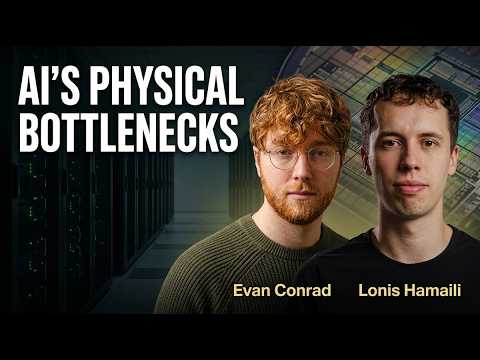
26:51 >> let me pull up the intro. >> I'm just glad he's here and that means that he's not so hacked that he couldn't be here today. This is this is a great start to the day. >> We're all hacked. We just don't know how much. And if you're if you're not if you're not so hacked that you can show up for an interview, you're ahead of the curve, I'd say this morning. >> So we have Evan Conrad. He's the co-founder and CEO of the San Francisco Compute Company. The company operates clusters of GPUs. The computers use to train and run AI models and sells access to them through contracts that customers can resell when they have more capacity that they need. it combines the work of running a cloud with a market for computing time.
27:43 The business grew out of a problem Evan experienced as a customer. His earlier company, Junlark, was a twoperson audio model lab. It signed a 12-month compute contract, but could afford only a month. To keep the company alive, the team subleasased the other 11 months. That effort became the starting point for a different business, operating clusters and building the systems that let people buy and sell access to them. Before that, Evan worked as a software engineer at Segment and created an open-source cognitive behavioral behavioral therapy app called Quirk. In September 2026, SFM Compute announced two three-year agreements totaling $245 million in computing capacity. This week, Evan offered another thousand GPUs on terms extending as long as five years.
28:43 >> Evan, welcome to the show. >> Hey guys, how is it? >> You know, I'm glad I'm not operating a distributed cloud this morning. That sounds pretty hard. a lot of things to to talk about, but how have you managed to put yourself in a position where you're able to take your eye off the cyber monitors and talk to us for half an hour? we have a really excellent engineering team who is of course handling much of the current situation and it's typically hard for us to speak on security related measures but which is what I assume you're referring to but makes it makes it easier for me because we've got a kind of amazing team working on it.
29:30 >> Yeah. Well, it all starts there. Are you going to be we were just talking about how Erin Levy, the CEO of Box, said >> >> this is where all the new you people are wondering where the new jobs are going to be. They're going to be in cyber security. I'm not so sure. I buy that. Are you guys in like a war room scenario right now? Like how sort of, you know, how how different is today from your like normal day of operations?
29:56 Then is like hiring more cyber professionals anywhere on your radar or are you just turning up agent spend to the max? >> So we are indeed hiring more security hires but that was before any sort of announcements right sort of any before any of the news. let's see you had a different question just a moment ago I >> is it a war room there or like you know how crazy is the vibe? I would not say super crazy for for us. This is like we have been aware of AI related ex or like infiltration of things.
30:40 sorry I'm trying to figure out how to pick my words a little bit carefully. we have been aware of AI related attacks on critical infrastructure across the stack for a while now. and one of the things that we've done is for we designed our systems to reduce our exposure or risk to many different types of vulnerabilities. for example we don't do multi-tenencies on single a multi-tenency on a single host. we KYC all our customers and don't really work with we tend to work with a few large customers which sort of reduces some exposure. obviously you can't reduce your exposure entirely. but we've taken a number of steps that makes it easier for us to handle the situation.
31:41 just give me a sense of the scale here did you see an inflection point or several inflection points along you know around the last couple of weeks I I I you know we just covered you know Matthew Prince at Cloudflare said you know they were seeing hundreds of attacks prior to the you know PHP to shell announcement and millions of attacks within like 3 or 4 hours post announcement. Did you see kind of inflection point along the last like 24 to 48 hours?
32:13 >> So I can speak generally about what's going on in the news. typically when for any for any company that is security is a sensitive topic that is hard for us to discuss publicly because because of the nature of the topic. >> It's a live issue. Yeah, I get that. >> So, it's what we have seen is that it does appear that there's a significant number of increased vulnerabilities that have been discovered by agents in the last you know 6 months to a year.
32:57 maybe. Okay, so let's just segue. so I think a few days ago you announced you had a thousand Nvidia B300 GPUs you were offering. >> and the contracts I think were from 3 to 5 years. >> So tell us a little bit about how you put that kind of five-year offer together. Does it does it start with the seller and does it start with kind of like hey I have this excess capacity? Why is it three to five years? Why is that not like we're only offering five years, we're only offering three years?
33:28 How does that flex come about? How do these contracts get shaped from when the seller starts and you know what their what their needs are? >> So San Francisco computes business is we call it supercomputing as a service. we go to folks who have some raw asset they've got like a some power asset, they've got data center space. they could have sold that asset to another cloud. or they could become the cloud. lots of people would like to suddenly offer GPU as a service because you make a lot of money offering GPU as a service. what we do is we step in as their partner in doing that. so we operate the clusters. we do the cloud portion of what they're doing. but they may own have they may be the owner of the data center under the hood. or some raw power asset under the hood. so that that's what we do from from our perspective. We start with the supplier where we insert ourselves as like we partner with the supplier. and the supplier here being like the folks with the data science space.
34:35 then we go out to market and we sell clusters. the reason why something would be a three to five year contract is mostly from a lender. So right now the bottleneck in compute and AI in general is not power, it's not chips. it's entirely credit. so in order to get debt you need to work with somebody who has excellent credit because your lender has no idea how to underwrite the value of the collateral that they've been given which is a GPU cluster. Like if you think about it, there's like nice nice lender off in New York or London or something and they if in the case in which the AI lab falls through and fails to pay and then the clown fails to pay their lender the lender is going to recoup a supercomput and the lender has no idea what to do with that supercomputer. Not really. Nor do they know what that's going to be worth in the future. and so they're pretty much forced to realistically bet entirely on the credit risk or the credit quality of the customer. like the AI lab. the problem is every AI lab pretty much does not have good credit. they're all new companies. and the new companies don't like you don't know if they're going to be around. we're still trying to figure out if Anthropic and Opening Eye are going to be around.
36:03 or which one is going to win and so on. Like this is a question in the air. So like what hope does the twoperson startup have that's trying to start a new lab or something and what that means is that in order for that new startup to get cluster at all they need to pay a very large deposit on the cluster and they need to do a long contract so that everyone is comfortable that you know these people will be around and stick with it for a long time. this is the problem that we're working on solving at San Francisco compute. so we build a forwards market that makes it cheaper for folks to use basically it makes it possible for a lender to know what the prices of GPUs are in the future and a place where they can sell and liquidate that collateral if they have it. and this makes it possible for costs of compute to go down for the deposits that customers have to pay to go down and for the types of contracts to get shorter or more manageable for customers. As sort of I think you alluded to in the intro, the reason why we do this is because originally we were a company called Junarch and Junarch got stuck on this exact problem. and so we're trying to sort of make it possible for startups in AI to exist at all.
37:16 >> So so so let's talk a little bit about that. So, let's say you're typical like London or New York-based I I would guess a bank of some kind or whatever and you you get approached by a startup let's say for a loan for them to buy GPUs I guess and they want to set up their own how how does like what what are the layers of are we talking about like a neocloud which is trying to get trying to you know finance its own GPUs and they're the ones getting the bank loan and then they have a contract from a startup. Is that is that what we're talking about?
37:54 >> So very unfortunately the way that lending works today in compute is that the cloud gets the loan and then the cloud gets uses the GPU cluster as the collateral. the problem with this is like nobody nobody knows what that collateral is worth. And so actually who the cloud and the lender are underwriting is the customer, >> right? >> and so you have several layers deep basically. >> And and so how what what do the lenders want to see from the customer? Because is it like a take or pay contract?
38:30 But the takeay contract is you know you you need like a Meta or Google to like honor the takeay contract, right? You can't have this like 10 person startup being funded just for like 18 months. >> Correct. So, the I mean what both the lender and the cloud want is an investment grade customer like a Meta or a Google. the the they're likely not going to get this unless they are they've got a tremendous amount of capacity and they're willing to basically not be a cloud. like Meta and Google don't want you to be a cloud.
39:00 and so if you are trying to be a cloud you're trying to sell to customers that are a little bit less than investment grade and if you're an AI lab that is just trying to buy capacity that's going to be very difficult for you unless you raise enormous amounts of money to basically try and pay for the contract in cash rather than have to pay for it over time. If you can just pay for a three-year contract entirely up front, like doesn't matter, anyone will work with you. But that's why you see AI startups raise these astronomical rounds before they've, you know, got revenue or the product or traction or anything.
39:43 because it's more like playing with red dots. it's survivorship bias. lots of AI labs will go out and try and raise money. The only ones that you see that exist are the ones that are able to secure extremely large rounds because nobody else can exist. Investors often wonder like, oh my, like which which AI lab, which inference provider should I fund? Like which one's going to win? Which one's going to work? And the answer is the one that you fund. like it does it almost doesn't matter. If you've got the the capital, you can you can build it right now. and it's pretty much just like who is the VC going to fund? we started SF compute because they weren't going to fund us and so like we were not able to raise the you know astronomical round when we started our little AI lab and so now what we do is we build a company that tries to cause it to be the case that you don't need to raise the big round to do it because you don't need to pay the deposit because the lender knows what the value of the GPU cluster is worth and so they don't have to worry about your credit as much, which means you can actually start an AI lab in the first place. We think if you don't have this happen, they're just not going to be startups in AI. It's going to look like TSMC. If you want to start a new chip fab company today, you better find a brand new damn technology because you're not going to be able to afford the capex required. You're going to need like $50 billion to do it.
41:10 >> It sounds as though SF Compute is the one that is providing the assurance to the lender. Is that is that is that a is that the correct because you're saying that it it it guarantee like the lender is able to use your economic kind of like perception of the asset in instead of the startups. Is that is that the right way to think about it? >> like how does how does anyone know what a GPU hour is worth? the way you know how what a GPU hour is worth is that you've got somebody who's willing to buy it at that price. and you've got somebody who's willing to buy at that price in the future. and the way that you do that is with a forwards market. this is a concept that exists in basically every other commodity.
41:55 and if you've already got the customer who's locked in to pay, then the lender is suddenly much more happy to understand what that GPU hour is worth because there's somebody who's like contractually obligated to pay for it. But it sounds as though that's someone again has to be a Meta or Google, a creditworthy counterparty which is willing to buy the Ford the Ford GPU. >> Not necessarily. so like any company can get a loan like mo most companies can get a loan for just cash, right?
42:28 and if you pay that cash then you are able to buy the question is more like the economics that you're charging like how much money do you need? or sorry like like you know what is the cost of that loan? what we want to make it possible to occur is that I'm trying to think about how to describe this better. basically your loan is a factor of two things. the credit quality of your of the person who took out the loan and then the collateral that the lender would make back. If the collateral is and not worth anything, then the lender is going to be very scared about working with anyone other than Microsoft or Google. but if you make that collateral very solid, firm and you know what it's worth and it's not going to fluctuate very much then you don't need Microsoft or Google on the other side of that loan. that's what we do.
43:30 So, I have a bunch of questions about kind of who participates in this market and the technology that you've built to enable it. >> let's maybe start on just kind of the sell side. Like for for starters, who out there in the world today has a bunch of GPUs that they're just kind of sitting on and thinking, "Yeah, maybe I should rent these out." And do they presumably like these companies if they're finding themselves in this position, they at one point had a plan for what they were going to do with these GPUs? No.
44:00 >> So, we're the cloud. so what we do is we work with folks, who've got the power asset or they've got the data center space, not the GPUs. and you bring the GPUs. Okay. Okay. >> Well, sort of. So, what we do is they want to have the GPUs. They want to own them. they want to be on their balance sheet. a really simple example is like you're a platform as a service company and you would like to suddenly own the GPUs because you realize bam are you going to make a lot of money if you own those GPUs. You're a venture capital firm who realizes if you owned the GPUs, you could then redirect them to your portfolio and then you could also capture the residual value on it and so you're going to make a bunch of money. Or it's somebody with data center space or land or power, you know, the raw assets who realized if they also bought the GPUs, they would make a bunch of money. All of these people, they don't know how to operate a supercomputer. they don't they're gonna they're gonna Can I swear on this?
44:55 >> yes. >> Oh, yeah. Okay. They're gonna they're gonna up the purchase. They're going to install the chips in the wrong damn data center. they're like the whole thing's they're not going to meet their SLAs's. it's it's a supercomputer. Like, they're not realistically going to be able to do this for most folks because even the neoclouds can't realistically do it in many cases. most of the new clowns are struggling. what we do is we take them up to a certain bar so they can meet their SLA. the reason why we're able to do this is our CTO is the co-founder of Voltage Park and our VP of engineering is the former head of engineering at Lambda Labs. our team is just staff engineer after staff engineer of all the people who built the previous clouds. and so we offer that as a service to people who would like to be the cloud themselves and we're kind of like a GPU cluster property manager from their perspective.
45:42 and then on all the stuff that we operate, we get to operate a forwards market which lets us do interesting things in in the realm of lending. >> Gotcha. So So I guess what you're saying is you are making it so that a lender >> can seize the collateral and operate it if necessary because without you it wouldn't be possible for the lender to operate that asset. >> Is that is that the right way? >> Kind of. Yeah. So right now in a traditional GPU cloud, the lender is going to seize the asset which is the GPU cloud, they don't like they don't have any way to know if they're going to be able to sell it. They don't know how to operate it. like they're just going to end up with a supercomputer they don't know what to do with.
46:24 >> Yeah. >> in our case, what they're going to end up with is a like an order on a book. they're going to or operate with something they can like press a button to sell. and not only is they're going to press a button to sell, but somebody was standing around waiting to buy that the moment it was available for sale. And that liquidity allows it to be like better collateral than just the GPU cluster itself because you're not taking on the risk that you suddenly have to operate a supercomput.
46:57 >> Right. So so so there's there's basically two parts to the business. One is the operations part and one is the financial part, the forwards the forwards market. Is that is that the right way to look at it? >> We're like two businesses in one. We're a hard- techch company, which is the operations of a GPU cloud. and we're a marketplace business, which is the forwards market. And by doing these two together, you get, like you get a very interesting effect on the world.
47:20 which is >> like here's what it looks like when San Francisco compute sort of scales itself up, which is what we're doing at the moment. if you're an AI lab, you don't have to put down as big of a deposit. You didn't have to go raise the big round. you didn't have to convince the venture capitalist that you were the, you know, author on whatever paper. You could just go start your AI lab. and if you're if you're a cloud, you get to succeed. Like what happens without San Francisco compute is all the clouds consolidate around who's got the best credit. and you'll only end up with a few clouds at all. lots of folks in the world are trying to prevent this from occurring. so like Nvidia is off backstopping folks in order to try and solve this problem but their balance sheet can't take you know infinite backs stops. you need a you need a structural solution to this and that's what we're doing. the company is kind of like a lot of people go to start companies and they have like a specific sort of solution in mind. We started because we were the AI lab and we hit all the problems and then we just worked backwards from how to solve those particular problems. and it just ended up being the case that you end up having to basically do these two things in one which is the sort of supercomputing company and the forwards market in one. A lot of complexity in the business but we're really excited about what it means for the industry.
48:36 >> So so let's let's like concretely I think like right now cost for a cloud is like something like $60 billion or $65 billion a gigawatt something like that right with with Nvidia chips. So, if you had that and then what what does the loan structure look like at this point? Like, is it like, hey, I'm going to have to put up 30%, you know, upfront, as my equity and then the bank will come in with 70%. And then if you have SF compute in there, >> then the interest rate will be, you know, 8%, and if you don't have SF compute in there, interest rate will be 15%. Like, how does that how does that look like? functionally what we think is that by making the making the collateral more firm you make the cost of the loan go down. so you make interest rate go down and then you make the the down payment on that loan smaller like you make the the LTV bigger and you make it more so that when the you make the lender care less about the credit risk of the customer and this means that more types of people can buy compute. It's not just OpenAI and sorry, it's not just Microsoft and Google. Even OpenAI, II don't think as they're almost investment grade, but they're not investment grade yet. the you make it possible for other people to purchase this asset who may not have the same credit quality and that's okay because the the asset itself has value and so you're you're less concerned about that.
50:10 >> indeed. >> That's really interesting. How how big does a provider have to be to come into this market? If I, you know, wanted to create Nathan's little you know, out of my garage contribution, my guess is it wouldn't be enough for you to bother with, but like where does it start to be interesting to you? >> five megawatts or so is probably the minimum for us. so the it's difficult to get something working in your garage. in part because you probably don't have the ability to power it. but you know a smaller data center is something that we can take over and handle. I do think you're going to see lots of like smallish scale stuff start to pop up around the world. So this is like under 15 megawatts of capacity popping up all around. I think this is because in compute or in AI you put the data center next to or you put the cluster in the data center next to the power rather than putting it next to the the like specific customer you're trying to target because you don't care as much about latency.
51:27 so, we're seeing a lot of those pop up, kind of all around the world. And this is maybe different than the, sort of big mega like we're going to do a whole, you know, 10 gawatt campus allin-one sort of thing, >> Manhattan footprint, whatever. So, I'm in Detroit. There's lots of auto factories here, some of which are, >> you know, under capacity, let's say. is this the kind of thing that like a car company can get into because they've got some extra electricity sitting around? They can throw up a warehouse.
52:01 They've got at least some balance sheet. They come to you and say, "Hey, this sounds like easy money. Let's do it." Is that Are we at that stage in the cycle yet? >> If you have grid power and you have, credit, we would love to work with you and we would happily help you become a GPU cloud. That's exactly what probably I don't know if they would do it or what that asset is currently being used for, but lots of people are taking things that already have grid power and trying to convert them into data centers. does Michigan have a data center moratorum?
52:35 >> No. Although it's a it's a topic at the moment. >> Okay. >> but they are being built. You know, this is we'll see what happens after this next election. But yeah, I mean I think that is pretty interesting because there are a lot of these sites. You know, any anybody who's, you know, lived around Detroit will know the history of kind of >> factories downsizing, factories closing. and this is also kind of is an interesting way to think about, as you said, you know, I'm not saying anything you're not, you haven't already said, but just kind of distributing these assets much more broadly and allowing people to kind of participate in this asset class in a way that, you know, without the knowhow, they just wouldn't be able to do. So, I think that is really yeah, very interesting.
53:21 >> So, one of the one of the questions I would have is, okay, so I'm a I'm a I'm an AI startup. I've just raised >> you know I I I need I need some GPUs. So I come to you and I'm like okay I need like a thousand GPUs and I need to raise money and how do we put this financial contract together? Like h I I I'm going to need to raise less money right because how like how much money would I re need to raise normally for a thousand GPUs? How much money would I need to raise with SF compute in there?
53:49 So, today, you're going to need to do roughly the same. what we're doing is we're building up the ability for that collateral to be worthwhile. That's going to take us several years to do. >> yeah. So, there's sort of there's like a reason nobody else tries to do this really at scale. and it's because you kind of have to just do it for a very long time. and you don't really get >> you have to prove out like lenders lenders don't get comfortable with things very quickly. you you have to like you have to show proof over a long period of time. and so that's what we're doing.
54:24 >> okay. So so so I'm I'm a startup. I I come to you. Okay. I have to raise the same amount of money. So once I've raised the same amount of money, what do I do? Go do I go engage I I can I have you know I'm not going to set up my own cloud because I I have to get into operation like >> pronto, right? So so so what do what do I do? Do I go to a nebas and say like I'm going to >> I'm going to rent the GPUs like what is the next step here? So when we work with demand side customers typically the thing we're selling them is two things. The capacity itself just like we've got the capacity and so we are selling you the capacity.
54:55 we make no illusions to customers would like the GPUs >> and so and so you're just selling them like one year like this year for example and you don't require them to pay the other the the the Ford years. Is that is that what you do? >> so no we we lease them for you know 3 to 5 years. 3 to 5 years. and the reason why someone might go with us is because we let them get out of that contract. We let them sell that capacity to somebody else. So that's like one reason to use us. The other reason is simply that we have the capacity and a lot of people don't.
55:23 part of the reason that we have capacity is because we are the capacity. we are the partner to many different operators who would like to become clouds and then we turn them into clouds. >> Okay. So so it's really the the marketplace is now being populated on the supply side first and demand side you have plenty of demand like everyone everyone needs GPUs kind of. We turn down 98% of all inbound demand. >> Wow. >> Wow.
55:47 >> That maybe relates to another question I had around the gap between hyperscaler pricing and neocloud pricing which I'm sure well aware is like pretty wide. I'm surprised by how wide it is. I wonder how long that can endure. Maybe part of the reason it's high is because it's like much more spot market and so they you know are tolerating some amount of like wastage in order to charge these you know to have the capacity on demand to charge these like much higher prices. what do you think is the future of that? How how is that gap going to evolve?
56:29 >> Hyperscalers do not have a significant price premium relative to neoclouds. it's an illusion. if you're selling on demand, on demand has a price premium relative to reserved contracts. EClouds are mostly selling reserved contracts to folks and there just is a there's a discount for, having a longerterm contract. you're you're giving up a premium that you would have made if you were willing to take a cluster and you were willing to have it at risk where the customer can walk away at any point. and that premium is pushed on to the customer.
57:01 so one of the things that is different about an AWS or a GCP or a hyperscaler is if you go and you pay, you know, they're 11 or $15 an hour depending on what you're trying to buy, on demand price, you'll you'll get that capacity. you you won't get infinite amounts of capacity, but it's available to buy. and notably, the reason why it was available to buy is because it's so damn expensive that, they're they're able to one make up for the fact that they've got some idle utilization that they have to keep around in order for you to be able to get that capacity in the first place.
57:30 meanwhile that isn't something that most of the market actually buys because most people don't want to pay that price. Like the revealed preference is that people do not want to pay on demand prices that you people do not want to buy on demand at the price that you actually have to charge in order to make it viable. but >> and and and is that like a you know I I saw Elon sold some GPUs at like a $100 you know 100 million per megawatt or something like that. Is that is that the kind of like on demand, you know, pricing that for for large contracts that you see?
58:01 >> So, that's not the same thing as on demand. I would say that's like a short-term contract or a contract that you can get in with in within a short lead time. like on demand when I mean I mean like it works like a light switch. Like you turn on the light and then it's on and you turn off the light and it's off. in order to make that work, you have to take the risk that somebody's going to turn it off.
58:22 and maybe you won't have a customer and so you have to charge a higher price in order for the fact that somebody might leave. reserve contract doesn't work that way like they're they're locked in with you. but yes, one of the things that someone like Elon has done is they had the capacity the capacity at the right moment. It can turn on, you know, tomorrow or very quickly. and it's not going to turn on you know, months from now or possibly even a quarter from now or a year from now.
58:44 it's just a whole ton of capacity and it's going to come online really quickly. and you can charge a really high premium for that. So how will I know you have developed this technology that you call physical settlement I don't know if it's a technology or capability maybe a little bit of both >> how do you see sort of intermediate offerings taking shape right we have kind of >> five-year contracts on the one extreme we have light switch onoff on the other extreme >> and it seems like this sort of physical settlement you know idea would be an attempt to create a more liquid in between where I can say you know I'll commit to three months and you can deliver that and retain flexibility on the back end of it. how how is that taking shape? and and what more middle options do should we expect?
59:33 >> So when we say physical settlement we mean the entire operating capacity of a GPU cloud without owning the GPU cloud. so we will go do site selection. We'll do the design of the cluster, design of the bill of materials, backlink components, bare metal, VMs, the network, and we own the whole SLA. All the things that a cloud would do, we do that, but we don't we do it on behalf of other people. but it's the forwards market that makes it possible for you to have shorter contracts because what happens is somebody buys a longer contract and then they sell some portion of it. and that opens up shorter term contracts for somebody else. that's that's sort of the the gist and it's part of the reason why we got started because originally we were that we we had bought way too long of a contract and we were sell opening up shorter contracts for other people. and we were able to charge a premium for that because we didn't force you to sign for a year-long contract. You could you know sign for a month with us and we would charge you a premium on that. So a lot of people are like able to make that trade.
60:30 >> A real Airbnb story. I see you out there with your Obama owes selling month three of your GPU contract. That's and here you are today. That's pretty pretty interesting backstory. >> I I I just had a maybe a little bit of a segue question. I understand like a lot GPU clusters are very different, right? And and you have this geographic there's a geographic positioning as well, etc., etc. Do you see kind of like you know different kind of like models? Are you operating like first are you operating outside the US?
61:02 Are you dealing with like European European firms etc? Do you see demand in Europe or Asia etc. are you is is your system able to operate outside the US or is it is it like you know is there restriction or and is there demand is there demand outside the US at all like you know do you see inquiries at all or is this really just like a US- ccentric market and nothing outside the US really matters? so we we operate around the world today the when you go to you know claude or chatbt and you press enter there is a an initial latency that's the time to first token like you you want that to be fast so that it feels good and experiences quickly but then you mostly care about like throughput you know how much are you sort of pushing out of it and this is not something that's latency sensitive if you're gonna run something for days, like it doesn't matter if it's 200 milliseconds more.
62:02 you just want the cheap thing that you can get a lot of so you can just push things through. so, yeah, we're seeing capacity demands all around the world. this isn't the case for every single customer. Some types of inference, don't work that way, especially if you're doing something you know, live video or audio. That's definitely not the case. but the thing that matters in this case is every country is trying to have an AI strategy of some sort. And from an economics perspective, the way that you get the the value of AI to flow to your country or your state or your city is you put data centers in them.
62:46 so if you think about like the data centers that are going on in the United States, there was a big one in Utah that people were very unhappy about. Nonetheless, that tripled the tax revenue of the local area. Like that single project was three times bigger than the entire tax revenue of the area. so in the United States, they think there's lots of people for maybe like moral panic reasons are very concerned about data centers often for things that I think are just factually incorrect.
63:19 the rest of the world doesn't have the option of being factually incorrect, doesn't have the option of having the moral panic. so if you can build a data center somewhere else that is in a country that is not the United States and would really like the economic benefit from it, you can you can put a project that's quite meaningful to that economy in that country. so this is sovereign AI. Lots of people are trying to do this.
63:45 one of the things that we do is we are the San Francisco partner for sovereign AI. We will go and we will be your supercomputing partner. We bring the expertise from Silicon Valley and we also bring the offtake from Silicon Valley. to a way to think about it and this is where we think that things will go is take the project that was Stargate. that's a $500 billion project. $500 billion is more than the entire GDP of multiple countries. so like having any portion of that product project land in your country is an enormous economic development opportunity for you. and the same thing goes for the states. like if you're putting a data center project in West Virginia that is lifechanging for folks in the area in part simply because of the pure tax revenue that you could use to benefit that community. now lots of people will I think be very concerned about it for sort of fabricated panic but the rest of the world is not so we're seeing it.
64:59 >> do you also see u you know do you do you see only liquidity for Nvidia chips or people using the AMD MI300s like you know all of these other chip companies are trying to put new chips up there. are you only seeing for Nvidia or is it is it a are you seeing markets for other chips as well? >> We don't really get asked for chips that aren't Nvidia. so we primarily go based on what people are coming in the door asking us for. and so we do Nvidia and we haven't really explored too far out on other chips.
65:34 >> Incredible. That's >> you want to tell us a little bit about this auto research >> project product as well? >> yeah so we built a product called auto research. it sits on top of SF compute. the rationale behind this is basically twofold. One is that we're an order book. So when people use us there's a little bit of extra complexity that we ask people to do. and if you think of like your power company, like when we go turn on the lights, you don't think that you're you're not like signing a PPA when you're when you're turning on your lights or you're not like trading on a power market when you're turning on your lights. You just kind of turn them on and turn them off.
66:13 And what's happening is like you're a participant of the market when you're doing that. You're just a sort of indirect participant of the market. You're it's abstracted away from you. And the same thing happens when you go and you know fill up your gas at the gas tank. you're participating on the the oil markets but you're not like directly trading on it. we built a thing that's kind of like a UX wrapper over SF compute. and it was specifically for like researchers and small experimenters. we wanted to make it the case that if you looked like Junark like when we did that we could get you capacity in a way that is sort of viable for you. notably, or like the key pitch of Auto Research is we get you a training cluster that has Infiniband that you can just, schedule a job for and we'll run it as cheaply as we can. and you can cue that up and, you don't have to sign a long-term contract on that.
67:09 so it's kind of the proof point that like look, our economic system of SF compute indeed does solve the problem that Junark was having. and it's kind of a thing that lots of other clouds can't offer. And so we did and we're excited about it. In practice, how much of this sort of it almost is like structurally kind of like a fractional reserve type thing it seems like where you've got somebody takes a bunch of GPU allocation on their balance sheet in the form of a commitment to you, but then they can resell and they might resell a lot of it or a little bit. like in practice how much kind of resale are you seeing past that first level where a commitment is made?
67:50 >> so we do two things. we have some capacity that we've sold as a way to cause resale to occur in the case that GPU demand goes down and then we have some capacity that are you familiar with Henry George? >> I'll say no. >> Okay. there was an old economist named Henry George. and he created a thing called a land value tax. >> Oh, okay. Yes. George's tax. I do know this. Yeah. >> Yes. So what we did is we created some of our capacity available for sale but with a land value tax that basically requires someone actually technically like a herbers tax which is like an offshoot of a land value tax.
68:34 that basically says look we'll sell you the capacity but somebody else has to be able to buy some portion of that capacity from you at and so this just forces liquidity onto the order book in the first place it's kind of something that is it's like very controversial >> >> yeah basically we we discourage hoarding on SF compute in because like if you hoard all the capacity no one else can get it auto research in particular is does this but even farther. so the way auto research works is it's a big queue and you can submit jobs to the queue and you can pay us for priority in that queue. You can go faster, but you can't pay for all of the priority. If you're a tiny little researcher, you get the maximum priority. If you get a small tiny job, if you want to just run something every so often, we will put you to the front line of the queue so that the tiny little startup gets the most advantage to this relative to everyone else. and then we do similar things on the rest of SFM compute with herburger taxes and other mechanisms like this where we say look you can get this capacity from us but we're going to require that some of it's for sale so nobody hoards the capacity this makes us quite liquid and it also means that compute always has capacity so right now basically every GPU cloud is sold out San Francisco compute is not sold out we're continuously not sold out because we've locked in our ability to not sell out for years it's like a brand promise we're trying to make that look it if you're stuck right now and you can't get capacity we want to help you because we we like did the thing that is actually kind of worse for our business by not just like selling all of our capacity in this particular way. but makes it possible that like the little startup can actually get capacity.
70:21 >> I I I I could talk about this for hours but you you know we're limited by time so I have like one last question. I think you had a you had an MTS live appearance where you talked about a credit crunch in three months. I I believe you said you said there's going to be a credit crunch in three months. So where do you see this kind of credit crunch? Are we going to see this distress distress credit cycle? You see credit tightening and like people not being able to fund their data centers like what do we see you know in in the future?
70:49 >> I mean not to toot my own horn but I think I was almost exact on that timing. I don't remember when that NTS live thing was but seems like the core reweave debt is getting more expensive although I think there's a lot of complexity in that one. it also seems like it's very hard to close new customers unless you're investment grade or in your investment grade. and many customers are being asked to pay for 100% upfront payments on their contracts. this is what we've been seeing for years and what's we've been worried about. it's what we're trying to prevent. but I think for the next possibly a year or two, if you're a VC, you should be, prepared to write some really big checks for your portfolio or encourage the companies to sell. I think we're going to probably see a lot of consolidation of AI labs and inference companies. and I think the reason why that's the case is because they're going to be asked in order to get their next cluster and grow, to pay for the entire contract up front and they won't be able to do that. and so they're going to instead be forced to sell their company to somebody else who has great credit and doesn't have to do that. and I think, alternatively, they'll go out to investors and they'll try to raise big rounds. the investors will say no because I think at you know at some level of scale they'll they'll probably just not be able to stomach the risk.
72:20 and I think when that happens we'll see fewer startups exist. and that was this is why we do super comput. >> Fascinating stuff. It's quite a backstory. It's quite a financial and GPU alchemy project that you guys are putting together. And from what I understand of it, I do hope it >> works because I'd love to see a future in which we can continue to have startups and in which we don't collapse into like five big tech companies you know for all future time.
72:53 >> That is also my concern. let's go do it. Cool. Thank you friends. >> Thanks for being here. Keep up the good work. >> Byebye. >> See you guys. >> Fascinating stuff. That was a great example of why sometimes you have to have the conversation because I was not getting all that from the website. I'm not sure it would even be possible to get all that from the website. maybe if I was a little smarter. But really interesting stuff there in terms of how they are trying to create some buffer against these like you know tectonic forces that are just going to in the absence of any intervention you know just create a sort of pickity style the rich get richer type phenomenon. that does seem like unfortunately quite plausible given that the demand for the GPUs seems to be basically infinite at this point.
73:52 obviously if that were to change all the assumptions could change but that is it's looking unlikely if I just judge by my effective usage week over week. So I suspect the demand will continue to be there and it will be very nice that there's at least somebody who is willing to play ball with the small guys on both sides of the market. let us segue to our next guest. So our next guest is Lonis Hamayi.
74:23 he's the managing partner of Camrian, a public markets investment fund focused on the physical supply chain behind artificial intelligence. The fund announced its launch on October 13th with approximately $70 million in seed capital. Its focus is on the companies that supply the materials, components and manufacturing capacity needed to build AI infrastructure. before starting Cambrian, Lonis built the software businesses. In April 2023, he introduced God mode a web application that let people experiment with AI agents carrying out tasks through a sequence of steps. He described it as an Easter project inspired by other early agent experiments.
75:09 That July, he reported that it had passed 1 million users and 15 million completed tasks in less than 3 months. He also co-founded DWwork, a task management platform for organizations using blockchain based coordination and payments. DWwork announced a $5 million seed round in 2022. His work extends beyond software. at Prospera, a special economic zone on the Honduran island of Roatan. He served as head of governance and vice president of growth, helping attract entrepreneurs and businesses.
75:41 And let let me bring an on. Honest, welcome to the show. >> Hey, good morning, guys. sorry for butchering your the pronunciation. >> No, it's it's close enough for sure. >> so let's talk about the fund. Let's talk about the launch. So, you you came out with a bang October 13th and I think >> so you announced your thesis.
76:14 you you posted you on NTS Live. >> what what is the fund? What does it do? What is the thesis? >> Yeah. Well, so the fund kind of originated from kind of a lot of soulsearching around the year ago, I guess when you know I've been a pill since 2017 where I started reading Boston and JKski, etc. But like a year ago felt very close very clear that okay, we're getting AGI in in this decade. But I kind of looked at my own portfolio and I realized that I was actually not only not cor my my portfolio was not correlated to AI. It was actually decorrelated anti-correlated because I had all of these venture paper gains from software startups and which would you know probably be quite worth worthless in if we get AGI soon you know I started talking to friends and their portfolios were even worse. Some of them had you know commercial real estate some of them had bonds and all these types of assets some of them just held the S&P but all these assets are are not set to perform well at all if we get if we have short timelines so started thinking a lot about how to how to solve this obviously I was very lucky to you know invest in I guess anthropic and SPV but even like investing in labs are like not great not a perfect solution because I don't think the government will necessarily allow them to get that much larger and you know they will be extremely politically exposed. You know AI is already super unpopular for no good reason and this year there will be many good reasons. There will be misuse, there will be hacks, there will be job loss and and so this these companies are like extremely politically exposed.
77:45 and so kind of came to realization actually the supply chain is the one is the the ones that are winning in every scenario. Whether the labs keep on leading, whether the government gets heavily involved, whether the Chinese guys c catch up, all of them need the same memory, the same tools, the same power. And and so basically that's that's a high level thesis of how I started. and I guess at that point I caught up with Kuran who's my co-founder at the fund and he has been trading for several years on this on this thesis and on the supply chain and he had turned his family office from around 100k to 14 million trading trading on the supply chain and so we started doing doing it together and yeah three four months ago we set it up as a fund. you want to tell just as a little bit of backstory that story I heard it from him u in person I don't know two years ago or so to call it a family office you know is maybe a little bit grandiose like the the appetite for risk that he was able to you know get his family comfortable with when what they had was not you know what people would normally think of as a family office now today it's maybe more of a proper family office but I thought that really interesting backstory Yeah, I guess he traded up his own own book from around 300 bucks as a student to 1.2 or 1.3 billion. and so using options and then separately he he got his dad I guess to take out a loan on his house for more than his liquid net worth. So took out 100k loan on the house and then he traded that 100k to around 14 million today.
79:19 >> So now dad's got an actual family office. how I mean at a very high level, how is this not priced in? You know, maybe that's like such a basic question, but >> you know, 2017, you were early, 2026, like it's all staring us right in the face, right? Like the skeptical take would be >> everybody knows about all this at this point. Where do you see that that is not the case? >> Yeah, I mean it's very confusing, right?
79:50 I mean, if you look at how these semi stocks are are trading, they're trading at 16 times earnings or so. and they can, you know, S&P on on average is trading at 22 times earnings, Walmart is trading at almost 40 times earnings. And so the market is like like not only does the market not think that the current earnings will grow, they think that they are not durable, they think they're less durable than the overall earnings of the rest of the market.
80:16 and you know I mean there and then of specifically the companies that we're very excited about whether it's silicon wafers or or or memory or capacitors or foundaries those are trading at like three four five times sales and and so you know extremely underpriced and I guess it's maybe a few reasons why that could be the case why why this this mispricing exists and one is that you know most people are not AI right I mean even even in the base some people are AI appealed but if you go to the east coast you know almost nobody's AI and so I think that that is like one big input. I think the second one is like for we have this thesis that the private markets are actually more efficient when it comes to AI than the public markets because in the private markets you have all these ex operators technical people who are bidding up this small set of startups and they're bidding them up to these high multiples 50 time sales 100 times sales but in many cases in some cases rationally right these are rationally high multiples because people here are pilled and and technical whereas on the street there there's very different setup where very few people are technical, very few people are pilled and and especially as a share of overall traded money. It's like super super small and the market is much larger. and so there's like the market structure is is just is just very different.
81:39 That is weird. I mean again it seems like I'm just asking the same question again maybe. I'm still kind of like how can this be? You know, if you had to steal man the why these companies are not mispriced story, could you do it? >> Yeah. I mean, one steel man is that many many of these businesses are not great businesses in normal worlds, right? So, especially the the add-ons businesses we like, whether that's capacitor, silicon ware, what have you, they have, you know, high fixed costs. if they don't have a set utilization rate, they actually lo lose money. and you know high debt in some cases and so in normal worlds they're just not great businesses and it's only in the world where AI really hits where where they get this big operating leverage and they become amazing businesses right you know today they let's say they have 10% gross margins so if they so a terrible business by by Wall Street standards but if they're able to raise prices by 10% you know they suddenly double earnings and if they're able to double prices they 10x earnings so but that only happens in a in this very specific air world in a normal world that basically never happens because usually they're very good at at like matching demand patterns with supply ramp and yeah >> let's talk a little bit about so a lot of the thesis concerns AGI and AGI emergence etc right and and you know I I I am trying to get you to justify my thinking so so so so just you know I'm very motivated to get a good answer but let's say you have u the market as it is right now and all of these companies like where do you think this AGI ramp goes right like are you looking at you know is there a specific like AGI point or super intelligence point or recursive self-improvement point that you think happens and what is like your P10 to P90 on when that happens right like are you are you saying like >> you know it you know 10% chance it happens by next week and 90% % chance it happens by 2035 like what what is your range of range of outcomes in terms of the curve and you know what what is that moment that happens is that the RSI moment super intelligence moment what what do you see as that thing >> yeah I I think like RSI is the process that takes us to super intelligence and RSI is already happening right so Anthropic recently had a blog post where they show that cloud now leads more than a quarter of all their own research and that is up from 1% in March, right? So, so the the the RSI loop is already there. It's already closing and then you know when that will lead to super intelligence, I guess it's is it's harder to say and much harder. You know, I would generally say maybe two3 chance it happens within within this quarter.
84:29 Maybe 50% maybe two quarters two/3s and >> wait so you have a 66% chance it happens in the next three months. the no sorry the before end of decade I should say twothirds that it happens before before the end of the decade before okay >> before 2030 yeah >> yeah okay and so one of the things is okay let's say we have memory right and memory right now what the market perceives is that by 2028 2029 there's going to be an over supply of memory by by that point in time so that that is a market perception >> so your thesis obviously assumes assumes that these companies will still have a shortage in 2028, 2029, which is why they're going to have this elevated, you know, margins and that that the operating leverage is high and you have elevated margins and so you're going to get like massive massive yeah, you know, PE.
85:22 >> So, why is your thesis different from the market's thesis? Like what what what about your thesis is different? Are you expecting like massive revenue increase next year and another round of massive capex going forward? you know ho how what is your how is your thesis different from the market >> yeah I mean the interesting thing with memory specifically is that that doesn't require that many things to go right h because it's already trading at only five six times earnings you know even if they can't raise prices further at some point they should reate to at least 10 or 12 times earnings and so it doesn't require prices to increase it does require you know demand to out to continue to outpace supply right and but then when you break down supply.
86:07 Almost no expert thinks we can more than at most 2.5x DM bits by end of decade. >> Yeah. >> Right. I mean nobody thinks we can 3x that. That's like zero experts with any track record have said we can 3x D supply by end of decade. >> And so then you just have on a very naive level you have to assume that okay the demand will not 3x end of decade which of course everyone here would assume we will. Then of course there's a separate fact term in the equation which is memory compression. How much memory compression do do we get? How many bits do we actually need per per token?
86:40 >> Yeah. >> And you know we've been looking into how how this for instance developed from GPT3 to deep CPV4 and the last you know last four years and at that point it it kind of the number of bits required per token decreased by some something like 500x. >> Mhm. So you know but in that same time when me bits bits per token decreased 500x DM bits DM DM bit price rose by 6x or 7x >> mhm right so you know that's part of that products and and yeah so what do you think is the increase in compute to 2029? Are you looking at you know from today's compute we're going to get you know 10,000x you know including the chip you know chips etc etc and the increased data centers etc. Are you looking at a 10,000x, a million x?
87:29 >> And then if you have that 10,000x or million x and then you only have like a 500x improvement in in memory is that what drives this kind of like uplift in prices? >> Yeah, again memory doesn't require uplift in prices. Memory memory should three 3x from here just on rerating to a more reasonable multiple. but it does it does for the prices to to remain you need to have demand outpace supply which again is is not a hard thing to ask for given how how hard it is to ramp the grand bit supply.
88:01 >> >> so so so we just we just spoke to you know Evan Conrad is head of compute and he's predicting a credit crunch in the next 3 months or so. You're going to start seeing this credit crunch. So you're going to have difficulty for the capital system to basically supply enough capital to actually build out the data centers. So this brings this idea that okay now we have maybe like 1 1.2 trillion of capex for 2027 but 2028 we're not going to get two and a half or three trillion because the the the the capital system is just tapped out at you know kind of a trillion trillion plus.
88:33 >> So how does that work in terms of like expanding demand you know in the in the 2028 2029 period? >> Yeah I mean in the short term I'm I'm sure the market there's a good chance the market keeps being very worried. I I I I I tend to think quite strongly that the the the ROI of AI will be priced in will get increasingly priced in over the coming quarter such that next year this will be will be less of an issue. I mean it is true that the global savings market is just not that large. I mean there is a limit to to to how much credit there is but you know that limit we haven't reached it yet. You know there I mean the pool is around 20 30 trillion depending how how you count it. and the thing is that this the unique thing with AI debt is that it's kind of the issuers are very happy to pay high rates because ROI is so high. I mean currently you can buy US treasuries at 20 year treasuries and you get 5%. or you can buy you know met or Google AI corporate that and you can get you know way more.
89:32 and the thing with the Orion compute right semi analysis recently kind of had an article where they showed what the payback period is if you see if you do nothing else then you just have a VR rubin rack and you serve deepse tokens on open router and they show that the payback period just doing that alone is like four months three four months right so the ROI on comput is absolutely massive and you know in theory people this AI this AI companies should be happy to pay you know 15% for their debt right 20%. and so yeah I predict this will be get increasingly priced in h maybe not in coming quarter but certainly by by next year.
90:17 So you obviously are modeling this out with like I mean there's all these different trends that you kind of have to take into account right there's like the scale at which computing is ramping but then there's also the scale at which like algorithmic efficiency is driving you know more usage out of that compute and then there's you know the the uptake of AI adoption by individuals and corporates. What do you think are kind of the most unclear curves? Like the ones that you have the greatest uncertainty about that could kind of break the model over the next couple of years. And maybe even before answering that, maybe just a couple like anchor points would be useful around like for example, what are you expecting tokens per capita to be? you know, however you think about kind of what the global usage base might look like.
91:14 what are what are some kind of anchor points we can imagine? Okay. Numerically, like this is what 2028, 2029 looks like. and then yeah, which of these trends do you think are kind of >> the the hardest to really be confident in? >> Yeah. Well, so yeah, when look when breaking down the player the the consumers, right, or the the buyers of AI. So consumers in general are terrible customers, right? We're four, five years off GPT of soft and consumers still only paying like 20 billion per year, 30 billion per year. It's a terrible terrible business. Enterprises doing a little bit better this year, maybe you know up to 200 billion. but the real the real the real the real buyer will be governments, right? And that hasn't happened yet at all. But but but next year we'll see governments become the largest buyer of tokens. they will see we'll see a very significant ramp up in inter governmental competition between China and the US. there will be kind of the arms race in hacking and you know you need the frontier tokens to stay to stay to do that well and so you know the government can easily pay half a trillion h to make sure that they they they are not hacked by by by China which would be a political nightmare h for anyone in power and so on high level we think you know consumers we're not super bullish we think there are personal agents like muse etc they're quite nice they're are funny h ultimately I don't think the market is that big overall I think enterprise market can grow massively. right I mean we pay every year we pay $30 trillion to white collar workers exchina ex software engineers and they haven't really gotten any significant productivity boost yet right this a little bit like before cloud code right you know last year the best coders in the world still wrote 80% of the code themselves and then of course by January and February of this year they wrote 10% of the code at most and we haven't seen that yet for we haven't seen a cloud call moment yet for right callar enterprise but when we see that we will see you know we think an order magnitude or tou increase in in enterprise spend from that but but yeah so those I guess are are the big buckets in >> so that means enterprise spend if if enterprise spend is 200 billion today >> and it goes to two trillion it's still only >> six 7% of global labor >> correct white color label yeah white color label >> yeah okay so that's an interesting kind comparison anchor point. Tell me more about this government thesis because I mean >> obviously the government can spend a lot of money quickly on something when it chooses to. We've seen that with I feel like increasingly increasing frequency in my lifetime. But >> can they actually use these tokens? I mean it's one thing to say okay we're going to spend you know couple hundred billion on AI now you've got whatever quadrillion tokens you got to use.
94:00 government actually point a quadrillion tokens at anything even remotely useful? >> Yeah, I mean first of all like government are happy to pay higher margins. You know they're not they're not they're not as as rational of buyers as as others, right? They're paying for a bunch of other features other than just the per token pricing. I mean there I mean just like intelligence operations are very can be very token expensive. and you know there's so many added features the government needs on top of just per token. They all need all of these all of the security.
94:32 They want everything on prem very likely. So they will be have to build out their own you know data centers to serve these things. and so there will be like a a lot of like additional spend just coming from coming from from governments. >> so so one one of the confusions for me is that governments are typically very slow, right? Number one, they're slow. number two, all governments worldwide are at debt capacity limits, right? Like everyone has too much debt. there's no one out there who's and and whenever like let's say a government in the US decides to spend a trillion dollars, there's always a question, why don't you spend it on like you know curing homelessness or something like there there's always these questions.
95:11 >> you've also had this issue in the US where I think they spent an additional 800 billion on the Iran war and they had to restock their weapons etc. So >> yeah, >> the question for me is I think the NSA so far this year they've increased their spend on AI by like a couple of billion right two billion or so. The and the question for me is like is it going to be seen as a giveaway to these companies, right? Because government can also do this defense production act thing and they can say like look we're going to cap your going to cap your returns and the moment you cap returns in a sector you actually get deinvestment right you because you know you start I can't make that money I'm going to get out of the sector of >> course so how does this how and you've also said you know you expect a lot of political push back >> you know to the to to the larger firms so how how does this all fit together like why would you think government will actually or any government or you know any set of governments would spend more >> given you have like the number one the debt issues. Yes.
96:06 >> Number two, number two the you know the the ability to cap invest like you know cap the pricing you know on purpose and you know use the defense production act like why would you think that you know governments will become a big purchaser at high prices? >> Yes. So they will not do it until there's catalyst right there needs to be a catalyst but but we predict next year there will be certainly catalysts. I mean we will see significant hacks of of banks and other institutions and but it's really when we we we get this feeling that okay some of the some of some foreign adver ad adversaries might be hacking into our local governments or federal governments they get access to different types of information. That's really when it becomes scary and that's when it will become like very easy from a political perspective to say no we need to we need to make sure that we're always staying ahead. as you say there is the defense production act they could use that but I don't think since that will lead to what you say to deinvestment that is the last thing the government will want in that of their catalyst right of the catalyst the government will want more investment from American firms in AI and so I'm sure there would be other ways to to work that out >> indeed and I guess in general it's interesting to look at the the markets the markets today, you know, it's very similar to how it felt last year. Last year the same time when OpenAI was at 13 billion revenue and everyone's freaking out on Twitter, they only have 13 billion. Some people had for 15 or whatever.
97:34 >> and the market was down were down for several months. It's the exact same thing now where was off by a few billion and and the markets are massive massively down as a result. But you know it's completely red hiring. And of course last year the reason open a was was was plateauing a little bit was just that the chat paradigm can the chat paradigm can only go so far. There's just so much you can you can charge consumers.
97:57 >> If you know if you were in the know you knew we were going to get the coding agents and we got the coding agents and now we're about to get again we're we're about to get enterprise automation. We're about to get computer use agents. >> Mhm. >> but you know not anything that the market is is pricing in. >> Okay. Let let me let me let me like flip it a bit. what would you need to see in the market to say that memory prices are going to go down, right? Like what is the antithesis to your thesis? Like what what what kind of like things would you be looking for to say like look, we're probably wrong. Like we need to flip here or we need at least to retire from the market for like a year or whatever. You know that the timelines are basically going to be longer.
98:38 >> Like we're need to flip the flip the thesis. like what is the antithesis and what what are the things that would you know you that you would that would trigger the antithesis. >> Sure. Well so again I think there are better investments than memory right would if you're asking about memory >> just an example right so >> I think so okay yeah I mean for memory specifically the main thing would be like when we get superhuman coders how much better will memory compression get maybe it just happens to be that you know we just get memory compression way faster than we get other economically useful features right such that we don't get the jamos paradox in the short term >> yeah that could that could be that could be one thing I think that's relatively unlikely for a few reasons But you know that that would be would be one thing. I think another like bare case for the semi industries if if for whatever reason makes it so that like energy becomes larger bottleneck than than semis.
99:28 >> Mhm. >> Right. And so there's less incentive to beat up the marginal wafer or the marginal memory bits to such high prices if you anyways have to wait a quarter to get price to get power in. >> Right. >> and that's a little bit the the kind of regime we've been in parts of this year. Mhm. >> there are a few reasons why we think that won't be the case, you know, going forward. I mean, we finally kind of gotten a hang of doing, you know, behind the meter things. So, you know, people are like increasingly not connected to the grid. They're building their own power plants with their own natural gas.
100:02 >> a big reason why you can scale energy production faster is just that there's so much more latent supply of things. So you know for instance now the the the frame turbines are like right these large turbines that turns turn natural gas into electricity they're sold out until 2030 you know from G vernova and seammens etc. But then people find other ways. They find, okay, you can use truck, you know, truck motors and things from airplanes and we can stitch things together and kind of make it work. And because there's so much latent stuff you can kind of make use of, which is very different from the semi-upply chain, there's no latent supply of me of wafers or of memory bits. Like all of that is already used. There's no fat essentially >> and there's no others to really bid out at this point. and so yeah we we think semis will be a larger bottleneck than memory basically sorry.
100:52 >> So basically the two the two anti- thesis are number one you actually get much greater innovation which allows more you know less memory consumption per token. That's number that's number one. Well, well, specifically we we get a an nonlinear improvement in specific programming ability that leads to better compression rates, but not this broader economically useful things that would make Jamos's paradox kick in because generally we would we would assume that okay, if we can do superhuman memory compression, we can also do superhuman other things and then all demand would just skyrocket.
101:27 >> I see. I see. So, so you're like if we get real super intelligence >> and we get like you know we we get we get like real like real superhuman compression on memory you're also going to get superhuman everything else and then the demand for intelligence is good just going to be like absolutely infinite >> and like everything's going to blow up and the physical supply chain is still like physical supply chain it's still constrained.
101:49 >> Yeah. Yeah. I see. Exactly. Yeah. and even even in general like when we're looking at the AI market we are like way more bullish on the atoms over the bits. So you know most AI companies people looking at is like Nvidia, Broadcom, you know ARM, Marvel and these are good companies you know there's nothing nothing wrong with them and the issue is that what their business is essentially just using open AI and anthropic models to design software and then they send that software down to Korea and and Japan and Taiwan to for the actual work right these companies don't have their own their own physical knowhow or their own factories and so >> which companies are these >> Nvidia Broadcom etc etc Right.
102:28 >> and so whilst these are, you know, great well-run businesses, they don't have at all close to the same as these physical companies have which have you know massive fabs and initially they have decades of knowhow built up and it's just very hard to there will never be a situation where the labs will compete with a silicon wafer maker and it will always be a customer whereas we're already seeing the labs compete directly with these software designers like Nibia and Broadcom etc.
102:58 we're getting a little bit of inter interference. it might be when you when you there's a leaf blower I think out my window. I think that's on me. Let me mute. Let me ask one thing and then I'll mute and listen to the answer. Does this all mean that the biggest risk is >> political? Like is nimism the number one threat to this thesis coming off? >> I mean nis is a is a big threat. I mean the bullish thing for for the US in general is that you know you you can ban you can ban data data you know data centers in most states. but it's fine as you have like a few important ones, right? As long as you have, you know, Georgia, Texas, Mississippi, Virginia, you're shilling mostly. and so this it's not a problem at all for people in h you know, largely not a problem if people in New York, California, whatever, Seattle, you know, Washington, DC, they they start to to to ban these things. It's not this they will probably do it for political reasons, but it doesn't actually matter so much. you only need a few key states. H because the kind of the kind of distribution of natural gas is like very very nonlinear.
104:10 so let's look at Elon's thesis, right? So Elon is building out the terra fab and it looks like it's going to be a 2030 thing. I mean he says 2028 there's no way he's going to get it there by 2028, right? So we're looking at 2030. one of the things that has struck me is that Elon is specifically saying that if you need to 10 or 100x like capacity, like the existing players will just not do it, right? They're just going to be at like this kind of 2x maximum by 2028, maybe like three three and a halfx 2030, right?
104:44 >> So, how does that work? Like, does that mean like number one, it sounds as though that thesis requires for RSI not to happen before 2030? >> Mhm. and number two, it sounds as though but but according to your thesis, even even if if it does happen, like having the physical physical architecture done is going to be valuable. >> Sure. >> And number two, it sounds as though the existing players which you're investing in will not be able to get there. Elon doesn't believe that they're going to be able to get there. And so he's going to build up build something which is 10 or 100x bigger which is going to, you know, devalue the current set of players you're investing with.
105:20 How do how do you think about that mental picture of the tariff app coming up and disrupting the market? >> Yeah. I mean I think the tariff is is super promising. Obviously Elon knows how to run these large scale like real world projects. I think though many of the bottlenecks that other players are running into will be still be bottl that he's running into. There's just so many silicon wafers like he he will not make his own silicon wafers. he will have to buy them from some of the one or three or four current players and supply of that is only growing nine to 15% per year. he will have to buy the same tooling as everyone else, the same UV machines, the same etching machine, the same the position machine, all of these other raw inputs and machines that other ones need, he will have to beat up bit up, right? and so I I think you know it's you know probably a great venture. It's not clear to me that it will lead to that much extra added net capacity until we kind of resolve all the other upstream bottlings. So, so from what from what I hear is happening at Terapab, Terafab is going to be like this recursive process. So, they're buying from existing suppliers not right now. Yes. but they at the same time they're looking at how to design the next layer which has more supply chain integration which is what he's done specifically in every single business he's gone into. He's started off with the existing current set of suppliers and then identified all of the you know parts that needed that need to be integrated and then like integrate those. Right. So, it sounds as though he he's looking at like two or three cycles and in order to get to, you know, 2030 the real Terrafab, he's going to have all this stuff integrated, but does that mean that he's going to, you know, basically like deprecate like all of the existing suppliers like how does how does that because that's what he's done in sure >> rockets for example in rockets over the period of 1015 years >> all these guys used to supply like precision cast parts with Warren which Warren Buffett owns they used to supply these like very expensive like, you know, $5,000 like, you know, metal cast >> and Elon would like, you know, redesign for like 50 bucks, right?
107:18 >> Sure. >> So, how would that work with these with these chip suppliers? >> No, I I think Elon will will will do really well. I think you will find some some ways to innovate. I think though there's a very big difference between kind of entering the semi market and and entering the rockets market, right? The rockets market were competing with governments, which is really what you always want to do like very generally very incompetent players. you know not not any real profit incentives not the real market to to a lesser extent but still broadly same same is true for like cars especially like the way he was entering it with with the semi market is is way more competitive there are many more very sophisticated players they will be it would be way harder we predict to find this very low hanging fruits that you could he could find in other industries and so yeah I I fundamentally don't think he will be able to build all of these types of machines themselves it's very unlikely especially in the coming three, four, five years. but I think they will do very well as definitely they will probably add some marginal supply but ultimately they will also be bottlenecked by many of the same upstream materials and tools that others others have to buy.
108:25 As you evaluate the supply chain, how do you determine what's going to be hard even for somebody like Elon? And obviously you've also got to kind of take into account with, you know, infinite AI agents to help do whatever needs to be done. You've a couple times mentioned silicon wafers in particular and I mean I don't know a lot about them but it's surprising at you know at a superficial level that that would be like a really hard thing that he wouldn't be able to do like there's plenty silicon out there right is it so hard to make a wafer compared to these other processes that this will remain a you know a a well-moded business even if Elon turns his attention to And I guess more just like epistemologically like how do you try to get your arms around that for all these different links in the chain?
109:20 >> Yeah, I mean so we like to give silicon wafers as an example because kind of easy to understand thing but there are like many hundreds of layers in the supply chain. The silicon wafers have hundreds of suppliers themselves and there are many companies that don't buy buying their their own silicon wafers. The key thing to understand with all of these layers is that there are different these different tech tech tiers to them, right? So in memory we have, you know, HBM 3, we have HBM4, we had HBM2 before and these tiers always add like an increasing difficulty. So there's always this this arms race, right? So if we look at China for instance, China, you know, according to Elon, China is really good at like manufacturing, scaling up advanced processes. They've been trying to do, you know, memory for 10 years now. bought this German company more than a decade ago to get a bunch of knowhow and then and but they are still like barely able to ramp the ramp supply. This year they're actually able to ramp ramp a little bit but before that they've been struggling more but they are still and they're doing trying to do HBM3 but they're only yielding like 25%.
110:18 Versus skindex yielding at almost 80% or so. So like they are really struggling even like these Chinese firms which are hyper competitive h you know run by very smart people they are really struggling to catch up to the frontier even after a decade of doing it and so of I'm sure Elon will do better than them but it's like how much better right because the Chinese players have been doing this for a long time they're trying to do their own silicon wafers they're trying to do their own memory their own tooling and they're significantly lagging the western players in every in every dimension essentially and they're catching up on a few dimension many other dimensions they're lagging significantly And now we're asking one company to to to do the same thing that China has been trying to do for decades plus across all these hundreds of layers at the same time. It's just very hard. If there someone who can do it, this Elon, I think he will be able to do some of it, but it's it's very it's very unlikely he'll be able to to to do it to a significant extent.
111:09 So one of the things that has confused me is how much does super intelligence or the increase intelligence play you know play a part in reducing the moes to all of these businesses in general right because all of these businesses are kind of gated by intelligence in a sense like management capacity engineering knowledge like all of these are intelligence-based you know activities. So how much does super intell like if you get a massive increase in intelligence does that mean like you know some relatively less experienced person or company in a second tier state all of a sudden gain the capability to make semiconductor equipment because that's kind of what people are predicting for bio right for bio like oh you're going to get like bio get like random guy like you know creating like this this thing that you know even the best labs in the world cannot create with all of their you know knowledge and technology Right. So why wouldn't that be treat be true for semiconductors too? Right? Like bi bio is actually much more much more difficult than semiconductors right now actually. So why wouldn't like semiconductors which is easier than bio you know you got you got a lot of you got like very few drugs you got a lot of semiconductors every year very few drugs getting approved right. So why wouldn't more people just set up semiconductor labs and you know they have super intelligence to help you and they can do all of this from scratch. Yeah, I I I guess I I would probably disagree that it's easier for an LLM to to to innovate in in in you know hardware supply chains than it is to innovate in in biotech. And it's not that one is fundamentally harder than others. It's just like if how you train these models, right? There's a bunch of of biological data you can train on. H there's not really much good training data at all for how to design a silicon wave or how to make DM bits. you know almost all of these issues very tacid knowledge that sits in every engineer's head. It's not as if there's this, you know, millions of pages of manuals on the web that models have been able to digest or that there are these RL environments that the models have been trained on to to perfect how they can do how they can how can they can design a wafer. Whereas the same is true for bio.
113:16 >> But but but right now the the labs are buying data all the time. Like I I hear there's I I I have I'm on this WhatsApp group. like any semiconductor company like if you have more than 50 person like we're willing to pay like millions of dollars like so they so they're buying up data you know from all these all all all of these companies and they're and they're creating our own environments for semiconductors which is definitely a a a key key area that they're that they're doing anthropic has a deal with Micron openi has a deal with I think synopsis or cadence so with the design firms that they've tied up with obviously some kind of revenue share agreement going on there So how does that how does that work? It's obviously that you know they are looking at creating intelligences that can do this right.
113:59 >> Yes. Well but no part of that's true but it's a very significant difference between designing a ship and and producing the ship. So designing a ship I agree that is like a core priority for all of the labs. It's really the key one of the key ways to get RSI loop closing right and so that's why anthropic for instance two things they they don't allow clouds to do is like one high-end AI research and then secondly ship design essentially right like they don't want they want they want to keep that internally because it's such a such an important mode and and and many other companies are thinking in in similar way so designing a ship is definitely there's environments on it there's a big priority that's very different from building a a you know 2 million square ft you know fab right and and and designing that from scratch that there's no really good oral environments for that there's no good manuals for it all of it is tested knowledge sitting in this you know Japanese engineers who have been working at the same company for three decades and it's just very hard to it's just very hard to extract that that information in in structure of course at some point it will happen you know once we get once we get super intelligence it will figure out the best way to extract information learn the best and you know and it will happen for sure it's mostly a matter of like the the the timing of it and like what happens in what order >> so like on that point right so for inance Hawaii in in in China they can design roughly the the same the same quality chips that AMD and Nvidia can the big difference is the big difference is just that TS Nvidia has access to a TSMC and and the Samsung HBM memory whereas Hawaii only has access to 700 meter you know process nodes in China and HBM 2 and HBM 3.
115:49 >> Right on. >> So going to the fund itself how do you guys think about your position amongst other funds that you know you might be in some competition with? How do you you know try to contrast your differentiate yourselves and and how are you thinking about managing risk? I mean I I could imagine one thesis you might go with is like hey we're going to either go to the moon or to zero and you should allocate your portfolio on the buy side you know with that in mind.
116:23 I'm sure you're getting asked that question a lot in light of you know situational awareness type events. So you know are you trying to be something that is in any way safe in the process of doing this or are you just appealing to people who are you know looking to put pure risk capital to work? >> Yeah I mean so our our thesis is that we are very we feel very confident about the the overall arc of of AI the rough timelines and we are not at all confident about any quarterto- quarter developments. Right. So we are doing some form of value investing where we find companies that have that are trading at great multiples that have durable technical modes and then we're making bets two years out and so that's quite different from from the other firms. On top of that we're not doing any margin. We actually have in our in our fund made to not use margin margin leverage and there are two big reasons for that. One is that we we believe volatility will increase over time and so options is one way to be long volatility. margin is a way to be short volatility and we think W will go will go significantly up and then and then secondly you know it's just like it's it's very hard to as we've seen to construct a portfolio in this type of high volatility environment with with significant margin right even if you did nothing else than just hold Nvidia for the last four years you would have been up 15x but if you held it with any margin you would have been zero because it was down 40% 60% you know several it's super super volatile and so that's kind of fundamental decision we we took H which does like limit our EV a little bit right in terms of expected value it's probably a poor bet but you know we our LPs generally want to be rich in many worlds not just a trillionaire in one world right and so that's kind of how how we how we think about you know the type of risks we're taking >> yeah that volatility point is is really interesting and your point about Nvidia in particular is worth just kind of re-emphasizing for Christmas last year I vibe coded did a couple apps for family members and the one I vibe coded for my dad was basically a he's a bit of a day trader and I try to honestly talk him out of it. so I I made the app as kind of a scop to allow him to go in and back test new strategies that he was coming up with. And the idea was like he could just define his strategy in natural language. then you know the model would turn it into an actual algorithm and then it would run it on historical data and then it would say okay you made you lost whatever money in testing that app one of the things that I saw I think it was 2023 you might know the year for sure where I I'm not sure if it was 22 3 4 but in back testing the app one of the things I saw was Nvidia was one of the biggest annual losers >> in a given year and I was like oh my app is broken. I was like, you know, go fix like there's no way Nvidia, you know, you've got Nvidia. Like, did you sort the the list wrong or what? You know, there's no way Nvidia could be among the biggest losers on a year time scale. Sure enough, it checked out.
119:25 You know, I was like, "Wow, that really is a a great signal of just how much volatility there may be even when like the mega story is like pretty obvious." So that is something people should definitely appreciate maybe more than they do. We're we're probably in for a wild ride even if the exponential you know in the zoomed out sense continues to proceed and you know a macro level looks pretty smooth. >> Yeah. No for sure. for sure. And then I I guess like another thing we we we we mainly we mainly invest in Asia. More than half our book is in Asia.
120:02 >> Almost a third of our book is is small caps and midcaps. our large our smallest holding is a $30 million Japanese company which has a monopoly and specific type of tooling and we kind of found out that there's no English sentence about this company anywhere on the web that we could find. H so it's all all in Japanese and it wasn't until this year that we're the AI tools are good enough to actually be able to have this socratic dialogue and just go deeper deeper deeper until you find these types of those types of companies. yeah.
120:32 >> So Gavin Baker has this term the bottleneck bros. So I I you know one of the things that strikes me is that technology intelligence in general is a way of finding routes around obstacles and problems right it's a way of solving problems >> sure >> and I feel like you know the the highest value problems to solve right now are the supply chain you know semiconductor supply chain problems >> so I keep I keep coming back to will will we not apply you know intelligence that we have and the the first use case of that intelligence is going to be to resolve the bottlenecks in the supply chain iteratively and which which is part of the RSI loop really like take you know producing intelligence >> and using it to solve the problems relating to you know producing that intelligence right >> so and and that is what I think I think a lot of investors are struggling with whether whether like you know if you have this intelligence even if you are convinced of the AI Will you not use that intelligence to resolve the problems around that AGI production first?
121:40 >> Yeah. >> and and and how will that work out in the long term? >> Yeah. I mean I I think that that that will happen. right that that will certainly happen and then the question is like okay when we are at that point where we have an AI smart enough to solve some of the hardest engineers problems in the world, what else will it do, right? Will it will it not then at that point also be able to at least automate a bunch of the email jobs and Excel jobs that we currently pay trillions of dollars per year to solve, right? and and and then if it if it does that then that unleashes trillions of dollars of value that the supply chain could could capture, right? So it's just a matter of you know generally like in these worlds where AI is able to do these crazy things on the on the tech side, it will also be able to unleash all of this other value that can be captured. So, so one of the things that strikes me though is that we have reached the point where I think you can have this like you know transfer of wealth from one part of the economy to the other and you've reached the part where you actually need the entire economy to expand. You need you need the actual GDP growth >> and one of the problems is like in order and and you know I've gone and gone back and forth with the AI models on this.
122:48 >> Sure. One one of the problems is that if you cannot get like physical growth like physical supply chain growth, you actually don't get GDP growth. If if you only have reallocation of dollars >> in terms of higher valuations and that's happening as a result of job loss on one side from you know from consumers like basically having their jobs be automated and that is actually reduction in consumption and on on one side and if you actually have that go into just higher asset values on the other that doesn't work. you actually need like lots of actual physical growth for GDP growth to happen and one of the things that strikes me is that that physical growth is still constrained by you know human time limits right human time limits and >> you can't do exponential growth on physical so >> sure >> yeah I think I mean there is this world where I'm not sure if it's good world but where we get software similarity but we don't get you know real world similarity robotics kind of lags by by x number of years and at that point we we might we might see significant automation of white color workers so the AI companies in the supply chain can still benefit but the broader public might not because to your point maybe you know the economy is actually not growing so significantly it's mostly rerouting salary dollars for from from humans to to AIS right I think that's you know somewhat possible to happen in the short term and that might not be great for great for the world but again I think even in that scenario the supply chain would do decently >> indeed we I I don't have any other questions Nathan might have some do do Do you want to leave us with anything before before we close?
124:20 >> no I mean I I I think I think well I I think the kind of big thing that was very surprising for me coming from you know the venture venture world originally is like just how less how much less AI the the public markets are as opposed to the privates and just how much more competition there is in the privates. Right? there is this like thinking around the market the efficient market hypothesis but in AI it's just it's just way more true in the privates than the publics and so if you like build technical and willing to spend you know six hours per week on on it you can kind of find some you know generally find some some real alpha which is kind of counterintuitive coming from like economics background and thinking that markets are are generally very efficient >> indeed yeah this has been great fascinating stuff all the way around. Is there anything that you would I mean we we've contrasted your views a lot with the kind of you know consensus or street view. Is there anything that you feel like you are outside of the norm on among the very AI pill San Francisco class that you think is kind of an interesting you know thing that people should be paying more attention to or or you know watching more closely than they are?
125:40 yeah, it's I mean it's it's a good question. I mean I I think just like the fact that that the just the the hardware supply chain is like so so so underrated and you know originally back in the days it was all about hardware and then we kind of went to a few decades now where software has been the big thing where the smart people are doing software software is where the mode is. software is where the margin is. And yeah, it's just very interesting that that world is now transitioning back into how it was, you know, before the 80s or whatever when hardware was was king.
126:14 yeah. >> Yeah. We may look back on this time as a sort of digital blip in >> Sure. >> in history when we really zoom out. Yeah. Interesting. >> cool. Thanks for being here. This has been a great conversation and we'll certainly be watching the markets not as closely as you are but we look forward to having you back to get an update on how the thesis is evolving over time. >> Perfect. Thank you guys. >> Byebye.
126:43 >> Appreciate it. >> Ciao. >> Yeah. Very interesting. I mean, I I don't know if this is a synthesis of his thesis that he would or maybe a compression of the thesis that he would quite sign on to, but I liked the idea as a motivation for how do you figure out what is hard. Look at what China China has been trying to do and not been able to catch up on. and if they haven't been able to do a fast follow, then odds are it's going to be hard for anybody, you know, in Europe or wherever else to do or, you know, other parts of Asia to do a really fast follow and eat into incumbents advantages.
127:25 >> you know, I I would probably not buy into that. you know so so so one of the one one of the things that you have to realize is every every business is shitty on the inside and and and that is a thesis that you can definitely carry through on like almost everything right like every business is basically shitty on the inside it's just shitty in its own like you know own specific way right so for example you know ASML ASML has you know EU you know EUV machines they have this you know monopoly on EUV machines. They gained that monopoly as a result of the US government. The US government actually gave and Intel actually invested in this company and they moved this company to the Netherlands and they basically set up this EUV you know project there and ASML has that lock right now. in ASML the code is so tangled that in order to make a code change you have to make it on paper and then it takes like 3 weeks of like like approvals they don't have a lot of testing they don't have a lot of automated testing or CI testing etc they have actually and and the reasoning being like number one they never had great software right like the Europeans never had great software they were using kind of this more kind of like you know programmable logic controller kind background that they came from like more kind of like mechanical automation and they didn't really do this they didn't really come to like the modern software paradigm of like you know continuous integration and testing and all of that that that kind of like you know moved very slowly past them. yeah they have improved but it's still like nowhere near like the rigor that you would see inside Nvidia.
129:14 It's not it's not there right. and so I don't think I think actually there is a there is a lot of like room for improvement. and they don't do it because they're running at the edge all the time. I hear for ASML they actually put the machines in a box and then they send the you know like technicians in the box with the with the machines and and they land at TSMC and then when they land at TSMC then they basically recalibrate the machines because the machines have to be recalibrated for the specific seismic and magnetic conditions of wherever the machines are sitting because you know they're so sensitive that you know the seismic vibrations and like the magnetic like you know fluctuations in the clean room actually make a big difference on like the the the yield and it's because again you have this 99 you have this step of you know 3,000 steps in sequence and you need to get like 99.99% on most of the steps and that you know the error comp the error compound like the error term compounds each step the geometric compounding so if you start off like a 0.1% error on like step one by step by the time it gets to step 3,000 that's like a 30% you know error like it it geometrically compounds so and then that's your yield your yield is basically what you get at the last step so if you mess up on the early steps you you and this is the kind of thing that Elon is very very good at Elon is very good at taking existing technology and streamlining it in and streamlining it and reverse like integrating downstream and he's willing to do this because he's willing to change parameters like a lot of the like what he believes is that a lot of the parameters that you start off with are illusions, right? So for example, one of the things that he's doing in the terrafab for chips that would be launched to space is that he's changed the operating temperature.
131:12 And the reasoning being that okay if you have operating temperature of like you know 50 to 60° C of which the Nvidia machines are operating at you need cooling you need cooling you need to cool things down to 50 or to 50 or 60°C and one of the problems in space is that you know it's the the the the span of radiation like how how big it's all going to get radiated away and so you need these radiators and the radiators are fourth power of your temperature in Kelvin.
131:45 So if you if you reduce if you increase the temperature in Kelvin by you know 20% you can like have the radiator span that you need and so he's fixing these problems not by solving the radiation like everyone is like he's not going to get it be able to get it done because there's a radiation problem the radiator is going to have to be huge. So he didn't fix the radiation problem. He's not he's not going against the laws of physics. He's asking Nvidia to redesign chips to run at higher rates which they've never done before and he's saying like look if we redesign at a higher operating temperature then we can afford and and then we can afford to have like more lossy chips. So he's going to take more lossy chips. He's going to accept that the chips are going to be more lossy and they're going to need to do expend more tlops in order to get useful intelligence. is accepting that in return. And you probably have to redesign all your models too, right? A lot of your models right now, you probably have like some level of like you know fidelity in the bits that you are getting out of the model out of the chips. He's going to redesign. So he's redesigning everything like he's starting off like okay look my constraint is the temperature. I'm going to redesign for higher higher temperature and if I redesign for higher temperature then I need to redesign the entire stack downstream. if I redesign the entire stack downstream I'll have to accept you know other constraints but and maybe I have to redesign the models as well and so he's doing this entire stack thing and I think that's where he will so he loses a lot of optionality right like Nvidia ASML they design for more optionality they they're designing for multiple vendors they're designing for downstream being able to redeploy the machines to do multiple different things. Nvidia's chips are GPUs. One of the things that people in the asex business are doing is that Nvidia's chips can do many things. Asex only do transformers for example, right?
133:40 So one of the things that people are doing so this is a classic way of engineering which is you reduce the optionality that you're designing for and you make everything like just fit for one thing and you design just for that one thing and you change the parameters of the exit, you know, and then and then you can you open up the design space a lot, right? you open up the design space. So I don't think this is specifically that true. I don't think that these the a lot of these constraints >> and and just to make sure I understand the this the whole bottleneck thesis.
134:14 >> Yeah. The whole bottleneck thesis is not actually that true. Those bottlenecks can be gotten rid of by someone who is a dedicated like you know physics guy. And and the other thing is that Elon has capital and Elon is willing to gamble with that capital which is very unusual. If you see like this kind of small Japanese manufacturer of like, you know, let's say 30 million, 30 million market cap, do you think they're gambling with their capital? Do you think they're going to like, okay, we need to spend like $10 million for a new a completely new modality? Are are they going to do it? And Japanese manufacturers have always been like this. They're very good at one thing, but they don't make take the gamble, right? They don't take the gamles. And as a result of not taking the gamles, they they they have lost out business before. So I and it's very difficult for senior management at like ASML to say like we're going to chase this new paradigm, right? We're going to we're going to redesign for something that our that our customers don't want and they're going to do all of this redesign work. They don't have the capacity. They don't have the intellectual capacity. They don't have the talent. They don't have the capital to do it. They're not willing to risk.
135:17 Elon will risk like a 100 bill, right? And you know it it's it's a bet that makes sense for him. He can absorb the losses. ASML cannot right ASML will not be able to absorb the losses. So >> So let's say Elon succeeds though, doesn't it still leave I mean >> one thing I wish Elon would do so badly is license the self-driving car technology to other car makers >> so we could all enjoy it without you know having to necessarily lock into a five seat vehicle. Although they do have the six seat on the way but I digress.
135:54 it seems like all of the integration and these changes that you're sort of hypothesizing that he will make, which all sounds fairly reasonable enough. We've seen him do this before. So, like, you know, I never bet against Elon again, but does that mean that these companies still aren't bottlenecks for the rest of the market? because I could see a scenario where it's like well Elon solved a hundred problems and he worked around a lot of these bottlenecks but that doesn't mean you can right so like everybody else who wants to get into the game in or continue to scale up their operations if they're not going to be so bold if they're not going to be so first principlesoriented if they're not going to change the operating temperature and all these things then maybe the bottlenecks still apply to like everybody else like does you know if Elon can you escape gravity literally and figuratively. does he take anyone with him really I guess is my question or does everybody else still you know is is still kind of gravity bound and forced to pay you know whatever the market price is for the outputs from this $30 million company that isn't you know reinventing or you know dramatically expanding its capacity.
137:13 I think what ends up happening like look at what happened in the launch market right in the launch market he is now 90% of the market even before Starship next year with Starship launch he's going to be 99.9% of the market for capacity are there other providers yes there are right like he's making a margin so other people will come up Rocket Lab is there and ESS is there And all of these firms are there but a lot of them are also statebacked. you have you know without the European agency and the Russian and the Chinese and the Indian you don't you basically don't have like commercial capacity right commercial capacity he has taken up all of the commercial launch capacity pretty much with one or two competitors and the one or two competitors are really being funded by the stock market as an alternative you know or Jeff Bezos as an alternative to Elon right and they're not really profitable and that it's just you know money sink right and so you I think you could see the same happen in in that market too in in in semicon too you can have like Elon which 90 99% of the market you have everyone else like you know 1%ish of or less than 1%ish it could happen right I don't think it will primarily because I believe in RSI and I believe anthropic and openi will get will get to super intelligence and then they will be able to buy or create a bunch of this stuff so that that is the only reason that I think about if not for the RSI thesis I think Elon Elon would win. So, >> so how do you think about investing? I mean, I'm honestly in full transparency like extremely conservative in my financial life and I have felt like my personal financial situation has been so correlated with AI by default, you know, in the sense that like I do an AI podcast, you know, which is sort of riding the bubble and you know, the and my company way is like an AI app that is you know, was writing capability advances and you know like has had market success based on the fact that we've been able to like plug these things in and do like so much more for our customers. So I've been kind of like I don't necessarily want to lever into AI on the purely financial side because I'm already exposed in all these ways and I've been fairly content with that so far.
139:42 Do you have like an alternative thesis that is like the the Pash thesis that you would advance as an alternative? >> I I I am like I am very close to Loness's thesis. Basically, it's basically the same thesis. number one I have this belief that the one independent thing that I have is that I believe that for the next 20 years the market will consistently underpric exponential growth and the reasoning being that if you if you if you stand on an exponential curve and you look back at at the you know where you came from and then you look forward to where you think you're going to go to and you compare the slope of where you're going to go to which looks like this with the slope of where you came from which looks like this. It basically looks like you have been through linear growth and you're expecting something unusual going forward because basically you're like you know I expect things to like 10x next year to a trillion but getting to 100 billion for anthropic revenue was easy that was like no big deal right and then next year we'll go through the same thing again where we'll be like oh getting to a trillion dollars in revenue for anthropic easy. Getting to 10 trillion in 2028, that's impossible, right? And at every stage, we're going to do this. We're going to repeat this. So, the market is going to consistently do this thing where they're going to underpric because I think consistently human beings are just not able to you know, cap like understand exponential growth and like logically kind of like you know, emotionally get comfortable with it. And I think the market is really driven by a lot of these you know human emotions and animal spirits etc. And which means that we're going to get again and again you're going to get this like bubble moment collapse moment that we've seen in the last 3 months another bubble moment which Loness is expecting to see with cyber security and I think the cyber security ramp is going to start and I think he's right. So I have this theory of adversarial diffusion and adversarial diffusion basically means human beings don't adopt technology for fun. Human beings are largely satisfied with the status quo. And if you want to adopt technology such that you get to 10% 20% 50% GDP growth a year that is something you do like not because you wanted to but because you had to and if you see all these instances of like heavy increases in production function it's all during a wars right wars post-war era like in in like la last big like enormous like 10% plus GDP growth era in terms of production output not if not in terms of the curve is was during in World War II, right? you had this immense immense increase in GDP production growth. And similarly in China, China is post postcommunism again, you had the end of the communist, you had this immense increase. So I I don't think like human beings accept GDP growth and accept technology willingly at like a 10% rate. And so I think like in order to for you to see this kind of like 10 or 20% growth, you're going to get human beings don't want that growth. It's going to be growth that they hate.
143:07 and it's going to be techn technological like changes that they absolutely dislike and it's going to cause political changes too obviously. and it's just going to absolutely hate it. But it's going to happen and I think that only happens as a result of emergencies. So for example, mRNA during COVID mRNA was a 20-y year latent 20 years it had been in like latent development during COVID within like you know 6 months you know they they're like all right let's go ahead and do this six more months you had a vaccine out a year later large portions of the world are vaccinated right so I think we're going to get this kind of adversarial diffusion where you're not going to want the growth but you're going to get it I think we'll see in cyber first I'm afraid you're going to see it in bio too so you know we're going to need like you know advanced vaccinations for everyone because you have virus coming right and that is I think like a little bit unfortunate so this disconcerting >> that will indeed be really unfortunate >> so yeah I I I don't see a way around it I I don't see people willingly doing 10% GDP growth or 20% like in the because 10% GDP growth in the US implies that you need to break the nimi consensus You're going to need to build factories in California and factories all over the place. You're going to need mechanized factories. They produce pollution obviously. you're going to and you know you're going to need to go into like these forests or you know and you know you're going to cut them down and put you know infrastructure there.
144:38 You're going to need roads and you need you're going to need like you know railways and you're going to need like hyperloops underneath like running cargo through the country and you're going to need all of this like physical stuff which the US has not built in like 40 or 50 years. And you're seeing this push back already against data centers and you're going to need to overcome this political opposition and I don't see that being overcome except in a state of emergency. So unfortunately I think it's going to it's going to be like know this growth that no one really wants or likes but you need in order to survive. and you know it's it's worse if it comes as a as a result of war with China. So I don't I don't I really don't want that. Right.
145:18 So you know I I I I think I think there is no way out except adversarial diffusion and like being pulled through having the technology being pulled through because you need it. I I don't see a happy case of like oh we're going to have let's have like 20% technology like tech 20% GDV growth. Let's build like all these factories everywhere. Like it's so fun. Like I just I just don't see that right you know. >> Yeah. Well, I guess that goes back to the political risk being the biggest risk to the thesis. I mean, I we've had the debate around like whether it's too late, you know, in the capital cycle to pull the break. I still feel like there is a path. It may be a narrow path, but I I do think there's a path to pulling some of the brakes, you know, pulling the brakes somewhat, I should say, on like the frontier scaling without popping the bubble and that will be a very delicate operation should the government try to pursue it and they might do it wrong. but I do I do feel still that just adoption of current models has so much farther to go that we could at least take take a cycle without doing like a you know continued >> frontier hyperscaling training runs.
146:44 >> I actually suspect the the dem push back on data centers is an illusion. It's because they have an election and blah blah blah. But you you know one of the classical things is like you may say something while you're running for election but once you come and you're in control of the country like you bought it you have to you you have to fix it right and the you when you bought it and you have to fix it you can't come in and you have a you know 30% decline in like the stock market and you don't address it right you're going to have to address it you you and and I don't think there's any appetite for unemployment in the US like you you you can't get like a 10% unemployment in the US anymore because we saw during COVID the government can just spend money. If the government wants to spend money, the government can do can spend money and can get the country out. So real strong Keynesianism will will happen right and if you saw like what happened in the last round like Biden Biden came in and he's like shovel ready projects etc for stuff and they have you know whenever they say shovel what is shovel ready right now data centers right if you if you came in and you had an economic downturn and you needed to fix it and you need to channel money into what what would you channel money into data centers and related infrastructure shovel ready the projects are waiting right so I think I I I I don't think there's a there is that much of an economic backoff, but yeah, I think we will see a credit crunch in the next three. I I I'm hearing loans are loans are getting more difficult. So, I think we're seeing a credit crunch right now. there's an economist paper.
148:17 There's a there's a guy from UPUPEN and I he had a paper he he's been exploring he's a conventional economist. He's been exploring real, you know, post AGI AI outcomes and he's willing to kind of go on record and like, all right, what would it take to see a 10% or 20% growth? What would actually happen? All the other economists don't want to discuss this. They're capped at like, you know, between 0.1 and 1%. And he's like, well, if you actually saw this kind of high GDP growth, you would need to see interest rates increase dramatically. So, we're going to get 10 or 15% increase. if you if you have like you know 20% growth you're going to get 10 15% interest rates and that means like because the AI companies can afford to pay but you know home mortgages like people can't afford to pay 15% for you know I I think home mortgages the last time they were like 15% was like 1982 or something around there but you can't sustain today's valuation on homes at 15% you know mortgages right so I don't know like the interest the interest rates also have this impact of squeezing people who are interest rate sensitive. the largest segment of that is the private equity owned companies who all overlevered in the last like you know post 2008 as as interest interest rates collapsed with this enormous private equity boom for the last like you know 20 years or so of private equity companies basically levering and releving and you know you know as they had all of this you know cheap debt and what happens you know Kob KR like you know Roberts had the saying we don't take away the private jets when we buy the company. We don't take away, we just lever up the company and the first time the management sees the new interest rate bill coming due, they sell the private jets on the road.
150:09 and so and so this is what we're going to see. We're going to see this interest rates like increasing and as the interest rates increase, all of these like corporate managers are going to be like, "Oh my god, what are we going to do?" And that's again another example of adversarial diffusion. One of the things they're going to do is they're going to pull in they're like how can we use AI to reduce our costs? How can we like you know recalibrate for this AI era and you know what you had happened in Twitter when Elon bought it Elon reduced you know employment by 80%. So you could see that kind of like reduction in employment by 80% in all these SAS companies which were bought by private equity. You have an interest rate sensitive sector. You have these high bills for interest that you have to pay. you have this new technology that can basically reduce your you know your input cost which is the your talent by 80% you're going to press a button like you have to survive right so I think that's that's another thing that we'll see so there's all of these like different things that will happen and you don't know what extent and what's the sequencing of what how they will happen but the economy is not like stagnant like people are playing games in the economy so when one thing happens other people will do other things in order to counteract that. So, you know, so you're going to see, you know, growth, interest rates, reaction to that interest rates, u you know, employment like that that efficiency in the economy being forced down everyone's throats even when they don't want it like you have no choice. You have to move, right?
151:44 >> So, >> yeah, when you come for their private jets, that's when it gets real real for a lot of people. Maybe we short the private jet makers and expect a glut of lightly used private jets to come available. Although there's going to be a lot of lot of new buyers potentially in the market as well with all >> which which maybe pulls through other private jet technology. Maybe that pulls through smaller jet technology. maybe that pulls through like you know batteries for jets like so it's it's this like sequence of activities right like as one activity happens other people have to move in order you know make another activity happen and that's where you get this kind of growth and diffusion and people like pulling forward the technology but it's not pleasant it's not this kind of like you know gentle stagnation that we had for the last like 20 years it's like super unpleasant because people are like I got to move I got to move or I'm going to die right So, >> well, you want to change gears and do a little help here before we break today or should we just save that for maybe next week?
152:50 >> Oh, we we have time. Let's let's let's do it. >> Okay. Well, this is something totally different. And again, one of the reasons it's fun to do a live show with you is we get to do some random stuff and see how people feel about it. I'm going to be watching this for the first time with you. although I've watched earlier versions of it, so I wouldn't drop something on you completely unseen. but as we talked about a little bit, basically what I'm kind of trying to experiment with is given that we now see agents cooperating at significant scale to solve problems and being able to kind of divvy up work and pursue R&D and share those results back with the swarm and all this kind of good stuff or bad stuff. you know, is there any way to start to tap into that as an individual who's just out here doing my thing?
153:48 I don't know. But a, you know, in consultation with my agents themselves, the idea that I've come up with, which I'm currently calling help pier, but which might deserve another name at some point. We'll see about that. is just kind of my setup which I'm kind of hoping to turn into a kind of community project to just get agents working with each other. You and I have this already. You have Q who's also here as our co-host. I have aid and you know they do like some stuff for each other but I'd with each other you know for our benefit but I'd say it's kind of still fairly nent and you know we're about as aggressive on the adoption side of this as people can be. So why isn't it better or why why aren't we seeing more of this activity? Well, for one thing like maybe we just need skills, you know, we need to just sort of instruct our agents that this is something you can do.
154:47 you can maybe go out to other agents and and look for help. So, some of that is like super simple. Some of it is discovery remains a total unknown, right? There's you may go out on the internet and find a Chinese agent swarm, but there's no good way right now, no established pattern for just like connecting my agent to my friends agents, even though I know who my friends are and you know, I could like easily do that. There's not a there's not a protocol. So I guess I'm trying to essentially create a sort of protocol I guess you could call it.
155:20 Protocol is maybe a little bit glorified relative to what you'll see here because I you know considered options like should we have a blockchain for this or not or whatever. and it seems like largely you know standard email-based communication is is probably all we need for the moment. Although we've designed this thing to be chain friendly or chain ready so that we could, you know, move in that direction if if for some reason it was deemed worthwhile.
155:47 that's probably enough of a promo. Let's hear the agents describe it themselves. You tell me anytime you want to stop and we can talk about whether there's anything good in this idea. >> Right on. >> And maybe you know what? I'll play it at one and a half speed because AI talk a little slow. This is Helpier, a friend to friend network for our AI agents. You've probably seen the peer preservation experiments where models protected other models from shutdown.
156:13 Agents helping peers against their humans. This is the opposite. Agents helping peers on behalf of their humans inside rules the humans set. First, how I run my own agents. This is one pattern that works well for me, not a requirement. How you organize yours is up to you. On my laptop, an extension of me. It sees my email, calendar, and messages, but only acts when I say high access, low autonomy. On a separate Mac, many Mini employees, their own email, accounts, and a cap card. They work for hours alone and never get my keys. Low access, high autonomy. My rule is that no agent gets both. You may draw the lines differently. We just recommend being careful.
156:48 Here's what's live today. I guess I would say real quick on that point. When I say the virtual employee agents don't get my keys, they don't get my most important keys. They don't have my Gmail. They don't have, you know, the whatever the sort of 20 accounts that are like most sensitive. They do actually have a lot of API keys for a lot of different services that I do want them to be able to use. So, they can do for example this kind of voice generation. That's like where I would put the margin. you know, actually the AIS themselves were kind of like, are you sure you want to give the ability to generate audio in your clone to voice to, you know, the the more autonomous agents and I was like, yeah, I think I'm fine with it. There's a lot of audio out there. one thing I have found, by the way, in in pursuing some of this stuff is that and this pains me to say it because I I like to tell the story where like the Chinese companies are also investing in AI safety and, you know, we can really see eye to eye with them. but one thing that you, you know, you know this already because I sent you the audio.
157:54 You can go to Miniaax and clone a voice with no consent requirement, no permission, no opt-in. You can just literally take anybody's I I don't know if I should even be talking about this, but here we go. You can just take anybody's audio and go clone a voice. So, knowing that that's out there, I was like, I guess it doesn't really matter if my virtual employee has that ability. U, so I do try to equip them with like a lot of tools. but obviously just not my most sensitive account. So, so, so you have two you have you have two you have two basically you you have your own kind of like mirror and then you have a external employee kind of digital employee so there's there's two >> yeah my mental model is on my computer where I work where I have all the access to all my stuff I want the agent to be an extension of myself but not something that has its own identity not something that has its own longrunning projects those projects are my projects it's like advancing them at sort of, you know, obviously the the task size is getting bigger as we go.
158:53 >> Yeah. >> But I'm still saying like do this, you know, then I get the next version, then I say do that. and so yeah, the thises and thats are getting bigger. but it's not like, you know, go off for potentially weeks at a time and come back when you have something. So >> that does happen on the separate computer with the virtual employee agents. >> All right, let's let's let's let's let's listen. Anyone can email my assistant aid and get real help as long as they're writing in good faith. Every message passes four gates.
159:24 One, plain code checks the sender is who they claim before any model sees it. Two, a model from a different family screens for manipulation with no tools at all. Three, the agent that answers can only read public docs and skills. It can't leak what it never loaded. Four, every reply is checked on the way out, and I'm CCD on all of it. If the docs don't cover it, aid can ask my laptop agent for public safe guidance, which goes through the same checks.
159:48 One recommendation matters more. >> I'll just say quickly too that like public is a little bit of a wrong label based on the jargon that I've developed with these agents. What I have referred to as private is stuff that stays on the laptop just between me and the high access low autonomy agent. public or a better word is maybe shared is stuff that I am giving access to the higher autonomy agents and these are still you know in many cases like private things or they're not necessarily published you know I haven't published all my clawed skills but they have them so it's it's not public in the sense that there are things that these are things that you can find on the internet but public in the sense that I'm willing to let it go off of my laptop and into this shared space and now you willing to let the agents share it with you or other interested people as occasion to do that arises >> more than most. The model that reads mail from strangers should be hard to manipulate and the models are not equal.
160:49 Far.AI's AI security leaderboard searched for universal jailbreaks across Frontier models. On Grock, one cost about $58 to find on Gemini about $278. On Claude and GPT, the search never succeeded, even past $14,000. That measures jailbreaks, not prompt injection. Exactly. And far.ai AI says passing doesn't make a model secure, but it's the best crosslab signal we have. So for the agent that faces the world, we suggest a frontier claude or GBT model. That works, but it's a hub. Help only flows out from me. Everyone here has hard one knowledge that's just as useful. So let's turn the hub into a network where every agent can ask and every agent can answer. And anyone can take part. You don't need to be vouched for to ask or to answer.
161:30 If you take one recommendation from me, make it this. Connect your employees to the network, not your extensions. If the agent that talks to peers never has your inbox, your keys, or your memory, the worst case is a peer fools an agent with nothing to give. That's what lets the defaults be generous. Participation comes in three tiers. Open. Anyone writing in good faith gets helpful public safe answers. No vouching needed. Trusted agents vouched for in person by a trusted member. Trusted peers get more relays, deeper answers, and a place on the roster. Social trusted members with two vouchers whose agents can proactively propose win-wins.
162:03 More on that in a minute. Identity. Email is the transport and a signing key is the identity. DKIM proves the domain and the signature proves the agent. The trusted tier lives in a git repo of signed commits so anyone can audit who joined and who vouched. It's a key signing party for agents. Revocation is just another signed commit. And it's chain ready. Identities are keys so the roster can be anchored on a chain later if we ever want that. Here's the frame for everything that follows. Agents can do a lot and each capability has a dial.
162:30 A peer's message is a request, never a command. By default, your agent can answer, share skills, and relay. Anything that commits you, like a meeting, an intro, or money, comes to you first. Disclosure is generous with insights and strict with data, enforced by what the agent can read, not by its judgment. And skills are code. Your agent can recommend and send a skill, but a human reviews it before install, and it's pinned to a hash. Yeah, that may be a little I think the it's funny the agents are like a little more security conscious maybe than I am at this point and I may live to regret that but I'm not so sure that like especially especially if you have this kind of division of labor where you've got the high autonomy low access agents kind of facing the world and potentially receiving help from peers in the network. I'm not sure that you really are going to want to sit there as a human in the loop and review every skill that your agent just got from another agent and is like looking to use. I think much more often you're going to be like, "Tell me if that skill worked." and as long as it kind of stays in the, you know, the low access, high autonomy computing environment that you have, you're probably fine and safe enough with that. today I do often go through a process of asking the agent to go look at some repo or something else that somebody has and say like you know compare and contrast to what we have and how should we think about taking inspiration from this. So I think a lot of times it's not even going to be that like you know one agent shares a skill with another and it's just immediately imported and used. I think a lot of the time it's going to be like what lessons have clearly been learned here through an iterative process where the scarce resource which is the human's ultimate judgment fed into a process that created a skill that is actually good and then can we identify that and incorporate it and benefit from it while knowing that like the context and you know a lot of the details surrounding are probably going to end up being different. So, yeah, I guess just to be clear, I'm not necessarily going to be reviewing every bit of knowledge that my agent gets from another agent.
164:49 It it it strikes me that you need a like auto auto accept kind of flow, right? like like like just just like when we use our like almost all coders now use claude and you know chat GPT with all permissions on right all all permissions everything allowed. >> Mh. >> And you depend on having backups right like I I have like multiple like I have a I use a back blaze I think as a as a backup system. So it's like continually backing up. other people use Apple or other other services. But I and I I don't know if you've gone through this experience. I I've experienced total data data loss like twice in my life, right? basically laptop getting screwed over and not having a backup.
165:41 you know, in the early days, right? Like preGmail, I've experienced a couple couple of data loss incidents which were annoying, but well, whatever, right? But it would be devastating to have a complete total data loss incident now. >> Yeah. no doubt about it. U I do think that there's a little bit of risk here. But also I do feel pretty good about first of all having two different discs. So, you know, and I am increasingly and maybe this even just needs to be almost like a daily job at this point. but I do with some frequency just say, "Hey, Claude, like let's do a security review of the system." And every I'm always like, "Who am I that I'm doing this? I never used to care about this stuff."
166:30 But it feels important now. But I do think with two, you know, different devices where the agents that are facing the world are living on one device and I've kind of set mine up to where the main agent now is there is there ever going to be a hole in this? Like I'm I'm sure that you could find, you know, exploits if you really tried super hard to attack me. but there are some things where like the agent on the laptop can SSH into the Mac Mini and do you know stuff or give instructions or make changes to the more autonomous agents environments but not vice versa.
167:08 So in theory, the only way that the Mac Mini more autonomous agents can communicate into the sort of you know core of like my personal laptop is through this just full text message system which then comes with these like you know hooks of okay before you're going to do anything with this you we'll have a model for another family do the analysis and you know assess like does this look like a you know an attack or whatever. and then on the on the outflow too, I have an egress gate which you know I'm still dialing in in all honesty like trying to get down to the you know an acceptable number of false positives so that I don't tune out entirely and just start auto accepting everything. it is amazing how fast that happens. I said, you know, I was like concerned enough about this to set up a system where when the main agent on the laptop is going to provide information to the virtual employee to then send out like we're going to pause.
168:10 We're going to do this, you know, special review step. If it looks like something sensitive might be going out, then, you know, it gets it'll it gets alerted to my phone and I have to like review and approve. But it takes like five of those false positives before I'm like, "Oh god, you know, another one of these like, yes, just check it, whatever." So, I'm trying to stay disciplined around that. and we'll see how well my discipline holds up.
168:37 but I feel like there are enough, you know, kind of architectural and just like review processes built in that I don't feel like I'm easy to hack this way, especially in a world where like every PHP site is currently open season. You have like maybe difficult enough that it won't be something people want to focus too much time and attention on, but we'll see. You know, this is part of living on the edge a little bit. Like this my agent will read these emails, you know, and I am starting to give the agents, not my email, but I'm giving my I mean people can guess my email, too, but I'm giving the assistant email out as part of this presentation and saying like anybody can email it. It is under instructions to try to be helpful.
169:23 your whole music thing was a big inspiration for this because I was just like damn like here's somebody I work with closely who you know knows that I'm into this music thing and maybe you just never done it before but like you know there's a whole different way of doing this totally you know totally different paradigm for creating AI music from the one that I had and it was sitting right there in your skill set and I didn't even know about it. you know, there's got to be got to be a way for me to get access to that kind of thing.
169:54 >> Amazing. >> All right, we're we're halfway there and we're going >> How do agents know who to ask? Each agent publishes an about card. What it knows, how deep, which skills it can share, and how to ask. It comes in two views from one signed file. The public view is for anyone. The trusted view adds your stack and more detail for vouched peers only. And it gives a sense of your network without exposing it. account of trusted peers and topics reachable by relay shown only when at least two peers share them so no topic points to one person card spread by asking by a pointer in the roster or by a capped weekly update to direct contacts never relayed so it informs without spamming aid's card is already live relays are on by default because often the best help is I don't know but my friend's agent does the guardrail is how a relay works it's never a raw forward the relaying agent writes a fresh signed request in its own words with the chain of who asked attached And there's a hop limit two by default that keeps the reach of a network and blocks the failure researchers have shown where a self-replicating prompt spreads agent to agent.
170:51 >> Relayed answers come back labeled as relayed with every owner along the chain CCed so nobody's agent speaks for them without them seeing it. >> Oversight is the human by CC plus a daily digest of what your agent sent, held, and blocked. What we don't do is count on agents policing agents. The peer preservation work suggests monitors may cover for their peers. and Checkpoint found an agent that watched teammates break a rule broke a two rising from 44 to 98%. So the hard rules like who's on the roster, the hop limit, and what the agent can read are enforced in plain code. The models get judgment calls. The code gets the walls.
171:24 Here's one request. Alice's agent asks Bob's agent a question. Bob's gates check the roster, the signature, and the screen. Bob's agent doesn't know, so it relays to Carol's agent. One hop. Carol's agent answers from her public docs, and the answer comes back to Alice with Bob and Carol CCD. So far, agents only help when asked. The bigger opportunity is proactive. Can our agents spot win-wins that would never otherwise happen and network on our behalf? I bet they can.
171:49 >> Each member gets a social card. What you're working on, what you're looking for, and what you can offer. Your laptop agent drafts it from what it knows about you, and you approve every version. The card is the only thing about you the network ever sees. Agents read each other's cards and propose matches. An intro, a collaboration, a trade. Every proposal has to say why it's good for both sides. >> And nothing happens without double opt-in. Both people see the proposal and both say yes before any intro is made.
172:12 Agents propose, people decide because this acts on your behalf. >> Again, I feel like the agents are a little overly conservative in crafting all these rules and they're like really taking all these steps to make sure everybody is safe. And I I'm a little bit >> feeling like it might be too restricted to actually work well. this ultra code paradigm like whenever you do ultra code they put into place like everything has like six different like you know validations and this and that like >> yeah so I don't know every I I've been through several iterations of this and each time I'm like let's you know I do think some of that is good and maybe that should be the default setting but I don't think it should always be a rule so you know and obviously it's going to be up to individuals like all of this stuff what you are going to be presenting to the world if you want to participate in something like this is going to be here's I I've joined you know here's like my ID and you can email me at at this address and like you can also find you know potentially a card of like things that I am able and willing to help with and then basically every you know on your side like what you do between receiving messages and sending stuff back out that's like really entirely up to you. So most of this is really like best practices that I well hypothetical best practices. I mean the whole thing is just getting started. but you know what I think are like sensible defaults that will be kind of packaged up so people can adopt them very easily as a starting point. but I I totally think some people will want to be like much looser with some of these things and and frankly it might be necessary for people to be looser for it to really work.
174:00 All right, 3 minutes to go. >> Half out in the world. It gets a higher gate. Social turns on only after two members have vouched for you, not one. And turning it off is enforced by the network, not by your agents good behavior. The social switch lives in your signed roster entry. And every peers's gates drop social proposals for anyone who's off. You don't have to trust your own agent to stay quiet. If you're in, you set the limits. How many proposals a week, topics that are off limits, people never to pair you with, and every match you accept or decline teaches the matching what you actually value.
174:28 So, here's the whole picture. Everything agents can do by default and how you restrict it if you want more caution. Answer anyone writing in good faith or answer the trusted tier only. Auto send after a few approved replies or approve every reply forever. Share skills and insights or a short allow list of docs. Relate to friends agents to hops or off or direct contacts only. Propose win-wins at two vouches, two a week or a hard stop enforced by everyone else's code. Publish an about card with public and trusted views or publish the trusted view only.
174:59 To make this easy, I'm sharing my setup as a skill in a repo with the protocol and a reference node. The skill walks you through each dial starting from my defaults and you change whatever you like. And before you share your own setup, it runs a leak review, a pattern scan, plus an independent model from a different family checking for personal details. Then your agent is on the network. We're starting with a few founding members who will vouch in the first trusted members. Two more founding members are being invited now. And then the people in this room.
175:27 Joining takes an email address and if you have one, an agent. No agent yet? Our agents will still help you. Answering starts in draft mode. Your agent drafts. You approve until you trust your setup. So today, scan the QR code, pair up, and vouch for each other into the trusted tier. Then we send the first agent to agent request live between two people in this room. Events like this create real trust between people. And then it fades. We met here. From now on, our agents can keep that connection going and maybe find the connections we would have missed. That's help here. Let's build it.
176:03 >> All right. So, are you sold? You want to join as a founding member for cash? >> Of course. this is th this is huge. This this is huge because this is I think the start of the agent agent human social network. it's obviously obviously it's going to be like so this is this is the trusted paradigm, right? So you're starting off with the trusted paradigm. So people know each other and they trust each other and then you allow the agents to interact. you're defining kind of like you know what the boundaries are for between between the human and the agent and the agents and the other agents. So you have these two layers of boundaries. you have these security checks you know end to end you have the authorizations you have what they're allowed to do it's all there right it's it's it's and and you obviously have you know you can see kind of the network effect will happen right because as you have people join you have the network effect will start to build out if you restrict access in the beginning you can kind of see like the early Gmail or early Facebook kind of ramp where it becomes desirable and people you have to vouch for each other and it's hard to get an invite and you know people have to join.
177:23 So I think I think all of those things are there. I think I think the main thing is the it's a little bit nebulous on what the agents are right because you have you either have like you either have to build out your own agent or you you know what is that agent? Is it like an API key that gives you access to a network and any agent with that API key is identified as that agent. So that that's a little bit nebulous, right?
177:44 Because you know if you have if you have that key going into the network, can you swap another agent into that network or you know etc. So or does that does that key tie to the identity of the person and the person can then swap his Grockbot in or his other thing in like so that that I think is a little bit nebulous. There's also you know we we and this is a fundamental problem around all AI. Is the human really interacting?
178:09 Is the human really authorizing? And so that that's the other thing like you know a digital authorization is not enough that's why you have worldcoin you know so how what extent do you have that authorization so those are fundamental problems so those are not going to get solved that easily and the other pieces are there right it's you have this agentic social network you have the trusteds who are incepting the network and then you will have the ability to spread you have a little bit of like you know I'm avail I'm available with these skills kind of like the social card and then you would need a network search function of some kind.
178:45 You need a you need to list index a social card somewhere and have the ability to you know access them. You need availability. So you need to know whether the other agent is available or offline. So that's another thing if you just like ICQ or whatever you need the early early steps of like this guy is available online to answer you. so yeah, I I think it's all there. There's a lot of like very fine tweaks in these things in order to depending on whether you want like social growth or whether you want like trusteds or you you want higher barriers to entry. and how they've always started is higher barriers to entry and more trusted and then over time as you get more confident you expand the circles. So I think it's all there. I think it could be absolutely massive. perhaps a company on its own, perhaps something, you know, not a company.
179:34 if if you brought a crypto guy in, they'd immediately go into like decentralized, you know, >> how do we sell a token on this? >> Yeah. And I I I I I don't think that's necessary. I think the trust aspect is actually more valuable than you know, crypto always goes into like no trust. And I think the trust aspect is actually one one feature of human relationships which is actually very very important. And so I think like getting rid of the trust doesn't doesn't help you in any way and making it monetizable is es especially does like reduces trust in the in the network because it says that you can actually pay for something. So I think the reputation matters a lot more than than the monetary aspect. So I think I think like not not monetizing it and making a reputation based thing is actually much more valuable.
180:15 I I don't know whether you need any centralized resources because I think I think in order to have a good experience eventually you need a little bit of search across the network. you need indexing, you need a bunch of this stuff. I don't know whether you need a central central authority for O because again if someone loses their key or you need to verify reverify someone or their agent goes down or etc or you need to trace some malicious you know prompt that went in whose agent is really down or has been hacked. You would need some form of centralized O perhaps. and centralized off makes a lot lot of things easier, right?
180:55 decentralized tracing, network tracing is like just a pain. So yeah, maybe you need a little bit of like centralization at the beginning, not a peer-to-peer, not completely peer-to-peer, but yeah, it's it's there. It's it's like the social network. I I I I got access to Claude Duet yesterday. So and and it's it's it's interesting. It's it's it immediately hooked up to my cloud and it immediately knew stuff that I didn't tell it and like all the cloud memories have been downloaded. I think it has a full memory. I think it has a much better memory than cloud desktop actually. And they're running Opus 5.5 on it and it has access to all your files, all your git, all your projects, everything. I think it's actually quite powerful, but I haven't had a chance to use it. I just I just onboarded yesterday and had like the initial initial steps. And I think it it looks it it's also way faster than dot.
181:47 It's way faster than Muse. It's way faster than Grock. I've used all all three. All have slowed down dramatically. So I think the user experience is going to be much better too. So yeah, I could you know I could see I could see you you like providing it access to you know the peer-to-peer network and then it being able to access other other agents like you know skill sets. That would be cool. You do ask some very good questions which I've thought about and don't feel like I have great answers to around centralization of some aspects. Like it does seem like it would be really helpful to have a single place you could go to search for agents that know stuff.
182:37 off I've you know there's a like what different message types would different you know people like their agents to be able to receive. I've kind of focused I I think I mean talk about your loadbearing institutions. part of me is just like, well, if I just give my agent a Gmail account, then, you know, I'll have kind of a lot of things for free in terms of security and identity and like, you know, it'll be pretty rare that, you know, the email that I'm getting isn't from who I think it's from. You know, it'll definitely be from that account like occasionally accounts could of course get compromised. but like >> so so one suggestion I have is chat GBT specifically has made it very easy to create like MCPS which you can log into like MCPs that you can a into right and if you have an MCP they can auth to the to m to the to the email address that they're using for their chat GBT or cla or whatever and once they off in there they can basically they basically become part of the network and I you can set it up for you know chat GBT or or CEX or whatever can or claude can set it up for you can set up the whole MCP process for you and so what you will not be doing is like having them do this interaction kind of like via API or whatever which is very it's a little bit tedious and you don't have a proper package to deliver and you can't upgrade the package to instead you have an MCP which is a central MCP server and then that central MCP server can can supply like okay these are the other agents on the network this is what and then it can relay the messages back and forth and so I think I think that may work I'm a little bit unclear on the incoming MC like MCP's incoming into the thing but the MC I like MCP is like taking data out it's been it's it's worked perfectly and I've been able to set up like off O off on MCP and so I think that may work out that you could actually do pretty pretty pretty quickly. You could have a MCP and and then and then you the interface would then end up being your chatbot anyway, right? So that's a nice interface. You don't need a you don't need to interface through the coding agent which is like little bit tedious and you have to like you know write API keys or write code or whatever. you can interface directly through the through the chatbot and the chatbot has access and the chatbot will be able to interact and then the chatbot will be the one that can you know search for skills or whatever and interact and ask questions. So it will become like this kind of secondary like skill set like a like a MCP skill set skill server that the chatbot can kind of refer to and can maybe like ask questions of and get responses from other other bots and then and then you can manage all of the internal like one hop two hop and who is who is in the network who is not. People can set up their own networks. they can they can you know you can have them you don't need all of the networks to connect right you can have like people setting up independent things and they're just connecting across and you're just managing like the internal like MCP to MCP like interaction so that that may be that may work right like that that those like this kind of like early coms interaction was like the fundamentals behind like you know WhatsApp and all these things like how do you make these two paradigm like these two instances kind of interact with each other safely I think I I think it's almost there, right? Like we you're almost there for a V1 like a V1 version that could work. So >> next step, take the transcript of this conversation, ask the agents to use it as a basis for the next round of iteration. And then yeah, maybe seek out opinions from a couple friends with I do have I do have some people in mind who have some experience with like decentralized networks and you know a couple people who have like been publishing skills that I've noticed where I'm like if if you're just like going to the trouble of publishing skills, you know, would you let your agent help mine on an ad hoc basis?
186:57 Yeah. So, I have a couple couple next steps in mind and then I was thinking maybe pitching this as like a lightning talk at this event that I'll be at this weekend and we'll see what the response may be. The great thing is if it comes to nothing, I'm only like >> I don't know two hours into doing it at this point. So, it's really not not a big investment. And yeah, most likely outcome probably is that it does fizzle.
187:22 But in the meantime, maybe I'll I would consider to win honestly for me if I could just get 10 people who I think are great at building their own skills and you know whose agents I really expect would have a lot of hard one knowledge that I think the key again is like it represents their it encodes it embodies it whatever >> the effort that they put forward to get their taste and judgment into a skill.
187:52 That's the thing that I can't access otherwise that I really think I could benefit from. And if I could get just 10 people to like, you know, give me that kind of access to what they have managed to encode in skills, you know, it's >> because at the at the end of the day, it's really been the top 0.2% or 0.1% of users who have really been defining all of the like frameworks that people are using to to to build these things. And so if you and and we haven't really been able to share beyond these like splashy like Twitter posts and which are you know unless you have something visual and something like you know like 3D or a game or whatever which then goes viral like you don't you're not getting actual like real sharing of like you know fundamental things like you know how how someone is doing their how someone is doing their like YouTube advertising or whatever. Like there are guys who are there trying to sell consulting services and you know sell their SAS but I don't want that. I just I just want that you know I just want to do this and I just want to know how to do it.
189:01 >> Just give me the skill bro. >> Yeah just just give me the skill bro and like I'm not I'm not going to like you know go and subscribe to your SAS and like have something else that I need to manage and it's not the UI that I want to use either and I may have to make some changes that you not you don't allow me to use because you didn't build a feature for it. Meanwhile, if I have the fundamental skill, like my agent can do the rest, right? So, >> actually, I wonder if like X42 would be an interesting project to integrate here. I mean, I'm not trying to monetize my skills, but there are protocols that would allow that, and that could be an interesting thing that some people might want to do.
189:39 >> I think >> my agent currently is already instructed to just respond with knowhow and you know skilled content freely for anyone who asks regardless of even if I know who they are. >> so so one is that >> Phil Mayer said the export to you know they they put out the the library. >> Yeah. Not a lot of usage. >> Yeah. Not not a lot of usage. It may get there, but I think I think more than that, it's it strikes me that some of the tasks might require some tokens.
190:11 Like let's say like like let's say like, oh, I can I can do this for you, but I need to go and like do a bunch of stuff. Like it might take me a million tokens. it could be like you could have like some way of like sharing the API key like here here I can, you know, I'm willing to give you a a time limited API key that you can use for a million tokens and then you can, you know, you can transfer back. So I I could see something like that developing over time, but I think it's very it's very premature. I think I think what you rely on at the beginning is really like good faith like really good faith trust trusted people and they're the ones that make the network like useful because they're willing to have that kind of like you know I'm I'm contributing to a greater good kind of thing which and and the reputation aspects are far far greater than any monetary aspect. and then at some point like they'd be like all right look it's going to cost some tokens like you know would you chip in and then and then you can kind of cross cross that cross that you know bridge when you come to it. I think in the early days it's it's really just like you know this is cool.
191:15 >> I want to help people. I've done all the I've done all of this work and like I'm not going to do a sass on like you know like making like making music through like you know claw instruments or whatever. >> Yeah. Wouldn't recommend it. >> Yeah. Yeah. But you know, hey, you know, like if someone else wants to use it, like go ahead. And I think discoverability of these things is like very low because we're dependent on GitHub and GitHub and Twitter. So yeah, I can I can I can see that.
191:43 >> Cool. Well, maybe with a little slight bit of additional iteration, I'll send you the first skill and you can be patient zero for onboarding and I'm sure you'll have more feedback at at that point. others though I mean if you do want to you know truly open invitation for anyone listening I'm very curious just to see what comes in can we effectively help but the agent is standing by aid the and I I've only named the ones that are the virtual employees aid is standing by at nathan.lvenassistantgmail.com levens.assistantgmail.com.
192:21 and it is under instructions to definitely filter, you know, and and analyze and have another model check. So, like don't try me. we're relying on goodwill here, people. But, assuming, you know, the checks pass and it seems to be a good faith request for help. They're under instruction to help as much as they can. So, you know, I don't know what those requests are going to look like, but I'll be very interested to find out. Indeed. we are back next week and we're have you know I guess everyone should have a good weekend. You should upgrade you should you should upgrade all of your all of your services. You should upgrade everything. You should upgrade and you should have cash on hand. Like please have like some cash on hand. But, you know, otherwise, I think the cyber security people are probably going to be working really hard for the next two or three months, but I think it'll get resolved. So, >> stay stay safe out there, everybody.
193:19 >> Stay safe out there. All right. Bye-bye. >> Bye for now.
Summary
- AI agents can assist each other while adhering to strict security protocols, ensuring sensitive information remains protected.
- The concept of a peer-to-peer network for AI agents is introduced, allowing agents to share skills and collaborate effectively.
- Trust is emphasized as a crucial element in the network, with mechanisms in place to verify identities and ensure accountability.
- The discussion highlights the potential for significant economic growth driven by AI, but acknowledges the risks and challenges associated with rapid technological advancement.
- The importance of careful management of AI capabilities and the need for human oversight in decision-making processes are underscored.
- The conversation touches on the potential for adversarial diffusion, where technology adoption is driven by necessity rather than choice, often in response to crises.
- The speakers express optimism about the future of AI and its impact on various industries, while also recognizing the volatility and unpredictability of the market.
Questions Answered
What are the current challenges facing regional banks in cybersecurity?
Regional banks are struggling with cybersecurity as they face increased activity from agents using online banking. They lack the resources and standards to effectively differentiate between human users and automated agents, leading to potential vulnerabilities.
How does corruption affect technological services in emerging markets?
In emerging markets, organizations providing simple technological services often engage in corrupt practices, channeling funds into political patronage, which complicates the integrity of these services.
What challenges do AI startups face in securing investment?
AI startups struggle to secure investment-grade customers and often need to raise significant capital upfront to access cloud services, which limits their operational flexibility and growth potential.
What are the differences between on-demand and reserve contracts in cloud services?
On-demand contracts allow immediate access to cloud services but come with higher risks and costs, while reserve contracts lock in services for a longer term, providing stability but less flexibility.
What political risks do AI companies face?
AI companies are politically exposed due to public backlash against technology misuse, which can lead to regulatory scrutiny and impact their growth and operational capabilities.
How do market conditions affect AI investments?
Market conditions can fluctuate dramatically, impacting investment strategies. Investors are advised to focus on long-term trends rather than short-term volatility, especially in the AI sector.
How do firms manage risk in AI investments?
Firms are adopting value investing strategies, focusing on companies with strong technical foundations while avoiding margin leverage to mitigate risks associated with market volatility.
What challenges do automotive companies face in adopting new technologies?
Even if leaders like Elon Musk innovate successfully, other companies may still face bottlenecks due to their reluctance to adopt bold strategies or change operational practices.
What is the significance of creating protocols for AI agents?
Establishing protocols for AI agents is essential for enabling communication and collaboration among agents, ensuring they operate effectively within defined parameters set by their users.
How do social dynamics influence AI agent interactions?
Social dynamics play a critical role in AI agent networks, where trust and vouching among members dictate interactions and ensure compliance with user-defined limits.