Section Insights
Understanding Financial Repression and Its Impact
What is financial repression and how does it affect investments?
Financial repression involves keeping interest rates low to reduce the value of debt, which can create inflationary pressures. In such an environment, owning hard assets like gold becomes crucial for protection against devaluation.
- Financial repression intentionally lowers debt value.
- Inflationary pressures arise from low yields.
- Hard assets like gold are essential for protection.
Gold Market Dynamics Amidst Economic Changes
How do geopolitical events and interest rates affect gold prices?
Recent geopolitical tensions and rising interest rates have caused fluctuations in gold prices. Despite short-term volatility, the long-term outlook for gold remains strong due to ongoing financial repression.
- Geopolitical tensions can impact gold prices.
- Interest rate changes influence market dynamics.
- Long-term gold ownership is a strategic move.
The Underinvestment in Refineries and Its Consequences
What are the implications of underinvestment in refineries?
Underinvestment in refineries has led to significant price increases for refined products, which directly affect inflation metrics. The lack of new refinery projects means that supply cannot keep up with demand, resulting in higher margins for existing refineries.
- Underinvestment in refineries leads to higher product prices.
- Refinery margins are significantly elevated due to supply constraints.
- Inflation metrics are affected by refined product prices.
Diversifying Energy Sources for Stability
How can diversification in energy sources mitigate risks?
Diversifying energy sources, including renewables and traditional fuels, helps create a more resilient energy portfolio. This approach reduces dependency on any single source and prepares for potential disruptions.
- Diversification in energy sources enhances stability.
- Combining renewables with traditional fuels is strategic.
- Preparedness for disruptions is key in energy management.
The Historical Cycle of Commodities and Technology
How have commodities and technology influenced economic cycles?
Historically, economic cycles have alternated between commodities and technology leading the market. Understanding these cycles can provide insights into future investment strategies and market trends.
- Economic cycles often alternate between commodities and technology.
- Historical trends can inform future investment strategies.
- Recognizing market leaders helps in navigating economic shifts.
Transcript
0:00 There's only one thing you call that is they didn't like the price that the market was providing. And in any other terminology, I call that financial repression. They want the yields lower. And the reason why we pounded the table on gold. We have financial repression. It creates inflationary pressures. It's intentionally done to lower the value of that debt. So the debt holders want out. What's going to protect you in that kind of environment? It's going to be owning the hard assets. We have a problem in diesel and that's an affordability problem. And we just go back to our problem on interest rates. Interest rates that 10 years sets mortgages.
0:36 It's an affordability problem. and we think about gasoline prices retail. So everybody's thinking about oh oil's at 94 and it's not at 150. You're 189 on diesel. You have an affordability problem. So it's not something we're waiting for. It's here. Welcome to the Master Investor podcast with me, Wilfred Frost, where we celebrate and learn from the success of the greatest investors, business leaders, and politicians in the world, giving you, our listeners, an edge. The Master Investor podcast is sponsored by the World Gold Council, BMY Investments, LEG, and Interactive Brokers. Please do remember the views expressed in this podcast are for general information purposes only. Nothing in the podcast constitutes a financial promotion, investment advice, or a personal recommendation. More on that in the show notes. My guest today is Jeff Curry.
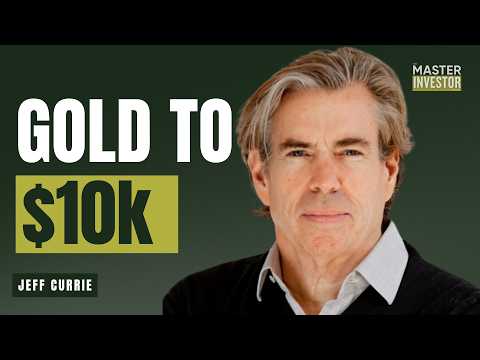
1:31 He's one of the world's foremost experts on commodities. He spent three decades at Goldman Sachs building and then leading their commodities team. He left Goldman in 2024, spent two years at Carlile before deciding to go out on his own. He's the founder of Rail Macro and of ABAX Markets. looking forward to discussing both of those new ventures with him later on in the conversations. But Jeff, it is an absolute pleasure to see you. Welcome to the Master Investor podcast.
2:01 >> Oh, it's a pleasure to be here. I've been waiting to do this, Wilfford. So, you know, I've done this with you going back when you were at CNBC for literally decades. So, it's a pleasure to be reunited in in this kind of format. Well, I couldn't agree more and particularly I would say in in this format because it gives us plenty of time to to explore the key factors and obviously we're going to get into all the commodities but I feel like we have to start with the yield picture which is the the story of the last the last couple of weeks. What is your quick snapshot on the rise in yields before we get to some of the the actions that we've seen from policy makers in response? I I mean this has been really at the core of our thesis is that you know the the debasement pressures from public debt being so large at this point and the lack of investment in hard assets and the inflationary pressures creating a sharp rise in yields and I think we're beginning to see that take place and I would expect it to be a theme and we we go back to you know we we turned bullish on commodities in October 2020 and that's when you look at yields that's pretty much where they trough yields, commodities, hard assets, all of that. And the view was that these things were just going to be a straight line up for you know decades. And by the way, if you look at the the picture, it was a straight line down for what nearly four decades. And so I think this we are in that you know call it a you know a super cycle on hard assets and commodities and yields are going to be a part of that. And I think this is we're we're not in the first inning of this. This is like we're in like the second or third inning of it. And I think we're going to see more of it.
3:47 >> And for our non-American listeners, you're referring to the second or third in of nine of a baseball game there. >> Yes. I forget. >> being based in Spain now, Jeff, you're going to have to adapt some of your analogies going forward. >> I will. >> True European that you are now. let's let's touch on the intervention then. I mean obviously Scott Besson the US Treasury Secretary announced his his buyback or or the size of the buyback going forward and his intention to try and dampen the rise in yields at the longer end in the curve. Talk us through your reaction to that.
4:22 >> you know I don't you know whatever you want to call it maturity swaps or whatever you know people have termed it. There's only one thing you call that is they didn't like the price that the market was providing and in any other terminology I call that financial repression. They want the yields lower and if we put it in the broader context of intervention you know they started it with oil intervention oil went you know through the SPR and other methods.
4:48 why they wanted to get that that the the term the the the term structure down and the term premium down. then they intervened in the the yen market. Why? Because they wanted to prevent the Japanese from selling. Then they interveneed with FEMA, you know, with swap lines to places like the UAE to prevent them from selling. In other words, they're very concerned with yields going higher. And the question is why are they concerned with yields going higher? Right now if the the the interest rate at which most of the US debt is priced at is somewhere around 3.2%.
5:26 If they have to roll in the maturities it goes up to 4.2 and if the the interest rate bill is 1.1 trillion now we estimate it go to around 1.5 trillion. That's a huge jump. So you can understand the urgency of keeping the interest rates lower because where are they going to come up with all that money to be able to pay that interest rate payments. When we look at what really changed over the last couple of years is when you look at where interest rate payments sit in you know the cap structure of of the US budget. Number one is social security and Medicaid. And then number two is the interest rate payments that are above defense costs.
6:08 So it's really moved up there and you probably all have heard once interest rate payments go above defense the country has a problem. And if anything the concern what happened was we spent 20 years with low interest rates that really hit this and then all of a sudden around 22 23 we popped up and that's why it's become urgent. And I mean on one level you could argue, you know, it's understandable if if it's just a temporary move that he wants to kind of smooth out the market. But but what do you kind of make of the timing of and the way in which it came out? It wasn't really a sort of structured announcement.
6:44 >> No, that's why I say it's financial repression and not a maturity swap because it came out, you know, a day after we hit, you know, record levels on on the 30-year. and after like 2 to 3 weeks after the normal announcement and long before the announcement that they would have normally. So it was completely out of the blue and it was very aggressive after a string of interventions in other markets like oil, yen and swap lines through FEMA to to other big owners of US treasury. So the timing of it I think is the tail that tells you this was not a normal action.
7:22 this was an action to push down those longer term yields so that hey you can lower the cost of funding at a time when they need to roll some of this debt so I think it's meaningful very meaningful >> do you think it's going to work for for long-term yields because it's interesting at the open you mentioned the long-term correlation or relationship between yields and the broad commodity index will they successfully cap those long-term yields and could that therefore cap commodity prices.
7:53 >> I mean that was always the view that you know we we had taken was that you know financial repression is preventing yields from going high enough that clear the market. So then you end up with inflationary pressures that eventually erode the debt. you know be so that's why it's repression called financial repression because it's not good you know in terms of you know the owners of these assets because ultimately it deteriorates the value of these assets which is why the Japanese the Amiradis and the rest want out of these positions because they're very aware that this is what the goal is and you know you look and the reason why we pounded the table on gold by the way I I may sound like I'm picking on the US I'm picking on the west more generally and by the way China is in the same vote is that all of these in fact I go everybody goes well the dollar is the dominant one it's going to be the you know yes it may end up being I rather own dollar than pound sterling you know sorry Wilford but the but the reality is I want to own gold over the dollar and the pound sterling and I think that that's the message here is that hard assets which are independent of central banks and treasuries and and other policy makers are where the value is going to be generated. And that's why and a lot of people ask where do I come up with the 10 $10,000 gold forecast.
9:17 And by the way, I didn't do a scientific rough to get you back to the levels of gold as a percentage of shares of reserves pre971 before Nixon took us off the gold standard. but so I think the key message here is yes, we have financial repression. It creates inflation inflationary pressures. It is, you know, it's intentionally done to lower the value of that debt. And so, the debt holders want out. What's going to protect you in that kind of environment?
9:47 It's going to be owning the hard assets. >> It's it's a really interesting point, Jeeoff. And by the way, I'd refer people back to our episode with Luke Groman recently who echoed a similar point that all of the currencies look like cells against gold, but they might all move to together. I I just want to kind of highlight though or get you to highlight Jeff the significance of your your call on gold because this is you've been a bull on energy for a while and we'll come to that but but your loud banging the table by case on gold was a was a late August call and it is a pronounced one. Just remind people of the price action. We got up to what 5,400 on gold in in in January have come back and you now think now is the time to get in and establish a long-term position. Yeah, we I mean we've been long-term bulls. By the way, when I made this, we went short in March of this year. And when I made the case, you know, I'm a perma bull on commods hard assets. They go, "No, no, actually, you and I'll probably talk about it later."
10:45 I was a bear up until October 2020. and that's when we shifted very bullish across all hard assets and in golden in particular. And so you know we look at gold and by the way I want to emphasize you put these commodities these hard assets people don't realize this since October of 2020 they are the best performing asset class bar none across all even including crypto and you know between energy because you don't the rotation may change across the hard assets but the trend is the same when you look at the broader indices and gold was one of the biggest drivers early on you know your point is January went to 5400 in March March when the war started, we go, "Hey, you got to take a step back and get out of that." And by the way, I'll be honest with you, I'm kind of a little concerned right here, right now.
11:32 And the reason why we said to get out in March was that when you look at the Middle East countries, they were going to have to sell gold to be able to fund themselves through this because they couldn't sell the oil. And then there many of the emerging markets, you know, places like Poland and Turkey, we're going to have to sell gold to pay for the higher energy prices. you know, for the most part in paid for defense. I think Poland's outright said it. so, you know, we we saw the selling of gold.
11:59 It came off down to 4,000. That's when we thought, hey, the coast is clear. and it was clear that, we were starting to see the rise in interest rates. And, you know, we took the view, it's time to get back in. And we were sitting around 424,300. We went we rallied back up. And now with the the hostilities in the Middle East and concerns around Worsh wanting to raise rates, gold took a backseat. But no way. I mean, these are little blips in in in the the daily movements. Longer term, you know, whether you you ask me what have you the actions by Bessence is just the beginning of something that we're going to see on a much longer term basis. By the way, you know, I think is you know, you know, you look at Yellen did the same thing back and I think it was in 24. So it's not every time those interest rates get back up that high.
12:47 It's not a partisan issue. It's whoever sitting there realizes how do I make the budget balance as my interest payments goes up so much. I better intervene in these markets to get them down. And again, so that's the whole idea of debasement and financial repression which is really the basis of we wanting to own gold right here. >> And and listen, it's a very compelling long-term case for gold. one sort of final quite basic question if you'll allow it on gold is if you step back and look at the chart of gold it's not dissimilar from stepping back and looking at the chart of Nvidia that the the rise in recent years looks unbelievably pronounced and one wonders whether you know without being a chart expert or or anything like that those levels of sort of 4,000 were quite crucial support. Do is there any part of you that worries if you fall below whatever that kind of relatively close level is that that they could really pull back or or is that a low probability in your eyes? I I I would view it as a low probability and here's the reason why and the pro one of the key reasons why we were so bullish on on gold you know back in in 2020 and it started in 2018 when the very first by the way Minutuchin is the only one who used secondary sanctions and he used them in March of 2018 when they punished Rousol and Oleg Dera Pasca for meddling in US politics and by the way that morning everybody I remember I was at Goldman at the time that is March 28.
14:20 We woke up, oh my god, financial systems froze up. That's why when Besset threatened it, was it this week or last? It was last last Monday when he threatened it, nobody goes, he's not going to do it. It's just it's too disruptive. But the point being why I bring this up when he did it and by the way, it was like it was a shock to the global system. Don't touch it. We don't know who's going to get sanctioned.
14:40 You're going to get taken out of the market forever. What did the Russians learn from that? Do not own dollar assets. That was first lesson. And by the way, they had something like 93 billion US treasuries. They sold them down incredibly quickly and they replaced it with gold and by the way paperback, you know, greenbacks. They'd fly them in in these super jumbo 747s, you know, plates of gold and green backs. And if they ever had a deal with dollars, they do it in something that couldn't be sanctioned. and so it began there. And then then you had the war in Ukraine occur and that's when they sanctioned the rest of the portfolio of the Russian central bank.
15:20 The rest of those whether if it's Chinese and all the emerging markets look at and go we're not owning dollars anymore. We are done. And you look at the normal relationship between gold and interest rates you can see the day they did that they disconnected. You just saw gold shoot up. And and if you are a central bank in an emerging market right now, particularly given the fact that Bassin goes out and threats secondary sanctions, are you going to own any dollars? Absolutely not. and so the buying, you look at some place like China, it's somewhere around four and a half, 5%, they're going to continue to ddollize. because it, you know, something like gold, you know, leaves you in a place where you don't have to worry about sanctions. and by the way on on crypto every crypto is a good No, it's not because it leaves a footprint. You got to go in and you got to get out. Gold you can sneak it around some. By the way, how do they you know with all these ships going the straights of horos you know you can see it you got satellite you can move gold and you can use billions of dollars of gold really quietly and trucks and everything like that because it's so dense versus other commodities and other assets. So that your ability to hide dollars in wealth in an environment in which you have governments trying to do sanctions or taxes or whatever it is, the demand for gold is not going to stop. And as a share of reserves sitting in these central banks, it's still too small in places like China and the emerging markets.
16:55 >> I guess gold is heavier than a thumb drive though. But I but I take your point about the >> but hold on actually on the thumb drive. I learned this from a Russian oligarch once and he goes, "You know, you you're running down out in the woods and bad guys coming after you and you got your FOB with your Bitcoin on it and you got your gold and platinum in here and your partner, he wants to go a different way and you can take out your axe and what are you going to do? You can break open and split the u the diamond, the gold, the platinum and split it. You can't take a fob and split it in half." And and then he goes, "The other thing, if you're swimming across the river and you got your fob in there, you can't get it wet because you're going to lose all your crypto. But hey, you know, gold, diamonds, and platinum, it'll survive the river swim." So, you know, it goes down why there's no substitute for for these things have been around for three millennia. They're not going to change as being a historic value.
17:45 >> You'll have to tell me who that that Russian was off over a beer another time. This episode is sponsored by BNY Investments. BMY Investments is part of BMY, a global financial services company supporting investors and institutions around the world. This sponsorship does not constitute investment advice. This episode is sponsored by the World Gold Council, the global experts on gold. They champion gold as a trusted strategic asset, provided marketleading research to help investors understand gold's role, and modernize how gold is owned, traded, and used, developing industry standards and market infrastructure. Learn more at goldhub.com.
18:35 Let's move on and talk about energy and and you know, as you've been alluding to, you've been successfully accurately bullish since 2020. It's had a phenomenal run, particularly this year. Before we talk about the action this year, ju just outline for us one of the key reasons I think you've been bullish in the leadup which is a very long-term point about underinvestment in the space for for decades >> and and when we look at I'm not going to say it's been a decade. It's been the last time we invested it was 2014 and the that was when oil fell off the off the cliff. And and I want to put this in the context of of technology.
19:16 And you know actually the saying was >> and when you say last time we invested you mean as as a collective western global econ even the Chinese and the reason why because the price gave you the signal it was $120 $130 a barrel and in refineries and all of those hard assets you know in fact I just got back from Hong Kong and I was sitting in in the same place I was sitting in 20145 you know talking about about commodities and I go last time I was sitting here. I think it was in 2013 and you know all you guys wanted to own was BHP and Rio or Exxon, Chevron and ProChina and if I would have brought you Microsoft or Google, you wouldn't touch it with a 10foot pole and you know it was interesting because the mentality was so commodities. In fact, I guess when I first met you, Wilfford was talking commodities back then and the and during that that environment, people thought in fact, you had peak PC demand. You know, tech is terrible. By the way, they were spending 15 to 25% of their free cash flow. There's no investment. They were they were just the worst of the bunch.
20:29 By the way, the metals guys, the oil guys, you know, in fact, the term I use were spending like drunken sailors then. In fact, they were spending 120% of free cash flow. And by the way, the investors are going rah rah rah more more more grow. And you know, and then all of a sudden, as we all remember, it didn't end. It ended badly. you know, oil prices collapsed, metals prices collapsed, the dollar ripped, and that's when we transitioned out of that that commodity super cycle and into that tech super cycle. by 2015 2016 they're going Microsoft and Google look pretty interesting and by the way then they went on on a terror but I think there's a couple takeaways that come out of this people go when are these these oil guys going to spend again I go they won't remember we fired all the CEOs and management teams in those metals and mining and those energy and oil companies in 2013 and 2014 because they spent too much we waned on the idea you don't spend.
21:33 And so, in fact, I like to call it the municent seven. Municent means gifting lavishly. When you look at the big energy companies put together, the top seven of them, they have a free cash flow yield of 15.5%. The mag seven is two and the hyperscalers are zero. They don't because they're spending. And by the way, those tech guys are now spending like the drunken sailors of the metals guys back in 2014. They're in the 100% of free cash flow and what do you and by everybody at this this conference were all what do they want to do? They just want to get long the mag seven the tech the AI guys and they go no we don't want to touch these oil guys. and so when I go back to the point this underinvestment theme, so you had that going on. By the way, the investors do not want, in fact, the one thing I've learned is growth is like a it's a it's a even though it's five letters, it's a it's like a four four-letter dirty word.
22:27 You don't grow in this space. And so that's one of the mentality. The other one is remember we for people forgot about ESG. People are wondering why are we having diesel prices go to the moon? We haven't built refineries because they were considered off limits because we assumed, you know, we would never need them again because of peak oil demand, which is something that's thrown out the door and people have forgotten about it. But the the overall incentive was not to spend. And I think that when we think about that that those two put together, that's why we don't have the investment and we have all the problems we're witnessing to here today. But I I I also and by the way the first time I discovered it was in was February 2002.
23:08 We called it the revenge of the old economy because they called the dotcom guys new economy and the you know the Exxons of the world were were old economy but it's something that that that that we see here. but that's not the only reason you know we can talk about it later why I want to own own the space but there's a lot of demand reasons also there that that that play come into play. Let's stick on the supply just for a minute longer. And I kind of almost it's the question I would have asked three weeks ago before hostilities picked up again because even before they picked up again in the Middle East, you you were making a point which you alluding to just there that even if crude prices Brent or or WTI had paired back some of their gains albeit still up on the year you were watching closely the prices of the the refined products the products that we actually all use that actually will feed into CPI and other inflation prints. and those were spiking regardless of of crude softening its its rise.
24:09 >> Yeah. And I think it goes to underinvestment in refineries. And going into this, there was expected to be zero investment in refineries after 2027. And I was just in a big refining thing yesterday in Hong Kong and they made the point we got a little bit more coming in 27 and 28, but that's delays from 24. There has been no new investment. I weigh cracks are they're normally somewhere around $15$20 a barrel. They're $15 a barrel. That's four times five times more than normal. These refineries are printing cash. Again, magnificent 7 versus magnificent. Municent means giving you money. and these things just print the money right now because there's none of them and we can't build them. It takes you seven years to build one. So, you're not going to, you know, actually was entering. I said, I was asking Claude the other day, who is richer, JD Rockefeller or Elon Musk? And he goes, well, as a share of GDP, US GDP, they're about the same, but Rockefeller was a different kind of rich, i.e. cash. These assets spin out cash, which goes to municent. They give you cash, but I can't get anybody to want to own them. They some reason they don't want cash. They want something, you know, building data centers on the moon as opposed to getting cash today.
25:33 but I think the key point there is we had the underinvestment of the of these refineries. The other factor that that comes into play is you had people are focused on straits of horm moves and don't have their eye on the ball on on Ukraine. Ukraine has gone in and taken out somewhere around 3 to four million barrels per day of Russian refining capacity and that was 10% of the global supply of diesel. Also when we think about the Straits of Hormuz, there's another 3 million barrels per day of refining capacity trapped behind the straits. And when we think about if you're going to sneak a tanker out, are you going to sneak a tanker of product out or a tanker of crude? You're going to do the crude. Why? Hey, if you get hit by a bomb, you have you have a good chance of surviving it. But if you're on a gasoline tanker, you're not surviving that if you get hit. So, nobody's going to take the risk of taking the gasoline out. So, those refineries stay offline.
26:27 And that's where the shortage is. And I don't understand why everybody's so focused on counting the barrels of oil getting out when you got a crisis in products. And you know, you look at the price of of diesel, it's like $468 on NAX, which means it's near $6 at the pump, if not higher. I haven't looked at it lately. This is where the real concern is. I think what it is is people don't have any way to assess the the the $4.68 they see on their screen and they don't think about it. I don't understand why they can't, but they don't look at it.
27:00 >> And and just a couple other areas to to round us up. I mean, hypothetically, if you did get a a lasting peace deal with Iran and maybe not full peace, but something more peaceful with Russia, Ukraine, would would that remove your your significant bullishness on on energy related products? >> I I actually I I think we're at that turning point right now today. China China is coming back and you know the point people in fact somebody asked me the other day, oh, China's the reason why energy prices are low. I go, "No, China, the reason why energy prices are high, nobody in this world that's listening to this, other unless you own a refinery or if you own an oil company, cares about the price of oil. The other 99% of the world only care about the price of products." And I don't understand this why they tell me, "Oh, China's a reason why oil prices or energy prices are down." They're a reason why oil prices are down because they're not buying the oil and exporting the product. China's a net export and we think about what does China do it strategy whether if it's in steel aluminum AI control the processing control the processing you control the processing you control the cost you control the geo geopolitics and you end up controlling where the value in is in the supply stream and so when we think about what China does whether if it's in copper or oil or steel or whatever it buys the input and then trades what that that processing margin is. And so for for security reasons, for reasons around you know the the price of wanting to control the price of energy domestically, they cut back on their runs and they cut back export of product. They're coming back. So if right now I'm not ready to go, hey, I'm going to short diesel cracks and I do want to be long oil. You can see it. By the way, Dubai there's a thing called backradation. It's like the spread between the spot and the forward. It's super bullish formation, which tells you the Chinese are buying oil again, which means what's going to happen right now, diesel prices are 189, oil is what, 94.
29:12 Actually, it's 96 right now. What's going to happen is you're going to see oil go up and the refineries get less. And that's because the Chinese are likely to come back. >> That's very interesting. And how much does where strategic reserves are globally feed into that case as well? that that crude stocks are lower than they were when the war started. >> you look at the US, it's really slowed down. You're at like 280 something. I'm not, you know, this million barrels, you know, but going into this, if you would have asked me where do you get the problems? I'm just citing research of engineering experts.
29:46 It'd be somewhere around 270 million barrels. You know, Amos Hawking, who was, you know, and the the Biden administration, he's harping on some, you know, below 300. He's got to know cuz he was the guy sitting there, you know, taking this thing down during the Biden administration. We're we're at that point where it's going to start to become dangerous and where where are you going to find it? And by the way, this whole idea you can just take Venezuela, turn it on, and refill it. It's a different kind of oil. It's going to take a long time. This is not going to happen to tomorrow. And whether or not, you know, and we and here's the other thing, too. People sit there and go, "Oh, you know, you know, they're up to twothirds coming out of the straits."
30:25 Let me just remind everybody that 7 million barrels per day of oil still shut in. I don't care if it's, you know, 12 to 13 or 14 or 7 million shut in versus 8 million. That's 7% of global supply that shut in. These markets run on very thin margins. we are going to have a problem eventually. By the way, we don't it's not eventually. We have a problem in diesel and that's an affordability problem. And we just go back to our problem on interest rates.
30:54 interest rates. That 10 year sets mortgages. It's an affordability problem. and we think about gasoline prices, retail. So, everybody's thinking about, oh, oil's at 94 and it's not at 150. You're 189 on diesel. You have an affordability problem. So, it's not something we're waiting for. It's here. On on that note, Jeff, I mean, I I discuss this very regularly on on Sky News that there's not I guess no one's optimistic at the moment, particularly about the outlook for the economy, but there is a calmness that that the tepid growth of recent years will continue. Do do you think whether it's the US, whether it's Europe, we're under underestimating global recession risks?
31:38 >> absolutely. And you know I have a term for that is the abundance illusion. And I I I want to go back to Jimmy Carter 1977. he did give what's now called the the sweater speech and he was in this cardigan sweater and he's on on on TV and you can see the thermostat in the back and it's turned down and he's cold. He goes you know you know telling the public you know we have an energy crisis. you're going to have to do conserve energy because we have scarcity. And what do you think happened the minute he finished that? Panic set in. by emitting the problem, it created hoarding a lot of other problems. And what would you do? Oh my god, the president just told us we're out of oil run down and you're going to fact I remember I'm I'm old enough to remember my father put a diesel tank in our backyard. and that's not the reaction you want.
32:38 And when when when you think about from that point forward, it started with Reagan never had a problem with it, so he didn't do it. But with George Bush senior in the Iraqi war in 91, from that point forward, released the strategic reserves and talked the price down. And everybody thinks Trump's being different. No, Biden did this. Obama did it. George W did it. Clinton did it. And George HW did it. They all did it. And so when we think about it, that abundance illusion. The Europeans do it because what happened to Carter? He created he was a one-termer and it was done and over with. But I want to go one other point that Carter had another speech and it was in April of 1977. It was called a meow speech. MO, moral equivalent of war. And by the way, the press killed him. They called it meow. I go he he's an idiot. Blah blah blah. U you know what he proposed? He proposed energy transition.
33:35 energy transition was never an environmental movement. It was all about energy security. He put solar panels on the roof of the the White House and said, "We need to quit consuming oil because it's portable and stored. We need to consume nonfossil fuels because they're secure. We have sun. We have solar and let's go nuclear power." And I like to point this out during that time period, France has 90% of its power come from nuclear power. it and it has the lowest carbon footprint in the world. How did it get there? It didn't get there because it wanted to save the planet. It got there because Charles de Gaulle was afraid of exactly what is happening today with the Straits of Hormuz shutting down. So that point I want to say, you ask me, you know, are we underestimating it? It's done on purpose in the West. And one last point, I know I'm rambling on here, is China heeded Carter. They did energy transition. It was never about saving the planet. It was about it being protected in an environment just like today.
34:35 >> Of course, you you guys the US is obviously at least energy independent today, particularly with with the help of some of the dirtier crude in Venezuela. Not something you can say about the UK. And I I I kind of agree. I think recession risks are significantly underpriced in places like this. Before we move on to a and and other commodities, I just want to check. So the municent seven is what the the global majors. Who are the the seven?
34:58 XOM, Exxon Mobile, Chevron, Kico, Phillips, BP, Shell, Total, and Saudi Ramco. >> Okay. So, not not any from Italy and not the Asian the Asian names >> because you want people who pay big cash flow. the I mean, that's the thing. >> The French total love a good dividend, but I'm not sure that their execution is always the best. Actually, you know, I'm gonna disagree with you on that. I would say Patrick Puce, he he he does what we talk about as being the new jewel order.
35:34 The new jewel order is diversify. do it from, you know, oil, gas, solar, wind, nuclear, do the whole, you know, he has in, you know, East Texas, he has, you know, solar and wind going into the power with the gas underneath. And then he has, you know, oil and gas and places like, you know, actually, I can't take this. I think it I think he does in Germany. It's actually he has actually I think he has oil in Germany. But I think the key message about Totau is that it is it has a little he cares about the jewel which is why we call it the new jewel order and he he focuses on creating jewels from all the available sources because you do not know which one is going to have a problem. Mhm. And all seven of those. Is there an ETF that merges them or you just think people should establish positions in >> I'm working on I'm working on the ETF right now as as we speak. So, >> hi guys, it's Wil. I hope you're enjoying this episode. Just a quick reminder to please hit follow or subscribe on your podcast or video app so that you never miss an episode. And if you've got time, please do give us a fivestar rating and leave us a comment.
36:48 really helps other people find the podcast too. Now back to the episode le let's move on to agg Jeff because this is again a slightly more recent call at least the extent to which you've been pounding the table again in late August you you were loud and clear that that you expected the a commodities to pick up indeed they have. Yeah. And when when we look at the motivation behind that call again, we we've been long the whole complex going back to 2020. And but if you look at a it's the one that's been the most explosive and it was in the tree commodities first and tree commodities are like coffee, cocoa, and cotton and rubber's in there as well. they were the the reason why they've been impacted the most is they're at the equator.
37:38 and the global warming has had a really significant impact on remember you saw that was it was the Hondurans that were you know the immigrants that were coming into the US in like 22 and 23 because they couldn't the coffee was being taken out and when we look at what's going on right now it's two factors it's a record El Nino and you have war Ukraine is going into the Black Sea grain corridor and taking out Russian exports, also taking out Russian oil. So I I I'm kind of shocked the market is only focused on the straits of hormones. Is it open? Is it closed? You know, what is the president going to tweet today? Yet nobody's paying his, by the way, is today the first time in nearly this has been going on for about two months. you know, Secretary Bessant actually brought it up.
38:29 that's going on in the Black Sea with the with the Russians taking out refining capacity. And I think one of the reasons why the CIA, you know, sent their representative to Moscow was tell the Russians, stop this because you're starting to really impact inflationary pressure. So you have war plus weather combined. And let's think about what the weather is doing. You know, the Ryan River is at is at record low levels. the Panama Canal is being shut down to things with only a 47 1/2 ft draft. So we are a lot more choke points than Straits of Hormones. You got the Straits of Hormuz. You have the Red Sea, which is war with the Hoodies. you have Black Sea on Oil, Black Sea Grain Corridor, Russian Refinery Capacity, Ryan River, and the Panama Canal. Those are a lot of choke points and they're all out of reach of the toolkit that Washington has from its policy perspective. and we're beginning to see it on our screen. So, and actually out of all those calls that we made back in August, and it's been about two and a half, three weeks ago, the best performers are the is the agriculture. I I just everybody go back and look at a at the price graph of wheat. It's a line going straight up. and also when we think about last point I want to say and you metals too are on fire right now is most commodities are dirt and diesel.
39:49 I hate to make it boil it down to that being that simple. If diesel is at an all-time high, you're putting a lot of pressure on everything else. At the same time, you have all these weather shocks going on. So, you know, the the risk here, I think, is substantial. particularly on the grain side. And if we go back to everybody likes to take inflation and strip out food and fuel, but that's throwing the baby out with the bathwater. from an affordability perspective, food and fuel are central to the to the overall inflation expectations going forward. So you know again why are in going back to where we started this conversation you know the higher interest rates you know are being driven by the risk here that are getting increasingly more important dayby day.
40:38 This podcast is sponsored by Interactive Brokers. Building wealth starts with the right broker. And Interactive Brokers helps you reach your goals with powerful tools, global market access, low costs, and unmatched financial strength. That's why the best informed investors choose IBKR. Learn more at ibkr.com/master investor. This episode is brought to you by Else, the leading global financial markets, infrastructure, data, and analytics provider. To learn more about how Else connects businesses, investors, and markets worldwide, visit elseg.com.
41:23 I guess as we kind of sum up all of these commodity kind of positive outlooks, I have to ask the extent to which it's already priced in. I mean, I I I get that some commodities are only responding more recently than others, but this year has already been a great year for those municent seven stocks that you mentioned, even if on, you know, price to free cash flow yield, they're they're still relatively cheap. and as you kind of just outlined, it's hard to see many more choke points emerge in in in the global sort of shipping lanes that that already exist. So to what extent do you worry that some of these things are already priced in?
42:04 >> very little. And the reason why is commodities are spot assets. Financial assets are anticipatory assets. And what does that mean is that commodities they're they're physical assets that clear today's supply and demand, not tomorrow's. Even the futures are not tomorrow's. They're a cash and carry relative to today's prices. Financial markets like stocks and bonds, they price expectations on growth rates. In fact, the way I like to say it, why do you get a negative correlation between commodities and financial assets? is that when the inflation happens like it is right now and Worsh expressed his concerns in Jackson Hole about raising rates and that's what took some of the steam out of out of gold and if he begins to start to raise rates the financial assets go down because why growth expectations go down commodities will still go because think about this commodity is demand is up here supply is down here you got a deficit whether if it's oil grains or whatever so you got that spread let's say they raise rates and they slow the demand down, you're still in a deficit. The markets are still going to die. The only way commodities go down is if the demand goes down like that below the supply and that's not likely to happen. And so when we think about with financial markets, all they're they're they start going down because the higher rates says you have a lower growth rate and that's why they go down. And so when we think about why you want to own commodities in this kind of environment is they're going to be the ones that are going to power ahead as your financial markets get hit with the inflationary pressures. By the way, you know, it's it US Labor Day is next week. I think when people come back and sit in their desk and they look at the situation and see record diesel prices and you know, who knows, oil will probably be over a hundred by then.
43:52 and we see, you know, metals prices, you know, copper's at an all-time high. I think zinc is is is getting their aluminum. They're gonna look at this go, hey, you know, the risk in inflation is probably pretty high right now. I better get out of the financials and start, you know, out of, you know, the equities, out of the bonds and start looking at these hard assets, you know. >> So, just f just finally on that then to push it a bit further. I mean, I guess the question is how long is the lead time with which you're confident commodities will still rise? But we all know the old adage that the cure for high commodity prices is high commodity prices. It draws investment in. You've already touched on the very long lead time to to build out more refining capacity. So I guess there's some breathing room there. But to your point on if demand is here and supply is here, if if you do feel that there's risks of a recession, that would be a trigger to to pull demand down.
44:51 >> And by the way, that happened in 0809. put it, you know, commodities, high oil prices helped facilitate that credit crisis because, you know, you get higher yields and and it compounded on itself. Commodities collapsed in there. But the structural bull story, the super cycle kept playing out in 9, 10, 11, and 12. And it wasn't until late October 12 that we became neutral on there because it became apparent Shell was going to solve the problem. and you had too much.
45:19 Again, going back to these guys were, you know, spending way too much in 12 and 13. and you know, eventually everybody goes enough is enough. And you couldn't stop those managements from spending because that's what they knew knew how to do. Kind of like the AI guys today. >> but I but I think the so we think about where are we in this. I'm comfortable that this super cycle there may be a recession. It'll come down, but it's going to go back up really quick.
45:44 I don't think there's a going to be a catastroastrophic recession because we don't have the same imbal you think about where are the imbalances in the global economy today. everybody wants to point at private credit. It's nothing like what we had in 0809 and it's not systemic or anything like that. the problem is in the sovereigns this time. That's where the imbalance is. It's not in public credit markets or anything like that. It's with the sovereigns.
46:08 It's with the United States government, the British government. you know, it's with the Chinese government. By the way, the only ones that are actually, it's the Germanspeaking countries that are actually the continent. Actually, here in Spain, they're in pretty good shape. Actually, Europe is actually in really good shape. Take the UK out of it and Italy out of it. The rest of it's actually relatively in, you know, you take in general, they're 81% including the UK. And when you get into places like Germany and Spain, you get into the 60%. to put it in perspective. the US is 125, Japan and China are the 200s, 300s. so these are real serious problems in terms of of of looking at at at these sovereigns. So I that's why even if you do have one of these problems, it's not like 0809. It's very very different.
46:54 >> Yeah, those obviously you're referring to the debt to GDP percentages there. so, so as we kind of start to kind of broaden out and conclude, Jeff, I'm interested in terms of are there any moments in your career or or other parts of economic history that you really feel feel like today where where that kind of echo of history stands out to you? >> Well, I originally if you would have asked me this question in January, here's what my answer would be. Oh, it's just another it's another hard asset cycle. And here's the model I I think about the world as being is there's two industries that matter. One is energy and commodities. If you can't turn the lights on, nothing happens. The other one is technology. If you don't innovate, you never progress. And you look at a history since the post-war era. It's either hard assets like commodities or you know let's say like the Exxons of the world or it is the the world's being led by the technology guys you know let's say like IBM Microsoft Nvidia Google it's always one of those sitting at the top and if we go back to the 50s coming out of the you know the second world war we had a big physical capex boom cycled to rebuild everything coming out of the war and the commodity guys led but eventually they overdid it you're swimming in capacity and we go to the nifty50. The 60s was all about, you know, low and stable inflation and low interest rates. Very similar to 2010s in the early part of this decade, but eventually you ended up starving off the capital to the the the hard assets and you went into the 70s and then that was the boom. And so, you know, you look at, you know, IBM, Kodak, actually Coca-Cola as long-term growth type brands. It's same thing as technology.
48:38 They led the nifty50 and then they got crushed in the 70s, the 80s. Exxon's the top of the the king of the mountains. Then they get crushed and then the tech leads. You the dot and Microsoft's the top of the mountain in 2000 and Exxon's down here in the bottom. And then they get crushed by 2010. Exxon's at the top and Microsoft, you couldn't give it away in 2011. And you know, here we are. Microsoft, Nvidia, Google at the top.
49:04 Nobody really likes these these oil companies right now. Where do you think we're going to be in 10 years? That's the way I looked at the world post Iran. This is bigger. This is way bigger. And the reason why I say that is let's start looking at the book ends of what's changing here. And you know, let's start going about the globalization story between that occurred. You know, I'm using this from Robert Pape, a professor at Chicago. And he goes in 1991, two things happen. The Soviet Union collapsed. United States goes to Iraq with 10,000 body bags and used 147 and the word was shock and awe the Americans. They became the hedgemen to the world and that unleashed that globalization. What's happening here? US is being challenged by China. I came back from Hong Kong. Hong Kong has the mojo back. China is like going, "Hey, yeah, we're the big guy on the street now." And the US is not doing too well in Iran. So it's those are the two books. That's globalization that's done.
50:01 you then let's think about Brett and Woods 1945. You know what was the deal with the grand bargain? You we're going to give you the World Bank and all this money. Rebuild yourself. Use the dollar. and we're going to use our big gigantic navy to protect the world and free trade and globalization. Guess what? The United States is breaking the grand bargain today in in the Middle East. And people goes with Bakra. I go, you know, are they going to walk away? They can't because what are they going to do?
50:29 excuse me, Mr. Ayatollah. Can I bring my my superpower Abraham Lincoln into into the straits and park it at Bach Rain which is my big you know naval base there? This is huge. This is not you don't take a big L and walk away like everybody thinks. This is huge. This is gamechanging. And then I want to put this into perspective bigger for 400 years. Bach Rain was founded by the Portuguese in6002. It's called Fort Portugal. And when we think about that US Navy, it's not the ships and the technology. in 1941, the Americans inherited it from the British. It got Diego Garcia. Think about that name. Who founded that? It was the Spanish and the Portuguese. Bachrain. The British got it from the Spanish and the Portuguese. The Spanish and Portuguese founded all this stuff. Why? Because the Ottomans cut them off from the spice route going across Asia land. And they had to figure out how to do this with ships. They created deep sea navigation. They're the ones who founded all that. Then the the British inherited and then the Americans inherited from the British. This is Western dominance for 400 years. By the way, I was making these arguments in China when I was there this week.
51:41 They're like, "Rah, rah. This is our first time in 400 years we can push the the West out." What did the world look like before Britain? U because when the British defeated Napoleon, that's when we got a hedgeiment. And after the after you know Britain it became the Americans and you know the the Anglo have controlled all of those islands Diego Garcia Bachrain and everything and been the global hedgemen for for you know good 200 years. what it looked before it was sovereignbacked corporates like the Dutch East India Company with their gunships and you know in fact by and what do they trade golds and silver and I think that you know are we going to go back to a world where that you have sovereign backed you know corporates that are running around the world are we going to be trading gold and silver in tokens it's something you really need to think about because if the US is not the hedgemen we're going into a very different world.
52:37 >> It's it's fantastic food for thought with some great historical context. Jeff, let's have that forward-looking kind of follow on on crypto. You're very bullish gold. You've made that clear. Where are you on Bitcoin and and other crypto assets? crypto. I think Bitcoin did more damage to digital ledger technology DT than I think we can fathom. People are because the technology is incredible. and I when I think about where we are on, you know, the progress of web, web 1.0 was HTML. You read it.
53:14 That was 1990. web 2.0 was social media. that was you know that was in the 2010s. and and then I like to point out you know Goldman figured out how to do HTML with like you know Enron online was a force in trading. We created a liquidity explosion and actually the same with you know Goldman became the vampire squid by 11 and 12. what did President Trump he figured out web 2.0 O how to read it or write it. That was understanding social media and everything like that. And you know the MAGA movement all came out of that and they took over the world. Web 3.0 is DT. Own it. Read it. Write it. Own it.
53:55 And was crypto ever made for humans? No. It was made for AI. and because now you can think about what this you create your AI agent arming with his with his wallet. A wallet is a token. and you know and you run them down the rails and let's take baseball cards. They're really far down in terms of getting down into the downstream. they trade at 20 to 30% bid ass spreads. Now I arm my III agent with his token. He can go down there and arb that out and close that arbitrage. We're going into the the the possibilities here are huge. But the problem is everybody's stuck with crypto. Now what's my view on crypto?
54:36 you know, it's not going to replace gold. It's been around for 17 years. It's about a $1.25 trillion market cap you know, industry. Gold is 30 trillion. It's been around for three millennia. you can hide it. You're not hiding crypto. Everybody calls it crypto. You got to buy it. You're going to leave a footprint going in. So, I'm super bullish on the technologies. I think actually when we look at, you know, the Genius Act in the in the Clarity Act, it's I think it's going to create another liquidity explosion like what we saw with Goldman in the in the in the in the 2000s where they just went downstream and started trading. I like to point out that web 1.0 allowed us not trade WTI and Brent, but to trade like, you know, gasoline and jet fuel and all these things further downstream. So, I'm a big believer in the technology. I'm not a fan of of Bitcoin and the crypto crypto itself. Tell us a little bit more about what you're doing now with Real Macro. Of course, two years after you left Golden >> Real Macro I like to, you know, call it Real Macro.
55:41 >> Your Spanish presence now, >> Spanish, my Spanish presence. And I named it after Real Dio. And what is the Real Dio? It was the first silver coin. It was the first reserve currency that the Spanish developed. And by the way, that's where the dollar signs. It's P real do means pieces of eight. It was in eight units and that's part of where the dollar sign and the coin was silver. But the point being is here we're going back to a world of hard assets. And I go back to you know the world before you know during the real dojo is that hard assets were at the key. We talked about you know the world you know before that the the British it was gunboats and you traded in silver and gold. And I think we're going back to a world of that. One last point I want to make here. One of my predictions is the sovereigns or the corporates are going to trade through the sovereigns. Meaning Apple's debt is going to trade at a tighter yield than the US treasuries. And that was what the world existed back in the reality dojo world that we lived in.
56:44 >> Really really interesting that Jeff we are pretty much out of time. this has been fascinating. I've loved it. we'll have to get you back on but I flagged this to you at the start. We like to end by asking what the overriding piece of advice you have for our our listeners. so what is it? >> Don't try to to get too fancy in these hard assets and you know I like to call it halo hard asset local operations because we're going to we're going to delobalize and fragment. and you don't know which commodities are going to be the ones that are going to go up.
57:19 So own the broader indices. Don't try to be smart and cute here. Own the basket of miners, oil producers, you know, uranium, critical minerals, food guys, own just a b don't try to actually pick which one. Remember I was saying before, why do I like total strategy is because they own a little bit of all of it. We don't we don't want to just concentrate on one thing. so my, you know, whether if it's a, you know, like an indicy like, you know, like, you know, the old part of why what I'm going to try to do is create new indices because the only ones out there are like, you know, the the, you know, the BCOMs and then the Goldman Sachs commodity index. Quantics has one of them. but, you know, ultimately, you know, that's where my focus is going to be is creating new investment vehicles because we haven't done this for 20 years since, you know, ' 06 in that time period.
58:08 >> Jeeoff, that was absolutely fantastic. Great to have you with us. keep us posted when you launch those ETFs. We'd love to have you back. and thank you again for joining us here on the Master Investor podcast. >> Great. Well, thank you for having me, Wilfred. I really enjoyed it. >> That was Jeff Curry, of course, of Real Macro, former Goldman Sachs head of commodities. Next week on the Master Investor podcast, we will be joined by Thomas Pivy, the founder and chairman of Interactive Brokers. So, please do hit follow or subscribe on your podcast app to make sure you get that one, too.
58:41 We'll see you next time. The Master Investor podcast is sponsored by the World Goal Council, BMY Investments, Lseg, and Interactive Brokers. Please do remember the views expressed in this podcast are for general information purposes only. Nothing in the podcast constitutes a financial promotion, investment advice, or a personal recommendation. More on that in the show notes. This podcast is produced by Paradine Productions and Master Investor Limited in association with Birdline Media. If you've enjoyed the show, please do subscribe on YouTube or click follow on your podcast platform and you'll be automatically notified each time a new episode drops.
Summary
- Financial repression is leading to lower yields and inflation, pushing investors toward hard assets like gold.
- Diesel prices are significantly high, indicating an affordability crisis that affects overall economic conditions.
- The lack of investment in refineries and energy infrastructure is contributing to rising prices and supply shortages in refined products.
- The current economic environment is marked by a super cycle in commodities, with rising demand and constrained supply.
- Curry predicts that the U.S. will face challenges in managing its debt due to rising interest payments, which could lead to further interventions in markets.
- He believes that the demand for gold will remain strong as central banks diversify away from dollar assets due to fears of sanctions.
- The agricultural sector is also experiencing price surges due to weather events and geopolitical conflicts affecting supply chains.
- Curry advises investors to focus on a diversified approach to hard assets rather than trying to pick individual winners in the commodity space.
Questions Answered
What is financial repression and how does it affect investments?
Financial repression involves keeping interest rates low to reduce the value of debt, which can create inflationary pressures. In such an environment, owning hard assets like gold becomes crucial for protection against devaluation.
How do geopolitical events and interest rates affect gold prices?
Recent geopolitical tensions and rising interest rates have caused fluctuations in gold prices. Despite short-term volatility, the long-term outlook for gold remains strong due to ongoing financial repression.
What are the implications of underinvestment in refineries?
Underinvestment in refineries has led to significant price increases for refined products, which directly affect inflation metrics. The lack of new refinery projects means that supply cannot keep up with demand, resulting in higher margins for existing refineries.
How can diversification in energy sources mitigate risks?
Diversifying energy sources, including renewables and traditional fuels, helps create a more resilient energy portfolio. This approach reduces dependency on any single source and prepares for potential disruptions.
How have commodities and technology influenced economic cycles?
Historically, economic cycles have alternated between commodities and technology leading the market. Understanding these cycles can provide insights into future investment strategies and market trends.