Transcript
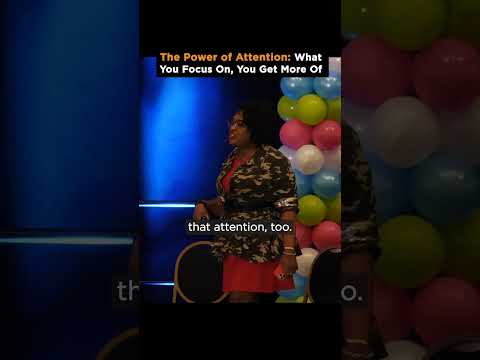
0:00 what I also want to point out our attention illuminates whatever it's focused on and all else Fades into the background putting attention putting our attention on something places an inherent value on it so when I put the attention on the good that you're doing I'm going to get more of that when I put the attention on something that's not so good I'm probably going to get more than that so let me tell you remember I told
0:31 you guys about kindergarten Mafia I had I had this one little baby called little turnup and until I found that wasn't his real name y'all but he was turned up all the time so we just call him a little turn up right so listen I couldn't figure out what to do with them this was before I had realized Doug give him some jobs lady but before then he was just acting out and I was always
1:03 placing my attention on him and what do you think the other Scholars started doing they're acting out because they want that attention too but when I started putting my attention on good things that were happening guess what I got more of good things positive things we must scaffold children's attention by helping them aim their flashlight at the desired goal we assume that Scholars and people come to us already knowing how
1:36 we'd like them to behave and treat us when the truth is is that we're teaching people not just Scholars people in general how to treat us every day and so whatever I'm focused on that's what I'm going to get more of but that's a choice for my S I can change my mind not your mind I can't change your mind I can influence uence you I can ask you but I cannot be responsible for your mind changing I would like to be though
2:08 but I'm not
Summary
- Attention shapes perception and value; focusing on positive actions yields more positivity.
- Neglecting positive behavior can lead to increased negative behavior as others seek attention.
- The speaker shares a personal anecdote about a challenging student, "little turnup," to illustrate this point.
- Redirecting focus to positive behaviors can transform classroom dynamics.
- We must actively teach others how to treat us through our attention and responses.
- Changing one's mindset is a personal choice; we can influence others but not control their thoughts.