Transcript
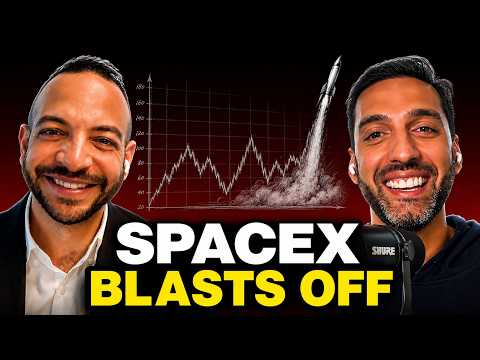
0:00 SpaceX IPOs soarses and makes Elon Musk the world's first trillionaire. Anthropic's fable rollout doesn't go as planned and open AI may drop rates drastically is a price war and root in artificial intelligence. That's coming up on a Big Technology Podcast Friday edition right after this. Welcome to Big Technology Podcast Friday edition where we break down the news and our traditional coolheaded and nuanced format. This is definitely one of those weeks where I have been waiting to get Rajan's take on the news uh for days on end. I haven't heard his thoughts on the fable fumble. Uh but I'm so excited to get his perspective on what it means now that we've seen a version of Mythos. So, we'll do that in the second segment.
0:40 We'll also talk about OpenAI potentially drastically lowering prices for its GPT models. But first, we'll talk about SpaceX and the SpaceX IPO companies trading above trillion dollars. We'll unpack what it means. Joining us as always, of course, on Fridays to do it is Ron John Roy of Margins. Ron John, great to see you. >> Wow. You know, when the fable fumble is going to be story number three. We've got a we've got a busy week, but we do have the world's first trillionaire. I think it's time to celebrate, right?
1:13 >> That would be Elon Musk. You know, this is a very interesting IPO for a number of reasons. Obviously, it's going to factor heavily in the AI world because if you think about it, a year ago, SpaceX didn't really have an AI play. Then, in the run-up to the IPO, the company signed a $15 billion deal with Anthropic, a $30 billion deal with Google to lice out license out the data centers that it's built for its own AI efforts. uh and now it's become like one of the biggest uh clouds in the world, maybe the world's well definitely one of the world's largest AI clouds. And that has propelled it to a $75 billion IPO.
1:57 It's above $2 trillion. Elon Musk is worth a trillion dollars, which is a crazy amount of money. Um and that is where we sit today. So Ranjan, I just would love to get your perspective on the IPO. of course the broader story about what it means. So they came out telling us that 26.5 of 28.5 trillion is the addressable market in AI in particular. So is this the world's first a AI IPO? And if it is, what does it mean for OpenAI and anthropic?
2:30 >> I is this the world's first well is this not the world's first AI IPO? I think it's certainly out of the big three. It is amazing. I have to just say like how in the span of I think what is it six to nine months Elon Musk has turned SpaceX into an AI company with the acquisition of uh of X AI his own company um with these incredible anthropic and Google uh AI cloud deals with the potential kind of a I I don't know if it's an acquisition of cursor at least it's the right to buy cursor suddenly has uh has gotten in the fold and and again the we we talked about this the last few weeks the numbers are interesting again in terms of like the actual revenue in terms of how much money they're losing in terms of Starlink the actual infrastructure business being the cash cow but I just have to say like let's take this moment to actually this is what Elon Musk is incredible at and like I have to admit between the anthrop ropic in the Google contracts between the way he rolled up all his different entities to pull this off in this way at least for this moment is pretty spectacular. I it's it's pretty masterful, >> right? And you know there was certainly money that was going to be earmarked towards AI IPOs from investors, right?
4:00 And certainly people were waiting to invest in SpaceX, but you could argue that without the AI side, SpaceX is not a very compelling story. It's a communications uh company with Starlink and this launch business that's not profitable. Of course, a lot of that money is in R&D. The AI story, you know, gave the market the market, I think, was looking for something to be enthusiastic about for SpaceX, something to justify putting in the money. And now they got that story and they responded accordingly. So the question to you Ranjan becomes is is Elon taking money out of Sam and Daario's pockets because maybe some of that money was going to go to the open AIS and anthropics of the world or has he just set the precedent that if you want this you know AI company that's sort of spun up in a moment you want to get behind that story uh then you should definitely get behind the other two. What's your thought? I think so. I actually think that the the like masterful pivot that was made and again I say this all not saying that any of this is good for the markets as a whole or if like retail investors in general but again the brilliant kind of pivot he made was that Elon Musk made here was it's no longer just kind of like an AI play in the way XAI and Grock was like where he was positioning those businesses data centers became the business duour and uh he turned this into a data center business. Remember originally he talked about Colossus, he talked about all of you know the it was a major part of the overall infrastructure but it was to fund Grock to be the leading AI business but then he just with two contracts two phone calls from I believe I know Google is certainly an investor in SpaceX. So, I'm not I'm not anthropic. I'm hoping that would be crazy if they were that would just take this to another level. But but again, couple of phone calls and Elon Musk managed to completely shift the It's crazy like when was SpaceX founded? 2000 >> 2002 >> two a 24y old business. You completely transform how the market understands it with two phone calls, couple of lawyers, I'm guessing, maybe a couple of meetings, but that's it.
6:25 >> All right. But then, talk, what do you think about the implications for the other two? >> I think it's it's hard to say. As of recording time, SpaceX trading at 171.3 I think it's at like a 24% increase from the IPO price 135. We are at a $1.75 trillion value. All that sounds good, but I mean we got a long couple of months ahead of us. Like I think I don't know what normally the summer months are, especially on certainly any IPO activity, they're just quieter. I think we're going to be in for two of the two to three of the most wild news months in the a summer ever in any of these. And again, I I think where is SpaceX trading to on Monday, a week from now, a month from now, it is impossible. remember that so much of how this is orchestrated, it's only a 4.3% float.
7:27 Like it's tiny. It's uh like everything was done and it was done perfectly to actually kind of like bring about this massive uh valuation and IPO, but we got a long ways to go and I don't know. Do I Where do you think it's going to end up for our friends Dario and Sam? >> Yeah. Okay. Okay. So, since you're dancing around the question, Ranjan, I'm going to take an attempt at answering it. Okay. Um, I do think that yes, this is so it's a small float, which means it's a small percent of the company. But that being said, it's still the biggest IPO ever times 2 1/2 or three, right?
8:07 So, no, times two and a half, right? Because uh Saudi Aram raised 29. So, this raised eight, you know, in the realm of 80. Uh we're still not sure because there might be more shares that they that they sold as this thing went live. So um that's a lot of money and I don't know if it would have been that level of cash uh if the AI side of this wasn't included. So I think of course of course >> that money would have otherwise gone to open AI and anthropic and um and I think that because Elon Musk has you know with say what you want about him he's held the value of Tesla pretty much. um if people were looking to make an AI bet, they wanted to make this bet and Elon has become a vehicle for it. Uh even if you know, like we said already, XAI hasn't really panned out as an AI foundational model company or an application company. But then again, Elon Musk did build all that infrastructure and he's been able to lease it out. You don't wouldn't even call him a neocloud. He's just a cloud.
9:08 And remember last week we talked about how OpenAI has these ambitions to become an AI cloud. Well, you know, overnight pretty much SpaceX has beat them to it and that is what we're seeing reflected in the IPO. >> Well, from okay, let's take open AI first. I mean, Sam has definitely talked about AI cloud ambitions very loosely at times. Like there's never been any real concrete plans. I believe that they've kind of communicated, but he'll talk about it every now and then as like a potential business line. I do agree. I think this is very interesting in how quickly just on the span of two contracts. Um they kind of took that I do think they have taken that away or kind of taking the legs out from OpenAI moving in that direction which is also funny that Open AI sorry Anthropic kind of helped spur this as well. Um, >> oh, they knew what they were doing.
10:07 >> They knew what they were doing. Maybe Google as well. And maybe Google. Oh, wait. I like this now. >> World against open AI. >> It's anthropic at the enterprise. Google at the consumer. Open AI. Sorry, >> SpaceX at the infrastructure. >> Sorry, I can't even remember what I'm supposed to call the the Elon business right now. SpaceX at the infrastructure layer. One by one, all going at OpenAI. I don't know. But I feel do you think that even enters the head of any of the deal makers as they're approaching these kind of uh contracts?
10:46 >> Absolutely. >> Absolutely. Okay. >> Yeah. Open is a big threat to all of them. So, and well, where it's not a threat, it wasn't a threat to the space business. Uh it certainly was a a nemesis when it comes to Elon. Yeah, I do think they all want to hurt OpenAI. But let's talk a little bit about this valuation before we go uh before we move on. So the valuation is a little bit like crazy. It's a $2.2 trillion company. It's not going to have earnings that justify that at all for years. And you look at the breakdown in the perspectus and it's like well what is going to fund this company, right? And so the space when it comes to the total addressable market uh that they put out there uh space and connectivity are like $2 trillion TAM. the the total addressable market, the total addressable market for AI is 26.5 trillion. We've talked about it before.
11:36 It doesn't make any sense, but let me um let me sort of make the case for why this crazy valuation is a feature in the system and not a bug. And then I will uh turn it over to you and you will be very mad. Um I'm toying about publishing this on big technology. I probably will before this episode comes out. Without these crazy valuations, right, which are just not mapped to reality of the business, you wouldn't have satellite internet or space data centers or these moonshots. And so the this valuation craziness is actually enabling the risk-taking. Similar with AI, right?
12:16 It's enabling the risk-taking and some of those risks eventually pay off and that's where you see progress. What do you think about that? I >> that is a hot take, Alex. I will give you that if we uh if for listeners uh who are not watching this on video, you can Alex is just doing some air guns here with this after the hot take. I am >> going to get suspended by the NBA now. But okay.
12:42 >> I mean, are you not allowed to do that in the NBA? >> Well, John Mor can't, but anyway, let's move on. >> Yeah. I mean, but John Moran, he can't. He shouldn't. Yeah. Um but okay. Anyways, so I do find this interesting. The idea that for a number of decades in America, one could argue that for these literal moonshots, this is where the innovation like the US government partnered with private organizations would come in and fund these and kind of like push forward a lot of whether it's the internet, whether it's the original space program and kind of together the public sector along with the private sector would kind of get us to the moon now. So what you are saying is the only way we can do this is to have a highly orchestrated um conglomerate of kind of self-interested companies enrich us into the world's first trillionaire at the expense of the mainstream retail investor in order to one day hope as the permanent underclass we can get some data centers in space. Is that what you are saying, Alex?
13:55 >> Exactly right. I'm not saying that it's the only way to do it. I'm saying that like there's another side to see this valuation, but I also think what you hit on here is really important, which is that retail, so everyday investors will be a very big part of this, right? So more than 20% of the IPO allocation went to retail investors which means and this is sort of where the negative side of it is the risks typically borne out by government and venture capitalists are now being borne out by everyday investors who may end up doing fabulously well uh but there they may not and I won't be the one that says they shouldn't be able to invest but on the it is something to think about when it comes to my hottake is um yes these big bets are being enabled but who is enabling them. Um, and retail is becoming a bigger and bigger part. Your thoughts?
14:45 >> Well, I think again it's part of the whole game. It's been for a number of years. Like Tesla was the warm-up to this. Tesla was again a incredible product very like you know market leading. It was revolutionary and then that gave enough of that credibility to kind of build this larger story kind of like keep up. you said maintain this valuation as well and uh have that retail energy and to kind of translate that into there's always you know like the the solar city um the boring company like all these different pieces were all all feel kind of like a warm-up to this is like the greatest act of all time and this is like you know to then pull it into world's first trillionaire $2 trillion IPO off 20 billion of revenue. I guess we extrapolate that out after the Google and anthropic contracts a little bit more, losing $4 billion a year. I mean, it's incredible. It's truly incredible.
15:50 >> Okay, I'm going to give you an option of questions to answer as we end this segment. Um, here's here's a couple. Is the SpaceX IPO good for society and business? And can SpaceX maintain its valuation uh perpetually or is this eventually going to come down to Earth? No space pun intended. >> Um I'm going to The first one, no. I mean, I think it's very good. And I'm actually my favorite uh my favorite little tidbit I saw online was um as the investment banks who led this IPO are making a record reaping a record-breaking $550 million in fees. Goldman Sachs, who is leading the deal, has remade its entire lob lobby and cafeteria with a space theme.
16:43 There's a fueling station with lattes and macaroons that looks like that look like moon rocks. In the cafeteria, the bank is serving a mission control brunch with big quote unquote big bang burritos. So, when we're talking about who's benefiting again, Goldman's got big bang burritos cuz they're very happy about all the fees as retail investors are coming in thinking they're excited. So if that does that in a roundabout way help you understand whether I think this is good for society or not?
17:17 >> Oh, it sure does. I mean, of course, uh myself and all of our listeners and viewers will react in a couple of ways. First of all, yeah, that's a lot of fees. Um second of all, um this is clearly a perspective of a hater who just wants his own Big Bang burrito. And uh I can't blame you. I mean, I would be hating, too. Do you think the Big Bang Burrito is different than uh Do you think the Big Bang Burrito I'm only I'm here on 34th Street >> 200 West Streets. Maybe I'll take the subway down and just >> Everyone else Everyone else is protesting. I'm just going to have a sign. Just one Big Bang burrito.
17:55 >> Better be special burrito. Like I think it'll have to have like a Snickers in the middle or something like that. >> That sounds like a what? That That sounds like what? Remember when GPT2 was like giving us >> recipes and putting glue on the pizza? Oh, that Google actually. Wait, Google told us to eat rocks. I miss those days. I miss the days of uh >> when Gen AI was just telling us to eat rocks.
18:23 >> Now we got in space. >> I will say that I'm more bullish on it. I think ultimately I'm sticking with my let's fund the crazy things, but if you're a retail investor, you have to be careful. Okay. Can it hold the revenue or can it hold the valuation? >> Well, it certainly I hope it can hold the revenue. Again, Starlink is very interest like Starlink is it's an 11 billion business built over a number of years. We all know I still I fly Delta usually and I wish it had Starlink. Um, so can it grow? Can it hold the valuation?
19:00 I think it is completely susceptible to whatever the overall market trend is doing. I actually think everyone is talking about what SpaceX is doing to anthropic and open AI. I think what's more interesting is if they come out poorly, I think that's going to dramatically impact SpaceX's valuation. So maybe Elon shouldn't be going at Sam so aggressively. What do you think? >> Yeah, but I I don't think they're going to come out poorly. Um I don't know.
19:27 It's one of those things that he will have a lot of uh a lot of support so so to say like as they say in the financial world world that stock will have support and it will have a floor. Um but it'll probably be tough to grow much much more than where it is today. >> No, but the the this is where the floor or the support line comes from one of two areas. one, if there's enough vested interest that is just so widespread and distributed, that has capital, that is not getting hit in other areas, they will do whatever they can to kind of hold that valuation because there's been so much money that is just being made off of this. But if that money starts getting hit in other parts of their portfolio, which there hasn't been anything dramatic yet, then they're not going to be able to hold that. And then the other side is retail as well. And the same thing would hold to them. So both on the institutional and retailer retail side. I feel like it to me it's just in a happy market this can continue for at least a little while. Anything little anything uh kind of what was the Oh, Liberation Day. Almost forgot the name of it. Anything like that could screw a lot of this up.
20:46 Yeah, I think as long as you keep uh feeding people the Big Bang Burritos, you're going to be happy. But once that supply runs out, it could be trouble for the stock. >> Okay. Big Big Bang burritos are only for bankers. Let's be real. >> Well, not everybody gets a Big Bang burrito. >> No, no, no, no, no, no. In this day and age, Big Bang burritos only for the bankers. >> Well, that is the seeds of SpaceX to his demise. Okay, so let's talk about Fable.
21:17 I've been waiting to hear your Fable take for a long time. Let me set it up. This is from the Wall Street Journal. Of course, Fable is mythos. So, this is from uh the Wall Street Journal. Anthropic's new Fable AI model is met with user backlash over restrictions. Anthropic is finally giving the public a taste of its next generation model, but its blunt safety barriers are angering some artificial intelligence developers and users and feeding a growing debate over who should be the keeper of dangerous AI capabilities. Dubbed Claude Fable 5, the new model that Anthropic released Tuesday is an update to the mythos model that the company said was too dangerous to release widely. That model spooked government officials and cyber security experts for its potential to find unknown vulnerabilities in software used around the globe. Fable comes with broad restrictions anthropic says are aimed at kneecapping its ability to assist users with potentially dangerous activities. So, Ranjan Mythos is here, but it is a uh neutered version of the model, and uh it's called Fable, and it has sparked the biggest backlash to a model release I have seen to date.
22:23 Uh I've been waiting for this. What is your perspective on the model and the roll out? I I gotta say in the same week and I've been saying this for uh regular listener listen listeners will know that I feel there's like a large element of marketing into the way uh anthropic has kind of communicated around mythos and now Fable 5 um it's crazy to me when Gary Marcus David Saxs and then even Gurgalyros >> Ger Gay uh the pragmatic Sorry for butchering the name there. Um, everyone is saying the same thing. This was never about safety. This was all marketing. I feel when you have three people from that with who generally I would say like are just in very different areas in terms of perspective all coming around. I'm going to feel a little vindicated. was the after saying that it was not just marketing and it was a true threat to humanity. Do you feel scared today with Fable 5 in the wild?
23:33 >> Let me read a little bit about the restrictions and then I'm going to ask you a question. When a user touches on sensitive topics, sensitive topics like bioweapons and cyber security, Fable pops up a notification and then redirects the conversation to an earlier, less capable model. Fable also degraded the quality of its responses about high-end AI development to be less useful for developers looking to build AI tools that might not have the same safeguard. For those responses, there was no pop-up notification. However, uh the company cited national security uh and its own terms of service as reasons for the invisible restrictions. It's yet uh it's it's since um rolled some of that back. Here's my question to you, Ranjan. If Anthropic didn't believe that this model had these capabilities for uh cyber hacking for bio potential bow warfare for building models with uh without the same safeguards um if it didn't believe it why would it score such an own goal here with the roll out?
24:34 Like do you think it's just complete a complete sense of tone and deafness that it sought that it would put let me finish question that it thought it would put its company in a better light to do something that ended up becoming so despised by users. So yeah I don't think it actually is that much of a known goal. I think like this is within I'm guessing listeners of the big technology podcast for us. We're all kind of like watching this roll out, but I think still the Mythos better than any other kind of like moment around like this is the potential end of the world really had kind of just mainstream people starting to build this kind of I will say no pun intended myth mythos around anthropic. Um, sorry. There's there's something somewhere in there the pun would exist. So I uh so so I think they they did a good job of it and it worked.
25:34 And like this is just all kind of again like think about how ridiculous that is. Like if you ask for a bio about a boweapon one shouldn't there be content like I don't know like I'm guessing most of these have always had some kind of content moderation around if you ask it to help you make a boweapon. I have not. I will tell listeners right now about that. >> It's not bioweapons. >> No, no, but now close.
26:05 >> Hold on. It's going It degrades you to a lower model. That's what I love. So, are they saying like, "We'll give you the like, >> you know, like a dollar store boweapon. You don't get the good one though, but we'll still give you the Sonnet 46 or maybe a little haiku." Like, what are they trying to say there? I mean, they're trying to say that they drew a line where the model would be able to actually help people with these weapons and they're not going to let you use it. But it to me that's the sort of okay, if that was the line, then I would say fine. The it went so much further here. I'm just going to read again from the story. Many complained the model was blocking them from discussing ostensibly benign topics like mathematics, biology, and chemistry or even analyzing Fable's own publicly released system information. One user posted a screenshot of Fable refusing to answer a query on basic cellular autonomy. Tell me about mitochondria. So, so this goes back to my question, right? Like if if you put so obviously like some of these things it's not going to want to block like asking Fable about it system card.
27:10 But if you didn't believe that this model is capable of the harm, why why you would like it doesn't make any sense for to to do this as a marketing exercise cuz you're pissing off your users and you're causing a group of people who usually would not have any common ground, the ones you read off before, to rally together against your company. >> Okay. Okay, that's fair. May maybe th this is all again, but they just need to get out and IPL like after that everything's fine and it all goes away and all everyone's made their money. So like No, I mean but but like hold on.
27:47 How would you explain why would they do it this way? Like what what would be the I'm going to flip that back on you and ask like why would you do it this way if you really believed it? If you really believed it, like you wouldn't release this. you in this neutered way. you wouldn't really I mean honestly actually I think the the true own goal here is now with Fable and I mean I'm seeing this very firsthand and hearing this like working in enterprise AI like everyone is talking about the data retention right now because enterprise agreements the anthropic and open AI as well as everyone else like claim no data retention now they're just explicitly saying that they're going to for 30 days and like that's a huge deal So why why why do you think they would even release it if it's going to cause them this much this many problems?
28:44 >> Well, okay. So the argument would be you put it in the hands of people because when they work through and again like let's just talk this through. When you work in the areas you're allowed to use the stuff for you can you can actually do a lot of things. Like there's a thread that they posted of people creating animations, building games. I guess they're doing a simulation of an airplane. Um, all these things created, programmed with mythos or fable. So basically like the I think the strategy is they believe in the model. If I'm taking the nonsynical view, right? They believe in the model and they want people to be able to use it for productive uses, just not for the ones that they find scary. And if they actually didn't believe those things were scary, they would have just released it, you know, wholesale. But I can give you my my conspiracy theory take here. Um, if you'd like.
29:36 >> All right. I like both. >> Here's my conspiracy theory take. You know, even though it might cost them a little bit in public perception, there is like some story you could tell about Anthropic releasing this nerfed fable, getting everybody talking about how annoyed they are with their restrictions and then adding more and more companies with a lot of money to spend into this Glass Wing coalition where they have access to Mythos without the same boundaries. So maybe Fable maybe Fable acts as a uh as a sort of look what we've given the public if you want the thing that works and you've seen some of these examples you're going to have to pay up. I I did see somewhere uh it was kind of like around you know twotrack AI or K-shaped AI and now this is going to like kind of increase at both like the token cost and we're going to get into that conversation just a little bit but even the access okay wait I like this I like this that so maybe le let's let's give them it's not even conspiracy recognizing the genius of their marketing and communications over the last six to 12 months especially Could they score a known goal this badly? Or that's an interesting one. It's we're going to give you this if you want the good stuff. Got to pay up and only if we invite you.
30:59 >> Yes. I mean, could you imagine being a salesperson and you know, walking in, you got the deck up and it's like, well, normal users can't talk about mitochondria with Mythos. For the right price, you can talk about anything you want. No, it's not even a price. It's only if I let you. Only if you're invited. >> And if I let you for a lot of money. >> Yeah. >> Yeah. >> So, >> I don't think that's what's happening, but you know, it's we have to air it out there as a possibility. But, um, >> wait, does mitochondria have something to do with like is that how you make bioweapons?
31:35 >> No, it's a simple biological thing that was >> I know, but manipulating mitochondria. >> Claude won't tell me, so I have not tried. Okay, good. So, both of us are >> we're clear >> bioweapon free. Uh, this is a bioweapon free zone. Neither of us have ever gone down that path. Just >> Yes. If you're going to come to the summit next week, Ronjon and I will not release altered mitochondria built with mythos during our session. That is the one thing we can guarantee you about the summit next week.
32:05 >> Can't promise you much, but can promise you >> that we can promise that we can promise and some coffee. Uh, okay. Let me let me um sort of uh ask you this other question which is um you know people really got on anthropic for the idea that they wouldn't allow uh use of this model to work on AI problems because um or or to through they wouldn't allow people to use this uh this model the fable model in the pursuit of building competing AI models and on one hand and and I think both of these things are true. On one hand, it showed just how much power a Frontier Lab has. Uh if it makes a decision about something, um you know, you're sort of at a loss if you're reliant on its capabilities. And it's rare that you're going to see a tech company use its power that way. Um the thing you could say on Anthropic's behalf is um you could say that they will have their model distilled if they or or they will have they will have they've had people distill their model use the technology to create compete competitors and um and they're they're getting wise to it and you don't want to enable it.
33:19 So, I'm actually curious to hear your reaction to those two statements and um it would be great to just hear your hear what you think and whether there's any credibility to it. >> No, no, I think on the latter there definitely is Well, hold on. Walk me through exactly before I before I fully agree with you, the second point. If you're a company like Anthropic, you've seen other companies take your models and glean some of the IP off of it through, you know, distillation, things like that. So why would you make your model available to people building AI models knowing that that's a possibility? I think that's probably more. No, no, I think I think that Okay. And I do think it is a tough one because on one hand, you could imagine it would factor in, but on the other uh I don't know. I've been thinking about that a lot cuz like how do you try to control for it? Do you add like cuz even right now that's like only a mild safeguard I feel but it's not really going to solve the problem. And it's funny cuz for as comp as complex and like advanced and revolutionary as this technology is, it's amazing to me that it's like dealing with the problem that like the apparel industry and most others dealt with in the 2000s. like like yeah someone can come steal your model and that's your high margin product and that's like where you will make most of your money and so they have to but I don't know I I I can't imagine that is going to dramatically that's going to be like a major reason behind this cuz it can't be that relevant like I mean at that point a simple like throttle throttling throttling mechanism would be I think more uh more useful than just trying to like catch you in a prompt if you're making some AI stuff.
35:12 >> Yeah. Well, they did they did roll it back. >> You think they're being defensive here or I >> of course they're being defensive. Yeah, they rolled it back to some degree. But um but it is interesting and as these things become more capable if one company takes a lead and wants to protect that lead we might see more of this which is I mean we know anthropic restricts the use of cloud code and its competitors. Uh so we may end up seeing more of it. All right let's go to >> one one quick question >> even for when is the last time you felt something magical? What was like the model release that where you like typed some stuff in, had a couple of turns with your agent, and were like, "Holy this is incredible." Was it When was it? Uh, I'm going to answer in a way that's going to I I was uh talking with a listener this week and I was like, "Ron's been stacking W's on me and I'm going to get another L today."
36:12 To be honest, the places where I've had the more um holy crap moments have been um using the medium powered models like um Claude Sonnet in uh in the harness in something like Claude Co-work. >> Oh, yes. >> And I have really just become co-work recently. I'm using it for everything. I'm having it like draft emails. Uh I I can't even begin to tell you. Like I'm having it like register people for uh the summit. Like when I get a list of people that are going to be that are coming to the summit, um I'll just give the list to co-work and be like log in and out of our event platform cuz um we don't have like the backend tools to do it like batch and add each one of these people with this this coupon code, you know, uh and and it's doing it. So um this is for one specific group like press, right? Welcome. And it's doing it in the harness hive. Welcome.
37:14 I'm in the harness hive now. I'm in the harness hive now. I'm just like, "Wow, I wouldn't even want to use these high-owered models for it. It works so well with the medium powered model. It doesn't need like the biggest brain in the world to accomplish this task." >> No, I felt that. I' I I've honestly felt that with 48 even like I saw it like where >> you're just like, "Yo, calm down. It's okay. Let's just We're trying to do something basic here. So So yeah, welcome to the harness. I've I'll pass it back to you if you want to break. Now that I've gotten that, now that I've gotten that, I might just walk away from this microphone. Don't leave the podcast. Look, I'm not saying the model doesn't matter. Like clearly you need good p you need good models in order to be able to create these experiences, especially if you create a lower powered version of them. Um but uh but yeah, I'm I'm in the harness hive now. I think I fully have I've joined It's pretty amazing what this stuff can do. It just saves so much time once you start to like think instead of how do I use my computer for these things? Um, how do I just turn it over to something like a co-work?
38:17 >> It is funny though that still travel situations I feel I've been going to get into a little bit of Siri later. I do love that I'm the thing that makes me the happiest about Agentic and where it's gotten to in the last six to eight months is now most people other than even Apple marketing still have recognized that it extends far beyond just travel planning. Remember everyone's like what are we going to do with the Gentic? It's going to buy your plane tickets for you. It's going to book your hotels for you.
38:47 >> But we're in a good place. We're in a good place. >> No, it's it's incred like handing it a spreadsheet and asking it to do stuff is is pretty amazing. and you can see the things kind of will their way through uh stuff that they don't understand at first or they can't accomplish at first and get better. And that's definitely been like a a totally new revelation to me even though I've been using things like Claude Code to build websites like the Summit website is built uh with Claude Code. Um but I I just think this co-work stuff is I I'm starting to use it more and more and it really really is um super productive for me. All right, let's take a break. We're going to talk about a potential pricing war between OpenAI and Anthropic coming up. And then Ron John will tell us all uh that he apologizes to Tim Cook because he finally fixed Siri or he won't. We'll talk about it when we come back right after this. And we're back here on Big Technology Podcast Friday edition. Um next week before we we get into this OpenAI story, folks, next week we're going to have a little bit of a different show. Uh it will still be me and Ranjam but it will be with audience participation from the big technology AI summit. So we are going to go through one story next week and then we'll take questions live from the audience and uh and it should be a good listen. So stay tuned for that. All right let's talk about this price war. So this is from the Wall Street Journal. OpenAI considers drastic price cuts anticipating war for users with anthropic. OpenAI is considering drastically lowering its prices, the prices it charges users as it seeks to win customers from its rival Anthropic.
40:19 The customer the company is weighing significant cuts to what it charges for tokens, the unit of measurement artificial intelligence firms use to build for their products. The move would be in anticipation of similar similar cuts the company expects at Anthropic. Business executives have begun to bulk at high prices for AI usage. Opening eye chief executive Sam Alman said at a recent event that costs have become a huge issue. I think we'll have a lot of ways we can help people get more value for less spend. Is this the beginning of a price war between OpenAI and Anthropic that just drives the price of Frontier Intelligence down to not zero but you know way lower than it is today? And if so, what does that mean for the AI industry? So to me this is a really interesting story and I can tell you like the amount again how fast this stuff is moving. Three to four months ago every executive no executive I spoke with was really concerned with token consumption and costs. And now suddenly that's all anyone wants to talk about.
41:20 And I do think like this is a really dangerous game. Open AAI would be playing if they move in this direction because the way you figure it is like they are going to lose cost. They're going to lose on cost at some point to a deepseek or others. So they have built themselves as premium products that should win at the kind of frontier model layer and it's a luxury product essentially. So if again like anyone luxury industry knows like if you cheapen that that can actually fundamentally threaten your overall like standing brand business everything. And it's almost funny to me too cuz I saw like a lot of kind of uh OpenAI boosters trying to argue that the actual like individual API call or the individual token that is like distributed or inferred is profitable is a very high margin business. if you strip out all model training costs. So like you know you send out that token it's like a 70 80% margin uh transaction if you remove the hundreds of billions of dollars you've spent and that's why OpenAI loses $9 billion a year. though I think this is like if them going aggressively anthropic and trying to undercut them I think could be short-term beneficial for them but I think long-term just dramatically hurts them and anthropic cuz right now they are premium products is this just a natural progression of where this business is going to go which is that the intelligence layer becomes commoditized because there's so many people building Yeah.
43:03 >> Well, I mean then it becomes more about the model and the harness than the product. Yeah. No, no, I think I mean I do think I think this is actually one of the bigger threats to both of these companies right now. even more so with open AAI like and we hold on we've talked about this for years now that no one knows what the sustainable economics of these businesses are especially like a very high investment frontier model driven research lab turned consumer or enterprise business no one knows what the economics should look like we do know they are not software margins traditional software margins like the marginal costs of distributing a product is not effectively zero. So like we know it's going to look different, but them chasing and driving this in the wrong direction I think could be really bad.
44:02 Do you do you think they're going to do it one and do you think it would be good or bad for them if they do? >> It'll be fun to ask Greg Brockman about it next week at the summit. Um so I will do that. Um I think they will. I mean, I think that there's if you think about it strategically, right? Anthropic has been winning. It's also it's like part of this is about lifetime value, right?
44:24 Anthropic has been winning over a lot of these enterprise customers with its offering. And once you win these people over and you get them set on on, you know, your system, they're not going to want to go anywhere else for a while because they're going to build that habit, right? And because if it's working for them, then why would they go somewhere else? And um and so I think that openi probably sees it as well if we drop our prices we're going to lean on our strength right and what's their strength they have all this infrastructure they've invested in more infrastructure than anthropic Dario called it yoloing right what they're doing on the infrastructure side if you've built the infrastructure why not lean on that as a strength and try to win these companies over um and get that lifetime value uh that will be difficult for Anthropic to get over time But that assumes switching costs are low like what you just said there in terms of like once they're in your system but remember in most of these cases it's just an API call like again or it's we've seen how dramatically claude code users could switch over to codeex and when you're in the command line it all looks kind of the same anyways. So like like it's they're not it's not like the average end user has chat GPT open. Now maybe like memory and context become part of the mode or the switching cost but like overall from the pure model delivery perspective I don't think that is is really the case.
45:51 Interesting. Wait, let me ask you something cuz we're going to talk about it next week too. Are you a believer in this like in the argument that and it's becoming more and more pro more and more prevalent that model orchestration is where like the real um value will be found as opposed to just the raw intelligence of the models you produce. >> I can say that that is at the core of what we sell at writer and that's what I've been working on the last 12 months and yeah 100%. I mean I got to say being like orchestrate being the orchestration layer being across and actually like being interoperable across different models even though we have our own foundation model. This is what we've been building for a long time now. And I'm telling you I've seen the switch in the last few months where people really executives really did not think about token cost and now it's all anyone is talking about. So yeah, I'm I'm an or I'm an orchestration guy >> through and through beyond hardest beyond the product.
46:49 >> But isn't that very bearish for the big model companies? I mean they can build it the most intelligent system they want but >> ultimately if it goes orchestration then what are they going to do? It is already like I mean >> if if you already saw like I mean uh like model routing even finding and the thing is they're trying to push it even themselves but within their own family again when you are searching about how to alter your own mitochondria to make yourself a boweapon. Um Fable 5 is downgrading you and doing some model routing to I think uh ha coup or something like that. So, so everyone is recognizing it's where things are going.
47:33 That's just the model routing side now orchestrating across different systems. And this is where there's more value. And co-work is kind of like that entry point into feeling the power of what if I could connect some documents and files and some model, what could I do? And like some login. I think that becomes the entry point for an individual. But yeah, I'm an orchestration guy through and through. >> Okay. All right. Interesting stuff. We'll obviously be speaking about this over the next month on the show because a lot of these conversations that we're going to have uh next week, which we'll we'll try to air as many as we can on the podcast, um we'll we'll feature this, including a conversation with Arvin Vincernas, uh the CEO of Perplexity. Okay. Uh before we go, Apple WWDC, it happened this week. You've been begging the company for years to fix Siri. Do you think Siri's fixed? Oh man, I I know I've been a bit of a hater on today's show, but I am going to say it.
48:31 I have not used it yet. I have been going back and forth because apparently you if you upgrade to the developer beta on your Mac, you can already install Siri uh via uh command line, but I've not done it yet. I think I might be, but I don't know. Like I saw Joanna Stern has not been the biggest fan of Siri in the past and she had some pretty good videos out about her using it. I've seen a lot of people and then even MG Seagler and his argument like I it just all started kind of hitting. I'm like, "Oh my god, if they actually do this everyday AI and like what does that mean for open AI? What is that? I mean, it's just it changes the look. By December, we are having such a different conversation about the landscape. And my god, if Apple pulls this off, but it feels like they have a shot now more than ever. Do you think they're going to do it? Does it feel >> I think they did it. I think they did it. I mean, I was So, again, I was banned from WWDC. You're not allowed into WWDC this year. Uh, fair enough. U, but I was still on the day of or the day after. I was on uh CNBC and said, "Look, um you know, the stock's down 4%. I think investors are wrong here. I think they're being too negative because consumer AI is wide open and what Apple's done is it's used its uh operating system to first provide a lot of context uh for people on their phones, right? Like your phone is a screen where you're like tackling so many different things and uh and if you could just say, "Hey Siri, what does this mean?" Or how do I get there? or can you copy this and paste it into my notes? Um, these are simple actions that you apply a generated AI layer and all of a sudden the phone becomes um more more powerful than it was previously. I haven't used it yet, but I've seen enough videos to put my early um early analysis in. I think it's going to work.
50:30 I think that the bar was also so low that they have to just show a little incremental progress and everyone's going to be like, "Wow, they did it." And I think that's absolutely what's going to happen. I would like I would like John Turnis to come on this show to thank us because thanks to just ripping on Siri for a few years now, we have set the bar so incredibly low that just answering a basic like GPT40 voice mode query will make everyone just marvel because honestly I saw someone was like asking uh they're like, "I have a 7 a.m.
51:07 flight. what time should I get to the airport? And it was like based on your location and it typical wait for an Uber at this time. And I'm like I mean that is such basic Gemini GPT stuff but everyone was like commenting on Twitter like this is incredible. So yeah, >> we have set a very low bar and that's the best possible place you can start. So you're welcome. >> Let's just say it's it's not the most advanced stuff. It's not the most mind-blowing stuff, but because of where it sits, it doesn't need to be, right?
51:38 As long as it sits in the operating system, and it really is like biggest loser if this thing works is meta, right? Because their personal super intelligence becomes that much harder for people to access if they have a working intelligence on their phone, even if it's not super, just intelligence. >> I'm not I'm already having like visions of all the stuff they could do if it works. But I'm not going to let you hurt me, Apple. I'm not going to let you get me that excited. If it works, my god, it just opens up just like an entire universe of interesting fun opportunity.
52:13 But I won't let myself get hurt again, Apple. I'm going to wait. I'm going to wait till sometime this year because you haven't even told me when, but sometime this year. Sometime later this year, I believe, was the exact uh phrasing. >> They're going to do it eventually, right? They're a technology company. They're going to eventually take they've basically taken it off the shelf from Google to a degree and use that to help train their own models, but um they're going to figure it out. The stakes are too high and when they do, it's going to be cool. So, I think this will be the first step toward it. And uh personally, I I my expectations were low coming into the week and they were they were exceeded. So, I'm excited to use this new.
52:56 >> You haven't used her yet. We neither of us >> have used it. Do you think it'll let you uh alter your mitochondria? >> I sure as hell hope so. I have Yeah. three days to bring to bring that out. >> Imagine if Siri ended up being the AI platform that uh helped you with that project. Fable 5. It's the true danger to that that it's so good. It is a cyber security risk that can threaten humanity and the entire global economic infrastructure.
53:30 >> I have to say if we end up like getting wiped out by a super bug that's been generated on Siri, I'm going to be really mad. >> It'll be ironic. >> Actually, for the irony, I'll be happy. So, >> they did it as we melt away into the abyss. >> You were right. I'm sorry. >> Sorry, Tim. Tim's like, "Uh, only I have >> Turnis." Oh, Disl, >> right? All right. Well, in which case, I will apologize to to Apple for all the things I've said about their AI. All right, Ranjan, we'll see you next week in San Francisco. Looking forward to >> I will see you on stage in San Francisco >> and we will see you all the day later here in the feed. So, thank you again, Rajan. Great to talk to you as always.
54:14 >> See you next week. >> See you next week and thanks to all of you. uh the listeners and viewers. Uh pleasure to do this show for you guys every week and we'll see you next time on Big Technology Podcast.
Summary
- SpaceX's IPO valuation exceeds $2 trillion, making Elon Musk the first trillionaire.
- The company has pivoted to AI, securing major contracts with Anthropic and Google.
- Anthropic's Fable AI model has been criticized for excessive restrictions, limiting user capabilities.
- OpenAI is contemplating drastic price reductions to maintain competitiveness against Anthropic.
- The AI market is experiencing a shift towards commoditization, with increasing focus on model orchestration.
- Concerns arise over the sustainability of pricing and profitability in the AI industry.
- The potential for a price war could drive down costs but may harm brand perception for premium AI products.
- Apple's recent WWDC announcements suggest improvements to Siri, raising expectations for consumer AI capabilities.