Transcript
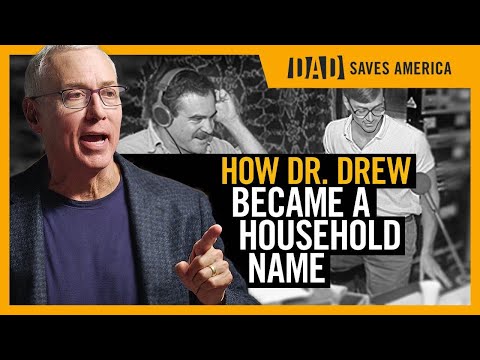
0:00 (slide whooshing) - I was a third-year medical student. I can barely remember the stories now. And we were living about a block away from a radio station that, overnight, became this dominant radio station in Los Angeles. Los Angeles was a ossified, large radio environment, where KLOS, and KMET, and KLAC or something, K- - (laughs) K something or other. - Yeah, where they just dominated. There was just nothing else. And all of a sudden, KROQ, which was- - Yeah (laughs). - right up the street, came outta nowhere.
0:31 - Yeah. - And people I knew knew people at the station 'cause we were in the neighborhood. And one day, they called me, and they went, "Well, they have this show in the middle of the night, and the program director wants it to be a community service show, and they need some help." And I said, "You're in medical school. Maybe you could come on and do a segment called 'Ask a Surgeon.' You'll use big words. It'll be funny."
0:49 I'm like, "What, what the?" - And technically, you're not a surgeon, right? - I'm not. (John laughs) I wasn't even a doctor yet. I was in medical school, but I was intrigued. - [John] Yeah, okay. - And I was up to my eyeballs in AIDS patients. That's mostly what I did, the first- - So, what year is this? - This is '83. - Okay, yeah. - And a lot of the first, like, through '88, '89, a lot of what I did was HIV and AIDS.
1:09 And in 1983, we were just starting to call it AIDS. We'd been calling it GRIDS. A few months into me doing radio, we had a causative agent we called HTLV-III if you remember that. We were just defining the epidemiology. - Wow. - It was this mysterious thing- - Right at the front lines. - with a 100% fatality rate. I, as a third year medical student, every day was telling somebody they had six months to live, and I was never wrong.
1:33 It was a dark period - [John] Wow. - that very few people remember 'cause most people died, or they were like me. They were sort of early in their career, and we were deep in it. And it was just a horrible thing. Anyway, you know, I had this opportunity to go on the radio, and I thought, "I'll go see what it is," and I brought my textbooks with me, (John laughs) my infectious disease and gynecology textbooks.
1:53 I had no idea- - Did you have a "Gray's Anatomy"? Did you have that just for fun? (John laughs) - No, these were, no, 'cause I moved on beyond that to clinical now. - Okay. - And here were these questions that, you know, were just so important. And they were asking them in the middle of the night to a FM disc jockey. And nobody was talking to young people about AIDS. Nobody. (hands thudding) They'd never heard of it.
2:11 And I thought, "Oh my God, I have to come back." And I just said, "Hey, can I come back every," it was once a week at midnight. - [John] Yeah. And I just kinda came back every week, thought I was doing community service. And I did that once a week for, like, 10 years. (hands thudding) And if I was on call or something, I just didn't go. And it became a bigger part of my life than I ever (laughing) expected it to.
2:30 - [John] (laughing) Yeah. - And then, all of a sudden, it went to five nights a week. And by that point, I was deep in my workaholism, clinically. And I was like, "How do I, I'll never go home I guess," - Right. (Drew laughs) - But it forced me to go home for dinner. So, when I started doing that five nights a week, I'd go home at six o'clock, (hands thudding) and I'd go back out at 9:30 to do the radio show at 10 o'clock.
2:47 (slide whooshing) (upbeat music) - If you enjoyed this clip, we've got more where that came from. Be sure to check out my full conversation with Dr. Drew. And one of the best ways you can help support us is to subscribe to the channel, so you won't miss our interviews and short videos as they come out each week. (upbeat music continues)
Summary
- Dr. Drew was a third-year medical student in 1983 when he began his radio career.
- KROQ emerged as a new, influential radio station in Los Angeles, breaking the dominance of established stations.
- He was invited to contribute to a community service show, despite not yet being a licensed doctor.
- During this period, he was deeply involved with AIDS patients, often delivering grim diagnoses.
- The radio show provided a platform to discuss AIDS, which was not being addressed in other media.
- His segment evolved from once a week to five nights a week, forcing him to balance his medical career with broadcasting.
- The experience became a significant part of his life, impacting both his professional and personal routines.