Section Insights
Introduction to Active Listening
What is active listening and why is it important?
Active listening is a crucial skill for building relationships and connecting with others. It contrasts with passive listening, where the listener is not fully engaged. Active listening requires commitment and practice.
- Active listening fosters better connections with others.
- It involves being mentally engaged rather than just hearing words.
- Commitment and practice are essential for developing active listening skills.
Prerequisites for Active Listening
What are the key prerequisites for effective active listening?
The two main prerequisites for active listening are prioritizing listening by setting aside distractions and practicing the skill regularly.
- Listening must be a conscious choice made every time someone speaks.
- Active listening is a skill that improves with practice.
- Nonverbal communication is a critical aspect of active listening.
Verbal Communication in Active Listening
How does verbal communication enhance active listening?
Verbal communication in active listening includes asking good questions and providing small affirmations that show engagement. Good listeners ask thoughtful questions and allow the speaker to fully respond.
- Asking good questions is essential for effective listening.
- Small verbal affirmations help maintain engagement.
- Listening involves both asking and responding appropriately.
Responding to the Speaker
What is the importance of responding to what someone says?
Responding to the speaker shows that you are actively engaged and interested in their message. This can be done through reflective statements or follow-up questions.
- Active listening requires responding to the speaker's comments.
- Reflecting back what you heard demonstrates understanding.
- Engagement is crucial; a blank response is not active listening.
Maintaining Focus on the Speaker
How can one maintain focus on the speaker during a conversation?
To maintain focus on the speaker, resist the urge to share your own stories or change the subject. Dedicate the initial part of the conversation to listening actively.
- Keep the conversation centered on the speaker's interests.
- Limit your own contributions until the speaker has shared enough.
- Active listening should dominate the first half of the conversation.
Transcript
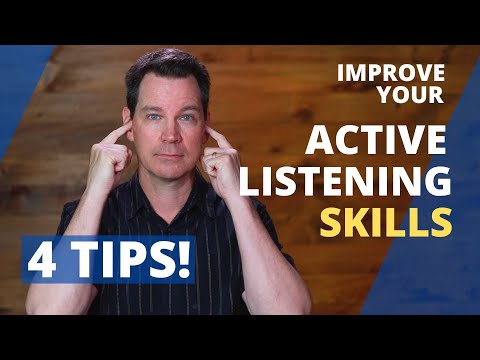
0:00 - We're going to talk about active listening skills, so let's get into the details. (upbeat music) Hey there, I'm Alex Lyon, and I actually have a one-hour course on effective listening skills for leaders. I will tell you more about that at the end of the video. So listening is so important because good listening is probably the easiest way to connect with other people and build relationships. Active listening is the opposite of passive listening, and you have probably experienced this.
0:34 The person you're talking to might technically be hearing some of what you're saying, but they're tuned out. They're on autopilot. They're just not mentally engaged with what you're saying. And as the speaker, this can be very dissatisfying, very discouraging when people really aren't paying attention to us, like, why am I even talking in the first place? But active listening looks, sounds, and feels obvious. Active listening means listening completely.
1:05 But before anybody does that well, there are two secrets, two prerequisites to active listening. Number one, you have to commit. You have to put aside whatever else might be distracting you and make listening a real priority. Good listening is first and foremost a choice that you make every time somebody speaks. Number two, it takes practice. Like any skill, you have to work at it. The good news is that listening is not mysterious or complicated, so let's talk about four qualities of active listening that you can put into practice.
1:40 First, active listening involves nonverbal communication, and there are two sides to this. On the one hand, you're demonstrating that you're engaged and paying attention nonverbally. You put your devices completely away. You make eye contact. Your body posture is open and oriented toward the other person. Now, on the other side, you're also noticing the speaker's nonverbal cues. There's an expression, you listen with your eyes. And part of that means you're noticing what's happening with the person visually, on their mood or their emotion that they're showing.
2:14 Do they look nervous, frustrated, annoyed? You can pick up on that by actively observing their nonverbal communication. Second, active listening involves verbal communication. Again, there are two sides to this. The most obvious part is asking good questions. Probably the most common pattern that good listeners demonstrate is that they ask a good question and then they let the speaker fully answer it. Like a good mental health therapist will ask thoughtful questions and then stop talking for a while and let the client speak.
2:49 Honestly, what we're paying for in many cases is just somebody to listen carefully to us. So a good question is a huge part of the listening pie. And the other part of verbal communication is those small utterances that show the other person that we're following them. Like I hear you, yeah, that makes sense. Sometimes it's not even full words. It might just be, hmm, Those little utterances keep us engaged and show the other person that we're following.
3:20 Third, active listening involves responding to what somebody just said. So the pattern goes like this. You ask a question, they respond, for however long that takes. And at the end of that talking term, you give an informed response to them. So let's say you just asked a person what they've been up to lately, that's your question. And in their talking turn they tell you that they have been doing diving lately. So you actively listen for a while while they're talking, and at the end of their talking turn, it's your turn again, and this is where you show that you were actively following along and were interested in what they were saying, and you can do this by reflecting back what you just heard.
3:58 You might say something like, wow, that sounds like an exciting sport. That's really cool that you're doing that. Or you could ask another follow-up question. I had no idea that you were into diving. How did you first get into that? Of course you could do a little bit of both, like I just did. You could make an informed, reflective statement, and then ask a follow-up question. The key is to respond to what they have just been saying.
4:24 What you don't wanna do is just look at them blankly and not react when they're done talking, and you've probably had somebody do this to you. You tell them about part of your day or something about your life, and they don't react. They just have this stone face. That's not active listening. If you want a gold star for active listening, then you have to respond to what they just said. Fourth, keep the focus on them and let them talk.
4:50 Now this one might seem obvious because you're listening, but when you decide to go into that listening mode, just make a decision that this is gonna be all about the other person talking and not about you. Resist that temptation to jump in with your own story or to change the subject to your favorite topic. Keep your talking turns and questions concise, and then stick to whatever topic they're interested in. Now, eventually, once they've done plenty of talking, there will usually be an opportunity later in the conversation for you to share your experiences.
5:25 But my rule of thumb is to dedicate at least the first half of the conversation to pure active listening. So I hope these four tips help you listen completely in your next conversation. Question of the day, which one of these tips do you need the most work on? I would love to read what you have to say below in that comment section. And I do have two follow-up videos on listening coming soon on comprehensive listening and empathetic listening, and I'll link to those in the description below once they are posted.
5:56 And I also have a one-hour course on effective listening skills for leaders. You can find out more about that by following the link in the description below the video, and you can find out all the details by following that link. So thanks, God bless, and I'll see you in the next video.
Summary
- Active listening is the opposite of passive listening; it involves being mentally engaged and present.
- Two prerequisites for active listening are commitment to prioritize listening and the practice to improve the skill.
- Nonverbal communication is key: maintain eye contact, open body posture, and observe the speaker's nonverbal cues.
- Verbal communication includes asking thoughtful questions and providing affirming responses to show engagement.
- Responding to what the speaker has said is essential; reflect back their points and ask follow-up questions.
- Keep the focus on the speaker and avoid diverting the conversation to your own experiences initially.
- Dedicate the first half of conversations to active listening before sharing your own stories.
Questions Answered
What is active listening and why is it important?
Active listening is a crucial skill for building relationships and connecting with others. It contrasts with passive listening, where the listener is not fully engaged. Active listening requires commitment and practice.
What are the key prerequisites for effective active listening?
The two main prerequisites for active listening are prioritizing listening by setting aside distractions and practicing the skill regularly.
How does verbal communication enhance active listening?
Verbal communication in active listening includes asking good questions and providing small affirmations that show engagement. Good listeners ask thoughtful questions and allow the speaker to fully respond.
What is the importance of responding to what someone says?
Responding to the speaker shows that you are actively engaged and interested in their message. This can be done through reflective statements or follow-up questions.
How can one maintain focus on the speaker during a conversation?
To maintain focus on the speaker, resist the urge to share your own stories or change the subject. Dedicate the initial part of the conversation to listening actively.