Transcript
0:00 A lot of being successful as an investor is finding an investment philosophy that fits your own emotional makeup such that you can be rational when you are wrong. I'm wrong a lot. This is a humbling business. When I am wrong and it's because of something I hadn't considered or a risk I was unaware of, that made it hard for me to be rational. But when the stock went down and it was a risk I had considered, stocks always go down more than you expect. It was much easier for me to be rational and make high-quality decisions when I'm wrong, which I think is a lot of what being an investor comes down to. That's very important. As an investor, you have to either panic early or double down late. And you have to be one of the two. It's hard to be both.
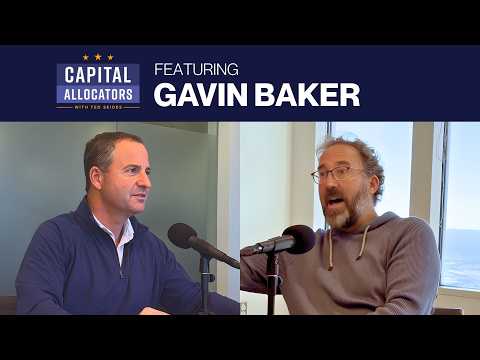
0:46 For me, I'm a double down late person. I'm always buying stocks on the 52-week low list. It makes me uncomfortable when a name is in the consensus. Sometimes consensus is right, but it's important to me to be contrarian. >> [music] [music] >> I'm Ted Seides and this is Capital Allocators. My guest on today's show is Gavin Baker, managing partner and chief investment officer of Atreides Management, which oversees $7 across public, [music] private, and crossover strategies focused on technology and the consumer.
1:25 >> [music] >> Gavin's deep knowledge of semiconductors and AI may be second to none, but our conversation barely touches that space. We begin with Gavin's upbringing, intellectual curiosity, and path into investing before turning to the beliefs that shape his approach. We explore his view that investing is a search for truth best pursued through debate, intellectual honesty, and a willingness to be wrong, and why people, culture, execution, and risk management matter more than investment process in driving long-term performance. We then turn to the application of those beliefs at Atreides, where Gavin emphasizes the importance of deep fundamental understanding, hypothesis-driven research, and culture that rewards constructive disagreement. We discuss how crossover investing can create informational and behavioral advantages, particularly in AI, and how portfolio construction in both hedge funds and venture capital can narrow the gap between insight and performance. [music] Before we get going, Capital Allocators seems to reach a sufficiently large audience to create all kinds of serendipity. Here's my 16-year-old son Eric to share an example. [music] I was hanging out with my friend and his dad was super mad at us for being so loud.
2:42 He told us we should quiet down and learn something. He then asked me, do you listen to any podcast? >> [music] >> And I said, no, but I probably should given who my dad is. He then goes, here's one. The guy asked a lot of really cool, important questions. The podcast he was holding on his phone, none other than Capital Allocators. I sighed in annoyance because this has happened before and I asked for his phone and started playing the Ben Hunt episode from June 2024. If you don't remember, that's the last time I did the spread the word. [music] The sound of my voice made his jaw fall completely to the floor. Even after showing off to my friend's dad, I'm still not going to listen to this podcast, but you definitely should.
3:25 Apparently, all the rich, smart dads are doing it. If you want to be rich, you should, too. If you already are rich, don't worry. Tell your poor friends about this podcast. [music] They're going to get a lot out of it. Thank you so much for spreading the word. As a disclaimer, I'm both an LP and an advisor to Atreides, so I'm a little biased in my suspicion that you will really enjoy this conversation with Gavin Baker.
3:50 >> [music] >> Gavin, so excited to do this with you. Yeah, I'm likewise excited, Ted. I'm dying to know, what were you like as a kid? I was very competitive, but I was terrible at sports. Picked last for every team, always. >> [laughter] >> I was very into Dungeons and Dragons. Like I remember a signature honor was being appointed the Dungeon Master by the outgoing Dungeon Master. He was going to his freshman year of high school and I was in fifth grade. And I was just so proud to be the youngest Dungeon Master. I was always into history, the news, current events.
4:27 I loved military history. Loved playing chess. Loved playing this game Stratego. I remember how bad I felt the first time I beat my dad at both Stratego and chess. I wasn't particularly social until I got to high school, then I became very social. That served me well. When I got to college, people were going crazy cuz it was the first time they'd gone to a big party. And I was like, wow, I was doing this stuff when I was a freshman in high school. Maybe I'll go crack open a book at a library. I had a pretty free-range childhood. Was able to do what I wanted in the summers. I was very lucky. I grew up relatively privileged. My parents gave me an unlimited book budget. As a family, we'd go to bookstores every 2 weeks, so we'd spend hours there and I'd stack books up. Also, there wasn't a lot of structure to my summers.
5:17 I spent most of the summers at my grandparents' house in the Texas Hill Country, which was an incredible experience growing up with all of my cousins. If I was there for like 7 or 8 weeks, maybe my parents were there for in total 20 of those days, some of the weekends. It was a 6-hour drive from where I lived. So I grew up with all my cousins sleeping in a screened-in porch, going fishing, searching for arrowheads, running around.
5:43 Tennis was very important to me. There happened to be a public swim club sports complex and I went there and there was a racket and a ball and I just started hitting against the wall. That was my first experience with athletic competition because I could practice my way into being good. And I realized junior year of high school that there was no hope of me playing even Division III college tennis >> [laughter] >> and I gave it up. But I think that was the first time other than something like chess or Stratego that my competitiveness had an outlet.
6:16 The unlimited book budget curious how you learned to learn. Strangely enough, I got very into a military technology. Those those black composer books and they're this big. They're black and white and they have papers. And I probably filled 50 of those. I was into the thrust-to-weight ratio of various planes and I redesigned the F-15 with a canard, a different radar, and then these Rolls-Royce engines instead of Pratt & Whitney. Strange I didn't end up becoming an engineer given all of that. I read a tremendous amount about history. I read a vast amount of fantasy and science fiction, which I think shapes a lot of who I am today and I still continue to do that.
6:57 The conversations around the dinner table with my family were always about ideas, books, things that people had read. We'd go on family vacations and we'd go skiing. You have a dinner and then the last 3 hours of the night, we would sit in the living room as a family and read. The first time I went on vacation with someone else's family, I was like, wow, people talk a lot and they're talking about different things that I was used to. Arguments were really big thing in my family. My parents were both lawyers.
7:30 Arguing with them was always encouraged. That blend of competitive vibe, often in childhood education, gets filtered into grades. A lot of what you talked about in learning has nothing to do with what you learned at school. I was curious your perspective on that. I don't think I got very good grades in high school. The classes weren't meaningful to me. I found what I was doing my own pursuits much more interesting. I was lucky enough to be a good standardized test taker, so that helped me get into college despite my grades. A big thing that changed my life, I went to Dartmouth College. I had no business going to Dartmouth given the grades I had. I'd been the captain of the tennis team and the president of a big club or whatever. There was a kid at my high school in my junior year. He was a little different. He was 6'7, 6'8, a big guy. He got relentlessly teased and bullied. I think this shaped a lot of my life cuz for sure I think I would have had a different path had I not gone to Dartmouth. One day, there was a pickup area where you waited to be picked up. I was a junior, so I was driving myself to and from high school. And I saw this group of freshmen teasing this huge kid. I didn't think anything of it. I was just like, hey, don't do that. That's not cool. Never do that again. The next day, one of my best friends in high school was the captain of the basketball team, captain of the football team. And I invited this kid to come sit with us.
8:55 Every month, come sit with us and never thought anything about it. Senior fall, I get an alumni interview for Dartmouth, which I think was a little surprising to the guidance counselor. And a really big man sits down across from me and I'm not thinking anything. He's like, Gavin, do you know who I am? And I'm like, sir, I don't. I'm so sorry. They didn't give me your name beforehand. He's like, well, I'm the guy who's going to change your life because you changed my son's life. It was the parent of that kid.
9:25 And he's like, I'm the president of the greater Texas Dartmouth alumni association. I've never asked for anything and you're going to Dartmouth. And I was like, okay. As you went through school, what led you into finance? It was complete coincidence. In college, the most important thing to me by far was rock climbing. I became more serious about my grades, but rock climbing dominated my life. My plan was, I'm going to go climb. The best seasons to climb are fall and spring cuz the rock's not too hot. If it's too cold, you can't grip it. If it's too hot, it's slippery. So, spring and fall are when you really want to climb. And I was going to climb full-time spring in the fall. I was going to be a ski bum in the winter. I ski bummed at the Gold Miner's Daughter at Alta. I was such a screw-up. I was there with a bunch of kids from Dartmouth. Everybody else got rapidly promoted. I stayed at the most junior level of housekeeper the whole time.
10:19 >> [laughter] >> I was the guy who had to clean the toilets cuz I'm a little absent-minded. I was going to be ski bum in the winter, work on a river in the summer, climb, live out of the back of a pickup truck, try and write a novel, maybe write something about history, be a wildlife photographer. I was into photography at one point. You could save enough money working as a ski bum and on a river to support yourself in those shoulder seasons. A lot of people do it. My parents are like, "This is an amazing plan. We've never asked you for anything, but [clears throat] just do one professional internship." The only internship I could get was in finance here in Boston working for Donaldson, Lufkin and Jenrette. I worked for the head broker and the number two producer in the office. Every day a bunch of research would be produced and we'd get these big stacks of nicely bound paper research reports. My job was to look at which clients owned them and then put them in an envelope and mail them to the client. As part of that, I started reading every report and I got so into it. It was everything I loved. It was competitiveness. It was history. It was current events. It was understanding risks. Risk is a big part of rock climbing, accurately calculating it. I often think about things I learned about risk a lot in the context of investing. I started reading these. I loved it.
11:37 I'll never forget I had to write a 20-page thing at the end and I wrote up Cisco in 1996. And I presented it to everybody. And everybody was like, "Yeah, but it's already been such a good stock. How could it go up any further?" It was got 20x in the next four years. And being the arms dealer to the internet resonated with me. And I knew how important the internet was cuz Dartmouth had email. They called it BlitzMail.
12:02 I was very familiar with all of that. I came back to Dartmouth. I changed my major from history and English to history and economics. Started the hedge fund that traded options. >> [laughter] >> Never looked back. Started reading the Wall Street Journal every day. That fall that I spent at DLJ, I lived in a one-bedroom apartment in the basement of a woman's house in Cambridge. Every day I'd take the red line home, get off at Harvard Square.
12:30 There's the people who you can play chess for money. I'd love to beat one of them. I'm no chance. I'd play one of them and then I'd go home, cook myself Kraft Mac and Cheese and read about investing. I read Buffett's letters to his shareholders. I read both Peter Lynch books. I found this great book that we still use here that helped me understand accounting. Taught myself how to build a model and that was how it worked. I remember I printed out the Motley Fool message boards. There was this guy Dale Wetlaufer. He talked a lot about return on invested capital and incremental returns on incremental invested capital. That was so powerful for me. I never looked back. Then had a series of finance internships.
13:08 I was interviewing with Soros and Tiger. I interviewed at Goldman Sachs for investment banking. They said, "Hey, we see your SAT score. You're not dumb." And they're like, "We see you've gotten bad grade in I forget what, maybe geology. I don't know what it was." And I'm like, "Listen, if I'm not interested in something, I struggle to apply myself." And they're like, "Well, in investment banking, a lot of it is doing really boring, detailed work that has to be done well." And I'm like, "Well, that doesn't sound like it's for me."
13:37 >> [laughter] >> But I'd gotten a job in Goldman equity research. And I was thinking about all these things. I didn't always go to class. So, I relied on CliffsNotes before a economics test. And they're like, "Hey man, we just heard this Fidelity pitch and it sounds incredible for you." I interviewed them the next day and this was the first time I learned about the buy side. I said, "Well, I have these exploding offers from Goldman Sachs and Lehman Brothers. They explode like in two days." And the Fidelity guy was like, "Don't worry about them."
14:07 And I'm like, "What do you mean?" And he's like, "I'm going to tell you they're not going to explode." I'm like, "No, they've told me they're going to explode." He's like, "Listen, if at noon tomorrow you still believe they're going to explode, you give me a call. But we want you in Boston two weeks if these offers aren't going to explode." The guy's name was Steve Calandrella. He's great guy. And then the next day Goldman Sachs and Lehman Brothers call me and they say, "You have as much time as you want. Your offers are no longer [laughter] exploding." And I was like, "Oh."
14:34 I think had I gone to work anywhere other than Fidelity, I would not have had a successful career in finance. I profoundly believe that. What was it about Fidelity that led you to believe that? At Fidelity, you join out of college. You don't work for anyone. They give you a group of 30 stocks. They give you the phone number of the IR, the email address of the IR, how much Fidelity owns in percentage and dollar terms of each name. They give you three monitors and they say, "Go."
15:06 That's very different than anywhere else where you work for someone. I don't think I would have done that great working directly for someone. Can't tell you how incredible it is. There's a one-month trading program and it's really good. But then you just get this list of stocks. The only thing you're judged on is results. Sometimes people there believe it's political, but it is ultimately very meritocratic. Sometimes it takes three, five years for meritocracy to assert itself. But it was incredible. Your job is your buys need to outperform yourselves. Ideally, your buys outperform the market and the measured spread value added each side relative to the market.
15:44 Then they measured your impact. How you changed Fidelity's holdings. You can go do the job however you want. If you want to be one of these people who's always on the phone talking to other people on the buy side, okay, as long as it works. If you want to be the world's best modeler, live in a world of 10Ks and 10Qs, great. If you want to constantly be on the road, if you want to go to every relevant convention. And there was an unlimited travel budget in those days, which is wild. You can do that. If you want to do continuous channel checks. If you're the retail analyst and your process is you just want to drive around, go to every Best Buy you can, great. All you have to do is generate results. You have this incredible freedom and independence.
16:29 And then it's combined with because Fidelity, they run money in every discipline. Value, growth, core, income, small cap, mid cap, large cap. They have sector funds for each thing. And as an analyst, you have to service all of those PMs. You have to learn what will resonate with each PM and you begin to find the philosophy that resonates with you. I'll never forget Joel Tillinghast, great value investor. I went in and I covered these capacitor companies that were wildly over-earning.
16:59 Joel owned one and I was like, "Listen, the earnings are about to crater. You don't want to own these names at a cyclical peak when they're really cheap because tech cyclicals are different than normal cyclicals. Normal cyclicals, you get peak multiples, trough fundamentals. Tech, it's not quite the same. Makes for a lot more vol. But even so, everybody understood that capacitors were obviously wildly over-earning. And Kemet, K E M E T, I think it was at four times earnings. I went into Joel and was like, "Man, you need to sell this. Their earnings are going to go down 80%." And he's like, "Well, let's do something. Let's look at their assets. Let's look at their equity. Let's look over the last 10 years, 15 and 20 years what their average ROA and ROE is. And then we'll generate their normalized earnings." And I'm four months out of college. And he's like, "Well, on those normalized earnings, I think it's pretty cheap and you're probably right, the stock is going to go down. But I've owned it for a really long time. I have a low cost basis and I'm going to live with this one."
17:59 You have experience after experience like that with different fund managers, which I think is really healthy because a lot of people come into investing. They're steeped in Buffett. And they're super convinced that that's the only way to do it. By the way, everything is downstream of Buffett. In the English language, 99% of good quotes are from Shakespeare, 1% are from Winston Churchill and there's essentially nothing else. Overstatement. In investing, Buffett is 95% and then there's Peter Lynch who's 4% and then a bunch of other people for the 1%. It's important to be exposed to all these things because you come in steeped in value and steeped in Buffett and steeped in Benjamin Graham. Everybody's read The Intelligent Investor. Everybody knows chapters 8 and 20 are the most important chapters. That's not the right philosophy for a lot of people. A lot of being successful as an investor is finding an investment philosophy that fits your own emotional makeup such that you can be rational when you are wrong.
19:02 With you were exposed to all this, what became the investment philosophy that matches your own disposition? A few things. Steve Wymer, Steve's approach was to always do the work himself. To not rely on the analyst. Rather than expect the analyst to deliver ideas and alpha for you, to go understand the company really well. To go to every analyst day, to go to every relevant trade show, to do your own legwork. To read every relevant transcript. That was most formative for me because what helps me be rational when I am wrong is feeling like I have a high knowledge level on the company.
19:43 I'm wrong a lot. This is a humbling business. When I am wrong and it's because of something I hadn't considered or a risk I was unaware of that made it hard for me to be rational. But when the stock went down, and it was a risk I had considered, stocks always go down more than you expect, it was much easier for me to be rational and make high-quality decisions when I'm wrong, which I think is a lot of what being an investor comes down to.
20:12 That's very important. And as a result of that, I didn't care whether the analysts at Fidelity got their stocks right or wrong. It was utterly immaterial to how I evaluated analysts. There's an analyst, he consistently had some of the worst stock picking metrics in the department. But I made a vast amount of money with that guy, because he always laid out all of the facts, even importantly the ones that suggested his rating might be wrong. And he would always lay out very clearly the bull and the bear arguments. Here are the three bullish lenses through which people view the stock. Here are the three bearish lenses.
20:49 He would happen to pretty consistently pick the wrong one. It was incredible. And I think that was the way a lot of my colleagues on the growth team, who imbued Steve's philosophy of doing your own work. That was what was important to us. Be on top of the facts. Show us the second there is a new fact that's important, because investing is a Bayesian endeavor. You have a Bayesian probability space of expected outcomes. The data points should fit within that. And then if there's a data point outside that, that's where you have to super focus. If a data point's inside your expected probability space, it's less urgent than if it's outside. The second thing, there's a woman named Jennifer Yurig, who's one of my closest friends, just like Steve.
21:33 Her big thing, and it's so true, as an investor, you have to either panic early or double down late. And you have to be one of the two. It's hard to be both. >> [snorts] >> For me, I'm a double down late person. I'm always buying stocks on the 52-week low list. It makes me uncomfortable when a name is in the consensus. Sometimes consensus is right, but it's important to me to be contrarian. And then the third one is what the enough. A lot of people feel biased to be consistent. If you've been buying a stock every day for 100 days, and the facts change, it's hard to turn around and type into the order management system SA, sell all. And Will was a true master of being totally dispassionate.
22:20 Didn't care what he did yesterday. When the facts change, I change my mind. That's John Maynard Keynes, but not many people can do it. Going back to that Bayesian probability space, when there's something that lands outside of that, it it changes the thesis. You have to react. So in those three examples, there are threads of growth investing versus value. Joel Tillinghast is the value guy you're pitching getting out of a value stock. There's threads of value wanting to double down late. Where did you see yourself on the stylistic spectrum, in addition to wanting to know the companies really well?
22:57 Yeah, at the end of the day, everything is downstream of value. But it's not like this great value versus growth debate. This is something that's often misunderstood. When a growth investor owns something at 60 times earnings, it's not like they believe in the greater fool theory. Instead, what you think is that in three years, or maybe five years, it's a high-quality business, and on your numbers out that far, it's at eight times earnings, and it should probably be valued at 25. So it's a triple.
23:25 Growth investors tend to have more out of consensus estimates. Warren Buffett's famous statement is, "The price you pay determines your return." I would modify that and say, "The price you pay determines your return for a given business outcome." That's a very important modification. If you're paying 40 times earnings, and the company is actually going to compound their earnings at a high rate over time, which is possible with a lot of these great growth stocks where they have low margins cuz they've been investing, and then you go into a period where the revenue growth maybe slows a little, but the operating margins explode.
24:03 But I don't know a single growth investor with good numbers who isn't extremely sensitive to valuation. John Hampton's a famous value guy, short seller. He wrote this thing about an investment memo should be eight to 10 pages. Valuation should be two sentences at the end. It's not complicated. If you've been doing this long enough, you can do a DCF in your head really quick. If you've been doing this more than five years and you can't instantly do a DCF in your head, this is the wrong business for you. People are not confused about valuation, and I do think this is why a lot of fundamentally based value strategies have struggled for a long time, cuz the alpha in those strategies was being willing to own these stocks that other people were embarrassed to own cuz they were so out of favor, and you didn't really have that different of an opinion on the future business outcome. You just were willing to tolerate six to nine months of pain only something really out of favor, and then it would mean revert.
24:59 The problem is when algorithms and quantitative investors came in, they took all that alpha, because they don't feel embarrassment, they don't feel shame, they don't feel emotion, and that's why a lot of human-driven fundamental value strategies really struggled, have struggled for a long time, and the alpha in the market as a fundamental investor comes from having earnings estimates or free cash flow estimates or whatever metric you choose that are materially different from consensus, and being right.
25:29 The three people you talked about effectively had their whole career at Fidelity. You're on that path. At what point in time did you decide you wanted to do your own thing? I did my first venture deal in 2001. I was on the floor of the Consumer Electronics Show, and I'm at [snorts] this company. They could do something called RF on CMOS. At that time, most Wi-Fi chips were made with very specialized, more expensive materials. They could do it on the standard silicon. This is going to be amazing. And I said, "Man, when are you going to go public? I can't wait to invest." Cuz I was at Fidelity. The CEO had heard that this Fidelity guy was at the booth asking about how to invest, and a sales guy eventually comes out of whatever, you know, at CES, people are in these rooms. And he's like, "Well, you can invest right now. We're looking to raise a round." And I'm like, "But you're private." He's like, "Well, you could still invest." So I call up Wymer, and I'm like, "Man, I think this is really exciting." He's like, "Oh, yeah, RF on CMOS Wi-Fi, that's going to be amazing. It's going to change the world." You have a lot of unusual experiences as a young person at Fidelity, because sometimes you own 15% of a company. You're the most important shareholder, and you're 22 or 23, and you're sitting down with the CEO. So anyways, I go to this room in New York.
26:42 I don't know, it was at a law firm's office, and I was by myself. And there's this giant team. It's the management team, they've hired a banker, it's their lawyer. We're there to negotiate the terms. They say, "Hey, we think this is the price we want." And I'm like, "No, that's not the price. This is a fair price. I'm not going to pay an unfair price." And they're like, "Okay." And I was like, "I I have to go meet with a big public company where we own $800 million worth of it. We need to wrap this up quick." I wasn't even negotiating. That was just the truth. We were only going to put 30 million into this company or 50, and I was going to be late to see the CEO of a company where you owned a billion dollars worth of stock. I was like, "Guys, I don't have a lot of time. Let's either do this or not." And then they're like, "Well, what kind of terms do you want?" And I'm like, "The standard ones." And they're like, "Well, what kind of preferences do you want? What kind of liquidation preferences?" I had no idea what they were, and I was like, "I just want the standard ones."
27:32 And then they sent over a term sheet. A Fidelity attorney got involved the next day and explained it all to me. And then I re-engaged with venture right around the time Allen & Company started bringing growth stage equity opportunities to big mutual fund managers. It was just so important to own Facebook privately in 2010. From that point on, I became very involved in Fidelity's venture efforts. I was getting more into this, and it was more exciting. It was becoming clear to me that doing public and private investing together was a big advantage.
28:06 So for instance, there's this company Roku. No VCs would fund it, because every venture capitalist was worried about competition from Amazon, Google, and Apple. I was like, "Well, I'm really familiar with those companies. Compete with Roku, it is not on their top 50 list of priorities. It's not like the A team is being staffed on this. And I think there's a room for a connected TV box. They had a great UI, and the founder Anthony Wood was great." We led three rounds in a row at Roku. Made plenty of mistakes as well.
28:38 I did invest in WeWork. They pushed the price, and I did cut my order in half, never did any more to the best of my memory, but it's not like it was all roses or successes. But I really liked it. A venture fund or a hedge fund. I got excited about them. They felt like my calling. I had become passionate about the products. So told my boss, "It makes sense for me to leave." So you go to launch a Trainees. How did you think about bringing the best of what you saw both from yourself at Fidelity to a firm?
29:10 When we started, I had a couple of ideas. I do think being at Fidelity for 18 years was an advantage, because I saw a lot of different regimes for how you compensate analysts and PMs. Probably most big asset management firm changes the way they pay people every three to five years. And it's really hard. You got to find a balance between accountability and incentivizing risk taking. I had participated in the hiring decisions for hundreds of people, and I'd seen how those people had worked out as analysts.
29:42 Like anything, repetition and seeing a lot of film helps. What were some of the things that you learned about how to interview analysts well to get at good outcomes? Point number one, when I started I thought there was way too big of a bias for people who had played college sports or been a fighter pilot in the Navy and I was like, "Hey, we need to have room for a violinist." In today's world, I should having played sports is an advantage or done anything where there's objective outcomes. For a lot of children, they've lived in a world of participation trophies and grade inflation.
30:15 They haven't been confronted with losing, with an empirical reality where they're wrong. Having participated in a competitive endeavor is now more important to me than it was. Having a tremendous amount of passion and curiosity is important and again, I think investing is interesting enough that you can take somebody who has a demonstrated history of competitive success, hard work, passion, curiosity, and a lot of those people will succeed in investing because it is so inherently interesting. I was a little less sensitive to experience, but then a lot of it is I would always ask people, "Tell me about sometimes when you were really wrong and how you made a decision." And then I would ask everyone, "Tell me what's your favorite class was and the three most interesting things you learned in it." And if you didn't have a good answer to that, you probably weren't that passionate. And even though I wasn't a different student, there were some classes that I was passionate about. I loved my class on the Iliad and the Odyssey. I loved my class on romantic poetry. I loved my class on behavioral finance. I loved my class on macro. You don't have to be interested in everything, but you have to be really interested in something and then you have to be really curious. Tell me 10 things you've learned in the last 3 months. Cuz if you're curious person, you should always be learning. So, I look for curiosity, passion, and try to tease out this ability to be rational when wrong.
31:38 That's I think the hardest thing to do. What are some of the other things that you brought to AQR from your experience at Fidelity and how you wanted to build the firm? I wanted it to be a place where I do think investing is a search for truth and truth alpha generation is truth comes out through discourse and discussion. You become friends with people you work with >> [gasps] >> and you don't want to make an analyst look bad in front of the portfolio manager.
32:10 So, I wanted it to be important for the analysts to argue with each other in a constructive respectful way and to tell me I was wrong. Those are the most important things to me is I wanted it to be a place where debate was really encouraged. People understood that I genuinely liked being told that I was wrong. So, I did a lot of that. Tried to lead by example. Anytime somebody tells me I'm wrong, wow, thank you. Let's talk about that more. I wanted to really incentivize people to not seek out confirmatory information. So, instead of having an investment thesis, we have an investment hypothesis. Thesis being a little statement of belief and if you state a belief as a human, you become attached to it. Whereas a hypothesis is quantitatively falsifiable and you're attempting to falsify it all the time. And I think that's an important distinction cuz everyone here always looking to falsify our hypotheses. A lot of being a successful investor, you have to find an investment philosophy that fits your own emotional makeup and then you always have to find the right balance to quote Michael Steinhardt between the courage of your convictions and the flexibility to admit when you're wrong. I tried to set all of that up to make it safe for people to have high conviction and also make it safe for them to change their mind when the facts changed. In some investment organizations, it's not safe to change your mind. So, just try to set up an organization where there was healthy respectful discussion and dialogue about stocks. People felt comfortable debating each other and suggesting that other people were wrong. People felt safe telling me that I was wrong.
33:54 And all of that trying to find the right balance between conviction and flexibility and get to truth. It's hard to do. How did you organize your team with this idea that you yourself want to know the names really, really well, what you learned from Steve at Fidelity, and yet you need that research support to have bandwidth? The way I think about it and maybe it's not a perfect analogy, every position in the fund, I think of it as like an airplane and you can pick any moving vehicle. On some positions, I'm the pilot. On other positions, I'm the co-pilot. Some positions, I'm in the plane and maybe the pilot or the co-pilot are people who I've worked with for a long time, I've come to really, really trust, but I'm still in the plane. I'm going up to the cockpit regularly, you >> [laughter] >> A lot of that comes down to my knowledge level, where I feel the analyst's knowledge level is.
34:52 But it's a balance. How do you get to the depth of research on a name that allows you to feel sufficiently comfortable to know when to buy and sell? I think just doing primary research. You do want to know those bullish and bearish prisms. On any stock, there's like three to seven key analytical debates. You need to understand all of those debates. Every once in a while, you'll have an analytical angle that no one is thinking about, but that's rare. The analysts need to understand the analytical prisms for a given stock through which they're driving price action in the market.
35:29 Where are we in consensus? Where are we out of consensus? How do you think of the concept of an edge on a name or knowing something that other people don't? Idea generation and edge are the concepts that I struggled the most with. None of this is to compare myself to Michael Jordan. But if you watch the last dance or you read any histories of the Bulls, Jerry Krause, who was the GM, after their second to last championship, said, "Listen, players don't win championships.
35:58 Organizations do." He went on to say, "It's not just Michael and Scotty and Dennis Rodman. It's the way we scout players. It's the way we draft players. It's the way we evaluate players and trade for them. It's the training facilities we have. It's the offense we have. Tex Winter's triangle offense. It's a system. We have an organizational edge." Well, after Michael Jordan left, they never won another championship.
36:29 >> [laughter] >> That is a truth that a lot of allocators struggle with because it feels safe and good to say, "Oh, wow, there's a process and it's repeatable." By the way, you have to have a process and you have to have the process that works for you. But any process that's repeatable that generates significant alpha, it's a very competitive world, it's going to quickly be arbitrated away. In fundamental investing, any process-driven advantage just isn't going to last.
36:59 So, where does the repeatable performance come from? I would just submit that any investment organization, no matter how big, there's somewhere between two and 10 people. And if you took those people out and the organization had the exact same process, the results would be very different. I always think of idea generation as a very funny concept because particularly as a crossover investor, there should be no new ideas if I'm doing my job well.
37:32 You should have a defined universe where we have a very high knowledge level. You should be aware of the fundamentals and then the fundamentals drive the valuation. The places where you have the biggest gaps to consensus and ideally the stock's cheap on both consensus numbers and dramatically cheaper on your numbers, that's where you hunt and vice versa for shorts. I think of the most important edge has recruiting, training, and retaining a great team.
38:06 And then going back to that pilot, co-pilot, having an internal process such that we get the most out of our combined insights. For me, execution is the gap between our performance and the performance we could have had based on the quality of our insights. I make an effort to measure that every year and every year get better. That's incumbent on me as the portfolio manager and it's incumbent on the analysts. We are a team on each stock and it's our job to deliver the best outcome on that stock given what we know. And then the rest of the team is there to be additive to that discussion and debate.
38:52 Kaizen is a word that we often use here and my goal is to get a little bit better at execution every year. If you bring all of those insights, the ideas, the team together, ultimately comes into construction of a portfolio. Let's just talk about the liquid side for now. How did you think about building a portfolio at AQR that had that you weren't involved with at Fidelity and a bunch of different levers that go into driving returns?
39:21 The only thing everybody who ran a hedge fund said to me, and these are hedge fund luminaries, is listen, Gavin, you are going to hear from every allocator that shorting stocks is very different from a long only and you should be cautious and learn to short. Said it is super important that you ignore them. There's no difference except for the risk, but the same principles apply. If you're going to buy in stocks, you're going to be good at shorting stocks.
39:47 Now, you have to understand the risk differently. That was the second thing. I've had such a lucky career. I was so lucky to be assigned small and mid-cap semis in the year 2000. Another really lucky thing that happened to me, I took over my first fund, I think I was 25 years old. I went down 700 basis points relative in my first month. It's a lot. I'm like, "Oh my god, I clearly have no idea what I am doing."
40:11 Fidelity had just hired a team of quantitative researchers. There's a lot of skepticism back then about the quants. They asked to schedule a meeting with me, and these are like people with PhDs. And they say all this stuff to me about how to think about risk and construct a portfolio and size decisions and selection for sizing. And I was like, "Oh my god, this is awesome." And I was like, "Well, when is the next time I can meet with you guys?" They're like, "Well, to be honest, not many people want to meet with us. So, we're excited to meet with you as much as you want." So, I met with this team of quants for 1 or 2 hours a day, every day, for more than a year. I read the Bear book on factor risks. I got used to thinking in terms of vol adjusting position sizes. But, after a rough start, that background in thinking about risk and portfolio construction from a quantitative lens helped me make this transition. Because it's not the dynamics of shorting that are different in terms of what makes stocks go up or down, it's the risk.
41:11 Because they can go up infinitely. You have to manage short squeezes, crowding. One of our clients had this great phrase, "There's three risks for a hedge fund, LLC, liquidity, leverage, concentration." I now say LLCC, liquidity, leverage, concentration, crowding. Understanding all of those was maybe a little easier for me because of that incredible education I got from those quants who I'm so grateful to. Where did that land you in terms of the gross net exposures that you like running?
41:41 If you are going to run a high gross, the most essential thing that you have to manage is basis risk. Basis risk is when your longs and your shorts are not correlated. So, quantitatively, if you are a hedge fund and you run a levered long book and a net exposure over zero, the most important factor for your returns is long short spread. You can generate an immense amount of long short spread by being long names that are uncorrelated. You can't be long a stock like GM and be short Tesla.
42:14 From a quantitative perspective, that makes no sense. If you're long growth and short value, that's equally painful. If you're long value and short growth, that means you're just levered value. If you're long growth and short value, you're just levered growth. So, if we're going to run with a high gross, it was important to me to try and generate long short spread in stocks that were quantitatively and fundamentally similar. If you do that, you can leverage that up, and then that's how you get a sharp ratio that's ahead of the index. That's a hedge fund.
42:49 Typically, a long short fund names people spend more time on the shorts than the longs as a result. I'm curious what drives the hypothesis. Is it a long idea and then you're looking at the shorts to balance it? Is it a short idea that then you have to find longs to balance? Both, yeah. An alpha short without a funding long is hazardous to any hedge funds. The allocators always ask about alpha shorts, particularly as a contrarian, there's nothing more emotionally satisfying than being short a name that's a consensus long and being right.
43:27 Alpha shorts are great, you just have to have a funding long against them. If you're going to run with an unlevered long book, maybe it's a little bit different. It's another thing about hedge funds that are under appreciated. If you're going to run with an unlevered long book under 100, then short alpha is irrelevant. All that matters is your shorts must make money, full stop. How do you think about position sizing? I think position sizing has been conviction adjusted risk reward.
43:55 What I mean by that is the best risk reward that we have in the book might be on a name where I don't feel like we have enveloped all of the outcomes in a high fidelity way. You can't envelope them. So, that will be a lower conviction name. That's the conviction adjusted risk reward. Beautiful thing about a hedge fund relative to long only fund is in a long only fund, it's actually very hard to manage risk. In a long only, you can manage it with a blunt instrument. In a hedge fund, it's with a scalpel. This isn't to say we're Citadel or a pod shop, but I do try to be pretty factor aware.
44:30 I took the discipline I had from Fidelity in terms of long only portfolio construction. There's three tranches of position size, just high, medium, and low, and it's conviction adjusted risk reward. The one thing that is important to me is if you have a 35% position in one stock, and then your second position is 3% or not a fund, you're a stock. Maybe some people like that. If I'm going to have one position in a 10, 12, 15% range, a necessary condition for having that one position is feeling like there's at least two, three, four other names that I have a similar conviction adjusted risk adjusted IRR in. Therefore, you have a diversified top of the book. Even if your biggest position is 15, the number two is 1 and 1/2%, you're still a stock, not a fund.
45:17 I'm always trying to balance risk reward between those three tranches of bet size. Within that, the link that people have between turnover and time horizon is one of the strangest concepts I've ever encountered. Turnover should be a function of how often you change your mind, and part of that in any disciplined valuation based process should be about how the stocks move. For me, turnover is mostly a function of volatility. What do I mean by this? You can have a 1-month time horizon, never change your mind, and own the same three stocks for 10 years. You can have a 10-year time horizon and change your mind every month, and you'll have 1,100% turnover. We underwrite stocks, we look out 3 to 5 years, we come up with a framework for risk and reward.
46:05 If your evaluation sensitive and a stock goes up 100% in 3 months, either the expected IRR that you underwrote to just got cut in half, or you took your numbers up 100%. A price shouldn't be revising numbers up 3 to 5 years out 100% all that often in a high integrity research process. For me, turnover is a function of volatility, not time horizon. The concept that there are a few real stars that are driving the performance of a fund seems to fly in the face of the success of the pod shops, and I would love your perspective on that hypothesis and whether it applies to what's become a very significant part of the hedge fund landscape. At a lot of these multi-managers, there are a couple of pods, and maybe I am out of date, who are running a disproportionate amount of money with really good returns. The reason they have a disproportionate amount of money is because they have a long history of generating excellent results. At some places, there's an investment team of 50, and if you take the top 25 away, it's really different.
47:13 And it's not to say it's just two or three people, but any competitive endeavor, it comes down to individuals. So, let's turn over to the private side. You talked initially about the synergies across public and private investing. Where have you found that to be particularly relevant? It's always been relevant, but I think it's paramount in AI. One of the benefits of being a crossover investor is theoretically, if any company is good enough to go public, you should have had a decent amount of exposure to it as a private investor.
47:47 You should have a familiarity with the business. You've probably met with the company a few times. You've probably done a lot of due diligence on them. Maybe if you're conflicted out cuz you're in a competitor. When a company goes public, instead of starting from scratch with the S-1 or the testing the waters meeting, you might have 3 to 5 years of history already. It's funny that some investors have an idea that you can do 90 days of work on a business and really understand it.
48:15 I don't think it's possible for me to really understand a business, I need years of history, in some case decades, to see how the business and the management team have responded to challenges, how they have overcome adversity, how they've adapted to changes. It's really hard to do 90 days of intensive work and have a deep, thoughtful opinion on a business that gives you at least the knowledge level and conviction I need to have one of those big conviction adjusted attractive risk rewards.
48:51 So, what are some of the other reasons you think it's important? I have never seen a new technological trend where at every level of the stack, the competitors are both public and private. In other words, in the early days of the smartphone, it's not like Apple had loads of private competitors. There's this company, I think it was called Danger, became the basis of Android. The competition was mostly taking place with public, with Apple and for a period of time Nokia. In lots of other new technological revolutions, it's taken place in public. Even with SaaS, Amazon was public.
49:30 Salesforce was public. AI is different in that at every level of the stack, whether it's the frontier models, you have open AI and thropic X AI compete with Google. Whether it's semiconductors at every level of semiconductors, the key competitors are both public and private. From an application perspective, there's all these verticalized AI companies that are running fast at different things and doing things in a very different way than SAS companies are doing them. To invest in AI, whether privately or publicly, it's a big advantage to have both lenses. I don't know how it underwrite a private semiconductor company without a really detailed understanding of the public companies.
50:09 And I don't know how I'd underwrite the public companies vice versa. For AI, having both a public and a venture investment practice, it's important at least for me and at tradies. Have you thought about competing for deals in the private markets? A lot of this comes from my friend Antonio Gracias. You want to be a repeat player in life with people, with institutions, with everything. In public equities, relationships are important. I'm very close to a lot of my peers. But in private, people really remember how you behave when the chips are down. If you approach venture with the goal of I want to be a repeat player with everyone I encounter, every partner at a venture firm, they're like a client. We need to take care of them. We want to have a repeated relationship with them over time. With founders, I want to generate references.
51:03 So there's founders who we passed multiple times on them, but I still talk to them every 6 to 9 months. Viewing venture as a business where relationships are very important, being a repeat player is important, doing what you say you're going to do is important. All of this sounds easy, but I don't know how many people actually do it. And it's a big advantage. If the people around the table trust each other, you can get a deal done really quickly and fairly. And those references are so important. Having CEOs who are willing to drop everything to give you a reference for a new founder, that's essential.
51:45 A lot of venture firms are more resourced to try to create operational value add. In a world where you're not trying to compete on depth of resources applied to the businesses you're backing, what is it that's causing these CEOs to want to give you those recommendations to others? Giving them good, honest feedback and having that good, honest feedback be proven correct. That's one aspect. Being a crossover firm is powerful. Being able to say to a founder, I never have to sell your stock to get paid. That's so powerful. If you execute, I can hold you forever. And then being really honest with the founders, if you execute, I'm going to try and be very helpful to you for future capital formation. And if you don't execute, I'm going to be there to catch you. That's probably a different deal, but it's a fair deal. When you're in that position, you can do a lot of things. People really remember if you do those things. That just goes to being a repeat player and not optimizing for a single interaction or a single transaction. If you recap someone and you do it in a fair way, also you do it in a fair way to the existing shareholders who maybe can't participate, people will remember that and appreciate that. The golden rule is powerful. Treat others the way you want to be treated. For whatever reason, not a lot of people live that, but particularly in venture.
53:05 How do you position yourself against or alongside venture firms that are very well resourced and are trying to contribute operational value to the companies they invest in? I don't know how much operational value those venture firms are really contributing. Like a few of them do. So we're very close partners with Valor Equity Partners. If you were to read the Walter Isaacson biography on Elon Musk, there's a chapter called Antonio and Tim and all of the hard things they did.
53:38 But they're doing real work. Tim worked in the tube shop at SpaceX, working on the supply chain, working on distribution. Valor has stood up repair centers for companies. They've sent teams to China to help stand up a supply chain. Going back to how important relationships are, I don't like to invest in a company and make it a big position unless it's either a repeat founder who I've had a long duration relationship with or there's a VC who I have a close personal professional relationship with who has a really good track record and they are on the board.
54:16 I like to invest when I trust that wise advice is not needed cuz they're already getting it. And I will pick my spots like Cutco Burn, but I think that's actually a pretty powerful pitch series C and up. If you're a founder, the VCs who do seed A and B, who built companies, they actually have really valuable wise advice. But by the time you have three of those people on your board, if you're a founder, you're wise advice doubt.
54:44 >> [laughter] >> Okay? And so one day I say is I'm investing because I trust you and these people on your board to make really good decisions. And I trust you that when I have an opinion, which is rarely, you guys will listen. And hey, if we disagree, reasonable minds can disagree, but I'm not going to be another person continuously giving you wise advice. The value add that a firm like a tradies or a crossover firm can have is going public is actually pretty scary to a lot of these companies.
55:17 There's all sorts of things. This is what you do the first time you get a short seller write a report about you. Do not respond. I know it feels so personal. I know how personal it is, but just don't respond. Let the numbers do the talking. If you get in a public fight with them, it's just blood in the water. Even if you're right, it's just pattern recognition for them and it's going to attract more sharks and it's going to be less pleasant. So the best thing to do is say, I'm aware they're short. I'm confident in the numbers.
55:44 Let's see what the numbers hold. That's what you say. There's a whole set of things we can do to help companies go through the process of going public. You can go on the cover of the S1. You can be there during the lockup. And that's offering an opportunity to acquire more stock in a company you know really well at a time when there's a lot of low information sellers. The short answer is a lot of the operational value add from a lot of these firms is wildly overstated. The wise advice is super not appreciated.
56:15 Apart from the truly exceptional VCs, I try to be very high value added per minute I speak to one of these CEOs. After our discussion on thinking about portfolio construction and risk in the public markets, I'm curious how you go about thinking about putting a portfolio together in your private market strategies. It takes time to get to know someone. The way we try to manage risk in the private portfolio is when possible, we start with a small check or have a long duration relationship with someone. And it goes back to it's really hard to make a high quality decision with 60 to 90 days of diligence. So the way we try to manage risk is by making sure that our larger positions in private companies are ones where we've had a long duration relationship with whether it's a CEO, some of the investors. That approach has served us well.
57:09 There is more bad behavior in private markets than I think people realize. FTX, it's very public, but these companies, they're not filing always audited financials. They don't have the controls. Particularly when something starts to go bad, there's a lot of bad behavior that can be really damaging. And then there's bad behavior when a deal goes south by other investors. That bad behavior costs you a lot of money. And the way to avoid that is to take your time getting to know people and only make a really large bet once you have a history with a person and a company. Do they do what they say they're going to do? Are they honest? Do they behave honorably?
57:51 Are they as relationship and repeat oriented as I am? My rule is trust but verify. I will bounce the ball to anyone once. Then if I like them, I'll bounce the ball one more time. And if the ball doesn't come back, okay, no more bounces. It is funny. I think there's this community of people who are like-minded who bounce the ball to and from each other. And then you end up in that community and doing deals together.
58:18 Some of this comes from people knowing you. I'd love to ask you about how you thought about your brand, your presence on X, things like that. When I was at Fidelity, X became a very important part of my investment process. Going back to AI, AI happens on X. The Jacks team at Google got into a giant fight with the PyTorch team on Meta on X. And the heads of each company's respective AI division had to make a public truce and it struck their troops to stop fighting.
58:50 You learned a lot following that fight. Anthropic researchers have said, "A lot of our hiring comes from what people say on X and what they might write in a substack." To a large degree, AI happens on X. But even before that, there's this giant community of investors sharing ideas, critiquing each other's ideas, in some cases dunking on each other, but you learn from all of it. There's a lot of really smart people. So for the last three, four, five years that I was at Fidelity, X was a very important part of my investment process, but I was not allowed to post. I felt like, "Wow, I've learned so much from X as a consumer, as a lurker, as they say. And then I want want contribute back." And then I found the more I posted, the more I got back. It's very funny.
59:38 >> [laughter] >> Two things are true of most analysts. One is they're on X, probably under an anonymous account. And two, they think they're smarter than their PM. They may not work at a firm like a Tradewinds where the PM loves to be told he's wrong. I love it. Sometimes I'll get in these dog fights with 15 analysts. They're clearly smart and they know it and it's like great. I'm not here to be right or wrong. I'm not here for ego validation.
60:07 I'm just here to learn. When you put something out on X, even if people are dunking on you, as long as it's a smart dunk, you're learning. You're pressure testing your ideas. Mervin Petrakos has said having a big high IQ following is actually [clears throat] a superpower and it really is. So I think for sharpening your ideas, it's incredible. Then there's a whole other dynamic. It really matters for DFO. So that's why I got on it to contribute. And then I found the more I contributed, the more I got back. One of my friends said X is an exercise in cultivated equanimity.
60:44 I try really hard to be nice on X. Sometimes people say that was the dumbest podcast I've ever heard and he's totally wrong about everything. I may or may not have a lot of draft replies, but I don't send them. Because I try really hard to be nice. People get a sense of who you are by how you behave in public. Because once you get a big X following, you have this huge community of trolls who are continuously dunking on you and quote tweeting you and replying.
61:13 If you fly above it all, are respectful to everyone, never really get down in the mud, I mean people get a sense of who you are. I'm going to ask you one more question before we dive into the closing questions. How in the world do you find time to talk to all the people you do, cover what you do in as much depth as you do, particularly in some of these fast-moving sectors? My personal life and my professional life are very integrated.
61:41 I have only a few really good friends who aren't in the business because they've been friends with me since college. I have a doctor in California and a writer in Vermont. And apart from that, essentially everyone I spend time with, at least some chunk of the conversation is about investing, it's about technology, it's about venture. That is what it is. There's no real difference. I'm a very competitive person. This is the only thing I've ever been good at.
62:11 Djokovic said, "To be a good tennis player, you have to like hitting the ball." For me, hitting the ball is the first thing I do. I wake up and I'm either looking at emails or X and my X is all about investing. The first 8 hours of any day that I'm awake, whether it's a weekend or I'm on vacation, I'm working and it doesn't feel like work. You can't be competitive in this game if you don't, to quote Buffett, tap dance into work. And if you don't tap dance into learning about things and investing and technology, you're just not going to be successful because you're competing against people who are equally smart, equally hard working, but for them the work is just fun.
62:51 Gavin, let's turn to a couple closing questions. Before we get to the closing questions, I want to tell you about one of our strategic investments. We've made a few and each are working on a product or service we think will be valuable to our community. One is Thema. For all the private equity managers out there, Thema uses AI to help map the landscape and source private businesses. It's incredible [snorts] what a well-designed AI tool can do to accelerate the discovery of businesses in private markets. There's a link in the show notes so you can learn more. And here are those closing questions. What's one thing most people don't know about you that you find interesting? Geez, well I've done a lot of these at this point, Ted.
63:33 >> [laughter] >> I'm pretty open. I'm probably a bigger NFL fan than anyone knows. I'm an extremely competitive fantasy football player. And I should actually say fantasy football is probably the only thing other than investing that I'm good at. I've won my leagues at a statistically improbable rate. And that's because fantasy football and investing, they're fundamentally the exact same thing. You have to have a differential opinion. If you just draft everybody where their ADV is, you're never going to win. You have to understand, well, the reason this running back wasn't good is the offensive line was better. They're changing to a different system and they've upgraded the left guard and I actually think he's going to be good. I think I'm probably a much bigger NFL fan and bigger fantasy football, more competitive player than possible. All proceeds go to charity.
64:20 I've also become a college football fan because of my wife, Becky. It's a big Penn State family. I have not missed a Penn State game in many years. And I do like Penn State. They don't have the names to learn about the team. I think that's cool. Which two people have had the biggest impact on your professional life? The three fund managers that I referenced at Fidelity, Jeff Vinik, Steve Wymer, Will Danoff. They've had the biggest impact on me from public and then from a private market investing perspective for sure, Antonio Gracias Valler. One of my closest friends. We do a lot together. A large part of the way we approach venture is driven by the way Valler approaches venture.
64:57 What's the best advice you've ever received? This concept of Ikigai was very powerful for me. Ikigai is a Japanese concept. There was a possibility that there's what you're good at, there's what you love, and there's what the world values. Ideally, you want to find something at the center of all of those. That was very helpful to me to decide to go all in on investing. Cuz early on I felt like I got off to a good start. Okay, I'm okay at this. Although I think it takes 5 to 7 years to really know.
65:30 And then I love it and the world values it. So I think Ikigai as a concept was really powerful to me. From a business perspective, your former colleague, Mike Baron, who now is at Goldman Sachs, he gave me very good advice starting at Tradewinds. You have to get to a billion dollars. Don't worry about how you get to a billion dollars. Once you're at a billion dollars, you have some level of durability and resilience. Hedge funds are fragile and the smaller they are, the more fragile they are.
65:58 I do think it's becoming a scale game and that was very important advice from Mike. So if you have a diversified business, it makes it a lot easier to be rational when you're wrong. If you don't have a diversified business, when you add on all the performance pressure that you naturally feel, the pain you feel from being wrong, if you're also worried about business fragility, it's a problem. And so resilience is an advantage for performance. All right, Gavin, last one. If the next 5 years are a chapter in your life, what's that chapter about?
66:31 I think it's about a few things. Point number one, something I profoundly believe is that 50 through 70 are peak performance years for professional investors. I'm about to turn 50 and I'm really excited about that. Some of my closest friends, like Steve Wymer, who's still investing, he's nearly 15 years older than me and it's just a big advantage. I am excited to be entering my peak performance years and really looking forward to that. Tradewinds going to celebrate its 7th anniversary of our launch in May of this year. So I had a 14-year track record of running money and there are all these allocators who were like, "No, we want to see 1 year of numbers. We want to see 3 years." And I was like, "Really? 15 years is different than 14? 17's different than 14? What are we talking about?" But I have come to see the wisdom because it did take a long time to build processes and frameworks internally.
67:24 It took a long time in some cases for me to learn how to work with some of the really talented analysts we have. You can't just make no-look passes day one. What I do think, going back to that execution gap, the gap between your insights and your performance, I'm optimistic that they will help narrow that. We're I think in the very early days of AI. If ChatGPT is to AI as Netscape Navigator was, we're in year three of what should be a 20, 25, 30-year really exciting cycle or trend. Given that semiconductors are my first love, both as a private investor and a public investor, and semiconductors are so foundational to AI, I think all of that is exciting. All of that will play into building a Tradewinds into a firm that can hopefully endure beyond me, which would be so fulfilling for me. I'm excited for that, but that's a long way away. I'm going to do this for a long time because I love it. Gavin, thanks so much for spending the time. Really enjoyed it. Thank you, Ted. It was awesome. Thank you for being a friend.
68:24 I've learned so much from you. Thank you. >> [music] >> Thanks for listening to the show. If you like what you heard, hop on our website at capitalallocators.com where you can access past shows, join our mailing list, and [music] sign up for premium content. Have a good one and see you next time. All opinions expressed by me or podcast guests are solely their own opinions and do not reflect the opinion of Capital Allocators or their firms. This podcast is for informational purposes only and should not be relied upon as a basis for investment decisions. It should not be construed as investment advice or solicitation, recommendation, endorsement, or offering of any kind.
69:00 Clients of Capital Allocators or podcast guests may maintain positions in securities discussed on this podcast. The statements and opinions contained herein may change at any time based on market or other conditions.
Summary
- Successful investing requires an emotional philosophy that allows for rationality when wrong.
- Baker prefers to double down on investments rather than panic, often buying stocks at their 52-week lows.
- He values contrarian views and believes that consensus can sometimes lead to poor decisions.
- Investing is a search for truth, best pursued through debate and intellectual honesty.
- Deep fundamental understanding and hypothesis-driven research are crucial for long-term performance.
- Crossover investing offers informational advantages, especially in technology sectors like AI.
- Baker emphasizes the importance of a culture that encourages constructive disagreement within investment teams.
- He believes that the best investment decisions come from a combination of personal insights and collaborative discussions.