Transcript
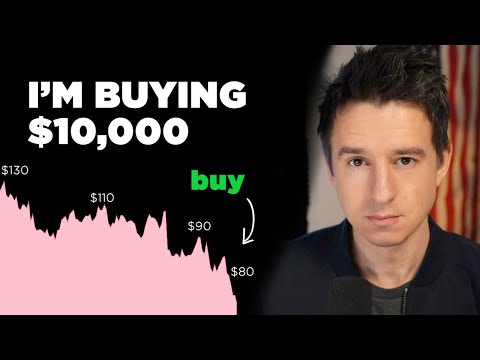
0:00 Welcome back everyone. Today on the Joseph Carlson show, I am buying $10,000 more of a stock that I already own. The company's in the story fund, my secondary portfolio, and the stock is Netflix. I already own $109,000 of this company, and I'm buying another $10,000 because Netflix is a company that's in the red today. It's down 2% down below $95 per share. In mid 2025, it was trading as high as $133 per share. So, why has Netflix fallen so much? It's fallen at least 30%. This is the biggest sell-off in the past three years. What's going on with Netflix? Well, of course, they've decided that they want to buy Warner Brothers Discovery. They want to pay a lot of money for this asset. And Warner Brothers Discovery has already signed a deal with them. But then you have Paramount swooping in saying that they're going to be doing a hostile takeover, a hostile bid to try to steal it away from Netflix. Now, Warner Brothers Discovery stock is in the green by 5% today, trading as high as $30 per share. Why is Warner Brothers Discovery trading so high? Well, as the Wall Street Journal points out, investors now believe that Paramount is going to have an even higher bid. David Ellison is going to bid way higher than Netflix's bid and take the asset from Netflix. So, we have ourselves a bidding war. Things are getting messy. The stock is a total mess right now, down 30% from its highs because all of this uncertainty is going on. Investors aren't even sure if Paramount doesn't successfully steal the asset from Netflix, will Netflix even be able to buy it with regulatory hurdles.
1:32 There's so much uncertainty and this uncertainty creates what is called dead money. Dead money is when a stock faces so much uncertainty, so much regulatory scrutiny that the stock really can't go higher. So investors don't want to put their money in it because they know that it's not going to do much for at least the next year. With Netflix's regulatory approval, with this bidding war, with all of this uncertainty, Netflix is dead money, but I'm buying it anyway. And I'll be going over the reasons that not only I'm holding this stock, but I'm adding to the position. In fact, one of my favorite things to do in situations like this, I do it every time there's some type of complex deal, is I look at what's called game theory, which is just a way of looking at the likely outcome of events and then assessing what will happen in these different scenarios.
2:19 This has worked out really well before. I did the exact same thing with the password crackdown on Netflix. And my takeaway from that game theory was that Netflix wins in any case. It's almost impossible for them to lose, which is exactly what happened. So, we'll be going through all of this, plus we have a lot of other news. For example, we have news that Whimo has crossed 450,000 weekly paid rides. Google's on a roll. They have the best robo taxi company right now. Uh we're going to compare it to the rivals and take a look at what Tesla is doing. Elon Musk is still making promises, but the promises are getting much closer. Instead of things being months out, now he believes they are weeks out. So, I'll be looking at this landmark, putting it in perspective, showing some charts, and then we also have a little macro talk.
3:00 We have an article here from the Wall Street Journal pointing out that every single day investors are hedging against the AI bubble. Investors expect something is happening. They think that the AI trade has ran its course. Is this accurate? We'll be looking at that as well. So, we have a ton to get to in this episode. Let's go ahead and jump in. And we start things off with my buy. Like I said, I'm buying $10,000 of a dead money stock and I'm doing it in the story fund right now. One of my larger positions is going down, which is Netflix. And this is one that I've been bullish on for a long period of time.
3:32 I've covered Netflix forever, it feels like. Uh I was one of I think the few people that held on to the stock when it went down 75%. So if you look at Netflix and you see a stock going down 30%. That doesn't really scare me. Like I've been through the ringer with this stock. I've I've literally held on to it when the thing was collapsing, when everybody said this company was dead. It it seems like a long time ago, but for me that that felt like it was just yesterday. Just a couple years ago, people were talking about the death of Netflix. There was YouTubers literally making the rise and fall of Netflix videos, pronouncing it dead. They were losing subscribers.
4:10 Competition was clouding them out. But now everybody thinks that Netflix is like a monopoly of streaming. So sentiment changes quickly. But a 30% fall in stock price is not a big deal. Especially when the stock was trading far up in valuation, it got into a premium category. Now it's fallen down. But if we look at Netflix, it is definitely trading far below its normal trading patterns. Like you just look at the chart here and it's fallen far past anywhere would you see normal trading.
4:39 So we do have ourselves a genuine sell-off in this company. And the reason why is simple. Investors want to make money every year. Investors overall are very short-term. Netflix has moved into the category of what investors consider to be dead money. Meaning that the situation's so complex, there's so much going on. There's so many moving parts and it's so uncertain that the stock really can't go up because it can't go up for the foreseeable future, maybe the next year and a half, maybe the next 12 to 18 months. It's dead money. And who wants to put their money in a stock that's dead money? Everybody wants to make money every single month. They want to buy companies that will go up next week. They don't want to have to wait 12 to 18 months. So, as soon as Netflix became a stock that is dead money, all of a sudden the stock price is going down. Nobody wants to own it. But my perspective, my viewpoint on stocks is not to own them for the next 12 to 18 months. I'm not buying Netflix because I'm looking at 2026 and trying to maximize my gains for 2026. It's not what I do as an investor. Most investors do that. That's not what I'm doing. I look at my returns over the next 20 years. I look at companies that I think will be extremely heavy big companies 20 years out. And those are the type of ones that I like to build stakes in today. So even though I agree that Netflix is dead money for the next 12 to 18 months, I actually think that's accurate. I'm buying this stock anyways.
6:06 I'm building my stake and I'm being very patient with the company because I believe that over the the course of the next 5 to 10 years, Netflix will be one of the heaviest companies in the world. The market in the short term is a voting machine. In the long term, it's a weighing machine. Netflix is going to weigh a lot and I believe for a number of different reasons. So, the way that I'm doing this now is Netflix right now is traded to $95 per share down around 30%. I don't think the trade down is done. I think the stock goes lower in the short term. I could see it going below $90. I could even see it going to the low 80s. I really do. I think if things get messy enough, if the bidding war continues, I think the sentiment can shift to the negative, investors can start to give up on Netflix and the thing can trade down. So, I see that in the future. That's why right now I'm buying $5,000 today. I'm going to keep another $5,000 for maybe next week to buy if it continues to trend lower. I want to get the best price possible, but I'm also going to be taking advantage of this tradeoff. Now, with Netflix, I already have a sizable stake in it. My cost average is around, I believe, like $45 per share. So, every time that I buy at $95, I'm raising my cost basis. It makes my returns look less impressive by contrast, but I don't mind doing that.
7:27 I'm not trying to do this to look good and have the most impressive percentage gain. I'm doing this to make money. So, I'll raise my cost basis. Even though I've paid on average around $45 per share, I'll raise it and buy more shares at $95 because Netflix is a better company today than it was 5 years ago. So, I have a $5,000 buy going in today. I'll be buying another $5,000 within the next two weeks. And then I'll look to continue buying if the stock price continues to trend down. Now, when we look at Netflix, again, a lot of people are looking at this and they're thinking, "Wow, this is a crazy situation." We have Netflix stock going down, Warner Brothers Discovery stock going up because investors are expecting another bid from Paramount. So, we believe right now that another higher bid from Paramount is imminent, causing Netflix to get into a bidding war. And that's where we get into the different possible outcomes. What I did with this bit of game theory is I mapped out the possible outcomes and I just want to go through them so you can see my perspective on how I see this playing out. When we look at the first possible outcome, this is the one where Netflix closes the deal where they simply buy Warner Brothers Discovery. Now, a lot of people are saying that that's like impossible, but I think it's more probable than people believe. If Netflix is able to win the bidding war, if they're able to fight off David Ellison and Paramount, somehow successfully fend them off and then they go through the regulatory hurdle, I believe there's a better chance of them passing regulation than what most people believe. Now, again, right now, Netflix feels like a giant juggernaut. It feels like a a huge company. But just a couple years ago, everybody pronounced them dead. The same people are saying Netflix is way too big. Regulators will never ever accept this are the same exact people that said Netflix was completely destroyed and dead just four years ago. Remember when they lost subscribers? Netflix can bring that up. They can say just a couple years ago we were losing subscribers. We had to completely reinvent our business model. We had to introduce an ad tier.
9:31 Like we really had to transform to grow our company. So even though Netflix looks like a giant juggernaut today, just a couple years ago, Bill Aman was selling the stock at $200 per share, it was very agreed upon at that point in time. The consensus and the sentiment was that Netflix was done. Netflix also has believed for a long period of time that they face intense competition. They've said it in every earnings report that they compete with YouTube, they compete with Warner Brothers Discovery, they compete with Paramount, they compete with Disney, they compete with Apple TV and Amazon Prime and Tik Tok and all the rest. And that's the same thing that Netflix management today believes. They believe that they're in a highly competitive field that they're nowhere close to having a monopoly in video entertainment or streaming. This is Greg Peters, one of the CEOs of Netflix, and he talks about whether or not he believes right now that they face a lot of competition.
10:26 >> This like funny question I almost had to ask you. There's two points of view. There's there was the streaming wars and they're over and Netflix won. And then there's this other perspective that's like >> there a lot of streaming services out there. >> There's a lot of streaming services. A lot of them have really matured. They sort of consolidated into I don't know about formidable competitors, but vertically integrated competitors. You've got YouTube. It is in some ways the most competitive media environment that has ever existed. How do you think about this?
10:50 >> I would say it is definitively the most competitive media environment that's ever existed. If you think about the the the range of choice that is available to any given, you know, person on the planet for what they can be entertained with. There's never been this range of options available and they're all I mean they're increasingly completely friction-f free, right? You can like if you don't like what you're doing right now, you're a flip or a click away from doing something else. It's very very simple. So, um, in my mind, it's incredibly competitive. We've expanded the types of entertainment that are available to people, too. Right.
11:18 >> Gaming. >> Yeah. Games or, you know, social media, short form. There's so much that's going on. And so, I think that's great for consumers. It's, you know, it's incredible. Um, but it's also, you know, it requires us, our peers, everybody to basically be constantly reinventing themselves, pushing themselves to deliver more because, you know, if you stand still in this environment, you will have your lunch eaten for sure. Greg Peters makes a strong case that they're not a monopoly and that they face intense competition. Even prior to this acquisition, he's always said that they face a lot of competition. This isn't something that they just started saying now that they're doing the acquisition. They've said it in previous earnings reports. And in only three sentences, he explains why he believes that this would pass regulation easily.
11:59 We go from 8% of view hours today in the United States to 9%. So, we're still behind YouTube at 13%. And potentially worth noting that we would be behind what would be if Paramount combined with WBD them at 14%. So we think that there's a really strong fundamentals-based case here for why regulators should approve this deal. >> If they combine, they're still behind YouTube by a couple percentage points. Andy mentions that if Paramount buys Warner Brothers Discovery with all the assets included with cable TV will be greater than Netflix and Warner Brothers Discovery. So assessing whether or not this deal could pass regulation is difficult to do, but there is a very solid argument for it. Many people have said, well, TV watchtime is not the best way to gauge success of this asset or the market size. But even Sundar Pachai with YouTube uses TV watch time as one of the primary ways to gauge the success of YouTube. We have it right here in the most recent earnings report. Sundar Pachai says quote in YouTube in the living room YouTube has remained number one in streaming watch time in the US for more than two years according to Neielson data last month marked YouTube's first time as a live NFL broadcaster. To me it looks like he's saying that YouTube is the biggest that YouTube has the biggest market share in streaming. It's number one by watch time. Even when we look at YouTube studio and we ask it what is the best way to gauge the success of an overall channel. YouTube answers saying that watch time is generally the single most important metric in assessing the overall growth and health of a channel.
13:35 Watch time is the metric to define this market. If Netflix combines with HBO and Warner Brothers Discovery, they will have less watch time than YouTube. So, it's very difficult for regulators to block this deal when they wouldn't even be the biggest one in the market if they combined. So, I believe that in the case that Netflix successfully fights off Paramount's big bids and David Ellison, they can get it past regulation. I think that's what's going to happen. Now, the bears will say that they're taking on too much debt and it's going to lower their margins. This is what I call analysis by the numbers. First of all, even when we address these numbers, Netflix can easily handle the debt very easily. They're producing $10 billion in free cash flow. If you include the free cash flow from Warner Brothers Discovery, if you believe that they're going to grow subscribers in the future and they're going to continue growing their operating income, Netflix could pay off this debt in a a couple years.
14:27 They could slowly pay it off while reinvesting and becoming bigger, growing margins over time. Netflix is incredibly smart at doing valuations and seeing what they would be able to pay off and what they wouldn't. So, this is debt that they're they're easily handling. And then I also think it's very wise for Netflix to not give up much equity because I believe this stock is worth more than cash. So by doing this deal financed by debt, I think it's better than financing it by equity and diluting the shareholder from those valuable shares. The next thing is that they would have a profitable box office business and they would have the HBO library. They would be doubling down on highquality content on HBO. So the the goal here for Netflix is to buy HBO and give them double the funding. have them focus on their prestige high-quality shows while Netflix focuses on general entertainment. That is the strategic plan here. Netflix wants to buy HBO, say do what you're good at, create more shows like The Wire, create more Game of Thrones, create more successions. Let us focus on the more general reality TV shows and general entertainment. So, that is the strategic focus. What Netflix would essentially have if they owned HBO is they would have a company that has enormous reach and then they'd be tapping in to this enormous library of IP to constantly make new series and draw upon that well of IP. They could bring back series that aren't getting much attention, ones that are underutilized. They could put money into places that HBO can't that they don't have the financing for. So you would see a lot more HBO content and a lot more funding going to that if Netflix acquires him. That'd be good for the member of Netflix and it would be good for the shareholder. It would make the moat much wider. It'd be highly scalable. It's something that could grow to massive global size. It'd make the cancellation or turn rate much lower for Netflix as well. So when you're looking at the numbers, you can't just say they're going to take on a lot of debt and lower their margins. You also have to factor in that people are going to stick with Netflix longer. people are going to want to have the membership and never cancel it. Uh it'll be something that will improve the overall fundamentals of the business because of this incredible IP that they'd own.
16:36 They'd also, as an added benefit, no longer have to worry about licensing stuff from HBO because they'd own it. So they could mix and match content across the libraries anytime they want without that frictional cost of licensing from one of their competitors. So that's another thing that would save a lot of money. And then on top of that, they'd have a nice box office business that they could use to promote different shows. I believe that if they can fight off Paramount, they will be able to close the deal. There's a chance they don't, but I think the odds are in their favor because they're in a heavily competitive market. And I believe it's very difficult to argue otherwise. And this would also set them up really well for the next 20 years to create epic content, to have these assets invest more. I think it would be a very strategically strong position for them to be in. So in scenario one, Netflix closing the deal, Netflix has a year where it's dead money, and then for the next 20 years, it's set up as an incredible worldwide asset, one of the most unique assets in the world, be highly profitable. It would grow margins over time. I think it would be a company people want to want to own, and I think it would be worth a lot more than $95 per share. Then we move on. Let's go ahead and move on to scenario [snorts] number two. In this scenario, Netflix deal is blocked by regulators. Netflix would have to pay $5.8 8 billion to Warner Brothers Discovery. Now, like I said, I think that this is unlikely. I think they can pass it through regulation. But even if this happens, let's say that there is a chance of this if it happens is that they would slow a competitor, which is Paramount, from owning Warner Brothers Discovery for nearly 2 years. So if you look at it that way, they're basically paying $2.5 billion per year to prevent Paramount from building upon this asset and racing away in the streaming wars for another two years. And that is precious time. So even in the case that Netflix loses, it's kind of a tossup. Like they lose the $5.8 billion, which Netflix can easily afford, they fund a competitor, which is not something they want to do.
18:35 But the big trade-off is forcing that competitor to not have the asset they want for another two years. And that's a pretty immense trade-off. So I believe that this case is the worst case for Netflix. I believe it's the one where they're hurt the most. But even in this case, it's not that bad. There's not too much downside here. Then we get to outcome number three, which I think is the next likely outcome. And this is where Paramount simply ups the Annie.
18:59 They come with a huge number. They bid another $5 per share outbidding Netflix. When we look at what's going on behind the scenes, Paramount's being ran by David Ellison. David Ellison is a person that's used to getting exactly what he wants. He has Larry Ellison as a dad. Larry Ellison is worth hundreds of billions of dollars. So David Ellison shows that when you have Larry Ellison as your dad, you can accomplish almost anything. You can do whatever you want.
19:23 He can buy whatever you want, even if that means it's gigantic US media assets. So David Ellison is not happy at all that Netflix got this deal. He's enraged by it. He's furious at it. And he's going back to dad. He's saying, "Hey, I need like $10 billion more. I need a dip into the Oracle family trust because I don't want to not have this asset. I want it to be mine." And he's also telling his dad to call Trump, to tell Trump that the Netflix deal shouldn't work and to cancel the Netflix deal. Right? So, David Ellison is leveraging everything he has, his family trust and his huge wealth, his father and the relationship with Trump. He's also meeting with different people from Warner Brothers Discovery, different large shareholders and executive rooms, saying to them that he wants them to support him, not Netflix. He's trying to turn everyone against Netflix. So, he's doing everything in his power to try to kill the Netflix deal and make it his because again, David Ellison is used to getting what he wants. That's what happens when you have a dad that's worth hundreds of billions of dollars. Now whether or not this happens, we don't know. But again, it is likely. It is very likely that Paramount comes with another bid exceeding Netflix's and it has to exceed it by a lot. So let's go over what happens in this case. Now Netflix understands that no company is worth an infinite price, including Warner Brothers Discovery. Netflix has a valuation analysis on Warner Brothers Discovery. Basically, Netflix has done in-depth analysis on how much all of Warner Brothers Discovery is truly worth, how much they can leverage the content, how much they can grow the company, and they have a number, a number of what's the maximum amount they'll pay for it. So, Netflix will bid exactly up and match the bid from Paramount until it no longer falls into their valuation range. Once Netflix says, "Look, it's just outside of the valuation range of where we can make it work," they're not going to bid any further. They'll be disciplined in their approach. Netflix won't bid a dime more and overpay for an asset. They're not going to do that. Warner Brothers through the Paramount bid will also have to pay a noshop breakup fee to Netflix for $2.8 billion. So, in the case that Warner Brothers Discovery decides now to sell to Paramount directly and they take their offer, they're going to owe Netflix $2.8 billion. That's in the contract that Netflix signed. So, even in the case that Netflix gets outbid and they lose Warner Brothers Discovery, and it's so sad because they they no longer get the opportunity to buy this iconic library. Although that's very sad, they get $2.8 billion of cash added right to their balance sheet, taken away from Paramount and Warner Brothers Discovery, which need that 2.8 billion more than Netflix. So in this case, you have money going from their competitors directly into Netflix's pocket, which of course is beneficial to them. Netflix will have successfully raised the price for a competitor while making a competitor pay them an additional 2.8 billion directly to Netflix. Netflix is likely to match bids only to raise the price for Paramount to make it even harder for them. Paramount's already a company that is not big, so most of this is funded by outside sources. You have Jared Kushner, you have the Saudis funds, you have different people from outside trying to support this bid and Netflix is making it more and more expensive for their competitors. So in the case that the competitor wins, they win at what cost?
22:55 They're going to win a company that they have so much debt and they don't have the financials of Netflix to support that debt. So they're going to do this at an extreme cost, extreme personal cost. Netflix gets a lot of money. They upped the price of the asset for a direct competitor and people aren't going to run out and cancel their Netflix membership because HBO is now combined with Paramount. People aren't going to do that because right now Netflix doesn't own HBO. So, it doesn't change anything really with Netflix.
23:23 They just keep the same. It's the same company it was before. There's just Paramount and HBO together when they were separate. So, not much changes. is people aren't going to cancel their Netflix, but now Netflix just has another almost $3 billion. In this scenario, Netflix still wins. So, to summarize the overall outcome of this, in scenario one, where Netflix closes the deal successfully, they win. They have an iconic library. They can easily support the financials of the deal. They can spread the cost of this new content across a massive user base they've already acquired. They win in that scenario. Scenario number two, Netflix deal dies to regulators. Netflix loses in that scenario, but they also keep a competitor boxed out for years. So, it's a win-lose. It's a compromise, but it's still not too bad for Netflix. And keeping their competitor boxed out from the asset is probably worth the price.
24:12 And then in the third scenario, Paramount outbids Netflix. Netflix still wins. They get $2.8 billion. And Paramount likely will overpay. When I look at this, every scenario that I believe is likely and unlikely all lead to a favorable outcome for Netflix long term, and that's the reason that I'm buying more of the stock. Now, let's go and move on to some news. First of all, we have one of my large, in fact, this is my largest holding right now.
24:36 Google's the biggest position. Now, there's always a lot of news going on with Google, but the big one today is that Whimo, their robo taxi service, has crossed 450,000 weekly paid rides. Now, there's no shenanigans that they're doing here. There's no caveats. Uh there's no gotchas. This is just 450,000 rides weekly every single week without employees in the vehicle. Uh you know, without anything funny going on. It's just people getting in a car that's empty and being driven from point A to point B. Now on Qualrum, we have a KPI where we track this. So if I look at at Google here, we have the KPI which is weekly rides by robo taxi. And this is a 125% increase from the same quarter last year. So it over doubled in a single year. When we look at Tesla and we bring that in or look at Zuks, you'll notice that you can't see their bars on the chart. And the reason why is because this is based off of robo taxi rides where there's no employees in the vehicle. There's no kind of caveats or gotchas or anything like that. This has to be straight up 100% robo taxi rides.
25:44 And right now we haven't had any from Tesla. Now Zuks has been doing them, but they haven't reported any. So as soon as they report how many they're actually doing on a weekly basis, you'll see Zuks updated in this chart. As soon as Tesla starts to do them without employees in the vehicle, you'll see it updated on this chart and then we can plot them all together. But right now, this is what it looks like. Now, where does this 450,000 trips per week come from? This isn't official from Google. So, there is a chance that this number's off, but it does come from a pretty reputable source. It comes from Tiger Global, which is a huge hedge fund investing in Google. They said that in their investor letter that Whimo has surpassed 450K trips per week with a product that is 10 times safer than human drivers. The 450,000 rides estimate is based on publicly available data. So they're doing analysis on the stock that they're invested in and this is their estimates, their best estimate. When we look at Whimo's actual report, so this is straight from the source. They say one of the clear signs of that rider impact came from this spring when we began serving over 1 million fully autonomous rides every month. So 1 million a month, about 250,000 per week. A number that we're on path to hit every week by the end of 2026.
27:01 So when we look at Whimo today, they're at around 450,000. That's Tiger Global's estimate. But by the end of next year, they're going to be having a million per week. So this will go again over double where it is today. They want to they want to over double it once again. So you're getting you're getting numbers here where they're overdoubling every single year and they're estimated to do the same thing next year. So Whimo continues to crush it. They're doing so well. I love seeing it as a Google investor. It makes me just more confident in my top holding. But we also have Tesla and Elon Musk is not he he's not just sitting down letting Whimo run away with this. He has big plans. And the whole idea of Tesla is that even though they're not on the map right now, they're not doing unsupervised rides.
27:46 They're going to leaprog Whimo very quickly because of the approach they're taking and because they believe that it's more scalable. Here is Elon Musk saying that he believes having fully unsupervised rides, meaning no employee in the passenger seat with a kill switch, right? No one else, no funny business going on. He believes that's going to happen in just a couple weeks. >> So, I'm surprised he's pretty much sold those points. Um, so there will be there will be Tesla robo taxis operating with no one in them. um not even anyone in the passenger seat um in about 3 weeks.
28:28 >> No one in the passenger seat, no employees in the car. 3 weeks. That means this January we should see Tesla's on the road with no employees in the front seats and we'll see Tesla finally on the map. So, we'll be waiting for that. Now, moving on, we get to some macro news. It seems like the tides are shifting a little bit. investors are moving from a FOMO stance of wanting to get into every stock and every AI company. Any company that has a deal with ChachiBT goes to the moon. We're kind of moving away, shifting away from that attitude now to one of caution.
29:00 It's really interesting to see what's going on with investor behavior. We have an example here. Brian Han had most of his savings in tech stocks for a decade. The 51-year-old math teacher for years had about 80% of his investments in tech, including exchange traded funds in individual semiconductor companies. In October, he put most of that money into gold, which many see as having as a a safe haven rather, during big market downturns. So, this teacher, you know, he's been riding this tech wave for a decade now. He's turtling in and becoming super defensive, buying gold as a hedge. It was too much risk for me to assume that this was going to keep moving higher, said Haunt, who lives in Franklin. Now, we also have news that Michael Bur of course is becoming super bearish. He actually on his blog that he started on his Substack, he's monetizing the Substack, he has thousands of readers and every day he's posting more bearish content, saying how all the the big hyperscalers, how all the big companies spending on artificial intelligence, saying how Chat GBT and Open AI are not sustainable, saying how the deals with Oracle are silly and they're they're not going to be able to do it. uh you know, he's going over so many different bearish things at once that it is causing investors to rethink some of their strategies because even though he might be a little dramatic, Michael Bur may be wrong and have gotten things wrong before, investors are thinking, what if he's on to something here? What if these companies really are spending a bit too much? What if the valuations of some companies like Palenter and Nvidia, they they priced in a lot of growth for these companies?
30:29 There are some investors that are becoming a little bit concerned. We have another guy they highlight here, Daniel Jarrett. I think just an everyday investor. He invested in Nvidia three years ago and estimates that about he estimates that about twothirds of his portfolio is techreated companies that are involved with AI. He hasn't sold any of his Nvidia holdings but stopped buying additional shares in recent months and eased off purchases of AI focused ETFs. Quote, "The boom has kind of come and gone. It's a strong company and I don't think it's going to fail by any means, but I don't think the stock price is going to continue to grow the way it was. I'm actually happy to see a shift away from the AI craze. I would like it if investors expanded their horizons a little bit and maybe looked at companies that may not be the big AI winners, but are still great companies putting up records amount record amounts of cash flow. Salesforce, Adobe, two companies that aren't AI companies, but they're companies that are producing enormous amounts of cash. We have other companies like Mastercard, not an AI company by any means, but it's an incredibly strong company putting up record amounts of cash. So, I like seeing the shift of investors being hyperfocused on AI to now looking at different possibilities, maybe even becoming a bit more conservative. I think it's healthy for this market.
31:42 That'll be it for this time. Hope you enjoyed. See you in the next one.
Summary
- Netflix's stock is down 30%, leading to a "dead money" status due to uncertainty from a potential acquisition of Warner Brothers Discovery.
- Carlson is leveraging game theory to analyze possible outcomes of the acquisition, believing Netflix has a strong chance of success.
- He plans to buy more shares if the price continues to drop, emphasizing a long-term investment strategy rather than short-term gains.
- The competition from Paramount, which may outbid Netflix, could still result in Netflix benefiting financially from a breakup fee.
- Carlson argues that Netflix's acquisition of Warner Brothers Discovery could enhance its content library and profitability, despite concerns about debt.
- The podcast also touches on Google's Whimo achieving significant milestones in autonomous rides and a shift in investor sentiment away from tech and AI stocks toward safer investments like gold.