Section Insights
Introduction to Benchmark
What is Benchmark and what are its notable characteristics?
Benchmark is a venture capital firm known for its unique partnership structure and significant investments in major technology companies over the past three decades. The firm has a flat partnership model, where all partners share in the same economics, and it has maintained a relatively small fund size, although it recently announced new funds totaling $2 billion.
- Benchmark has a distinctive partnership structure in venture capital.
- The firm has a history of backing influential technology companies.
- Recently, Benchmark expanded its fund size to adapt to market changes.
Benchmark's Operational Dynamics
How does Benchmark operate internally?
Benchmark operates with a unique approach where partner meetings have no set agenda, fostering an ongoing conversation about market trends and potential investments. This informal structure allows partners to share insights and discuss companies they encounter throughout the week.
- Benchmark's partner meetings are informal and agenda-free.
- The firm emphasizes continuous dialogue about market developments.
- Partners share insights on companies and trends to inform investment decisions.
Investment Decision-Making at Benchmark
How does Benchmark decide on investments and collaborate internally?
Benchmark aims to invest in as many successful companies as possible, recognizing that not every investment will succeed. The firm values the ability to match partners' skills and networks with the right opportunities, allowing for smooth collaboration and decision-making within the partnership.
- Benchmark focuses on maximizing successful investments while acknowledging risks.
- Internal collaboration is key, with partners leveraging each other's strengths.
- The firm has a culture of supporting each other's investment choices.
Flexibility in Investment Strategy
What factors influenced Benchmark's investment in Cerebras?
Benchmark's investment in Cerebras in 2016 was initially against the firm's typical strategy, as it had not invested in hardware for a decade. However, the potential of the founders and the innovative technology prompted a reevaluation of their approach, showcasing the firm's adaptability and collaborative decision-making.
- Benchmark's investment in Cerebras marked a shift from its traditional focus.
- The firm values adaptability and is open to new opportunities.
- Collaborative discussions among partners can lead to strategic investment decisions.
Investing in Innovative AI Applications
What motivated Benchmark to invest in the AI application Manis?
Benchmark led an investment in Manis due to its innovative use of AI technology and the impressive capabilities of its co-founders. The application was built on top of major AI APIs and demonstrated rapid growth, which attracted Benchmark's interest despite the challenges associated with international investments.
- Manis showcased innovative AI applications that attracted Benchmark's investment.
- The firm's willingness to invest in international companies reflects its adaptability.
- Rapid growth and strong technology can drive investment decisions.
Transcript
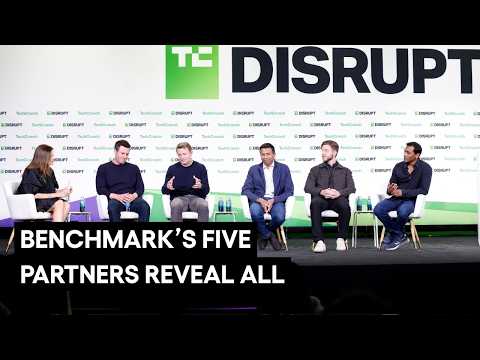
0:00 Benchmark. Hopefully, most of you are already famili familiar with Benchmark, but it's backed some of the most consequential technology companies of the last three decades while maintaining one of the most unusual partnership structures in venture capital. Today, all five benchmark partners are here together. Please welcome Jack Alman, Peter Fenton, Chathan Puriga, Everett Randall, and Eric Vitria with Techrunch editor-inchief Connie Loysos. >> >> Hi all full house. How lucky are we?
0:47 so Anthony just remind you reminded you of what this firm stands for and has accomplished over the years. But I do think it's it's interesting. So I think we all think of benchmark as being associated with a few things. Its notable bets, its flat partnership where everyone sort of enjoys in the same economics and also its almost stubborn adherence to a small fund size. But this summer you announced two billion in new funds across two vehicles. Peter, what happened?
1:23 Well, you know, it's the Silicon Valley, our ecosystem is most distinguished, I think, by its adaptability and that that there are certain things that lead you to say the next trillion dollar company's most likely to come from the Silicon Valley. I know you probably have a global audience, but this doesn't mean that there's a 0% chance outside of the Silicon Valley. And so that question of adaptability and evolution is something that we inherited at Benchmark. And so there's a craft that has not changed, which is the core fund that we have of working closely with founders at the beginning. Usually it's a 10 to 15 year commitment and we're really shoulder-to-shoulder and that doesn't scale. So it turns out there's been inflation. Last I checked, it's more than the exact $500 million fund size that we held for 20 years. And so our core fund has just inflated to be consistent with the existing economy. So that's something that we had not done and and that was a probably a just a tactical error on our part. But allows us to continue the core business as we practice it for the you know 30 plus years of the franchise. the the T1 fund which is you know very much a expansion of our mandate which is in some ways we get permission from the ecosystem to do more than just the core early stage business and the permission we had was sort of a fork in our eye. So there were a number of opportunities that would have been somewhere between 10 to a,000x that came to benchmark and we were constricted by our early stage focus and you know the conclusion we came to is that there's enough of those opportunities to support a fund that is that is in the continuum of what we do where we still think the return profile could be 10 to 100x maybe a thousandx so it's asymmetric but it very much is a rooted strategy in the core early stage business. So it doesn't replace it, it doesn't compete with it and in many ways it expands our horizon but in a way that doesn't distract us. We don't have to hire a whole bunch of growth people and and try and be something that we're not.
3:36 So if it fails it fails. But I think it's part of being in an evolving landscape is that you try new things while you also assert what makes you distinct and and you know differentiated. >> And and when you think about this fund, the the growth fund 1.25 25 billion. Are you thinking like a handful of bets for being that prescriptive? >> We all have different answers which is the beauty of a non-h high firm. I would love for us to have as as the great JP Morgan paper which everyone should Google and read the agony and ecstasy of a concentrated portfolio. If that's fund is successful there'll be one or two investments that generate 90% of the returns. So I I think it should be four to six, maybe it's seven to eight, but it's not our core fund, which should be more like 20 to 30.
4:20 >> Okay. Well, EV, you are a growth stage investor. You are one of the more recent additions to the firm you joined late last year. You worked for a number of other known brands, Founders Fund, Bond, Kleiner Perkins. I think the audience would love to know something that you've I'm sure answered numerous times before, but how does Benchmark differ from those other firms? Yeah, I think every single firm ultimately is just a collection of the people within the firm and then the way that those people work with each other. And so you can have really large institutional firms where you have a 50 or 60 person investment team. It's very hierarchical and and investment processes are you know federated into product groups since you have an app group or a fintech group or a consumer group. and then you have small partnerships. I think very early on in my career, I was very drawn to the idea of a small partnership because you you as a individual and as an as a team, I think it allows you to have just a a higher level of throughput and fidelity in your conversations where you don't feel like you're communicating and making decisions through some bisonantine you know corporate structure, but you're actually going out as a team similar to you know a sports team as a small group of people going out on the field together and and you know trying trying to win the game on the field and so the small structure was always very very attractive to me throughout my career and most of the the firms that I had worked for were smaller firms in terms of the number of investment headcount. and then I think the other piece is just you got to find your people. You have to find people I think we say oftentimes internally not only that you that you like but that you admire. And I think getting to know the benchmark group before I joined and I think this was a very core piece of when we were recruiting Jack as the fifth fifth GP for the current crop of GPS at Benchmark was it was a group that it was very very obvious that everyone liked each other and got along very well and worked really well together. But even deeper than that, it's a group that admires each other and can learn so much from each other. And so finding I think that mix of attributes within any team or any firm is is very rare. And when I when I saw it, I was I I immediately wanted to to join the group. And I think Jack felt the same way also as a newcomer.
6:40 >> Well, Jack, so you are the officially the the newest member. You joined back in February and you've got a really interesting path. I mean, you a year ago had told the Wall Street Journal that you had just closed your second fund with $275 million in capital commitments in a week's time. you have a hugely popular podcast that I listen to and enjoy. Why did you join Benchmark? >> Yeah, I mean I it's funny. So I I I did that podcast with these guys not that long ago like it was at the start of this year and you know at you know speaking about the the growth fund and one of the things that's so cool is during that podcast you know obviously we talked about the commitment to being a small fund but I think more than that what I heard was they were committed to like we want to be the first people that the founders call we want to be really in it with people we want to be concentrated and they just care and there's so much in the industry that I think gets tied up in all sorts of other stuff and you know there's there's money and status and all these other things and what I felt from the benchmark team then and you know 10 times more as I've you know gotten to know them so well it's just a group that really cares about founders and helping companies and that really spoke to me and you know I I I did enjoy being an individual and you know investor and it was great but kind of like Ev just said it's like a rare thing to be able to have a dynamic where everybody that you work with is different and unique and you respect and admire all of them in their own ways and you just learn and it's fun and like right now we're in such a crazy dynamic market that I don't know how I would feel figuring it out you know on my own but having a group of people who are so smart and focused and driven to sort of learn it with and from has has been awesome. So, for me, it kind of just came down to wanting to learn as much as I I've only been an investor for a couple of years, and I just thought there would be no better place to to learn than with these guys.
8:36 >> That's great. Eric, I I also think the audience here would just love to know a little bit more about how Benchmark operates. So, somebody told me recently that you guys meet on Mondays. You have Monday partner meetings, but there's no agenda that you just kind of like >> zero. >> Yeah. So, that's very interesting and kind of counterintuitive. Jack tried to make an agenda. >> Yeah, Jack tried to make an agenda. >> I've got an agenda for next Monday.
9:03 >> how do we operate? It's very haphazard and and kind of weirdly arbitrary in terms of how we how we operate. It's a one way to think about it is it's just an ongoing conversation. And so much of what you're trying to figure out in a time of of rapid change and and kind of where the kind of technical substrate is unstable is like what's actually happening what's becoming possible now that wasn't possible six months ago. where which people are are kind of you know bending light and and you're just trying to like figure that out and it's not clear. And so there's just a perpetual conversation that we spend a lot of time on Monday literally just talking about it like just what are different companies and what are they doing and what are you seeing and you you know we all are meeting companies throughout the week and it's just like what piqu your interest and who piqu your interest and why and and then what's going on in the portfolio and what are you seeing in board meetings and everything else and this is there you can try to systematize it. You can but one of the beauties of of five people is you don't have to systematize it. you can just have a conversation and through that conversation you uncover new nuggets or new questions and then you go dig in on during the week and of course we're kind of constantly talking on on messages or whatever throughout the week and and then every once in a while not that often but a few times a year each of us get really excited about an opportunity and and then as soon as you get excited about something you probably have some other people look at it and then you have and you kind of start to build some momentum and you get new questions to think about and then and then you go after it. But it it I I think the way I think about is just it's like a decadesl long conversation that is constantly evolving and that only works if you're small. It only works if you actually enjoy spending time together because if you don't it it would be really miserable. you know, and after this we after this session here, we get to go have dinner with one of the very few elite entrepreneurs who's built a multiund billion dollar company. And so we do that to kind of keep our thinking who who we are not invested in. And and so you kind of keep on on doing that in different ways to to stretch your mind.
11:20 >> And you need space to do it too. And so part of not having an agenda and having exploration time is you need space to be reactive to the speed of the ecosystem. And part of staying nimble, part of being creative with our strategy, our fund size, whatever, is I believe that we're the best firm to react to any given moment to what our entrepreneurs need. And so if they need help landing an executive, the five of us can be at their disposal and close candidates. if they need a really important strategic partnership to land, if they need to talk to a certain executive at a big company, whatever it is, you need space to do that work and and I think that's what we optimize the internal dynamic around and it's super effective when we can do that and the founders feel it in a completely different way.
12:10 >> Just wondering since you are an equal partnership, can one person put the kaibos on a deal? How do you what do you do when somebody feels strongly and the others are like I kind of like this company a little bit better? >> Nobody knows. No, >> we don't have rules around it. >> Nobody knows. Like I I I literally >> you I actually don't know. So I was waiting to see what someone else >> Yeah. I mean >> it's never happened.
12:33 >> Yeah. Well, it's it's I think to sort of this previous point, it's like because the firm is structured around a low volume of deals, >> you don't actually want to have all of this rigor. I think if we were structured in a way where our mandate was to invest in a 100red or 200 companies per year, then you'd want to use the CRM or have a CRM, you know, you'd want to have Mondays that were very structured. You'd want to know a very formal voting process. You'd want to have, you know, a big team that was sourcing things. But I think because it's so few and it's so rare, the lack of structure is just a huge asset to it.
13:08 Another dimension of that is I think we're you know we're saying yes at the beginning of the adventure e even in our quote unquote growth fund the idea is that's still in the first 1%. So if your partner has built conviction about somebody, they're seeing the dimensions of their personality, their poss, the gravity of their possibilities. And and I think when we go into a room, we don't like say yes or no to a deal. We just think about, okay, knowing what I know of Eric, is this a relationship that I can look back on in 10, 15 years? It's it's not to use a dating analogy, but we all have friends and the partners. He's like, that's not such a great fit. And you might point out things recognizing they may still get married. So you you tread lightly and you know I have been wrong.
13:57 >> What are we talking about here, Peter? >> And so I I've been wrong when I've discouraged because I see things that I wouldn't want to work with. But the beauty of a partnership is that there's not we're not judgmental. I think one of the differentiating aspects of our brand is we're not so cockshore to come in and say winner loser. It's not Shark Tank. We we see we sort of feel awe, for lack of a better term, at all the possibilities, having done the job for long enough to know that yeah, we're we're seeing Toby from Shopify tonight.
14:29 And I adored Toby. We've been admiring him from when he had three people at the company. And I I felt that connection and all the possibilities, but it made no sense. This is a guy in rural Canada running a white label e-commerce with no network effect. And over time, what you'd realize is as you do more of this investing stuff is that you you you amplify certain dimensions of seeing something that others may not see. And you know, in a partnership, we try and do that for each other. And and so the occasional case where someone comes in that's polarizing.
15:04 we we have the space to and by the way the entrepreneurs feel that if one someone in the room doesn't like you >> we're we're not a great partner and what what I think we try and create and I think this is universal for where it's really worked is that the entrepreneur says it's just different when you walk into a room and there's five equal people and and like your sales are filled with the the energy of of that group's belief in you then we should sign up and and support it. But but you know, it's mostly it's relational advice, not investment advice.
15:34 >> and Jay, I'm just kind of curious, too. I mean, companies are springing up. I'm not sure actually if they're springing up faster than they ever have, but they certainly are growing faster than they ever have. So, I would think it's easier to feel like you're missing out on opportunities if you don't invest with maybe like greater frequency or have you guys picked up the pace in any way or is it still two to three deals a year for each of you? No, I think the pace is consistent. I think part of the the reality of venture capital in our business is that we are not going to be part of though we wish we were. We're not going to be part of every successful company and that's okay. The thing that we want to be part of though is there are companies that we identify, we find that the entrepreneur has some great strength and we want to amplify that strength and it's our job to find a way to work with that person. it kind of doesn't matter how much capital they want to raise or what structure or where they are, all that kind of stuff. You you just have to work through all that stuff. you know, in any given year there's going to be x number of successful companies. We would like to have as many of those as possible with the acknowledgement that we're not going to get 100%. I think part of training this mind that Peter talks about is that as you continue to make these decisions, you kind of refine what works and where you as a partner can add the most amount to that that relationship with a founder. and it's even within this group, you know, there are times when one of our partners brings in an investment and it's fantastic that, you know, my one of my partners is really excited about that company and that opportunity because there's a matching of skill, matching of networks, etc. And then I think the beauty of this partnership is is that there have been times where one of us meets a company and it's clearly a much better fit for somebody else in the group. And that's passed with such little friction internally. And I think that's actually a very special dynamic.
17:35 And there's, you know, and it's sort of these stories that you tell internally. And there's a story of eBay where Bob was on the board, but Bob wasn't the first person to meet the company. And so, there are many examples like that where somebody meets a company and and pulls somebody else in and says, you know, this really feels like something you might really want to dig into. >> Yeah. >> And that works out great. And it's a beauty of the partnership, the equal equal partnership.
18:01 >> U you know there's so much I mean it feels like the ground is shifting underneath all of us right now. And one thing that I think founders are interested in or certainly I'm interested in as a trend is VCs backing competing companies. your brother was not that excited initially about you know OpenAI and Anthropic having the same backers but now they have dozens of the same backers. We just saw a sort of as they're very Silicon Valley like kurfuffle with factory and cognition having a coastal ventures as an investor in both and there being some confusion around that company but I'm just wondering has that pact changed because companies are growing so quickly and expanding into one another's territory.
18:45 How are you thinking about that Eric? Well, I I think one of the things that we have an ethos around is we are making a commitment to an entrepreneur and through that commitment we're saying we're we're going to work with you in this thing and and whatever that thing is and and we are working closely enough where like it matters and it should matter to them and as it matters to us. The harsh reality of this world is every company is evolving very quickly and so you do have companies that will naturally like evolve from one thing to another or pivot or change and you are going to get conflicts and and like that's that's just the reality of the of the kind of current dynamic. Having said that, I I feel this way like pretty strongly, which is like we are committed to that entrepreneur and and to and to helping them with their company and that commitment exists, but we are not product or technology experts. And so if they can tell us anything that ends up being valuable to someone else, they were anyway. Like it is just like it's just not like it just can't be. And so of course we like are we're maintaining confidentiality and like doing those things and have been you know fortunate to not end up in in that type of like insane direct conflict but you know for the most part like we're helping with we want each company to realize its potential and its maximal potential and like and you're kind of working through that. So at least for for us and especially for the stage that we we invest in which is generally like very early you know I think that commitment of exclusivity in that area is really important but things are evolving there's no doubt about that >> and I think people are ultra ambitious in this AI era and then you know as the cost of coding new products effectively goes to zero >> you know founders are incredibly ambitious they see a surface area and they want to attack the surface area and So, I think it's really it's probably going to happen more where you start to run into each other, but there's a way to be there's a a way to maintain that relationship and be respectful. I think it's like if you invest in a company and it's pursuing a core strategy and there's a direct competitor, then that's an easy answer. I think over time if this company expands its surface area and it so happens to be in a place where another portfolio company is that's sort of like that happens.
21:11 >> I this is it's like kryptonite. So yeah you poke right at the nerve center where we run our toughest problems which is smart but the in the spectrum you have like co-founder who would never work on a competing company to public market stock picker in our industry. you could distribute their strategies based on that. So, so for some firms, it's okay if they do five competitors because they're stockpicking and they're not causally influencing other than marginally allocating capital, we trend closer to co-founder. Meaning, if if we do something where if if it's a conflict, first of all, we honor as as in truly like a deep ethos is transparency to say golden rule, if you were in our shoes or if you were in your shoes, what would we want to have had as the communication? And so there shouldn't be the surprise like after the fact. And then if conflict does emerge, you know, it's it's you you really should never feel like you're getting less than because we have another thing that's sort of landed in the competitive space. And that that just an ethic and value system we have. And I I I it'd be shocking to me if someone says, "No, we we divided our loyalties." And that's not what happens. It's Yeah.
22:24 I wanted to ask, so you mentioned you're relatively new to this, although you've got an amazing portfolio from your all the capital days and your angel investing. Have you made an investment yet on behalf of Benchmark? >> Yeah. Yeah, I have. Okay. >> Yeah, made a few. and a lot of them are a lot of them have been recent. a couple of them have been recent, so it's they're not all disclosed, but yeah, I've made a few. I mean like I can tell you and just in generalities what's funny is you know my background was software you know as a founder and then that's a lot of what I had done on my own but since joining here I've done chips and robotics and infra and so yeah >> so I was wondering if there's a lot of pressure on you know the first deal because again there's not that many you know shots on goal per year. I can't remember who said it but I mean they did such a amazing you know some somebody asked me when I joined like how was the onboarding and I was like it was perfect there was no onboarding and like I can't remember it was either Tathan or Eric said to me like hey you're going to feel like you're going to feel tight on your first one like don't like you're going to make many investments while you're here like the this whole game includes you know crazy power laws the odds of it being your first are low you know don't don't think that and just, you know, I I kind of came in thinking that, well, you know, benchmark I I trusted that they understood what my shape was as a person, as an investor, and that I was going to just try to stay as consistent to to that as as I could. But yeah, I mean, like I think in general, it's always like, you know, you're coming in, you know, to a group when you people have these unbelievable portfolios with, you know, companies that you look up to and all those things. And so, of course, you want to build that, but I I don't think I would I wouldn't say I felt that kind of pressure. in any negative way at least other than just wanting you to do a good job. The other cool thing I was thinking about with just listening to Eric talk was it it really is and I don't know how I've never worked at another firm so I don't really know but it really is it really is a group dynamic on a lot of these like the investments that like I made you know it's like I don't think we would have won them if I didn't have my partners. I don't know that I would have been able to know how to get to a yes without my partners. So, it it one of the really cool things that I just had never gotten to experience before is it's really not a solo act, which is what, you know, Peter Peter joked to me when I was you know, interviewing him on my podcast is like he was kind of like, "How do you do this alone?" And I think now now that I see what it's like to join a team, I I see why he would say it that way.
24:49 >> Eric, I had wanted to talk to you about Cerebras. That was an interesting bet for the firm. You've told my colleague Julie Bort that you almost didn't take make that investment because it was a little bit of field for benchmark. So can you talk a little bit about what persuaded you and what that says about your kind of flexibility I guess as a firm. >> Better lucky than good. that's I think I think the biggest takeaway.
25:13 when we invested in Cereberson 2016, it was spring of 2016. It was the first round of financing for the company. we, you know, hardware wasn't a thing. AI was obviously in its infancy. Deep learning was was just coming around and I you know I think I was look our our days are packed with meetings obviously and pitches and everything else and you're like we hadn't made a hardware investment in 10 years. It it was like it was just a different era in 2016 and and we we met it and was like wow this is there's really something there like it just it the founders seemed good. They had a very simple thesis and and then mostly everything else I didn't understand.
25:58 and that was kind of on a Wednesday we had several other meetings and then I remember Sunday night talking to Peter they were coming in again on Monday to kind of meet the rest of the partnership and you know Peter said to me at that point he was like this goes against everything I've ever learned in the industry in venture at that time and I was like you know okay that that means something this is like part of the partnership dynamic and then on Monday after they pitched and it just relates to this whole thing after they kind of took us through the story, you know, Peter Peter had flipped and he and he said like you should like do this basically and you know and I think a big part of it is like you understand each other's instincts and and proclivities and of course that began a a journey of lots and ups and downs and many potential deaths of the company along the way to to where we are today and it's and it's far from over. there's a lot more of ups and downs to go and so you know that that I think is like a lot of the journey now if if we look at it we have actually like a decent number of hardware investments and including for antantis and and Sunday robotics and and you know Jackson chip company and like all these other things and and so like the world has changed a lot in that in that era but I think just the idea of falling in love with a a founder or set of founders and an idea and the kind of I don't know the romantic ism of that part of the job is why we do it.
27:25 >> Part part of that and what what Eric is alluding to you think about it is like reapers represents a giant wafer a bet on a certain form of inference and all these sort of physical properties. But that's not what happens. Yeah. >> What happens is you have Andrew and his co-founders and they're heretics. what they're saying is absolutely unorthodox and and and you see it even today with people dumping on the stock because it's it's it's polarizing. That's exactly where we have to be as investors because if it's consensus and everyone thinks it's makes a lot of sense that that would happen. Why are why is there a startup like we are in the area of people in the process of creative destruction of their industries and conviction and his activation of us in response to that was so unambiguous that you had to make the investment. So you think back like, okay, it's crazy in every dimension. Yes, it was unorthodox and against all of our principles except for the one that mattered the most.
28:24 Well, I was gonna say >> I was just going to say that I think that's one of the actually interesting differences between the very early stage and growth as we've talked about which is you you really are attracted to these this like orthogonal approaches like 11 people are saying one thing and one person is saying something different and like the one person is the one that we're like wait a minute we better think about that and like did we like are we and and and then at some point like that actually has to translate into like a business and momentum and and you know that's and that's where the growth comes into play which is in some ways you know there's there's obviously always hidden gems but it is a bit more consensus than like than the very early stage and and as we kind of talk through these companies that that's one of the things that we're working through. Oh, I was going to say what's interesting to me.
29:14 So, Cerebris went out. I mean, you guys have done very well by this company. Andrew was here yesterday with his, you know, dinner plate sized chip showing it off. but it was priced at 185. It went out at 350. Now it's back down to 185. Peter, you mentioned that the stock is getting beat up. I'd like to know why you think that is. >> And I have a second question after that, but maybe who wants to answer that one?
29:41 One of the things about six weeks before the company went public, I took the the I presented through the company like just what it's like to be a public company and I showed stock chart after stock chart like Coreweave, Data Dog. Name your company, >> Amazon, >> Amazon, Dash and and Door Dash. And you look at these companies and you look at them like peak to trough. >> peak to trough. you look at a peak trough over one year or two years and it is insane how many of them move 500% in a year up and down. And so the answer to the question is who the hell knows?
30:20 there's but the reality is you can control what you can control and then you update the public markets every 12 weeks and that's how it works. And so like the reality of being a pro company, which is a public company, is you need a stomach of titanium >> and the employees have to understand that. And the labs will go through this as they will and others will too. But that's what it takes. And and and that's part of being, you know, being one of the elite companies. and we've had, you know, lots of experience in the firm and individually taking companies public and experiencing this volatility as board members. I would say that the one thing that you get as a benefit to all the volatility in the public markets is one, you get a much bigger balance sheet and then two, your ability to raise capital to do interesting things totally >> goes way up as a public company. And so my encouragement to this current generation of AI companies is to think about going public early because if you just look through the history of technology and Toby's a great example of this at Shopify, what you can do as a company and how big you can get leveraging public markets is truly amazing. And I think there, you know, there are many companies that have done it in the private markets, but doing it in the public markets and sort of going through the other side of it and what it lets you do, is really, really amazing.
31:48 And so we have all the confidence in Andrew and the founding team that they'll execute through this period. But again, like stock price, it's one of those things that you have to prep the company about, which is stock market volatility is something that that is the price of being a public company in order to get all the benefits of being a public company. And so if you can digest the volatility over a long period of time, you and you execute against that, you're going to build something extremely valuable and durable. And so maybe the event doesn't matter that much, but I wanted to ask if anyone on this and this company still believes in direct listings versus IPOs. Your former colleague, Bill Gurley, was a big big advocate of finding another way because this huge pop doesn't really benefit the company. It goes to, you know, bankers and their clients. And I I wonder if you still think there's a problem.
32:39 >> I've had the benefit of working on a direct listing. I think maybe of this group, I'm probably the only one who's like worked on a direct listing. I it can make sense like it can for sure make sense. I think the reality is for this crop of AI companies, it's going to be unlikely because they need capital and they need a lot of capital. And so, you know, at the end of the day, IPO raises money. You know, Cerebras raised $6 billion like that matters. and so I I think it's probably unlikely for this crop just because most of them need capital and capital is an important part of it. for a company that doesn't need capital and and is is going public, a direct listing is great.
33:17 Jathan, I also wanted to talk to you a little bit about you've made some really interesting bets. You made a crypto bet, which is not so usual for for benchmark. You also led the Manis deal. I thought that was so interesting when I read about it. Obviously, there were like strong reactions. This is the company based in Singapore. Senator John Cornin sort of said, you know, raised questions about whether a California company should be firm, you know, investing in this company. Meta bought it. I also was surprised by that. and then the Chinese government kind of unwound the deal and the last part seemed like the most predictable piece of that entire chain of events. Why did you lead an investment in that company in the first place?
34:00 >> Yeah, Manis was an AI application that was building on top of the APIs of OpenAI, Anthropic, and Google. And at the time they had really pioneered a way of computer use in a in a way that and browser use that a lot of people hadn't thought of and then put it in front of consumers in an application that was easy to digest. >> and the six co-founders were really spectacular technologists based in Singapore.
34:30 >> and they were moving at a pace and innovating a pace on top of these APIs that was truly remarkable. And so there was a magnetism to that technology and that product that we all felt and so we made that investment. Meta acquired it in December of 2025. They had gone from 0 to 100 million run rate in 8 months. and the acquisition closed. and that's when I stepped off the board. What happened after the acquisition and what's transpired since?
35:01 We were completely out of the picture. And so you know I don't know. And but you know I think it made a lot of sense for to meta for meta to acquire the technology and you can see their push into consumer AI applications. I think there's going to be a lot more in consumer emerging now that sort of the technology is better understood the model layer is better understood how the API should be consumed. I think what we're making advances in terms of browser use computer use agents themselves and how people can use that.
35:34 I think it's going to be a really exciting time for consumer. >> We're running low on time and I I'd wanted to talk to you a little bit about just kind of the macroeconomic picture. You were a finance major. companies are you know basically you know it's very expensive for companies to borrow right now. They are they've exhausted their free cash flow. IPOs are being pulled. We just saw our first AI bankruptcy yesterday with Character AI.
36:02 Do you think we could be in for a severe correction like potentially soon? How are you thinking about this? >> Yeah, I think macro is is always a bit of a fool's errand to to try to predict with any any level of precision. I do think that we are in a the thing that has changed the most since I began as an investor I think is the information environment. like for example like Character AI going bankrupt. Character AI was aqua hired like a year and a half ago. like that was the corpse of a company whose founder and management I mean no offense to the the remaining company but you know the the founder and the management team of that company was acquired into Google and it was already sold for 2.3 billion and so like the leftover remaining assets then going filing chapter 11 being seen as as like this this like oh is this like an AI chill effect it shows that the info environment for public equities in tech has been drawn so much into this like hyperactive ive X echo chamber where like the the if you look at the market today and you see where coreweave and nibbius and all these things are trading those numbers are are due to the ARR figures of two private companies that will probably be public in the next 12 months but like the public markets in many ways run on X right now because there's so much capex and there's so much investment that runs through the the like estimated and projected health of OpenAI and Enthropic and So I I I think that the thing that feels much less healthy about the current macro more than the actual underlying results like we're seeing every single day like our companies are seeing so much demand that they can't get compute like they cannot get the compute they need to serve customers that are willing to pay them u money for the product at good gross margins. Like there's nothing inherently unhealthy about a lot of the AI ecosystem. What is unhealthy is that we have an immense amount of volatility and an immense amount of sort of like swings in the market sentiment based on you know data points and facts that oftentimes aren't true or are made more exaggerated or hysterical for for for clicks or you know you have people that are you know starting these like consulting agencies that that their their sole sort of purpose is to either be bearish or bullish on the AI trade. And so just the info war and the info environment around the macroeconomic environment has has never been more volatile and that that volatility seeps through into the market and and you know gives you the the current environment that that we have.
38:35 So I'm not worried about the underlying AI ecosystem as a whole from what we see. but I do think that OpenAI and Enthropic going public would be very healthy so that we can actually know what their quarterly revenues are instead of having the market swing 5 to 10% every time that there's, you know, an updated estimate from a from an account on X that's anonymous. >> Last question. Speaking of Open AI and Anthropic, they've really almost feels like single-handedly pulled the center of gravity back to Silicon Valley. Do you agree? I mean, are you guys interested in companies that are outside of California and outside of the US?
39:08 Maybe we'll go down the the the aisle really quickly and then Jack, what do you think? Is it do you have to be here if you're a founder? >> I don't know if you have to be here as a founder. I think it is the by far easiest place right now to get talent and capital and customers in many cases. And so I think it is a big advantage. I mean I think you know probably everybody on here works with companies that are not in San Francisco but we're also in San Francisco every day we're here. So I wouldn't say you have to but I would say strong strong bias for our particular setup.
39:38 Yeah, I mean if you look look at just historically probability density is 90 plus percent that of the capital generated return generated has been founded here. There are these beautiful stories that are outside of that dense probability distribution. you think about today Shopify is a great example. there ramp there are other really big success stories. the ecosystem effect that occurs when you have a successful company and that that leads to a background of great executives, ambitious people, the bar of success gets raised. I don't think it's systemically happen anywhere quite like here. Will that happen one day? It's possible, but you know there there's these exceptions and and yet the density is is still here very much. You know, crypto maybe it wasn't, but now I think it very much is.
40:28 >> I agree. I think San Francisco is a magical place. There's a reason all five of us live here. our Monday meetings are all in San in the Bay Area in San Francisco. And so it's a it's a magical place. >> It's it's it's I'm trying to think of a nonsfbbased company that I've met in the last 18 months that didn't like wasn't actively saying that they were spending more time in San Francisco. They're either opening an office in San Francisco, they're spending half of their time in San Francisco, or they're planning to move out to San Francisco.
40:56 And I think everything that that Peter said rings true where it is like if if you you want to be around a group of peers that are going to like iron sharpens iron. Like you want to be around peers that are going to make you the best version of yourself. And it's hard to think of a city that does that better than San Francisco in the current era that we're in now in AI >> here. Here.
41:14 >> Yeah. So guys, those of you are in from out of town, it looks like you're going to have to think seriously about moving to San Francisco. Guys, thank you so much for joining us. All of you, thank you for for coming all of you. >> Thanks guys. Thank you.
Summary
- Benchmark has announced two new funds totaling $2 billion to adapt to inflation and evolving market conditions.
- The firm maintains a flat partnership structure, promoting equal decision-making and collaboration among its five partners.
- Benchmark's investment strategy focuses on early-stage companies, with the potential for high returns, while also exploring growth-stage opportunities.
- The firm values a small, cohesive team dynamic that fosters open communication and collective decision-making.
- Benchmark partners prioritize building strong relationships with entrepreneurs, emphasizing commitment and support over mere financial backing.
- The firm is cautious about investing in competing companies, prioritizing transparency and loyalty to its portfolio companies.
- Despite the current macroeconomic challenges, Benchmark remains optimistic about the AI ecosystem and the potential for public offerings to stabilize market volatility.
- The partners believe that while Silicon Valley remains a hub for innovation, successful companies can emerge from outside the region, though the advantages of the Bay Area are significant.
Questions Answered
What is Benchmark and what are its notable characteristics?
Benchmark is a venture capital firm known for its unique partnership structure and significant investments in major technology companies over the past three decades. The firm has a flat partnership model, where all partners share in the same economics, and it has maintained a relatively small fund size, although it recently announced new funds totaling $2 billion.
How does Benchmark operate internally?
Benchmark operates with a unique approach where partner meetings have no set agenda, fostering an ongoing conversation about market trends and potential investments. This informal structure allows partners to share insights and discuss companies they encounter throughout the week.
How does Benchmark decide on investments and collaborate internally?
Benchmark aims to invest in as many successful companies as possible, recognizing that not every investment will succeed. The firm values the ability to match partners' skills and networks with the right opportunities, allowing for smooth collaboration and decision-making within the partnership.
What factors influenced Benchmark's investment in Cerebras?
Benchmark's investment in Cerebras in 2016 was initially against the firm's typical strategy, as it had not invested in hardware for a decade. However, the potential of the founders and the innovative technology prompted a reevaluation of their approach, showcasing the firm's adaptability and collaborative decision-making.
What motivated Benchmark to invest in the AI application Manis?
Benchmark led an investment in Manis due to its innovative use of AI technology and the impressive capabilities of its co-founders. The application was built on top of major AI APIs and demonstrated rapid growth, which attracted Benchmark's interest despite the challenges associated with international investments.