Transcript
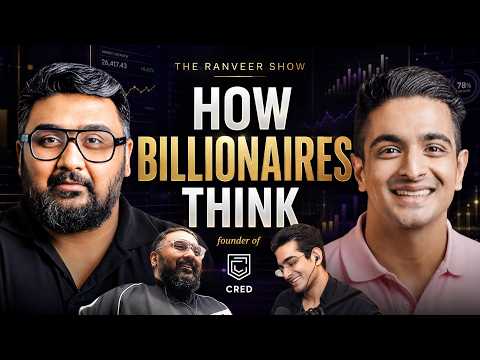
0:00 Today's guest Kunal Shah is primarily known as the founder of FreeCharge and CRED in the startup community. He's extremely respected because of his business skills, his business knowledge. But, you know what? In the world of Twitter, he's one of India's most influential Twitter influencers. You know why? Because he's one of the most well-read people. He's someone who's got access to some of the world's best minds. And in today's episode of The Ranveer Show, Kunal Shah's going to unleash all that intelligence on you guys. Have fun. This is a very deep, heavy conversation, but I promise you, if you're a young entrepreneur, or if you're just someone who wants to get smarter, this is the episode for you. Enjoy yourselves.
0:43 >> >> Mr. Kunal Shah, welcome to The Ranveer Show. >> Thank you so much for having me, dude. >> How have you gained this reputation of being one of India's smartest people in general, but also one of India's smartest people in the startup space? >> I I don't know, man. I don't think I'm the smartest person around. I I probably vocalize my thoughts, which sometimes appear smart, sometimes they just go above my head and people's head, and that people assume to be smart. So, I guess I am just curious. I would not say I'm smart. I would happily take the title of being the most curious person. I don't know if I'm the smartest person.
1:38 >> How have you built out startups which have been so successful? Like, what has been, you know, the work that's gone behind it? And by behind it, I mean right from the time you were in college. What has the preparatory period involved? >> I guess I became financially independent when I was 16 and not out of choice. The family went through financial crisis, so had no choice but to jugad my way into it. So, I've done anything from selling pirated CDs to selling mehndi cones to all sorts of things that I've done to kind of earn an income. I used to run a small cyber cafe. I used to do tuition of computers. I I've done all sorts of thing that made money. And I had no choice but to do that. Good news is that it taught me how to make money very early on in life. And I think that is what I think our education misses completely.
2:37 we get to learn to sell something so late. And and also because we have a lack of dating culture, you're terrible at selling in general, right? So, that makes us a country of terrible salesmen because the 98% of the country is doing arranged marriages, which makes us terrible at sales. And I think I learned that doing that extra matters so much in a country where people are just not trying to push for it. Like I I appreciated the effort that you took to get the perfect setting for this podcast. And I like people who do that because it's the extra 5% that makes all the difference and not just like acha mic laga diya ye kar diya. You you sent me a microphone.
3:24 You you get all the settings done. To me, all the value that I have seen people create is by the shiddat that they have in their work. And I think that's been my thing that I do not like to work with people who do not do this to the last level. I I like to hang around with people and I think businesses just happen to be happening around same time. But if I have to look at my journey, I've done all sorts of things. I've probably done I don't know, 15, 20 different types of businesses. I'm known for one or two, but the thing is it's been a constant journey of iteration.
4:02 And if I had to point out to one thing that has helped me kind of create some successful businesses, is to understand the core concept of human motivation. What do people want? And will they pay money for it? Right? And I think most of businesses miss exactly these two points. And And they imagine problems and therefore start solving it. And they imagine the severity of problem that people will pay for money for that problem, right? And I think that is the core two insights through which I have kind of been very fortunate to constantly build businesses. And I don't know anything else to do in life, so I keep building businesses.
4:46 >> Mhm. I want to know why you think you don't know anything else in life because your Twitter says otherwise. But is it Would you Would you reframe that sentence as you get your biggest kick out of business? Like you get your biggest life's high out of business? >> I think that's a fair point. I I think my core need is to be curious and to know things, but do I really know it can be only be tested by if I've made a business out of it, right? So, let's say business is the application of knowledge because knowledge for the sake of knowledge is not as valuable because you have not tested it, right?
5:23 and I think India has too many gyanis otherwise, right? So, the application of gyan is is everything. I I I believe that otherwise knowledge is freely available on YouTube as much as we want, but most people are so addicted to just listening to gyan and motivational stuff and doing zero things in life. And I think that to me is the biggest problem of India. I would say summarizing it that way too much knowledge, way too much gyan, very few people trying to apply and improve that.
5:54 >> Mhm. Completely agree. While I do feel that's changing because right before this podcast started, I gave you the gyan that I give most entrepreneurs in their 30s, which is that a 27-year-old and a guy even in his late 30s are way more similar in India compared to that 27-year-old and the 22-year-olds of this country because of the impact of the internet and all that. Absolutely. I mean, I want I want to I want to ask you a very broad question.
6:23 Feel free to answer it in whatever way you wish to answer it. What is India in 2060 going to look like? >> Oh, that's a hard one. Either we have an extraordinarily bright future or a very dark one. the reason it could be dark is that what capitalism has done, the world has become like a one-big conductor, right? All of us are connected to each other. And the way to understand this is very simple. A joke becomes popular instantly, right? Like everybody knows about the joke. Saying the joke next day also is not cool because everybody's heard it already, right? So, the world is super hyperconnected and everything is just spreading very, very fast.
7:06 And because of that, when innovations come, they spread very, very fast as well, right? And sometimes they take away jobs, right? And when we are not prepared for that change quickly, the skills that we have will be irrelevant very quickly. India has this unique curse of terrible education system, not having the curiosity mindset to learn more things, right? And fundamentally, the world will therefore take away the jobs and automate them, but the job losses will happen in India because the world is connected, right?
7:46 So, an American becoming more efficient is taking away a job in India, and we don't even understand this connection right now. >> Mhm. >> For example, let's say because of COVID all centers in the US are not working and they somehow all figured out to outsource to homes. But now they realize that oh, all the homes are outsourceable, so they give it to India. But now they figure out that we can automate this stuff because people are doing IBR on their own and app thing or airline booking kind of all that stuff.
8:15 Everybody has learned how to become tech-savvy. Boom, millions of jobs are gone. But they're not gone in the US, they're gone in India. Mhm. Right? So, I think the world's useless jobs are getting accumulated in in poor countries. And in 2060, unless we shut our borders and make like like kind of think of a North Korea kind of an imagination where we are only and we are only using kind of a thing, it's going to be very very hard. Now, the positive side of this is that we have a very very young nation.
8:50 Probably the youngest in all the nations. And if people figured out that they didn't don't need to depend on education system to become smart and learn skills, and just that basic skill is taught and habit in people's mind, I think we will learn how to crack things. I think creating an entrepreneurial mindset, the country's biggest curse is that we are all job seekers, right? if you look at Google Trends and look at the top 10 keyword searches every day, out of that top 10, two are for government exams.
9:22 Right? And that is the level that I am worried about that if everybody is just hoping for that one government job, the problem is the government does not need so many people. And and do please understand the largest employer of the world is inefficiency. And when you remove inefficiency, those jobs are gone. Right? And the problem is the skill sets that we have had. There are so many jobs in India which are not required, like lift man, like or ATM watchman, like there are probably, I don't know, millions of people guarding ATMs. But what if people stop using cash?
10:05 What happens then? Right? So, I I think we are just not ready. Our education systems are not just there. Our our dependency on agriculture is way too high. and one more scary factor, which nobody pays attention to, the number of women working in labor force is dropping every year. >> Okay. >> Less than 10% of urban Indian women work. And have financial independence. This is lower than Pakistan.
10:38 >> Oh, wow. >> This is lower than Bangladesh. Bangladesh has 68%. We are at 8%. China is at 90%. Right? And we just don't notice it because we don't notice it because we don't pay attention to it. But look at airport, how many queues for women and how many for men? >> Mhm. >> How many compartments in metro for women versus men? When you stand in rush hour, how many women do you see and how many men do you see?
11:05 >> Mhm. >> 94% to 92% of all credit cards are owned by men. 95% of all personal loans are taken by men. We have not fundamentally understood that we are a fairly patriarchal and regressive nation because we don't look at data. >> Yeah. >> And and the scary part is every year the female participation of labor is dropping, not increasing. >> Mhm. What do you think will be the catalyst to change all this?
11:36 There has to be a solution and this is where you know, maybe the entrepreneurial side of people like yourself has to kick in. >> It's a scary thing because India is trying to play the game of capitalism but the blood is of socialism. >> Mhm. Oh, Okay, hold up. Can you explain capitalism and socialism really easily for the listener? Like in very basic terms. >> Capitalism is very simple. You you use capital to produce more goods, employ more people. The whole society focuses on wealth.
12:12 innovation is rewarded disproportionately to one inventor and and one manufacturer, one businessman, one industrialist if they do good stuff and therefore the overall wealth of society increases, right? But socialism, unfortunately, it just failed everywhere in the world and India has still not adapted to this is that where you say that everything is governed by the state, it's shared equally. So, if like if a patent is made in India, you don't get the benefit of it. It is assumed to be a public good, right? And it's a complex topic but the thing is 99% of Indians have no clue what is capitalism or socialism. For example, lot of people think MRP is a good idea.
12:50 Her product MRP with that and fundamentally that is against capitalism because why somebody like you and me who are staying in affluent neighborhoods paying 30 rupees for diet coke and somebody who's not staying in affluent neighborhoods are paying 30 rupees. We should be paying 100 rupees for that, right? Because our real estate is expensive in our area, storage is more expensive, delivery cost is more expensive but MRP removes this and it's a very socialistic approach saying that subko ek hi price.
13:21 And this fundamental concept is not understood by Indians. If you tell people is MRP be for you? Everybody will say, "Yeah, it's great." But and this is why we have no clue about capitalism. And it is going to take a complete overhaul of our education system or our government's thinking to really improve that because the government somehow operates also with a socialist mindset. Because the country has been this and therefore like there are lots of subsidies and and all of that stuff which does not create wealth.
13:51 And another problem is most of our taxes are coming from capitalism, right? The 30 40 million people who are doing their jobs are paying taxes. A lot of businesses who are in capitalistic market are paying taxes. But the thing is that we have still the mindset that we are PSU my job will get government will get my job done. That's the mindset we are operating at, right? You you've heard about stories about how 10 100 jobs created like 1 crore applications, right? That kind of mindset that we are operating with.
14:19 And the country is fundamentally status seeking more than wealth seeking. >> Mhm. >> And therefore the Indian crab story is a very popular story. I don't know if you've heard about the story where there is a story which says that one guy goes to a crab store and there are lots of these containers where crabs are stored and in one container is kept open and the guy is like, "Is it okay to let it out?" Like why is this container open?
14:41 He is like, "Oh, these are Indian crabs." He is like, "What do you mean by that?" He is like, "Don't worry. As soon as one guy starts to climb up, three guys will pull him down." >> >> Right? And this is the fundamental problem of difference between wealth driven society and status driven societies, right? A status driven society is fundamentally dislikes anybody going up in life. A wealth driven society is like your money is being made, my money is being made, everybody's money is being made.
15:08 Right? >> Mhm. >> And they are way more collaborative. And I think we don't understand this because we've never seen a collaborative society. I'll tell you another factor that India that we don't understand. India is not one country. India is 25 countries merged to become one country. And therefore we have need for neutral platforms. Let's take example of neutral platforms. Our neutral sport is cricket, not from India. The way Kunal and Ranveer can speak to each other is through a neutral language which is English.
15:41 Our neutral beverage is tea and coffee, not from India. when we have a party at office, the neutral food that we order is pizza. Not from India. Samosa is not from India. Biryani is not from India. In fact, I recently discovered that even khichdi is not from India. >> Oh, really? Is it from Nepal? >> It's from the east, so China, Nepal somewhere. The point is we do not realize that the need for this country to come through neutral platforms.
16:14 For example, let's say magically we ban arranged marriages. And we also ban same language relationships. Let's say a Gujarati cannot marry a Gujarati, a Punjabi cannot marry a Punjabi. Fundamentally all the kids that are born after that will be English. Naturally, because the neutral platform that connects a Gujarati to somebody Bengali is English, right? And I think we don't realize and accept these things. And and we are confused between still fighting elections on the old topics, are stuck on some old principles. And the reason we are like that is that nobody is interested in future.
16:57 Everybody is happily celebrating past, right? the fact that we are still thinking about, let's say, building statues of some old people or or creating some things which take a lot of money to build some of these stuff that about past glory. I think every time I've seen nations super obsessed about their past are usually delusional about their future. >> Yeah. Yeah. 100%. you know, a lot of the things you're saying actually echoes this book I'm reading which I'm dead sure you've already read. It's called 21 Lessons from the 21st Century by Yuval Noah Harari.
17:34 and I know for a fact that you're a very avid reader. And considering everything that you have said, I have a couple of points to add. Take it as points, take it as questions, whatever. So, I was recently hanging out with this Colombian girl. we were she was the cinematographer at a shoot I was at. And she's been in India for 6 months. So, she's actually been stuck in India because of COVID. I asked her, "What have you noticed about India that separates it as a society?
17:57 Like what's different about the people here?" She's like there's a lot of beautiful things like spiritual sensibilities and empathy and you know, a sense of warmth and friendliness. But she's like there's way too many internal battles people are having here. So, I asked her, "What do you mean? Like insecurity?" She's like, "No, not insecurity. She's like everyone has an ego about themselves and the sense of ego is extremely strong here. And that again echoes your status-driven point that you made where everyone's fighting for or you know, I should be respected more. And I should be respected more."
18:29 In fact, I remember early on when I had co-founded one of my failed startups with someone, that guy had told me specifically that dude, the one thing I looked for in my own career always is is a respect. I don't want money. I don't want anything. I want respect. And I told him, "Okay." But the thing is I was a YouTuber by that point. And I was automatically getting the bow everywhere we went. I was getting the attention.
18:51 And that's why he kind of drifted even as a co-founder. And then when I thought about it over the years, I was like, "No, no, it wasn't respect. It was this ego massage." Like because I mean, you know, that's that's that's what masks itself as samman and you know, these kind of concepts which are very deeply ingrained in our culture. And the second thing I want to kind of talk about is now in that book they spoke about how throughout the last 200 years there's been capitalism and socialism and communism and all these different governance systems where every country has thought our system is the best our system is the best. And we've gradually seen all of them fail in one way or another. They thought that capitalism was the answer. They thought that America and Europe's model was the answer and now suddenly Brexit is happening. America's elected Donald Trump. Things are collapsing every year so there's no answer anymore. And Yuval Noah Harari's intuition is that the whole world is going to move back to what it was in ancient times in terms of China's going to go back to its own ancient version of itself where they had one government that rules everything that thinks that we are the not just in China but all over the world.
19:57 Russia thinks that there's going to be one czar which is Putin. India might become a collection of kingdoms just like it was. That's and he's actually written about this in the book. >> Interesting. I've I've not read the book. Yeah. But >> Oh okay. Really? >> I I've read the previous book Sapiens. I've not read the book second one. I've never got a chance to look at it but I'll tell you what is interesting what he is saying and it's actually true.
20:20 See society adopted religion capitalism or anything else to collaborate at large scale. But when you collaborate at large scale automatically some people become more successful right? And unless we accept the wealth divide we will say come back. So crab mentality brings it down. We will not care about that we are all richer than before because wealth is not zero sum right? But the fundamental thing is status is zero sum so we'll pull people down. Right? See I I remember one person one very senior banker told me Kunal Right?
21:03 So and therefore you will notice one thing about all the people who are affluent over here, they'll always do this. Right? The reason is this that because flashing wealth in this country is considered to be bad. Like when I sold my company, the first advice I got is that Kunal don't buy a car with Lena. Drive simple car, do this thing because people will hate your success and will work very hard to pull you down. And the thing is, why are we like that? What if we all became wealthy? What if we all of us income grows? Because that's how many countries income per capita has gone from $2,000 to $50,000, right? But we are fundamentally not accepting that part of the nation mindset. Now, to your point about why we will probably go to these bottles is very simple. Let's take a small example.
21:55 If you go back in 500 years ago, the person who entertained used to be poorer than person who got entertained. Right? But slowly as they found distribution, let's say that they got theater about us. And or 400 people could watch something, then suddenly the person who entertained became richer than the person who's being entertained. Then they got cinema. Then they became really rich. Now they have found internet and they'll become even more richer because the distribution is significantly higher now. But there's an interesting angle to this. What is happening with education?
22:37 You tell me now that everybody is learning on Zoom. Every student is learning on Zoom. Why shouldn't physics be taught by the best teacher of India to everybody in this country? And this is one going to be a one hard question to answer because if you do that, yes, everybody will like physics because there's this extraordinary teacher who's come to start physics now, but what about all the other millions of teachers who have been teaching physics maybe slightly poorly or or extremely poorly, right?
23:13 And and suddenly this creates wealth in that teacher and teacher was never a wealthy profession. But if you notice one thing, all the YouTube teachers are really good, they're actually entertainers. They make physics really interesting. But our teachers did not make things interesting for us because they were teachers, they had power, they had respect. Right? And the point is that this is going to create a very very different society.
23:46 And and suddenly we'll say to me, "Oh, there's a lot of good change over here, a lot of good change over here." But the problem is can you stop this change now? COVID is like a catalyst of future. It has accelerated future. Boom boom boom boom boom, it's there, right? And you can't stop it. And and therefore countries are going to behave differently, families are going to behave differently, and we don't know if the world needs so many people. One of the things that I remember watching a documentary that talks about this.
24:18 Before cars were invented, the horse population went like this. And as soon as the car came, the population just went down in 10 years. >> >> Because you do not need so many of them. >> Mhm. >> Now, this is a very scary possibility because human beings are not horses. So, suddenly if you have to keep giving them free income to survive, will they be happy with it? >> Mhm. >> And and we are entering fairly scary possibilities that we don't even have the mechanism to prevent a civil unrest.
24:58 >> Yeah. Yeah. >> We are assuming that everything is peaceful. What if it's not? What if COVID has killed 50% of jobs for long term? And what if we are not going to get them? Like we all used to take cabs. Now millions of drivers are not having a job. What happens now? Right? So the thing is the moment a country becomes emotionally charged, you do not know what outcome it creates because it behaves like a mob after that. And I think to me imagining 2060 for India seems like a very hard thing because we are going to go through a lot of pain before we get there. And you know it's a fun story, but Naveen, if you go and look at every country that made it big, first went through insane amount of crisis.
25:50 It almost looks like it's a compulsory step before you become big in life. >> Yeah. Yeah. 100%. which also echoes a scary thought that I read in the book yesterday, which is that the next war is always going to be a civil war within countries. Countries aren't going to fight each other. It's just that that's been the nature of mankind that the worst and most pivotal wars in human history are always when a brother fights a brother as in when you fight your neighbor. So all the future wars possibly according to the trajectory of where we are are going to be within countries. again echoes all those thoughts we spoke about. With this whole concept of artificial intelligence becoming a crucial part of mankind, taking away our jobs, you know, the concept of retail, actually going to a mall, actually going to a shop to buy something versus 3D printing everything at home.
26:45 All these concepts are probably going to let a lot of people remain jobless. And even Yuval Noah Harari, experts of the world have no answer. The way I look at it, I kind of feel that man, and this is just the optimist inside me talking. I feel that humanity will find a solution in some way. Will that be that there will be a very good model of communism or socialism where the government takes very good care of its citizens? I don't know what the model will be. But my big hope, and this is something I feel strongly about, is that the next phase Facebook of the world and the next Amazon of the world might come out of this country.
27:24 And that's also a flaw of India, where, you know, we always aim to create national businesses and not international businesses. But do you agree with me when I say something like that that possibly the next AI startup which will revolutionize everything in the world can come out of here, the next virtual reality startup can come out of here. >> I have very little hope on that. The reason I have little hope on that is naturally the country has always lost its best talent to the global audience, right?
27:52 I'll give you a story. I was once in Stanford and I met bunch of Indian and Chinese students over there. And I asked every Indian student, "So, papa side?" And not a single person was coming back. And I asked all the Chinese that, "Hey, what's your plan after Stanford?" And all of them were going back to China. >> Mhm. >> So, if our smartest brains are going to be leaving the country, and I think that's where the the tricky part of socialism comes in, right? If you feel that the as a taxpayer, the country's not rewarding you back, let's say Bombay, Bangalore contribute to a large chunk of taxes, but what if the taxes contribution back to the city is very very low because we have a lot of people to take care of this country, then you're like, "Yeah, let me just go." And now, with technology, you can actually be anywhere, right? For example, Facebook can employ somebody in Colombia with an Indian sitting over there. So, world is going to be getting all mismatched and and and the whole different kind of matchmaking is going to start happening where everybody's okay with anybody being anywhere.
28:57 And that is a scary possibility. Now, coming to can we build these companies? The thing is talent and audacity and money and product mindset is something that is extremely hard, right? Like I said, we had like lot of global companies CEOs are Indians. So, it's not that there is no brain, but the exposure. We forget that all the Indians that we are proud of have changed their citizenship long ago, have lived abroad. They are way more Americans than Indians. But, there is a in psychology there is something called as basking in reflected glory, right?
29:34 So, it's called we were happy Google Indian. But, boss after good fighting right? So, the point is we've we've have had the opportunity for the years and years, but we are constantly losing talent. And as a country it's extremely hard to take care of the smartest people over here where we have millions and billions of people to invest behind, right? Or their education or their food. Like the amount of subsidies that we have to take care of or all the amount of loans that we have to wave off.
30:08 So, my worry is that the brain drain that is happening constantly is scary cuz it is happening in my circles. Like some of the people that smart people that I have hired have now moved abroad and working in big companies like Uber and Spotify and all these places. And I'm like I'm just going to keep losing people who are really really good. Then who's building the product for India, right? and I think that is a scary possibility.
30:37 and and and while it is cool and nationalistic and yeah, I got up my time I got it. But, guess it I got my Google >> I think that is a scary part. And you notice one interesting pattern is that many times we had Indian startups doing something global companies came and they became bigger in the same space. Right? And and almost competing neck to neck in many cases, right? Like you look at cab companies or e-commerce companies or or payment companies, right?
31:12 Fundamentally we are not able to keep up and competing with them. So, the thing is that how do we become global companies, right? The sheer ruthlessness or the sheer relentlessness that we need to make it big and the amount of capital and talent required is probably likely to not be there because great talent can work anywhere. Are we creating a country where people would love to stay? Be enjoying their time, would love to have their kids raised?
31:39 I think these questions are hard and as a nation we are conflicted between there's a small group that feels like they're in Singapore. And there's this rest of the nation that feels like Africa. And we've joined them together and average India बन गया कुछ तो, right? And and and therefore there's an interesting thing when you fly over Bombay or Bangalore you see suddenly the sky rises and then then jugias and then like कुछ भी चल रहा है। Right?
32:03 And that is the state of India. Right? That if now let's say medical care is not there. Like Where would you want to be locked down during COVID? India? Or abroad? If flights really opened up, you think many Indians would just probably go in countries that are likely to have more better health care. So, I think those are the questions which are harder to answer. And it's not in government's hands. So, a lot of times we just start coming and blaming on the government. अरे ये ये गवर्नमेंट ने कर दिया ये गवर्नमेंट ने कर दिया। The problem is country is built by its people.
32:39 All the knowledge is available on YouTube. How much are people reading? Right? We are having to constantly dumb down content so that it makes sense to people, but the point is that you are competing in a global world. We are making textbooks easier to understand. We are making videos easier to understand. We are summarizing books so that people understand a little bit about it, but you're competing with global talent. How are we going to win? So, my my worry is that our skill set, our talent is not keeping up, and general curiosity is just very, very low. And everybody thinks "I am okay."
33:19 But in the world we are living in, you can never say "I am okay." because you have to constantly up your game to be relevant in the game, right? You can't just say "I have a degree. I am okay." In fact, I would say most degrees are extremely irrelevant now. But who's going to give people who are currently in college this bad news? >> Dude, you know, I man, there's so many things I want to say right now. Right from the fact that back when I was in college, I feel like parental psychology was very different from the parents of college students today, where they actually tell them "Go be a YouTuber. Go be a whatever, you know, social media business cool." Parents are thinking differently. That's a positive. I do feel that you know how we're getting a brain drain? So, who's actually leaving the country? It's like urban kids, maybe tier two kids. Not really the interiors of India because they don't have the money to leave. Now, just my experience has been that some of our pivotal hires have been from the interiors of India, including during the pandemic, where I've had to actually fire some long-time people at our organization because they were too expensive, and they weren't working as well as someone who we could hire for 1/3 the price and who would do triple the amount of work. So, that's my personal big hope. I feel like those kids need to be taught concepts of entrepreneurship, leadership, even very human concepts like, you know, like just thinking that like relentlessness, things like that.
34:51 my question to you very quickly, it's actually a pretty vast question, but I'd love to hear your opinion on this. Today, I think Jeff Bezos' net worth crossed $200 billion. What can a kid sitting in a village in India that you've never heard of? What can that kid learn from Jeff Bezos in terms of a mindset and that which he can adopt if he has to become the Bezos of India? >> That's a very good question. I think all the billionaires who have become billionaires have become big through very basic principles of life.
35:25 Right? And understanding how things work, right? And understanding is not responsibility of your teacher. Understanding the world and how it operates is your responsibility. And if you're waiting that are you all parents willing to put on your thinking you have to put your teacher willing to put on your thinking your coaching classes like our biggest curse of this country we're all getting coaching classes to solve a super dumb exam suit super dumb hacks and then we think we are smart.
36:00 When we have understood nothing. And I would say that's very simple thing is you are not going to make it big if you do not understand. Not when you score marks. When you do not understand what is the business, what is the principles of the business. How many people are curious about understanding like Jio digital, right? What is the revenue model, what is the average ARPU? We don't know these words also, and are we waiting for education system to teach us this stuff? Because by the time you get bigger and go to college, all these words are irrelevant anyways, and you look feel like a sort of syllabus kind of thing.
36:41 Right? Because is our entrepreneurs building education institutes? No. So, they are already way ahead on some of these things, right? So many Stanford courses are available free on YouTube. I I sometimes see 5,000 videos viewer. I'm like You go to a higher level or go to a lower level. The reason it is like that >> You're talking about Y Combinator's how to start a startup. >> There are so many videos. Like you can just keep surfing, and and I think all of us, you, I, all of us become smarter not through our colleges by watching content, constantly having this need to get bigger, get improved, get bigger, get improved.
37:20 We're constantly searching. In fact, it's funny the the word how, H O W, if you look at Google Trends, in last 5 year, 10 years, the word has declined on searches. We have searched in Google. Right? And the thing is but there is so much more to figure out. I search for almost every how to get camera get to set up camera, you have badminton with you get to play now, or glass get fog get to get out. I search for everything. Recently I was showering. I was like yes, glass get fog get to get out. It's a good solution or not good.
37:53 And I searched for that and I found out if you put this shampoo and wipe it with shampoo, it never fogs. I was like this is great. Like 40 years of my life I did not know this. Now I know it. Right? The point is the the need and curiosity is just not there, and we are very happy getting our status from this TikTok videos and likes and I don't know what to do. Right? And and at the problem of likes is that not everybody can make it big. Right? We we forget that no matter what we are.
38:23 See, in in a country with low trust, there's always going to be 25 companies who will have all the profit, 25 Bollywood guys will have all the profits, 25 apps that will have all the users, right? The thing is you have to really break out and create new territories, right? I'll tell you one fun story. In India, inheritance was always shared. So, naturally when person dies, the land was divided between two sons, right? And we did not have female inheritance, which was a different controversial topic, but in the West, they had a concept called as firstborn.
39:00 So, the firstborn got inheritance, the secondborn has to go and do exploration to get his own property. So, naturally, the society became exploratory and capturing, and India kept dividing its land and we have got agriculture land with our way. Right? And this is a fundamental difference. I'll tell you one more thing I have observed. I was in once in Portugal, and I went to a beautiful church. I want to There's a beautiful monument put for Vasco da Gama or one of these explorers.
39:30 And I was like, "Why is it inside the church?" Because you normally you see these things outside the church, right? They said, "There's a culture in Portugal that all the explorers were given highest status, more than the king, and they were buried inside the church." >> Wow. >> So, suddenly, explorers are respected. But, who's more popular in India? Bollywood star or entrepreneurs? So, what will you desire to be? You will desire to be the cool guy like a Bollywood star.
40:01 You don't want to be an entrepreneur, because it's not cool to be an entrepreneur, right? We've not made them heroes yet. And I'm telling you >> Yes. >> yet. And I think that's the one interesting thing that we have to be very sure what we want. We've made a lot of people popular because of being politicians. So, a lot of people want to be politicians. They like to go in college politics here or there because again status.
40:24 I'll tell you one interesting fact, right? You will see all sorts of people who managed to get status through comedy, through poetry, you know, whatever, become politician. But you will never see a politician become a poet or a painter or an actor. >> Mhm. >> And that is the ultimate status game. Right? And And the point is that we have to fundamentally have wrong role models. Now, the question is, do we want to become a wealth-driven society?
40:54 It is the question that we need to answer. And And if we are, then we need to make them the heroes. Right? We need to make people who create wealth heroes. we need to encourage people, employees to have stocks in the companies that they work for. We don't have those concepts. We don't even understand these concepts. How many people have participated in stock market? 20 million people in 1.3 billion people. Right?
41:24 The point is that wealth you need to understand, shares you need to understand, capitalism you need to understand. Then how are we playing this game? >> Yeah. one of just bring in two three concepts from past podcast. A mentor of mine, Dr. Radhakrishnan Pillai, he keeps speaking about this concept of Anvikshiki, which in ancient India was the first subject you were taught in junior KG. You were taught to look at an object and ask yourself, why is this object shaped like this? Why is it not shaped like this? Which is again the same concept you said that, why is that ideology kind of left us? Somewhere over medieval times, I think it left us, which is something I spoke to with Amish Tripathi about.
42:06 so, he basically he said that, you know, something's gone wrong. It was this whole again an ego game where kings started fighting each other therefore society got destroyed. And the third thing I want to talk about is again the present times. There was this conspiracy theory I read about how not all warfare is physical. So you can have wars like between two nations where there's tanks and missiles and planes and soldiers killing each other. Or you can have psychological warfare.
42:39 And the big conspiracy is that hmm has China started psychological warfare in in India by introducing TikTok in this country and by introducing PUBG in this country? So I had firstly my question to you is let's hear your thoughts on psychological warfare and what you think of this conspiracy. And the second question is what do you think about gaming in general and do you think gaming is benefiting or spoiling the future of the youth of this nation?
43:06 >> First of all whenever you find flaws in people and their first reaction is to blame somebody else they are not really reflecting on what the problem is. >> Hmm. >> As a country we should stay away from all the people who sell conspiracy theories to us because it is their method to gain followerships. >> Hmm. >> Do not idealize people because they give you the goalie through which you come gather and you come make them the leader.
43:43 >> Hmm. >> You have to question every single thing. Right? And unless you question every single thing you will always be manipulated. Because the human brain does not like to burn energy. Fatafat shortcut answer chahiye. We talk about TikTok. Have you checked our weddings? It is the largest TikTok ever. >> Yeah. >> And we keep forgetting that we keep dressing up like prince and princesses for last 50 60 years in our weddings.
44:16 What is that? Isn't that status seeking? >> Mhm. >> Half of our weddings are like fun and fairs. A charkhana up to some yoga here. Oh, we sing and dance what is it? What are we doing? We we keep we need to ask these fundamental questions and anytime there is a shortcut answer that comes to our mind, the first tendency should be to reject it. And ask a deeper question.
44:47 Otherwise, we will keep shifting from conspiracy theories because the brain wants shortcut. You need to use shortcut you need to use shortcut. Right? And this is our country's biggest problem. We have never been trained to think or critically think. I'll tell you one thing. Any country that default respects elders stays dumb. I'll tell you why. Because you have to just accept it.
45:18 Elders have to buy it. >> Slave mentality. >> And and you fundamentally kill curiosity to ask hard tough questions. How many kids in India will be allowed to ask question about why does God exist? Why should we be doing this ritual? How many people have questioned why should raksha bandhan exist now that we are in an equal society? The moment we ask these questions, we will have so much of outrage in the society because we accept parampara. We accept norms to not be messed with.
45:54 And I think that creates a very interesting society by itself that there is a value for values, right? But the question is if you don't allow questioning then we will always be ruled by the next person who can give us a story, right? And I think for a country to become well-driven, we we will always be manifesting what we truly are, right? Our our country will be like what we are. A lot of people say that "Arey yaar, ye Bollywood movie kaisa movie hai? Like, how can people like that stuff?"
46:29 But we have to understand that those movies made 200 crores because probably the average IQ of the country has stayed low. And what have you done to improve that? We can't keep judging. I see so many people from Netflix keep judging "Arey, kaun dekhta hai Tarak Mehta Ka Ooltah Chashmah, CID?" There There is a meme right now "Rasode mein cooker ke upar But the point is this content is the highest TRP content. >> Yeah. >> Why is it the case?
47:00 There is a reason for it, right? And I think unless we ask ourselves tough questions, take efforts to really evolve minds, we are not going to get better. And I think the the biggest problem is about worship. Oh, Kunal ko worship karenge because he's questioned the thought about this. Why? What if he's wrong? What if Ranveer is wrong? Why are we following people and like we keep moving from "Oh, let's follow Gary V because woh bahut sahi baat kar raha hai." But what if he's wrong?
47:35 What if everybody is wrong? Why are you not questioning? Why are you not seeking truth? And I think truth seeking is very hard to learn late in life. Because it's like it's like muscle, you know? You have to build it very early on in life. I'll give you a small example. In Israel, mothers don't ask children when they come back from school "Ke aaj kya >> The question that they ask is what was the most interesting question you asked Now imagine the power of that one single ritual.
48:11 Every day the the son or daughter are thinking I mean a constant question but I am going to tell my mom. And because they are asking very good question that teachers are becoming better. And the society is becoming smarter and smarter. >> Yeah. Dude, I've been to Israel and it's been It's been one of those life experiences that stays with you forever. That country is just different and I feel they are like at the arrow tip when it comes to human progress in the world.
48:39 But go on, please. I'm sorry I'm interrupting you. >> No, I'm just saying that the thing is We We go abroad and we still eat paneer and paratha when we go abroad. >> >> Yes. >> We are almost going abroad like we are going to zoo. >> Mhm. >> And observing the world I like a zoo make my own way. versus immersing with that world. Learning something from it.
49:09 Right? What's the point of going abroad and eating the same food that you eat at home? >> I completely >> or hang out with the same people you hang out with in Bombay anyways. >> Mhm. >> How many Indians have traveled alone anywhere in their lives? So where are Where are we likely to get individual opinions? Our opinions are of a group. There are no individual opinion because we don't appreciate anybody trying to be alone.
49:43 >> Yeah. >> If you are a young kid and you say tell your parents that you are I want to go alone to Ladakh or I want to go alone to Spain. They will say you are पागल हो गया है. >> How are you going to find individuality without exploration? So, I think we are very early days into these things and and it will take some time. >> While that was a heavy answer, I think the core kind of insight I got is change the culture.
50:13 Change the culture right from the top. Have Have whoever the PM, the educators telling people to explore, people to accept, people to question, which I doubt is going to happen in the next 40 to 50 years, but in saying that you never know how social media is going to grow and will it actually be a situation where PewDiePie numbers of 100 million YouTube subscribers will be very normal for Indians considering the fact that we have the in the world. So, will we have these really powerful social media influencers {slash} Bollywood actors who will influence society? That's my optimistic outlook on it, but the question I have to bring you back to is the big gaming question. You know, the whole PUBG wave that's going on and I want to know it from you because you're someone who's considered like what society would call wealthy and successful. Considering the fact that you've aced both the status and the wealth game, what's your outlook on PUBG? Is it kind of helping kids develop, you know, in certain spheres?
51:14 I'm sure it is. Obviously, it does help your reflexes, etc., etc. But how much does your reflexes matter in terms of setting up a wealthy family life? You know, like that's what I want to know that. Like what's it actually doing for you as a person? Also, keep in mind just generally, the gaming community is extremely possessive about what they are protecting, which is their ideals about No, no, I want a career in gaming and I'm going to kill it in gaming. And while gaming is a growing industry in the world, we're very aware of that, you're someone who has an outlook on the modern startup world, the future of this country. What's gaming doing to the youth of the population?
51:50 >> It's a good question. First of all, the reason gaming is becoming big is that we have a natural tendency to get short dopamine hits. I like Let me explain what I mean by that. let me ask you a question. Can I build biceps by just doing something for 2 minutes? Is there a way to do that? It's not, right? I will need to give hours and diet and months of effort to be able to get a good body, right? So, anything that is worthwhile takes deliberate effort for hours and months and years sometimes, right? Can I become an Olympian gold medalist by getting quick dopamine hit here and there? No. I have to give hours and hours of practice. Can we become good at acing an exam? No, we will have to give hours and hours of contribution over there. But what happens is that the brain can be easily fooled into getting these small, small shots, right? Instagram Do like Do not picture We'll go back and then we go to YouTube and then we go and we go somewhere else we go something and the brain is just moving shallowly from one place to another place constantly getting a hit, right? Then WhatsApp go check if anyone message Then we do and then we keep doing this all day long, right?
53:09 Now we can keep saying Instagram we learn social media Oh, it's gaming The question is will anybody pay money for it? There's a concept in Japan called as Ikigai. It says that you have to do three things. one stuff that you like, one that you're likely to be good at, and the third I'm assuming it's about what the world will pay you money for. If everybody decides to be a YouTuber, YouTube they got to go.
53:41 >> Mhm. >> And And the is that we do not understand that some professions are fundamentally limited for a few people to win. How will you beat BeerBiceps on podcast? He's been at it for 5 years. Just because you see that I can make a good career and I'll copy what he's doing, but you can't because there are 500 things that Ranveer knows about his game that he has not even documented. It's in his brain.
54:11 About every single thing that you've done. So, I think my my biggest worry is that we we do a lot of these things that are supposed to be for fun. But if you think that it will create income, skills, it's not possible. and therefore, we we have to understand that entertainment has to be treated like entertainment. According to me, watching a movie on Netflix or playing a game or chilling with friends are all your break times, right? And we all deserve it. But if it becomes our identity, it's a very scary situation.
54:45 What happened to all the TikTok stars suddenly when TikTok shut down? What are they doing now? I'm curious to know because it became their identity. For the good guys. For the casual guys, it was okay. Okay, TikTok got over. They'll go somewhere else. They'll do Instagram. They'll do something. But for people who built the community, it's going to be a big thing. So, I think the question is that what makes money? Right? Getting followers and likes is not good enough.
55:13 I don't think that's what creates wealth, right? You have to solve a problem. What's the cure for that? What's the overall benefit? Right? And I think people often confuse these things because we don't understand what do people want. Right? And what are people willing to pay money for? What are people willing to pay a lot of money for? Right? And and that to me is in a very early phase right now where we are understanding these things. The youth has to be told like entrepreneurship existed while we're a country of the Gondor's and and businessmen. We're not a country of like job makers, but we've forgotten what makes people pay money, what makes people kind of do stuff. And I think that is going to be a thing.
55:59 Answering your question on short on gaming, I I I think it's a good blip because we're a young population that is bored and alone and lonely and a lot of times just you people feel PUBG and they chill with friends and do different they're converting their identities to different things. But my biggest worry is that if this becomes an identity, what happens to your real real identity? That's going to be a scary place to be. >> Yeah, it's one of those things where definitely gaming has its advantages.
56:27 The gaming industry has potential to grow. It will create some jobs, but not jobs to kind of satisfy that whole bubble of youth that's kind of invested in it. And I think that people are so into that dopamine kick aspect of the game that they will go to any degree to ex- to defend even the concept of gaming. So the final takeaway is that dude, it's cool, have fun, but grow a skill set even outside of it.
56:52 Even if you grow a gaming skill set, just having that second, third, fourth, fifth skill set can add so much to even your gaming career. So I'd probably look at it like that. Now one of the final few questions I have for you in the podcast again, we spoke a lot about wealth driven societies in this and that seems to be a concept that you think about a lot. Therefore, I feel like you think about wealth a lot in general. I'm not talking about money. I'm just talking about wealth even means knowledge, wealth means you know, just the ability to invest in different places, the ability to affect other people's lives, ability to elevate your team. All that is wealth.
57:28 Keeping that in mind, what are the next industries you as an entrepreneur would invest in, would keep an eye out for for this country / for the world? What are you looking at specifically? And I obviously have to ask you that do you have an eye on social media? Like again, that's a selfish question, but really want to know. >> All wealth is created when you help people achieve what they want in life.
57:59 Right? So, the moment you make it easy for them to achieve what they want, they give you money for it, right? So, money is what we pay to somebody or a product to make it easy for us to achieve what we want. That's the summary of a business, right? Now, people want different things, right? For example, if you ask a lot of Indian parents, they would disproportionately spend on, let's say, educating their kids, but would they pay 5 rupees extra delivery charge to get Swiggy 1 minute faster?
58:34 No. Right? Because as a country, we never had industrial revolution. A country that does not have industrial revolution does not understand the value of time. Right? So, for example, if you go to any Western country, you ask them what is your salary per hour, everybody knows. Because their first job was an hourly salary job. And even if their income grew, their math in their head is 1 hour mera salary kitna hai. In India, if you ask anybody what your income per hour, they have no clue.
59:06 Because our first job was a monthly job. And and continues to be a monthly income. And therefore, we do not take good decisions with our time on hourly basis. For example, if you find out that your salary per hour is 5,000 rupees, does it make sense to spend 30 minutes to look for a 200 rupees discount for a flight ticket? And these questions are not asked because we don't understand these concepts. And therefore, in this country, making money on products that save time sometimes is harder versus products that increase status because we are a status-driven society.
59:44 And fundamentally, all the profits are in status-driven society. I'll give you one fun example. I have a friend who used to be a buyer at a very large retail company in India. I asked him to just check one thing that you have. Can you please check the margins of product in products that are sold for living room and products that are sold for bedroom. And she's like, "I said categorization we have dining, we have kitchen." I said, "No, no, no, come on. Please check for living room versus bedroom."
60:12 And the profit margins of products for living room had three x more margins in bedroom in a large retail company. Why? Because living room products are made for status. Bedroom is not. And fundamentally, therefore, margins in India are more in living room products than bedroom products. But if you switch this context and go to Western countries where it's individualistic, they'll be spending a lot more money in their bedsheets and lot more in their mattresses and beautiful pillows and their bathroom will have expensive products because they take care of themselves. But we are thinking about look at that angle. And therefore, the motivation and margins exist in about status.
60:55 Like think about all your relatives. Am I likely to make money from them if I offer them status or convenience? Think about it. The answer is almost instant. Right? >> What What would be examples of status-driven businesses? Like you know, that have this status game at their core. >> Like think about money work. Shadi ke kapde. >> Mhm. >> Right? iPhone. Audi. >> Mhm. >> chashma. Like you'll be surprised these have like 70-80% gross margin because they make you look cool.
61:29 Right? The material cost is nothing. It'll probably be 30 rupees, 40 rupees, but it's sold for if you put a Gucci next to it, it'll probably sell for 5,000, 25,000, 60,000. Right? Any product that we signal like this thing I'm wearing, what is this? Just because it's an Adidas logo, it'll be so much more expensive because you can recognize, "Oh, this is Adidas. I I know what this is." Right? And and status products are designed designed naturally that way, right? I'll tell you what.
61:58 Remember when you were in school and anybody who got the magnetic compass box was cool. All kids are status-driven. They're not wealth-driven by design. >> >> And therefore all products sold to kids are usually very high gross margin because kids are constantly trying to compete each other with status. You remember that all these cards we got, flash cards? They were so expensive. But we took it because we could show off to our friends. Right? So fundamentally products that increase your status will always be higher gross margin and you could either increase your status or prevent status loss. Right? So anything that is like an insurance will be high gross margin business because it'll reduce your social status. So you protect it in some way. So basically anything that is emotional in nature will always have higher gross margin.
62:50 I remember watching this movie Ayushmann Khurrana and their parents have kids at a very late age. I'm forgetting the name of the movie. >> I I know the one you're >> Yeah. And there's a scene where this guy goes to a wedding of his jijaji and he says, "Kiya Sharmaji matlab kamal kar diya." Matlab And the the Sharmaji says very interesting line saying that commodity is killing it.
63:21 So the Indian mindset is that keep collecting money and you would all on weddings. But how many unicorns in India startups have background of weddings? Zero. The reason it is zero is we have no ideas to copy from from the world because world does not have any marriages or spend so much on weddings. So we have not learned anything. Most of our ideas in India are copycat models of the Western or Eastern models. Whereas spending on wedding is a very Indian thing. But we figured out education. So there are lots of education startups that are becoming very very big because we figured out that Indians spend disproportionately on education.
64:03 Right? I I I often tell people that education in India is like treated like right? So I think that's the way to think about it, right? Fundamentally the country is confused about these things and and will never understand these things and therefore your job is to not make them well driven. Your job is to understand these things and that's the way to do it.
64:35 Right? And and you'll be surprised. Think about when you manage to take money from your parents for doing some work for them. Was it more to save their time or was it more to increase their status? And sometimes asking these questions will reveal more things. >> >> What what industries would you point young investors at or young entrepreneurs who just don't know what they want to enter? >> find which ideas to your mom, dad, cousins and ask them would you pay money for it.
65:07 >> Mhm. >> Not look at internet. Don't look at internet. The answers are around you. And if you can find a way to pay let them pay for it, make a large platform like an app to distribute it or a web to distribute it. Always ask this question to your family members. Will you Do you think people will pay money for this? Would you pay money for this? What will your dad pay money for? What will your mom pay money for? What will your cousins, brothers, sisters will pay money for?
65:40 And if you know this, 90% of time you'll create a successful business because you fundamentally ask the question is it okay to give it away? >> Mhm. What are your knowledge sources? How do you work your brain muscle? Like what would you recommend? Any books that created an impact? Any books you go back to? what What do you do for your mind? >> I I have a very different approach. I don't finish any book I read. I I am a guy who gets curious about a topic then I research everywhere.
66:13 Is it going to answer the question or not? >> Got it. >> For example, I randomly got curious about where word shampoo comes from. Then I found out that the word shampoo comes from the word champi and the guy who used to sell tail for champi in India went to Europe and and Europeans converted that product into shampoo. shikakai was converted into shampoo and the word shampoo comes from the word champi. Now the point is this is the random information that I know because nobody else is ever got curious about where shampoo comes from.
66:45 Right? And and the thing is I get randomly curious about many many topics. I research it completely and I let my curiosity be wild. I'll tell you why this is an important topic. In India, if you are a kid and you randomly got curious about something your parents will say don't think too much about it and focus on your studies. You'll get good marks. I don't know. So we suppress random curiosity. But every kid has it.
67:11 Fortunately for me, because I was terrible at studies, I anyway stayed random on my curiosity. Right? And use internet for asking these questions. How does this work? Why does this work? How many people know how banks work? How many people know how automobile companies work? How many people know Tesla How many people know Facebook How many people know how many people Facebook has using the product every day? If you are not going to be randomly curious, you will quickly become somebody who makes less income compared to most people.
67:49 >> Last question of this podcast on a very brotherly level, without your entrepreneur suit on, just your in your boxers, what is the best and worst aspect of your life as a guy right now? >> Huh. best is I get to meet people smarter than me constantly by just writing to them. I shamelessly write to them and and constantly try to spend time with people who are smarter than me. And there are two, three ways of doing that.
68:19 You read their books, you watch their videos, or you meet them. And if 90% of your time is spent with people who are smarter than you, you will become smart. It's very simple. Right? And what's the thing that I'm disliking right now? I am just tired with this whole thing of everybody being hold in and this spontaneous thoughts, discussions, wildness, creativity is stuck because all of us are stuck in this Zoom world, which is great.
68:53 >> But other other other than COVID, I'm not talking about COVID things. I I hear you about COVID, but in life. >> I wish I had more time in life, man. I want to do so many things, read so much. I wish I I wish I could not sleep. and and just be constantly do curious stuff out of curiosity and constantly be amazed at things and intrigued by things and I I I just I wish I was getting younger in life.
69:20 I'm 41 now and and it is hard to keep up. I need my sleep and I'm like you can hold me, right? And I think the thing that I would love to change is that what if we had more hours. But the thing is no matter who we are, we or Mukesh Ambani, Elon Musk, anybody, Jeff Bezos, everybody has 24 hours every day. The difference is what they do with the 24 hours. >> Beautiful. Thank you, Mr. Kunal Shah.
69:49 Here's the first episode of I'm Dead Show. A lot more episodes going forward over the years. I really appreciate this. Everything from you helping us with the setup to giving me my next few business ideas to just opening up your mind and all your conversations to me. I appreciate it a lot. I will be linking down all your handles in the description box. Is there any last message you have for a young Indian watching it till this point?
70:14 >> I would only say get curious cuz life is going to get hard. >> Beautiful. Thank you, brother. Appreciate it. >> Thank you. Bye-bye.