Transcript
0:00 How far ahead of Europe and the US do you think Chinese producers are now? >> Well, I think we are leading a few areas. I think in electrification, Chinese players obviously has the advantage of having, you know, strong battery technology, capacity, cost advantages. >> >> In the automotive side, because China is the largest automotive market in the world. But what's really driving the I would say competitiveness in China is also the fast evolution of technology.
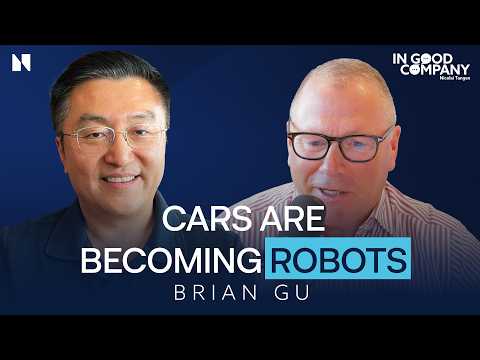
0:41 >> Hi everybody, I'm Nicolai Tangen, the CEO of the Norwegian Sovereign Wealth Fund. And I'm really excited excited about this podcast. Xpeng is one of China's fastest-growing EV makers, but it doesn't call itself a car company. It calls itself a physical AI company. Betting that the same technology that can drive a car, pilot a flying car, and pilot a humanoid robot. My guest today is Brian Gu, vice chairman and president of Xpeng. Brian, warm welcome. >> Thank you, Nicolai. Very happy to be on the podcast.
1:10 >> Brian, what is Xpeng? >> Well, I would say Xpeng, first of all, is a technology company. But as we now dive into the depths of all things physical AI, I think we would consider ourselves really kind of forefront of this physical AI movement. We're building EVs, as you mentioned, it's one of the leading brands in China as well as globally. But increasingly, we have broadened our product scope to be including more areas and directions, including robots, flying cars, and other modalities as well.
1:45 But using the same core. >> A lot of people think that electrical vehicle is is a car with a battery, but you say it's about it's the intelligence that's the differentiator, not the electrification. What do you mean by that? >> Well, that actually is what we actually has done differently over the years. Even when we were very very small startup, let's say about 9 years ago when I first joined Xpeng, you know, that time I think everyone is looking at starting an EV company.
2:12 So the big, you know, pitch was electrified energy transition for automobiles. But even at the end, you know, we have told investors as well as our partners that we believe the long-term differentiation is not with electrification only. It's actually in the intelligence. And that's why I think for us, you know, we have consistently focused on building a full stack approach on the intelligence areas that includes hardware, software, and now increasingly moving into the era of AI.
2:43 >> So when you when you enter a car you know, as a professional just how do you judge whether this is a great car from an intelligence point of view? >> Well, first of all, I think you know, when you get into a car, you have to really understand, you know, whether the car can understand you. You know, there is obviously various degrees of understanding. First of all, it has to understand you personally, your behavior, your preferences, where you want to go to, the way you interact with the car, you feel like at ease. So that's the first thing you actually understand. The second thing is when the car start moving. I think an intelligent car can handle a lot of these driving conditions on its own. Obviously, I'm not talking about level four yet, but even at the level two plus, you know, I would say regime, you can feel the difference. The more intelligent, the better trained models will handle the roads smoothly, handle very tricky situations very nicely without causing any concerns or anxiety.
3:44 So all of that actually translating to the intelligence aspect of it. And ultimately, I I is, you know, how do you unify the experiences? So, what we are working on right now is to unify the autonomous driving intelligence and the smart cabin intelligence and merge them. I was actually just in the car this morning. We are going to launch our latest I would say the intelligent driving the VAL 2.0 editions. One of the feature is actually using the smart cockpit interaction to command driving.
4:14 You say, "I want to pull over a little bit." The car knows what to do. I want to actually make a quick stop. They can actually do that for you along the, you know, the planning as well as the delivering you there. So, all of that I think combined together will deliver a intelligent mobility experience. >> What is this going to look like in 10 years time, you think? >> Well, I think with advancement in technology, I would say, you know, the level four capability were just a matter of time. It's going to happen. It's going to happen in our lifetimes. It's going to happen in a lot of, you know, sort of ubiquitous scenarios that you encounter. so, if that capability becomes everywhere, they can imagine the current the way of life, current mobility experience will be completely transformed. You are not limited to a certain location. You are not limited to, you know, spending time planning your time to handle the driving.
5:10 The driving is is part of the your daily work or daily, you know, entertainment as part of your, you know, mobility, you know, time spent. So, I would say it will change people's time allocation. It will change industries like real estate, change industries like communications, and also change pretty much everything, I would say, you can actually handle inside a vehicle now. >> What's going to happen on the on the range side in terms of how long how far a car can can travel? I mean I mean so just to in inject here, a level four is totally autonomous, right?
5:45 >> Yeah, level four is fully autonomous without human intervention for example without a steering wheel. Yes. >> So what is what's happening with with with range and charging times going forward? >> I would say the range with the current chemistry, I think that current chemistry will last for you know, quite some time before we get to maybe solid state. I would say that's more than five years away to be commercially you know, feasible. So with the current chemistry, I would say the range was say similar to what we see today. Let's say between 500 to 1000 kilometers given the size of battery obviously. But the charging time and the charging experience will change dramatically. Obviously you saw the super fast charging become very very popular in China already and it's spreading around the world. The charging time and charging speed will allow people's you know, down time to be very similar to a gas station stop. So for example, used to be taking I don't know, half an hour to an hour of charging you know, time. Now it's maybe five to 10 minutes.
6:52 So that I would say also changes people's mobility behavior. So with charging as well as the efficiency, I would say you don't need a large battery. You don't need a car that has you know, 2000 5000 kilometers of range. That just adds to the cost and weight of the vehicle. But I think it definitely addresses a lot of people's range anxiety already with availability of network and the charging speed improvements. >> What's the range where you think it's enough and beyond that you don't need more range?
7:26 >> I think 1000 kilometers outside sort of limit. Anything more than that is waste I mean in my mind. >> Do you make your own batteries? Or do you use CATL or who do you use? >> Well, we don't make our battery cells. So we actually source from very high quality suppliers. You know, there there's actually a couple other names, which is large battery companies in China we work with, not CATL. but we do, design our own, you know, battery technology utilizing those cells. For example, you know, the battery management system, the packing technology, the really the, you know, the electric platform that make our vehicle more efficient, higher and faster charging. So, those technologies actually we do ourselves.
8:09 >> where do you see the Chinese, EV market going? >> This past month, Chinese, new energy penetration exceeded 60% or maybe even close to 65%. That's a staggering number, which means that we have more EVs sold in China than ICEs today. So, this is actually the first time the battery electric vehicle crossed the ICE. And obviously adding on the plug-in hybrid, the the new energy segment is now more than 60% of the new car sales, which means that actually, you know, the EV or new energy vehicle is actually mainstream product. A few years ago, people always see EV is a niche product, right? I mean, it's only a small portion of people buying EVs compared to the, you know, people most people still go for the ICEs. But today, because of the change, because because of the change that, you know, EVs and hybrids become mainstream, all the rules are different now. So, for example, the you know, we we're now getting rid of all the subsidies because now you don't need to subsidize the mainstream product. You don't need to encourage the use of them anymore. You know, people are naturally buying them. But at the same time, you know, I think of those behavior, for example, you start to see gas stations disappearing, replaced by charging stations. you got to start to see, you know, people actually now utilizing the electrified vehicles, and hybrids, because they have a battery, they have computing power, a lot of those intelligence become more and more prevalent. So, that actually leads to a whole new trend, not just because of energy, but also intelligence and other behaviors.
9:50 >> How is the competitive landscape developing? Seems from the outside that it's becoming, I mean, it's just like fiercely competitive. >> Absolutely. I think the China, the new energy vehicle market, which includes the EV market, is probably the most competitive segment or industry in the world. we have a lot of very, very high-quality players competing with each other. I would say, you know, China is probably the fittest gym in the world for automotive industry, right? You know, whoever can actually survive this gym, I think has a good chance of, you know, really become a, you leading players globally.
10:27 >> Who's going to survive that gym? >> Well, I think you know, we have a decent chance, but also there's a very, very uphill battle for everybody. Because, like I said, one is it's very competitive, two, it actually requires a lot more to compete than in the past. I think in the past, automotive company can focus on their segments, they use a lot of, you know, tier one suppliers, tier two suppliers, they actually source technology from outside. But today, given the development of this physical AI, you know, cars become more and more like robots, right? I mean, not only it's electrified, but also because of the intelligence I mentioned, it's because they have, you know, the autonomous driving capabilities that need to demonstrate. In order to build a very competitive product, you need to be both good at automotive engineering, but also at AI and software. You also be good at, you know, understanding the new electric powertrain. And at same time, you need to also make sure you deliver the best services as required for building the brands. So, having all these capabilities are making the competition at a different level compared to before.
11:38 So, the people who can survive and be and I think winning the race will have to be the people who has a full stack technology, but also has a scale and global reach in order to be competing. >> How far ahead of Europe and the US do you think Chinese producers are now? >> Well, I think we are leading a few areas. I think in electrification Chinese players obviously has advantage of having, you know, strong battery technology, capacity, cost advantages.
12:10 In the automotive side, because China is the largest automotive market in the world. I think it's actually just a matter of time, you know, when China produces a local champion, just like what Japan has produced or Germany has produced in the past. So, I think it was, you know, in that regard, I think China, you know, is leading in this segment. But, what's really driving the I would say competitiveness in China is also the fast evolution of technology.
12:39 like I said, you know, the you know, China being competitive, being, you know, the you know, a market where consumers really embrace new technologies. So, the speed of change and also the customer adoption of new technology is faster in China than in other world other parts of the world. so, I think with these kind of background and coupled with also the manufacturing advantages in supply chain, manufacturing efficiencies, etc. I think China does I think possess I would say a lead in some of those key areas in the EV development. But, at the same time, I think Chinese players also have to be learning a lot from global players.
13:21 first of all, I think Chinese players still not, you know, used to be a leader in a multinational world, because that's an area I think Chinese players do need to learn how to behave you know as a company that can be a leader in multiple continents, multiple regions, building a brand that people trust, building a service that people rely on, and also building local relationships that allow you to stay for the long run. All of that I think takes a long time to invest. So those are things actually we should learn from multinational leaders in Europe as well as in the US.
13:58 >> How long time do you think it will take Xpeng to roll out globally? Because you've you've kind of in a way started in the Nordic region to a certain extent. with a dealer network and so on, but just where are you on that journey and what will it take? >> Well, you know, we started journey as you pointed out in Norway about 6 years ago. When we actually launched the first store in Norway, I think the end of 2020.
14:22 And it's been a very interesting I would say and very very educating process. You know, we have went through a lot of changes in our business model internationally. We entered Europe as a whole. We also entered into other regions in Southeast Asia, Middle East, Australia, and also Latin America now. So we're selling over 70 countries at the moment. But I would say the biggest challenge is to making sure that we you know really adjust our models to becoming a locally accepted brand and product. As you know, you know, Chinese brands in the past has been viewed as you know coming from you know you know possess you know lack of quality or some you know brand recognition issues. So for us is that not only we are entering these countries, but also have to build the local capabilities and brand that supports our growth. And also, another challenge for us is how to differentiate from the, you know, a dozen other brands that currently also is trying to go global out of China. So, those are things actually, you know, top of our mind at the moment.
15:38 >> When you compare and contrast, Xpeng with let's say, European producers, what do you What are you seeing when Volkswagen has a stake in you, and you also produce cars in Europe? So, you've got a pretty unique opportunity to compare. Just what are How do you compare? >> I would say we're, you know, looking at a number of dimensions when we actually see ourselves competing with global peers. On the technology front, I think we are, you know, as a small company, a young company, I think we're probably more nimble than a lot of the global players.
16:15 We make decisions quicker. We can actually also make technology innovations faster. So, that's one of the reason that I think some of the global peers working with us, such as Volkswagen. But at same time, also we are really understanding how a global multinationals operate. That's something I think we're learning from the bigger players, you know, from German OEMs, as well as, you know, American and and Japanese OEMs. How they can actually sustain, you know, many generations of product development and cultivate a local recognition and brand loyalty.
16:53 That is something I think we we're learning from them as well. At same time, I think also given the development in EV and also the technology in intelligence, I think there's also a thesis to be made is that you will see more and more collaboration between Chinese players and international players, such as the ones that you saw between Volkswagen and Xpeng and and some other examples as Because I think there's a very strong complementarity that we actually bring to the table. You know, we're bringing faster innovation, we're bringing, you know, I would say some of the consumer understandings from a Chinese market. And also I don't know being able to deploy in a faster pace. But at the same time, I think you know, coupled with international players like Volkswagen that actually can help us really achieve scale. also and having us, you know, making sure we can monetize some of those investment in a much wider segments. So, those benefits I think come together. I think actually could encourage more collaborations down the road.
18:02 >> What explains the difference in speed and innovation and generally in in speed? I mean, what explains the what we call the Chinese speed? >> Well, I think the Chinese speed appeared because multiple factors are driving it. First factor is because China has proven to be a very, very strong player in the software, internet, consumer electronics area. So, those expertise allows, you know, the Chinese development I don't know team, you know, R&D side working with the automotive engineers to really think creatively how we can utilize those learnings and make cars smarter and make more consumer friendly.
18:44 On the other side, you have the market forces. As I mentioned, you know, there's a lot more competition in China that force you to be more innovative, to push you to, you know, really be faster in in turning some of these technology development into actual product and features. And then the third piece of that is, you know, the consumer adoption rate is much faster. So, in China, people willing to, you know, embrace new technology. You saw that in internet, in mobile internet, in mobile payment. All of that actually points to the same thing. So, those three forces together as well as obviously the supply chain manufacturing advantages I mentioned, makes Chinese innovation much faster.
19:26 >> How much faster would you say? >> I think there are two way to look at. One is vehicle development cycles. I think that we probably shortened by and if I'm you know, maybe five to three to five years to about, you know, two years. So, I think there's a definitely shortening of vehicle development. the other one is how quickly you actually launch new features. I think you know, every OTA we we add features to our products. so, that's product cycles much faster than the traditional automotive product cycle because now you have the software and OTA feature adding to that.
20:01 >> So, why can't you do that so much faster than let's say European producers? >> I think it First of all, it is the DNA of the company is different. I always say that, you know, Xpeng, even though we're obviously automotive company, but the core DNA is tech. You know, we obviously the founders came from both automotive world as well as the software internet world. And now increasingly with the AI capabilities. So, I would say the DNA at the top really drives the way we think about product and development.
20:32 Second answer I think to this is that we're small. We're young. You know, we don't have department walls. We don't have processes that has been in place for decades. so, it's very difficult to change. we also don't have stakeholders we need to maneuver to make those changes happen. Some of the global players, you know, you have make a decision in their headquarters. And when the decision reaches China or reaches their end market, it's already like maybe a year later. So, those speed is not able to match the speed we see on the ground in China.
21:05 >> How much harder do you think you work? >> Well, I think I I I would say, you know, our team probably works very hard. In a way, I think it's it's it's both the China work ethic and and speed of innovation, but same time also we have a sense of entrepreneurship because company is only 12 years old. so, we still I think the the the management team and team here still have that spirit I experienced when I first got here. We still keep that entrepreneurial spirit.
21:32 So, I think, you know, those two characters really drive, you know, the work ethic and and and I think you know, teamwork much much harder. >> Flying cars. When will cars fly? >> It's already flying. You know, we actually but we are flying a different way. we have this company called Air Ridge that actually is a company that we incubated. And the company currently is now only invested. We're minority shareholder at the moment, but we it's we consider that company in our ecosystem. They have been designing flying car for over 10 years.
22:08 it was actually founded by a very charismatic founder who used to be a you know, individual pioneering the development of flying motor and flying vehicles on his on his own with only a couple of a few people, very small. But now with obviously our support with, you know, the development over the last 10 years, he's built that, you know, business into, you know, a very very substantial business. And they actually have a product ready to launch, obviously pending the final approvals in China at the moment. It is a considered flying car, but it's actually what we call the aircraft carrier, the land aircraft carrier. It's a car that carries a EVTOL inside the vehicle and can be separated automatically and be used flying for, you know, 30 minutes and then you can actually take two people with, you know, the vertically took off and it can actually come back automatically and be loaded into a vehicles. So, that actually is something I would say it's very very close to commercial reality. The The company actually already collected more than 7,000, you know, inductive orders around the world, not just in China. So, I think you're actually seeing the the low altitude economy, which is a Chinese buzzword for the last few years.
23:20 Same time, also a flying mobility, that's actually I would say the Western world, you know, become probably reality in the next year or two. >> But when do you think they'll be a mass market? Flying >> EVTOL business, I think it will take in my opinion, a longer adoption time. Clearly, it's heavily regulated area. For example, we are waiting, you know, the company Area 42 is waiting for Chinese CAC approval, which will take, you know, I would say longer than regular vehicle approvals.
23:53 At same time, I think for up, you know, companies or individuals who willing to, you know, buy and operate these vehicles, I think it will take a a long educational process. So, I think, you know, in terms of the curve of penetration, I think it will probably take probably three to five times longer than what we typically see in automotive and some autonomous driving technologies.
24:25 So, it will be a gradual process. But at same time, I think I I see a lot of enthusiasm for this space because ultimately liberated, I would say it will liberate a vast economy which is not tapped at the moment, both in China and globally. So, I think there's a tremendous potential for this, you know, segment to become a mainstream industry. >> Brian, let's move on to another incredible incredible area, the the humanoid robots. Why Why are you going into robots?
24:56 >> You know, the reason that we're going to robot it's actually very natural. First of all, as I mentioned earlier, Xpeng has always believed in intelligence. It's our core differentiation. That intelligence obviously in the automotive world is autonomous driving, smart cabin. But with now the the advent of AI and physical AI development, that means that we have to develop a core capabilities, for example, including, you know, edge computing. Now we have our own semiconductor chips in our vehicles we develop ourselves. We have to build models for handling, you know, the VLA that you know, make, you know, autonomous decisions for vehicles. We have to also build a AI infrastructure that handles data inputs, collection, and training.
25:41 So all that capability actually is naturally very transferable to think about the robotic development. Because at the core it shares a very similar physical AI fundamental building blocks. So for example, in the robotic world we're utilizing the same edge computing system which including the chips, the models, the the data, and the training. But also the same times we're using, you know, our learnings from, you know, the the powertrain, how you know, the efficient, you know, electric powertrain, the motor electric motors which can be utilized also in in in in humanoid robots. And I think those capabilities synergistic in terms of development because they share that same core.
26:28 Ultimately, you know, in fact, if you look at the the the process of you know, vehicle development it's increasingly becoming more similar to a robotic robot than than a traditional automobile. So that's why I think there's significant synergies that we can actually share because the core that we focus on is actually on the intelligence. And why we're going to human robot is because we think ultimately with all the capabilities I mentioned, the most versatile form that can impact people's daily lives is a humanoid robot. Because think about it, you know, the environment that we live in, the the room here, the office there, the store, you know, the the the the restaurants, all built for human movements and human occup- occupation. So, having a human-like human robot, which is what we trying to do, unlike some of the other robotic company, is to make sure that we can, you know, design something that can be widely, you know, you know, applicable, deployable, and that also help us getting the information and data collect that can continue to train and improve the robot. So, that is actually thinking behind it.
27:43 >> Yeah. No, I I personally I can't wait. I think it's going to be absolutely great. And I also think it will get divorce rates down because you'll stop doing all the boring things like taking out the rubbish and emptying the dishwasher and all these kind of things that creates divorces. But, now, you are very serious player here and you just raised capital and have support from Alibaba and Tencent and so on. tell me about the landscape.
28:08 There seem to be a lot of very serious players here. >> Yeah. Well, I mean, humanoid robot has seen a quite a boom in the last, I would say, two, three years. internationally, you have the big boys like Optimus, you know, from Tesla, as well as Figure and others that's been very showing showing various degrees of capabilities, attracting attention and capital. But, in China, I think you also see a really robust industry that, you know, you see emergence of a lot of startups that actually has been focused on various type of development in robotic industry and in the process.
28:45 but, I would really say that, you know, what we see here in China, you can group those companies into a certain different types, right? you have one type which is really focused on the body, which you can see the company like Unitree, like Engineer, like that, shows very cool, very, you know, high-caliber, you know, motion capabilities. They can run, they can jump, they can kick, they can perform and dance, but, you know, they're they're really good at the body.
29:13 but, obviously, you know, we we want to see them become more intelligent. That that's obviously something, you know, that that that they haven't been focused on. The other group of the companies are focused on more on the brain and the intelligence side. they look training the robot to handle certain specific tasks, but because, you know, their their resource and focus on the upper body, they actually, you know, did not really design anything that has, you know, nice, you know, motion and and and and movements. And then there's the third group, I would say, is, for example, the tactile hands, you know, the companies that really try to build building key building blocks as well as, you know, with combined with some models that can perform certain tasks. so, those are the types companies, but where I would say a company that can really put these three pieces together and make that unified in a common, deployable, more volume produced humanoid robot. is that something that we aim to do? And which actually we have now, you know, have completed I would say the development for these different pieces. I think ultimately, there's different views on on robots. You know, certainly, there are industry players that say, "Okay, robot needs, you know, immediately go to industry factories to per- perform certain tasks." But, you remember, you know, we already have robotic arms that's operating our automobile, you know, factories. So, you know, the the the the robot that can be used to perform a fixed, you know, task is not as exciting as a robot that can handle more general and it can be general purpose robot.
30:53 At the same time, I think as I mentioned, ultimately training the robot and with the relevant data and have the data scaling capability is going to be the key to the success. And we think the best way to train robots, obviously there's a lot of data, you know, you can collect from that from simulations, from egocentric, you know, sort of video camera collections. But ultimately, the best way to collect the most accurate and useful data is by deploying the the the the body that actually has the most general purpose application and deploy them in a large quantity. That allows you to have the best data collection and training. So, those are the things actually I would say you know, we're focused on that's different from the other players in the industry we see in China.
31:43 >> Is it right that Chinese training centers buy a lot of humanoid robots to train them and to actually pro- collect that data and then feed it back to the producers? Is that how it works? >> People do that mostly for deploying into certain specific tasks, specific use, which I think is still not I I I'm I'm I'm sure there are players ultimately will will be able to, you know, complete their business model utilizing that approach. But I would say is that the ultimate the the the data collection should come from regular deployment and use and continuity improvement of that that robot that you have the the fixed body.
32:30 >> The The fact that you have so many players in the EV space, what does that do to the Chinese abilities in the robotic space? >> Well, I think the there's a lot of the capabilities I think EV player can empower robotic development. For example, you know, the the process of you know, providing electric power train, you know, lightweight, sensors, compute. So, these capabilities I think especially you know, EV companies that has the AI capability, a lot of them can actually also you know, I would say empower the robotic development. But it also goes back to the roots of the company as I mentioned. You know, if the root of the company is automotive player, it's it's already very difficult for them to pivot towards let's say a software-defined vehicle and then move towards the AI defined vehicle. For them to be immediately jump from automotive company to be a robotic company, I think it's a big culture challenge as well. So, I think also it goes back to the the DNA and the roots of the company that who actually can leverage that capability and have the innovative thinking allow them to see you know, the development needed for you know, human robots.
33:57 >> What about the ecosystem of sub-suppliers of the various components that go into these robots? How how would that compare in China with let's say the US or Europe? >> First of all, I think the supply chain for robots is still being formed. There's no existing, you know, suppliers people can just pick and choose to build a robot or you cannot pick and choose to build advanced robot. I would say what we do right now is actually we spend a lot of our time and effort working know, with our you know, EV supply chain, identify players who has the capability to be able to function in the robotic setting. Lot of the parts that we use for our humanoid robots, including the Dexter hands, the powertrain, the joints, the motors, actuators, lot of those are actually designed by ourselves. But obviously, we don't make everything ourselves. So, we actually work closely with our, you know, supply chain partners to make sure we have, you know, very, very solid supplier for these parts. I would say the overlap between our EV supply chain and the robotic supply chain is more than 50%. But most of them are not readily available parts. Those are parts that we actually have to work closely and design together and make sure they can supply us.
35:21 And I think that's probably going to be how how our supply chain will be built for for this industry. >> Have you got access to all the chips you want? Nvidia chips, all these kind of things. >> We do actually design and build our own edge computing mobility chips. For example, the Turing chip, which is now used in our vehicles, replaced the Nvidia chips we used before as the go-to high computing chips for mobility driving technologies. I would say the for all the related chips, we have full access and we we don't have any limitations. We do have to, you know, obviously sustain the same, you know, challenge that we everyone's facing on the memory chip and other on the cost and supply side. But so far, I think it's within control. But in the in the long run, I think, you know, we see that lot of those chips we actually can tap into more locally sourced fashion. So, make I would say the more secure and more available.
36:28 >> So, when do you think they'll be on par? >> Well, on the vehicle end, I think we are already producing chips that can rival the latest technology that's provided in the West. so, for example, our Turing chip has 700 tops of compute, which is similar to Orin Soar the the Nvidia Soar, which is their latest chips. So, for these on board edge computing mobility chips, I think we're already there. You know, a lot of Chinese players will come up with similar capabilities. But, I do think there is still a generations gap exist in the GPU and other sort of cloud computing areas, which I think Chinese companies are trying to catch up.
37:19 >> When do you think the Chinese language models will surpass the American language models? >> I think it's you know, it's a different race. I would say, you know, the two ecosystems are building language models are trying to tackle in different problems and focus on different customers. I would say in the US, you have the frontier models that actually is you know, focused on you know, delivering high value and also secured solutions services to Western you know, governments and and companies.
37:55 Whereas I would say the Chinese models are more focused on you know, tackling I would say small medium companies, as well as, you know, the emerging market customers, including obviously obviously Chinese market as well, to, you know, making sure the models can be easy to use, open source, and also have a low cost. So, I think those are different priorities. at some point, I think you know, you will see separation of you know, the ecosystem that rely on these time two different type of capabilities.
38:30 >> We talked about self-driving cars, flying cars, humanoid robots. What is a city going to look like in 20 years time? >> Well, I think first of all, you know, the city it will be a lot more dispersed. My view, it does not need to be a center. Unlike today, you know, you have you know, CBD or you know, center area and then people commutes and then there are satellites. You people rely on proximity to do things.
38:59 With obviously the autonomous driving or robot taxi or level four you know, individual level four as well. You probably don't need these clusters. People can actually have much easy access to remote areas. So, people actually can choose to live in what distributed fashion rather than a concentrated fashion. I would say the second part is that with the also the technology, that there'll be a lot of last mile solutions. You know, for example, you know, the delivery. You know, nowadays there's a lot of delivery.
39:38 These probably can appear in your door front or in your roof or or some you know, designed storage. It will show up because it come from low altitude or come from autonomous delivered vehicles or robots. So, I think those also reduces last mile so need for a lot of the merchandise solutions. I would say you will see cities become three dimensional. Because a lot of these travel, a lot of these highways are no no longer just be on the ground.
40:12 They will be designated corridors to travel in in in low altitude in in in in in certain I would say routes that connect cities so much faster. so it it it's put together the city sort of a distance and the travel time. And and ultimately I think in home and businesses you see a lot of root main a routine repetitive as well as a can be handled by humanoids. that I I I I think it's going to happen very soon. And obviously it depends on how quickly the humanoids can acquire more and more tasks. But I think you'll start to see the population it there may be a scenario that you know, you will see more humanoids walking on the street than humans. That could be a very interesting sight in the new you know, modern city in a decades down the road.
41:11 >> Do you think we're going to be happier? >> Well, I think I I would hope with the advance of technology and you know, you save time. you save hassles. you actually can travel much longer distance or or you can actually have more time to enjoy. It actually you can allocate more time to things that matter. for example, you you focus on things that really can impact your emotions. really you know, we spend time to think about judgments you have to make not on a simple task on a more philosophical sense. there are things that actually you can actually at a different degree to really approach because now 90% of our time is occupied by routine task and and and and and items.
41:59 >> Moving on to the personal side, what matters in your life? >> You know, I joined Xpeng 9 years ago. I joined my friend and partner Xiaopeng who's the chairman CEO. I think both of us I think want to do this, you know, because we already had a pre prior career. We don't need to, you know, have a new career. We want to do this is because we think of this is going to be so much fun. We want to see the world really be shaped, you know, we have our cars now. Now now I go to different countries I'm so happy and excited to see our cars in different streets. Hopefully in the future we'll see, you know, robots roaming in in offices or in stores that is, you know, our robots. I want to see, you know, the really the lives being, you know, changed and transformed because of technology and innovation we brought to to this world. so yeah, this is something what drives us and also drives Xpeng. That's why I keep really innovating and keep moving forward.
43:00 >> Mhm. No, I agree. It's as we live in an incredible time. so interesting. How does your day look like? >> Oh, I would say every day is different. you know, we for example, I can just tell you my today, you know. >> When do you wake up? >> I wake up around, you know, 7:30. I, you know, start my first meeting at around 8:30 9:00. and I, you know, talked about my upcoming, you know, sort of a trip in Europe which we'll have, you know, hopefully some exciting things to do to to pursue.
43:36 and then I had, you know, 2 hours of really driving in our brand new vehicle, the G9 L. But most exciting is actually test drive the latest edition of autonomous driving software on that vehicle. which I drove the car all around the city and the test all kind scenarios. Very exciting. I see tremendous improvement. And I think this give us more confidence that, you know, we can launch probably more level four like capabilities not just in China, maybe hopefully next year somewhere in Europe as well. So that's something also we're very excited about.
44:15 And also I'm going to go you know explore our development in Hong Kong when we setting a new R&D plan for you know how to really work with Hong Kong utilizing the capabilities in the market and all the talents and the support and then you know end the night probably was a dinner with a partner to explore more exciting things. So you know I would say every day is different. You focus on both running the business but also more important is thinking about the future. How expand can bring technology to real life. How it can expand to more regions, more markets and get you know the global you know sort of talents to join us to pursue this mission together.
45:02 >> What's the way you look into the future? Who do you speak to and what do you read? >> I actually you know because of my background I used to be a banker and also used to be a banker who focused on technology. So I have a lot of friends in the entrepreneur world. A lot of people who you talk to on this podcast are actually my friends. I you know those are thought leaders. For example Joe Joe Tsai is a great friend.
45:26 He is someone I Yeah from Alibaba. So I talked to him and really learning from not just him but also a lot of Alibaba friends. You know people from you know Tencent. You know Jensen is a great you know I would say person that you know we learned a lot from. Obviously we used to be you know collecting a lot when we are you know utilizing Nvidia chips more. But again I mean I think along the way I would say given what we do and what we see we run into a lot of very amazing accomplished minds and and and and and and I would say inspiring people. So I think for me, you know, having that exposure and having the ability to talk and learn from these people is tremendously rewarding. I really enjoy it.
46:12 >> Now, we talked about all kinds of successes and great things. but we've started also it's important also to look at some of the failures. What would you What would you say if you were to pick your biggest personal failure in life, what has that been? >> I would say, you know, I always regretted I did not pursue my first passion further. you know, my background is you know, actually my first career is a scientist. I was a chemist because my mother was organic chemist. when I started in college, which my mom, you know, put down major chemistry for me already. so, I became accidental chemist. But, I really enjoyed it. I I got my undergrad in chemistry and then went on to pursue a PhD in biochemistry. And actually my PhD experience is probably one of the most rewarding process because I got to work with my professor David Baker. I don't know whether you know him. He actually won a Nobel Prize 2 years ago in chemistry. And he and I actually started that lab together. We actually both arrived at University of Washington at the same time. He needs a graduate student, I need a professor, and that's how we started that lab, which now became obviously highly successful and he won the Nobel Prize.
47:31 but that is being a you know, very absolutely I would say rewarding process and I would say that I was at that time wanted to be a scientist just like David and also try to pursue a scientific career. But in the middle, I think I want to say is maybe I want to also see the outside world other than the lab and academia. so, I sort of pivot away from science and went into business and you know, obviously first was you know, Wall Street and then now in X Pan. But I would not say my biggest failure, but I think that's one of my regret is if I actually continued on, you know, I would also be very exciting to make sure I can solve big problems for the world in the scientific area, which you know, David and I actually the the thesis was actually to unlock the protein folding problem. Which actually he did you know, about 20 years later.
48:28 >> Don't you think it would have been fun to have five different lives and kind of shoot them off in different directions? >> Well, I think that's something that's something I always dreamed about, but I guess you know, at some point you should have focused on one thing at a time. But I think life is full of opportunities and I think it's just you know, focus on you know, the next one. I think that's something I think it's I would always tell my kids, you know, don't worry about changes. Change always bring opportunities. Just focus on focus on the next one.
48:58 >> Yeah. And then just to kind of crystallize that a bit more, just what would be your advice to young people generally? >> I always >> >> think you know, for young people never afraid of change. Embrace change. Actually, you know, I always think in looking back in the you know, my career, you know, change make you better, make you stronger. A lot of times we go into a new area, you know, whether it's a new profession, a new region, a new language, a new culture, a new industry, you feel like you're you're intimidated. Actually, you should feel really excited to learn. I mean, you can actually now get into a new area that you absorb what's there.
49:43 So, I think that attitude could actually you know, >> >> really reward the young people if they actually adopt that attitude. >> All right, this has been just tremendous. I kind of think you are a scientist, you know, and for sure a very good one. And what you're doing with the company is totally mind-boggling, and thanks for giving us a you know, kind of a glance into the future. It's been so interesting. >> Thank you very much, Nikolai. Very nice talking to you. That's great.
50:10 >> Thank you. Really hoped you liked the episode. If you did, please like it, subscribe, and put on the notification. This really helps us to get new great guests.