Section Insights
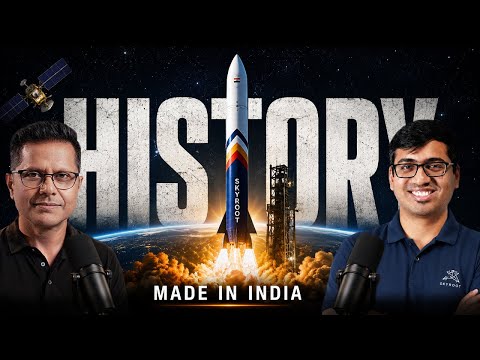
The Historic Launch of India's First Private Satellite
What is the significance of India's first private space company's satellite launch?
The launch marked a historic achievement for India, making it the first private company in the country to successfully place a satellite into orbit on its first attempt. This event was celebrated nationwide and recognized by prominent figures, including Prime Minister Modi.
- India's space capabilities are evolving with private sector involvement.
- The successful launch demonstrates the potential for innovation in India's space industry.
- This achievement is a source of national pride and international recognition.
Overcoming Financial Challenges in Space Ventures
How did early financial support impact the startup's journey?
The startup faced significant financial challenges, but crucial early investments from individuals and institutions helped keep the project alive. Notably, GIC's investment was pivotal in overcoming skepticism in the deep tech sector and provided the necessary capital for growth.
- Early financial backing is critical for startups, especially in high-risk sectors like space.
- Investor confidence can shift industry perceptions and open doors for future funding.
- Strategic investments can catalyze significant advancements in technology and innovation.
Understanding Launch Risks and Safety Measures
What are the risks associated with launching from a government launch pad?
Launching from a government pad carries inherent risks, including potential launchpad incidents, as evidenced by past failures in the industry. The team was acutely aware of these risks and took extensive precautions to ensure a successful launch.
- Safety is a paramount concern in space launches, especially for private entities.
- Historical incidents highlight the importance of rigorous safety protocols.
- Understanding and mitigating risks is essential for successful space missions.
The Technical Aspects of Rocket Launches
What are the key stages and technical challenges during a rocket launch?
The rocket launch involves multiple stages, each with specific technical requirements. The first stage is critical for lifting the rocket, and the entire process must be executed with precision to ensure success. The mission was executed flawlessly, adhering to predicted performance metrics.
- Rocket launches require meticulous planning and execution at each stage.
- Technical complexity increases with the size and capability of the rocket.
- Successful launches depend on precise engineering and real-time adjustments.
The Importance of a Culture of Safety and Testing
How does a culture of safety contribute to successful rocket development?
A culture of paranoia and rigorous testing is essential in rocket development. The team emphasizes the importance of identifying potential failure modes and maintaining high standards in testing to minimize risks and ensure successful outcomes.
- A proactive approach to safety can lead to fewer failures in complex projects.
- Building a culture of thorough testing and risk assessment is crucial in high-stakes industries.
- Leadership plays a vital role in fostering a mindset focused on safety and quality.
Transcript
0:01 What is the future of India's space missions? >> On one rocket launch, deposited more than 100. >> 2 1 0 >> You became the first private space company out of India to put a satellite in orbit. And that first company in the world ever to be able to do so in first attempt.
0:35 >> >> This is like absolutely historic feat for India, but also for the world. Whole country is celebrating with you, including Prime Minister Modi. I think that was one of the first call you received. >> Yes, sir. that time when two two people just came to you and then came with an idea literally with thought with no proof proof of success. so what is your thought process on what made you do the investment? >> Actually, I asked you how long will it take?
1:07 you said 5 years and I think I told you it was going to minimum take 10 years, but maybe longer. Then I asked you how long you guys are willing to work on this and you said we are willing to work on for rest of our life. >> I would say like the potential of India is untapped. A lot is untapped and and for example, Skyroot is just one one symbol of how you know it gets untapped, right? So I think there are 100 ways the country can be tapped. Yeah.
1:32 >> What was the lowest point in this journey? Pawan, welcome back to Sparks. What an incredible week. You must be running on adrenaline. It's is your phone stopped ringing yet? >> No, not yet. Not yet. I'm still on adrenaline and for example, I just traveled back to India. I was in London for last 4 days. So left just after the launch. I had some up commitments, so just just reached back, so still running on adrenaline. >> I was trying to, you know, think of what is the other private company achievement which comes anywhere close to it.
2:02 Honestly, I'm struggling to put anything else that a private company in India has ever achieved. >> Yeah. Yeah. So, yeah, I mean, I didn't put much thought about it. But but I think definitely I think this will be one of the very historic milestones. >> So, just to remind, I you know, unless somebody is living under stone, I'm sure everyone knows, but just to be very doubly sure. >> Yeah. >> So, just a week ago, last week on Sunday, I think >> Saturday.
2:26 >> Saturday, you became the first private space company out of India to put a satellite in orbit. And that first company in the world ever to be able to do so in first attempt. Even SpaceX couldn't do it. It took them third or fourth attempt, something like that. Right? It was This is like absolutely historic feat for India, but also for the world. >> Yeah, absolutely. Right? So, I mean, still I'm in out of words even now, you know, because I'm still imagining the launch. It's just stuck with me so much that the launch day literally no words because we never expected you know, that it would go well.
3:05 I don't know if you have watched the curve, right? >> Yeah. Yeah. >> Just spot on matching >> Yeah. Yeah. The trajectory on the television screen, it was just actually Unfortunately, I couldn't make it, you know, I had something personal going on, but I watched every minute of it. >> We missed your presence. But but yeah, but it was fantastic like, you know, it's just like first launch going pitch perfect and reaching orbit is like phenomenal.
3:24 >> So, a little bit talk about the team's reaction. Like what was the, you know, back room >> Yeah. >> feeling among the team members? >> Like you know, in fact, team was very excited before the launch also because they knew that they had done a fantastic job. Almost every team, they knew that their systems are going to work well. And because I was in fact, I was stationed at Sriharikota for almost a month there. I was with the team almost entire month before the launch.
3:50 And then I was talking to everybody. I had enough time to spend with people and then I was asking everybody how is the confidence on your systems? What are the things are we taking care of everything well? People were so confident that it will do well. It will do do well. >> >> So so just the day before launch when everything was all ready to lift off then I put a post saying that I know the expectations are very high all of you but but first launches are you know statistically not so great. So so I told them that whatever happens cheer for every milestone from the lift off till orbit you know any in fact we our mission objective was just to lift off and cross the tower. That's it. The most most companies even fail to do that as well you know for example. So that was a major milestone because a good portion of the systems get tested in the lift off itself.
4:37 >> Got it. >> So so that was a milestone and then so when the expectations were kept low but we know that it can go better. In that feeling the moment watching the launch is like out of surreal experience. >> So has the like celebration partying at Skyroot stopped yet or not yet? >> it's continuous it continues on and but we are yet to have a success party. We'll have have it in the coming days. >> Yeah looks about good thing is the whole country is celebrating with you including Prime Minister Modi. I think that was one of the first call you received.
5:06 >> Yes yes yes. >> What was the conversation? >> So so so yeah so in fact he he called and I congratulated that this is a major milestone. And in fact he watched it live. He was having back to back meetings and as you know like you know there was a 30 minute slippage in the timeline as well so he got very busy. But but then he watched it live. He was like multitasking. He was watching it. He got interested. He He saw the everything and then and then he immediately called you know. So that's how it happened and he you can see the excitement in his voice as well. And the ringtone says Vande Mataram. The moment I took the call his ringtone was Vande Mataram. And he sent a Vande Mataram card >> Yeah.
5:46 >> to go to the to go to space in the rocket. >> Handwritten? >> Handwritten. Handwritten. >> Amazing. >> And just watching when when I received the card and watched it, I got goosebumps. >> Yeah. >> And and then now we're happy that, you know, it it has reached orbit successfully. And and then we started with ringtone and then and then he congratulated and then he was all over it. I mean, like all praises to Team Skyroot. And because this is a real good symbolism that what India can potential of India, right?
6:13 >> Yeah. Look, lot of, you know, companies build all kind of products, have successful launch and whatnot, but how many times the Prime Minister of the country calls you to congratulate? And that show that, you know, talks to the fact that how important this milestone is for the country. >> Yeah. >> and just to again remind to to remind our, you know, viewers, you are what, fourth or fifth private company in the world to have the launch capabilities?
6:39 >> Yeah, something like that, yeah. >> Like just handful of companies, you know, low single digits, you know, which is so it puts you in a very exclusive club. That obviously means great thing for business to come and we'll talk about that later. >> Yes, yes. >> But >> There's only two companies which are launching regularly. There's only two companies. >> Three now. >> Yeah. >> Yeah, you're the second launch company in the world. >> Yeah, yeah, that's right. Yeah, so once we get two more launches, hopefully we'll be the third, yeah.
7:02 >> I think it is really that significant. You know, wonder that it has gotten such a deep emotional response across the country. >> Yeah. >> Like people are while it is Team Skyroot as well as all the support you have received from the government of India, from ISRO. >> Yeah. >> Lot of people directly involved with it, but I think everyone's almost seeing it as their launch. It's like Indian cricket team. Winning the World Cup, right? Everyone's winning the World Cup.
7:22 So it's like everybody's launch. >> Yeah, yeah, yeah. So I didn't expect that, actually. So it was like celebrated as a national milestone. >> Yeah. >> And and it all, I think, stacked up really well because the first launch, you know, getting successful and then it's in fact like a cricket match last over because it's only 15 minutes, right? So the launch from liftoff to, you know, putting in thing in the satellite in the orbit is just 16 minutes.
7:43 >> And and we'll slow down. We'll go through that 50 minute slow motion. But let me just take you back to now the beginning. I mean this is now I'm very fortunate to have been associated with you from day one. >> Yeah. >> What do you recall from our conversations 2018, you know, when you first started interacting about this, you know, when Skyroot was just an idea in your and Bharat's head? >> Yeah, so so in fact like I was very excited to meet you because I was a I was a user of Myntra's products. You know, so I used to use a lot. So I thought like you know founder of Myntra of meeting you itself I had no expectation. I thought like meeting you itself was great.
8:15 So in fact I think after reaching out on LinkedIn immediately the same weekend you gave time to meet. >> Best reply response I've ever done. >> >> Yeah, just good good that you saw the message, responded immediately. And and I think there is a great it is just it destined to happen probably, you know, because you saw it and and then you like space. >> Yeah. And it was not in isolation. I was actually, you know, for last few years before that thinking about space and why there is not a space company and you know, I had a desire, latent desire, but obviously on my own I couldn't have done anything, you know. I was obviously not expecting that you will reach out on LinkedIn. But I'm so glad I responded back.
8:52 >> Yeah, yeah. So that's that's I think there's a little that's a good I mean something is streak of streak of luck or streak of streak of greatness which happened. And and then we we met on the weekend and then there was I don't know whether you remember it was a clear frequency match. >> Yeah, that's right. Yeah, I remember I think half an hour into it you were on the whiteboard explaining and you know, we were having technical discussion about exactly, you know, I started to really gauge do you guys really know what you're talking about you're just claiming you're going to build rockets.
9:20 >> So that time, you know, like I was 27 27 at that time and and then like you know, very naive. You wouldn't have realized. So and then we were like sketching out what what was the plan, what next, etc. And then like you really liked the the the enthusiasm, etc. And then I think that we it was supposed to be like I think few minutes meeting at the and then we extended to 45 minutes. And then you said I'm going to invest. And then we were also very excited. We we didn't expect.
9:48 So we didn't expect. So it was it was >> When you and Bharat are going back like were you checking like is he guy bluffing? Is he serious? >> No no no in fact that we were very excited because we we trusted you literally, you know. We thought that it is going to go through and and then we thought is is it real? Because we didn't expect. And and then we were thinking like what to do what is the next steps we need to take it up. We were really excited. It was like this like lift off moment that time. You know, I'm very curious to ask you like you know I just want to turn the tables and ask you ask you a few few questions on like you know what on our first interactions.
10:22 >> Yeah. >> Right? So it is it has been now I think it has also been quite a discussion you know in the ecosystem of your investment in Skyroot. It's it's like you know that it is it is literally built what Skyroot is today. And so I want to hear your thought process, you know, because that time when two two people just came to you and then came with an idea literally without with no proof proof of success >> Yeah.
10:49 >> or so what is your thought process on what made you do the investment? >> Yeah. >> And both on the industry side on the people side, you know, why you why you thought that you know you should back the company. >> I think two things. I have always I've loved science all my life. I have watched you know anything happened in space for a long period of time. The SpaceX story and so on. So and I had a strong desire for that you know we should have private space companies in India.
11:15 So that thought was growing somewhere back of my mind. After I moved on from Flipkart in 2016 I had some liquidity. And one of the I actually very in the hindsight very good decision I made is I'll do very concentrated bets. Like typically people become angel investor you write 25 lakh here 50 lakh here. And I really nothing comes out of that. So I had what I did was whatever liquid money I had, half of them I put in CureFit.
11:40 Other half I kept for I'll put in just one or two companies. >> Okay. >> And one of them I just committed you know my first check similar size in Grow. >> Yeah. >> Which also fortunately worked out very well. >> Yes. Yeah. >> And then the last check was left in some ways. And that I really wanted to invest behind a moonshot. >> Yeah. >> So in some ways you know it's a I was prepared in some ways both financially as well as mindset-wise.
12:01 >> Yeah. >> And just talking to you guys you know I could see you were really prepared. You didn't come to that meeting just on a whim you let's all build rockets. >> Yeah. >> You have done your homework. You know what you're talking about and somewhere you know you say there is something Pawan that you say in words >> Mhm. >> but you also communicate through body language. >> Yeah. >> So I think your deep conviction and passion for this space was like very very clear.
12:24 >> Mhm. >> I got inspired you know talking to you guys. I thought there is a real shot of doing something. If I lose this money that's fine but at least we would have For me the fact that you guys are willing to work for a very long period of time really was the clincher. >> Yeah. >> Because if you said we'll try for 2 3 years and see what happens and you know I won't have invested you know because >> Yeah.
12:41 >> it was clear that most likely rocket will not happen. If it happen it will take 10 years. >> Yeah. >> So I think you know that long-term orientation is really what sealed the deal for me. >> Wow. Amazing amazing. In fact like you know I think we India needs more risk-taking capital like how you gave you know that that time and also I I think what really helped also is that you've been an entrepreneur. >> Yeah.
13:03 >> And you have seen like you can understand other entrepreneurs well. >> Yeah. >> And so that way I think you're able to feel the thing beyond the financial metrics or something else. You know you just back the people's mindsets and I think I hope like India can take more more people like you can take more risks and like you know you know be part of extraordinary journey. >> No 100% I'm very deeply committed to like you know, there is a one defense tech startup I invested recently. I can't talk about publicly yet, but it's something very exciting company. In fact, the founder reminded me of you and Bharat, you know.
13:38 One of the reason I decided to invest as like, I'm getting the same feeling that I got when I spoke to Pawan. So, I'm like backing these guys. I think hopefully they'll do something interesting. But I think you you and I have been also chatting about, you know, maybe doing something more at the ecosystem level. So, let's see. I think we discussed many things, but one of things, you know, Actually, I asked you how long will it take?
13:58 you know, you said 5 years. And I think I told you it is going to minimum take 10 years, but maybe longer. Then I asked you how long you guys are willing to work on this. And you said, "We are willing to work for rest of our life." And my next question is, "Okay, what do you need to because you have to financially support yourself?" And you said, you know, "As long as the salary is 50,000 rupees a month." I was like, "Wow, you know, these guys are like really committed.
14:19 It's worth backing and, you know, it's a literally a moonshot." But But yeah, I think you guys have the, you know, deep conviction and obviously we are with all our know-how of how to put it together. It's been outstanding. And yeah, it's it's not not not even 10 years, you know, 8 years and here you have the actual launch capabilities to put satellite in in in orbit. I'll not talk too much about the journey, Pawan, but just one There must have been low points. Like today the whole country is celebrating.
14:48 What is the lowest point in the journey? >> so, lowest point was you know, raising our Series A. You know. And in fact, if you remember like, you know, the the first seed seed capital was almost almost coming down. And the COVID hit and then priorities of all investors changed. And we were unable to close the next round. and then I was I wondered, you know, literally whether we'll survive or not, you know. because the dreams are very high, but but and we did good progress first 2 3 years. We've done a really good progress. But but then we I thought like maybe we'll we'll come to an end, you know? But anyway, I was fairly sure that, you know, we will continue the journey. You know, me and Bharat, we will continue whatever happens. But the team and and then like, you know, again we have to restart a lot and then it's it's going to be a big challenge and something which we never imagined. And that is something, you know, because there was absolutely no no signal of being able to close the round, you know, little at that time.
15:46 so, it was there and in fact, thanks to you that time, if you remember, you you gave 2 crores additional at that time just to keep the keep the things moving. and then the Series A investor, Anil, also forgave 3 crores or something of that sort, you know, at that time just to keep keep keep that extra leeway until we close the round. And then few months we closed the round and you know, it it is it is restarted our journey.
16:09 >> Right. And look, I think also shoutout to some of the early investors who came in, you know, particularly I think both Temasek and GIC. Because from their part, also it was a big bet because we ultimately we needed those tens of millions of dollars to be able to put this together. >> Yeah, yeah, yeah, absolutely. In fact, you know, when before GIC came in, there was a lot of skepticism in the industry and in the community investor community whether deep tech can raise you know, large capital or like, you know, growth capital. They thought maybe like, you know, initial rounds if you see, it's more like, you know, entrepreneurs investing, etc. But then when whether the large capital, can they take the risk of a deep tech startup that early on when there was no like, you know, visibility of revenues, etc. Right? So, then I think GIC's leap is I think is completely revolutionary what in the in our journey. Like, writing a $51 million check, you know, and before even we did the first e-commerce launch, even the trial launch. it was actually the round we closed 2 months before the launch. Like, that is like a phenomenal you know, thing which happened. And then Temasek followed on after the launch. Like, without these two, I think we would not have that momentum which we needed.
17:18 >> Yeah, but rest assured that the GIC and Temasek investors today will be having the best week of their life. >> Yeah, so so they were they were there in fact we have spent a good time after the launch and they were very very happy to see the progress because it's a national milestone and it's also global milestone. >> Yeah. Now, other thing we should also acknowledge the progressiveness of the government as well because this obviously could not have happened if In-Space didn't start I think in 2021.
17:45 The whole space was privatized. >> Yeah. >> I didn't realize Pawan at the time but I think 2018 what we were doing was probably illegal or semi-illegal cuz we're not allowed to build rockets privately right at that time. >> Yeah, no no in fact 2018 we were not allowed to launch rockets build rockets, you know, so there are some headlines saying that you know we're doing illegal things but >> Okay, fair enough. That's good clarification. Okay, we're allowed to design, build, keep the rocket in the backyard.
18:11 >> But don't launch in the backyard but you can't launch. >> Right. >> Because launching is is what is required regulatory you know clarity and and then that way I think we have done everything has happened like like it's destined to happen for us, you know. So, there was no delay because of policy for our launches. There was no delay because of anything, you know, it's just like it just happened on the go. >> And ISRO has also gone out of their way right to you are busy using their launch facilities. Lot of guidance from them continuously, lot of reviews, test facilities like it's just gone all out to support.
18:43 >> Yes, yes, it's like entire entire wisdom of Indian space sector built has supported this mission and all the infrastructure built has supported this mission and the from the highest offices we have the you know all the bullishness that space should become big from India and then that all work together to make this happen. >> Yeah, I really hope you know the whole celebration of Skyroot now also translate into a case study to be replicated because there are there is no dearth of aspiring young entrepreneurs and India has lot of know-how. Lot of it is actually with government. If you like nuclear as a sector, like all the know-how is with government. If the same thing can be replicated and we can unleash dozens or even hundreds startup, I think that will do wonders for the country.
19:24 >> Absolutely. In fact, I would say like the potential of India is untapped. A lot is untapped. And and for example, Skyroot is just one one symbol of how, you know, it was it was tapped, right? So, I think there are 100 ways it can be tapped further. And and because in the because time is everything and, you know, the next 10 years is I I feel the next coming decades are India's decades and we should unleash all that potential energy to what I say is kinetic energy.
19:51 That's typically what Skyroot has done, you know, potential energy of India is converted to kinetic energy. >> Absolutely. I think that's very well put and we yeah, we have incredible potential and we definitely need all that to convert into kinetic energy if we have to really put India on the, you know, on the same footing with the other, you know, major global superpowers. And without really owning our deep tech future and having indigenous indigenous technology IP, we cannot get there. See, there are plenty of people in India who can do million-dollar check. In fact, they already do. It's just that, you know, they are putting that money behind very safe, familiar area, something which can be monetized a year or two.
20:30 But with that, you can't have deep innovation. If people who are cheering this innovation, who want India to really have breakthrough technology, need to also back like it's in this case, you know, me 10 crores eventually brought in you know, 50 million more, 100 million, you know, between Temasek, GIC, other investors. So, you can get leverage. It will come over a period of time. So, I really hope that lot of people consider whether someone building new age engines for for aircrafts or trying to build a GPU alternatives or next generation large language models or whatnot. Most of it will not work.
21:04 That's the nature of deep tech. But then you have to when a bet works, it pays off financially but also huge ecosystem contribution. >> Absolutely, no doubt. >> Let's talk a bit about your team. So a lot of your team was highlighted in the that television footage of the launch. The team is so young. I think looks like average from I was reading average age is something like 27, 28. So really literally 20-somethings building and launching rockets in space.
21:29 >> Yeah, absolutely, absolutely. In fact you know, so the the real I think the crux of it is that energy you know, and I don't know like whether people know that during the Apollo missions, the moon landing the mission control average age was 26. >> Wow. >> You know, so so it happened. It's like it happened before. The most historic events in space happened with a very young team. So I think this is similarly I think this is what is a great harness of potential because one of the best thing I observed is that people who are fresh and in fact 95% of Skyroot team has never worked on anything space before before they joined Skyroot. So I think it it's a fresh perspective, fresh thinking, fresh problem-solving.
22:13 There's no past baggage. People think that everything is possible, anything is possible. >> I think you've really broken lot of barriers and myths, you know, starting with first of all literally youngsters can do anything. Like this is if you can launch a rocket in space, you can pretty much you know, do anything. Capital-wise also it's not like you've taken billions of dollars. I think leaving aside the money you raised, my understanding is the all the money invested till date probably sub $50 million.
22:42 >> Yeah. >> Or in that ballpark. >> Yeah, around that you know, 60 to 70 70 million is what we invested so far. >> That's nothing right, you know, that's again you know, we people keep comparing with the you know, Hollywood movies have hundreds of millions of dollars of budget. This is like a real rocket built from scratch putting real satellite in orbit. You know, it's a So you don't I mean that kind of money is available.
23:01 You know, you obviously have to put in your 8 years. You can't just say, "Okay, day one, give me a term sheet of $50 million and I'll do a deep tech startup." You know, you have to go through the grind that you went through. And then sometimes people say, you know, government is an issue. But again, you know, government you have to get in front of them. You have to reason. You have to show them a road map, you know, knock on the door multiple times. And there are people willing to listen and support and go out of their way to make it happen.
23:23 >> Yeah, yeah. So, literally all you know, if you if you if you looked at 2018, right? I mean, the all odds of success remained very low at that time. There was no policy. There was no funding environment. There was no proof that capability that we can build such complex tech. Right? So, all literally, you know, we broke every glass ceiling down the road, whether it is capital raising capital, whether it is government support, you know, whether it is building a team, building high high tech stuff.
23:47 Everything. Literally, we we discovered our path. >> See, one of the things these days there is lot of interest and also a lot of complaints about, you know, where is the deep tech ecosystem in India? And I see a lot of people there are people who are very accomplished, probably have very strong deep tech credentials. They say, "I will start a company if I can get, you know, $20 funding." But you cannot. You know, that means you are never starting. You need to start with a half a million, a million, do 2 years of hard work, put together a blueprint, white paper, some, you know, basic testing, something. Then you get your next 3 4 million. It's It has to be a journey.
24:22 >> Yeah, yeah, absolutely. In fact, when we started Skyroot, Mukesh, it's a blessing that, you know, you came on board in the on the you know, day one. But in fact, I was ready to like, you know, raise 1 crore, 2 crore, just just to make progress. Right? So, I was prepared for all in. You know, even if worst case I use my savings and start something. Right? I think that that risk has to be taken, especially in deep tech, because because you need to make progress and you keep making progress, whatever it is.
24:49 >> Yeah, I really hope lot of aspiring deep tech entrepreneurs watch this episode and they take this. I think if someone is a working professional, you can start with a few crores of your own money. >> Yeah. >> And if you knock on enough doors, you will find 5 or 10 crores. It's not that hard. You will not find 20 million on day one, but you have to earn your way to that 20 million. >> Absolutely.
25:07 >> People are not really ready waiting ready to write the check for you 20 million. >> now there are 100 times more capital than when we started, you know. Now RBI has been announced, you know. RBI is 1 lakh crore fund, you know. So, where like 50% can be funded by the government for deep tech projects. You have to just have to be more than TRL 4. That's it. And and then and then like a lot of deep tech funds have come across India, right? So, and riding on like the recent successes in the deep tech across now I'm sure like more will come. And RBI is funding funds as a fund of fund.
25:38 So, I think the it's a probably 100x more capital today for building a deep tech venture. >> Right. Now, RBI is also a pioneering initiative by Government of India. 1 lakh crore is a humongous amount of money and they're also very keen to start distributing that money already. I think first batch has been allocated to various funds. >> And >> Yeah, it is only going to again get more and more active and participate in the ecosystem creation.
26:03 So, Pawan, in the next segment, let's actually go inside the mission control. I think let's What happens in mission control, you know? What's Let's take few hours before the launch before the coverage started. What is going on there? What are you guys doing? What are checks you are doing? How do you make sure you are really ready for the launch? >> Yeah. So, so in fact what we do is that these are just consoles where we, you know, we can control the the actual rocket. We can start, give signals, etc. etc. and just see that the health is good or wrong.
26:32 so, so what we do is that typically we ensure there is there is a something called pre-countdown activity. So, that is almost T-minus 5 and 1/2 hours before launch. You know, lift-off time we decided is to be 11:30 a.m., you know. And and then T-minus 5 hours is when the pre-countdown starts. The pad the tower is removed, the rocket is exposed and ready to lift off in 5 and 1/2 hours. That's that's the activity and then we check everything, you know, whether every electronic package is working, all signals are >> Every minute some check is going on. How many checks are there?
27:04 >> Oh, hundreds hundreds of of checks. Yeah. Yeah. So so anything going wrong or giving some spooky signal or there's no connectivity or we are unable to see the health, we hold the launch. >> How many components roughly will be there in the whole >> You know, so the entire So I would say like components will be in tens of thousands, several tens of thousands. And and over a thousand independent systems. And that means like every system has multiple components, but independent systems are over a thousand and they all have to work like clockwork and work like with each other perfectly and then in fact like the interactions are in milliseconds.
27:40 You know, like there are certain sequences which has to happen within milliseconds. Then only you know, that event will be >> So you and your team are watching all this pre-flight checklist. >> all the health. And and then we we know that this after this we do this this and there's a lot of safety aspects. For example, there are so many brakes you know, for example, you know, there's a lightning strike comes or like let's say there's some electromagnetic magnetic radiation which can trigger some signals. Right? So what we do is that that can sometimes cause ignition and then cause some catastrophes. So what we do is that last minute only we remove the last break. Then we are it's fully armed. We call it as vehicle is fully armed to lift off.
28:18 >> That that happens what time? >> That happens T minus 11 minutes which is automatic launch sequence. That automatic launch sequence you can't do anything. Human can't do anything. It's full computer takes takes full full control. And it gives signals in like you know, in sequence in prescribed sequence and anything is out of bounds we put on hold. >> Was there a lot of nervousness also in the room in the mission control? >> Absolutely. Yeah, absolutely. And but the only thing is that you know, we prepared for literally you know, before the day before rocket launch, we only pray that it lifts off.
28:49 >> Mhm. >> Because typically even if you see like Starship, you know, supposed to launch the day before our launch. >> Mhm. >> still the launch is yet to be scheduled because there was a lot of scrubs. >> Mhm. >> in the launch even there there's a 13th launch or 14th launch which they're doing. >> Yeah. >> Right? So so it's the first launch you can expect that it will get scrubbed at you know there are very very high chances probably 90% chance that it can get scrubbed for the day.
29:11 >> Yeah. >> And that's why we put when we invited people also we put a disclaimer that you know it could get >> delayed. >> Yeah. >> And it's probably >> And you had a minor hiccup so we were all watching the countdown. At a 5-minute mark it automatically stopped. And I think there was a it must be pretty nerve-wracking for the team at the time. >> Yeah yeah so so it was like that that's what is basically we got. So T- minus 5 and 1/2 hours is when the pre-countdown starts and then T- minus 11 minutes is when the what we call it is ALS automatic launch sequence.
29:38 >> Yeah. >> So that the computer takes over then every event it completes checks everything. >> There's a step-by-step process. Then at T- minus 5 minutes exactly T- minus 5 minutes there is one event which supposed to happen but it did not happen and it was put on hold you know. And then and then we announced that the computer put on hold and and then we saw like you know why then we started like checking and literally when we knew that as as I told right so most first launches get on to hold it's pretty common.
30:09 >> we were not so I mean like on on sitting there we were not so tensed per se. We were just like focus on how >> to fix the problem. >> And but definitely I think there'll be worried for all the people watching what what So what what happened to this event and that's happened just 5 minutes before. >> Mhm. >> Right? So and then when we saw that it was a very minor software thing that the past memory got stored and then it did not match with the current data.
30:34 >> Mhm. >> Right? So and because it didn't match with the current data put on hold. The moment we realized that it it was is happened because of this >> Yeah. >> The moment we restarted is going to work because the current data will be the past data. >> I see. >> And then it will match with the current data. >> -huh. >> So, it's so typically that's how it was. And then we thought it should work.
30:52 And then it's like how we restart and it works. >> And And you were saying, "Okay, so let's get to the moment of launch now." was there any apprehension that the it would not even ignite or not take off? Like was that risk there? >> Yeah, so that is one of the possibilities, you know, that it will not ignite. The other possibility is that there could be a launchpad incident. >> Mhm. >> In fact, you you saw you might be seeing like just few months ago there was a major incident happened with Blue Origin >> Mhm.
31:19 >> launch, you know, so they they had like on the pad on the on the I think third or fourth launch on the pad there was an explosion, a major explosion and this $2 billion property. >> Yeah. >> Right? So, at risk. So, this this could be you know, this this could be a very big risk happening for the first launch when a private entity is going and launching on a government launch pad. >> Mhm. >> And then you lift off and then there's a launchpad incident. It it it is That That's exactly what I was praying for.
31:46 >> No No No message from Jeff Bezos or Elon Musk yet? >> Not yet. >> Not yet? Okay. But pretty much everyone else in the world has messaged by now. Yeah, definitely in India. But okay, so let's now So, we watched those 50 minutes at 15 minutes. It seemed like almost like a very fast, you know, within 15 minutes the rocket was up in there. But let's go stage by stage. What was happening and what was firing at each stage? Let's just, you know, >> So, so, so basically automatic launch sequence T minus 11 minutes. And then then the it starts with the lift off signal.
32:16 >> Yeah. >> You know, it goes. Then the first stage gets ignited. And then the it took off well. I was very happy that it was going straight up. >> So, that is your like the heaviest stage one firing. >> stage one. So, that's where that's what actually lifts off the the entire rocket. >> And how far does the stage one take the rocket? >> So, around 50 km. >> Okay. >> So, in fact, the toughest, the most intense part of the you know, rocket flight journey is in the first 50 km.
32:41 Because the atmosphere is very thick. >> Mhm. >> And then like you know stresses are very high. You have vibration. You have >> Yeah. >> everything thermal loads, heat, vibration, you know, and then the heavy structural loads all happen in the first in fact it all happened the first 20 km, 20 20 km. >> And this first 50 km roughly about a minute? >> Yeah, about a minute. It's around 100 seconds. >> 100 seconds. So within 100 seconds you know like more or less it's going to work or not going to work.
33:06 >> In fact in the first 20 seconds you know. >> Okay. >> That like most of the things have worked you know because there's something called max Q. >> -huh. >> Max Q means like the highest stress on the rocket. >> Okay. >> You know and during its journey. >> -huh. >> And if generally if that crosses >> Mhm. >> for for most first launches you know they put that that is a criteria >> Yeah. >> they reach max Q that itself is a it's like a beyond expectations typically.
33:28 >> Yeah. >> Right. So we crossed max Q was like very easy for Vikram one. Actually that's how the data was you know so good. >> And >> And then we crossed it, crossed it, crossed it and the next the stage one went perfect. >> Yeah. >> And so so just even to recap first lift off happens >> Yeah. >> and then you cover the launch tower. It's the most important >> Mhm. >> most important milestone. Just lifting off straight crossing the launch tower is is in fact it gave me a lot of relief.
33:55 >> Yeah and because and just just you know people may not know is this is not a you know light vehicle. It's what seven story tall? >> Seven story tall. >> meters roughly that's >> Yeah so it's 23 m. >> 23 m. So it's literally a seven story building lifting off. >> Lifting off absolutely. >> Right. And what is the weight? >> Weight is around 50 tons. >> 50 tons. >> Yeah. Yeah. >> That is like what five elephants or something?
34:17 >> Yeah it's 25 elephants. >> 25 elephants. Woof. >> elephants. Yeah yeah yeah. So it's it's a massive it's a massive rocket. And then it it lifts off and just to give an idea right the thrust of the first stage the moment it lifts off is over 100 tons. >> Mhm. >> You know, so it's a 100 tons. And and then just to just to in energy terms, it's 3 gigawatts of energy. It can light up an entire city for few seconds.
34:43 That's the kind of energy getting unleashed at liftoff. >> Yeah. >> Right. And then it lifts off >> Mhm. >> and crosses the tower. And then we what we do is that we call it as a roll maneuver. Rocket rolls and aligns itself to the trajectory. >> Okay. >> That is a single point failure. If the rocket is not rolling, >> Yeah. >> right, engines firing to make it roll >> Mhm. >> for 4 degrees, it just rolled perfectly.
35:05 >> Mhm. >> And then then the rocket is aligned to the trajectory. >> Right. >> And and then you pitch. >> Mhm. >> Then pitch you have turned towards the trajectory where you want to go to the orbit. So this roll and pitch maneuvers are very important. In fact, there are rocket failures which happened because the rocket turned in the opposite direction. >> And then you're supposed to like destroy it or >> Yeah, so there's nothing is we have to destroy the vehicle. And >> And there is a destroy mechanism also built in.
35:27 >> It's built in and so all that is the only thing manual which goes after the liftoff. >> Okay. >> There's nothing else you can control. This is fully autonomous vehicle. The only thing you can do is like you can destroy the vehicle. >> So there is like giant bomb inside the rocket. >> Yeah, so there's RDX cord throughout the rocket which will cut cut cut the rocket into, you know, two pieces. So the pressure is released and it falls down.
35:46 >> Right. >> And so that that is a very important, you know, safety mechanism for the rocket to ensure that it doesn't cause any damage. >> Yeah. >> And and and generally first launches, most of them are terminated. >> Mhm. >> Almost everything Almost everything is terminated. >> It must be very heartbreaking, right? To see the rocket lift off and you have to have press the button to like that's a but I guess a lot of rocket pioneers have to go through >> Go through.
36:10 >> this other but in your case, so it all went absolutely picture perfect. >> Absolutely picture perfect. And and the only thing we couldn't test is the flight termination system. >> Mhm. >> Which is is a good outcome. >> Okay, yeah. >> Which is a good outcome. >> Well, yeah, you can pray that you never have to test it, yeah. >> test it. And and and that's what In fact, that's a milestone for a first launch that you test a flight termination system because it's it gets activated almost all the first launches.
36:33 And so then we we tested, we rolled, and we pitched in the right direction. And and then there are a couple of launches which failed in the past, you know, internationally >> Yeah. >> because it the rocket went in the wrong direction. Can you imagine like a rocket being built >> Yeah. >> and and you the direction is because of the software issue. It's coded or the hardware issue is one one situation happened where the assembly of the main sensor happened in the night and the technician assembled it in the opposite direction.
36:58 >> Oh god. >> Yeah. >> And then the rocket sends it in the opposite direction and turn in the opposite they have to discard >> But like this that's the point. Like this there probably thousands of failure points. >> failure points. Thousands of failure points. And and and in fact the complexity of a small rocket is that you have to optimize in grams. >> Mhm. >> You know, because you have to get a payload of, you know, few hundred kilograms.
37:17 >> Yeah. >> You have to optimize in grams to be able to get that payload. When you have a bigger rocket, you have the luxury of, you know, actually you know, adding more redundancies. You can put multiple electronic packages, multiple systems. If that >> Yeah. Mhm. >> But you have absolutely everything has to work. >> Yeah. >> There's no other go. >> Mhm. >> So so that way I think all systems have to work. There's no go. And everything was working well.
37:38 >> So this is like let's let's just keep going slowly. So this is still Have we reached max Q yet or like >> So so it's just like turning and this is just happens after the launch pad crosses. Then another 10 15 more seconds and it's max Q. >> Okay. >> like the peak aerodynamic pressure because the rocket is racing >> That's about 20 km. >> Around yeah, 10 km. >> Yeah, so around 10 km. And 10 km >> And that day it was also cloudy. Are clouds an issue because the rocket disappeared very quickly in the clouds?
38:04 >> yeah. So so that's it was a cloudy day. And we expected it would be a very sunny day, but it was a lot of rain before the day before the the launch. And >> And when it was raining the rocket rocket was soaking in rain or it was covered? >> Yeah. No no no. We do something called rain proofing. The rocket is rain proof. That means even if it launches in a heavy rain, it matter.
38:22 >> I see. Okay. >> Yeah yeah. So, so we we rain-proofed it because we expect that it can happen. In fact, typically launches happen on islands. >> -huh. >> Very close to the shore where they're like So, cyclonic places and continuous rain generally. >> Sure. Okay. >> So, and luckily July is not a rainy season in in the launch site. And but the day before it launched, very very trained. And and then typically that also can be a cause of delay scrubbing the launch. You know, just it's not convenient to launch. We just hold hold the launch. Luckily, that everything cleared on the morning.
38:49 >> Okay. >> And it was only drizzle. Light drizzle which is good for launch. >> Yeah. >> And there was no thunderstorms, nothing. Convenient environment. Everything the nature gave way for the launch. >> Nice. >> And then it like you said, you know, it it has disappeared within the clouds. >> Yeah. >> And and then it was a beautiful launch I would say like within the clouds you see that flame coming. >> Right. >> I saw the picture. We have to release some of the pictures, but I saw some of the fantastic shots.
39:13 >> And you had a multiple onboard camera, right? Recording the whole thing. >> Yeah, yeah. We had like multiple We had seven cameras onboard. >> Nice. >> Seven cameras onboard, internal, external. And two on the outside and several on the inside to check the separations and you know, various various things. And and then we have so many cameras on the ground tracking. You can track up to like you know, almost 40-50 km. >> Oh, nice. >> Because of the clouds we couldn't track a lot, but but generally we can track a lot because of the we zoom it and track the cameras, you know.
39:41 >> Okay. >> So, so that way I think it was tracked well. And it lifted off then max Q crossed and then Mach 1 crossed. Mach 1 is like >> We saw speed of sound. >> Speed of sound crossed speed of sound. >> And then the rocket raised ahead and the next big milestone now is everything is stable. So, the next big milestone can is is stage one separation. So, So, the stage one separated at around 50 km.
40:05 >> Okay. >> And the separations typically a good portion of the launch failures happen because of separations. Because it's the first time you're testing in the actual real environment. >> Yeah. >> >> So, so the first stage separated well. >> So, and first stage then some of the heaviest portion of the rocket. Like how much of the seven story you're shedding when you let go of stage one? >> Almost half of it. >> Half of it, okay.
40:25 >> Yes. >> All right. So, the rocket is now at this point much much much lighter. A lot of fuel is also burnt off and you're >> In fact, like almost 70 80% of fuel is burnt off. You know, so first stage has 30 30 tons of fuel. >> Yeah. >> All burnt in 100 seconds. So, it's like you can see like the majority of the rocket that works is >> And maybe people may be curious, which fuel do you use? What's inside?
40:44 >> Yeah. So, so the first the booster stages of the rocket, you know, we have used something called solid fuel where where it's a mix of few chemicals, ammonium perchlorate, aluminum powder, other few things and there's something called HTPB. It's a mix of all these three coming together. So, basically because there is no oxygen in in space. >> Yeah. >> What we'll do is we have to mix all the fuel and oxidizer in one thing and then that ignites and it goes. So, that means it works in vacuum.
41:12 For example, when you go on aircraft, you use atmospheric oxygen because aircrafts only fly maximum 10 12 km. All right, but here the rocket goes to, you know, beyond to space, deep space where there's vacuum. So, this initial phase is like these these chemicals come together and and then like, you know, form the fuel and then it ignites and then it takes. And yeah, and then the stage one separation, that's where like in fact I was very confident of stage one separation because like I've personally seen that and you know, so the design is robust. Everything is perfect and so I was fairly confident that it will go well. So, the moment we reach there, it will separate well and separated like, you know, as like clockwork and it was seen in the camera.
41:52 >> Yeah, fantastic. >> And the stage one, the entire tank will fall off in the ocean. >> Fall off in the ocean. >> And it sinks? It goes to the bottom of the ocean? >> Yeah, yeah, yeah. So, so it hopefully even depends on the orientation it falls. You know, so if it falls in some orientation, it could float. Could float for a very long time, actually. So, so so we'll I hope, you know, where it is. I don't know today. Probably, maybe it might have sunk with a high probability it might have sunk already. And then, and then all the propellant gets consumed before it falls.
42:21 And it's an all carbon fiber case. It's very super light. >> Right. >> And, and then the first stage is over, then the second stage ignites. And then there is a sequence. The first stage separation, second stage ignition. It's all like, you know, this is like very It should happen in a few milliseconds. >> And it is all managed by onboard computers. >> Onboard computer. So, rocket, other than the termination of the district, everything is automated until you reach orbit. You can't >> So, now second stage last for how long?
42:46 And what is What exactly is >> That's another another 100 seconds. >> And how far does it take from 50 km to >> like, you know, goes to around like 150 to 200 km. Almost. >> So, this is then you transition from Earth's atmosphere to pure space. >> Yeah. Yeah. To space. And then during this the moment you cross space, that's the the moment you cross the, you know, 80 100 km, line threshold. so, what happens is that then there's no atmosphere. So, then the If you see the nose cap of the rocket, that is just a cocoon of protection for the satellites until that portion.
43:16 >> Okay. >> After that you don't need that mass. We separated the payload fairing. >> That is after 100 km? >> Yes, yes. After 100 km we separated it at, I think, around 110 or something. So, we separated the payload fairing. That was also seen very beautiful on the camera. >> Yeah. >> And, and that is in fact the one of the most critical separations. >> Well, it can also strike the rocket, right? When it separates.
43:33 >> Strike the rocket, and, and you can't test it fully on the ground. You know, because what happens on the ground, there's no acceleration. >> Yeah. >> And you test it and there's atmosphere. But in the real environment there's actually vacuum. >> Yeah. >> And then the bottom stage is accelerating and it separates. >> At the separation time, do you kind of, is there a mechanism to kind of push it away? >> Yeah. Yeah. So, so, we have a mechanism to push it away. So, we have like, some stored energy pushers to push it away. And they all have to perfect even That's a fail. Even there's a multiple pushers, for example. If one pusher fails, mission mission is gone.
44:05 You know, and even there are like multiple mechanisms which separate. So there is something called like separation and there's something called jettison. Jettisoning separation is just unlocking. Jettisoning is pushing. So both have to work clockwork and then there is horizontal separation, vertical separation. The payload fairing is like you know, it has to separate horizontally and vertically as well. And it's like a clam shell. It has to separate and and then there is a very fine tuned you know, for example horizontal has to separate few milliseconds before the vertical few milliseconds. If that goes wrong again it's a mission failure.
44:35 >> And there's a cap will also fall off in the ocean. Will it burn? >> Yeah, it it falls off in the ocean. Yeah, it falls off. Generally they don't burn down fully you know, because there's a lower atmosphere and typically like 100 km the velocity is only 2 km per second. So it's it's not like a re-entry so hard that it will it will burn up. So they fall and they fall very close to the shore actually. Close means like 150 close to the very predictable locations and in the deep sea. And then then the second stage took over and then perfect actually again the separation was perfect.
45:07 >> Yeah. >> And the ignition was perfect for the second stage, payload fairing separation and then second stage was separated. Second stage separation is you know, where it has to separate for 1 m 1 m it has to come out. And without without like you know, consuming that 5 cm of gap. >> I see. >> Otherwise it will collide with the upper stage and it was done meticulously. It separated well and >> This stage two separation is happening at around what?
45:29 >> It's around 200 plus. >> 200 plus kilometers, okay. Got it. And this is also going to fall off in the ocean. >> It's all So it falls off in the ocean. >> And then the stage three takes over immediately? >> stage stage three what we have is that we have some you know, coasting. >> Okay. >> And >> Coasting is now just flying off based on momentum. >> Yeah, yeah, yeah, yeah, yeah. Based on momentum. So so so stage three happens immediately, but then after stage three consumption there is a long coasting.
45:54 Yeah, because there what happened is that the separation system between stage three and the the final stage which inserts the satellites into orbit. Stage three reaches 400 km almost close to orbit. >> Okay. >> close to orbit, but there's some little bit more delta V what we call it is the velocity required to put it into orbit. And you can reach orbit by just 10 m/s less, you don't reach orbit. >> Mhm. >> Or over 7.4 km/s >> Yeah.
46:15 >> even 10 20 m/s, you know, can cause for, you know, not reaching orbit. >> So, precision at every every stage of the whole rocket. And but just to finish the story, so stage three, is the last stage or there's stage four as well? >> there is there is a what we call it is an orbit adjustment module. >> -huh. >> It's not like a truest stage, but it's more like an adjustment. It adjusts the final delta V. Right. So, that is a liquid fuel stage.
46:37 >> And that is very complex, extremely complex. They're like hundreds and hundreds of components which has to work. And you know, it has like so many it has to control so well. It has some 20-plus valves which has to work like in milliseconds, >> Yeah. >> you know, to control the stage in the right direction. It's one of the most complex stages. And it all worked very well. And and then yeah, so so then there's a stage >> four burns off before you deploy satellites or >> Yes. Yes. So, we call it as a OM cut-off.
47:06 >> Mhm. >> The orbit adjustment module cut-off. So, that is like a because it's a liquid fuel stage, you can cut off >> whenever you reach orbital velocity. >> -huh. >> The computer sees that, okay, you have achieved your target orbit, you cut off the propellant. >> Right. >> And the propellant remains. And now for us with the first mission, one of the very important parameter is how much propellant is left off. >> Mhm. >> So, based on that, we know that how much but but this mission was like clockwork, so it's all predicted as per this it's all nominal.
47:28 >> Yeah. >> You know, so typically you see the curves, you know, there's an upper bound and a lower bound, between which the rocket can perform any time. It's good for the flight. >> Right. >> But it was exactly spot on nominal, you know, so this is like nominal. So, it's all like as expected. >> And how many satellites were you carrying on this rocket? >> So, we we carried six payloads. And out of which two are separating payloads, which we call I mean satellites are nothing but separating payloads which rotate around the Earth. So, two satellites and four payloads which are attached to the upper stage >> Okay.
47:55 >> And these Okay, these are all some of them are commercial satellites for other people? >> Yeah. So, these are all all commercial you know satellites. And one out of the two satellites, one is our own satellite. And the other is like a company called Graha Space, which are building earth observation satellites. So, that is their satellite. In fact, this is their second launch. Their first launch you know failed on a foreign rocket. >> Mhm. Okay.
48:20 >> And and then they were like praying that you know this is also first launch of an orbital vehicle. >> Yeah. >> Whether it's going to be you know it just succeeded. And they had like you know they just received phenomenal data from the satellite recently and it's like it's a great thing. >> And I think I should also remind our listeners we are kind of and you can add to this is we are kind of in the middle of almost golden era for need for satellites in orbit.
48:46 >> Yeah. >> Like there is all kind of communication satellites, imaging satellites, defense satellites and people just want to put thousands, tens of thousands satellites over your millions. >> Yes, millions. So, your order book must now be just ringing off the hook. no see in fact like the globally there is hardly any reliable launch vehicles. And most of the launch vehicles are booked capacity is booked. So, I think now the now there is a new world has a new vehicle. And it's like a lot of interest.
49:12 >> Mhm. >> Yeah. >> Amazing. So, I think So, where where do you go from here? So, like does you from this successful I this is probably more than a test flight is there. >> Yeah. >> you you have the actual launch capabilities now. >> Yeah. >> will you increase the frequency like when does second, third, fourth launch happen? >> See, I think one thing crazy which we have done is that we out of the like 60-70 million we spend, a good portion of it is into actually for the future.
49:39 So, we built a factory which can build one rocket a month. That's the leap we have taken. >> And this factory is fully functioning? >> The factory has all the machinery to do it. We just ramping up because ramping up to one rocket a month is it takes could take years. You know, but we because we planned it early and we have a plan. >> Again, how many companies in the world today who can do one rocket a month?
49:58 >> Only two. >> Only two. >> Only two. >> SpaceX and Rocket Lab. >> SpaceX and Rocket Lab, that's it. >> Wow. >> So, that's it. And in fact, you know, the best both of them are SpaceX is 24-year-old company. Rocket Lab is 20-year-old company. And almost I think both of them took like maybe 12 to 15 years to get to one launch a month. >> Yeah. >> Yeah. That's how complex it is to scale a rocket.
50:20 >> Yeah. >> Building a rocket is one thing. First step is like, you know, reaching an orbit in the first attempt. And among these three three players, we're the only one who reached in the first attempt. And then and then like scaling to you know, get to at least two consecutive months is a big milestone. >> So, now you're ramping up that factory, so which will give you capability. You have one more rocket already built out.
50:42 >> Yeah. Yeah. Yeah. So, one more rocket is already in the final stage, I would say. And then like there's a lot more work to do on that. >> launch is going to happen in the near future? >> we're targeting this year. >> Okay. >> This year we'll do one more launch. And and yeah, so that'll be like typically like second launches take longer, but for us, considering that the first launch went well, so it should >> And what's the plan? Now this Vikram-1 becomes a workhorse or you're thinking of the next generation rockets?
51:06 >> Yeah, so so there'll be continuous improvement in Vikram-1 itself, and Vikram-1 will be a workhorse. And and then like we plan to hit like the 300 kg plus payload capacity >> Mhm. >> by the by the few launches. First three third, fourth launch, we want to hit that demonstrate that capacity. >> Yeah. >> And the moment we have that velocity, I mean like so much things we can do for customers. >> Mhm. >> you know, there. And then by the time hopefully I mean production is extremely tough. And we're trying our best how to get to ramp up the production because it's extremely complex, very very complex. And typically most many companies have failed in achieving the cadence of launch, right? But considering that our preparedness, so hopefully we'll sometime next year we want to produce a rocket because as I told you the thousands of systems >> Yeah.
51:54 >> independent systems, components are in tens of thousands. >> Right. >> It's all of them have to work to be space grade. >> Mhm. >> Have to work individually, have to work together. And there are a lot of lot of testing >> Yeah. >> in the in the way. So, it's like building a manufacturing, testing, getting on the launch pad, launch operations. >> Mhm. >> It's it's a it's it's a >> So, so >> >> if you if you reflect on this this is you have you know broken a lot of records in the process. globally first in you know a number of parameters.
52:22 >> Yeah. >> What is the crux of like what what is behind all this? Why do you think Skyroot is able to get into this literally very you know rare orbit >> Yeah. >> to to to do all these things? >> Yeah, I think a mix of a lot of things. So, definitely I think one is that one is that the founders both me and Bharat, you know, so we being like technocrats >> Mhm. >> like you know, we we are like really good at the systems which we take.
52:50 >> very complimentary. >> Mhm. >> This is like for example, I take care of like the mechanical aerospace parts of the rocket >> Mhm. >> and he takes care of like the electronic software part of the rockets. And very very rare to have like you know hands-on >> Mhm. >> founders who can >> You are still hands-on? >> Yeah, absolutely. I mean that's must. I mean this has to be. >> Yeah, yeah, yeah. >> What what what level of hands-on? Like give give me actual example of something in last few months you were involved in designing or implementing >> In fact, see last few months for example in one of the ground test you know, one of our propulsion system failed, you know.
53:23 >> Mhm. >> And literally we were like at our best, I would say, after that happened. >> Mhm. >> Literally because we didn't expect the launch was supposed to happen a few months after that. >> Mhm. >> We we had a failure in the ground test. >> Yeah. >> then this is and literally, you know, in that that failure happened so bad that the the the engine did not even start. >> Mhm. >> You know, because it happened even before because of the small component failure, which was more probably probabilistic in nature. That means in the ground testing it does not come. And in the actual test it has happened.
53:54 >> Mhm. >> It is pure probabilistic. It is just literally, you know, five micro five micrometers movement of one of the components >> Mhm. >> extra than what is required has caused a failure in a component which is not even you know, made the whole test failed. So, then like we can get to know why it happened. >> Yeah. >> Fixing it, fixing the problem. And in fact I put a goal to our team that typically to come out of such a failure it would take a year.
54:20 >> Mhm. >> Easily a year. Sometimes it could take two years. You know, and then I said like in 15 days we have to get back to the >> Mhm. >> test bed. We just >> were in the in the lab literally like >> saw the whole fire right before my eyes. >> Yeah. >> You know. It was like a scarring it was scarring event, you know. and literally people who worked like years on it >> Yeah.
54:40 >> they got depressed. The team got depressed. And I told them no, this is this is the time we have to come to get back to work. and then we pulled everybody called a meeting and said like 15 days we're going to get back. >> But that's where the your character of organization also shows up in the crisis. Sometimes for if you build organization well >> Yeah. >> the you get the best out of people when you're facing a crisis.
55:02 >> Absolutely absolutely and also like see I didn't expect them to also come back and work because because literally you know, somebody just imagine like you worked years on something >> Yeah. >> and didn't work out. It's natural for human tendency to get depressed and not get and just just come out of it, you know. and then we said there's nothing doing literally and we don't even I didn't even know where the components of the next rocket are, you know.
55:24 >> Mhm. >> I said just 15 days we have to get to get back to bed. >> Yeah. >> Finally we got it to 45 days. >> Mhm. >> And that was a record >> Yeah. >> for such a system >> Mhm. >> getting to back to the test bed in 45 days is a record. We got back. It was successful in the very first attempt. It was a big you know it was a big milestone and then that's the reason why we were able to launch. Now otherwise gone the launch was you know way off.
55:46 >> Right. And from what I understand nearly everything is made in India. >> Yeah. Yeah. So so like so sourcing wise like more than 90% is sourced within India. Design 100% designed by Skyroot. >> Yeah. >> Manufacturing 100% in India. And sourcing wise 90%. So which product in India hard tech product in India has 90% sourced within India? >> Yeah. >> And that too that too as as deep tech as hard tech as a rocket. >> Yeah.
56:12 >> So it's it's a truly it's a truly made in India product. >> Yeah. I think I'm just thinking you know Skyroot is a like living breathing example of pretty much any deep tech can happen in India if we just catalyze the ecosystem the right way empower the right people. I think I honestly think funding is not an issue. A lot of people complain about funding. >> Yeah. Yeah. >> You just have to earn your way to the right amount of funding to do the hard work. But yeah this is it's literally I mean this is a living example of this can be done nearly anything can be done.
56:41 >> Anything and also I think one good thing which happened you asked us is that is the struggle for funding >> Yeah. >> has made us a great company. >> Right. >> You know because if we had a lot of money you know on day one we'd be blowing rockets for nothing. >> >> That's a good that's a good point. That struggle is actually very useful because it force you to soul search. >> Yeah. >> People ask you very hard questions. You have to go back do your homework and you iterate. So that part of you know it's not in the fact that I don't know at least 100 investor must have said no to you.
57:09 >> Oh 100 several hundreds. >> Several hundred right? >> Yeah. >> But there is a you know learning is in that experience also. It's not like hoping I just talked to five people and I get my check. >> Yeah. >> It's just almost wrong. You don't want that check. >> Yes. Yes. In in fact like until GIC came and Mukesh like 50% of our time with the founders time went into fundraising. >> Mhm. >> And you just imagine for four years of the company, 50% of founders bandwidth going to fundraising is like of a rocket company where you have to be hands-on.
57:37 Right? So >> Yeah. Now, all the people who are today, you know, watching and cheering Skyroot's success and hoping, you know, to emulate something like this should also be prepared to receive few hundred no's and without, you know, there is this definition of success, right? The success is going from failure to failure without loss of enthusiasm. >> Yes. >> This is exactly what it is, right? You know, it doesn't matter how many people are saying no. You are clear in your head, you are committed.
58:00 >> Yes. >> And then sooner or later you start catching the right breaks as well. >> Yeah. >> What's next? In terms of, you know, how we are just once the dust settles down >> Yeah. >> how will you think about company? >> Yeah. See, see, for me like the dust settled down the same day. >> Yeah. >> So, next day I was traveling and for work like meeting customers, partners, etc. Because I knew that rocket, you know, building a rocket actually teaches you to be, you know, very humble because you know that the next stop >> Yeah.
58:30 >> can be as risky, even more risky. And and so like, you know, you have to actually be very focused and not like bask in glory so much. >> Yeah. >> You know, because you need to get back to work. And it's good good to like pump up the spirits for a few days. And in fact, we done the same thing for Vikram S. Vikram S launch was, even though it's like a much smaller launch, that time it was a big big thing for Skyroot and for the India as well at that time. And and then like, you know, we went back to work a few days. And then like then Vikram 1 came into life. It took much longer than we imagined, but now like it's a, you know, first time success and then we are next important is next next launch. And and and then there's so many more things which we are doing, you know, beyond just Vikram 1.
59:09 >> So, you know, I don't want to talk about your product roadmap publicly necessarily. It's a competitive area as well, but what can you just paint the picture about the kind of milestones you'll want to see happen over next coming years? >> Yeah, so first thing is that have demonstrated at at least, you know, consistent successful launches. Two to three successful demonstrations will actually open up a lot of opportunities which you cannot imagine and it will empower empower us to you know launch satellites across the globe and also very interesting satellites in the within the country which can empower the country in a big way. So that is something which we're looking forward to and after that I think we want to do something which nobody has done like whether it's the scale of production which we're going to get to scale of launches we want to get >> Yeah.
59:55 >> And then also we'll have upgrades of the vehicle we have something called Vikram 2. This Vikram 1 is going to launch multiple times. >> Yeah. >> Then we have a very interesting vehicle called Vikram 2 with over a ton of payload capacity you know and then that brings that ton of payload capacity to India for a vehicle at a fraction of cost which we have done before and for this it is good for the globe. We have like a good you know payload capacity vehicle which can launch even bigger satellites and constellation of satellites faster.
60:23 >> Yeah. >> Right so that is that has the same first stage of as Vikram 1 so it's like you can say it's like a good portion of it will be proven in Vikram 1 >> and then it has a very advanced cryogenic stage with very complex engine extremely complex engine which we are going to have multiple tests before we fly and so that one will actually expand our market capabilities and also the kind of payloads which we can launch >> Yeah.
60:46 >> and then these two will be like workhorses for several several years and then we have we're also working on you know a reusable vehicle. >> Yeah. >> And this has been like a you know really really important work which we are doing at Skyroot. >> Today ISRO does not have a reusable vehicle right? >> Yeah the entire world like yeah yeah yeah there's only one company which has you know which is launching >> Is ISRO building trying to build one?
61:12 >> Yeah yeah so so trying to build one and and and then in fact that that will you know that is perfect for like launching very large satellites in a big way and and then constellations in a very big way when you want to get to million satellites. This is the only way you can get to it and that is like a marvel in technology. >> Yeah. >> And all the learnings which went into this will go into that and then that that will you know bring it online as quickly as possible.
61:40 >> What are the time frames in this decade do you think you will have a shot at reusable vehicle? >> We'll try. >> That's the target. That's the target. >> Yeah, I think you have the track record. So might as well I think that is probably but many orders of more complexity in reusable vehicle, right? Like maybe what what is like really complex about it? >> I mean see I would say like you know a small rocket is very very complex because as I told like you know there's no redundancy and the first time you're building it etc. But a big rocket the the biggest challenge is that you know handling that large building the tools, building manufacturing such a big rocket, transporting it, putting on the test pad, testing it, you know, a small rocket is easy to move, easy to test, it's highly mobile.
62:22 >> Yeah. >> With a bigger rocket it's like everything just just moving from one place to other is a you know it is a hassle and you know it needs huge fixtures etc. And then the energy it unleashes like I was talking about one engine is like 100 tons 3 gigawatts. There it's like you know in several several gigawatts, hundreds of gigawatts of energy getting unleashed, right? And then and then the moment the iteration cycles are longer. The moment you have a failure for example I said like you know we had a failure we got on back on test in 45 days.
62:49 >> Yeah. >> Right? There we it's probably even possible to get into 45 days. It would take like 6 months, 1 year sometimes to get back. You know and that's very common like failures on the test phases follow. In fact Vikram 1 we're very fortunate that the probably one of the most successful rocket development programs ever probably. You know because we had very literally minimal failures in the development of it on the ground testing. Everything was first time, right? Almost everything was first time.
63:15 >> What's behind is this is this very process driven? You have a like culture of paranoia. You are like testing testing and like how how do you achieve such a low level of >> Yeah, so I think one thing you rightly point out is like paranoia is for example I'm very paranoid as a nature which really helps helps me a lot and especially in you know rocket because really paranoid because I know that the smallest crack, smallest scratch you know can go wrong you know.
63:42 Always think in the terms of failure modes you know. and then that our team also you know build that temper. It is very important to build that you know temper within the team and then we we have like you know a lot of wisdom from the past. For example we have you know people who built rockets before for like donkey's years like so many years they have built and they have seen every way it can fail. So we don't want to repeat that mistakes again and then but that is still not enough. New mistake every design is new. So there are new mistakes and new failure modes which can Even the rocket today we flew on this how many failure modes might be still there. We have to just like keep keep learning keep improving etc. Right so I think paranoia and then and then I think past baggage is something which we try to hit it off.
64:29 When somebody says that this is how it used to be done this is what was done in the past no. I mean we have to make it more reliable much better than the past. Right and we have to make it faster we have to make it better. So I think that that mindset also really helped that I think we designed very reliable systems. >> Yeah. From design. Reliability comes from design till manufacturing to testing. Right so reliability is not just in a launch you know because it's four year back how you design that system. The thousand systems four year back you started the design how you have designed what is the thought process in design which went into that component.
65:00 That that shows up you know for example even if you see you know we had failures I mean the the country's program you know we had a tough time you know two PSLV's have failed. >> Mhm. >> It is supposed to be the most reliable vehicle. >> Recently or earlier? >> Last >> two launches have failed for PSLV, you know. So, in fact, India came out of this failure spree with Vikram 1 launch. We had like two consecutive failures. It was very depressing, you know, for the space program, you know, to have a one of the most workhorse vehicle to be get grounded until the next launch. This is a very, very is very tough phase for us. And then, it is a thing which has never failed has failed. And to understand failure itself took several months.
65:41 >> PSLV has never failed in the past. >> Yeah, so it had it had the the first the first launch failed. >> Mhm. >> And and then there is 37th or 39th launch failed. I was at ISRO at that time. The fairing did not separate. The the cocoon which I was talking about which protects the satellite, that did not separate. Those were the two failures over 60th missions. First failure, okay, first mission everything fails, almost, right?
66:03 But then there's 30 then 39th mission or something failed. >> Yeah. >> All right. That is okay. And and then like 60 61 62 failed. >> Mhm. >> And consecutive failures is like a it's it's like it's literally In fact, that has helped us in the process of the last few months. We were more cautious with Vikram 1 because we didn't want to do, you know, anything. So, we tested, retested. Ensured ourselves. In fact, all the failures which have happened in the last 6 months have helped Vikram 1's journey. Whether it is like PSLV failures, whether it is Blue Origin failures, we just got more cautious. I got more paranoid. You know, as a team we got more paranoid.
66:41 >> But okay, but for the country the good thing is now we have at least an alternative and there is a backup. ISRO has the launch capabilities and you guys have launch capabilities. So, at least >> Yeah, that just shows how important it is to have multiple launch capabilities, you know. So, it's like you need to have more launch vehicles. Each This for example, ISRO should have multiple vehicles, you know, where like if one launch vehicle gets grounded, there are other other other vehicles which take up the battle. And for example, I think LVM 3 is India's like I think the future vehicle. All right, we are like it's all all all launches were you know successful so far and it was like a phenomenal you know journey. And then now the PSLV you know is in this thing but they'll get back to launch pad. I'm sure like it'll next launch very high probability of success. And then now we have Vikram 1 coming in just just coming in and then we'll hopefully have like more launches next year.
67:35 So that way I think multiple entities being able to operate multiple vehicles will actually put us in a very good condition. >> And you are not only a rocket company, you have also built this whole satellite business. You are able to manufacture satellites from scratch. >> Yeah, that's right. Yeah. Yeah. >> See Pawan, Skyroot is obviously a phenomenal company with what you have achieved already. But you have also been able to spawn many other deep tech startups. At least many I have personally interacted with you know people who work with you got trained there and some of them are starting to get decent traction as well.
68:07 >> Yeah, that's right. So actually if you see we are building an ecosystem I would say. Some of our you know people literally the thought process of building a deep tech company is is similar. It's rigorous engineering with bold steps taking you know think of doing things which people imagine that it cannot be done but the ideal engineers know it can be done. So so that that's where like you know and this this process so many startups coming up right now. And hopefully you know a good portion of them you know will will do significant work. Some of them will become very successful and that opens up but but alarmingly less for India. India the phase we are today is so much potential energy. I think the number of entrepreneurs are I mean like not enough. I mean I'm not very happy with how it's getting probably now the momentum is building up which is very good but I think it's probably 10x more is what India requires now.
69:02 >> Yeah, I think fundamentally this is you know you went through that it's it took you 8 years since the start to finally have a product that you can monetize. >> Yeah. >> The whole VC ecosystem is too hung up on monetization in 1 or 2 year. >> Yeah. >> But you can't say you build a rocket and launch in 2 years or build a GPU chip and show me revenue in 3 years. >> Can't happen. So I think that patience capital where monetization can take 5 to 10 years, you are building lot of IP, lot of iterations, etc. Right? It's a So that's I think something is still holding back, you know, both from mindset, >> Yeah.
69:38 >> risk appetite, >> Yeah. >> and just that whole patience. And also just love for science. You can't do deep tech unless you really like engineering, science, you you have to be really geek out on this thing and get a lot of joy from that and not from valuations and the money you are raising. >> Yes. Yes. Absolutely. Absolutely right. And and also like see I mean I think now now it should not be like financial engineering anymore. The funding ecosystem >> Yeah.
70:00 >> should be more like technical engineering. >> engineering. What engineering was always supposed to be. >> Yes, real engineering. Real engineering will be will have phenomenal financial engineering outcomes. >> Eventually, yes. >> Eventually. So so that is what like you know I think that narrative has to change. I hope like you know the Skyroot journey, you know, opens up like more capital to more people. Because like I mentioned very few investors thought that we can raise like deep long-term capital for the company. And like you know we did it and like you know it's just a beginning phase now. There's so much more growth to happen.
70:28 >> What are some of the areas that top of your mind where you think we have the opportunity or we should try to build a whole deep tech ecosystem. What are >> Yeah. So so one is definitely space because India has a huge advantage for space because ecosystem which ISRO has built for the last 60 years, you can literally build like some of the best global companies from India for for in space for sure, you know, and >> Would you want more rocket companies to come up?
70:54 >> I mean it's welcome, you know. So competition is always welcome. It makes the ecosystem better, you know, and and then in fact like you know, India has very less rocket companies. You know, so the US has so many, China has quite a quite a lot. You know, it's just that only two companies are succeeded and doing regularly, but it's important to have like more companies you know, working on it. But but it's a long journey, right? So luckily you know, we had that we started at an early start and and then like you know, this it keeps things keep evolving. So so definitely I think you know, more and more activity in space and but but rocket I think there's very limited people you know, which which can make it really because we have we've seen the grind and the journey and you know, you need that time to >> And and when we say space space does not mean rocket only. There's so many possibilities.
71:41 >> things, you know, so so satellite itself there can be like you know, 50 types of satellites people can build. You know, each one can be a business of its own. You know, very large successful business of its own. Like cracking that code. Now that launch becomes more available with time. You know, assuming it gets more available with time can unlock new opportunities in the satellite and downstream. For example, you can use the data to do like new things which are not done before. Right? So I think it's it's an open it's an open platform to do. So so space is one.
72:09 Then then definitely aviation is the other thing. It's it's which is it's again a even longer journey because like you know, especially when you have humans involved. Right? And you know, so that is one. Defense is a big area. India India needs a big big push in defense after number India is you know, such a country like India we should like being like the best in defense. Right? So and we we can't like you can't import keep importing you know, billions of dollars worth of high-tech products. And and that that's that's I think you know, if you can build and launch a rocket to orbit you know, you can build like the best best defense ecosystems in the world. I mean for sure and and that is something I think there's a huge gap which needs to be filled and that is a great opportunity. And nuclear, the government has opened up nuclear to private sector just recently. And there's like both fusion and fusion.
73:00 so, I think so fusion fusion requires a real fundamental tech and engineering to unleash. And it's it's going to be long game. I think Indian company should take that and and the fusion is one, fusion is now, you know, open and and in in all sorts of constants of India, India has and with large thorium reserves and less uranium reserves, right? So, so you know, any tech which can unlock the potential of India is is what is required for us in nuclear because we need like more and more sustainable energy going forward. And there's robotics. Robotics is I believe that robotics is >> Industrial, home, both?
73:40 >> Both. Both. So, so see this is now with the kind of pace which AI is pushing, the momentum now the brain is there, you need that body. >> Yeah. >> So, so that way I think robotics will be defined the future. And we need more in it from India. And So, so that is robotics is one, then yeah, so these are I think some biotech. So, biotech is we we should build our own vaccines, drugs.
74:14 and many people I I I keep meeting, they say like even that is like rocket science. >> Yeah. >> Spend like hundreds of millions of dollars to develop one drug which can change the future. >> Yeah. >> And you need that you need that step and that risk to get to that, you know? And so, I think like phenomenal talent like India's blessed with talent. It's just like the opportunities and the entrepreneurs can create. >> See, I really hope, you know, in the See, people call about talk about Sputnik moment or GPT moment. I think I hope this will be remembered as a Skyroot moment where it gives lot of belief to lot of people and really unleashes the entire entrepreneurial creativity as well as passion for deep tech. I think we have a you know historically very deep culture of science. We have had many Nobel Prize winners in the country. Had lot of luminaries. In fact, after independence, so many towering figures. Some of them you have taken inspiration from and named your rockets after them and so on.
75:06 But I think that is really waiting to unleash and I think the Skyroot has really shown what's possible. Eight years is not a very long period of time. >> Yeah. Yeah. >> You know, and this is all whatever you if you can build a rocket >> Yeah. >> successful rocket in eight years, you can almost build anything in that time frame. >> Absolutely. >> So I really hope you know this is beyond celebration. This is really seen as a moment of self-belief and unleashes the entrepreneurial creativity. But more I think this is historic milestone. You know, once again, congratulations to you and your team. I have immensely enjoyed you know being part of the journey literally from day one.
75:37 >> Yeah. >> And it's been a great you know working with you, seeing you grow. and this you know, so much more to come. I think now Skyroot is very well established to be like really pioneering company. Literally in your case, sky is probably not even the limit. >> Yeah. Yeah. Thanks. Thanks, Mukesh. I think this is really really very satisfying journey and really really fortunate to have you part of the journey and and then this is just the just beginning of I would say like it's just beginning of the journey. And then the first eight years are like I mean I I always tell our team it's just it's just warm up.
76:10 >> Yeah. >> You know, we just our journey is just the race starts now. >> Yeah. I think the yeah. I'm pretty sure like I have one prediction for you like you obviously will have a very strong space company, but you also I think you'll become very good motivational speaker because your journey is so inspiring. Like you know, you'll be in a lot of demand for people who want to come and talk to you to inspire people. That's probably and you should I think you know by all means it's a inspiration. You know, we all need inspiration in life.
76:36 >> Thank you. Thank you. So and it in fact like it's to say it's a tough tough journey where you have to inspire yourself and you know and inspire our team as well, right? So, probably you know that journey you know made it you know make it have that. But but yeah, but it's it's it's been an incredible ride. Now now I think now we are more confident that we can have bigger you know bigger things when you can believe see in fact globally it has been like extremely rare to succeed on the rocket with a fresh new vehicle. Never happened before. And and then that gave me a lot of satisfaction. You know so not not like you know launching a rocket putting satellites in orbit something doing a global first.
77:19 >> Yeah. >> You know we are like a fresh new rocket with no system tested before put on the launch pad lifts off like a textbook launch putting in satellite orbit gives so much satisfaction that you can do like pioneering work last thing you do. >> Yeah for me absolutely. I think people are celebrating where a Skyroot has come. But I would say and I'm sure you'll agree like you this is just just getting started. You know Skyroot is just warming up I think.
77:41 Where it is going is going to be you know hundreds of times more more exciting. >> Yes yes yes yes. >> Okay all the best to you Bharat and the entire Skyroot team. Once again congratulations on >> Thank you thank you Mukesh.
Summary
- Skyroot Aerospace's Vikram-1 rocket successfully launched a satellite into orbit, marking a significant achievement for India's private space sector.
- The company aims to revolutionize the space industry in India, with plans to ramp up production to one rocket per month.
- Founders Pawan Kumar Chandana and Bharat Sikka emphasized the importance of perseverance and long-term commitment in deep tech ventures.
- The launch was celebrated as a national milestone, receiving congratulations from Prime Minister Modi and widespread public support.
- Skyroot's journey highlights the potential for deep tech innovation in India, with opportunities in space, defense, aviation, and biotechnology.
- The company plans to develop additional rockets, including Vikram-2, which will have a higher payload capacity.
- Skyroot's success is seen as a catalyst for inspiring future entrepreneurs and fostering a robust deep tech ecosystem in India.
Questions Answered
What is the significance of India's first private space company's satellite launch?
The launch marked a historic achievement for India, making it the first private company in the country to successfully place a satellite into orbit on its first attempt. This event was celebrated nationwide and recognized by prominent figures, including Prime Minister Modi.
How did early financial support impact the startup's journey?
The startup faced significant financial challenges, but crucial early investments from individuals and institutions helped keep the project alive. Notably, GIC's investment was pivotal in overcoming skepticism in the deep tech sector and provided the necessary capital for growth.
What are the risks associated with launching from a government launch pad?
Launching from a government pad carries inherent risks, including potential launchpad incidents, as evidenced by past failures in the industry. The team was acutely aware of these risks and took extensive precautions to ensure a successful launch.
What are the key stages and technical challenges during a rocket launch?
The rocket launch involves multiple stages, each with specific technical requirements. The first stage is critical for lifting the rocket, and the entire process must be executed with precision to ensure success. The mission was executed flawlessly, adhering to predicted performance metrics.
How does a culture of safety contribute to successful rocket development?
A culture of paranoia and rigorous testing is essential in rocket development. The team emphasizes the importance of identifying potential failure modes and maintaining high standards in testing to minimize risks and ensure successful outcomes.