Transcript
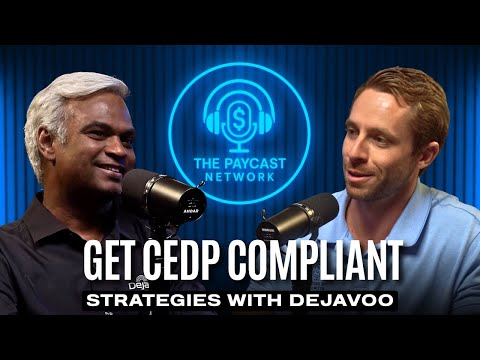
0:02 This episode of the Paycast podcast is sponsored by Deja Vu, an IPO systems company. Deja Vu empowers businesses with cuttingedge payment technology. Learn more at deja vu.io. >> Welcome into the Paycast network where today we are talking about CEDP or commercial enhanced data program. My partner here to the left, the best beer in the business, James Ringstaff, is very proud that I memorized that. Is he not? How many times did you say that in the mirror?
0:31 >> 40 50 at least. That's just in the last hour or so. >> Joining me and James today on the Paycast network, we have a living legend, the CTO of Deja Vu, Vinc, but originally not from Texas, all the way from India. Thank you for joining us today, Vinc. We are honored to have someone who um for the viewers, if you're watching this, you probably know who he is already, and if not, you're going to learn all about him. So, thank you for joining us today.
0:56 >> Thank you, Chase. Thank you for having me in. >> Of course. Of course. So, like I said, CDP, which stands for >> commercial enhanced data program. >> Commercial enhanced data program. Thank you, James. Um, the date that it is going live is October 17th. Whenever you're watching this, it is probably uh already live. Uh, but we want to go through what it means, where it came from, a lot of what Dja Vu is doing to to handle it for the the merchants and ISOs agents. So, from what I understand, CEDP will for the most part affect merchants that have been uh doing more of level three processing. But before we get into what CEDP is, can you give me some background on what level three means and and how it's gotten us to where we are today?
1:41 >> Sure. Let's uh go to the memory lane. they had to go back uh several years backwards to figure out why this L2 L3 program was created in first place by the card schemes. So back in the days when cards were being issued to the common man for common use case um there came a requirement that companies needed to issue cards to their employees for specific use cases >> specific sorry specific purposes. For example, fleet cards came into existence for the drivers who would be driving the trucks uh for the business. Uh the salespeople of the company were issued company cards to use for company expenses.
2:22 >> Um there were many use cases like that. >> So what's special about those uh they call it as pen cards, they call it as corporate card, they call it as purchase cards. But whatever may be the name whatever the name may be the the uniqueness about these cards is that they can be used for specific purposes and not for others. So the merchant category in which it can be used the products that they can buy with the card are restrictive. They can buy certain things but not other things. Now how will a card issuer particularly the companies that issued the card would know about these transaction.
3:00 >> Mhm. This would come only if an acquirer is willing to send this information all the way to the issuer. Now the acquirer is dependent on the downstream on the merchant location on the POS companies on the register companies to feed this information. So in order to facilitate this card schemes created this L2 and L3 programs. They upgraded the specification. They requested the acquirers to send this and there was not enough participation from the acquirers. They said okay I need to throw in some incentives.
3:30 >> They said okay I'll give you an incentive you make changes to your downstream systems and send this information and hence the benefit was created the L2 L3 benefits but guess what most of the people found the shortcut instead of changing the uh POS systems and the registers to send this information came a new breed of gateways called interchange optimization gateway. They thought okay I need to send this information who checks what information I send and they started sending the junk data or filler data. they smartly called it as filling uh process and they started getting the benefits and this is the genesis of L3 and L2 right it it depends on the actual data what the consumer bought with that card has to flow in the tax information is very crucial for companies because the money spent on tax will have to be accounted separately >> for a big corporation so they needed to know they needed to know the discount account information because they have special discount program with spec certain companies. If you go to a particular hotel chain and book your hotel and if you are from ABC company, they have to give you certain percentage of discount. So they can verify if that discount was applied or not. And these information will have to flow into the issuer and because of this uh men in the middle who are smartly filling in the data that actual information never went in but people were getting the benefits and then people were all on the steroid and started enjoying the benefits without without doing the work >> and smartly filling in the data quickly turned into autofilling the data.
5:16 >> Exactly. That's where the autofilling came in and the whole purpose of the program was lost. >> Now the card issuers are left with junk data and they are parting away certain interchange benefits to the acquirer. That's when visa said hey I can't allow this you know cheating >> started cracking down on it. Yeah >> exactly and that is when the L2 L3 kind of ended >> and they brought in the CEDP and now we are in the AI age. Obviously they can monitor the transaction in a much superior way and here comes EDP.
5:49 >> Gotcha. >> Hope that helps. >> Perfect. Definitely. So for the the groups that are have maybe been doing the kind of autofill cutting the corner situation and they don't adjust by that October 17th date, what will be the impact on them? >> The residual goes down. Simple as that. >> Uh the data is validated. Now the merchant will will come in as a non-verified merchant. they lose the interchange benefit and that will affect the bottom line significantly >> depending on what kind of benefits they were getting, what percentage of transactions were L3 transactions before. If it's a predominantly an L3 uh merchant, >> they would lose 20 basis points average on all those Visa transactions, which is a significant impact on the bottom line.
6:37 And like James mentioned, the the notice for this went out in April of this year. Right. >> Right. April of this year, but it actually kicks into effect October 17th. So the flip is being switched and so now Visa is going to actually start enforcing these rules. >> And how long has Deja Vu been preparing for something like this or maybe for CDP specifically? Well, when I started preparing, CEDP was not even on the cards. But I knew that this gaming cannot go on forever and at some point the axe will fall.
7:10 >> Uh so we always believed that this autofilling will not uh it's not the right thing to do and it will not go for long. So we started preparing for this about an year ago. uh we created uh the right protocol for all the point of sale system to feed this information back into the gateway and from there the gateway will decide what information to send to the processor. So we were uh preparing for this for about an year. Um so when this announcement came we we were probably the first one to be ready with our solution end to end >> and involved in that uh that research and in preparation we we talked a little bit about um some of the the things that that deja vu and and you learned that you were sharing with us involving some merchants that will actually benefit from this that you didn't realize before. Can you can you speak to that?
8:00 >> Yes, that that was the first surprise we learned when we started implementing this program. So initially we thought we are doing this program for specific merchant categories. They are involved in B2B. They are involved in government payments and so on. But when I started rolling it out and started looking into the data, I realized that there are more regular merchants who are also uh getting the benefit of this primarily because corporate cards and the spend cards or the fleet cards are used in more day-to-day merchants. For example, my data team tells me that uh tax filling as a service, education services, >> automotive uh services, and you'll be very surprised uh the laundry and dry cleaning.
8:48 >> These are all the businesses that are seeing close to 30%age of card being used there is some sort of corporate card/fleet card slash spend cards. So those merchants qualified for these rates because the card used qualified for those rates. That's uh common moment for us to say that hey it's not meant for specific merchant category. Our everyday merchants can qualify for these rates. So we designed our program for everyday merchants and also for the special category merchants.
9:22 >> Right. Okay. So even by that logic then I would think restaurants would qualify for this too. >> Think about like your formal dining with all with companies going out for dinner, right? >> Absolutely. Fine dining. >> In the fine dining category, we figured out that 40%age of card used would qualify for an L3 because they were either corporate cards, they were spend cards or some sort of uh cards that will qualify for these L3 rates.
9:49 >> Yes, you're absolutely right. >> Interesting. So what at this point uh services Dja Vu providing to those merchants that uh maybe are are simpler merchants that do qualify for CDP? >> Yes. So uh one size fit all doesn't apply here. So we knew this uh when we designed this protocol. Uh so we treat those merchant categories appropriately. For a simple common merchant they may see 20 30%age of card used is smart uh you know the qualified cards. we don't want to complicate their workflow uh by prompting additional data to be fed in which will really slow down their sales process. So for those we have a program called CEDP basic.
10:34 >> Mhm. >> Uh that will take care of those merchants who sell one particular line item, one particular service. They don't have complex tax situation. They have fixed tax for the products that are being sold. Uh it's mainly for services rendered in person. Uh so there is no shipping involved. For such category of merchant, our CEDP basic will work on a standard credit card terminal. you buy a Deja Deéjà vu payment terminal and that's all you need to qualify for a CEDP uh program rate.
11:07 >> Okay, >> that's our CEDP basic meant for those uh merchants. >> So then for merchants who are already on iPays, there's nothing they necessarily need to do on their end. They just continue transacting as normal. >> Absolutely. Those who are currently using uh the IPOS space gateway with the deéjàu terminals who have enabled uh the L3 program L2L3 program they will continue to get the CEDP benefit because it was uh designed to send that information right from the payment terminal all the way to the gateway.
11:38 >> And what about your more traditional uh L3 type of merchants? Is there a separate program for them? Yes. The the next category would be those merchants who are using registers. Uh the typical retail uh environment where they use some sort of registered product. The register product is the one that contains this uh the data >> and so they cannot talk to the processor. They need to talk to the processor through our payment terminals. >> So and hence they need to pass this information to the payment terminal and then we will relay this back to the processor and it'll go all the way to the issuers. So we have enhanced our uh spin protocol which is the um protocol the registers would use to send this information.
12:25 >> Now any ISV who who is having a register product can take advantage of the the latest version of the spin protocol send this additional tags and qualify for CEDP rate. >> So okay hang on a second. You mentioned spin here is eligible for this program too. Uh so that means like a a POS like Deja Pay Pro then for example that would qualify. >> Yes. >> Okay. >> Good question. Those ISOs and agents who are deploying Deja Pay Pro now they can qualify for the CEDP rate because Deja Pay Pro now feeds the line item information into the payment terminal which using the processor specification will transfer the data back to the processor. Okay. Now, I've noticed also like when I take my P8 for example and I pulled up the DV store that there's quite a few other apps on there from other ISVS through deep linking. Is that also eligible for this program?
13:24 >> Yes, good question. Anybody who is running their point of sale application on a device using uh our DV store and invoking the payment using deep linking we have enhanced our deep linking protocol to support the tax that needs to come from the register application to the payment application. >> So yes that will also qualify for this AEDP rate. >> Very cool. I have a question from the the merchants perspective. Uh high level view visa is kind of cracking down on like we mentioned those autofills and putting in you know basic not non-information essentially into these fields.
14:03 >> Um would the amount of time that the merchant has to spend filling in these fields go up in this case because they have to put the actual information in there and if so how is deja vu helping kind of limit that a little bit? Yeah, it is um it's not that bad but still there has to be some uh interruption in the in the flow to get the actual information only if there are uh specifics involved. For example, if a merchant is selling certain products that are tax exempted certain products uh that are uh qualifying for a lower rate then those tax situations will have to be handled at the transaction flow.
14:41 Now if if if the house merchants uses our uh register light product, they can set the product itself with those differential tax rates, the tax exempt status and so on. But then there are some transaction that may involve shipping. When the shipping is involved now, you need to pass the zip code to which the product is being shipped. That would be an interruption. But when somebody's going into a store and and buying a product, 90%age of the time it's going to be in person purchase versus versus the shipping is involved.
15:14 But that minimal percentage of transaction that requires shipping, there will be additional user input. But for 90%age of the cases, it will be a simple flow. So particularly if you use uh our register light product you can set up the properties of the product and hence there will not be any additional step involved in the transaction processing flow >> and on the flip side wouldn't the taking the the few extra seconds to be accurate with your information would help on the the discount side >> of course it's uh as they say the the squeeze is worth the juice. It's it's it's worth every bit of it cuz if you take time to fill that information, that's going to save uh save money for the merchants and the agents and the >> ISOs, >> right? Better to take the time because again with CDP, they're introducing that AI element to verify these transactions and there's a potential savings up to 40% if they do this right.
16:09 >> On the flip side, however, Visa is holding up to 45 days where they can actually go in and downgrade the transaction if it fails verification. So it and it sounds like that um there is obviously this the downgrade potential, but if you're doing everything correctly and you're using a system like Dja Vu who's been preparing for this for a year plus um the benefits could potentially outweigh what the the downside of it could be, right?
16:36 >> Yes. >> And it also sounds like if with a system like Deja Vu, if you get a like a Deja Pay Pro, then maybe you're paying a little bit for a little bit more for monthly. Mhm. >> The savings could could way outweigh whatever that extra fee is. Right. >> True. True. So then let's look at the the grade of uh uh the products available at the entry level. You could use a deéjàu payment terminal and enable L2L3 in this case CDP to get advantage of the CDP program.
17:07 You can go one level high and you can subscribe to the register light product >> if you are particularly using less than 200 300 inventory item not too many complex situations >> particularly the services business parking those kind of situations. So you use the the Deja P uh sorry uh the register light product then the comes the Aje pro. If you want to have a very simple very basic um register product you can use the AJ pay pro. All of these products are CDP compliant now >> and then comes the advanced merchants who are using specialized software for the specialized business. You might be using uh pet store running software, a pharmacy software, a retail restaurant software. Those ISVS can integrate using my spin protocol.
17:59 >> Okay. >> So we have offerings for every one of the channels that you can imagine. And right James rightly asked about deep linking customers can use the deep linking protocol. E-commerce customer can use the hosted payment page protocol to send the line item information into that. If anybody is using a CRM >> kind of product and they are using my transact API today, they can send the line item information on the transact API. So every one of the interfaces that we have exposed to our ISV channel >> all of them supports CEDP enhanced tags.
18:37 Now they can take advantage of this program. So, not only do they have a completely omni channel offering, the entire omni channel offering is already CDP compliant. >> Yes. >> Wow, that's impressive. >> Yes. Uh to begin with, uh IPOS space uh was designed to be an omni channel gateway. >> Mhm. uh and and we knew these kind of situations would come and we will be in a better position to take advantage of this because of the omni channel approach that we took three years ago four years ago when we built the gateway. We knew that this is a direction in which industry is going.
19:13 You will have tap on phone transactions. You will have e-commerce. You will have shopping cart coming in the card present and the card not present. >> If you create I'm sorry Gordon. >> Sorry. Uh you said tap on phone. >> Yes. >> Meaning that this is also eligible through the mobile app iPod go. >> Yes. Yes. Any tap on you build an inventory on DV pay light. >> Mhm. >> You build the inventory on the gateway.
19:37 The very same inventory is available for you to run a transaction from our cloud pause which is typically run on a portal. It's available on a physical pause. It's also available on the tap on phone application. So you build the inventory once and you can run that inventory from three different channels and all those channels will qualify for CEDP now. >> So you can take a device I already have in my pocket, no extra hardware required and now I can take and qualify for level three with CEDP.
20:06 >> Exactly. That's the fun of tap on phone. You don't need a physical payment device anymore. Your phone be it Android or iPhone can can develop as a payment device. >> Now the double whammy that is you can also uh run a CEDP complaint transaction using those. >> Wow. >> I'm really interested in the the preparation piece of this. Like you said, you've been preparing for this for four years essentially. Um, and you're being obviously very active in you you have all these systems out that are already registered for C CDP way before it's out. I feel like I haven't heard a lot of other people in your position in in the market talking about it, let alone having their product ready for October 17th. Um, you you did touch on a little bit earlier, but I want to hear more what went into the decision of, hey, we need to be as active as possible for when whatever happens. And then when you found out it was CDP CEDP, you decided we're going to be ready for this way before it ever comes out.
21:09 >> True. See this this is one product where you need to take a holistic view. >> Mhm. >> You you cannot be a peacemeal solution to this. Guess what? We we thought we are ahead of the curve. We were into this for 12 months. We we thought we are very much ready. Just 3 weeks ago or four weeks ago, my QA team came back and said, "Hey, how about recurring payments?" Mhm. >> Then we realized that we have not even thought about the recurring payments and we need to make amendments.
21:37 >> So when you are taking care of recurring payments, you need to store these tags that was recorded as part of the original transaction and replay it for every recurring transaction because it's the same commodity code, it's the same um SKU, it's the same amount, the same tax treatment. But I need to prepare my system to store this information and replay it as part of every recurring payments. Today I can safely say that my recurring payments is also CEDP compliant but that came as part of a diligent R&D >> Mhm.
22:11 >> approach and also uh we we brought up every brought every one of our engineering team and product team up to the speed on this for the last 6 months. So I've been digesting this, meditating over this, thinking over this and hence we have a solution that is is a cross channel solution available today >> and I think the approach too for other gateways is they're just kind of know wait and see moment and they're going to be more uh reactive rather than just proactive. Um, and I think part of the problem is they just don't have a firm understanding of what exactly is happening, which to give them some credit, like this information has been rather fluid. It's been changing quite a bit. Um, but to just sit on the sidelines too is dangerous in and of itself.
22:58 >> Mhm. True. Very, very well said, James. Uh, see, there is a gap between the reality >> and the interchange benefit. When I say reality, the transaction happens at the merchant location, but the interchange benefit is made by the card scheme based on an AI deciding certain things. So, we don't know how this is going to >> pan out. >> Mhm. >> Right. We are farther from the truth in in that regards. So, we have to get ahead of the curve, do the right things, look at the result, make those adjustments and and get ahead of the curve. That's the name of the game.
23:32 there is uh there is or there are gaps between what visa spec specification says and some of the processor specification. >> So I'll give you give you an example. Visa specification says if there is a way if you are giving a discount at the invoice level not at the line item level if you want to give a discount at the invoice level you can send certain information but now one of the processor with whom I was certifying with they don't have that granularity so what do I do now if I have an ISV who says I'm I want to give a discount at the invoice level >> I cannot do >> so there there are gaps between what visa expects and some of the processor specifications which will get fixed over a period of time. I would say 80 85% coverage is there. The remaining 50%age everything will evolve as we as we go along. But we are in a better situation I would say to handle this uh because our preparation time has been longer rather than reacting to the to the moment like James rightly mentioned. So what will a merchant need to do to ensure they are CEDP verified?
24:48 >> Well, if they're on iPays, then they're are automatically opt in, right, with the CD basic. >> Yes. Uh first and foremost, when the settlement message is sent, we need to enable a particular flag called CEDP flag, which is acting as opt-in flag. This change is something we will do as part of the technology initiative. So if you use any of the deja product it will send those flags but not for all transaction but for specific transaction that will qualify for CEDP rate >> and this is without the merchant having to do anything >> they don't have to do anything >> and then once they get 500 transactions or about 30 days of good clean data then they become verified.
25:32 >> So Visa then marks the merchant as a verified merchant. Once the merchant goes into the category called verified merchants then the interchange benefit will start flowing in instantly as part of as a real-time settlement. >> If not it goes into the category called deferred payments. They will do additional validation probably 2 weeks 3 weeks later you would get the benefits. That will put stress on your reconciliation systems to verify if the benefits really did flow in or not. and it will be difficult for an ISO to settle the agents uh you know based on this uh deferred payment. So uh the most >> positive scenario would be that the merchant goes into the verified list which would happen if 90%age of the transaction sent by them qualifies for CEDP. And I think it's important to note also that once a merchant hits verified status, they need to continue providing that good clean data on their future transactions moving forward because they can also lose verification and if that happens and they go back into that up to 45day waiting period for that rebate.
26:38 >> Would they be notified if they were to lose that verification? From what we see from the notification sent by Visa there is a email communication and ISO can write to Visa with the BIN informations and such they can ask for what they call it as VML list. VML stands for verified merchant list. >> So they could ask for this list and from time to time verify if those merchants or if their merchants are in the VML list or not. If not, they can talk to them why and do the rectification uh to get those merchants re-qualified or reverified.
27:14 >> So that'll be the the ISO's responsibility. >> Yes. >> Right. Got it. So until this program settles down, I would recommend ISOs who may be using any of the solutions including the Ajavu solutions. Keep looking at your interchange report. Look at the interchange qualifier and see if you qualified for the uh CEDP rates. >> If not, we need to ask the processor the why question which will go eventually to visa. They'll probably give an explanation. Hey, your total did not tally. you mention one thing on the line item but the summary is reflecting another thing. This MCC code doesn't qualify for tax um exemption.
27:55 There there will be reasons mentioned why you did not qualify and they will probably have to fix those reasons. Some of them may require a little bit of coding change. We are ready for such uh such tweaking I would say but otherwise they need to be vigilant for the next few months until they you know settle down. >> Right. I know I mentioned it earlier, but I haven't been hearing this type of information really from anyone else in in the industry at this point. So, I really appreciate you coming on and and sharing this this with us.
28:23 >> Thank you, Chase. Uh, see, the the October 17th date is is not the real date to us. The actual date happened somewhere in March or April. Those merchants who are using my L3 solution prior to March, April, all of a sudden we received complaints saying look they are not getting the benefits. >> Then we realized that the check have been implemented by visa system much earlier than they announced to the rest of the world. >> Mhm.
28:52 >> So based on those results, we started looking into the data figured out why the merchants would not qualify, what was wrong in their settings. We help the merchant set the settings correctly. There was one situation the merchant did not set their tax rate correctly and after just changing the putting the right tax rate in their settings they started getting the benefits. So we have been helping the merchants in the last few months >> to qualify for the CEDP rates. So, kind of piggybacking on that with the the topic of of sharing information and you might have kind of already answered my question, but as this situation unfolds and has already been unfolding, um, is déja vu, what's kind of the method behind helping the merchants and the ISOs and the agents in what is and will probably for a little bit of time be a pretty chaotic period?
29:45 >> Yes. So we have to be vigilant and we have to keep our antennas up and the organization should be geared to face these uh um consequences and make those adjustments. So we at Deéjàu is fully committed. We have created an email just for this purposes cedpjàu.io that's been created just for this topic and there's a whole lot of management team that are getting the broadcast of these emails. So if any ISO any agent have any question on CEDP they can write to CEDP at dejàu.io they'll get the notice of the CTO head of sales head of marketing and even the CEO. So you will get the maximum visibility uh with respect to the CEDP.
30:32 So that just to tell you how alert we are to the CEDP program. But that said, I have also confessed that we are little far from from the fact meaning I as a technology service provider I'm not privy to the settlement report. I don't know what transaction got what interchange rate. >> So ISOs and agents need to help me by providing this report so that I can figure out the reasons and I can make adjustments if required.
30:59 >> So it's a process there's a long chain of support. That's the agent, there's an ISO, me as a technology provider, and then the processor, which could be TCS, Fiser and so on. And then the C schemes. So when the C scheme says this transaction doesn't qualify, is that because of my processor not sending certain information that they should have sent >> or is it because my ISV who was sending a wrong data which is which is the culprit behind this. We need to investigate on case by case basis. M so all I'm saying to the listener of this podcast is that it's going to be a ride that we should all be in with the seat belt on and and go through this process.
31:40 And I can assure you that as a company Deéjà Vu as always a support friendly organization. >> We have raised our own internal alert level high on this one. The entire management is tuned in to the CEDP program. So you'll get the maximum attention on this. That much I can assure you. >> There's a lot more going on behind the scenes than most people realize. >> Yeah. And I'm sure for an organization like Dja Vu who already has a really strong reputation for service in a period of time where service may be the most important thing with this CDP going on. Um the the track record that you guys have already has got to be a pretty big deal when it comes to something where there's going to be millions of questions for yeah support is our DNA. Strong support and being responsive to the need of the customers has been our DNA.
32:24 >> But in this case even more because there is money involved. >> Yeah. Uh so one thing is like hey my terminal is not working are you providing support to me over the weekend versus I lost 30 basis points or 20 basis points because of A B C and D. >> It's it's a different level. It deals with the money and it it it determines the profitability for several agents who have put their trust on us and the on the ISOs and hence we have a obligation uh to be a lot more uh sensitive on this topic >> right and like we mentioned the next you know 6 to 8 months or so will probably be pretty chaotic uh but I have to ask the the person in the company that was ready for this four years ago where do you see this going over the next four or five See the bad apples will be will be removed. Uh the gateways uh their uh founding principle was interchange optimization through data filling. They will all be gone and they will all try to push more and more data uh to come from the downstream and there who are uh creating innovative solution will survive.
33:32 >> Uh it's it's a this this is a game for long-term people. >> Yeah. Yeah. So definitely Visa's initiative is an amazing initiative which is uh helping those honest uh good people to be in the game and and and reap the benefits while eliminating the bad apples. Uh but I think like you rightly said that next 6 months is going to be a tough ride but then things settles down and and of course the AA is going to get better and better and those who have been sending honest data will not have to be worried.
34:01 >> Those who are playing the police and thief game, we need to get better. Uh but if you're honest, I think it it'll be okay. >> Yeah. And and like we've like we've said, if you're if you're doing it correctly in in an honest way and you're using the correct solutions like Deja Vu, Deja, Deja Pay Pro specifically, I think we mentioned earlier, um the the benefits we don't even probably know what they could be in total at the end.
34:27 these these merchants and agents and so on could actually be making a lot more money with this situation >> particularly with what we have found like we discussed earlier uh this program is not restricted to specific merchant code the benefit can come from any type of merchants uh where a corporate card or a visa spend card is being used of course Mastercard their own category so the benefits will accrude from all sides of it >> right >> but you need to use the right solution and the right partners >> right and who wouldn't want partner with the group that was ready for this four years ago.
35:01 >> Well, um, on that note, Vinc, thank you so much uh for joining us. Like I said, I I haven't heard this much information or really much information at all leading up to this um until today. I think James can can probably uh echo that as well. I saw his eyes with some of those stats you were throwing out earlier. Uh, but seriously, thank you so much for for joining us today. I know this is a big deal in history.
35:21 >> Thank you, Jason. Thank you, James, as always. Thank you, James. Thank you for joining us on this episode of the Paycast Network. [Music]
Summary
- CEDP is designed to enhance data accuracy in payment processing, particularly for Level 3 transactions.
- Merchants using autofill methods may face significant financial penalties if they do not adapt by the October 17th deadline.
- Deja Vu has been preparing for CEDP for over a year, creating protocols to ensure compliance and data integrity.
- The program is not limited to specific merchant categories; everyday merchants can also benefit from CEDP.
- Deja Vu offers tailored solutions for different merchant types, including basic and advanced programs to facilitate compliance.
- Merchants will need to provide accurate data to maintain their verified status and avoid potential downgrades in transaction benefits.
- Deja Vu has established a dedicated support channel for inquiries related to CEDP, ensuring responsive assistance during the transition.
- The long-term impact of CEDP is expected to eliminate dishonest practices in payment processing, benefiting compliant merchants.