Section Insights
Introduction and Background
Who is Ron and what is his background?
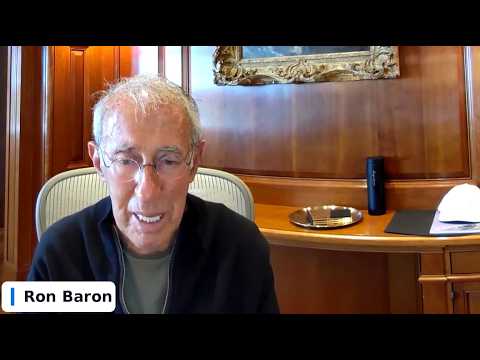
Ron is the founder of Baron Capital, which he started in 1982. He has a long history in finance, beginning his career as an analyst in 1969 and accumulating significant experience in investment and management.
- Ron has been in the finance industry since 1969.
- He founded Baron Capital in 1982 with $10 million under management.
- His early career included working with notable companies like Disney and Nike.
Challenges of Data Centers
What are the current challenges facing data centers?
Data centers face significant opposition from communities due to noise, environmental impact, and perceived lack of tax benefits. States are responding to these concerns, with New York banning new data center constructions.
- Communities are increasingly resistant to data centers due to environmental and noise concerns.
- New York has banned the construction of new data centers for the upcoming year.
- The cost and time to build terrestrial data centers are significant compared to potential alternatives.
Investment Perspective on SpaceX
What is Ron's outlook on SpaceX's stock performance?
Ron is not worried about short-term fluctuations in SpaceX's stock price. He focuses on the long-term potential of the company, projecting significant revenue growth over the next several years.
- Ron emphasizes long-term value over short-term stock price movements.
- SpaceX is expected to see substantial revenue growth, potentially reaching $1 trillion in five years.
- Investors should consider the long-term trajectory rather than immediate stock performance.
Long-Term Investment Philosophy
What is Ron's investment philosophy regarding long-term holdings?
Ron believes in holding investments for the long term, especially if he anticipates significant growth over the years. He emphasizes the importance of integrity and intelligence in the companies he invests in.
- Ron advocates for a long-term investment strategy, especially for high-potential stocks.
- Integrity and intelligence are key qualities Ron looks for in companies and their leadership.
- He reflects on his initial skepticism about Tesla, highlighting the importance of ongoing evaluation.
Current Portfolio Insights
What is Ron excited about in his current investment portfolio?
Ron highlights the Baron Partners Fund's strong performance and discusses the recent focus on software investments, which now make up a significant portion of their portfolio.
- The Baron Partners Fund has been a top-performing mutual fund since 2003.
- Ron has shifted focus to software investments, which now constitute 41% of the portfolio.
- Despite recent underperformance in small and mid-cap companies, Ron remains optimistic about future growth.
Transcript
0:00 Welcome everyone. I'm Kacha Rosenblad, head of distribution at Baron. I will turn it over to Ron momentarily. Just a quick note on questions, feel free to use the Q&A button at the bottom of your screen to ask any questions as we go. We also received many questions in advance. We'll try to get to as many of them as we can after Ron's opening remarks. Ron, with that, over to you. >> Thanks. So, Baron Capital I'm the founder of the business.
0:27 I started it in 1982. My career started as an analyst in 19 69, the summer of 1969. I went to law school at night in the 1960s and I worked in the patent office in the daytime, which was a better choice for me than going to Vietnam. In 19 80, in 1970, started as an analyst. Applied for a job which I wasn't qualified. Ultimately, I convinced someone to take a chance on me. In 1970s, I sold research for commissions.
0:59 My companies were Disney, McDonald's, Nike, FedEx, and a small company called Daylin, which I was buying with Ken Langone. He was buying for himself. I was buying for my clients and we were splitting it 50/50. I made a double or triple and since I was working on commissions, I recommended to my clients to sell and buy something else. He stayed with it and that ultimately became Home Depot. The executives when they were fired started Home Depot.
1:25 1982, started Baron Capital. We had under management at that time $10 million. By the way, in 1970, I was in debt $15,000. And my credit was so bad I couldn't even get a telephone. So, 19 80, I became a millionaire. 1982, we started Baron Capital. I had $10 million under management and it all came from George Soros. In the 19 1970s, he had a bad year, 76 or 77. And Quantum, his fund advisor said, "Why don't you have some other people manage money for you instead of just you, people who don't work for you?" That was one of his six favorite analysts. He gave each of us $5 million.
2:06 other people bought and sold, bought and sold. We did a lot of trading. my investments were I made $5 million investment, became $10 million. Very little trading, and which surprised them, but it was the best record that they had. 1982 gave me the $10 million to start. 1992 had 100 million, and as of June 69 billion. And where I was in debt before, roughly 11 and 1/2% of the assets we manage are my son's and mine.
2:38 the you know, so so we made our clients, we have 69 billion of AUM in June, and we made our clients over 70 billion in profits. So we made 70 billion in profits, and managed 69, which doesn't seem quite fair to me, but that's what it is. met Elon Musk in 2010 when he was going public with SpaceX with a with Tesla. I thought it was very unlikely he'd be successful. I found him a very impressive person and executive, though, and so kept following him. And he came public at 17 a share.
3:13 3 years later, 4 years later, his stock was 75, tripled. And when I thought he wasn't going to be successful, went to visit him in 2014. I said, "Oh my god, I made a terrible mistake. I really need to invest in this company." And starting so he went out there, spent a couple hours with him in his factory in Fremont. and I walked away saying, "Man, I I have to buy this stock." And so now the stock is already tripled from the IPO price.
3:41 Don't own a share. 4 years later, then and then you know, it doubled or tripled again. It was $175 or $200 a share, and I said, "I can't take it anymore. We're buying stock." So, we invested $400 million between 2014 and 2016, and we've made somewhere in in purchasing mostly from short sellers, I guess. and and we made about $7 billion so far in profits, six or seven or eight billion dollars, and I think we're going to make five times that amount in Tesla over the next 10 years as they've changed their model.
4:17 instead of just manufacturing and selling a car, initially making $15,000 in profit a car, now making 7,000 on roughly a $7,000 capital investment per car. So, it's still very, very profitable. Now, they're switching to having a car that they're going to make for themselves. cost them about $30,000, and they're doing at least a million out from a year, and on those cars Waymo does 66,000 revenue miles a year. They charge $3 a mile. we're probably going to charge less than that.
4:50 I would guess a dollar or two, but if we charge a dollar, that would give us $60,000 of revenues a car, $40,000 roughly of profit for a year for a car that cost us $30,000, and that's a million miles, therefore forever. And what Tesla would be then at point is to have $40 billion of profit year one, 80 billion in year two, 120 billion in year three, and on top of that, you're then going to add robots, which he thinks is the biggest product ever. Starting in 2017, because I had this relationship with Elon, I requested that we be able to participate in in purchasing a SpaceX stock when they did employee tenders, which they did a billion dollars twice a year. And they were way oversubscribed early on, and we started buying in 2017.
5:48 Even though we were small investor because we did have a good relationship with him, we were treated just like Saudi Arabia, just like Singapore, just like Abu Dhabi, just like Fidelity. We had the top allocation in each of those purchases or you know, one of the top two or three President's family. So, so we were buyers in all those allocations and from 2017 to now, we have invested roughly $3 billion and that as of June is worth $25 billion. and and it's down since the end of June, but they're still in the 20s and what we think is that we were another billion dollars on the IPO. and we think that over the next 10 or 15 years, we're going to make 20 to 30 or even more times the money that we had invested as of the point of the IPO. So, we think we're going to make hundreds of billions of dollars, not billions, hundreds of billions. One interesting story is that one of the analyst, Ishay, went to a dinner last few days, a Morgan Stanley dinner organized by Adam Jonas who's the analyst at that company and follows it and he says, "Well, for 40 minutes, 45 minutes, the entire conversation, the entire conversation was about what's going to happen to the price of of shares of of SpaceX when the unlock takes place, when unlocks take place.
7:25 People weren't able to sell their shares, when they can sell their shares, what takes place? And obviously, the sentiment was extremely negative and what happened in that period of time is that, you know, the stock went from 200 to 125, 130 and you know, people a large part driven by short sellers and there's now 200 630 million shares that are in the public float. 270 million shares have been sold short in the past two or three weeks. 270 million shares on the basis of what's going to happen to the stock as soon as people are able to sell it. Presumably they think that everyone's going to want to sell all their shares at the same time immediately. So that's what and and then the short sellers you're you know pushing it down whenever they come with that narrative. And what people sort of forget about I guess is that when it stops going down there's 270 million shares that people got to buy and if they don't buy it they're going to go bankrupt because the company in our opinion is going to go up 20 30 40 times and people can't withstand that kind of a price increase if they're sold short.
8:39 So So that's what we think's going to happen. So why? So what is Starlink? What is a SpaceX? SpaceX happens to be an incredibly unique business in my entire career. So I've been doing this 56 years. In 56 years there hasn't been a single company that I've seen like SpaceX. Not one. And what is it? So most people think oh it's a rocket company. It's way more than that. What it is is that initially you know the the the idea was that he wanted to have a rocket you could use over and over again. When I was a patent office examiner in the 1960s my art was chemistry. And and all those nose cone coatings that we put on so that the nose cone wouldn't burn up when it reentered the atmosphere I granted those patents. So I've been thinking about rockets since the 1960s.
9:32 I'm you know amazing coincidence. So so the idea was that to reuse rockets. That's the plan. And so, when you start thinking about reusing rockets, then you say, well, if we reuse rockets, then we're going to need a lot fewer rockets. Why should I What What else can we do with them? And what else we can do with them that led to Starlink. And Starlink, what that is is that that is going to be the internet for the entire world. That is the internet for the entire world.
10:03 Right now, they have there's 8 billion people on the planet. 3 billion don't have the internet. And of the 5 billion that do, it's mostly unsatisfactory. and anyone who's used Starlink says, man, I have never seen anything like this before. This is the best product I've ever had for my boat, for my plane, for my house in the country, for when I travel in the desert, a hiking trip, or it's the best. And so, so, so, so, why is that? Because you're directing you're connecting to You don't have to spend, you know, $16,000 a mile to connect a hard wire to your house. You carry it on your back in a backpack, $250, $300, you connect right to the satellite, or it's going to be directly on your cell phone. So, it is the internet for the planet. Right now, I we think that they will be able to do in, you know, in 10 years, we think in 10 years that's going to be a trillion-dollar annual revenue business.
11:02 It's right now about 15 or 16 17 billion. We think it's going to be a trillion dollars of annual revenues, about a third of it from people subscribing, a third of it or 40% from the government, and 40% from enterprises. So, 20 25% from individuals, and 40% from the government, 40% from enterprises. And and a trillion dollars of revenues in 10 years will produce, we think, roughly 7 or 800 billion dollars of profits a year. That means that in in 10 years, this company from Starlink alone will be worth and it's still immature at that point. It'll still be able to grow a lot.
11:42 then at that point, we think that's going to be worth somewhere around $14 trillion. $14 trillion for Starlink alone, and the entire company is now being valued for less than $2 trillion. That's one number one. Number two is compute AI. So, all you read about today in the newspapers is not all you read about, but a big topic is that our data centers. And what the what what the tenor of the conversation?
12:13 People don't want a data center in their backyard. They don't like the sound. They don't like the appearance. And and they don't like the impact it has on the environment. And and and they don't like the noise. And they don't like they don't think they're getting enough tax revenues. And so, states are beginning to react to their constituents and say, "You know what? I know we need more data centers for technology, but I don't know what does technology really need need us for anyway at this point." So, New York has just banned construction of data centers for next year. The governor of New Jersey just won a race for governor on the basis that data centers are making electricity too expensive.
12:58 And when you do it in space by the way, you don't pay anything for electricity because you're using the sun. And and you don't use water because you're using cooling from radiators. You have giant radiators that take the heat that's being generated inside of the satellites and you know, shoot it out into space. So, no cooling and no and no electricity costs. And and no permitting. And and no three or four or five years to get into space. In fact, one of the things really interesting is that a lot of things are interesting, but one thing is especially interesting is that it costs an on an regular data center on on on terrestrial on Earth, it costs about 40 or 50 billion dollars right now for a gig gigawatt.
13:45 And what they say is that Jensen Huang last week said he thinks it's going to cost a hundred billion dollars. And it takes two or three or four years to get these things built plus a huge amount of capital, a lot of risk, and your community is against you. And and so in space, you eliminate cooling costs, you eliminate electricity costs, and instead of the $10 capital cost that other people bear to build on per watt to build on our planet, it costs us two billion two billion two dollars.
14:19 So, $10 for everyone else, $2 for us. And that's for capital, and when they spend $10 for capital, they then have to spend $2 a year to maintain. we don't have that expense either because if things don't work, we just, you know, close it down and deorbit the satellite. So, we assume we're going to last for five years. And every five years they get 10 times as powerful as they were the year before as they were before, and the satellites might cost 40 or 50% more, but the bottom line is that you that our costs are dramatically lower. Costs us $2 one time, costs them $10 up front and $2 a year. That's point number one. Point number two, in order for data centers to work in space, what do you need? You need not just cheap launch to get to space, but also you need to be able to figure out how you're going to get that data that's being produced in space in your as an inference back to our planet. When you do that, what you need is you need Starlink. So, Starlink, you get all those satellites whizzing around. There's 10,000 now, on the way to 20,000, and they say that, because of the tremendous demand for data, it's going to be 100,000. They have all those satellites going around.
15:37 So, all you do is from this satellite that is producing, this information, and data, you shoot it over to Starlink, and Starlink sends it back to the ground. Without Starlink, you can't have the these these satellites in space. So, it all goes together. In order for you to have the space, satellites, the space data centers, you need to have a way to get it back. That's Starlink. In order to have it there, you have to have rockets that you can use over and over and over again.
16:04 And the big unlock right now is coming from, from, from Starship. And that's going to be the first one, we had, I guess, about 12 launches so far. They're going to be able to use them in in mass sometime, this next several months or so. And when you do that, the cost and NASA says in 2010, it cost to get kilogram to orbit, it cost $18,500.
16:34 $18,500 according to NASA in 2010, when you can use a rocket one time. It currently costs us because we use the rockets over and over like an airplane, it costs us $1,500 per kilogram. And when we sell the service to others, we get $4,000 a kilogram. It's about to with our new super rocket, with our new, rocket ship, Starship, it's going to cost us $150. So, NASA was paying $18,500, other people are paying $4,000 to us when our cost is $1,500, it's about to cost us $150. So, tremendous advantage.
17:12 Nobody can compete. Nobody can use the the over and over again. By the time they can, you're going to be facing a constellation of a million satellites for Starlink, and you're going to be for for computer AI, and you're going to be facing you know, 100,000 for Starlink. And then one more thing. So, so what I'm thinking about, we're thinking about a trillion dollars of revenues for Starlink alone in the next 10 years, we think that the revenues you're going to be producing from from computer AI are probably several times what you know, several trillion instead of this one trillion in 10 years, several trillion.
17:51 And what it's a little bit further out, but several trillion. And we can't And if we're thinking that Starlink alone is going to be worth 14 trillion, and if we're thinking that star you know, the computer AI is three or two or four times as valuable, and the whole company's being valued at two trillion dollars now, that's crazy. And then number three is that you need a lot of chips. So, if you are TSMC, this is going to be the last point I make.
18:16 when if you're TSMC, and you're making chips for other people, and we go to you and say as SpaceX, we need to have 50 times as many chips as you're producing for the entire world every single year. And so, they say, "Well, we can't do that. We have a great business. We can't do that." Go to Samsung, same thing. We can't do that. So, we're now building a fab in the United States for 50 billion dollars phase one, 100 billion dollars in total when when we make And we're going to make these chips for inferencing in space, and and it's not that they're going to be dramatically cheaper, although we think that they will be 99% cheaper than we're buying from other people.
19:03 and it's not just that the fact that they're cheaper, but the fact that we can't get enough of them from the existing suppliers. The existing suppliers aren't willing to take the risk, so we're going to do it ourselves, otherwise we're going to have to slow our growth dramatically. So so that's it. We have us Oh, yeah, one more thing. And the last thing is in AI. So AI is the data centers on on on the planet, and also so we have Anthropic, and you have ChatGPT, and you have Gemini from Google. what they focused on is building an AI model like the magic inside of a box. The box you get a spigot going in, brings all the data in the world to the magic box to to mess it to figure out what to do with it, and then you have a spigot coming out which gives you an answer after you ask it a question, after you give it a prompt.
19:54 That's what this model is right now. What is going to happen is that So Elon, we have the same thing. We have Grok. And Grok started later than others. Oh, they have to remember, the head of Anthropic was trained by Elon. The head of ChatGPT was changed was trained by the Elon. So he thinks in fact most outside observers think that we're very close to being equivalent to Grok to to Anthropic. Very close, but not there. Anthropic is still ahead. But we think that the AI in the box, that's going to be commoditized.
20:40 Everyone's going to be able to do it. They're not going to be able to have compute, but they're going to be able to do that. So just it So Elon has spent his initial effort on making sure we had the most compute. He thinks that's the barrier to growth. And so what he's done is that we invested in compute, we fell a little bit behind in Grok. He thinks we're going to catch up in Grok in the next several months or so, and we'll be the same as Anthropic or close to it, and but we'll be cheaper, dramatically cheaper. In addition to that, those guys need compute. So, when Anthropic comes to Elon and he he's a good guy, he comes to Elon and says, "I need compute, otherwise I can't service the customers. I can't meet the demand for my customers." So, so Elon says, "Okay, I'll sell it to you." So, what we spent in Memphis going to say, I think $35 billion for and it took us 120 days. Other people, three or four years. 120 days and we doubled it in 90 days. We sold a capacity in that facility to Anthropic for $1.25 billion a month for the next year and a half about.
21:48 Cancelable contracts, but for $15 billion a year, we sold it to him. Then Gemini, Google comes along and says, "We need compute also. We don't have enough compute." So, Elon says, "Okay, I'll sell you what I have left for $900 million a month." And then someone else came along for two or three billion dollars a year. So, we have almost $30 billion a year of revenues coming in for assets that we had invested in already that weren't earning a return and weren't likely to earn a return or need need be needed by Grok for several more months or a year. And so, we're now getting $30 billion a year of extra revenues from those assets in the ground that were not producing anything for us.
22:30 And now, we're we're still growing compute and now Grok is about to catch up to the others. So, where are we going to be then? And the answer is trillions and trillions of dollars of revenues. So, the the the ending comment here is that the United States economy grows is a is a $30 trillion economy and grows roughly 7% a year. Doubles every 10 years. Two or three percent is real, four or five percent is inflation.
22:58 And and so, that's that's the economy. Elon believes that instead of doubling every 10 years, because of the innovations that he's bringing to the table here, and creating sustainable abundance for everyone, not just for the rich people, for everyone, then what's going to happen here is that the economy, instead of doubling every every 10 years, is going to every 10 years, in a not long distant future, go 10 times growth every 10 years. So, instead of growing doubling every 10 years, he thinks we were about to grow 10 times every 10 years. And remarkable. And if that's the case, then there's going to be universal income, I suppose, and and the people will feel about whether they can work or not as optional. I'll tell you one thing, my children, my grandchildren, they're going to keep working. and you know, to contribute, to have an impact.
24:00 And our goal for Baron Capital, the most people's goal when they're doing what we do is to make as much money as they can as fast as they can, and retire and do something else. Our goal has been to have an impact, to to add to society, to create a value for for for everyone from the basis of our business, that a family-owned business that's going to last, hopefully, forever. so, that's what we do. I'd be happy to take any questions now.
24:30 >> Great. Thanks, Ron. Lots of questions. Let me start with one that is coming up a lot. You talked a little bit about the short sellers, but can you elaborate a little bit on where SpaceX is currently trading, and how low could it go? Someone who bought at peak is down now over 40% from that peak. You know, what's happening, and are you worried? >> am I worried? No. that Of course, I'd always like to see stocks going up, but I was expecting that if they were they were coming public with two trillion dollar value, I thought it would stay there. It went to a big premium initially, then came back.
25:06 so so I tell our clients, I don't have a clue about what this stock is going to sell for in the short term. Not a clue. That's not what we worry about. We worry about what a company is going to become and what that's going to be worth over five and 10 years. And in five years Elon thinks they'll do a trillion dollars in revenues in five years from 19 billion dollars last year. That's what he thinks. And he lays out in his prospectus or I guess in the Goldman Sachs report, they lay out and they talk about the revenues for connectivity. That's Starlink. And for they're guessing for 11 for for 2025, 11 billion dollars of revenues. 26, 17.9. 27, 27.6.
25:57 28, 49 billion. 29, 83 billion. 30, 144 billion. 31, 100 246 billion. But that's only 1/3 of the revenues or 25% of revenues. Then the the government is doing 40% and enterprise 40% and this is 20%. So basically, you're looking at, you know, really big, you know, as as I said, this trillion dollar revenue idea. So we think that in 10 years that Starlink alone will as I mentioned before is going to worth 47 times the IPO price. And then we think that SpaceX is going to be worth the triple that. So so short term he's he's saying when he was at this this dinner, I was listening to him describe to me and I said, "What a waste of of of brain power for people to worry about pennies and nickels and dimes and what's going to happen in the short term and things that you can't predict, as opposed to talking to the company and studying their business and saying this is what's going to happen. This is why this company is better than other people. This is why no one else can do the same thing. I was just talking to the CFO this afternoon, who's in Boston right now, CFO of the launch business. And and I was describing to her I was asking her about this $2 capital cost that other people have 10, and the other people have the $2 maintenance. I was wondering, how do you service you know, compute in space when something goes wrong? And and she says, well, we deorbit the satellite and if that not many are going to go wrong at the same time and we're replacing them every 5 years and every time it's 10 times as powerful as it was before. And and so I'm saying, well, I don't understand why are people worried about and then we have this competitive advantage where we have Starlink.
27:51 And and I say, it's amazing listening to these people talk about these hedge funds about predicting what's going to happen in the short term to the stock price. And and they say, we're not going to be able to have compute in the sky, data centers in the sky, forever for 5 or 10 years. That's one these other people say. And and I'm saying, so we think we're going to have it in 3 years. And and said, how do you explain that? I said, well, we just saw that we we have this opportunity and we're taking advantage of it and the manager there now. I said, how come other people don't ask you those questions? And she said, well, Ron, the reason I like talking to you more than hedge funds is because you do ask me those questions. So, just question about what's going to happen. So, our premise of our business premises are our mission is to change lives. Our mission is to have an impact. It's not to make as much money as we can, it's to have an impact.
28:53 And we question everything, we invest in people, we own businesses as opposed to buying and selling stock. We believe exceptional takes time, nothing happens overnight, and anything's possible. That's how we build our business. And that's how you know, our Baron Capital, when I started it in 1982, the book value for Baron Capital was $100,000. $100,000. 10 million under management, $100,000. Book value of Baron Capital is now 4.5 billion. In addition to that, we have another billion and a half of of deferred taxes because I haven't sold things. And so therefore, that $100,000 has become $6 billion over since 19 '82. How do you explain that? It's not from buying and selling and trading, it's from being a long-term investor and knowing more about the businesses in which we invest than others. And you know, your analyst had great, you know, really good report.
29:50 Really, really good. Just like Goldman's report was good and Morgan Stanley's good. Really good. And and so, you know, most people, they they can't say, "Well, how are you going to take $100,000 and make it into 100 million or a billion or 6 billion?" How do you do that? And one of the last example is that we get audited periodically by IRS. And the last time they told me it was Actually, we haven't been they haven't been there for a while. They used to come every year. Now they now they haven't come in several years. And the last time he wanted to do an exit interview with me when he was leaving the office. And the exit interview was he said, "Well, how did this $6 million Where did that come from? Did you raise capital? Did you have an offering? Did you raise extra money?"
30:38 Said, "No, this is this is just being a long-term investor in these businesses and not buying and selling, just buying something that could become much bigger and hanging on. And in that period of time, stocks that we invest they go up and they go down, but we just kept our eye on what it's going to be in 5 years, in 10 years, and held. That's how we got to be successful. >> Great. So, speaking of that, their lockups about to expire for some shareholders. Someone asked, "Do you have a sense of how many shares may be sold and what impact that could have on the share price?" And taking that a step further, maybe comment on our funds. Do you intend to sell when you're able, when your lockups come off?
31:17 >> Since 2017, we had 27 distinct transactions where we purchased $2 billion, and then another billion dollars on the IPO at what was it? $135 a share. And And when when it was an over-demand deal, and when you know, when they asked me how many shares I wanted, I said I would like to have a billion shares, a billion dollars worth, because I wanted to we have a billion and 1.25% of the company, and I just wanted to maintain the 1.25% of the company. So, do I intend to sell?
31:53 No. And of of of our family net worth and business net worth, I think we have about 4 and 1/2 or 5 billion dollars invested in SpaceX and maybe a billion and a half invested in Tesla, and another billion and a half invested in in our other mutual funds. >> Ron, because you said no question was off limits, here's another question on Baron X, that SpaceX only partnership you just referenced. Someone is asking, "Why not release investor shares to them after the 1-year lock? Why force investors into a taxable event or holding the holding the fund for up to 6 years? Charge them an exit fee if you need to, but why not let people redeem in kind in shares where they can so they can estate plan and or borrow.
32:41 >> we're trying to arrange so you're going to be able to borrow against your share against your interest in the partnership. But when Elon gave us favorable you know you know positioning in purchasing shares for the past I guess 9 years he didn't give us those shares out of the goodness of his heart. I'm sure he did it cuz cuz we're friendly now. but he didn't give it to us expecting us as soon as we had a chance to sell to sell.
33:12 We're not flippers. We're not selling and we're not letting other people sell either. If you wanted to sell if you wanted to invest in SpaceX along the way for the past 9 years there are many partnerships in which you could have invested where those partnerships charged you 20% of your profits for doing nothing. 20% of your profits in addition to that often 1 and 2% management fee and an exit fee often. So they charge you 20% of your profits. So basically the profits that we've made for our clients are I don't know 15 billion dollars maybe.
33:46 And and and in those profits I've given up 3 billion dollars of profit so that we can have those shares and and be long-term investors in their business. So if people I I thought well if people want to cash in and they want to give me 20% of their profits well okay I'd consider that. But then I thought about it again and said no I don't want to be known as a firm that takes 20% of profits for nothing. And I don't want something I want I don't want Elon to think about us as someone who he gave stock to who then as soon as they had a chance to sell it they sold it. He sold it he gave us that stock believing that I was a long-term investor. So I was talking about this deal before when they asked me about you know D&D's Goldman Sachs. They said "How many shares do you want?" I said, "I want a billion because that would keep us at a 1 and 1/4%." And and he said, "Okay, you got a billion." Over subscribed tremendously, a billion.
34:45 And I said, "Really? That's just like that?" He said, "Look, there's two kinds of orders we get. We get orders from other people and we get orders from Ron Baron. We get orders from Ron Baron, they're different orders from everyone else. So, people who companies, I want them to think about our firm differently than they think about others. And I think we're being incredibly generous by letting people redeem at the end of 6 years from the time this is an IPO a year afterwards and then 5 years after that and get stock and then never have to pay taxes on it because they're going to be get the they're going to get their original basis. And if people want to go earlier, that's fine also, but they're going to pay a big penalty because there's a big tax that they're going to bear. So, that's damaging to my reputation and that's and that should be damaging to them financially. But remember, those people who are cashing in are going to be paying a big tax by doing that and they're not going to pay tax if they waited around. And that's my So, I'm loyal to to Musk for doing that, but also I'm I'm a fiduciary to all the investors in our partnership. And if I thought it was a bad deal, and if I thought they shouldn't hang around, I would say, "Fine, we'll give it to them."
35:54 We want people to think about us a certain way and and also we want to be loyal and and we think our clients will benefit by the fact that they remain, but if they want to leave early, they're welcome to do it. >> So, Ron, one of the questions was, "What is an appropriate time horizon for SpaceX holders?" >> Well, for me, it's my lifetime. for my family, I don't know if it it'll be at least my lifetime.
36:22 and for people who we manage money for directly, it's going to be a long time. But for other people, if I think that in 10 or 15 or 20 years, it's this is going to go up 20 or 30 times, why would you want to sell before that period of time is over? You know? So So whatever But But So So one more thing. Then then in in 2014, so remember, I didn't invest in Tesla originally.
36:55 I didn't invest in it cuz I thought it was unlikely he'd be successful. He told me when he came in his IPO that he was going to do 20 million cars a year. and in my lifetime, 60 car companies had failed. And in 1992, and so And so here he's got car dealers against him, car companies against him, oil companies against him, politics, everyone's against him. And And so I said, "Well, it's going to be really tough way. I I think it's going to be hard."
37:22 and so I didn't think that he was going to be successful. And but kept following him cuz he was an you know, an really unusual incredibly smart person. And And And he had a heart. In fact, I just saw something recently. He's talking about what is important about people who he hires. And And it was it was in concurrence with what what Buffett said recently, intelligence, integrity, and energy. And And you make sure that the people you hire are the highest integrity, that you can trust them. And if you can't trust them, integrity and energy and intellect, that's great. But if they don't have the integrity, you can't you sure don't want them to be high energy.
38:11 Anyway, so So as far as the the idea about meeting him and and purchasing him and and and and thinking he has a tremendous opportunity. So initially, what I did is I went I I bought the $400 million for our clients and then I told my board in 1992 that I wanted to get the same return that our shareholders got. So, I would be willing to no longer invest in stocks for myself.
38:42 And then and then after I bought the $400 million for our clients none for myself or my firm our firm I went to the I tried to get all the other portfolio managers to invest in in Tesla and I wasn't successful because there was a lot of bad publicity going on at the time and people were skeptical about Elon. They hadn't seen him the way I do. so, nobody else wanted to buy except for me. And then I went to the board of our mutual fund and said, "Look, I would like to invest $50 million for Baron Capital in Tesla and I think I'm going to make 20 times my money. I'm not investing it personally. I'm investing it for Baron Capital and if I'm successful, that means Baron Capital will have another billion dollars in book value which will make us financially stronger which is good for our mutual fund clients. And if you let me do this, if you let me break my word to you, what I will do is I promise I'm the last in, I will be the last out. I will not sell a single share until all of our clients have sold all their stock." And what do you know, and he said, "Fine, Ron. You go ahead and do that." And then in I guess in 2022, the stock went up 20 times just like I said it would. And and and we had made a billion dollars and for clients, it became being up 20 times a very large percentage of the client assets. And so, I didn't want clients to think that we were ignoring them and we're getting a lot of pressure from clients to say, "Geez, it's a very large percentage of my net worth.
40:17 I like to sell some. And so what we did is we sold a quarter of our shares up, you know, up 20 times from where we started. Did not sell a single share for Baron Capital. Then for the next 4 years, the stock remained the same, virtually. It went up and down, remained the same. And then it doubled again. So now it's 40 times from where we started. And and I still haven't sold a share. Just like I said I wouldn't, I would not sell a share. So what's important to me is about people think about when we say we're going to do something, we do it.
40:53 And when we're we say we want the same returns to our clients, that's what we're looking for. And we want our our shareholders come before, you know, our our employees come before us, our clients come first, our share our employees are second, and then we're last. We're at the bottom of the heap. But if the clients are doing great and if the employees are doing great, then we're ultimately going to do great as well. >> Great. Ron, one more question. To what extent do you think SpaceX's contracts are contingent on their relationship with the US government? And also, if you could touch on Starlink obviously being a target for adversaries like China and Russia, you know, how do we think about the security of assets in space?
41:38 >> I ask about the security of assets in space all the time. And if someone wants to be a bad actor and and destroy satellites and create create garbage in space, that's bad for everyone, not just for us. And you know, we're wary of what we do and but we have big defense contracts now, really big defense contracts. And they're getting bigger. And you know, if you look at Boeing and Northrop, and you look at all those guys, they have contracts 50, 100 billion dollars a year and they're cost plus.
42:18 And when we do contracts, we do it for They So So it used to be there's not one person we've ever recommended to a job at SpaceX. And a young woman and she played on her grandmother. That wasn't my wife although her Her name is Judy. So anyways, that's the ringtone. So So we recommended this this young woman.
42:48 Her grandmother plays bridge with my wife in Florida. And she asked me She said she saw a man wearing a SpaceX hat. And Grandma, could you fix me up with him for lunch? And she says, You don't want to talk to him. You want to talk to Ron Baron. He's a real investor in SpaceX. So So I had lunch with her and it was one of the most fascinating lunches I'd ever had with anyone. It was amazing.
43:16 And she was 22 at the time. I'm getting to a point about what we do at SpaceX with defense. defense. And And so So I had lunch with her and and then I go back and and she And we're talking about black holes and space and the origin of the universe. It's an amazing conversation. And then she tells me that she got a job working for Raytheon designing satellites and it's right across the the the driveway from SpaceX in California.
43:45 And And so Are you happy with your job? She says, I'm happy, but what I have to do is that they give me requirements that what I want to you know, what they want. And then I design something or I figure out how to do it and we do it. And but it takes forever. And then they make me go I get finished with it really fast and then they ask me to I said what's next and they say well nothing's next to me got to do the think about this here read this and since she reads it and reads it and reads it and she says well I know this now what should I do? So well we're still you're a little faster than we are just got to wait a little longer. So she says at this job I'm bored. Can you introduce me to people at SpaceX? I don't even think she has to introduce me but I just said I'm I'm introducing you to the Gwynne. So after that lunch I call up Gwynne and I say Gwynne I just met a young you and a young Elon you got to hire this woman. So she then goes through nine months of interviews nine months of interviews with eight or 10 or nine people and the last one was with a gentleman who is the former head of NORAD who is Elon's science advisor. And and so I said so what did he ask you?
45:01 She's 22 at the time. What did she ask you? What did he ask you? She said well he asked me that if I was going to design a satellite network how would I do it and why? I said you're 22. How do you ever answer a question like that? She said I answered it and I got the job. And so then Esha and I whenever we go to California Michael too go to California I have lunch or breakfast with her. And so what's her most recent job? It's at Vandenberg Air Force Base and what it is is that she looks at the satellite launches. What they do is that before a launch takes place they open up a hatch and she crawls inside of the rocket and make sure that all the connections are right and everything's pointing in the right direction. And she says often times when I come out I go back and say that isn't right we could do better here do better that. And so she then calls the government and says and the government is you know they're sort of you know proprietary design so they call them and says I don't think this is the right way to do it. We should do it this way." And then the person says to her, "Well, you sound young. How old are you?" She says, "23."
46:11 And and 23? And you're telling me and and then ultimately they say, "Okay, we'll do it your way." And and then what happens is that now they find that the government, when they issue contracts to other people, costs often times two or three times as much as they do with SpaceX. And not only that, but now the government has gone to a point where they say, "Okay, SpaceX, this is what we want to accomplish. Not giving you the design, you're better designing stuff than we are." Instead of just giving them the design, telling what to do, they say, "Okay, this is what we have to accomplish. You design it for us."
46:50 And then SpaceX looks at it, and they spend a week or so working on it and the the plan. They come back with an idea and the government, you know, says, "Okay, do it." And the contract is for a fixed price, not cost plus, not incentive to take forever, not incentive to use subcontractors that take a long time and cost a lot to do it as cheaply and as fast as they can. So basically, when you're talking about defense work, then those other people doing 50, 100 billion dollars a year contracts with the government, and we're just starting to really tap into that business. And and that's a big deal business for us, especially when you talk about Golden Dome, and we are the low-cost best provider of these services, much better than any other company. So the relationship with government is becoming more important.
47:38 It's not the critical one yet, and it never will be critical, but it's a it it goes off and it's again in the idea that Elon is a patriot and he wants to do well for our country, and he wants not to to to to to rip off the country, but to do the best he can so that our country can defend itself and survive and prosper. >> Great. Ron, we only have a minute left. I just want to clarify one very important point. Someone asked the question, is Ron saying that shareholders in the Baron Funds are subject to penalty if they sell anytime soon? So, that is absolutely not the case. There is no penalty for selling.
48:15 The question Ron was answering was simply in relation to our pure SpaceX partnership Baron X with some people asking for redemptions in stock rather than in cash. So, that's what Ron was addressing there. >> Yes, that's right. >> Maybe just to pivot in our last minute or two, pivot away from from SpaceX and Tesla. You know, what else are you excited about in your portfolios and are there any other funds or portfolios you'd want to highlight? I know you have a lot of thoughts about AI getting all the attention. so, maybe this is an opportunity for you to share what else you're thinking about in our in our, you know, super optimistic on.
48:50 >> Well, one thing is really interesting. So, Baron Partners Fund, of course, is the number one mutual fund in the United States at a 2,000 since 2003 and when it became a mutual fund. Baron Growth Fund, we now call it Baron Generational Growth Fund, is only a as a fund for it's now $2.3 billion. we've had redemptions over the past 3 years. That was probably $6 billion before that. And so, we've had to sell stocks that I really haven't wanted to sell.
49:21 but it was the number one small cap fund in the United States since 1996, I think it was when it started. In the past 3 years, it's underperformed. And the reason it's underperformed is that small and mid-size companies have been out of favor and this one especially out of favor because it's been negative return for 3-year period of time. And and it's fallen from number one to, I don't know, top 20% 25% something like that.
49:56 And and now what we've been doing in the past year, we've investing heavily in in softwares and this fund now is 41% of its money invested in software. And in companies FactSet, Morningstar, Guidewire, Gartner, MSCI 41% And and those stocks are probably I don't have the numbers right in front of me right now, but those stocks the PEs are down a third, the companies are down stocks are down 40% over the past year I think 35 40% and the companies have been the stocks were so cheap that we've been aggressively buying shares for all of our accounts and we've been the competition we've had is coming from the companies themselves they're aggressively buying in their shares.
50:54 So so companies buying in their shares the narrative that's been spread by short sellers is these companies won't even exist and there's something special about so I wrote about in the last quarterly report that we did I talked about how Buffett says that it's you know being a contrarian is just as silly a strategy as as as never selling I guess and and what we do is when we think there's an opportunity we aggressively invest our time and our effort in those businesses to see if we're right to test every thesis that we have.
51:38 And in those companies there's something about them they're either a very important element of you know they're 9 or 10 billion dollar companies compared to maybe 900 billion or a trillion for an Anthropic or close to that for a ChatGPT or Google. So basically Google is part Gemini is part of Google of course. So what what we do is that we study these businesses and over and over and over again whether executives are in India or Bangladesh or or or or Bosnia or or East Hampton. We are constantly on the phone to check and recheck and and test our thesis and and learn more and more about the executives and then we come to conclusion. We're not child, we buy as much as we can as fast as we can buy it.
52:30 And and so one area as I said we invest in is software and since there's a lot of people who sold it short, we benefit from that by having stocks at cheaper prices than they would be ordinarily. And these companies are actually benefiting from AI where their their business is actually growing because people regular people like us don't know enough about AI and they got to learn about it and who's turns to learn about it about the people who do the software and people who teach them.
53:03 That's these companies. So they're unique businesses and if they're 900 billion dollar companies want to get into the areas of finance or get into health care whatever they want to get into and our company is selling at eight or nine or 10 times earnings at times then why wouldn't they buy them? If they stay at those kind of levels. And so as a result of that either it's going to be recognized that they're growing faster and their costs are falling as opposed to they're not going to exist. So so that's one area. Another area is consumer and that's companies that are like you know hotels and and leisure. So it'd be like Red Rock and casino in Las Vegas, a local casino for for individuals or Choice Hotels, which is a you know, a a moderately priced hotel business which caters to retirees or construction workers. Or Figs, which is a company sells uniforms to healthcare workers. Or Vail Resorts. Idex, which is an animal hospital, animal care place. That's 39% of our portfolio. And financial companies are about 40% of our portfolio, 42. And that's companies that are Primerica, selling over your kitchen table to families, to policemen, farmers, firemen, in in local communities where the individuals are underinsured and they go and they tell the person, "Hey, listen, you're investing in whole life insurance and if something happens to you, who's going to take care of your family?"
54:43 And so, they get them to switch from investing in in whole life insurance into term insurance, and and they grow really nicely. Arch Capital, we've been investor in Arch since 2001. It cost us $2 a share. It's now 100. We have a whole bunch of those things, by the way, 50 and 100 times money. Arch two to 100. And Arch is a property and casualty insurer. And the founder I can't tell his whole story because it would be too long. But, the bottom line of it is he's an immigrant, comes from Cyprus, incredible values.
55:26 Father is dirt poor. They live in a house without heat, without a floor. Father gets a job as a constable. And when he comes home at at 6:00 16, Eli had to borrow shoes to apply for the job. And then comes to America with his brothers and sisters, and they all become successful. He gets to be you know multi-hundred millionaire, and then his brothers and sisters become prominent teachers, doctors, and I said, "So Dinos, how did this happen to you?" I said, "Well, every day when I went to school, remember, dirt poor, with every day I go to school, and when I come home, my dad says to me, 'What did you learn today, Dinos? What did you How did you help anyone today, Dinos? and Dinos, did you say your prayer last night to God for all he's done for us?'" All he's done for us. We live in a floor with with dirt floors.
56:27 our So, amazing what he does. He worked for for for Buffett. And when you work there, he learned about how to price insurance. And most people price their business on the basis of how many policies you write. And when when he did his business, that what he wants people to base about how much profits that we make at the end of the day. So, if we're not getting a good enough return, I don't want you writing policies. And you're getting paid on the policies you write based on how much money we make on those policies at the end of the day as opposed to getting paid for doing more volume. So, that's Arch Capital, Level Arch Capital.
57:05 Kinsale, another property and casualty insurer, very low you know, >> Ron, it's about 4:10, so I'm going to wrap up to you quickly, but yes, Baron Generational Growth Fund, you're very excited about it. You know, thank you for some of those highlights. Just one final question, and before I ask the final question, just so everyone knows, there was a question asked, there will be a replay available for this call, which we will circulate in in few days. So, Ron, just one last question, taking it full circle back to Elon. this is a tough one. Elon is known to make promises and projections that seem not to pan out. he's famous for stretching the reality of when things will happen. He said in 2 years we would have self-driving cars, still waiting. Why will it be different?
57:52 Why will it be different now? >> Well, I would answer that that you know, he has big dreams. And and he says he says that I might not be right on the time, but I am right on being able to accomplish these things. As far as I can see, not everything he gets done, but you wait till you try this. I just I just bought a car from him. So, we had four Teslas. And I just got out to my house in Long Island yesterday, and I bought a new car. There were 250 cars called signature examples of of of the Model S. and this car, I've only driven it so far from my house to the restaurant and back again. So, it's maybe 2 mi. It is the best car I've ever driven in my life.
58:46 It's wine red, and they have made only 250 of them. So, it's not cheap. and the normal S car was maybe, I don't know, 70,000, 80,000. Normal one of their cars was maybe 40,000. This was like 160,000. And there were only 250 of them. And I found out about it really late, but they figured out how they can get me one. So, I bought one, and and you know, same as prices everyone else. I can't get any different deal than anyone else gets. But, it was the best car I've ever driven in my life. Now, I haven't driven the self-driving yet. I have I got to Someone's got to teach me how to how to, you know, plug it in. But, Michael and David and I and he said we have been in these self-driving cars, it's remarkable. They get things done.
59:32 Wait till you see this car drive by itself. Wait till you see it. You will not believe it. This is going to be an unbelievable business for them. This is a business that's going to go 40 billion, 80 billion, 120 billion, and then the robots are on top of that. And that's just with the the making these cars, they're going to the robo cars that are going to be owned by the company that last, as I mentioned before, last for a million miles and it cost us $30,000 a car and they're going to do 60,000 miles a year and do $2 a mile, $1 a mile, $3 a mile, whatever.
60:08 You're going to do less than the others. >> Ron, thank you. Thank you to everyone who joined us on a summer Friday afternoon. we deeply appreciate your partnership. Have a wonderful weekend. >> Thank you for listening.
Summary
- Ron Baron founded Baron Capital in 1982, starting with $10 million in assets under management, which has grown to $69 billion.
- He emphasizes the importance of long-term investments, citing successful investments in Tesla and SpaceX, which have generated substantial profits.
- Starlink is positioned as a revolutionary global internet service, projected to generate $1 trillion in annual revenue within a decade.
- SpaceX's reusable rocket technology significantly reduces launch costs, enhancing competitiveness in the space industry.
- Baron discusses the integration of AI and data centers in space, predicting massive growth in the sector.
- He highlights the importance of maintaining strong relationships with the U.S. government for defense contracts, which are expected to grow.
- Baron expresses confidence in the long-term value of SpaceX and Tesla, despite short-term market fluctuations and skepticism.
- The Baron Generational Growth Fund is shifting focus towards software companies, capitalizing on undervalued stocks in the market.
Questions Answered
Who is Ron and what is his background?
Ron is the founder of Baron Capital, which he started in 1982. He has a long history in finance, beginning his career as an analyst in 1969 and accumulating significant experience in investment and management.
What are the current challenges facing data centers?
Data centers face significant opposition from communities due to noise, environmental impact, and perceived lack of tax benefits. States are responding to these concerns, with New York banning new data center constructions.
What is Ron's outlook on SpaceX's stock performance?
Ron is not worried about short-term fluctuations in SpaceX's stock price. He focuses on the long-term potential of the company, projecting significant revenue growth over the next several years.
What is Ron's investment philosophy regarding long-term holdings?
Ron believes in holding investments for the long term, especially if he anticipates significant growth over the years. He emphasizes the importance of integrity and intelligence in the companies he invests in.
What is Ron excited about in his current investment portfolio?
Ron highlights the Baron Partners Fund's strong performance and discusses the recent focus on software investments, which now make up a significant portion of their portfolio.