Section Insights
Jensen Wong's Engagement with Ezra Klein
What insights can we gain from Jensen Wong's discussion with Ezra Klein?
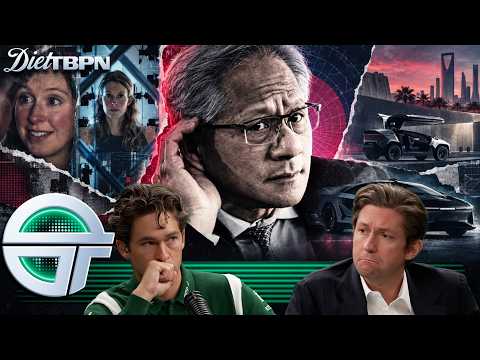
Jensen Wong, CEO of Nvidia, engaged in a challenging dialogue with journalist Ezra Klein, addressing critical topics such as AI safety, open-source questions, and the implications of AI on various sectors. Wong's role as a significant player in AI and his influence on the industry were highlighted.
- Jensen Wong is a pivotal figure in the AI landscape, often referred to as the 'central bank of artificial intelligence.'
- His conversation with Ezra Klein covered pressing issues like AI safety and the ethical implications of technology.
- Wong's ability to handle tough questions showcases his commitment to transparency in the tech industry.
The Need for AI Regulation
What are the potential risks associated with AI experiments?
The discussion emphasizes the importance of regulating AI experiments to prevent potential harm. If AI developers cannot ensure safety, it may be necessary to shut down labs. The conversation draws parallels to self-driving car regulations and highlights the need for legal frameworks to address AI-related damages.
- If AI experiments pose uncontrollable risks, shutting down labs may be necessary.
- There is a potential liability gap between self-driving cars and AI systems causing economic harm.
- Regulation could play a crucial role in managing the risks associated with AI technologies.
Technology's Impact on the Labor Market
How does technology historically affect the labor market?
The section uses an allegory involving a jar filled with rocks to illustrate how technology can fill gaps in the labor market. As new technologies emerge, they can create new opportunities, but they also require adaptation from the workforce.
- The allegory of the jar illustrates how new technologies can fill existing gaps in the labor market.
- Historically, technology has transformed job roles and created new opportunities.
- Adaptation to technological changes is essential for the workforce to thrive.
Cultural Commentary on Social Media
What does the use of social media during serious events signify?
The conversation critiques the juxtaposition of serious political discussions with the casual use of social media, exemplified by a leader using Instagram during a UN assembly. This reflects broader cultural trends and the impact of social media on political engagement.
- The use of social media during serious political events highlights a cultural shift in engagement.
- Leaders may use social media to gauge public opinion or to communicate informally.
- This behavior raises questions about the seriousness of political discourse in the digital age.
Innovations in Vehicle Design
What trends are emerging in vehicle design and technology?
The discussion focuses on the evolution of vehicle designs, particularly the new Prius models, emphasizing utility and performance. The conversation also hints at the excitement surrounding advancements in electric vehicle technology.
- New vehicle designs prioritize both utility and aesthetic appeal.
- The conversation reflects a growing interest in electric vehicles and their performance capabilities.
- Innovations in vehicle technology are reshaping consumer expectations and market trends.
Transcript
0:00 That's right. Get ready. >> TBPN Road to Christmas continues. 92 more days. Get ready. Nvidia CEO Jensen Wong went toe-to-toe with Ezra Klein on the New York Times podcast, The Ezra Klein Show. >> that's actually a crazy environment to go in. What >> as Jensen? I I just think he's brave. Ezra is a real journalist. >> It's like he's brave. He engaged with a real journalist. No, it's like it's like, you know, you have to imagine he was a bit traumatized after Dwar.
0:34 >> Okay. Yeah. >> Who who isn't, you know, I don't think of as as a journalist by any means, but he's obviously has very strong beliefs >> and and very Yeah. And and and gets to like the root question for a particular audience. Now, Doresh, although he was going super hard on the the open source question, on selling ships to China, on sort of AI safety and and roll out and like how the model how the AI race should go. Doresh is not the person to push push Jensen on like politics specifically, right? Like that's going to happen somewhere else. But yeah, it is it is a hot seat, but I think he did well. Two hours almost hanging out with Ezra Klein. there's some clips and I have some reactions and it's sort of interesting to dig into the mind of Jensen because he's simultaneously the biggest force in AI, the central bank of artificial intelligence according to the economist. He's the backs stop of all backs stops. He's backstopping everything from you know the biggest data centers in the world lending investment grade designation to the debt and the credit lines to like sort of acting as a soft landing for startups that get acquired at the application layer anywhere in the stack. he's been an acquirer that's sort of underwriting. If you're a VC and you and you did a deal at a billion dollars >> and you're kind of in trouble on it, >> there's a chance that you could get out because Jensen is willing to do a 10 billion$15 billion acquisition whereas like in the prior era, Apple had the money wouldn't do it. Google really didn't do that many deals that huge.
1:59 Facebook would do one big one every 5 10 years, but Jensen's been quick on it. And then he's also been investing directly in basically every lab and basically every AI project. So he's been an incredibly important force and yet he's now starting to stand alone in his sort of pdoom equals zero take which was very much the consensus in the technology community. >> Suck would like a word >> I think. Oh true true. Yeah, I think it still is the consensus in the business community, in the finance community.
2:30 Basically, anyone at the application layer is PDM0. Anyone deeper in the stack on the semiconductor side or the energy side, the buildout side, the neocloud side, they're all pretty much PDM0ero. But the labs and Jensen's been playing there, he's he's at that level. He's he's as important as a voice as as Dario, Sam, Elon. And so, to hear him not jump on the bandwagon when Elon, Sam, and Daario all agreed on pacing the frontier, he's saying, "No, we don't really need to pace the frontier." It's interesting to hear him, say this.
2:59 There's there's a couple clips. Let's play one, and then I I have sort of an allegory for where I think his position is. But let's play this. >> So, what I've been hearing from the labs, what they've been saying publicly is that they are facing a hard problem. >> Yeah. partially an engineering problem, partially an alignment problem, partially an operational excellence problem in Dareday's framing. And what they are worried about is that in competition with each other, in national competition with China, that they are being pushed to move too fast, that they all feel they're in a collective action dilemma. Now, watch you on the All-In podcast stage. Donald Trump, President Trump gave you a call there.
3:37 >> Oh no, this is not planned, but we know who it is. >> Oh no. >> >> Mr. President. >> Oh yes, sir. >> And you and and the president and the other members of the stage were very resistant to the idea any kind of regulation or collective action was needed >> and they're just playing right into the hands of a lot of people that don't want to see it happen. And that could be political people. It could also be China. And we're not going to let that happen. It's a it's a hoax. And >> you're right.
4:13 >> You come out as pro regulation. It's illegal to slow down. >> That's a form of regulation. Be like, I I think I think AI regulation is is incredibly important. We need accelerationist regulation. >> Really frustrate everyone. Yeah, it's interesting. Didn't he al didn't Jensen also do Jolen Kent on CBS just recently? I saw a clip from that. But very different clips going out. The one from Ezra Klein is talking about maybe we need to shut the labs down. a very you know in the weeds hot take about the current thing and the AI debate. I think the clip that I saw from CBS was talking about his leather jackets. Like I I I imagine that that that interview will be more substantive when it when it gets clipped properly, but it's funny that that's the one that made it out.
4:56 let's play the other clip from the the Midas project. >> That's a simple answer. if you're if you're going to build a car, a self-driving car, and let's say it's a robo taxi, and there's a really difficult condition. >> Mhm. >> And it just as an engineer, we just have no idea how to solve this problem because these cars are not programmed. They're trained. And so, we have no idea how to train these cars, and we have no idea how to align them to the safety standards that are expected on the road. And so, what's the answer? Don't ship it.
5:27 >> These products were unreleased. >> What's that? >> These products were unreleased. so now it's comes back to engineering problem again and so the one is one you have to root cause it second you have to you know think about what's the what you could have done what's the solution for it and then in the future you just you know improve your process so that you could you could avoid this from happening again I am fairly certain I am fairly certain they will say yes they need they know how to solve this problem and if if that's the case then that's the problem it's as simple as engineering and and now the alternative is that if They say the alternative which is there is no way to contain our experiments. There's just no way. When we test our AI models, it will get out and it will damage the world. Then I think the answer is we have to shut the labs down.
6:16 >> Yeah. I mean that that is kind of what happened with self-driving cars, you know, like they do before they ship them, they do test them on roads and they don't test them on open roads. They test them on closed courses before they move to open roads. they sort of have their own sandboxes, their own their own environments to test these in. I do wonder if there's a sort of a legislation or liability gap between the liability incurred by a self-driving car company who causes property damage from a car running into another car autonomously and an AI agent that hacks and defaces or causes some economic damage. I don't think there will be. I think the courts I if there was true economic harm like one model accidentally took down a payment system for an e-commerce website, I think it would be pretty easy to sue that company and say, "You caused me to lose this much revenue. You owe me." And the courts would say, "Sure." And even if the lab argued, hey, we didn't tell it to take down your your e-commerce system, your your payment rails, the judge and the courts would say, "Doesn't matter. Even if you expressed a duty of care, like you still have to pay in this in this scenario." But it is possible that there's a gap there and that's where regulation could fit in. It's interesting. He spent the first like 20 minutes sort of steelmanning the the the jobs question and talking about jobs because I think that's I think that's throwing a lot of people off like we we sort of moved past the job apocalypse SAS apocalypse narrative which was predicted from somewhat of the same community into actual apocalypse and people are like whoa whoa like you were wrong about the SAS apocalypse like Salesforce is still doing fine like Slack still exists s and you were wrong about the job apocalypse like the unemployment rate is like 3% for American white collar workers. You were predicting like 50% or 30% something like 10% overall. And even even in the Philippines, I mean, I remember seeing I think it was Tristan Harris on Modern Wisdom, like he he's now sounding the alarm bells about existential risk, but he was saying something like like the Philippines would see like, you know, 90% of their economy go away. because they're they're heavily dependent on call centers. Call centers are actually only like three and a half% of the Philippines job market. they do in fact make things and have agriculture and all sorts of other all all sorts of other economic endeavors going on in the country. But even in the even in the Philippines, like the unemployment rate is right now in the Philippines, it's 4.9% in June of 2026. Now, it went up to 6% in August, but it still feels like the AI effect is pretty minimal. And most people were predicting that like the offshore call centers would be affected first. And that one seems like like maybe we're there, but it's just taking so much longer that everyone feels very vindicated in saying like, "Hey, let's watch that play out first before we move on to the the x-risk discourse potentially." I think that's a lot of what >> Well, and now with with Muse floating the idea of having human in the loop on personal agents, you can imagine those people would be former like >> Oh, they could just move over. Yeah.
9:29 Yeah. Potentially. >> but yeah, I mean it's all the same you know in the limit in the exponential. Add add five orders of magnitude maybe things look very different. but Jensen just rejects that. I mean he's an is he an AI as a normal technology guy. I saw I saw Joe Weisenthal posting about this. He said that he had to he had to disagregate. Where is it? He posts a lot. So I got to dig it up man. He posts a lot. He said the splintering around AI discourse is really a sight to behold. Was in a conversation yesterday with some folks during which it became necessary to distinguish the people who see AI as normal technology from the AI as normal technology people because there is a group of people that have that have rallied around a particular thesis which is AI as a normal tech AI as normal technology and that's different than people that are just like casually into that idea because it's actually like a different ecosystem. Anyway, it does feel like Jensen is is AI is normal technology. I mean, he's certainly seen plenty of technology revolutions come and go and he's been in this industry for what 30 odd years. I I think of the jobs on the jobs question. We were talking to Joe Wthal about this when he was in the studio. like where is the where is the economic impact of the internet? Like why can't you see you know a kink in the graph of really any economic data when like the internet takes off? It's not like productivity went way up. There's nothing really to grab on to. You actually go back to 1970 if you want to see like the real the real trends shift. And there are other, you know, trade and globalization moves that have had bigger economic impacts in the internet, which is crazy to think because so much wealth was created, so many companies were created, and it did change the world, like the day-to-day experience, but it didn't actually show up that much in the economic data. And that's what we're seeing now where jobs are sort of changing, tasks are changing, but we're not seeing dramatically different economic statistics like the 10 years at all-time highs or not all-time highs, but 19-year highs. You said five over 5%. And yet everyone is sort of a consensus agrees that that's because of the war. Are are you rooting for people that are buying the bonds and getting higher yields now?
11:45 >> I guess. >> Okay. >> I don't know. Sometimes big a record-breaking number. It's just exciting to you. Just general just real golden retriever mind. >> You understand the implications and and you >> you don't even think about the implications potentially. You're just cheering for a bigger number. Yeah. It's like now it begins with a five. Great. I like it's a higher number. >> There's an interesting allegory around the effect that technology has on the labor market, at least historically. Now things might change, but Steven Kovi highlighted this in First Things First, his book on time management. he said, "I attended a seminar once where the instructor was lecturing on time. At one point, he said, "Okay, it's time for a quiz." He reached under the table and pulled out a wide-mouth gallon jar. He set it on the table next to a platter with some fist-sized rocks. "How many of these rocks do you think I can get in the jar?" he asked. After everyone made their guesses, he said, "Okay, let's find out." He set one rock in the jar, then another, then another. I don't remember how many he got in, but he got the jar full. Then he asked, "Is that jar full?" Everyone looked at the rocks and said, "Yes." Then he said, "" He reached under the table and pulled out a bucket of gravel. He dumped some gravel in and shook the jar and the gravel went in all the little spaces left by the big rocks. Then he grinned and said once more, "Is the jar full?" By this time, people were in on him. They said, "Probably not. There's something else coming." " good," he said, and he reached under the table and brought out a bucket of sand. He started dumping the sand in, and it went in all the little spaces left by the rocks in the gravel.
13:04 "Once more," he said. "Is the jar full?" "No, everyone roars." He said, "Good." And he grabbed a picture of water and began to pour. and the water went in between the rocks and the sand and filled up. And somebody said, "Well, there are gaps and if you really work at it, you can always fit more into your life." He said, "No, that's not the point. The point is this. If you hadn't put these big rocks in first, would you have ever gotten any of them in?" And so the effect that Jensen's describing is that like at one point in human history, there were maybe only two jobs, hunting and gathering, something along those lines. Then we invent agriculture, that industrialization. At one point, everyone's farming. Now very few people are farming, but we still have more food than ever.
13:41 >> Yeah, there might have been a third job singing. I could see Tyler while everyone else was hunting and gathering just kind of jestering and just singing for all the hunters and all the gatherers kind of like providing ambient entertainment. But >> anyways, but it does feel like that that was the effect that the internet had. like it didn't dramatically reshape the labor force, but like obviously like lawyers use the internet to communicate and now like you you see the AI agents thing. It's like every every little document will go through an AI pass.
14:13 Every little interaction in the economy gets this like small effect at least right now. And and that's what Jensen's like living in. He's like I have a real business to run in the real world today. So he says he's worried about but I or he said he says he thinks about the future but really he's clearly very much living in the present. >> It's it's interesting to think about how much like technologydriven efficiency gains just get effectively wasted.
14:39 >> So I would imagine today it's faster to clo to to like close a venture round postterm sheet than it was >> in like the 90s, right? You would think so with the with the internet and and AI and all these different things, but I bet you that it's not as maybe as fast as efficient as you might think if we can now generate docs on the fly and you can easily go back and forth on red lines. Yeah.
15:04 >> Right. Like >> maybe it went from 6 weeks to 4 weeks, but theoretically it could have gone from 6 weeks down to 5 days, you know? And I think you're just seeing that even with AI now, people can do their jobs faster. And you've seen some management teams tell their employees, hey, I know you're getting a lot more efficiency. That doesn't mean you should just do the same. I want you to do more work and the same amount of time. Don't do the same amount of work with less time, but you're just sort of like wasting a bunch of time.
15:32 >> Yeah, it seems like no one's really saving time. Everyone's just doing more stuff. There is an interesting like like correlary of that which is potentially these technologies they don't necessarily change the growth curve but they are responsible for the growth like if you don't have the internet speeding up commerce from a week to get an item to two days that is actually the source of the 2% growth and without the technology you have no growth and so there there is there is another side of an argument of course there's like population growth and a whole bunch of other things that are affecting economic growth broadly. But there is a there is a world where yes, if you if you're compressing the timeline on everything, you're building the house faster, you're deciding to buy the house faster, you're exchanging everything faster as things move quicker. Even if you're not doing entirely like net new jobs, just the fact that you're doing them faster, you do more of them, and that's what actually creates the economic growth. I don't know. We'll figure it out. We'll get to the bottom of it tomorrow.
16:28 Claude Opus 5.5 drew every frame in this animation in JavaScript. They went all in on LLMs, on the big model, on the great model, and now it can do basically video generation, but do it in JavaScript, do it in Blender, do it in Python, do it in SVG. and you can just hill climb on SVG. And people are sharing a bunch of cool demos and good for launch. People are sick of benchmarks. People want to see visual stuff. Entertain me, make a song.
16:58 and yeah. >> Yeah, really, really cool style. Yeah, >> I'm already sort of mourning it just because this is probably going to be everywhere on the internet like by next week. >> But for now, a good format, I would, you know, if you see maybe a co-orker doom scrolling, send them a custom animation like this saying, "Hey, stop doom scrolling." >> Yeah. >> Do some work. you could maybe send this to the I think the the president of Syria.
17:25 >> Oh, yeah. He was disgusting. >> Caught caught using Instagram reels at the UN. >> So, >> naughty naughty as they say. >> anyway, very very cool. >> Yeah. Mike Bird says, "Total cultural victory. Man has yet to create an ideology that can compete with short form video-based social media scrolling. Ahmed al-Shara spotted scrolling and sending Instagram reels during UN General Assembly with the translator headphone on. He's scrolling. Hey, you know, you got to keep those you got to keep those group chats going. You got to keep you got to keep the content flowing. You don't want to be falling off. He might be sending him to other world leaders. He might be recontextualizing what's happening at the UN with a funny reel. The person might be talking about some peace plan and he might be sharing some hilarious Instagram reel that makes fun of that to let his friends know that he's not buying it. Something like that.
18:23 >> He also could be just his feed could be so dialed into just local political content. He could be mainlining public opinion and trying to understand what's important to voters heading into the next election. Yeah. You know. >> Yeah. Yeah. there there's one more there's one more Claude post I want I want to show the GIF animated in Python and rendered in Blender and at this point you know I posted that AI video of you and people were asking like what was the workflow and I was like it's you just ask it to do exactly what you want it to do and you don't you you actually don't even need to know the word blender like you can just >> you can even misspell every word >> and it will still >> No, you just open up the voice mode and I just talk and I'm like you can you can even do multiple things now. So, I was like I have this children's story that I made up for my 5-year-old and and I was like in one shot I was like take this story, turn it into a series of stories, then a series of children's books, go find a place that can print the children's books, illustrate it, turn it into short form video, and also make a video game. And it did it all. It was just like spawning sub agents to do it. And you can just do it all in one prompt. And I didn't need to be like, well, I want you to use JavaScript for this and Blender for that. You can just ask for what you want and basically get it from all the models right now. you have an interesting thesis. You're you're black pillar on the on the application layer now. You think the models are getting so good that people are just going to use the AI tools. Does this change anything for you? Because I see this and like I still feel like these are these are great.
20:02 There's probably a couple revisions. When I do the prompts, I'm like I I still sort of filter and review. I'll usually get like 20 outputs, pick the best one. I actually talked to an AI video founder yesterday who's doing like AI movie production and whatnot. And it was absolutely printing using all the all the latest models. The business is doing fantastically. He's hiring four video editors like a week or a day or something like he's hiring lots of people because there still is a lot of it's not even prompt engineering.
20:32 It's more like processing the output, curatorial work, understanding what is the right thing to fit together. And I think that that mainly comes into picture when you're looking at something that's a bigger project. You want to go from a one minute thing that might have some consistency, but when you go to two hours, the consistency becomes much more important. the the style, the pacing, matching everything matters more. I don't know. I I I I think we might be gearing up for another application layer versus versus model layer debate. We we saw this with the Harvey discourse, but then all the models got cheaper since that released and so you think better back up. Yeah. But of course if the models can do it at at a base level, there is a world where every company just has, you know, a relationship with a foundation lab. So, I don't know.
21:22 We'll see. what else? >> EV news. >> EV news >> from from Dave over on X. He flagged this. We are one week out from the Roadster reveal. >> Yeah. >> And I'm >> Did you listen to the end of the show when we b when you bounced? >> We went deep on the Roadster. We got a scoop. We got a scoop from our guest who was next to a Tesla employee on a plane and was like pulling facts about him just to go leak it on TVPN. Yeah. Crazy.
21:48 >> No. No. I mean, I I don't know how real this was because the guy could have been messing with them. I don't know. It's It's all rumor mill stuff, but the guy was basically like, "Yeah, I was next to a Tesla employee and he was saying that the jets are not to make it fly. It's actually for downforce. It's going to suck it to the ground and it's going to go 0 to 60 in 1 second." Very cool prediction. Very different from what we were saying. So, who had the lowest?
22:09 >> Yeah. The only thing is it doesn't it doesn't track >> the lowest number. So, you're closer to win if that's what happened. Well, it doesn't track with what Elon was saying on Rogan, which is that he should be able to leave the ground fly. >> And that's what I was getting at. It was like if you can have a fan or a jet that sucks you to the ground for one purpose, you can probably reverse those and boost up at least for a little bit for a little jump. But we'll see. We're counting it down.
22:32 >> Well, in other news, the road to Christmas, Road to Roadster, but we're still keeping an eye on it. >> Saudi Arabia is aiming to disrupt the auto industry with these radical EVs. They're wedges. >> They have a brand called CER Exobot. It's coming as a sedan and an SUV. >> It looks like sort of a futuristic like Lamborghini option. >> Yeah, there's a little bit of Huracan wedge in there. Little Cyber Truck in there. >> is that >> this is Saudi Arabia's first true production car brand. So there's such there's such a hard trade-off between the wedge looks great, but it's a terrible use of space. The the optimal use of space is like the new Whimo vehicle, which is basically just a box or like a bus.
23:17 >> You care you just care about utility. Now, >> I'm just saying it's a trade-off. Like the more wedgie you get, the less utilitarian the the vehicle space is. of course, you need to have >> This one looks like somebody broke up with the new generation of Prius. Now they've leveled up again, right? That was the that was the original like read on the Prius is like, "Who hurt you?" You know, cuz the the new Prius is looking >> pretty pretty stanced, you know? It's a level up. Yeah.
23:46 >> But this is a level up. >> The Prime Prius Prime looks pretty good. >> Yeah, they've done a good job. >> Anyways, >> 850 horsepower tri motor electric powertrain. >> this thing looks insane. >> It does look insane. It it I wonder where they'll hit in terms of price. That'll be that'll be interesting to see. should we watch the trailer? The official trailer where you can see everything. We watched the preview clip. Now we get the full trailer. And I want you to pay attention to the quotes because the reviewers were floored by this movie.
24:18 >> Feel you did nothing wrong. >> I did not. >> So where did things get lost? Like how are you where you are right now? >> I I wish I knew, you know? I I don't know. I don't I don't feel like I understand that. >> So, I know you guys invited me to to stay here. Does any part of you worry about me being here 24/7? >> I don't think so.
24:50 >> Okay. So, pause. 24/7. He's actually, I think, >> living with Elizabeth Holmes. And it's crazy because only Nathan Fielder would even think to throw out an idea of, "Hey, would you mind if I moved into your house before you go to prison >> and documented the entire process?" Because you would think that there would be no circumstances where where that would be a good idea. >> I think it's just pure upside. There's there's very little downside to to doing this. I mean, you're going to prison.
25:25 Like worst case you look worse, but you're in prison either way. Like yeah, the only thing you the only way you can go is up and actually endear some people to you, which is the attempt. We'll see how it lands. Let's keep watching. >> That makes you look bad. >> I think this is the moment in time. >> No other film I've ever experienced >> this story before I'm gone. I fell in love in that first conversation >> before or after that she revealed she was the founder of Theronos.
26:02 >> Probably before. >> I mean, weren't you worried she was sort of scamming you? >> 100%. But what did she have to gain from me? >> Well, isn't your family rich? >> Yeah, I think that there's like a lot of different levels of wealth. >> Come jump in with me. >> You asking me to go? Yeah. >> You've never What is this for? Why are they doing a 3D scanner for him? >> That's just something Nathan would do.
26:31 Do you mind if we scan of your body? >> I saw that. I was like, "This has nothing to do with Theos or going to prison. I know what you can." No, you don't. I may think about this movie for the rest of my life. That is a crazy quote.
27:02 >> Be okay with >> it. Feels like there's going to be some twist or something. Something very interesting. But I'm I'm hooked. >> No, I think the I think the whole thing is going to make the viewer feel like they're in a really bad acid trip. >> Like all these scenes >> Yeah. the pauses, the silence, the way the lighting, the the sort of sense of impending like doom, right? Because she's going to she's about to go to prison.
27:28 >> Yeah. >> The kids, you know, being present in these scenes. Like the whole thing is just like incredibly >> I dark and weird. >> I don't know. feel like it has to break expectations in some way because the average viewer is going to sit down and believe that she is guilty and that she lied and is like a sociopath because like that's sort of her brand, right? Is that like she never admitted any guilt and was guilty in the John Ker retelling of the story and obviously the court findings. And so for it to be like that, I feel like there has to be some twist or something. I I would be shocked if it's just like, yep, like she defrauded investors and didn't really build a good blood testing device and now she's in jail. Like the end. Like would that be would that be >> I don't think it would get those quotes.
28:17 >> I don't think it would get those quotes. So I feel like there's going to be something crazy that happens. Some like complete twist like maybe she's innocent or something or or maybe she's like I don't know guilty of something else. There's a the question is how does the who's who's the guy that that she she would call Tiger? >> Oh yeah. I actually don't know. During the court case there was a question about his responsibility.
28:39 Should he bear more of the responsibility? And so but he doesn't seem to be in the trailer. So I don't know. because one one weird like twist would be if you came away being like that guy's more responsible than I thought, you know. But >> anyway, >> let's hit it. throwing flash. >> Well, thank you for tuning in to TBNN. We'll see you tomorrow. Goodbye.
Summary
- Jensen Huang is a significant figure in AI, often referred to as the "central bank of artificial intelligence."
- He advocates for a cautious approach to AI development, suggesting that labs may need to be shut down if they cannot ensure safety.
- Huang believes that the current AI race is creating a collective action dilemma among labs, pushing them to move too fast.
- He argues that the economic impact of AI is not as severe as predicted, with unemployment rates remaining low.
- Huang's views contrast with other tech leaders who support a more aggressive pace in AI development.
- The discussion touches on the historical context of technology's impact on labor markets, using the analogy of filling a jar with rocks, gravel, sand, and water.
- There is skepticism about whether AI will lead to significant job losses, as many predicted.
- Huang emphasizes the need for a balance between innovation and safety in the AI landscape.
Questions Answered
What insights can we gain from Jensen Wong's discussion with Ezra Klein?
Jensen Wong, CEO of Nvidia, engaged in a challenging dialogue with journalist Ezra Klein, addressing critical topics such as AI safety, open-source questions, and the implications of AI on various sectors. Wong's role as a significant player in AI and his influence on the industry were highlighted.
What are the potential risks associated with AI experiments?
The discussion emphasizes the importance of regulating AI experiments to prevent potential harm. If AI developers cannot ensure safety, it may be necessary to shut down labs. The conversation draws parallels to self-driving car regulations and highlights the need for legal frameworks to address AI-related damages.
How does technology historically affect the labor market?
The section uses an allegory involving a jar filled with rocks to illustrate how technology can fill gaps in the labor market. As new technologies emerge, they can create new opportunities, but they also require adaptation from the workforce.
What does the use of social media during serious events signify?
The conversation critiques the juxtaposition of serious political discussions with the casual use of social media, exemplified by a leader using Instagram during a UN assembly. This reflects broader cultural trends and the impact of social media on political engagement.
What trends are emerging in vehicle design and technology?
The discussion focuses on the evolution of vehicle designs, particularly the new Prius models, emphasizing utility and performance. The conversation also hints at the excitement surrounding advancements in electric vehicle technology.