Transcript
0:03 Okay, then started the puzzle.
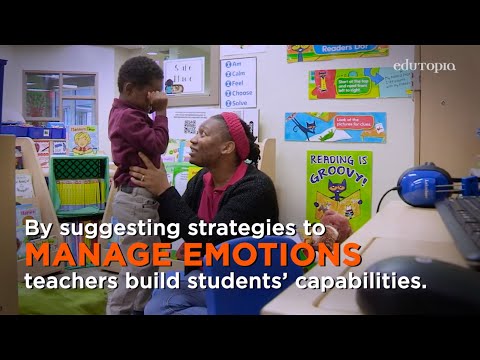
0:05 Because our teachers teach self regulation, our students are better able to manage their feelings.
0:10 That's a smile.
0:12 No, that's angry.
0:14 They are better able to verbalize their emotions and what they're going through, how
0:18 those make you feel.
0:19 They're ready to speak about their problems and not react to their problems. And by doing that, they're ready to go to that next level. If you looked into a typical classroom here at Educare, you're like, oh, all they're doing is just playing all day. They just like they're having fun. But there's intentionality behind everything. One of the things that teachers focus on is self regulation. I would say that skill set of self regulation is actually the most important because you're setting that child up for success.
0:53 We've realized that if a child is not able to actually focus and manage and cope, then they're not learning. So Conscious discipline is our research based social emotional program that we use in the classrooms. Conscious discipline isn't about managing behaviors. It's about giving the students the tools to direct it themselves.
1:12 I commit to use my big voice. I commit to listen to my friends big voices. I commit to using kind words. I commit to keep my classroom safe.
1:22 Conscious discipline gives the students and the teachers the language to work through things. It's about using your words in a positive way.
1:30 Eli's trying to tell you something. Can you listen to Eli's words? She's using her big voice.
1:40 You can handle this.
1:43 You are safe.
1:44 You are loved. You can handle this. In previous classrooms that I've had, we didn't give them the means to articulate their feelings. Can you show me how you're feeling right now? That's angry and sad and happy and silly and tired and worried, surprised and scared and cranky. Which one are you feeling right now? If you don't give them the language that they need, they can't communicate what their needs are.
2:15 Okay, but when we give them those big words, they're like, oh, I'm not scared, I'm not mad, but I'm frustrated. And they know there's nuances to how we feel and what we think. We're always telling them, use your words and not your hands, but what words?
2:45 Or I don't like when you grab my hood.
2:50 When the kids are able to say, I don't like it when you push me, will you please stop? The other child knows what they did. And then you have a relationship building moment instead of a tension moment. If I do what I'm supposed to do when they're transitioning from early childhood to kindergarten. When they're in second grade, they'll be able to use these skills. And then they can share them with their classmates in third grade. 4.
3:20 Fourth grade. You won't have the disruption. You can just teach.
3:25 Remember, it's my job to keep you safe. And it's your job. What's your job? To stay that way. High five,
3:48 Sam.
Summary
- Self-regulation is crucial for children's success in learning and emotional management.
- Educators at Educare intentionally integrate play with lessons on emotional skills.
- Conscious Discipline is a research-based program that empowers students to manage their own behaviors.
- Providing children with the language to express their feelings helps them communicate their needs effectively.
- Teaching children to articulate emotions fosters relationship-building and reduces classroom disruptions.
- Skills learned in early childhood can carry over into later grades, enhancing social interactions.
- The approach encourages using words instead of actions to resolve conflicts.