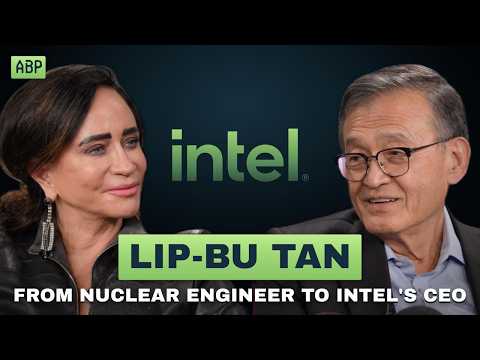
Section Insights
Introduction to Lit Buu
What makes Lit Buu a respected leader?
Lit Buu is known for his humility, ability to earn trust, and effective listening skills. His career spans significant roles, including CEO of Intel and Cadence Design Systems, where he led transformative changes.
- Lit Buu's leadership style emphasizes humility and trust.
- He has a rich history in venture capital and technology leadership.
- His journey includes notable achievements in transforming companies.
Family Dynamics and Personal Growth
What surprising insights do Lit Buu's siblings have about him?
Lit Buu's siblings initially viewed him as a 'naughty boy' due to the freedom he received from their mother. Over time, they have come to respect him as he has achieved success in his career, despite not completing his PhD.
- Family perceptions can change over time with personal achievements.
- Lit Buu's upbringing included a unique dynamic with his siblings.
- He values independence and has built strong family relationships.
Judgment in Leadership
How does Lit Buu assess people in his professional life?
Lit Buu focuses on understanding people's strengths and weaknesses, emphasizing the importance of honesty and teamwork. He has developed strong judgment skills over time, particularly in evaluating startups and their potential.
- Effective leadership requires keen judgment of people's capabilities.
- Identifying strengths and weaknesses is crucial for team success.
- Lit Buu prioritizes market potential and real problem-solving in investments.
Taking on the CEO Role at Intel
What motivated Lit Buu to accept the CEO position at Intel?
Lit Buu was inspired by a friend's encouragement to save Intel, recognizing its significance in the industry and the U.S. economy. He also had to consider personal factors, including family time, before making the decision.
- Personal relationships can significantly influence career decisions.
- Lit Buu felt a sense of responsibility towards Intel's legacy.
- Balancing professional ambitions with family commitments is essential.
The Importance of Partnerships
Why does Lit Buu value partnerships in business?
Lit Buu believes in collaboration over competition, viewing partnerships as essential for success. He emphasizes that no one can achieve everything alone and has successfully formed alliances even with perceived competitors.
- Collaboration is key to overcoming challenges in business.
- Lit Buu's approach fosters strong relationships across the industry.
- He sees potential in partnerships that others might overlook.
Transcript
0:00 Many great leaders command attention. Lit Buu earns trust. He leads with humility. He listens more than he speaks. And when he does speak, people listen. Most people know Lit Bhutan today as the CEO of Intel, a company whose innovations helped create the modern computing era and whose future has become one of the most important stories in technology. But I think of Intel as one of the chapters of Lip Buu's storyried career. Long before Intel, Lipbu built an extraordinary career as one of Silicon Valley's most respected venture capitalists through Walden International, investing in entrepreneurs and technologies that would transform industries. Later, as the CEO of Cadence Design Systems, he led one of the most remarkable turnarounds in our industry, transforming the company into a global leader in electronic design automation and helping enable the AI revolution we're experiencing today. I've had the privilege of knowing Litbu for many years through the global semiconductor alliance where he served on our board of directors during his time at Cadence and now serves again today as the CEO of Intel. I don't want to spend our time just talking about Intel. I want to understand the journey that shaped the man who was ultimately asked to lead one of the most iconic companies in the world. This is a bit personal with Jody.
1:22 Liu, welcome to a bit personal with Jody. I'm so honored to have you as my first guest of season two. >> Thank you. >> Yeah, it's going to be fun. I promise it won't be too painful. >> Okay, >> so you know, I've had the opportunity of knowing you for many years. I was trying to figure out exactly when we met, but it's been at least 20 years, maybe even longer, sad to say. >> I think it's longer. and I've had the opportunity to observe you in the boardroom meetings with other CEOs as well as several one-on- ones.
2:01 And I have a few observations that I would like you to comment on. So, so the first one is I mean you're a very gentle person, both a gentle man and a gentle person. you're quiet and you're extraordinarily reserved and at the same time you're this big risk taker. You're out there funding companies, running businesses, making a lot of really really tough decisions. So tell me about that side of LBU that I don't get to see. The the competitor, the tough boss, the ruthless operator.
2:36 Where is that Libu? >> I have a twin brother. I'm just joking. >> Navy. Well, I think you know it's just my natural personality you know brought up in Asia and you know tend to be more quiet and then only when I need to speak then I speak and I you know make my point if I feel strongly and you know I just don't need to you know just repeat or kind of you know show off and but more quiet and then if I see something that I can add value then I will speak out. And then in term of in business sometime you need to have some tough decision you have to make and you have choices you have to do and so you just have to go with your gut and then with your experience and then you just to address it and in a respectful way and so even if I need to fire people you know in a lot of time in the being a VC you have to replace some of the team members and you do treat with respect and with caring and so some of the people I had to remove are still friend and in fact they starting to get back to me to be an investor and because they at least they respect my view and I explain why and so they understood the situation so I think you have to deal people with respect and then and then with you know treat people with you know it's very important you know each one have we all have mistake We all have shortcoming. but just do the right thing.
4:18 >> So you do you ever get angry? Does anyone ever see that side of you? >> I seldom get angry. But I think if something that >> you know people are betray or dishonest and I just have to correct that. >> Okay. And then you know I just need to correct the the facts and then it's very important to address that and not not in the very you know the kind of offensive way but at least state the facts >> okay >> and then at least the other side understanding you know if there's any misunderstanding we just have to address it in the respectful way and be honest that's the best way. Okay. So, you're and this again, I'm sure this is just also part of your personality, but you're very chill, very calm, and you almost always say yes. And maybe at least to me, you always say yes.
5:13 >> You're a good friend, so I had to say yes to you. >> And so, I'm just thinking though that, you know, you have to be one of the busiest guys in Silicon Valley. How is it that you get so much out of 24 hours in a day? What's your secret? >> Good question. I think you know my philosophy you know you have breakfast, lunch and dinner and and then also you have 24 hours and the god is fair and then give everybody the same amount.
5:42 I wish I have more 48 hours a day >> and but you just had to squeeze in to become more effective and one thing good is I I I have a very you know in term of technology I have a very fast switch. >> Okay. I can switch one topic to the other topic very fast. >> Okay. >> And even my wife was surprised sometime call coming in at two in the morning. I respond right away to the to the issue.
6:09 And it just you can shift from one subject to another subject and very thoroughly. And that's kind of my training. >> Okay. >> And I think in some ways is u is a childhood day. I'm the youngest >> you know my mom you know my brother and sister are very disciplined they had to perform the best you know they have to get all the awards and then they have to you know the violin or piano to become performing you know meanwhile have to keep the academic in all A's and then the youngest one you can get away with it. Oh, okay.
6:48 >> And my mom is kind of tired. He let me do whatever I want. And in some ways kind of I built some hobby and like for example many people doesn't know I have more than 100 fighting fish. >> Wow. And then I rank them every day and then so in the way you kind of each one have a name and then and then keep growing and changing and so in the way you know my mind I can can do thing very fast and from one thing to the others >> okay >> and I'm very good with numbers and people just can't lie with the number with me and so I think with that is kind of my training and so that you know I thanks my mom to give me the freedom to do it. Okay. So, let's let's talk about that because before you were the lit bhutan of the CEO of Intel or before Cadence or before any of your VC days, you were just a little boy in Malaysia.
7:45 So, let's go back to that time period in your life. And so, what kind of memories can you conjure up about what the Tan household was like? I mean, was what were the smells? Were there music playing in the background? Was your mom home when you came home from school? Tell us what it was like. >> Well, I have one older brothers and three older sister. I'm the youngest. >> Okay. >> And and they are very high achiever.
8:13 And then my brother is a rose scholar and a heart surgeon and the PhD and he do artificial heart and my sister is professor at Harvard. So they are all very achiever achievement and one not beside just academic he's a you know is a concert performer and so in some way I grown up in that the youngest I think you just just do what you like to do and so you don't have to compete with them so in some way I feel very comfortable to be the underdog and then be the youngest and then the naughty one that they all call me and so in some way you know it's very comfortable for me but it's a lot of pressure and to perform and and my mom is very strict like tiger mom even I didn't finish my PhD he sent my brother to check me out and why is he not finished a PhD and so in a way it's kind of a it's a nice family and we are very competitive and meanwhile some of us are very close to each other >> so your parents must have set the expectations very high I mean How people want to know the secret to your mom's success in raising such amazing children.
9:29 >> Yes, she is very disciplined and and then he make make sure that we finish all our plates empty before you can leave the table. So I still have that kind of a discipline and so I think you know it it's good to have that kind of background that is a very disciplined. So we kind of have that culture of >> you know do thing right and then focus on what you assign you finish before you go to next things and so focus and the discipline and determinations of getting things done is part of our culture.
10:02 >> Okay. So it must have been a very musical family if you have performers. So was there always music playing in your house? >> Yes. And you know sometime you know I still initially I was a little bit annoyed you know when you try to do homework >> and then my sister playing piano and somehow always stuck in that particular notes and then the other sister is singing opera you know singing and then it's just a lot of music and then in some way I kind of missing that I wish I finished my piano lesson but I was so interested in spider in fishing and basketball volleyball valable >> with my hobby and my mom let me do that and so in some way I'm very grateful for that freedom >> and then meanwhile you know music become very important in our life and that's why even though I cannot play and I on the board of San Francisco opera for many years and we are still a big fan of opera okay >> and then and music and then so music is part of our life.
11:06 >> So are all of your siblings now in the US? one is in Cambridge, UK >> and then the others all in US. Yes. >> Okay. So was it always the goal for for your mother to have you all come to the US or to to leave Malaysia? >> No, I think it just encouraged us to pursue our interest. Okay. especially his educations and she's very few very strong and then so each one of us pursue our interest and then you know my brother originate physics then he enrolled to become a heart specialist and then heart surgeon so we each one pursue our own different things >> okay >> and then I decided not to be under my older brother's you know shadow and then sometime is in the in the college my my professor the valuable you're great >> and but your brother is better and so I don't like to stay in that path of always compared to my brother so I decided not to go to UK I went to US >> and then I want to do something completely different that's why I pursue nuclear engineering and then I thought energy is bigger problem solving a problem and then rather than follow him on the medical field and so my older sister also move into medical marine biologies and so we all pick different >> okay >> area that we can really strong and my the sister that closest to me you know she's languages linguistic he can speak fluent 15 languages >> wow >> and it's very amazing he's closest to me and so I think age wise and also hobbywise and so we kind of we all find our own way and then quite independent >> so what what would your sibling iblings tell me that I would be surprised about you.
13:02 >> Well, I think initially they think that mom give me so much freedom. So this one is this one is a naughty boy. Now when they were so young they really like me and but later on they felt that you know this boy is a naughty boy and mom gave him so much freedom and but over time and we become you know more respectful and then usually in Chinese community the older sibling like brother and sister they take care of the grand father and mother when they get old >> okay >> and now that I take care >> even though I'm the youngest So in some way I think they they didn't expect me and I didn't finish my PhD and they thought that you going to be just another goof goofing off kids and but surprised them I'm doing quite well in my area and then they starting to become much closer to me and be respectful of me.
14:01 >> Did your did you have your parents move over here? Yes. To live with you? >> I I invite them to come over. They they join me. >> Okay. turned out to be wonderful for our grandkids. >> Okay. Yes, I bet. So, tell me about leaving Malaysia. So, you were 19, you left to come to America. It sounds like maybe your siblings maybe had already, you know, paved the the way for you. >> but that it must have been a scary time or was it exciting? I mean, you even got more freedom if you could come over to America and leave home. So, what was that journey like? In some way it's not that difficult because my brother went to to Cambridge, London and then my three sister they all came to us and so it's kind of natural you know the youngest one also come and follow them and then in some way I applying for MIT I apply Stanford Berkeley MIT in a few school surprisingly Berkeley and Stanford they turn me down >> okay >> but MIT accept me and in fact my sister actually helped and the brother-in-law helped me to write my essay and then and then do all the application for me and so in some way being younger sometime you know older brother and sister they like to have you okay >> come along and so I'm turned out to be very lucky to able to come here and to me it's very exciting it's natural because they all come up here either here or Lond or or UK so it's kind it's kind of natural I to do that rather than stay in Singapore and I thought the energy is a bigger challenge so I decided to even though I have a offer to double E but I thought energy is a problem and I think I'm 30 years ahead of schedule now energy is a big problem and so I thought that nuclear engineering is a way to go and so I you know pick MIT for my nuclear engine graduate school >> you know I remember when I found out that you were a nuclear engineer here.
16:05 It was in 2011 at a GSA board meeting >> and the Japan earthquake had just happened >> and there were obviously damages to some of their nuclear facilities and we were discussing it in the board meeting. You said let me let me tell you what I know because I'm a nuclear engineer and I was like of course he's a nuclear engineer. It's like, you know, did you do this in your spare time almost? >> In fact, MIT tried to ask me because I'm on their advisory board and CEO advisory board. They ask me, I think you finish all the courses. Why don't you just come and do pick a thesis, we finish it up so that you can get it done. I told him that I'm too old for that. And so they just say, well, in that case, we get you to be on the advisory board and helping us. Morgan Stanley celebrated its 90th anniversary last year and its tech investment banking team has prided itself in working with the most innovative entrepreneurs and leadership companies for decades.
17:05 During that time, they've led IPOs for hundreds of tech companies including Apple and ARM, Astera Labs, Broadcom, Cisco, Facebook, Google, Nvidia, Salesforce, and Uber. In addition, they've worked as a trusted advisor and executed thousands of M&A and transactions for some of the industry's most defining deals in technology. Throughout the years, Morgan Stanley's tech investment banking team success has been achieved by dedication, consistency, and a northstar purpose of helping its clients maximize their opportunities and overcome their challenges. Now, let's get back to the episode. So how does a nuclear engineer get into semiconductors?
17:53 >> It's very interesting to be candid with you because my mom and dad sent my brother and sister to the English stream and my mother decided you know for the youngest one they should learn Mandarin >> and so I was in the tiny school. So he she always regrets that well sorry that I your English is not that good compared to your brother and sister and but I said no and it turned out that it's very helpful for me to do business in Asia >> in Singapore in Taiwan in China and so always a handicap because of my lang language to be candid with you the first master is MIT I don't think I going to make it >> because the professor have such a strong accent. I have not I don't pick up any words and then I also make a mistake and then every equation I try to derive it go to library to derive because physic training and finally one of the professor liu you don't have to derive every equation you just apply it and so so finally I managed to get through so to be candy with you I have three job at MIT one I doing my thesis for no no scholarship secondly I have a professor that dean he gave me he he he pity me so he said Aliu I think you're very good computer and good with mathematics why don't you work on my project I pay you >> okay >> so I got that and then I also have a scholarship from Singapore so I have three checks and then when the burser find out that I have three check they complain that every student only get one check. How can you got three checks? It must be something wrong. So you report find out that later on you know they justify for me that I working with one professor and then the thesis professor I supposed to finish the PhD with him. I help him to write the proposal to get the funding. So he did receive the funding. So I he he have unfortunately he had to pay me okay >> to to do that. So long story short, that's how I learned how to do three, four things at the same time.
20:10 >> I was going to say even at I was trained at MIT. >> Okay. Okay. So were you disappointed you didn't get in Berkeley and Stanford? I mean you think your life would be different? >> No, actually MIT is a great school. I really enjoy and one of the best and I think they're still number one in engineering. >> And then Berkeley, you know, I think they somehow like me. So very unusual. I'm on the dean advisor for two school of engineering and school of computer compute data science and society.
20:42 >> Okay. >> So I'm very unusual. I'm sitting on five different university advisory board for engineering. Okay. >> And the school of new school of compute. >> So I don't think I know the story of how that you went again from from MIT to VC funding. I mean because that's you know again that was the early part of your career and by the way it's remained throughout your entire career that you've been investing. So what was that leap like?
21:10 >> Good question. So I didn't answer your first question earlier question. So first of all after the MIT so I joined EDS nuclear and that's a nuclear analysis company and then our biggest customer is be >> okay. And so with that I work through it and they have a crisis and then so I help solving the crisis yeah with the CEO and then soft basically is the design methodology we use how do you assure you know your design is correct.
21:43 So I had to spend six month you know every day every night every weekend to solve the problem of doing the statistic you know the deviation to prove to the bectoral that our design is correct. So in some way I saved the company. So the CEO very like me a lot. So he basically work in his office doing project management. And then one day three of the person come to me to to buy me lunch and I say if we're talking about budget or at schedule we can just sit in the conference room. He said no no no we're going to take you for lunch talking something else. So we did and then basically they recruit me to do a startup.
22:23 >> Okay. >> So this my startup experience. >> Okay. And then so I did that and then after I finished the tape design and they said that by default we are all in the 50 you are early 20 by default you to be the CFO. So what did CFO do? He said balance the book. I said what book to balance and I think you don't know anything about finance. I said no. So they sent me to University of San Francisco starting evening MBA class in focus on finance. Then I become the CFO at night to balance the book.
23:04 >> Wow. >> And then so that's my CFO experience. Then after I finished my MBA and then we sold the company that we we started and >> what was that what was the name of that company? >> Echo Energy. >> Okay. And then so with that I tried to apply to the VC and the firm. I talked to about 12 VC firm. None of them give me an offer. So I was very disappointed. So finally I talked to Warden Capital and I told them that you need to don't need to pay me. I will provide my own and then just give me a space to work on. That's how I start Warden International.
23:47 >> Okay. >> And then so I start my venture opportunity and then from three million friends of my family and my father-in-law give me money and that's how I get started about three million I make a very good return and then that I build up to about five six billion under management. So that's kind of my warden history of venture. >> Okay. Amazing. Amazing. So and of course you're you're still investing today. So, you know, a lot of times people think of venture capital, they think, you know, as as as you were talking about on the on the finance side, you think of spreadsheets and you think of risk management, but really venture capital comes down to being a people job.
24:29 >> Yes. >> And you have just an amazingly privileged laboratory of studying human beings and, you know, being involved with thousands of founders. In fact, you know, it's not an exaggeration to say that in a lot of ways you probably saved the semiconductor industry because there was what 10 or 15 years of literally no one investing except Walden. >> Yes. >> It's it's a it's a pretty amazing accomplishment. So, take me through what you're looking for when someone walks in the door because I mean, is it technology first, the people second, or how do you look at it? Yeah, initially I kind of focus on people and it's very important you understanding their strength, their weaknesses, whether they have a team working together and whether the honesty and then some of the people they try to cover their weaknesses. They brag a lot about their strength and not to be their weakness.
25:34 >> Okay. So you just have to identify this I call it signal and noise. >> Okay. And so you know focus on the signal if you can find what is that person is it coachable is it honest he understanding what he's trying to do because every startup going through some near death situation and whether they have the stamina to continue and and then whether he built around himself strong team and rather than individual >> and so I think those characteristic you look for I mean Over time, I become very good in people judgment. I'm pretty good in due diligence and even though people tell me how good they are.
26:18 I have my way to do the reference check and even though he gave me the references, I usually don't use I have my way to over the years I have the experience and network. I able to identify and check whether this person is that good. Then later on I starting to learn a lot working with the tier one venture capitalist. It's very important to focus a market that is big and then you have a chance to become the leader.
26:46 >> And so I starting to really focus on how big is a market who are the key customer that you need to have. So like in semiconductor investment I always look at is that technology is really solving a real problem. How big is a problem? It's just 2x don't bother. You got to at least see a 10x performant improvement. >> Okay. >> And then the other part is who are the customer that you can talk to willing to pay the you know pay the price for the product or service that you provide. And then like in semiconductor I always want to look for the hypers scale player and they can help scaling the company and I work very close with Amazon, Microsoft, Google and they become very close friend of mine so that I know I can one phone call away I can check whether this is something that really they need and then you can scale and then make sure the team can really execute and deliver the products and so I think those are kind of what I'm looking for. So what about today? I mean like what are the most interesting technologies that you're looking at today? Are you looking at quantum stuff?
27:52 >> Yes, I invest in three quantum startup. >> Okay. >> And they're doing very well and one is INQ was already public listed. >> PSI quantum and I'm on the board. Victor Pan >> is a CEO. I I love working with him. >> And then we also have a company called Classic in Israel. I was early investor in it. So I think the thing that I'm looking for is disruptive quantum computing is one and I was very focused on high-speed connectivity that's why I back you know cradle semiconductor bill >> I back him and then the other one is the three f four founders from Aella lab I was earlier when four of them came out from TI and back together with a >> and so now it's focused on optical.
28:43 So I invest in quite a few optical company. Celestial AI, we sold it to Marvel, my good friend at Marvel Matt. And then the other one is D photonic in Israel. We just sold it to cradle Bill Brendan. And so I think that highspeed connectivity is very important. Quantum computing is very important. Then some of the cooling technology and know emerging cooling micrfluidic cooling I investing in micrfluidic cooling area. Then the other part is you know how do you you know focus on some of the frontier model software I invest quite a lot and then basically those are the one that going to drive the AI growth and then and then the other part is applying into the medical using AI >> okay >> and then I invest quite a few and that's one of the reason I joined the UCSF board and then so that I can be really I funded three startup from the UCSF faculty and so I think those kind of fun your brother and ask him advice >> sometime in some of the area.
29:46 >> Yeah. Yeah. >> He's a specialist in the heart. >> Okay. Was there ever a company that got away from you that like you didn't invest in that you regret? >> Be glad. Absolutely. We have a few that I wish I'd done that and then so in some way you're disappointed but you move on. >> You win some, you lose some. And in some way the venture capital business is very easy. You put $1. If you're successful, you make $10 or $100. If you lost, you lost $1. So the statistic so far, my track record is quite good. I don't lose too many company.
30:22 >> Okay. >> Less than 10%. >> And so just a little bit more on the people's side. So can you tell if you want to work with someone in the first five or 10 minutes of having a meeting with them? >> Yeah, usually before the meeting, I done my homework. >> Okay. I look at their background, look at their resume, people I know I can check. So usually I like any meeting I always well prepare for the meeting because I respect of their time and I don't go in a blank blank and no idea about what they what are my meetings. So I usually I ask who are the people I'm meeting. I would make sure that they send me at least a sketch sketch of what they try to do at least one page or some few slide and then so I look into it well prepared for the meeting and so then with then I zoom in on the question I want to ask >> okay >> and it can be half an hour one hour he don't have to go through all the slide >> and then that's kind of my style even my running company >> and so with that and you pretty much know what you you you're going to meet and then what you you can what you want to ask and at the end you can make a decision whether you want to go with that or not >> do you think that leaders are that people are either born leaders or not born leaders or do you think it's something that people can develop >> I strongly believe people can develop >> give you example when I was at cadence CEO and then one of my coach do the Maya bricks and then initially The feedback is I'm ultra introvert.
32:03 >> Okay. >> That's why you mentioned that I'm quiet and listen good listener. I'm out you know ultra introvert. But after five years do the same test I become ultra extrovert. >> So thing can change you can develop. >> Okay. >> And so when I step they asked me to step in to be a cadence CEO. I have no CEO experience and but I decided you know seeing the company need that I jump on it I focus on it and eventually actually you know I still remember the HR director Tina he he gave me three books you know CEO for dummies I read all three I read three all three books >> okay >> and turned out to be good because I have open mind I listen to I make a mistake in the all hands meeting I said that know I'm a first-time CEO and then if you send me great idea send me an email I will follow up I receive every day you know few hundred email and so I respond every single email >> wow >> and some of them I go and visit them and say they were very surprised so in some way being new you have a very no bias you try to do what is best for the company and you learn about the company and then you try to focus To be kind with you, I don't know anything about EDA. So I learned a lot and some of them are so excited to me and my teacher teaching me about all the different EDA tool. I'm a fast learner.
33:37 >> That's amazing. >> And then quickly I become expert and run the company and turn around. So same thing with Intel you know you just have to put the hard work and I have to say nobody will work harder than me and so and so in some way you just earn their respect and then and then sometime you have to some tough decision you have to make and then they all know lipu will do a homework I asking them let me sleep overnight but it's not sleeping I'm working on it and then at the end of the day I would make the decision I get people to buy in with my decision and then so I think that so far had worked for me.
34:16 >> So with a turnaround like that you did at cadence it takes you know some really really tough and very unpopular decisions. What's the hardest decision you had to make there that you think made the biggest difference? >> Yeah, a couple of things. One the hardest challenge is I live in Pitmon and driving to Santa Clara is one and a half hours each way and I did it for 15 years. >> Wow. >> And so so I think that is the most challenging one and u in fact some of the customer are very respectful of my commitment. And then secondly I think the hardest decision is try to change the culture is not that easy. Mhm.
35:02 >> And then and then unfortunately sometime you have to change some of the leadership and it's not easy and I usually want to do my homework and then and to be candy with you the first few month actually first three week I have a hard time to sleep because I feel the burden of how many employees >> okay >> I have and I'm so afraid of making mistake you know one person they give me a very good advice place and you know him quite well Mushi.
35:34 >> Okay. >> And then he used to be at Cadence then he become CEO of Zylin and then I reach out to him ask him to come and join the board. He said I can't but he's so generous every night spent two and a half hours with me go through all the detail of the organization on the field >> and then the most important part is the best advice he gave me. He said if you make 70% of the decision right you're a damn good CEO.
36:09 >> Okay. >> And I told him that wow I think you just lighten my load. That mean that I can make decision if I make mistake it's okay. >> You can be a C student. >> Yes. And that turned out to be a so I think couple of people give me some very good advice. >> Okay. >> When I finished my you know graduate school I asked my professor give me a parting advice. He said keep your eye open and take calculated risk that benefit me. You know I take calculated risk to be a venture capital take calculated risk to be a CEO of Kadan and I take a very big calculated risk to be an Intel CEO that many of my friend told me don't do it right >> it's impossible and in fact one of the friend very close friend even tried to convince my wife don't let lipo do it so in some way you know it's always good to you know keep your eye open take calculated the risk and sometime you may not know you just have to take a leap of faith and then and then just jump on it and then do the best you can to to do the best you turn around and that turned out to be very very helpful and then Moshi have been a great mentor to me >> okay >> and that advice so I think the most difficult decision is to make decision >> okay >> and I learned at cadence you're okay to make decision and as long as you don't end up on boot >> this Episode is brought to you by ASSE, the leading global provider of outsourced semiconductor assembly and test services. The future of compute will not be defined by silicon alone, but by advanced packaging innovation and manufacturing scale. That's the vision driving ASC's chiplet and heterogeneous integration solutions. Scaling silicon breakthroughs into realworld performance across AI, HPC, and data centers. Learn more at ASSE's website or follow ASSE on LinkedIn and X and be sure and watch our episode with Tian Woo, the CEO of ASSE.
38:11 You'll love it. So, you know, I was one of those people that absolutely questioned when you took the CEO job. So, I saw you maybe a few days after you took the job. We saw each other in Montana. >> Yes. >> And I asked you, Lip Buu, why? I mean, you have this like spotless record in Silicon Valley. Everybody Everybody's on your side. Everybody loves Lip Boo and you're taking, you know, this job that, you know, people doubted that anyone could turn it around. So tell me what you told me then as why why it was important enough to do it.
38:46 >> Yeah, a very good friend of mine is a important customer of mine when I was cadence and he's a very good chief architect and he wrote me a very nice text. I kept it and he said liber with all your success at cadence you have 150 plus IPO you know Intel is the iconic company it's so important for the industry and so important for United States before you retire save Intel >> that touched my heart and so and then I of course the most difficult one is talk to my wife. Five years ago, I have the finalist to be Intel CEO. And she told me, "No, you have two, you just have a first grandson. You miss a lot of time with the two boys that you have." And then, don't make the same mistake. So, I took the advice not the right time.
39:49 And then five years later on you know I have so many friend come from Intel and so it just feel very hurt to see the company in this situation. So very good friend of mine he kind of usually he's my customer usually I go to see him like every month and then to get a update on good and bad and ugly where are the thing that I fail. >> Okay. He came to my house for two hours.
40:19 It's unusual and he basically tell me don't do it. And then but later on you know he kind of sense that I kind of leanings to taking on this role and he want to check with me knowing you I just want to make sure that you got the objective right. First of all, you have enough money. You don't need this. And I don't think you're in for money. And he's right. Liberal knowing you, you are not power hungry.
40:55 And you are always very humble and working get the job done. I don't think you're in for power. Thirdly, you are so private and you are so humble and you are don't need to have publicity and this company going to have a lot of procity. I don't think you need this. So he check every single just make sure that I have my objective right. I have the heart in the right place and then at the end he said I think I think Leo you already make up your mind. You just go and do it. And so I think that's kind of a Sometimes you have some good friend tell you don't do it and then but at least make sure that you check out and your objective is right and pure and I still remember that kind of conversation. It mean a lot to me.
41:46 >> So your wife must have ended up saying yes. >> My wife you know when the time I was on the board you know I was struggling because I know the problem but I just can't do anything on the board. and a lot of email, a lot of texts from former executive and current employees and I can't sleep well. >> Okay. >> And my wife said, "Well, I think you just you should just resign from the board." So I did otherwise not healthy for you. And then secondly, you know, during this period, he said, "Libu, I know you are so passionate about this company.
42:28 you have my support just do it. So that's why you know that's my last hurdle. >> Okay. >> And then if my wife say no, I still can't do it. >> Okay. >> And my wife say yes. >> Okay. So what was that phone call like? That phone call of them offering you the job. I mean was it was it a surprise to you or did you know it was coming? >> Actually it's not phone call actually.
42:49 It's face toface meeting. >> Okay. >> And then then of course there's a five months of conversation discussion. Okay. >> When can you come over? What condition we can give you to get you to come over? And then and then what is the plan? You if you come over, you get the job, what are you going to do? How do you going to turn around? And that's the same question that President Trump asked me. >> Yes.
43:16 >> And then tell me how are you going to turn around? And so I think it's good to have they asking me those questions and it clarify my decision. And so nothing able to stop me to to drive these changes you know with very pure decision is to save the company and that's my mission. >> So prior to asking you how you were going to save the company Trump made a public tweet that you shouldn't be the CEO. So what was that all about and take us through when you heard it, how it affected you and then how you made it right.
43:58 Yeah, first of all, you know, I'm very passionate as you I used to invest in a lot in internet in different different business and I decided semiconductor is the best return for me and over the time I become specialized in the semiconductor you know through my EDA play working with TSMC working with a lot of leader in semiconductor so I become very strong in semiconductor it's kind every entrepreneur want to do startup come my conductor I'm the first one they knock on the door >> because they know that I add value >> so with that clearly I invest anywhere I invest heavily in Israel I invest in Taiwan invest in Singapore India and China is a big market I also invest but somehow people thought that you know that time is very popular you know if you remember Silicon Valley bank >> brought all the VC guy absolutely I used to be had the biggest market in the in the semiconductor but because everybody want to go to China it become very popular to invest in China so I was investing in China and then now they feel that is a conflict and because China become the biggest competitor and you know not I'm not just only one there's other four five big institutions you know the big venture capital firm they are all being questioned and So that because one of that issue I become conflict and Intel is a very strong with government and then that definitely is a conflict. So that's why president asked me to resign. So >> so someone just told him you had been a big investor in the Chinese semiconductor industry. Okay.
45:46 >> Yes. So I think long story short he asked me to resign. That's Thursday morning. I got a lot of phone call and so so I try to first of all I usually have my routine. I go to swim and gym before go to work but this five o'lock call and it kind of disrupt my whole routine and so first of all I just try to comfort myself. It's very unusual to have president ask you to resign and it's unheard of but anyway I took it well and secondly is most important is try to comfort myself that's not about me and I don't need this job and then if I'm not suitable and then so be it and so I take myself out the equation then I figure out what is best I can do to to do for intel and it's not for protecting my my my job and I don't need this job. So I said let's focus on what is important for intel. So the first thing is to prepare how we're going to communicate and then secondly the most important how to set up appointment.
46:56 >> Okay. >> And so there's a three or four people without name. They have been very helpful to me and then to give me the coaching to even set up a meeting with President Trump. and I set up meeting and then Monday 4:00 and then so I show up at Monday and then I thank him he listened to me I explained the facts and I never live in China I grew up in Singapore I went to Singapore and then went to MIT and then after that I've been US citizen since that time is you know 40 plus year and and he appreciate that then He asking me about cadence design.
47:42 >> Okay. >> So I shared that cadence design story >> and then that he was very impressed how I turned it around. Then he asking me Libu you know Intel had been the big situ bad situation. How are you going to turn around and how long you take it to turn around? So I share him my my strategy of how to turn around and then I told him that it would take two years to turn it around and the changes I need to make and he was very impressed and u then he asked me do you like to have US government to be a shareholders and I said I think it's a very good question I did prepare for it I said TSMC when they started development fund from the finance ministry make the investment. I was the same time with Morris. I was in Taiwan.
48:37 >> They invite me to be on the venture investment. They invite Moraurice to E3 first then they start the TSMC. So I'm together with Morris Chang for 40 plus years. And so I told him that look Taiwan government owned 48% when it started still a major shareholders. Singapore Charter Semiconductor, Hoing at Chhattam are big shareholders and same thing with Japan government is a big shareholder. This is the infrastructure just like road and traffic and all the bridges US government got to support and this is so important for us to have the manufacturing design and those are not easy you know eight you know 1.8 1.4 four you know to less than one and then point you know that geometry getting smaller and more and more complex that got to be developing in US and Intel is the best platform >> and I want to make it successful and we're a close friend with TSMC they are my I'm still the top 10 customer of TSMC we're going to continue working very closely together and you know it's very important you guys got to have our own like Japan have, Taiwan have, Korea have and I think he bought into it.
50:01 >> Okay. >> And then he decided, okay, now Monday afternoon, Friday I want to announce. So you work out with Howard and Scott and then work out a deal that I want to announce. So four days I had to work really hard to work out a deal that win-win for the company of good for Intel and good for the government. >> Okay, >> that's a story. Yeah, it's a great one. It's not very many people have been fired by the president of the United States before or asked to resign. So, I think it's a great story.
50:32 >> People were very surprised in such a short time. >> Yeah. Yeah. It's it is it's amazing. So, you talked about your relationship with TSMC. So, one of the things also that is that I've observed about you over the years is that partnerships is like the most important thing to you. I mean everybody is your partner, everybody is your friend. It's you believe in collaboration and you know now there's so many not only intraindustry deals but also outside of the industry a lot of partnerships. So tell me what partnership means to you and why why it's so important and can you really be a partner with someone that you sitting across the table you don't know if they're going to be a competitor next year? Yeah, I think this is something is my personality.
51:20 I never view people as competitor. Even what I like to win, you know, I'm a basketball player. I was volleyball, college player. I like to win. But it's not the zero game sum in the the business. >> So you always try to find you can't do it all alone. You need partners and I always value partners. So you know people were surprised you know when I started I reach out to Jensen our our mutual friend >> people thought that he's my competitor and we become partner and he put five billion investing when I need that and we work out you know R&D development together same thing people thought that you know Lisa so is my competitor we are very close friend and he bought three of my company when I invest you know venture investment I invest I sold three company to her.
52:14 >> Okay. and we are very good friend and we serve on the board and you know at the SIA board and then the other part you know people thought that TSMC is my biggest enemy and my competitor is not and even Jensen this J this CC way and then joking in the dinner VIP dinner said that you know my VIP my competitor sitting on my hit table and I correct him well I'm not your competitor we're partner And we're truly partner >> and then Morris when he started and I was with him and then a lot of my fabulous design company you know in fact recently I went to Computex I went specifically have lunch with Morris and we have a wonderful lunch together and then I told him that what the iconic and what legend you are if you don't build this foundry service business I cannot claim So many IPO I have and they are all fabulous company.
53:17 Can you imagine every fabulous company had to build a fab >> right >> nobody going to make money and he contributes so much in the industry that's why I have so much respect for him and so we still keep a very close relationship with TSMC and then I mentioned earlier you know I'm still the top 10 customer of TSMC we're going to manate maintain that way >> and really good I mean their service is worldclass and how to serve some of the fabulous customer includas and they are the gold standard and so a lot of respect and good news and CC also feel the same way is that lipo I can't even build capacity enough to serve the customer with this AI boom love to see you successful in the foundry so that we all can serve the customer together I say well I think we have a mutual understanding let's work together >> just seems like a kinder gentler industry. I think actually I think Matt Murphy last year when we added fireside he mentioned that and I it's not the industry that we started in for sure with that kind of attitude. I think it's great >> and in some way I respect Jensen. He mentioned that he don't view people as a competitor >> right >> he create his own market >> and I try to do the same create my own market create my niche and hopefully I can serve the customer better at the end of the day serve our customers. This episode is brought to you by Maverick Silicon.
54:50 So, one last question on the business side and then I want to turn to the more personal side, but you know, obviously you've been in the job for a little less than two years. A lot of amazing accomplishments. I I don't know, seven quarters of beating expectations, best growth rate in 15 years. You've done a lot in a short period of time. What's something that you're most proud of that maybe isn't something that's on a pitch deck?
55:17 >> You know, most proud of the most encouragement for me. In fact, one of the friend that came over to check my motive and most he kind of gave me a very good advice. Libo, this going to be a challenging job, the most difficult job in the industry. You have to find something that encourage you and give you a smile. And then to be candid with you, the biggest encouragement I receive is customer want us to succeed. That mean a lot to me.
55:53 >> Even my competitor want me to succeed and chilling on. So I think that part is the most encouragement I have. And secondly, I think you'll know that I brought in some of the good talent, good leaders to come on board. They all want to see new intel successful >> and that to me is a big encouragement that I don't have to carry the whole load myself. You know, I used to be the first few three month I have 22 meeting a day.
56:25 >> I broke my record. I have three dinner some I have two breakfast and so time is on my side. at the work now I live back to normal I know it's not sustainable so now at least I can today daily I have like 10 12 meeting but not 22 >> okay >> I only have one dinner and then I still have time with my wife you know to spend something that I like to do >> so okay so let's let's switch over to that what what's it like when you walk in the house every evening I mean who are you when you walk in the house are you just husband dad grandfather or do you bring that kind of I mean I don't see you sort of bringing that title into your house of CEO.
57:05 >> So, first of all, you know, I very cherish for my wife, you know, Issa and she's a big supporter for me and we married this year will be 45 years together. >> Wow. >> And she's my best friend and u so I think she keep me grounded and make sure that you know when you come to the house you're no more the CEO. I'm the CEO. >> Okay. So in a way you know it just give me relax and then be at home. And then secondly you know my two son I also get their permission to be doing the CEO job.
57:43 >> Okay. >> And they are very big supporter of me and our grandkids. We have three grandsons and they are very happy and support me and so I still spend time with them to their soccer game and spend time to bring them to the Warrior game and then and then to the World Cup, you know. And so I think you just have to divide the time and then make sure that you you you take good care be being a good husband, good father and good grandfather. And then I think my grand my two kids and my grandson they don't view me as a CEO of Intel.
58:20 >> Okay. >> It's just a person and then they they like and like tonight they invite me to go to their house for dinner and then with the grandkids. So we are delighted you know. >> So the other thing that people may not know about you is that you've been an elder in your church in Berkeley for decades. So tell me about how important that role is and maybe also that what do you think that Silicon Valley gets wrong about faith or vice versa?
58:48 >> Good question. I grown up as a Christian family and go to church. I studied the Bible study very well and I become face to face with Jesus and when I was in the high school camp and so it become very important part of my life and so it's a faith journey that you carry you through the we have the life journey you know from childhood to high school to college and become husband and wife, be income parent, the grandparent and eventually everyone have to die and everyone have the same 24 hours. It's just it's such a great comfort that you are not alone and you have a mighty God with you and that part give you a lot of encouragement to carry the day and the other part you know to be kind with you you know it's very important you just Understand you only have one person as the audience and you do your job and then the simple dayto-day job and be faithful in what you're called to do and you just you know do it with joys and then you're accountable to one person only and that give you a lot of comfort in your daily life in the challenging environment and you have a companion and it's real and so in some way what we do is just do your part and then I don't worry about the outcome >> you don't have the burden even the quarterly earning you know people feel so stressed out >> right >> but for me it's just a a a kind of checkpoint and but it's important is to create value enjoy the process of building and then take good care of the customer, take good care of the employee and then be honest to the people you deal with and then live a honest life so that you can sleep at night and then very peacefully and then you just carry out every morning you get excited to come here and then do something good for the industry, good for the employee, good for the customer, good for the shareholders and I take shareholder very seriously >> and I always make sure that everything we do is to create shareholder value and that is a responsibility number one shareholder responsibility for CEO and then at the end of the day you just have to build when I was captain in my basketball team we were last when I took over >> okay >> and then when we at the end I graduate you know we are champion and so in a way it kind of helped me to learn you know in fact I was close talking to Shakil, I talked to Stephan Curry. You just need to have a team that you can win championship. You can't do it alone, >> right?
62:15 >> And so that to me is very important. I that's why I try to build a strong leadership team, share the same vision and we work as one team to accomplish something great, you know. >> Well, I think that that's a beautiful note to end on. So, thank you for being my guest. I've learned things that I didn't know about you and it was very touching, very meaningful. So, thank you, Lip Boo. >> Thank you.
Summary
- Lit Buu emphasizes the importance of listening and humility in leadership, earning trust through respectful communication.
- His career spans significant roles, including venture capitalist at Walden International and CEO of Cadence Design Systems, where he led a remarkable turnaround.
- Buu believes in the power of partnerships, viewing competitors as collaborators to create mutual success.
- He attributes his leadership style to his upbringing in a disciplined family and values the importance of treating people with respect.
- Buu's approach to decision-making involves calculated risks and a focus on building strong teams around shared visions.
- He is committed to innovation in technology, particularly in semiconductors and AI, and actively invests in emerging fields like quantum computing.
- His personal life reflects a balance between professional responsibilities and family, with a strong foundation in faith guiding his values and decisions.
Questions Answered
What makes Lit Buu a respected leader?
Lit Buu is known for his humility, ability to earn trust, and effective listening skills. His career spans significant roles, including CEO of Intel and Cadence Design Systems, where he led transformative changes.
What surprising insights do Lit Buu's siblings have about him?
Lit Buu's siblings initially viewed him as a 'naughty boy' due to the freedom he received from their mother. Over time, they have come to respect him as he has achieved success in his career, despite not completing his PhD.
How does Lit Buu assess people in his professional life?
Lit Buu focuses on understanding people's strengths and weaknesses, emphasizing the importance of honesty and teamwork. He has developed strong judgment skills over time, particularly in evaluating startups and their potential.
What motivated Lit Buu to accept the CEO position at Intel?
Lit Buu was inspired by a friend's encouragement to save Intel, recognizing its significance in the industry and the U.S. economy. He also had to consider personal factors, including family time, before making the decision.
Why does Lit Buu value partnerships in business?
Lit Buu believes in collaboration over competition, viewing partnerships as essential for success. He emphasizes that no one can achieve everything alone and has successfully formed alliances even with perceived competitors.