Section Insights
Background and Career Path
What is Frank's background and how did he arrive at his current position?
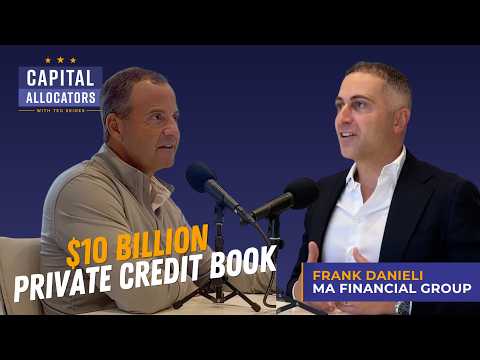
Frank has a background in funds management and consulting, specifically in credit restructuring. He co-founded Moelis Australia, which has evolved into MA Financial Group, focusing on asset management and credit business.
- Frank's experience includes advising hedge funds and banks in distressed situations.
- Moelis Australia holds a significant market share in advising on recapitalizations post-financial crisis.
- The company has transitioned to a focus on asset management, with a large portion of its business in this area.
Investment Philosophy and Governance
How does Frank's team approach investment decisions and governance?
Frank emphasizes the importance of understanding the risks associated with loans and maintaining a governance structure that allows for healthy debate within the investment committee. They focus on stress-testing loans to identify potential failure points.
- The investment philosophy is centered around understanding where loans could fail.
- There is a natural tension in the investment committee that is managed for the benefit of capital.
- Frank's experience in restructuring informs their approach to performing credit.
Acquisition and Market Insights
What insights does Frank share about the acquisition of the Finsure platform?
Frank discusses the strategic acquisition of the Finsure platform, which provides essential infrastructure for loan origination through brokers. This acquisition has positioned them well in the growing Australian loan market.
- The majority of loans in Australia are now accessed through brokers rather than directly from lenders.
- The Finsure platform allows for real-time market insights and enhances their origination capabilities.
- Frank views the acquisition as a smart move due to its infrastructure characteristics.
Navigating Uncertainty in Investment
How does Frank's team handle uncertainty in investment decisions?
Frank believes that uncertainty is a constant in investing, especially in credit. He emphasizes the need for protective mechanisms and a focus on risk distribution rather than high conviction bets.
- Frank's philosophy includes preparing for uncertainty rather than trying to predict it.
- He advocates for building protective features into investments to mitigate risks.
- The team engages in vigorous debates to ensure diverse perspectives are considered.
Advisory Business and Asset Management Synergy
What are the advantages and challenges of having an advisory business alongside asset management?
Frank highlights the benefits of having an advisory business, such as market access and feedback loops, while also acknowledging the potential for conflicts of interest. He believes this diversification allows for strategic flexibility.
- The advisory business provides valuable insights and enhances market presence.
- There are challenges related to conflicts of interest that need careful management.
- Having a diversified business model allows for adaptive strategies in varying market conditions.
Transcript
0:05 >> Frank, thanks so much for joining me. >> Ted, good to be here. >> Why don't you take me through your background that led to your path in the seat? >> My background was in a combination of funds management and consulting. So, I come from the dark side of credit. I was a restructuring or workouts banker, advising special situations hedge funds and companies, as well as banks that had got themselves into a capital structure that needed to be fixed. I met the founders of Moelis Australia. Moelis Australia is a was a 50/50 joint venture between Moelis & Company, the global firm listed on the New York Stock Exchange, and the local Australian staff. Which is today MA Financial Group listed on the ASX. I was doing that and in particular in the post-financial crisis era, the the platform in Australia had about a more than 50% market share advising on these situations. So, the recapitalizations occurring from that post-GFC era all the way through to to today. And I've parlayed that into building a performing credit business where the whole goal is to try to limit the the chance that we're going to be in one of those situations. And the reason for that structure was that the objective was ultimately to build more than just an advisory business, and in particular an asset management platform. And about 85% of the business today is in various forms of asset management. What I do is I lead the credit platform.
1:28 But we're investing across a range of different strategies in that market. We also have created this lending ecosystem, which is a large piece of financial infrastructure platform on which there's about 179 billion or 125 billion US dollars of managed loans on platform. So, it's quite a scale and it's a it's a pretty interesting model in terms of how we've done it. >> Would love to hear your thoughts on the region. On all the lending strategies and private credit in the APAC region.
1:56 >> The Australian market and and APAC in general, but the Australian market in particular historically was a very concentrated banking market. There's the big four banks in Australia, and if you go back, they controlled 80% of lending. And if you think about systemically important was a word coming out of the GFC, these banks are very, very important in that market. And so there was an empowered regulator in Australia in the banking space that that post-financial crisis wanted those banks to be unquestionably strong and started to impose a lot of the regulatory and prudential changes that have come out of the GFC much earlier and much more conservatively than what happened globally. At the same time, there was a range of market structural train changes like the rise of intermediaries and brokers for loans, technology, and other factors that that led those banks to change the way they do rain a lot of business. They sort of exited a whole series of areas, certain types of home loans, car loans, business loans, equipment and asset finance, but also, more importantly, changed the way they do those loans. So, rather than doing them directly, they do them by partnering with institutions like us and providing asset-based finance facilities to specialist companies that then do the end activity. And so, in our region, private credit looks really different to globally. You know, globally, this term private credit is almost synonymous with sponsor-backed direct lending.
3:24 If you think about our book, our book is 60% asset-backed facilities, 20% direct asset lending, and then 20% in the direct corporate lending, which includes sponsor-backed direct lending. So, it's sort of a much wider definition of what is private debt. It's not saying there's a certain type of leveraged loans that were better done in credit funds. It's actually saying there's a whole bunch of things that banks used to do, but they either can't do them anymore, don't want to do them anymore, or can't do them efficiently from a capital perspective and there's a different way. So, it's a it's a much wider definition of the term and that's really kind of what's occurred over the last 10 to 15 years.
4:03 >> When that pivot post GFC came from the bank balance sheets, the inception of private credit in the asset management side, what capital came in that supported it? >> In Australia there is a very large pension system called superannuation and basically you have to compulsively put a certain amount of your money every month into a pension. That system breaks down, that's about $4 trillion today, breaks down about 75% into large institutional style funds and then about a trillion dollars in self-managed funds which are really for high net worth individuals or high income earning professionals.
4:40 You've got these two sectors in the local market that are large and growing that have participated in that space. If you think about that capital, it is pension capital, so it's looking for quite a long-term investment. It's able to trade off a degree of liquidity for a premium if it can exist, but it's also looking for something that's more of a fixed income alternative rather than I want to get equity returns through debt. And so it's seen a system gravitate to something that I think is more investment grade oriented or a blend of investment grade and sub-investment grade compared to what you might see in other parts of the world.
5:16 The other thing about Australia is that it is part of APAC as you said, close to Asia and so we've seen a significant amount of capital all through Asia invest in these areas. >> With these two sides of the need starting GFC on the lending side and then this capital that needs to find a home with this type of strategy, how did you think about what you wanted to put together in the asset management business? >> We came from a restructuring background.
5:42 What we wanted to do was to make sure that we embedded the learnings of what goes wrong in credit, not just around the credit risk of your loans, but also around the structures that you're investing in, the structure risk, some of the other pitfalls that can happen through lending, so you put yourself in a good position if something inevitably does go wrong. But the other thing that we saw was the through the restructuring business was the importance of empowered process, good team structuring, good portfolio management, not just good credit selection. And so we've designed we we we spent a lot of time designing the the infrastructure around the business as to how we were going to approach the market. The other thing that we thought was important was that if we were right on the thesis that you were going to see a significant amount of capital move off bank balance sheets or in a world where banks were going to partner with institutions to provide capital, was it this going to be a very very large space. It's not going to be a couple of trillion dollars, it's going to be tens of trillions of dollars.
6:50 So your problem was not going to be AUM gathering. Your problem was going to be sourcing good quality loans, the right kind of loans, and the ability to produce those loans through cycles. And so that's why we went down a path of proprietary origination. And I know look, everyone says they have proprietary origination, and what people really often mean by it is I've got some great professionals with lots of relationships in the market, and that's one part of proprietary origination, but we felt it was important to have platforms, that's why we have the non-bank lending business, our own actual lending businesses that can that can lend in certain areas of the economy and and basically produce assets that our funds can own.
7:35 And then that financial infrastructure business I mentioned, not only a source of access, but a huge source of data or lifetime access of what's happening in the markets. It touches 350,000 customers in the Australian economy. It's It's a bit like how banks might use credit card data to have a real-time pulse on the economy. You can do that. You can see where the lending standards get better and worse, and we wanted that. And finally, we always believed in partnership. So, we've done a range of strategic partnerships with with banks and other specialist financial firms and asset managers around accessing deal flow. So, the idea was have this proprietary source to have a very, very wide funnel, tens of billions of dollars a year of potential lending opportunities, and then have a disciplined process to filter that out, which is all about we like to say, you know, we're trying to avoid losers, not pick winners. So, we're trying to basically filter out credit that's going to go wrong, or at least make it a very small incidents when it occurs.
8:33 >> I'd love to dive through those various aspects of how you do it. You mentioned origination, the importance of platforms and relationships. What does your team look like at that level of the investment process? >> Yeah. Altimus split into two basic cohorts, and then then there's a a whole series of support functions around them. But the two main cohorts in the investment business or in the asset management business are our investment team and our portfolio management team.
9:05 So, the investment team by their nature, they're there to source investments, underwrite loans and positions. They're not originators. We ban that word around around our or or if you're talking about people in our firm, we don't want them to just originate, throw it over the fence, and then someone else's problem now. We want them to own those positions for the life of them. And that's their job. The thing about the incentives that people have if if you're in the if you grew up in a in a bank, you think about your client in that bank as the the like the borrower, the CFO of the or the sponsor MD or whatever.
9:45 And so then you do the deal and you when you when you're bringing the deal in, next thing you do is you're beating up credit to get the deal done. Then you fund it, it's over, it's treasury's problem now. And then, oh no, it's gone bad. Well, it gets moved from you to the bad bank and you're out and then the bad bank guy comes out and he's dealing with the the the workout. Never in that value chain do you think about your job as being a fiduciary of the deposit holders. I hear a lot with in so many firms this idea of like you like you know, I'm I'm an originator there.
10:23 I've just I I've got to get deals done. I want to get the How do we get this deal done rather than should we do this deal? It's so hard. Then you have this other cohort called the portfolio management team. And our portfolio management team, they're sort of like the fiduciaries of capital. Their job is credit strategy, portfolio construction, thinking about the correlations between different parts of the portfolio and what they should look like. things like treasury liquidity as well. And so you've got these two cohorts that collaborate, but they also have a natural tension between them.
10:54 And that tension could be the investment person I'll give you a real example. Recently investment person has found a really good loan. This loan was a It was a senior secured corporate loan to a child care business. It was low leverage. It was in a re sort of covered regional parts of Australia. It was market leading position in what it did. The structure was tight, good covenants. All There was This was just a fine loan. Portfolio management team objected.
11:19 Why would they object? The reason they said is we actually already had it a couple of child care positions and and so and they thought that it was it was enough exposure. And so the idea was, well, hang on, just because it's a good loan, do we need another one? Now that goes the other way sometimes. Sometimes you'll see the PM team saying, "Well, from a strategic perspective, we need exposure to XYZ in the book to keep it balanced. That's something to have."
11:42 And the investment team on the ground, looking at the intricacies of the credit, might say, "Well, yeah, that's good from a macro top-down perspective, but the nuances of the these deals don't stack up." We had a very real example of that a couple of years ago around exposure to a a PM team, as we were doing more corporate lending cuz we sort of liked the dynamics that were emerging in that space, said, "Well, if we're going to be increasing our exposure to corporate, it makes sense to have exposure to defensive industries," which is true, such as health care, also defensive, aging population in Asia, and so on.
12:16 And so, a large position came up, but the investment team, having looked at the intricacies of it, stay objected. And they said, "Hang on a minute, but this one doesn't stack up. It's got XYZ problems. There's There's insurance putting the squeeze on. Costs are going up. You've got rents linked to inflation. Inflation was going through the roof. And the structure was pretty loose." And so, they objected. And that ultimately became quite a distressed structure. So, you want this natural tension. And the job of myself, the others on our investment committee, is not only to provide the governance environment for these groups, but also help to manage that tension for the benefit of our capital. We've designed our credit philosophy around an approach we call what you have to believe. And that's all about saying, "Every time we do a loan, we want to know where it breaks. Every loan, we want to know where you do lose money, even if it looks like a very remote set of circumstances, because that will mean we can go monitor for those things in the real world. We've really thoroughly stress tested it." So, we've tried to build these things into the nature of our process. We're always improving it, but a lot of it comes from having worked in the in the distress, the restructuring business, and applying it to performing credit.
13:27 >> So, if you tease those two part on the on the investment team that's doing the selection of the credits, how do they go about deciding when to dive in on something relative to that portfolio team that may say, "Well, that's great credit, but we already have a lot of exposure there." >> Yeah. Well, we like the process to be really fluid. So, we're having regular dialogue dialogue with lots of people in the room, actually. Some of the the junior people as well as the senior people. You want everyone to be around to be able to share those views. So, we've got very regular forums where people can talk about the opportunities that they're seeing or that they want to see and we can have that dialogue and debate.
14:07 And then we can leverage the fact that we've created this this lending ecosystem out there to go and actually produce or access those loans into the market to get the access. What we don't want to do is to be waiting for an auction to occur, someone to call us up and say, "Hey, now you can be the participate or not." we'd actually rather be able to go out and and create the opportunity on a bespoke basis. And so, that's kind of how we're we're we're creating the opportunities in the first place.
14:37 And then we're doing through a you know, usually a 1 to 3-month process. It's a quite involved processes of of a producing each opportunity. We're then doing a series of processes throughout that, which is leveraging the the network we have at MA. So, as far as we can, cross-pollinating IP across the whole group, all the different businesses we run, the the relationships that the firm has into the market, of course, things like expert networks and other ways we have access to industry expertise. And we've built a lot of data infrastructure to do this, too. You know, we want to be able to run loan books at very large scale. if you think about, you know, flagship funds that we run might have 200 and think, 246 positions, but for the positions that are the asset-based finance, which I think is today 98 different facilities, there's 1.4 million underlying loans and receivables that represent the collateral of those loans. So, how So, so this is Excel's out the window. You need to be able to use data infrastructure to visualize these loan books, to stress them up and down, and to and to really focus on what is important to to to know how this credit will perform through different cycles.
15:49 >> What are your rules of thumb for the portfolio management team in building a credit portfolio? >> The way we think about it is we've developed ways to think about units of risk. So, you know, how risky is a particular position that we have exposure to based on some qualitative factors that we've been able to observe historically, but also some qualitative, some judgment factors that we've just seen out there in the world. And as I said, they don't just relate to credit risk, like what's my loan-to-value ratio against the enterprise or or an asset. They relate to structural features of the loans, how how wide or loose the the covenants and baskets are, how extensive they are, some of the qualitative factors about the management of the of the counterparties, and so on. But the point is you're trying to break these things down into what's my actual risk, not in volatility terms, but in probability of actually facing a problem.
16:52 And then determining what are the correlating factors. What things cause that probability for each of these different segments, and how do we create a book where the correlation's a low. So, something that's going to impact our exposure to, say, home loan portfolios in our flagship book today, I think about 14% exposure to to many different types of home loan lending. They're driven basically by interest rates and unemployment. I mean and then you've got the security of the asset if things go wrong.
17:24 But we have other exposures like our specialty finance books up legal disbursement funding insurance premium funding that have almost no correlation to interest rates and unemployment. They're just driven by totally different things. And so the idea is that through a cycle, yes, there'll always be some ups and downs, but if you have enough different sectors, you've balanced your exposure those sectors well, then you can deliver a consistency of both income and and and capital. >> What does your portfolio construction look like compared to who you see as your peers?
17:58 >> The main difference from a lot of our peers, it's not true for everyone, but for a lot of people, is that we have exposure typically in our flagship vehicles to asset-based finance, direct asset lending, and direct corporate lending sponsor non-sponsor backed in one place. So we I think it's today 30 we have 38 different sub sectors of lending that we're exposed to. And the reason is because we're trying to create that fixed income alternative style product where we're saying, you know, choose your risk tolerance will deliver product that will deliver that same profile as far as we can, but with a premium for the fact that it's there's some complexity, there's some less there's less liquidity, and there's a proprietary element of what we do.
18:45 And so the difference is that we're not monoline. So we're not just saying we here's just a just a direct sponsor-backed lending strategy. We're saying here's a broad-based fixed income alternative product. And as a result, we've got this broad-based book and we're weighting up and down all that the different sectors we're exposed to. I think that that idea again comes from the the workouts history. It's about saying at some point in the cycle, the marginal loan in a particular space isn't going to make sense. And what you don't want is the moral hazard, which I think you're seeing in some parts of the global private credit market at the moment, especially with the exposure to sponsor-backed direct lending for software companies.
19:28 Where people saying, "Well, hang on a minute. I'm I I lend in this particular area. That's my job. So, I'm going to find ways to rationalize that the next leverage loan of this type is good. And how do I do that? Well, as more capital comes into this It might be good originally. More capital comes into the space. First, I'll start giving up on price. I can shave some pricing away. Once it gets to a point where there's not a lot of alpha left, you can't keep giving up price. So, you have to look for something else to give.
20:00 That's when you give up terms. And that's how you end up with 85% covenant-light lending in some of these, you know, markets. But once you've given up all your covenants, then what you do? What do you do if there's still competition and you can't do anything else? You can either call up to your clients and say, "Take the money back." Which usually money managers aren't in the business of. Or you keep doing that activity. And that's what then you give up sacred rights of lending. Your documents become Swiss cheese. And you have to still find ways to rationalize it. Then what do you do?
20:30 Well, actually don't stop. What they do is they then say, "Well, hang on a minute. I've got Swiss cheese. I'm not getting with the documents. I'm not getting paid that well. I better only lend to quality companies." And that's how you've ended up with concentration to a whole bunch of software companies because they actually did sound like really high-quality companies. And and maybe they are. They're mission-critical system of record, recurring revenue, high margin, high cash generation businesses with high valuations. So, I should have a good margin of safety. And then, "Oh, no. Cloud has arrived and it and it could disrupt this entire business." The fundamental problem isn't lending to software. The fundamental problem isn't doing sponsor backed loans, the fundamental problem is that in the business of lending, you actually need a big diversified balance sheet, not only scale, or or diversification in the sense of lots of things. You need lots of different things.
21:23 >> So, in a business that you are growing and you'd like to continue growing, how do you balance that idea of if you're a little smaller, you may have a more fine-tuned selection on a credit, but you're in a market that's competing and maybe they're growing faster than you, but you still have the same body of opportunities to look at than others? >> Yes, it is a it is a challenge and that's why you have to invest heavily in we believe proprietary origination channels, as we call it this ecosystem that can produce loan opportunities so that you're not forced to just participate in auctions. And it's not to say we won't do something more syndicated or clubbed, cuz certainly we do.
22:07 But you want to have that tension and that flexibility that you can keep producing assets. We've spent hundreds of millions of dollars of our own money building out that ecosystem. On top of that, we've invested heavily today $240 million of our firm and staff capital in the funds to show alignment and skin in the game in what we're doing. And so, if you think about those two things, it just mean that's a that's a lot of capital. And it's not it's capital that's got to come from, you know, your own balance sheet or from your firm. So, that's one of the challenges in it, but I think that what you'll see is that if you roll forward 10 years, 20 years, this industry of private credit will be all about that model of proprietary styles of origination, not that dissimilar to what happened what what a bank looks like. You're just doing it with a slightly different capital base and capital structure.
22:59 >> I'd love to hear more about the acquisitions that you've done to build that origination platform. >> One of the early acquisitions we made in that space was of a a non-bank a very small non-bank mortgage lender in Australia. Really just a platform to to to give us access to something that we could accelerate our entry into the space and then grow. There's been times where we've built organically. Our Our specialty finance platform is one we built organically.
23:28 Everything from found the opportunity, we secured it, we use firm capital to to lock up the first of the lending opportunities and then we went and literally got the right credit licenses to do the direct finance into that in that case the the specialty consumer space. The facilities, the tech, the origination process, the credit documents. It is very helpful when you go to that granular level and you see what the production of credit really looks like. Some of the things that are important, the tradeoffs that are made.
23:58 So, we've done both. On top of that, we made an acquisition for example of a business which became the financial infrastructure business we have today, the the Finsure platform. We acquired it out of a a small Australian bank. We thought it was a misunderstood asset. And we thought that the broker channel, that is that people would get their loans through intermediaries whether they're home loans, car loans, business loans, whatever they are in Australia would grow and grow.
24:26 And that's certainly been the case. Today 75 to 80% of loans in Australia don't go by someone going to a a lender directly. They go through an intermediary, a broker. But those brokers use infrastructure like our platform to access the loans. And that that was very smart. We liked the business for its infrastructure characteristics. But as I said, it's very important for data and intelligence around what's happening right now live time in the market. You're seeing $8 or $10 billion of loans go through it every month. You can see what's happening.
24:56 But also creates a real halo effect for us in origination, especially around asset-based finance, because we are more as a group than just a provider of capital. We're a true partner. We're a source of origination for counterparties, and we're a source of access. and then and then you do it through contract as well, as I said with those some of those strategic partnerships we've done. We've done one with major major Aussie bank going back in 2021. We've done some with a bank and asset managers over here in the US. We've We've done some things in Europe. So, we we are we're constantly looking for ways to to not just to do this through through yes, smart acquisition, organically where it makes sense, but also just where partnership is the right model.
25:38 >> When you add that up today, how many people and platforms do you have across asset-backed lending, direct lending, and corporate lending? >> Across the total MA Financial Group, all the employees and all the businesses and things we run, there's probably 900 or also people. All through Australia, Asia. We have presence now here in the United States. We have two offices here in the US. So, we're and we're doing asset-based finance here. So, we have a lot of different access points. There's about 30 different platforms that we're working with regularly. Some of them within our group, some of them third-party platforms. the the the direct people in the private credit investment business is a team of about 40 investment and portfolio management professionals with 100 people around them doing various functions. And then we have an asset management platform of 250 people. And the people in those separate platforms as I said. So, it's quite a large operation.
26:33 >> When you develop this with this expertise in the region, what was the decision process to expand, let's call it globally, beyond the APAC region? >> We thought about it a lot. The history of Australian platforms going global isn't actually that good. We thought that because of the inverse development of private credit in Australia where it started in these other areas outside of just sponsor back lending that we could take some of those learnings and some of that expertise and apply it in a global sense. And we did it by finding the right people and in fact it was it was through the the Molson company connection that well well we are listed I think down about 7% still the business today of a listed co. Through that connection we're introduced to a group here. We worked with them actually in a partnership model originally providing basically co-investment capital and some of the origination here and then ultimately we we we acquired that platform they became part of our business and and and fully integrated into the global team we're on.
27:35 >> How do you think about those trade-offs of having a partnership where there's deal flow to acquiring the team? >> There are times where it makes sense to to be in a partnership model if if it's relatively small scale or if there's something unique that that partner can bring particular access that it wouldn't make sense for us to develop. You usually want that to be complementary. Ideally we can bring more than capital. We might be able to bring certain types of our data analytics some of our credit frameworks, some of the the terms and structurings that we put into our deal flow that might be different from what is is standard in what that particular sector or market and we can do something together. That's how we've really thought about it. But from our perspective you know we want the partner to bring something we don't have usually access to a certain part of the market that for whatever reason it's it we don't have directly and it wouldn't make sense yet for us to to to own.
28:36 >> So you mentioned certain credit frameworks you use. What are some of those frameworks? >> Yeah I mentioned this framework the the what you have to believe framework earlier. The other thing that we like to do in our process around credit framework is to say, well, every time we're taking a deal to an to investment committee and through the process, we we assign some people to be our red team. And so, what this is, this is basically taking someone from the investment portfolio team, importantly not working on the deal. So, they haven't met the management, worked all weekend, stayed up all night, haven't fallen in love with the deal. They just They They're going to look at this deal and before the investment committee, they're going to go through all the raw information, the data room, all the all of the the credit docs, and they've got to come to IC and articulate the contrarian perspective. Why would you not do this deal? What's been missed? Is there something we're not properly calibrating? Are we Are we thinking at scenario X is more remote than it actually could be?
29:32 And well, sometimes this might feel belligerent, but it's not It's not intended to be. The idea is that we want to thoroughly elicit where the risks are, so that we can then monitor for those things in the real world when we're actually running these books, once we've made the investment. Because we're in the private markets, we can't we can't exit our positions as easily. And we can't exit the but we're not as easily. And so, you want to make sure you've you've really understood that that that downside framework up front.
30:04 And so, we've done that. The other thing that it does is that it really sharpens your thinking about origination when that person who was the red team yesterday is now doing their own deal flow. So, you get a real sort of symbiosis out of this. We We've done a whole bunch of other things in the process that we like to do. We We do these things called war games now every quarter where we simulate three recessionary scenarios, moderate, severe, and a crisis scenario on all our loans in our book. It's a huge piece of work.
30:33 And it's not that we can predict you know, all those economic indicators, there's probably 30 plus of them we look at, how they'll actually affect every loan in the real world, but it's again just getting people to think sometimes the world becomes a bad place. Sometimes things don't go your way. And another lesson of the restructuring business, normally when that happens, people aren't thinking straight. They're basically over there in the corner vomiting in a bucket. They're not moving quickly enough. They're not being proactive cuz they're just frozen. And we want people to actually say, "Okay, I thought about this.
31:05 Hasn't gone the way it should. Here's the break the glass now plan to go fix things." And so, it's things like that that have been core to our credit framework more than just saying, you know, we'll only lend at four and a half turns of leverage or never more than five and a half X. Like, we don't have those kind of hard heuristics, but we do have this framework for risk thinking and this philosophy that risk is everyone's responsibility because we're aligned. We're all investors and we have that philosophy of co-investment not just at the senior team, but through the entire team.
31:40 >> On that red team or red team blue team exercise, it always sounds like, "Oh, what a great idea. We'll just take contrarians and throw them in the room." What have you seen work in the in the weeds that allows people on the red team to have as much drive in getting at, you know, their side of the answers than they were the ones on the original deal team promoting the deal? >> Yeah. Look, the team's quite collegiate.
32:07 So, people ultimately I I think it can't I mean you get to enjoy that process and learn from it. But, the the thing that it really does is that what it elicits is not so much, "Wow, we we should never have even looked at this deal." The we actually think it's a failure of process. Like, if we've gone and done like 3 months of work on a private deal or something and you get all the way to the investment committee. We've spent huge amounts of time, resources, and then we don't do the deal.
32:37 Well, that sometimes happens, but it actually a failure of process. When that happens, we're saying, "Hang on, what went lot wrong along the way to to say we would never have touched that space or that particular company borrower asset class." What's normally coming out of the red team is through all these weekly and daily processes we've got is that we've we've kind of got a good view on the credit risk side. But, we might need to tighten the structure. If it's an asset-backed maybe there's an eligibility criteria or allowing a certain kind of lending that we shouldn't include or we'll need to adjust a covenant of portfolio parameter to limit exposure to that. Maybe we need to tighten the baskets in the corporate deal. Maybe actually we need in a direct asset do we need more equity in from the borrower? We need some sort of change in the in the in the in the structure of the loan.
33:28 And finally, maybe we need to do some checks or embed some controls for the third kind of risk in credit, which is fraud risk. And so, you know, we're always thinking about credit risk, which you need to manage, structure risk, which you need to control, and fraud risk, which you need to avoid totally. And so, it could be things like, well, you know, we've seen couple of egregious examples of double pledging recently. Are we making sure we've got consistent custodians or trustees across all the facilities of a counterparty? How are we doing the right audit AUPs, cash checks, and so on? Have we actually required that of the borrower in our facility so we can go and do those when we need to?
34:10 It's It could be things like that which don't eliminate deals, but actually make them safer or more sustainable through different market conditions. >> As you've done that with your team over the years and presumably they've sat on both sides of different credits and gotten sharper and better, how often does a credit that you're looking at at that investment committee level change today because of inputs from the red team? >> The changes happen regularly around deal structures and terms. I you know, it it might be a a 25 to 30% of the time. So, pretty regularly that that that that's causing changes to the structure. It's It's rarer that it's totally eliminating the deal. So, you know, we're doing 5 to 10% of the the deals we see through the funnel, but it's the it's the broader process that's eliminating things mainly rather than the the red team, but the the structural tightening happens a lot. And what it also does is that it it it creates a lot of cross-pollination of IP that we're making sure things we've seen before, terms we used in other facilities are being applied. So, it's a good cross-check to to give comfort to what we're doing.
35:25 >> What are some of the either phrases or values that you use internally to allow the blue teams and red teams to have that very vigorous debate, but then still be on the same team without egos getting involved? >> Yeah, well, the team they hear is they'll they'll laugh at me. There's a There's a bunch we're always throwing around. One of them I really like is the only certainty is uncertainty. You always hear this idea that oh, well, Trump did this, something happened in the UK, there's a lot more uncertainty now.
36:01 I always laugh when I hear that because I say, "Hang on a minute. Like, last week, before you knew that there was going to be what war in the Middle East, that was when there was you might have felt comfortable, but that was an illusion because there was huge uncertainty, you just didn't know it." We have I've always believed that the future is a constant level of uncertain. And what you're grappling with is always investing under uncertainty. How do you do that? How do you avoid, especially in credit, taking these high conviction views on one thing where you you expose your in your investors, your LPs to to catastrophic risk of loss because you've you've you believed you knew you could predict the future. The other one that I really like, it sounds like a Buffettism, it's predicting rain doesn't count, building the ark does.
36:47 And it goes to this same idea of, you know, we can't crystal ball what's going to happen tomorrow. Got no idea actually where interest rates will really go, what what could happen, what could come out of left field that we're not thinking about today. But we have to think about it as more of a spectrum, a distribution of risk, and build as much protection mechanisms as we can to types of security, asset backing, defensive features, things that give us just a really long runway before a problem hits us when something goes wrong. And that's again, we're in the credit business, we're not in the equity business, we're not compounding returns, and we're not trying to do equity returns through debt. We're trying to deliver fixed income with a premium for trading off a bit of liquidity.
37:34 >> What are some of the rules of thumb in your portfolio construction that allows you to build that ark? >> One of the core things is making sure that as as I said earlier, that the correlations between different sectors are understood. You know, what I if we're going to talk to our in in in the portfolio management sense, we want to know what drives each of those sectors of lending and be able to map the differences in them. some of them are also just more basic, which is saying, well, do you have the right level of diversification, not just oh, I've got low position sizes, but I have carefully thought about what my target ranges of different sectors, asset back commercial, asset back consumer, asset back to real estate, corporate, non-sponsor, sponsor are within the book. And then how you're managing those up and down through a through a cycle. It's a balance of art and science.
38:29 But the important thing is that framework around where we need to understand risk. We need to be able to evaluate what really drives credit performance, the credit risk side. But that we're building the right structural protection so we get what we're exposed or we think we're exposed to. And that structural element like you when you've gone and restructured a debt debt facility. When you've seen a special sit for or worked for a special sit fund with a very smart lawyer and you've gone in and you've pulled these things apart, you get a real appreciation for you know in in in here in an indenture and a facility agreement, now market, why are things actually there? What's that clause for? There's a whole bunch of clauses people never think about.
39:17 They're all I've got this covenant and I've got, you know, I'm I'm I'm saying your security is this basket. Okay, but what are all the other the other terms? What do they say? We want to know that sort of stuff and make sure that we in our portfolio have a range of different things that just can't all go one way. >> How do you balance the call it the realism or pessimism that comes from having workout expertise with the optimism required to make loans where upside's capped anyway?
39:46 >> One of our founders, Andrew Pridham, always likes to say, you know, in in our credit business we have to be optimistically pessimistic. And it is you can't do nothing. Or at least we we want to be able to provide capital out there into the real world. And the optimism comes from having followed a really rigorous process. So the that gives you the the conviction that okay, my portfolio is constructed well and I spend all my time thinking about risk where risk is what the downsides could be. So actually, I can be positive. So I can be optimistic about how this capital will perform through different market conditions. I don't like and we try to avoid having people in the team and developing people that you want to be like the star loan picker.
40:43 In my view, that's for equities, right? We get compound returns and you can have the the the 10 bagger upside. That's not our business. Our business the people that thrive for us are the people that are good at process. that want to improve those processes when they they can be enhanced. We have in our IC papers a bunch of checklists, for example, and the checklists are all about saying, "What are the things we've seen that have correlated with things that have gone wrong before?" And some of them are amber flags, some of them are red flags, and some of them are bright lines. Like, if there's XYZ, the you know, the borrower could steal the assets away.
41:23 Bright line is just not for us. And and and there's some things that are okay, this is a this is a a risk we have to be cognizant of it, but we can live with that. And so, it's a bit like we think about it a bit like, you know, an airline pilot. They're about to take off and what are they doing? Well, they sit there and they basically go through a bunch of checklists that say, "What are all the things that have caused crashes in the past?
41:45 Do they exist now? No? They're not in place, we take off. If they do, they stop, they check, they try to rectify those things, and if they can't get comfort on some serious things, they just don't go anywhere. And that's why air travel's so safe. We're trying to take that same philosophy, so we're trying to make it a process and it's the process that makes you optimistic. >> When you bring those credits into the book and then you're running your war games analysis on things going wrong, What have you learned about running that effectively to improve the portfolio?
42:18 >> One of the things that we've done is that we've had to make the war games process more than just the macro stress testing. Because the macro stress testing, we thought about it a lot often in the past anyway and at the and the time of deal inception. So, what that's really testing is how far can things fall in the world or the bad things happen before before where our capital's going to face an issue and has the underlying business, collateral, or asset changed so that the that sensitivity has moved a long way.
42:53 And that's a good exercise, but it doesn't change that much unless there's been fundamental changes in the underlying borrower. So, it changes here or there. If we've done a good job at portfolio construction, it's probably fairly minimal. But, the other thing that does change often and it comes up are these discrete risks. So, we've just talked about those instances of fraud out there in the market and they're certainly not the first ones to have ever happened.
43:17 This has been happening for a long time in credit. But, it could be things like behaviors of competitors, industry dynamics, changes in technology. So, we look at a range of these other discrete non-macroeconomic risks. Fraud and you know, I said fraud in the value chain earlier that inter-creditor dynamics if you see whatever certain banks decide they're going to exit a market. And we look at all those different things as well. We've also made it a lot more practical.
43:44 So, where things are where where there are loans that seem to have risks being elevated, how do we actually crack open the debt documents, look at, you know, is the security structure as robust as we thought? What's the social issues around this this dynamic? Are we in a club or a syndicate where we have to deal with others or are we bilateral in that particular case? How are the management team going to respond? Are they Are they appropriately incentivized?
44:13 is there some sort of regulatory overlay to this that we need to be thinking about? And so, it's that those those non- financial quantitative things that we've embedded in the process that have really made it better. >> If you turn from thinking about risks to the opportunity set, how do you look at the opportunity set in Australia, in the rest of Asia, and the rest of the world? >> Yeah. Well, I'll start with Australia versus the rest of Asia. The The opportunity we like exists in Australia, and it exists because there are these areas where it's just more sensible for banks to not do things directly or to partner up. And we we just love that model where where we can be arbitraging these things where banks used to do them, but it's not efficient, and we can for for some reason be a solution provider in that area where we can capture just some sort of premium. So, that works really well. In other parts of Asia, that dynamic really doesn't exist. So, we're often looking But you actually see the the ambit of what banks can do in that market is very wide. And whenever you're trying to compete with someone with such a low cost of capital, you you really have to step up the risk curve. And it's It's not that it's they're bad loans, but it's just not our business. We're not in that opportunistic credit business.
45:29 What we're seeing globally, and it's part of why we've expanded here to to the US and some of what we're doing in Europe, is that those same thematics around banks changing the way that they approach real-world lending, not just sponsor finance, it is really gaining pace. And we were we were in in a way fortunate when we were expanding and really expanding our US presence. That happened to coincide with the time when there was the regional banking crisis. Actually, my CEO, Chris Bykena, we were on a plane over to the US literally that weekend of Silicon Valley Bank. But, that has also shifted the dynamic where you're seeing this whole tail of regional banks here in the US looking for different ways to approach the markets as they deal with the managing the rest of their balance sheets and the regulatory impost that's coming. You're seeing the overlay of the the Basel III IV regimes coming through in all parts of the world. So, this opportunity around providing real-world finance is where we see the most opportunity. And we see it because of the arbitrage that we believe exists for for structural reasons.
46:42 >> How do you think about your rate to win the rate loans in say the US versus a much more competitive market relative to your positioning compared to Australia where you're clearly one of the big players in the market? >> In this area of of asset-based finance, we can do that. We're not trying to do a direct say sponsor-backed lending here in the US. In fact, what we've done is to apply an asset-based finance way of thinking to get some exposure to that sector. We've done that through We've publicly announced some strategic partnerships in that space, for example, that enable us to do that. So, we can actually be applying an asset-based finance facility to get diversified exposure into the sector in a private way, but where we still get to curate what's actually in the book. So, that works really well for us. And then the rest of the asset-based finance market we see as quite still an an emerging space. And we think there's just going to be tens of trillions of dollars of capital that move into that area. So, what we're doing is we're investing early and we're and we're bringing this way of thinking to the market, hopefully leveraging some some IP and structuring technology that that is a little bit different to what's actually here in the in the market.
47:55 >> What are who are the strengths and weaknesses of having an advisory business alongside the asset manager? >> That phenomenon for us operates in this in Australia. The you have to be careful of course around conflict when you when you have a diversified business. So of course you have to think about that lens. But the real the there's a huge amount of advantage in in having an advisory business. One, it gives you a very interesting set of eye pay access to the market.
48:28 It creates a a degree of halo. There's at the right level there's the ability to to have the right feedback loops around what does and doesn't make sense. but really the fact that we have a diversified group also means we're just in lots of lines of business. and that means that that we can be sensible about leaning in when it makes sense and pulling back when it doesn't. >> What's it like being a public company in Australia?
48:54 >> It's really good to be a public company and it's really hard to be a public company at the same time. Obviously, the the advantage is you have currency, capital, and I think being a public company gives you a degree of accountability to the public market to a range of investors that are not just you know, you as as as an individual or a series of partners. And that actually is a good thing. Accountability at the right level. The hard thing about being a public company is is sometimes that accountability can be too short-term focus versus long-term focus and so you're always having balance.
49:30 You know, what I've always liked about MA and and the the ethos that the founders really embedded within the business was this idea that they wanted people to be owners too. Owners of a business not just renters as would often say. And so when we were a private company that was allowing people to to to participate in in in in owning the business and that's continued as an ethos in as a public company. While we're listed, we're still a third owned by by staff. That idea of alignment runs pretty deep for us. So, you know, you've got to balance the two.
50:05 >> How's the Moelis relationship evolved from the early days to building the asset manager to now also participating in the US? >> Moelis has invested in the in MA the the the company was original partner. That relationship is very strong on the advisory side of the business where I used to be. now that for a long time been in the investment business on the asset management side, it's it's different. So, we it's a operate separately and I think about them often as you know, our cousins here in the market and and they're very helpful but in the asset management side, it's it's separate.
50:42 >> As you start to build your presence here and elsewhere in the world, what are you hoping to achieve at MA over the next bunch of years? >> Look, we want to be one of the preeminent managers particularly in this kind of fixed income alternative private debt. And we want to contribute to the redefinition of what it means to be in private credit and that's a lofty ambition but it's one that we're really committed to. >> I'd love to get your perspective on the noise that you see around private credit happening particularly in the US and some of the structures in place.
51:17 >> Well, there's noise in the US and in other parts of market including Australia. I'll touch on both. But I think what it all to me boils down to are these principles of disclosure, transparency and being really clear not just about what's in your portfolio. And that's a basic set of transparency. But it's also transparency around the risk-adjusted return of your book. Where are returns actually coming from? are they coming from performance of loans as you thought per contract? Are they coming from high interest rates, lots of delinquency getting you to a net position? Is there leverage embedded in there? Is there structure complexity? What does it look like? And and what is the actual risk profile of the loans? And then there's this third layer. So, it's peeling back the onion. This third layer of governance transparency. So, how do you actually running what running the business? How you set up?
52:16 How do you have the right checks and balances and controls as necessary in credit? And I think they're the sort of elements that are really important. And when they're understood, investors have confidence and they know what they're getting. Whether that's the nature of the credit, the the the exposure to a particular type of sectors or something more balanced, or whether it's things that are in the news around say liquidity and gaining and so on. But, ultimately, this is a long-term investment asset class. This is not liquid credit. And I think the the way people should be thinking about private credit is not oh, I want to invest in something that's liquid where I can get a high equity like return. It's actually saying, think about my portfolio, whether that's a 60/40 portfolio, whatever other parameters you want to use. But, let's use 60/40.
53:09 The part that's 60 is for growth. That's not at least our brand of private credit. Then there's the part that's 40, the defensive, historically in bonds. And what we want people to say is, how much of that 40 can I do actually not need daily liquidity or very, very frequent liquidity? How much of it can I invest in a in a in a longer-term structure where I've got a contingent amount of liquidity? I can take some of my money, well, sometimes all my money out periodically, but I know I'm actually invested for the term of the underlying loans.
53:42 And for some people that'll be 5%, for some people that might be 20%, but whatever it is, it's about making sure that you understand that characteristic, and that's really the key thing going on. I think if you boiled down all Take away all the noise, that's the fundamental challenge of the industry. It's what's under the hood, how do we enhance disclosure, transparency, and communication of what we do in a way that people understand. >> Hey Frank, I want to make sure you get a chance to ask you a couple of closing questions.
54:11 What was your first paid job and what did you learn from it? >> I did a bunch of odd jobs as a kid, but my first real paid job when I was in school was was as a piano teacher. I worked with this guy in the in a in Australia, it's a place called Cole's Music House, and he had this really interesting model where he'd teach people from kids to seniors not in a traditional classical manner, but based on pop songs, so songs that were out there right now to make it fun, and he used very intuitive methods. So, what I learned from it was the the power of process, and simply communicating complicated ideas. And that's been very helpful for me ultimately going into the world of finance, because we love in this industry jargon and complexity, but it's about bringing it back to first principles, and I really learned that in but I learned it on the job.
55:02 >> Which two people have had the biggest impact on your professional life? >> You know, in the restructuring business, there was someone very prominent who retired, and they wrote a book called Everything You Know in Life Everything I Know in Life I Learned From Doing a Restructuring, and they sent it to a bunch of people. It's almost like a bit of legend around the the industry now. You You can't buy this book on Amazon, but I've got a copy of it. And it has basically 50 what you'd call today memes in it. They weren't called memes then. You funny anecdotes. One of them, page 41, I know is if you want to be a Jedi master, find your Yoda. And it's all about the power of mentorship and and and people backing you, collaborating with you, and bringing you through the ranks. And I've really had that from Chris White, who's one of the co-founders of MA Financial Group, today our joint CEO.
55:54 We've worked together since I was a baby banker. He's backed to me and he and you know, he he's really got behind me as we've wanted to do things like build a credit business from a very small idea into something that's quite large and scalable. The other one for me has been my dad. My dad had all these great anecdotes and sayings when I was growing up. He he was never very didactic, but he'd he'd he'd say things to you that that gave you these really good life lessons. And one of the best pieces of advice he ever gave me was you're only as good as your last game. I played a lot of sport growing up and and he would say, you know, doesn't matter what you've done before, it's the next game is the one that matters. And he used to use this this anecdote of this so Australian rugby league player called Graham Langlands. This won't mean a lot to the to some of the Americans listening, but imagine it's a Derek Jeter or someone like that. And so this Graham Langlands back in 19 I think it was 1975, he he was in the grand final with his team and incredible player, one of the greatest ever, what they call an immortal in that Australian sport.
57:00 But he showed up at this game and he was wearing white boots under a sponsorship deal with Adidas. And every This is the time when you know, everyone wore colorful boots today, they wore black boots only. And and he had an absolute shocker. And they got thrashed. And his leg his legacy was almost tarnished by this one thing where in that grand final, he you know, he was a show pony and it didn't work. And so he said, you know, you've got to bring that degree of focus to every day and to everything you do. You can't ride on the coattails of what's happened before. So, yeah, those two people have been hugely influential in my professional career.
57:33 >> What's your biggest investment pet peeve? >> It's My biggest investment pet peeve is when people focus only on the investments themselves and they forget that that's just 1/3 of the job. Most of the alpha in the business of investing, I believe, comes from portfolio management and from risk management and they These things are equal thirds, but everyone only talks about the investments. It's the sexy part, but the real alpha is not coming from the investments. It's actually coming from the portfolio management and the risk management.
58:07 >> All right, Frank, last one. What life lesson have you learned that you wish you knew a lot earlier in life? >> It's easier to catch flies with honey rather than vinegar and it's something one of our other founders, Andrew Pridham, always says. He says it to me a lot. You know, if you come from a restructuring background, you're always thinking about leverage, pressure points and you can and and taking a kind of hard line and it's this idea of balancing not just smarts and IQ, but with with having having EQ, thinking about relationships, the the things that really incentivize and drive people, what motivates people in in in a broader basis than real discipline and and it's been very influential for me. It's I guess it's a bit like, you know, using a little bit more of the the the carrots rather than the sticks and knowing when to do that in the right circumstances.
58:58 So, that's >> >> I wish I knew that earlier. >> Frank, thanks so much for sharing your story. >> Ted, it's been really fun. Thank you. >>
Summary
- Frank's background includes restructuring and advising on credit situations, leading to the establishment of a credit business focused on asset management.
- The Australian banking market is historically concentrated, leading to opportunities for non-bank lenders like MA Financial Group to fill gaps left by traditional banks.
- MA Financial's credit strategy involves a diversified approach, with 60% asset-backed lending, 20% direct asset lending, and 20% corporate lending.
- The firm emphasizes a collaborative investment process, incorporating a "red team" approach to challenge deal assumptions and improve credit structures.
- Proprietary origination is crucial for sourcing quality loans, allowing MA Financial to avoid reliance on competitive auction processes.
- The firm conducts quarterly "war games" to stress-test its portfolio against various economic scenarios, focusing on both macroeconomic and discrete risks.
- Frank advocates for transparency and a long-term perspective in private credit, emphasizing the need for clear communication about risk-adjusted returns.
- The relationship with Moelis has evolved, with MA Financial now operating independently while leveraging insights from its advisory roots.
Questions Answered
What is Frank's background and how did he arrive at his current position?
Frank has a background in funds management and consulting, specifically in credit restructuring. He co-founded Moelis Australia, which has evolved into MA Financial Group, focusing on asset management and credit business.
How does Frank's team approach investment decisions and governance?
Frank emphasizes the importance of understanding the risks associated with loans and maintaining a governance structure that allows for healthy debate within the investment committee. They focus on stress-testing loans to identify potential failure points.
What insights does Frank share about the acquisition of the Finsure platform?
Frank discusses the strategic acquisition of the Finsure platform, which provides essential infrastructure for loan origination through brokers. This acquisition has positioned them well in the growing Australian loan market.
How does Frank's team handle uncertainty in investment decisions?
Frank believes that uncertainty is a constant in investing, especially in credit. He emphasizes the need for protective mechanisms and a focus on risk distribution rather than high conviction bets.
What are the advantages and challenges of having an advisory business alongside asset management?
Frank highlights the benefits of having an advisory business, such as market access and feedback loops, while also acknowledging the potential for conflicts of interest. He believes this diversification allows for strategic flexibility.