Transcript
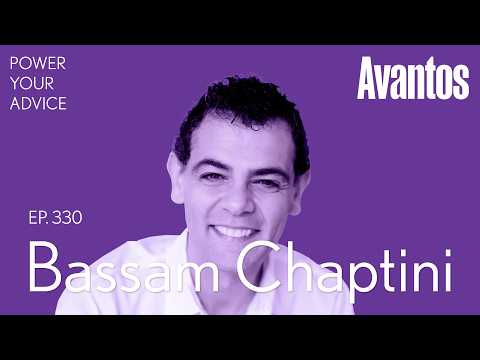
0:03 This is the Power Your Advice podcast and I'm Doug Heikkinen. Today we are joined by Bassam Chaptini, the co-founder and co-CEO [music] of Avantos, which is an AI native operating system for client management. Bassam, welcome to the podcast. >> Thank you for having me, Doug. >> Avantos is positioning itself as an AI operating system for wealth management. What does that actually mean in practice and how is it different from the wave of point solution AI tools we're seeing across the industry?
0:37 >> Yeah, no, great question. So, we are an operating system for client management. It is a white space in the industry that has been around uh honestly for more than 20 years. It's all about onboarding and servicing and managing complex client relationship. There's never been a solution in the in the field. People would use different point solution, a lot of swivel chairing. If you had to get the context of a given client, you have to like go to 15 different systems to assemble all that knowledge. So, we created Avantos to be truly an operating system to provide the full context around your client relationships, not just to onboard them and servicing them, but deepening the relationship. And what we mean by operating system, we truly mean a holistic view of your clients, but not just your client data, but also yourself, you as an advisor, the team that you're part of, and also the product that your clients are buying.
1:33 All of that interact heavily. And we created that system of context, which is what we call AI native, a knowledge graph behind the scene that serves as this holistic view uh for any advisor to service their client. >> There's a lot of excitement around AI. We read in so many stories, which they're usually pretty informative, but you said most firms are still in the early innings. What does real enterprise grade AI adoption actually look like inside a wealth management firm today?
2:04 >> So so yes, exactly. There's a lot of experimentation and R&D going on. In a good way. In a good way. A lot of the features that we are seeing are some point solutions that work well. Like note-taking is a like a very classic example of a way where AI works. It improve productivity, but it's more of a point solution, a feature that you're able to do. What we are pushing and seeing in enterprise, where we are deploying for our client, is what we call an advisor AI.
2:40 A a truly an AI that sits along with the advisor and holistically help them. Not just in meetings or in certain workflows, but holistically help them. For you to be able to do that as an enterprise, you need your data to be represented in a way that AI can consume it. And so what we do is behind the scene build that knowledge graph of client data, advisor data, product data, and the work to be done, the journeys, the client journeys.
3:07 And our AI agent sits on top of that so that it has literally the same context as the advisor servicing them. And so this way it can be a co-pilot. An advisor can ask it literally anything that exists in that knowledge graph and it the AI will help that advisor service their clients, whether this is starting a money distribution or onboarding a net new client or having a conversation and meeting with the client and identifying all the follow-up actions and executing on those actions. All of that is able to do as part of the operating system. And for us, that's truly the impact. Not just one sliver of what an advisor can do, but a holistic approach to how we how we how we help advisors.
3:49 >> After all this time, client onboarding and servicing are still major friction points for advisors. Why have these areas been so difficult to modernize? And where are you all finally making a measurable difference? >> Yes, and that is a fantastic question that we've been playing around for the last 15 years, my co-founder and I. We've been in the space in that client management space in different shape and form as consultants, as stack providers, and now with Avantous. The fundamental problem is well, complexity. But some of that complexity is built in into the into the flows.
4:27 Financial products are a complex uh product to to buy. You're not buying uh uh uh something off of Amazon. It's a complex financial product that has a lot of regulations around it. For good or bad, it's just complex as a as a product. But the flip side of it, the systems that either support the clients or the product are completely fragmented. They have different data models behind the scene, they have different workflows behind the scene. And it's the patchwork of different things. And so it becomes what should be a straight through automation or a straight through process becomes a fragmented process to collect all that data, assemble it in a different way, and deploy it.
5:10 People have tried different systems, but as I mentioned, it hasn't been a holistic view of what you need for a client management. It ends up being swivel chairing and a lot of a lot of work. So that that is the white space that uh allowed us as as a company Avantous to be created to solve it in a holistic way so that we can streamline all that processes. AI helps a lot, by the way. AI helps a lot in terms of behind the scene collecting all that information and building that knowledge graph dynamically. It also helps a lot with the execution of the workflow, so that you're not waiting for 2 days to collect data, and then ping your client again to get other data and what have you. It can be proactive in collecting all of that data and surfacing it with a human in the loop to to be able to kick off those either onboarding or servicing events.
6:01 >> Your platform is built around a knowledge graph connecting assets like 401(k)s, RIAs, and 529s. How does that unified data layer change what advisors and AI agents can actually do? >> Yeah, yeah, touch on a few points with the knowledge graph piece. One of the key piece that you are highlighting here is the cross product ability of our platform. So, one of the things that advisors do want to do is service again their client holistically, not across one product, but across different types of products, also products outside of your traditional wealth management space. We have clients that want to service not just their wealth management, but help cross-sell life insurance, annuity, banking products along with the wealth typical brokerage accounts or wealth management services like taxes and what have you.
6:54 Again, there hasn't been a platform before that is able to support all those types of products, and that's what we're doing with our knowledge graph and in Eventus we can represent different different product from different industries, sectors, with the complication of the workflows that comes with them and the data requirements that comes with them all in one one plane, and it truly allows advisors to also start recommending and thinking about other services and products their clients are interested in. If you're a client of an advisor and you mention for example you have a newborn, well, you might want to open a 401(k), you want want to open a 529 for example, open a trust, update your beneficiaries, but you also want want to increase your life insurance or get new life insurance.
7:43 Things that typically have been extremely manual and things advisor can service now can they can do it holistically. >> Right, we have to have the compliance question. As you know, many firms are hesitant to introduce AI into client-facing workflows due to compliance concerns. So, how do you design intelligent automation that enhances productivity without introducing new risk? >> Yeah, yeah. Um so, we designed our AI to be as autonomous as possible while having a human in the loop. Our AI does not do anything without a human in the loop confirming what it does. For compliance reasons, for risks reasons. The accuracy of the AI is actually fantastically high. It's not It's not because there's uh doubt in terms of what the recommendations are. It's just from a compliance perspective, we want to make sure like there's a human in the loop, somebody's looking at it. From a client service perspective, we typically so far provide a lot of the tools for the advisory team and they interact with the clients as well, but this is assisted by AI. Very concrete example, I'm I'm boarding a new client. I have a whole bunch of missing data I need from the client, missing documents. I want your taxes, I want blah blah blah, all that stuff. Our AI is able to look at an onboarding workflow, an onboarding journey for a client, tell the advisor, "These are all the missing information. I have these inform this information and these are all the things that are missing. Here's a draft email that you want to send to your client, review it, confirm it so I can go and collect it." They confirm it, it sends a link, and now the client can either digitally upload those documents or they can send them directly to the advisor, etc., etc. So, as you see, like it is automation with a human in the loop to allow for that productivity increase.
9:36 >> We're seeing a big shift from fragmented text acts to a more unified infrastructure. So, what's driving this modernization cycle? And why is it happening now? Is it more than just the obvious? >> I think it has long been um it's been long due in terms of just making sure things talk to each other. Uh the some of the issues that we find uh realistically is that it's hard to move data. Like, you might want to modernize your tech stack, but it's hard really to move the data and the ROI is tough uh moving moving data. It requires a lot of testing, a lot of integrations into the same system. Our approach uh as Avento's has been that keep your data where where they are. If you have a system that works or if your data is resides in a client master or product if you have your your product master, leave them as they are. But, now deploy a layer on top that abstract all that data and all those workflows and have that unified layer on top of your existing system to that you're not going through the pain of data migration, integration, migration, and all of that.
10:50 So, the need for a unified system is absolutely there and this is what we provide for our advisors so that they don't swivel chair, but behind the scene it might still be a fragmented system, but it's completely isolated and it's completely abstracted away from the uh the actual Avento's users. >> Avento's has already onboarded firms like Vanguard, Mercer Advisors, and Guardian. That's really impressive. What are those institutions prioritizing when they evaluate infrastructure partners?
11:23 >> So, there is a common theme and different thesis for each one of those uh firms. The common theme is deepening the client relationship. That's what they really want. wealth is a is a place where there's a premium at at deepening that relationship and at having a system that's able to deal with the complexity of it. Uh Vanguard, Guardian, and Mercer have different thesis in terms of how they want to approach it and this is why we love them as as as partners from our for our journey. Mercer want really to build uh uh a business where their advisors holistically see their clients. They are growing fast and they keep on adding advisors, adding clients, and they truly want a unique unique system a unified system to do all the things I described.
12:14 Uh Vanguard has the same needs of having deepening the relationship, but they have a different thesis as well. They have a lot of clients who are on their brokerage business and they want to promote certain brokerage clients to be full full-fledged uh wealth clients uh now. But they need the system to promote them, to construct the different uh elements that you need for a wealth management uh management business. So, they built they they partner with us to build that system.
12:45 Finally, Guardian, um as I mentioned before, they have a wealth business already in that within Guardian and they have the life and annuity business as well. They want to cross-sell products. They want their wealth clients to be able to buy life and annuity and vice versa. And so, they loved our platform and our approach of a knowledge graph to marry all those products for the same clients uh that they're serving. >> There's a big gap between consumer AI experiences and deploying AI inside regulated financial institutions.
13:20 What are the biggest misconceptions firms have when they try to bridge that gap? >> So, so uh from a consumer perspective, the expectation is to have a modern experience these days. And people are tend to be very baffled by not having that experience. They're filling PDFs or filling forms or sometimes literally paper uh signing and what have you. So, they're always baffled by why that is the case. The flip side of it is behind the scene because of the complexity of the regulations and the compliance, firms are sometimes not able to keep up with all the workflows and because of the fragmentation of the data, they actually it's much easier for the for those firms to revert back to forms because they can't update the system fast enough. It's easier to update a PDF and have a new requirement as part of that new new new workflows than to go up and update the system. So, the legacy behind the scene shackles the firms to provide the experience they want to provide, by the way.
14:25 >> It's not like they are not aware of a of the bad experience. They're just shackled by the underlying system that cannot keep keep up with all the regulations and the complexity of it. And that's part of the reason that we are at Advyzon um trying to solve, which is all that complexity, trying to abstract it away, heavily use AI behind the scene to um marry the data and tie those different systems behind the scene, but from a advisor and a client perspective, it's actually uh uh they're they're shielded from those back-end systems and they don't see the behind-the-scene mess that typically are from all those systems.
15:05 >> Continuing on with the consumer, as as automation improves efficiency and scalability, how do firms ensure they're not in road eroding the trust of the consumer or diminishing the human element that defines the advisor-client relationship? >> I mean, I we see it day day in day out. Whenever advisors are using Avantos and using our AI agents, they actually end up spending more meaningful time with their clients because a lot of the groundwork that they have to do to support the the clients is actually um automated and taken care by AI, which allows them to really focus with their clients. If they're talking to their clients, they're not focusing on okay, I need now they mentioned I need to do this this this and now after the meeting I have to go and open the accounts or uh move the money, etc. etc. AI is helping with all of that, which gives them more time to actually spend with the clients.
16:06 What we're also seeing is that because of that productivity increase, advisors are able to service clients that they weren't able to service before. Uh clients who might not qualify to be serviced by an advisor example. Now they're able to do it because of all the automation behind the scene. It's not like they're getting a robo advisor behind the scene. They're still getting the human advisors that clients want, but the automation behind the scene and the productivity behind the scene allows advisors to talk to a more people and more clients uh and and help service them. So at least that's what we're seeing on the ground uh on the on the Avantos platform.
16:46 >> Last one for you. Um what's next for Avantos? You just had an impressive funding round that's going to give you some room to dream and implement things. Um what's next? >> What we we have set from the get-go at building uh what again, what we call the operating system for client management. And we truly mean it mean it holistically for financial services. That's what we're focusing on. Um we started in wealth management as a starting point because of many reasons I mentioned. It is an area that is high growth, exciting for a lot of firms, and equally important, the impact for managing complex relationship is extremely high.
17:28 But our ambition in Advyzon is to actually be cross-sector in financial services. So, we're just starting we're just jumping into insurance, we're going to go into banking, into capital markets, alternatives, etc. etc. And so that this way clients or advisors can truly holistically service all their clients. So, we're moving across different sectors as as we go, but that's what excites us as as a company. And so so so that's on the on the on the business side of the equation. On the AI side, we're literally just scratching the surface of what we can do.
18:06 I mentioned and talked about knowledge graph a lot. That is the foundation to everything that we do behind the scenes from an AI perspective. And the ability for an AI to do different pieces is becoming fast like it's becoming more capable by the day. You can see for example AI trying to optimize taxes, optimize different pieces. For us, it's all great because we can bring it to the advisors in one operating system. Say great, so now you can cut your the time that you spend doing X, Y, and Z to to to to to spend more time deepening the relationship with the client. So, all of this is extremely exciting for us and we're literally just getting started.
18:52 >> Um um fantastic interview, very impressive company, and we thank you so much for being with us today. >> Thank you so much. >> To learn more about Advyzon, >> [music] >> please visit advyzon.ai. This has been the Power Your Advice podcast. For our [music] producer Tory Miller and the whole team, Thank you so much for listening.
Summary
- Avantos aims to create a unified operating system for client management, eliminating the need for multiple point solutions.
- The platform utilizes a knowledge graph to provide advisors with a comprehensive view of client data, product offerings, and workflows.
- AI is integrated to assist advisors holistically, improving productivity while maintaining compliance through a human-in-the-loop approach.
- The complexity of financial products and fragmented systems has historically hindered modernization in client servicing.
- Avantos enables advisors to cross-sell various financial products, enhancing client relationships and service offerings.
- The platform has already partnered with major firms like Vanguard and Mercer, focusing on deepening client relationships.
- Avantos plans to expand beyond wealth management into insurance, banking, and capital markets, leveraging AI for broader financial services.
- The company emphasizes that automation enhances, rather than diminishes, the human element in advisor-client relationships by allowing more meaningful interactions.