Section Insights
Introduction to Meta Ads Strategy
How does the speaker run meta ads to acquire clients?
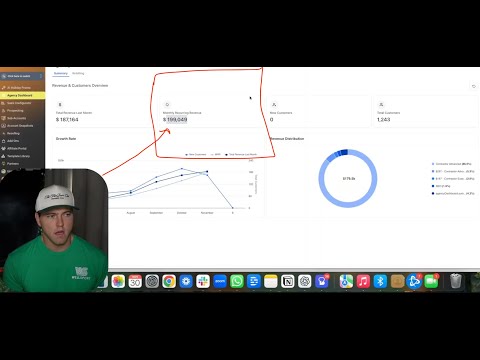
The speaker outlines their approach to running meta ads, including creating winning ads, setting up ad accounts, scaling ads, and sharing core lessons. They emphasize transparency in reporting earnings and the importance of showing real data.
- The speaker runs a successful agency generating significant monthly revenue.
- Transparency in ad performance is crucial for credibility.
- The session will cover ad creation, account setup, scaling strategies, and key lessons.
Finding Inspiration for Winning Ads
How can one find effective ad examples?
The speaker uses a tool called app.ads library to find ads that have been running successfully for at least 60 days. They suggest analyzing the hooks and messaging of these ads to inspire new ad content.
- Use the app.ads library to find long-running ads for inspiration.
- Focus on ads that have proven successful to inform your own messaging.
- Ad hooks are critical; adapt successful ones to fit your brand.
Ad Account Structure and Campaign Types
What is the recommended structure for ad accounts?
The speaker discusses two campaign types: CBO (Campaign Budget Optimization) and ad set budgets. They recommend starting with one ad per ad set and scaling up, while also transitioning to CBO for better results due to Facebook's AI capabilities.
- Start with one ad per ad set for better control over spending.
- CBO campaigns allow for broader testing of winning ads.
- Facebook's AI can effectively manage ad performance when using CBO.
Understanding Flow and Friction in Lead Generation
What is the relationship between flow and friction in lead generation?
The speaker explains that flow refers to minimizing friction in the lead capture process. For beginners, it's advisable to keep lead forms simple to maximize lead flow, while more experienced advertisers can introduce friction to filter for higher quality leads.
- Minimize friction in lead forms to increase lead volume.
- Higher friction can lead to better quality leads but may reduce overall quantity.
- Start simple when beginning ad campaigns to build a solid foundation.
Key Lessons in Ad Management
What are the critical lessons for managing successful ad campaigns?
The speaker emphasizes the importance of focusing on creative content over technical details, avoiding unnecessary changes to successful campaigns, and adopting a broad targeting strategy for beginners.
- Creative quality is more important than technical optimizations.
- Do not alter successful campaigns; let them run as is.
- For beginners, broad targeting can yield better results than overly specific strategies.
Transcript
0:00 All right, here's how I run meta ads to get clients for my $199,000 a month go high level agency. So, I'm going to go through how to create winning ads, ad account set setup and structure, how to scale your ads, and then a couple core lessons. let me refresh this page real quick just so you guys can see this is legit. so 199K here, 187 revenue last month. And then for everyone that says I make all my money off affiliates, let me go here.
0:23 I don't know why it's $0, but last month I made about $9,000 off affiliate. It's also not even the same payment processor. Anyway, I'm going to go to Stripe as well and refresh this. We're also in the middle of switching payment processors. So, Stripe is going to be messed up. you can see net volume last month was about 190K. And then this month we're going for about 199. And by the way, if you guys are listening to anyone on YouTube who's not refreshing their payment processor and showing you like the stats, don't listen to them.
0:48 Like if they're not refreshing their and showing you their processor of what they're making, like I'll have months on here where I refresh my processor and I'll be making less than I was the month before or the video before, it doesn't matter. It's about just being transparent and showing exactly what's working and what we're doing. But anyway, so here's here's what we're covering. So, how to create winning ads, ad account setup and structure, how to scale your ads, and then some core lessons. So, first off, how to create winning ads. Okay, so I use a tool called app.ads library.
1:14 there's a free version of it. I pay for it. It's like a hundred bucks a year, but this tool is like it's just it's the best freaking tool in the world. It's so worth it. So, I'll click Facebook, I'll click Instagram. we want to look for ads. and by the way, anytime I know we need winning ads, this is like the first place I come to to get ideas from people. That being said, like this does not give you an excuse to freaking copy people word for word. Like, don't copy their VSSL and their hook and their and their entire messaging and their offer and their landing page. Like, use them as inspiration. So, I'll come here. I'll type contractors because we work with home service businesses. We want to make sure we find an ad that's running for at least 30 days. Actually, usually I'll do 60 plus days actually. So, I'll do 60 plus. we want we want still running. And then we want spend doesn't matter. Format. We want I I'll usually do video if I'm doing video ads.
2:02 So, I'll come here. I'll see video ads here. I'll literally just click this ad. If your concrete company is already doing a million a year or more, but you still find yourself hustling to keep the pipeline full, this message is for you. Most >> that's his hook right there, right? And we know this has been been running for 132 days. So, I'm going to basically either I'll just copy that hook directly and then put my own body on it or I'll just like literally like take his messaging and if his messaging works for our industry, I'll tweak it slightly, but I'll I'll use the same general creative so I know it's me looking directly at the camera, saying that hook and then whatever messaging I want, right? Or whatever whatever whatever messaging that I come up with. But the point is is I'm getting my initial idea from this creative. Okay, so let's scroll down here as well. Let's see this one. how about this one? I'll click this one. So, this one's been running for 195 days, so we know this ad works.
2:52 >> What do you do when you get hundreds of leads month after month, but little to no sales? That's what almost every residential contractor is experiencing when they start to spend over $1,000 a day in ads. >> Okay, so this this this hook doesn't really apply to us, so I'm just going to skip this, right? But this is like this is genuinely the exact process I go through. I will just keep scrolling down here and keep finding people that already market for contractors. And like here's an example right here. So, I haven't really used much like many banners in my ads. So, I know this ad obviously works cuz it's been running for a long time. So, I'm going to try a banner. Obviously, I'll switch the messaging, but this is a unique idea that we haven't really tried yet. So, now I'm going to put a banner in my ad.
3:30 I'm going to copy this guy's hook, and then I'm going to put my own variation and my own spin on it. That being said, I might still copy, see how he's close to the camera. He's obviously filming with his phone like this with like some kind of a decent background behind him. I'll just copy that, right? And just use my own version. and I'll just repeat this process until I have a bunch of ads that I think will win and then I'll go test them. okay. So, ad account structure. so let me go over here and actually show you the ad account.
3:52 So, what we've been doing is there's actually two different ways. There's CBO and there's So, notoriously, you can see here we've been doing which is one ad, one ad set, and we will literally just run one ad per adset, start at $30 a day, and then scale it as high as we can. that being said, with the Andromeda update, we've switched over to CBO campaigns. So the difference is the CBO campaign basically the budget is held at the campaign level as opposed to one ad per adset, right?
4:19 So with the adset budget, you can literally have more control because you can say, "Hey, I know this ad is going to get this much spend." With the CBO campaign, because the because the spend is at the campaign level, basically what you're doing is you're just throwing all of your winning ads into one campaign, closing your eyes, and just praying it works. That being said, like Facebook's AI is so good at getting you results that honestly it's been working really well for us. And that's kind of what we're trying to transition over to.
4:44 so yeah, basically all the winning ads we've ever had, we'll throw them in one CBO campaign and just let it rip. anywhere from $100 to $300 a day. that's pretty much how we structure our ad account. And that's how we scale our ads. And when we're scaling our ads to find a winner, you always want to find flow before you find friction. okay, so what does that mean? So flow means here, I'll just show you actually. So flow means you don't want a lot of friction when they're opting into something, right? So, shameless plug if you want to use my if you want to use my link, you get everything for free, but for for go high level and all my ad and all my templates, but this would be this would be an example of low friction. So, let's say we run an ad to a to a landing page. Somebody clicks get instant access and they come here and there's just two questions, name and phone number, right? There's not very much friction here. But, if we wanted to add friction and get higher quality leads, we'd we'd ask a bunch of qualifying questions here like what's your business name? how long have you been in business for? What's your revenue level? how soon are you looking to take action? So, that would create a lot of friction and make our cost per lead go way through the roof, but we'd be getting higher quality leads. The thing is, if you're just starting out and you're spending less than a couple hundred a day in ad spend, you don't want to add a bunch of friction. You want to let flow come first. So, I would literally just put name and number and that's it. If you're going to run them through a landing page, just name and number, collect the lead information, and then call them, right? If you're more experienced with running ads, then you already know how friction and flow works. But the more friction you add, the the more your leads are going to cost, but the higher the lead cost will be or excuse me, the more quality the lead will be, right? So, if you just let the if you let the floodgates open and let's just say you just run a simple Facebook form ad, you're going to get a ton of leads, but they're going to be very low quality and you're going to have to go filter through all of them to find the good ones as opposed to just coming in here and adding a bunch of friction. Your cost per lead is going to go way up, but the leads that do come in are going to be significantly higher quality leads and way more ready to buy.
6:31 Okay, so a couple core lessons I've learned learned along the way. Nobody knows how met ads work. Like if anyone pretends they do, they they really don't. Like I'm over here just talking about my experience and you know $200 or $300,000 of ad spend. But these gurus out here like they can give you the basics and like core lessons, but again there are so many conflicting opinions and Facebook really is a black box which is why like I always just say test it and focus on creative over everything else. Facebook's AI is so good now that creative matters more than anything else and the creative will literally do the targeting for you. Okay? And also, like I just said, flow before friction. The most common thing I see inside my community and coaching and all that is people messing with that's working.
7:12 If you have an ad that is working, like I probably I've probably lost my ad account four or five times now. It it's ridiculous. Like not lost my ad account, but just messed up a winning campaign because I was trying to optimize it and make it better. If you have something that is working, do not touch it. Please, for the love of God, do not touch it. Just let it run and let it rip. Okay? Like, it's so easy to mess up a campaign. It's unbelievable. Okay? And lastly, be a Chad, not a virgin. This is the best picture. If there was one picture of how to be a media buyer, it would be this one, right? before me and my partner actually became partners, this was literally him. Like, he was trying to optimize for CPM cost and do like 1% lookalike audiences and all this nerdy Facebook And I just literally had a good creative and I just let broad targeting rip and I did significantly better, right? Obviously, there's there's nuances to this and we're testing different audiences and we're always testing stuff, but if you're just starting out and you're not an experienced media buyer, just go broad. Like, literally, just go broad.
8:06 You don't like Facebook's AI is so good. Just let Facebook do the work. Trust Zuck before you trust yourself. Okay. so that's it. Super super super simple. And go rip.
Summary
- Use tools like app.ads library for inspiration, but avoid copying ads directly.
- Focus on creating winning ads by analyzing successful campaigns in your niche.
- Structure ad accounts using either CBO (Campaign Budget Optimization) or traditional ad set budgets, with a preference for CBO for scaling.
- Prioritize low friction in lead generation to maximize initial lead flow, then gradually introduce qualifying questions for higher quality leads.
- Emphasize the importance of creative content over technical targeting; Facebook's AI can handle targeting effectively.
- Avoid altering successful campaigns; let them run without interference to maintain performance.
- Trust Facebook's AI capabilities and adopt a broad targeting approach for beginners.
Questions Answered
How does the speaker run meta ads to acquire clients?
The speaker outlines their approach to running meta ads, including creating winning ads, setting up ad accounts, scaling ads, and sharing core lessons. They emphasize transparency in reporting earnings and the importance of showing real data.
How can one find effective ad examples?
The speaker uses a tool called app.ads library to find ads that have been running successfully for at least 60 days. They suggest analyzing the hooks and messaging of these ads to inspire new ad content.
What is the recommended structure for ad accounts?
The speaker discusses two campaign types: CBO (Campaign Budget Optimization) and ad set budgets. They recommend starting with one ad per ad set and scaling up, while also transitioning to CBO for better results due to Facebook's AI capabilities.
What is the relationship between flow and friction in lead generation?
The speaker explains that flow refers to minimizing friction in the lead capture process. For beginners, it's advisable to keep lead forms simple to maximize lead flow, while more experienced advertisers can introduce friction to filter for higher quality leads.
What are the critical lessons for managing successful ad campaigns?
The speaker emphasizes the importance of focusing on creative content over technical details, avoiding unnecessary changes to successful campaigns, and adopting a broad targeting strategy for beginners.