Transcript
0:00 - I wanna read a quote from "The Mirror Effect," which is a great way to tee up I think a lot of things that I wanna talk about, so it said, you said in that book, "The very wealthy "and the very famous have a much closer affinity "with the indigent street person than with the rest of us. "There's the narcissism, the addiction, "even the outlandish dress. "Often they don't put great value in relationships." - And the bipolar disorder, I should've added that in there, that's the other thing you see in both populations.
0:30 - So I know you spent, and maybe continue to spend time, and obviously like have shows about this, dealing with people who were famous, celebrities, and the book talks a lot about that. This book's not new, but it's incredibly relevant. - Yeah, and what's a shame is that they wouldn't let me put this one chapter I wanted to put in there about other periods of history where there's been this much narcissism and childhood trauma, and I wanted to write about pre-revolutionary France and the probability of mob action and scapegoating and guillotines.
1:01 - [John] Really. - Here we are. - That tragically feels way more relevant than it even did - Here we are. - probably 10 years ago. - Oh, the people thought I was nuts. (laughing) Like what, how do you, you can't say that. I'm just looking at the patterns. It's just, it's inevitable. - How did you end up in this celebrity situation? Was it because of the radio combined with the medicine that you ended up treating celebrities as much as you have?
1:21 - Okay, so the psychiatric hospital I worked at, it was called Las Encinas Hospital, it was the template for every Happy Acres Hospital you ever see in the movie industry through the '20s, '30s, '40s, and '50s. It was fashioned after Las Encinas Hospital, because that's where they all went to dry out and deal with their depressions and their suicidality. This was a hospital that specialized in treating the Los Angeles world which was largely a lot of Hollywood, yeah, - Hollywood.
1:52 - lot of Hollywood types, and it was a private hospital, it was a for cash only thing back in the day, not when I was there, but back in the day it was this very exclusive thing, and they did a job of some of the stuff they were doing, but whatever. I mean I, when I got there, it was like a museum of psychiatry, it was incredible to see and to talk to some of the psychiatrists that became friends of mine who were there during all that and I really got exposed to the history of all this.
2:14 So I was seeing them in the hospital, I was talking to them on the radio 'cause we'd have celebrity guests every night, without exception, they'd pull me aside and tell me their, and it was always around trauma and narcissism and substances, and you know, and I would, I got to the point where I was running a program, I'd refer them over to my partner, yeah, you want treatment, we have a good team. - What is narcissism?
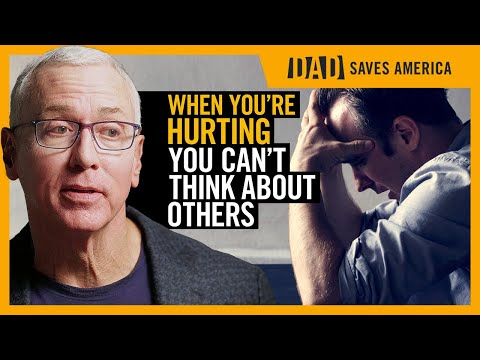
2:39 'Cause it's this word that I think we all know colloquially, like oh, that person's a narcissist and we just mean maybe they're self-absorbed or they, other, but what is it? - It isn't that, but, it's not egotist, it is self-absorbed but it's self-absorbed because of the deep pain they carry around, I mean, try to smash your finger with a hammer and try not to think about yourself, right? When you're in pain, you tend to focus on self.
3:00 These are people that often times were injured during childhood, it's called a narcissistic injury, and they don't develop normally. They exit the frame of relating that we need to develop an emotional landscape. They just pull out because of the trauma, and then they start trying to get from the world what they need to feel better, and that feeling better often involves feeling bigger and feeling more powerful, and it's literally, I heard a psychiatrist define it just a couple days ago, I have show Wednesdays, if I don't mention this my wife will kill me, at three o'clock where we've been talking to lots of the silenced people from the COVID epidemic, and it was, this was Mark McDonald who's been highly marginalized, but he said, you know, narcissist is, it all leads to narcissism right now, and he said it's essentially just a baby.
3:49 Imagine a, something that just not develop into a full adult, and then gets from the environment what they need to satisfy their whims. - That sense of arrested development I think is an interesting way to think about it. - It's a little just-so to say arrested development, it's really a deeply wounded core, and that core is something that narcissist is not necessarily in touch with at all. What they're in touch with is what they need from the world and how it makes them feel, and they need to feel powerful and big in order to protect themselves against this weak, painful, and often empty feeling inside.
4:26 - Why did you compare these celebrities and what they're going through to-- - The poor? - To the poor, to the indegenerate? I mean, we met because we worked on this homelessness documentary together, "Beyond Homeless," and so that context is lying in the background, and you're in LA, and homelessness there is a disaster. - Disaster. - But this is, you wrote this 10 years ago. This is before this was all at the forefront. - Yeah, I was just reporting what I saw.
4:52 So here I am, I thought I had some psychiatric knowledge and I arrive at this hospital in 1985 and I start digging in and really working there regularly, like I was there all the time, and this is what I saw. Now at that point, it was no longer this place that was, you know, cash only for the exclusive, it was a general psychiatric hospital, and so you know, Medicaid, Medicare, Medi-Cal, insurances and wealthy, all mixed together, that's who was there, the very rich and the very poor, and it struck me.
5:23 It was so striking, that the conditions that these two populations were suffering from was, would manifest differently, but it was the same, it was very much the same. A lot of trauma, and that's what makes people drive to be so successful, it also, it's what drives people to be nonfunctional. A lot of childhood trauma, lot of addiction, lot of bipolar disorder, lot of personality disorder in the narcissistic spectrum. Lot of it, just everybody.
5:53 Now, not to say there weren't anybody from the middle, of course there were, but boy, I was so, I would just, I was struck by how true it was that it was mostly the ends, that, how really it wasn't so much it was exclusively those people in the hospital, it was that they were so similar, and that was really striking to me, that the psychiatric problems of the very rich and the very poor were the same.
6:15 - If you enjoyed this clip, we've got more where that came from. Be sure to check out my full conversation with Dr. Drew. And one of the best ways you can help support us is to subscribe to the channel so you won't miss our interviews and short videos as they come out each week. (laid back funky music) (air whooshes)
Summary
- Wealthy and famous individuals often have more in common with the homeless than with the average person, particularly in terms of mental health issues.
- Narcissism is linked to deep-seated pain and childhood trauma, leading to self-absorption as a coping mechanism.
- Dr. Drew's experience in a psychiatric hospital revealed that both the rich and poor suffer from similar psychiatric problems, including trauma and addiction.
- The historical context of narcissism and trauma parallels societal issues, reminiscent of pre-revolutionary France.
- The conversation highlights the importance of understanding the underlying emotional wounds that contribute to narcissistic behavior.
- There is a striking similarity in the psychiatric conditions of the very wealthy and the very poor, despite their different life circumstances.