Transcript
0:00 today we have with us two amazing women who have a lot of experience are extremely passionate about this cause and of course their friends Educators edupreneurs uh parents themselves which is a big big plus one um and together hopefully with a lot of fun with a lot of actionable tips for you we're going to see how we can make play a very important part of of our children's
0:31 lives both at home at school and of course Outdoors um we have with us today P marker who's a certified parent coach with the Masters in special education and has spent the last two decades working with families to help them we have Miss Fatima aurar who is the founder of the aurar center of excellence and her passion for working with kids defines the different role she has crafted as an edupreneur educator mentor and for me both of them them are
1:00 really good friends so thank you both thank you both for doing this P you're also a special ed uh you know uh you're also a special needs educator what is the impact of play on children with special needs and how does building or creating or collaborating all of this happen um for children and how do use how do you use techniques to kind of foster it or bring it all together so um while we use play therapy as a term uh
1:31 sensory integration is the term that we use in terms of uh enabling children who have special needs and sensory integration simply put is just helping a child use all their senses to react to their environment or to play in a desirable manner so what tends to happen with children with special needs is that they may have one or the other sense heightened uh more than the other and that doesn't really help them coordinate well in order to do something so what
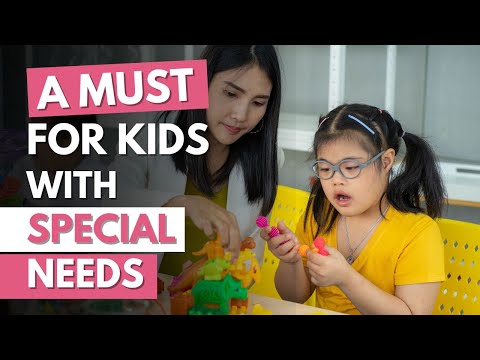
1:58 play does is it um makes you use all your senses okay you're using your tactile your kinesthetic your auditory your visual uh sometimes your sense of smell textures everything to put things together so manipulating things uh putting objects together you know whether it's balance and coordination all of those little things come together which seems like just ordinary play but it is um a therapeutic intervention called sensory integration so that is something that is really big for
2:29 children with special needs I think every human being would do well by it because I don't think any of us have all senses equally matched equally heightened and sensory integration will help us um achieve that so play is great uh for children with special needs because they're so threatened by what they cannot do and play takes away the threat the minute you're playing with someone there is no threat so in fact more and more uh relevant I think for
2:55 special needs I mean for every child but for special needs more than others where people's patience levels run low where their patience levels run low on themselves or for themselves play is very very vital so may I just add in a point here cuz I'm I'm actually now thinking about the classrooms where uh you know I find P that there are children who need support uh and it makes so much of sense when you say in a
3:20 non-threatening way they're able to control uh but and then there are the extra Smart Ones uh who are really independent and can really create create anything uh they also don't need that uh support from us but it's the happy gol Lucky in the middle uh who bless their souls are just happy yeah with no Direction really uh but they're not the ones who like the stage on fire with their oratory skills or raise their hand up saying Miss I know the answer or say
3:49 give me the ball cuz I know the tables but you put objects in front of them uh you put a Lego you can actually read their mind they're expressing in a nonverbal way but but you actually we use that as a pre-assessment tool um especially during admissions we get these kids to play and you can figure out what the child is comfortable with where the hesitancy is where the child is going to take risk what the child is
4:13 created without verbalizing If the child has created it's obviously in the mind it's just another step to express yourself but this is such an important diagnostic tool if I could sorry the Educator's hat goes on that's useful for my happy golui in between to say okay I can drive this now I push this kid to do this and perhaps like you jump into the water and be saved but I love that play is nonthreatening yeah I just like for me
4:43 that's it is such a big takeway for me because I you know I never thought of it like that and it just somewhere has created a Level Playing Field for the one who wants to catch the ball and answer the one who's you know the happy gol lucky or the one who's struggling right because this does not define I I I could build this but I still may not be you know top of class or bottom of class if I've buil this you
5:09 can't put a label on me whether I'm dumb intelligent sharp whatever labels we give kids hopelessly right so for me play is that non-threatening um that that feeling right and I I completely love that beer just hoping that we try and cover more ground on that so really thank you so much both thank you for having me thank you thank you so much man for parenting tips celebrity interviews recipes conversations with experts DIYs and lots more subscribe to
5:40 kidstop press now
Summary
- Play therapy and sensory integration are crucial for children with special needs, helping them engage all their senses.
- Play reduces the perceived threats children face, allowing for better emotional and social interaction.
- Non-verbal expression through play can serve as a diagnostic tool for educators to assess children's comfort levels and creativity.
- Play creates a level playing field, enabling all children, regardless of their academic performance, to express themselves freely.
- The discussion highlights the importance of incorporating play into both home and school environments for holistic child development.