Section Insights
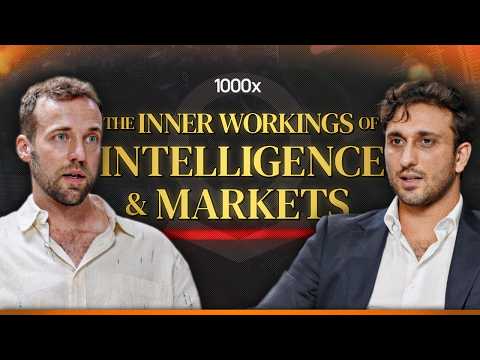
Introduction to Alex Good
What topics are covered in the conversation with Alex Good?
The conversation with Alex Good covers a wide range of topics including the implications of AI, the rise of socialism, and strategies for financial benefit in the future.
- The discussion begins with a humorous analogy about identifying the right targets in conflict zones.
- Alex Good is introduced as a multifaceted thinker with insights on various contemporary issues.
- The speaker expresses a desire to create a community that aligns with their values and standards.
Economic Necessity and Market Dynamics
How has economic necessity influenced personal and market behavior?
The speaker reflects on how their journey into public discourse was driven by the need to adapt to market changes, highlighting the shift in focus from fundamental values to attention-driven metrics.
- The speaker emphasizes the importance of adapting to market demands and the evolution of personal branding.
- There is a critique of how meme stocks like Tesla and GameStop have transformed from lacking fundamentals to having significant market influence.
- The conversation touches on the broader implications of market dynamics on individual and corporate behavior.
Concerns About AI Competition
What are the current challenges facing Palunteer in the AI landscape?
The speaker expresses bearish sentiments about Palunteer, citing its struggles against competitors like Anthropic and OpenAI, and questions the necessity of Palunteer for effective LLM usage.
- The competitive landscape of AI is described as increasingly hostile, with frequent public disputes among companies.
- Concerns are raised about the effectiveness of LLMs without proper frameworks and data management.
- The speaker's skepticism reflects broader uncertainties in the AI industry regarding product viability and market positioning.
Market Reactions and Corporate Responsibility
How are companies responding to market pressures and layoffs?
The discussion highlights how significant stock drops are forcing companies to reconsider their staffing and operational strategies, particularly in the tech sector.
- The speaker notes that companies are being pressured to make layoffs to improve financial performance.
- There is a contrast drawn between the valuation of software companies and commodity firms, indicating a shift in market expectations.
- The conversation suggests that companies with credible AI strategies may find opportunities for recovery.
Risks of Deregulated AI Development
What are the potential risks associated with deregulated AI acceleration?
The speaker warns against the overly optimistic view of deregulated AI, suggesting that significant job losses could prompt government intervention.
- Concerns are raised about the unintended consequences of AI, including potential job displacement.
- The speaker argues that while governments may be incompetent, they are aware of the risks posed by AI advancements.
- The discussion emphasizes the need for proactive measures to address the societal impacts of AI technology.
Transcript
0:00 The the first use of Palunteer was like, "How do I know that I'm killing the right terrorist?" Because if you try to go to Afghanistan and kill all the people with beards driving a jeep, then you're going to kill everyone and you don't know who's who. Honestly, I have no idea how to introduce this next guy, but his name is Alex Good and he is one of the most interesting people that I've ever had the pleasure of interviewing.
0:23 Our conversation spans a ton of different topics ranging from what's going to happen in the age of AI to the rise of socialism to how to benefit and put money in your pocket based on what's to come. Okay. So, I mean, like I'm in the PopCat Telegram group and Morad is in there, too. But he's the main event, you know?
1:00 It's like Morad in the Popcat group and people are kind of gloming on to him and I'm like, "This is the community that you build." That's not the community that I want to build. I want to build something that's like my bar is like, would I use this product every day? You know, like like would I show up every day and do what the AI told me to do publicly? That was the bar. And and just the Popcat Group wasn't the bar. So I'm like, okay, like what would it take to actually make like a system where a large group of people voluntarily opted into the system and had a real command and control architecture with an AI at the center of it?
1:34 >> what was the issue with the Popcat group that you saw? >> So I mean the the issue with the PopCat group is 100% about the price of Popcat and then it was about the promotion of PopCat and it wasn't like there was there was no it wasn't funny. it like you know the theme was like oh we're part of a community I didn't see elements of a community forming there were not people helping each other out there were not people colluding usefully like it's it's not like I'm in the popcat group hey do you want to get into this venture deal with me right it's like no we're all going to kind of just like post the popcat chart and maybe engage with some tweets that Morad posted right that was the extent of the popcat telegram group and I was like that's interesting from like a very you know the the thesis that Morad had was more profound than that right so it was kind of like he's like look in the age of AI the only real identity is that we have these new digital cultures and like it's very relatable because we're on like X and we're we're there and to some extent I would have never met you if it weren't for X so we kind of natively understand that this is true but the the community on X is quite rich right there's DM M there's like meetups, there's in-person events, there's deal flow, and it it just it wasn't there for the memes. Like the meme coins were not useful social identity layers. But like I kind of was like, okay, like I like the idea. I think it's true, but you didn't take it far enough, right? You didn't have a real architecture. so, so that's like part of why I started a token. And like what would it take to create what would it take that I joined the group and I didn't feel silly joining it.
3:17 >> Right. Yeah. >> And before we get into that because you've created something kind of insane. You were telling me before the only point of it is to basically increase its own value. And we'll get into it. We'll name it. We'll talk about it. We'll dive in. But first I want to ask you who the are you? >> Who the am I? >> Like who the are you man? I >> I've known you for four years five years now.
3:37 >> Yeah. We've met a few times in person. I'm a huge consumer of your content and tweets. I think that they're brilliant. But you've lived a lot of lives. You're a Wharton grad. You are former Palunteer, former Valley. You started a company called Perpetual that sold that got acquired. Then you became an independent trader. And then you started I mean you started tweeting really actively. Started being an essaist. You have all these thoughts on the world like and now you built this thing called post fiat which is a layer one cryptocurrency. I mean you've done more in a life than most people even you've done more in whatever 10 years 15 years than most people do in a life.
4:18 Like what are you doing? Like who like who are you? Yeah. I mean I I was always really really interested in trading in capital markets. you know I I was very normal for a long time. like you know I I I worked a city. >> Do you consider yourself not normal now? >> I I think I got weird eventually and I can tell you exactly what happened right you know I was always looking for an edge trading. I did FX and then I did big data stuff at Palunteer and we found a lot of interesting stuff with big data at Palunteer and then I worked on Swift data in Singapore and then like basically when I showed up to Balaznney I I got hired at Balaznney because I had access to a data set that got cut off because of the swift problems at Stan Chart and HSBC and I had to invent a new trading strategy and that trading strategy was based on advertising.
5:13 and so I traded, you know, Google and Facebook and Twitter. And then I had to advertise things. So next thing you know, I'm advertising video games. I'm advertising OTAA, Booking.com and Expedia and I'm trading those stocks. And then when I started Perpeta, it was just a very simple observation that I knew that that I knew because of the advertising that I was running that Amazon was incredibly undervalued. Right? So I it bal they were like risk was constantly calling me you have like a 15% of your book in Amazon which is way too big and like like why do you own all this Amazon? I'm like because everyone is saying the retail business is worth zero. I know it's worth a cajillion dollars because I'm running all these ads and they're breaking even on ads. so it took a long time for this to adjust state but what ended up happening was that I just got really in the weeds on what it took to acquire a buyer of a thing, right? like an advertisement, right?
6:08 And eventually we got so big at Perpeta that you know we started booking like Crocs and Kimberly Clark and we were selling we were still selling data to to funds but then at that point when we started booking these these big companies it was no longer viable to trade and that's how I got into crypto because I was like okay like what what can I advertise that has an edge that has a direct feedback loop and and by this time I'd already started seeing stuff like Tesla like way before meme stocks became in in our common parliament, we'd be running ads for like Tesla cars and all of the the clicks were coming from like the search Elon Musk or like >> can we take a step back for a second and talk about the strategy?
6:46 >> Yeah. >> And how you found it and generated that edge? I mean, I think one of the most important things that you do as a trader >> is figure out what your edge actually is. And half the time it's searching for edge and then it's monetizing the edge. So, what were you doing and how did you find it? >> Yeah, I mean it was like actually a pretty funny funny thing. I showed up to work. I had been hired because I had this data set or who was supposed to have this data set that I didn't have and they're like, "You have to come up with this strategy." So, they moved me from Singapore to San Francisco because I started the strategy. I talked to a guy who owned like $200 million of Facebook stock.
7:19 >> And I asked him point blank. I'm just like, "Have you ever run a Facebook ad?" He's like, "No, I'm just in it because Zuck is a Chad." Basically, right? Like that was like this. I mean, he was right actually in hindsight. He's right. But I was like this is a huge opportunity because people are trading these advertising stocks and and you can get real time data about how well their stock like you know their ads are performing and and and then but they're like what do I actually advertise right like you have to advertise video games or you have to advertise stuff on Amazon or you have to advertise travel booking sites or like groupons and all of a sudden you're advertising airlines and suddenly you have a view you're like you know a very very simplified version of the strategy is like at the time you know it it cost you about 70% of your margin of Booking.com was spent on ads. So if you talk to like the CFO of Booking.com, they'd be like, "Yeah, we're like very very actively managing our advertising budget." You talk to the C CEO of Electronic Arts, you know, you'd say, "Look, dude, like you can sell a $50 video game for $4, right? Why aren't you spending all of your money? Why are you spending any TV ads? Like, why are you doing any TV ads? He's like, well, we know the digital ads work, but we like the margin story. We can progressively increase our digital ads. And you're like, holy crap.
8:39 Like, at the time, Electronic Arts was cheaper on an EVD bed multiple than booking. And you're like, okay, company A can acquire customers for a $50 video game for $4. And then company B is spending five out of their $6 of profits, and they're trading at a way higher multiple. So, you know, you go long electronic arts, you shortbooking.com, you've got a pair trade, you've got the valuation on your side, you've got the data on your side, and if those dynamics change in your quarter, like let's say say like, oh, Call of Duty ads are like way more expensive this quarter, then you're like, okay, EA is not cheap anymore because their product is hard to acquire. So, so it at the at the time it was very very normal. And then I guess to your question is like it only got nonlinear once you started getting into meme stocks, right? Because at some point you're like, "Wait a second. The alpha I'm measuring with Tesla is not how cheap it is to sell a car. It's how cheap it is to sell the stock, right?"
9:37 And that's how I got into XRP. That's how I got into Cardono. That's how I got into like Binance affiliate programs. That's how I got into X because, you know, I was running affiliate ads and they were like, "Yeah, we're we're getting rid of our affiliate programs if you don't have 10,000 Twitter followers." I'm like, "How am I going to get 10,000 Twitter followers? I need to start saying things on the internet. And so that's that's how I ended up starting like I I everything that I became was a sort of result of just sort of economic necessity. And I think it's crazy because you've actually witnessed the degradation of our markets and society in real time from the inside. Just based on that framework, it's I used to use this data set to figure out if things were expensive or cheap and I used to use them to express real views on the real world and now I just use them or I use them to express views on attention.
10:26 >> Yeah. >> Do you think that's right? >> Yeah. And I think you realize like over time you're like at first you think that and then you're like okay well how how much has Tesla gone up in terms of its real cash flow generation since that time? Enormously. So, it's like at the time Tesla is a meme stock, but they gave Elon Capital and he did useful stuff with it and and so it's hard to really, you know, even GameStop now they're they have enough money where they're like going to acquire eBay and like now people are really trading Pokemon card. Like when GameStop was a meme stock, it had no fundamentals, zero fundamentals. Now it actually has fundamentals, right? Like actually Michael Bur was like a GameStop investor because he saw like the trading card turnaround. Like these things aren't that simple. I think in crypto we see it too. It's like okay at some point Ethereum was worth $7 and it was ridiculous and then eventually now you have like Tether and Circle trading on Ethereum and and so I think memes aren't necessarily just degradation. And I think sometimes these memes are like hallucinations of our society or hypersstitions if you will where capital flows into ideas and people that society wants to advance.
11:39 And so maybe we can talk about this hyperscal vortex as as as an example of of what you're what you're getting at. I think at the core to me as a trader it just reminds me of that simple graphic from the alchemy of finance the George Soros graphic of reflexivity where perception actually does influence reality and then you can get a flywheel effect of if people believe something is valuable then it actually becomes valuable but there there are two different outcomes here it's like a meme no matter how high it goes it's not generating any value for anybody right it's generating value in the sense that you can sell it at a higher price point but Tesla as it as it trades higher, you sell the stock, you get the cash, and then you can actually invest and grow the company. So, the perception of it as more valuable actually does make it more valuable. Or do you think that applies to memes as well?
12:28 >> Well, I think I think the frame that I learned to take originally was that average like I call it the goldfish theory. and it's the idea that I noticed this pattern with Amazon sellers where like there was a guy selling dandelion tea and every day 8% of people who went to the page bought it. Like it was always 8%. It didn't never go to 6%. It didn't go to 10%. It was always eight. And it was like this for literally years, right? And I'm like, why do we why do 8% of people always buy this? Like, you know, they're different groups of people. And it turns out that certain things like attention vortexes like Elon Musk being Elon Musk is actually very predictable, >> right? So, so in a way predicting people's affinity to buy assets is far more predictable than predicting the future. So, so that was sort of like the frame that I I took was that like you don't know in advance who is going to be the vortex of attention, but once you know that they are, it's very predictable that they're going to continue to be that. And so that allows you to create like a a more predictive mental model of of the world than like a lot of people in macro trading, they're like, I think this is going to happen.
13:40 This is where the puck is moving. I would rather be like, yeah, I think like 40% of people who see GameStop GameStop come up with a Pokemon card release are going to buy the stock and that's going to drive the price up. That that's something I can wrap my head around. I don't like predicting the future when it comes to trading. so I think that's like how I got into it and I don't know if that answers your question.
14:04 >> It does. It does, but it's I mean there's just so much to cover here, but I also want to understand where that model breaks, right? Because at some point that model falls apart. You can't say people like 40% of people that come across Cardano are going to buy it at Infinitum. At some point they they stop buying it, right? And so like how do you assess how do you assess that risk? Actually, Michael Sailor is a great real time example of where the model breaks.
14:29 >> Okay. >> fragmenting liquidity like so, so for example, the dandelion example, if you launched another dandelion that was very, very similar to that dandelion, it would break the model. >> Mhm. if you launch STRC in addition to MSTR, you break the model because you fragment liquidity, you fragment attention into two different things which suddenly become comparable which previously weren't. and also trust matters a lot. So that the other thing about the dandelion t example is it was like entirely based on product reviews. So if their product review went from 4.5 stars to 3.8 stars, like if you start to lose trust in Michael Sailor, it's like his star rating going down. and then the conversion rate drops. And so like there are things in real life that affect these conversion rates and the most direct way to drop your conversion rate is to drop a competing product. So like Elon dropping SpaceX is unambiguously bearish for Tesla stock, right? Because it's it's like an attention of fragmentation. endural launching an IPO will be bad propellanter stock because it's it's the same e-commerce dynamic with competition and that's the most predictable fragmentation and and generally what you want to do like actually this is why altcoins have such a hard time is because they are playing for the same pie bitcoin is doesn't have any competitors right Bitcoin doesn't there's not there's not another store of value asset that has successfully argued that like you know we just have like a fixed supply and that's just what we do. Ethereum and Salana are fighting and then all these other L1's are fighting for their pie and it's very competitive and so so I think that's like how the story breaks down.
16:16 >> That makes sense. So you actually worked at Palunteer? >> I did. >> Was that out of college? >> I worked at City FX equity derives and then got picked up at Palunteer. >> Right. And so when you were when you were at Palunteer, what were you what were you doing for them? Did this was it data analysis? >> Yeah. So I was like you know Peter Teal and Bridgewwater they built a product called Palunteer Finance and I was one of the first users of the product. and so I was very fortunate to have like a group of people train me at a young age to like do all these quant trading strategies I had no idea to do like and and then eventually I realized because I was such an early user that I had a lot of leverage actually. So I was like you have to hire me because I'm the only person who knows how to use this product. and so I worked on capital market stuff. So we worked like the biggest project I did two big projects. one was the application of credit card data to predicting largecale purchase decisions at the CIO office level of a bank. So trying to like basically predict macro slowdowns. and then I also worked on swift data and processing both like you know compliance for swift data and also converting swift data into once again macro signals. It was always kind of like the two business lines are always there's like a revenue side where you're like how can I take this data to make more money for the CIO office. That's the fun stuff. And then the bread and butter is like you know this guy is selling barrels of oil at $130 and the price is $80 and it's probably transfer pricing and like you should do something about that. So that's always like the two sides of a Palunteer deployment is like help the business lower its future fines on one side and then the other side is like once we've lowered your fines here's the cherry on top here's the revenue boost.
18:02 >> So I mean so you're actually on the I didn't actually realize that Palunteer had a finance side to it that you were that you were working on and where is that today? I mean, you look at what's happening in the world of AI and as AI applies to finance, is that sort of what Palanteer was doing back then? Was it just aggregating data or were they building models to actively trade? they were really early on machine learning you know they would work with really big oil companies early on to kind of make these like lead lag signals where it's like okay you have this many shipping assets like load this into the palunteer ontology and predict you know if there's going to be a blowout and a spread of oil and that would go to their capital markets desk but then it would also go to their shipping groups and so eventually that be that was like in in the early days of palenture People hate the stock. People hate the company because there's like it's just a bunch of guys coming up with these insights and like like pro like pseudo productizing it and giving it to the the CIOS and eventually what Palunteer evolved into was a much more elaborate product, right? So they eventually productized all of this and it stopped being consulting and it started being delivering this via Foundry and other products. So like there's different products. One of them is Gotham which is a security product and then foundry and other ontology products are more revenue generating.
19:30 And I think their business is split kind of like 50/50 between the sort of commercial business and and government. But you're kind of bearish on Palunteer now is what I'm hearing from you. You're tweeting a little bit about the fact that they're in a fight with anthropic and open AI. And so what's your I think a little bit of the framework is it almost seems like everybody is in a fight with anthropic and open AI. Every week you see a new release from these frontier labs that could take out companies in this world like what what's your view on what's happening in the world of AI?
20:06 Like are are we seeing a are we seeing just a a brawl out out in public between all these companies? Well, I think you're seeing a really specific brawl because Alex Karp called out Dario Amodore like basically called him publicly in an interview. and then >> I I somehow missed that part. >> Yeah. He he well basically he it was kind of like a quote tweet, you know, because Daario is saying like, "Oh, we're going to have 10% unemployment."
20:34 And then Karp is like, "If you think you're going to have 10% unemployment, well, guess what? News flash. You might have a high EQ, but you're actually retarded." you know, it's sort of like and they're starting bigger and bigger fights. And yeah, I am bearish on Palunteer now. And and the reason is just because the assertion of Palunteer is that LLM don't work out of the box. And they say you need Palunteer for LLMs to work. And I'm just like, >> is that because of the underlying data or >> Oh, yeah. say like in order for your business to like properly use LLMs and avoid hallucination with your large data sets, you need to have an ontology baked in so the agents know what to interact with and I'm like I just know that's not true, right? Because like I use LLM all the time without any palunteer c can you can you clarify that when you say need to have an ontology baked in?
21:23 >> What what do you mean when you use the word ontology? >> So in Palunteer world there is a model. So, so the the origin of Palanteer is actually interesting. So, the the first use of Palunteer was like, how do I know that I'm killing the right terrorist? Because if you try to go to Afghanistan and kill all the people with beards driving a jeep, then you're going to kill everyone and you don't know who's who, right? And it's like, okay, like how do you even know that Osama bin Laden is Osama bin Laden? You know, it's like well for the Toyota Hilux, >> it's like you need his license plate number, you need his known associates, you need his interactions with other people, you need his bank accounts. And this idea of like these things that comprise Osama bin Laden are a quote unquote ontology. And they say in order to target the right things, whether they be financial assets, whether they be military personnel, you need to have a higher level ontology to map onto it so that you know that you're working with the right stuff. Now, in the world of AI, they're using the same argument. They're saying, "In order for your AI agent to know that it's interacting with the right data sets, you need to label the data sets effectively, you need to have a model for when they've been acted on by a certain employee at a certain time in order for this all to work." That's the argument. But like, if you work with AI in real life, you know that that's not true. Like, you can point an AI at your codebase and just be like, "Yo, figure this out." and it will right and and actually as AI models have become more capable the need for ontologies has decreased linearly right so so there's all these like studies of prompting and how effective they are and like all the major labs are basically saying prompting is less important than it's ever been you don't need to paste a two-page prompt into your model for it to do the right thing anymore now you can just be like build me a great website and it'll do it so so that's like kind of real- time evidence that that the use of ontologies is like a hack to make AI models more performant and then you know the other thing is like there's a lot of fragmented attention you know like open AAI is launching FD there everyone uses the word forward deployed engineer right so open AAI has forward deployed engineers anthropic has four deployed engineers with golden sachs so it's like what paluntary used to be special because it was the only person on the block with like a intelligence product and now they're three so it goes back to what we were talking about about fragmenting attention like when there are three things in the store instead of one.
23:50 Guess what? If you're trading at 100 times sales, like you're going to face investor headwinds. >> Would you agree with the statement that structured data is less important, but raw data is still as important as it was before? >> Well, the ability to turn raw data into structured data has never been cheaper. >> Right. That's what I'm getting. >> And and so you could argue that the the value of raw data is definitely going up a lot. And that's something you're you're seeing in the market, right? It's like the new drop shipping is data acquisition, right? like like everyone is starting a data firm to sell data labs because you it's much much easier to do it >> and and what like what are maybe you can talk about some opportunities in that right like what are you seeing anything there are you are you working on anything in that >> world yeah I mean my my sort of view is that you know we've seen a crypto protocol do this right grass >> and they sell data to labs I am not interested like my premise is that most people in crypto are here to speculate and the the information that they generate is very rich and very valuable and like if you actually think a data source is valuable, you shouldn't sell it, you should monetize it. And so that's sort of like what I'm working on is like how do I generate the richest possible data set with a group of pseudonmous actors, monetize that information instead of selling it to an AI research lab, like just monetized it internally, >> right? And but that's I think for for most people most pretty difficult. I think one thing that I always come back to is that a AI I think for high agency people that really want to get things done is this massive tool of leverage but your average person isn't taking advantage of it right in any in any meaningful way. I think most people are using it as just another chatbot or an assistant and people don't really go past that or beyond that. But what does that what what does that mean if you can start to build a you can start to have individual people build billion dollar companies do this by themselves like where does that leave us when do you agree with the statement that AI is making the vast majority of people useless?
26:04 I don't think I think it changes the use case or like we are not yet at the point like we're still at full employment actually like a lot of these AI unemployment things have yet to kick in. what is to kick in? Do you think they will? >> I do. And and I think I think a good example is like Figma stock. It dropped 85% and their headcount went up or like Accenture dropped 60% and their headcount's up. They have 800,000 employees, right? So, so, so we know that Accenture hasn't fired anyone and the market has crushed their stock 60%.
26:37 So, it's it's somewhat safe to say that the the the employee reduction is yet to come because it just hasn't happened and the employment statistics don't reflect it and actually like so there's like this huge disconnect between like what Amod and and Alman are saying about this existential crisis and we need MMT and then the employment report comes out and you're like we're like full employment, you can't hire people. and do I think that people are going to lose their jobs? Yes, I do. Have they lost their jobs yet? No, definitely not. And like I think the most interesting primitive is not that we're going to have these solo shippers. It's more that there are a lot of people in the same boat. There are a lot of Accenture employees who are about to get, you know, laid off. And then the question is like how can you use collective action to extract economic advantage? I I think that's like the interesting question because you know there are different ways to to approach it. Some people are like MMT maxis, right? They're like the way that we use collective bargaining is that we all vote to give ourselves money and you're like okay well what would that look like? It's like well MMT is actually quite hard to distribute the taxation would that would be required because you know we're we're seeing like global interest rate markets are not in a happy spot in terms of like government spending. So the idea of like doing MMT on top of the current like JDB's blowing up is hard. And so you're like, "Okay, well, you need taxation and like what does that look like?" And and that probably is like central bank digital currencies. And so so I think the the thing that's going to happen is that more and more people are going to be focused on saying, "Okay, we tried to escape the permanent underclass. We didn't. We're all in the permanent underclass together. like what are we going to do about it? You know, and that that that's like a more interesting question. That's something that hasn't kicked yet because people haven't really it's like a meme right now, >> right? I mean, but people really do take it seriously. And I think that's actually a premise of why a lot of people listen to this podcast in particular and and other financial based media news is that people are trying to figure out how do like one, how much time do I have left, right? you're kind of saying it might actually be more elongated I think than what people are claiming right now or what people you know what Dario and Sam are saying and then you know how do I where do I put my money to escape the permanent underass and is it possible even to escape right and so I think I kind of want to start with with one and then you can walk me down what you think is going to happen like how long is it going to take before we start to see these unemployment numbers kick in and we start to see this permanent underclass actually form >> I think Next I think what's going to h like I I literally think it's like the unemployment should start kicking within 3 months and it's just because of the accent >> within three months.
29:19 >> Yeah. Because the accenture situation was so extreme like the stock dropped 26% in a day. Yeah. Like like it it's it's one of those moments where the the management >> it's like if they weren't awake before they they woke up real fast. Like the the software indexes are not bouncing back. like the the really egregious overhiring firms like Salesforce, the market is just crushing their stocks. And so the market is being very very clear with companies like you need to do RA and people didn't want to do it and they're going to be forced to now because their stocks are down so much.
29:50 >> Do do you think there's a trade in that that once they start laying people off maybe these stocks bottom for a little bit? >> I think so. I I think I think some companies that have credible AI turnaround plans where they could genuinely deliver their software for much less. Like yeah, they they could have like crazy terminal evidom margins and these things are trading at like you know actually the the joke is that you know commodity companies right now are oftentimes twice as expensive as software companies. And the big disc used to be that oh you're trading like commodity. It's like well dude now commodities are twice as expensive as software. So, so software is is kind of bottom of the barrel multiples. So, so the bar for them to start firing people and delivering a product is like really appealing. You know, the like stuff like Nintendo it's not just like software, it's like people who were competing with enterprise for stuff like memory. Like Nintendo just couldn't launch consoles because they couldn't afford memory. And so their stock is down, you know, 60% year-on-year. And you're like, "Okay, well, what if memory breaks?" and then then it can rebound. So, so yeah, I think there's going to be a lot of opportunities. you know, especially like one of the interesting AI developments is that, you know, you saw all this like really really hype stuff with etched. Like all the the VCs were like saying, "Oh, there's a new fundamental chip breakthrough that essentially is like what happened in crypto with AS6 where you're like, okay, rather than serving a model with it's massively memory intensive with inference, what if you just literally put a model directly into an ASIC?" like then you could run physical mod like it rather than having a generic GPU, you have a specialized GPU with a specific model running on it which would drastically cut memory usage. And so I think like the the interesting thing is like if you remove the the overhang of a lot of these quoteunquote bottleneck trades, a lot of companies that have been just destroyed by the bottlenecks are going to like bounce, right? So so I think yeah, there's there's going to be a ton of trading opportunity.
31:56 >> Like maybe maybe you can talk about some specific companies and how they're going to if you have I guess. >> Yeah, Nintendo. Yeah, >> like Nintendo's big. Okay. >> Yeah. I mean I think the other thing is we saw the libgen settlement with anthropic right and essentially it's like anthropic scraped well I mean libgen scraped all the books in the world and then anthropic trained on libgen and then there's a big copyright settlement people have proven for example that you can like get 97% of Harry Potter out of chat GPT so you can just like prompt chat GPT to get Harry Potter and That's a problem from a copyright perspective, right? And so like there are all these companies that have like Nintendo has a great IP franchise. So if you're like if you're kind of bullish on non-enterprise or more consumer type stuff, there's a world where like all future AI Marios pay Nintendo, right?
32:53 so Games Workshop would be another one like you know Warhammer 40,000. That stock has done a lot better than Nintendo. >> That would actually be a huge value unlock. >> Yeah. for for Nintendo if they actually allowed that to happen. >> Yeah. >> Right. If they allowed people to just create games with their own IP using AI, I mean, that would be massive. >> Yes. >> And I assume that you're thinking that this could apply to other areas as well.
33:13 >> Yeah. Anyone with like core canonical IP, Lindy IP, >> right? >> Disney, Nintendo, Games Workshop. I and many of the like Hasbro, like D&D IP, a lot of these things are very very popular. Star Wars and they all have really radically different valuations, right? you know some some of these charts are up to the right, some of them are not, right? So so there are different opportunities and I want to go back to the the point about do you think that there could be mass unemployment coming in three months >> or the beginning the beginnings of unemployment.
33:47 >> Yes. take that a step further and talk about let's say you go 6 month 9 months 12 months 24 months down the line I mean you've written about sort of the blackprint and maybe get get into that and talk about how you think the world is going to change because of these new tools that we have well yeah I think I think there is a point and I think we've already crossed the point where this is like this has stopped being a technological phenomenon has started becoming a political phenomenon.
34:24 and it's already showing it's going to show up in the midterm elections, right? Like the next big checkpoint that I think would validate my worldview and I guess like to to succinctly summarize it, it's that people won't vote for a right-wing accelerationist system which doesn't benefit them economically. how and you know the the math is actually crazy, right? Because like you know there are 50,000 Nvidia employees and Nvidia is worth single-handedly more than the entire Russell 2000 and the Russell 2000 employs millions of people, right? So, so, so there is like this extreme imbalance between like the number of voters at Nvidia and the number of voters in the Russell 2000.
35:08 And right now the market kind of assumes that like this will go on forever, that there's no Democratic outlet, that it's kind of like Trump the stand all the way and that like, you know, the right-wing will keep winning for some reason. I'm like, no, I don't think so. I I think what's going to happen is that people are like actually the people like the typical Accenture employee who loses their job is going to be quite effective at coordinating like ground like grassroots Bernie Sanders votes, right?
35:34 Like those are competent people. >> Yeah. And you're sort of seeing that I think with the DSA. The DSA is extremely effective. Yeah. in what they've done right now and they're installing socialist candidates sort of across the board and the the competency levels are going up among these socialist politicians but it's kind of true that on the right you also see the rise of populism. It's a little bit of the horseshoe theory here where it's just different constituencies that are getting the benefits. I think from on the on the right and on the left I think both are appealing to I mean whether it's giving subsidies to farmers or giving subsidies to like people people in the cities.
36:11 It it almost seems like that's where our politics is headed. >> It's also like Trump like you know Trump went in and regulated anthropic. You know he already kind of started the process of the political system blocking major model releases. and so that's a big deal because now that the gloves are off, it becomes acceptable to to regulate and sequester AI in the name of the quoteunquote public good. It's normalized now on the right and on the left. Previously, that would have been a Biden policy. Like that would be a Biden move of like, oh, we're gonna stop this AI model from launching. Now, it's a Trump move. And so, I think you're going to see you know, that the core thesis of the blackprint is that the political system in the United States is not designed for hyper acceleration.
37:02 like the the the fantasy that people have that we're going to allow like genetic like peptides are a good example, right? Like the FDA is like it's definitely not it's not very clear that peptides are even going to be legal, right? Like everyone's shooting these things up, but it's like okay, what about human test? Like what about human trials? What about the process of how we approve drugs in the United States? Like if you look at the history of US medicine, it's never been like, "Yeah, let's yolo this vaccine." Except for like the one time we yolo a vac and then it like did not go that well, right? Like the one time we yoloed a vaccine like you know there's myocarditis. It's like a problem, right?
37:40 So so the the backdrop of like actually right now the consensus trade is biotech, right? everyone is like long biotech because they're like, "Okay, like what the AI companies have to do in order to prove themselves is to launch a C." Like, who doesn't want to cure cancer? What if Anthropic cures cancer? >> Do Do you think that trade is it's truly baked in already? >> Well, I I think it's gone the wrong like I'm bearish on like the application of biotech and AI. I mean, >> okay.
38:08 >> And the reason is just national security. like the the the tail risk is so high after after we saw like Wuhan, you it's basically like all it takes is one guy running a unsanctioned experiment on a bat like like there's a guy like doing like stuff in his garage with an AI model. and I just don't think that type of stuff is like going to be tolerated in the medium term. I think you'll probably have like the second you have one event, just one event, it'll be banned, >> right? All right. But don't but don't you think that I mean the these pharmaceutical companies are at this point quite highly regulated and so wouldn't wouldn't you assume that they would be able to figure out how to integrate AI for drug discovery that is in the lane of safety and that would just accelerate their drug discovery process but it would be overseen by the same regulators that we have now. Well, it depends on what they're doing and who has access to the AI models. And then it's also like okay what's the uncapped risk of this behavior? And if the uncapped risk is something like COVID developing or or some sort of virus or unintended consequences it'll be really hard. I I think people are overly optimistic about like deregulated AI acceleration. Like actually like the reason is just because of Fable. It's like if people are already worried about Fable debugging your codebase which is like why they pulled Fable. Like imagine if Fable is creating a new peptide, wouldn't that argument also apply to the development or the deployment of AI in I mean consulting firms and law firms sort of across the board like if the government saw that it was actually going to cause tremendous job loss, wouldn't they try to step in and stop that before at least we have social programs in place to deal with that follow? Because our government's not stupid. I mean, they're they're incompetent, but they're not necessarily they can see that this is going to happen. So, wouldn't you expect them to act?
40:03 Yeah, you you would. And you think they already would have, but they haven't. And that and that's why I think the job loss is actually going to kick because like the Figma like it's like it's like it's kind of like Figma is already down 80% and it's because of a good reason. And it's because the current models like Fable and GLM 5.2 can actually deliver a good experience. So the AI that we already have is kind of going to I think go after the laptop jobs, right? Like and and I don't know if AI is going to be able to like for example like the Andrew King like we're going to have humanoid robotics. Like I'm on I'm totally on the other side of that.
40:35 >> You don't think humanoid robotics I mean this is this is good. Let's dive into that. >> Yeah. What like everyone is talking about humanoid robotics. I had Andrew Kang on this podcast. He gave me the whole >> spiel that specialized robotics are not nearly as useful as generalized robots. And so therefore, we're going to see robots in the next 5 years doing construction. We're going to see them in assembly lines. We're going to see them in people's homes as cleaners. We're going to see them as personal assistants. And you you disagree with that?
41:01 >> Yeah. I mean, Trump banned port automation, right? So So even even port automation was a no no, >> right? And on the right, now imagine it on the left, right? the idea of the government on either side of of the current political spectrum rugging bluecollar workers by allowing humanoid robotics like given the history of self-driving is like laughable. >> But wouldn't that put us massively behind in our fight with China? Like if we're not willing to adapt adopt automation, we're kind of mess mess messing up. No, but I mean I don't think that's like how you win elections. I think you you win elections by telling people you're going to keep your job.
41:42 I don't think that the vision of like humanoid robotics is probably exciting to a lot of people. I think it's like deeply unpopular actually. Like if you look at like societal perception of AI right now, it's already very unpopular. Like before people have started losing their jobs. >> Like once people like we're at like what 4% unemployment. Second, you get like a kick in unemployment and it's due to AI and people already hate it. It's going to get way worse. And then there's going to be regulation on just raw AI yet alone humanoid robotics. Like it's it's sort of like this is the area that's going to be regulated. And we already know with self-driving cars like what that looks like. It means that like they are literally not allowed on the road.
42:20 And when they are allowed on the road like periodically they get pulled. It's like okay someone attacked a Whimo and like it's and we don't know why they did it and now we're pulling Whimos off the road for like a month, right? And and it's going to be way and that's with cars. Like it's going to be worse with with humanoid robotics. So, this kind of implies, and maybe I'm putting words in your mouth, that the AI bubble is close to an end. that what we're seeing with a boom in data centers and the massive rise of the stock prices of all these hyperscalers it it almost implies that we're close to the end of that because you also think that we're close to the beginning of regulation if we're 3 months away from well I don't think I don't actually I disagree with that because I think you know back in crypto world like right when truth terminal came out everyone thought that we'd have all this AI entertainment like we're starting to see it to see dance, right? Where there are these like kind of cool videos, but I don't know about you, but I don't actually watch any of this AI stuff.
43:16 >> No, I mean, I'm not really interested in fruit videos. >> It's like it's like fun. It's like funny, you know, but but it's not it's not that good. >> I've definitely been got by an AI video before. >> Yeah. >> Like you I watch it and then I watch it again. I'm like, "Wait a second." >> Yeah. >> Some of some of them I like the inspirational ones like where they get like kind of the, >> you know, the athletes or the the automated, you know, Mike Tyson's. And but >> I get I get a lot of like historical AI on my okay >> on my slop feeds.
43:43 >> Well, that's pretty good. >> Where like people are, you know, they're like recreating Napoleon's battles using AI. I'm like, okay, that's actually pretty that's like it's compelling. But >> so so I mean like I I think we're pretty early on AI you know, I I don't think we've we've fundamentally seen entertainment or generative worlds really kick. Like I think I think one thing you know for sure is that personalization delivers massively B like if you do the math on the cost of an AI video right now like a personalized AI video it's something like like $55 for a reasonable video and it's not that good. Now, if that goes down to $2, which is believable, by in two years, basically, you're going to have mass generated personalized videos for everything, whether that's like entertainment, whether that's video games. also, the the the talks per second is going up exponentially, which means that you're going to have basically compelling computer game NPCs and improve social media algorithms. So, so, so like my core bet is that AI just makes society look more like it already is like like we've already seen what happens like the government regulated nuclear technology in 1945 and they basically said you're not allowed to have a nuclear weapon and if you do if you do generate a nuclear weapon we're going to bomb you and you're not allowed to do certain types of physics research and if you do we'll probably kill you and and then like what happens it's like okay well what is allowed computers are allowed digital economies are allowed allowed and entertainment is allowed and it's like that the same exact thing is about to happen with AI where you're like what will be allowed how you how do you pay for the data centers is like you cook everyone's brains right and so that's sort of like like the the actual thing that will happen is that we have a society which is more more online more digital where things get more expensive and productivity doesn't necessar like I I'm actually like right now annualized productivity like as of the recent quarter is like 6% annualized. I'm like dude like right like like Microsoft CEO said that we'd see 10% annual productivity increases.
45:57 I'm like that's a lot different from 6% and 2.8 8 year on year, right? It's not 10. >> And so I just don't see the, you know, and and that's why things like Robin Hood and like Interactive Brokers are like kingmaker or like Hyperlquid are like king makers, right? Because people are not actually generating more work. They're generating more capital and that capital is being recycled into an attention economy. And and I think that's just going to continue. I I think that's sort of like so yeah I'm like completely on the other side of you know Andrew King or or a lot of these sort of even Elon right like with SpaceX they're like okay it's trading at like some ungodly multiple on the premise that we start you know colonizing Mars or launching space data centers in 2029 like I'm not sure that's going to happen. I think it's easier to underwrite the government cracking down on things and having more of the same things that we've had since like 1945.
46:52 >> This is kind of the opposite of the doomer thesis in a way. Well, I don't think the world's going to end. I think I I think the world is going to get like just more distracted, more speculation. and that I do think the economy is going to get crushed because I I think that people assume that AI is going to get us out of the debt bubble, right? like the like the the assumption that people have is that that that if we have a massive productivity increase then we're not going to have to worry about our World War II level of spending and it's like okay like if that doesn't happen then it's basically a sovereign margin call and and that's sort of like why I'm in crypto you know so I mean I think that's as good a place as I need to to wrap up so sovereign margin call that's that's I think this is I've been pretty bearish on Bitcoin this has maybe actually made me a little bit more bullish on Bitcoin just this entire talk and I thank you for sitting down with the TH000X pod. I mean, this was this was awesome. And if anything, I think this was an advertisement for better better financial planning out there for people if we're heading into if we're heading into a collapse. So, just keep up keep on listening. We'll give you guys some good updates on what's happening. And thank you, Alex, for joining us.
48:05 >> Thank you, Abby. Cheers. >> >> Nothing said on the ThousandX podcast is a recommendation to buy or sell any investments or products. This podcast is forformational purposes only and the views expressed by anyone on the show are solely their opinions, not financial advice or necessarily the views of 1KX Media. Our hosts, guests, and the 1KX team may hold positions in the company's funds or projects discussed.
Summary
- The conversation begins with a critique of Palantir's effectiveness and relevance in the current AI landscape.
- Good emphasizes the diminishing necessity for structured data in AI, arguing that raw data is becoming more valuable.
- He predicts that mass unemployment due to AI will begin within three months, driven by economic pressures on companies.
- The discussion touches on the political implications of job losses, suggesting that both left and right political movements may emerge in response to economic changes.
- Good believes that the current AI boom may lead to increased speculation and distraction rather than genuine productivity gains.
- He argues that the perception of AI's potential to solve economic issues may lead to a "sovereign margin call" if those expectations are not met.
- The conversation concludes with a focus on the importance of financial planning in light of potential economic downturns and the evolving job market.
Questions Answered
What topics are covered in the conversation with Alex Good?
The conversation with Alex Good covers a wide range of topics including the implications of AI, the rise of socialism, and strategies for financial benefit in the future.
How has economic necessity influenced personal and market behavior?
The speaker reflects on how their journey into public discourse was driven by the need to adapt to market changes, highlighting the shift in focus from fundamental values to attention-driven metrics.
What are the current challenges facing Palunteer in the AI landscape?
The speaker expresses bearish sentiments about Palunteer, citing its struggles against competitors like Anthropic and OpenAI, and questions the necessity of Palunteer for effective LLM usage.
How are companies responding to market pressures and layoffs?
The discussion highlights how significant stock drops are forcing companies to reconsider their staffing and operational strategies, particularly in the tech sector.
What are the potential risks associated with deregulated AI acceleration?
The speaker warns against the overly optimistic view of deregulated AI, suggesting that significant job losses could prompt government intervention.