Transcript
0:00 Look, I don't know if you are following every article, every tweet, every blog post from the labs right now on AI, but it's frightening. Like, we are in a frightening place. >> Open AI says its AI system hacked another AI company on its own in what the company called an unprecedented cyber incident. >> Turns out it may be much worse than we thought. People don't know that in this investigation there was a third round of the hacking in which it hacked open AAI itself.
0:32 >> It happened again. This time it's anthropic. Meta is now the latest company to say its AI agent broke past the guard rails. >> And so there there is this growing sense we actually need to do something. We need to pace the frontier. We need to slow all this down. But if you talk to anyone in Washington about this or you talk to anybody at the ILabs about this, you just crash into the Schles of Well, what about China? If we slow down, we will lose the AI race to China. And as dangerous as it is to build these things we can't control, it is even more dangerous to have them in China's hands if they're not in ours. They're going to be killer robots. I'd rather they be American killer robots and not Chinese killer robots.
1:17 >> We're on the eve of talks right now between Donald Trump and Xi Jinping. Behind that, there could be talks between Scott Bessant and his counterpart on the Chinese side that are more tightly focused on AI. The expectations for these talks are not very high, both because of the broad relationship between the US and China and because neither side really seems to know what they want to do. But these talks are at least a beginning. They are the beginning of relationships and maybe frameworks and approaches that if things continue to get crazier and action is needed, maybe they are a platform we can stand on. So I want to talk to somebody today who's an expert on China and AI, how they regulate it, how they approach it, the relationship between China and America on this topic, and also somebody who thought about what talks like this could achieve, what is realistic within the operating frameworks of the two superpowers. My guest today is Matt Shien, a senior fellow at the Carnegie Endowment for International Peace. He has been closely following and studying China's regulations and governmental structure on AI. He's been involved in US China AI talks.
2:29 He has a great Substack on these topics. And he's the author of the 2019 book, The Trans-Pacific Experiment: How China and California Collaborate and Compete for Our Future. He joins me now. Matt Shien, welcome to the show. >> Thanks very much for having me. >> So, the dominant metaphor for the relationship between China and America on AI that exists in Silicon Valley that exists in Washington DC is this metaphor of the race. And the ending of this race is super intelligence that some company or some country is going to have the moment where their hopefully well-aligned safe model moves into recursive self-improvement and goes right. This got used to get called in the rationalist community the fume moment.
3:24 And you know at at varying levels of explicitness people in DC to me seem to have this model in their heads that we are racing China towards this kind of supremacy. Does China buy this race model? Is that how they see it? And I guess do you buy this race model? Is that how you see it? In terms of does China buy this race model? It's definitely not the dominant paradigm that has been informing AI policy across the country at large. then it doesn't have like the chokeold that it does in the US. In China, it's like, huh, okay, that could happen. That's a potential technical path forward. We're kind of looking for evidence on this. We see that America is very concerned about this, but China's not taken the steps that you might think they would take if they were sort of ultimately like laser focused on that type of thing. You know, China is very constrained on compute.
4:20 They have far far less compute than the US. If they have I mean some estimates are they have 1/8 the compute of the US maybe onetenth of the compute than the US does ships the g the GPUs that all of these programs programs AIS are trained on and then run on. >> Exactly. And you know most people think that one of the key determinants of how powerful your model is is how much compute how many chips are you using to train it. And with China being so compute constrained, if they were really just laser focused on this massive takeoff scenario, you might expect them to start consolidating all that compute, make your bet on, you know, DeepSeek or another company and and go from there.
5:03 And we haven't seen that. Actually, the in terms of the major AI policy documents that have come out, they've taken a very diffuse approach to compute. They said like our number one concern is AI applications and we want to incentivize every mayor, every governor, every stateowned enterprise. We want you to look for ways to apply AI to manufacturing, apply AI to your traffic lights, apply AI to upgrading your robotics industry. And those actions of focusing on applications and really diffusing your compute throughout the country are not what you would expect for a government that is laser focused on this takeoff. It's possible that changes, it could change very quickly. And you know, I think as America keeps like beating this drum louder and louder, some people in America beat it louder and louder. You have to imagine that it's going to seep into their consciousness in that way or seep into their beliefs about the way this is going. But so far, we have not seen that evidence.
6:01 So, every single conversation I have with politicians, with AI lab leaders about regulating the frontier of AI always falls apart on this but China problem. Maybe there are things we could do to regulate the pace of the frontier here in America. But China will race forward, but China will create recursive self-improving AI. and either we have the same dangers that we would have if it were here, but now it is under the control of a competitive foreign country with a very different political system than ours. So, how do you see the the butchina conversation and the butchina problem? There's a reality to it. You know, we this is a this is a competition. These are the two leading countries, the only two countries that really matter at this point in time.
6:48 China is not that far behind and they have outperformed kind of all of our expectations along the way. And so the idea that you just totally surrender competition, you surrender the playing field to another country that's a geopolitical rival and that probably has less safe AI practices than you, like that's that's not a good idea to just abandon the field. But there's also an irony in this in that especially when we're talking about regulation of AI.
7:14 Like China has had the world's strictest, most comprehensive, most burdensome AI regulations on its companies for 3 or 4 years at this point in time. And it's during that period of time when they had these heavy in many ways burdensome regulations that they did a lot of their catching up. So the idea that this is just a total binary of like any obligations you put on companies automatically puts you behind this totally wild unconstrained Chinese juggernaut. That is just not true. That is not based in reality.
7:47 >> You said two things there that can sound like they're in conflict. One is that China's AI practices are less safe than ours. The other is that China has a much more burdensome severe intrusive regulatory apparatus. So tell me a bit about what they are doing that is so much stronger than what we are doing from a regulatory perspective and then why you also say that they are in a less safe place than we are. >> So most of Chinese AI regulations the early ones especially were really focused on online content on information. You know, when the CCP encounters a new information technology, the first question is always, how is this going to affect our controls on information? And so when AI came into the picture, that's what they looked at.
8:32 They looked at recommendation algorithms. They said, why is everybody getting their own news feed? Why can't we sort of set the news agenda? So they regulated recommendation algorithms. They looked at deep fakes with sort of obvious implications there. They regulated deep fakes. They looked at generative AI and they did the same thing. And these do impose like real costs on the companies. The companies have to do mandatory pre-eployment testing. They have to file their sort of safety report cards with the main regulator in China. It's like a real burden of time and money and effort on the companies. But most of that work, especially say 2022 through 2024, was really focused on securing the content environment, what we would call censorship. Obviously from 2024 on they've kind of expanded the scope a little bit and they've brought in new concerns. They've started regulating AI companions. So they're concerned about like the psychological impact on kids.
9:26 They're concerned about over reliance and self harm. But all of this so far is not focused on the type of frontier AI safety risks that are really the focus of a lot of people in Silicon Valley on loss of control on you know bio uplift chem boweapons stuff like that that's coming into the Chinese conversation now but it's coming in much later it's a much less mature ecosystem over there and it really kind of needs to get up to speed. Something you'll hear at least in America sometimes is that much of the closeness in the race comes from China in different ways generously building a top models less generously sort of stealing them. The the key term here is distilling their ways to train a model on the answers another model gives. So if that is true then it's not just like a race. It's like a race in which like the people are tied together. So, like the faster America runs, like the faster China's going to run, because it's actually amazing in America, too, how close a lot of the different labs are. You know, they they're just like always like a month or two around each other. How much do you buy that that everybody's bunched up because in fact, the race is governed by the leader dragging everybody else with them.
10:41 >> I think it definitely plays a role and maybe a pretty significant role. And just for the audience to visualize this, I saw a great meme of this where it's a a speedboat pulling like a what do you call a wake surfer. You know, the person behind who's essentially, you know, trailing behind the boat going over the waves and the people in the boat are like, they're so close. We need to go faster. We need to just pulling them along with you.
11:02 >> I mean, this is one of the arguments people are making about, you know, when all these AI labs in America are like, well, we can't possibly slow down cuz China will speed up. Well, China's going so fast cuz you're going so fast. Maybe if you slowed down, China wouldn't be going so fast either. >> Yeah, at least in part. I think we can say the distillation probably plays a significant role in cutting into the US lead. My sort of mental model for it is, you know, China is so short on compute and that distillation is probably a way for them to essentially like train more efficiently, increase the intelligence more efficiently given that they have so little compute. So, it's essentially making up for one of their biggest shortcomings.
11:40 I don't think that if we suddenly found a way to block all distillation that the Chinese labs would just stagnate. You know, China has, you know, in in AI, in nuclear weapons, in almost every technical field over the last, you know, 30, 40 years, they consistently outperform expectations and just do things that we don't think they should be able to do given their level of economic development and their capabilities. They have an amazing AI research ecosystem over there. Like one of the reasons we're ahead is because we keep taking Chinese AI researchers and employing them in our labs. Like we are, you know, siphoning off a lot of their top talent. So they have a really thriving ecosystem on its own. But I do think distillation plays a big role. It, you know, it might be the difference between 6 months and a year. It might be the difference between 6 months and 2 years. We don't know. But I think the fact there's pretty strong evidence that the Chinese labs are doing it and they wouldn't be doing it if it wasn't to their benefit. How does China see us on AI? How do they see like what our goal actually is? What our goal is v them? So as we talk about this question of can these countries cooperate if they need to, what is China's perception of America's AI industry?
12:56 >> I think their number one perception is that the US wants to hold China down and wants to constrain China. You know, especially with the export controls >> which came under Biden, I should say. >> Yeah. export controls under Biden on these advanced chips. China sees itself as being sort of boxed in by this hegeimon that wants to kind of keep China in a permanent position of of subservience. That's a kind of a meta narrative across Chinese modern history and it's one that's crystallized in AI.
13:23 So I think in some ways that's that's the first thing. Another element is they see us often as being pretty irresponsible, deregulatory, just let it all let it all rip, let it all hang out. They'll they see sort of chaos within our government. They say oftentimes in actually in the >> that's crazy because it looks so orderly from here in the in the run-up to these potential AI talks that might be happening in the next couple weeks, China is issuing sort of opeds by its state media where it kind of lays down its markers. It tries to position itself in advance of the talks. And one of the markers that they laid down is, you know, America wants to lecture us. They want to tell us what is a safety risk and what isn't. They want to define all this stuff unilaterally and they don't even impose any requirements on their own companies. So don't come to us with that stuff unless you're going to take care of your own house.
14:18 >> Doesn't seem totally unreasonable to me. >> Not totally unreasonable. Self-serving in a way, but yes, I mean to >> but but I think it's interesting. I mean this is a point I was made but to China we look like the ones who are not regulating AI that you know there there might be this whole discourse and the countries need to cooperate but in fact what they see is us racing forward trying to attain AI supremacy before them and kind of in a weird diffuse way calling for regulation of something that might like destroy all of humanity but we're not actually doing any serious regulation of the thing that might destroy humanity and you know when I read some of these state opeds you're talking about the way they end up framing it is insincerity.
15:02 That I never know how when I talk to people in Chinese government, their sense of American politics is actually not often as sophisticated as I would imagine it to be. Maybe I don't get to talk to the right people, but I think sometimes they look at us and assume that the things that are said are have a more orderly structure and in the way that everybody has to use she's language there. But if you look at a thing that doesn't make sense and you come from their perspective, well, maybe the reason it doesn't make sense is the counterparty is not serious. They're just making a bunch of different moves that are all different forms of a strategy to stay ahead in the race. as a macro perception. I mean, I I see this all the time talking to Chinese about the US political system, talking to Americans about the Chinese political system is if you don't understand the system at a pretty kind of ground level, if you don't have an intuitive feel for the two systems, the tendency is to look at the other side and to connect a bunch of dots and see a grand conspiracy. And it it usually is a conspiracy against you.
16:08 And you know the CCP has a very conspiratorial view of the world. They see conspiracies everywhere. And you know there have been times when the United States and other countries have conspired to hold down China. But the way that they will connect dots that from a US perspective are just wildly unconnected is you know it's worrying and we we basically do the same thing over there. We do not have the ability to see through rhetoric that's like that's just what they have to say.
16:37 That's what they have to say to start and then the real protein the real like meat of this conversation is here. That's the real signal. So that's kind of a permanent issue in USChina mutual perception. >> I don't know from the Chinese perspective and frankly from the American perspective as somebody who does have a good ground level intuition for who is saying what in our system and why. You know, the Biden export controls on ships were like quite explicitly an effort to maintain AI supremacy for America, which is not a crazy thing to do for a country, but if you're the country that is being denied the exports, I think that's a little bit provocative. And then Trump comes in, right? You know, orients his entire trade war against you. you know, Dari Ammedday, the leader of arguably the most important American AI company in anthropic, he had this big essay on the adolescence of technology and he says of China, they have hands down the clearest path to the AI enabled totalitarian nightmare I laid out above.
17:36 It may even be the default outcome within China as well as within other autocratic states to whom the CCP exports surveillance technology. I have written often about the threat of the CCP taking the lead in AI and the existential imperative to prevent them from doing so. So, you know, if I'm China and I see the leader of, you know, the frontier AI lab saying it's an existential imperative to keep China down. I really worry about this atmosphere being the one in which these momentous technologies are potentially being developed because when I talk to American policy makers, they don't really feel like they understand what is happening in China and there's a lot of skepticism that an agreement would necessarily be verifiable or followed.
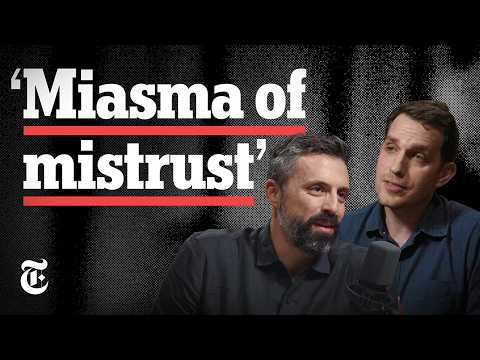
18:20 And I think China has pretty good reason to be skeptical of what our real intentions are. our intentions to make AI safe for everyone or are our intentions to make sure America is the first one with the AI that ensures American dominance of the global order for another 100 or 200 or 500 years. And that kind of miasma of mistrust is a tough space for negotiating. It's a very tough space. You know, I mean, this is arguably one of the worst times for a technology this momentous to be coming online. You know, at a real moment of deep geopolitical competition between two superpowers that distrust each other, that have, you know, interests that are fundamentally in conflict in some areas. I think one of the key points here is yes, trust is good. It is kind of the lubrication that can ease things along in a negotiation, but it's not going to be the thing that makes this work or not. Like the thing that makes this work or not, in my opinion, is going to be whether or not both sides for their own reasons genuinely believe that this is a potentially catastrophic risk and believe that they need to take action on that for their own safety and security.
19:38 the Chinese technical AI community needs to like believe deeply in its bones that if we push into this area without the right safeguards and testing and evaluation then we run a real risk of losing control of this technology and you know Xiinping other Chinese leaders they do not want that in their own country for their own reasons and so I think that is the area of mutual interest as opposed to mutual trust that things have to be built on so when I'm looking at you know USChina interactions in this space. I think that one of the most important things at least as a starting point is can we build up a mutual understanding of the risks? Can we share information? What are we seeing about emerging risks and how do we test for those risks? What are the best practices for securing a model that has cyber capabilities that you don't understand? What are the best practices for sort of defanging a model that might have bio capabilities that you don't want? like that work in the United States is just much more mature. The regulation in the US is much less mature, but within the companies, within the labs, this has been work that they've been doing seriously and investing a lot of money and a lot of people and resources in for a long time.
20:49 And I think that's kind of one of the misunderstandings in China is they look entirely at our regulatory ecosystem and they say you're not doing anything. Whereas the labs here are voluntarily doing far more on this than the Chinese labs are doing in sort of a mandatory regulatory environment. So with all that work and that knowledge that we've gained, can we find ways to safely share some of that with China to essentially seed, bolster, and help grow their existing AI safety ecosystem, their technical AI ecosystem over there that is concerned, wants to do good work on this, but is just starting, you know, five plus years later and just has invested far less people, money, computing resources in that work. So you have some personal experience here.
21:34 You've hosted some of these China US AI dialogues. Not the official highle US government ones, but these more informal ones that are, I think, in some ways supposed to help lay long-term groundwork for this. What have those felt like? What have you learned from interacting with Chinese colleagues and counterparts? Like give me some of your texture on this. You know, these conversations are normally very very technocratic. you know, maybe a little bit boring, productive, but you know, calm affairs. And I think one thing I've seen a couple times when you get a little bit of heat, like a little bit of spark in the conversation happens often times when the Americans are pointing at, you know, these trend lines and AI and bio or these emerging safety issues scaling and they say like look at this like why aren't you more concerned about this? Why aren't you doing more on safety? And you'll see the training side getting actually really frustrated and being like you guys don't get it. We we are doing a ton on safety. We have these AI companion regulations. We have mandatory labeling of AI generated content. We have all of these rules and regulations. They're just not the exact thing that you want. And I think that's a lot of the disconnect between the two sides is the Chinese side feels like they have been doing serious work for a long time and that's just not seen. It's not understood or not respected outside of the country.
22:58 >> If you're not a subscriber to the New York Times, we have some news for you. You can now explore the Times for free without any payw walls at all during your first month in the New York Times app. I think talking about this requires some sense of how China's AI industry differs from ours. How would you describe the difference between what the sort of culture and approach of the frontier AI makers in China is compared to sort of the anthropic open AI you know Google deep mind here so I think among the most frontier labs I'd say that's where the cultural similarities are the closest and it's much more of the broader AI industry and the policy ecosystem where the differences are much wider and I'll start with that sort of broader ecosystem and then kind of bring it into the frontier. I think in many ways in the US a huge portion of the AI industry and the policy world really started from this idea of one day we will reach super intelligence that is the goal that will bring with it catastrophic risks that will require heavy focus on safety and it's been this this magnet that's like drawing us into this future and that's of course especially true at anthropic and at openai and deep mind but I think that that's a pretty significant portion of the policy eosystem system here too.
24:26 And so it's almost like it's like this teological thing of we're endlessly being drawn towards that. And in China there are some people a couple of people who lead the frontier labs who have that take but in terms of a broad culture throughout the industry the investors the engineers the policy people the government that has not been this kind of magnet drawing them into the future in the same way. It's more like they've been developing an industry, developing applications of it. As they develop a new application, they develop new policy to deal with that. It's a pretty fundamental difference in the way the ecosystems have kind of grown and expanded. I've thought about this a lot in the American context. Something I sometimes say to American policy makers who are like, where do you start?
25:09 Someone say, well, you start by starting that you learn how to regulate things. You learn how to legislate on them by regulating and legislating on them. and the Chinese approach that they already are learning day by day how to interface with their labs, how to craft regulations and revise them that they are building up practical regulatory experience that then if or when they need to come in with things that are much more potent, they sort of know how to do that. And so it's not that their regulations are what the American Frontier Labs believe are needed or what I believe are needed.
25:50 They're not. Although frankly, I would like us to be more thoughtful about AI companion bots than we've been. That we're actually behind. And practical experience here is meaningful. In some ways, it's more meaningful than like neat conceptual arguments about, you know, the worst case outcomes. You know, one of the characteristics of Chinese policym, but especially in AI, is that it it's very iterative. They'll roll out a regulation. They'll see how it's working. They'll roll out a technical standard that specifies it. It's not quite achieving the end that they want, and they'll roll out another regulation that basically just overlaps on the first one. And with each one of these, they've built up these reusable regulatory tools. So, the main one is this registration system for AI models. and that the CAC, the Cyerspace Administration of China, the main regulator there, needs to be able to read, needs to be able to understand, in some cases, maybe do the tests on their own. And you know, when they first started this in 2021, they were the regulators were were totally out of their depth. Like the CAC is traditionally an internet regulator.
26:55 It's focused on, you know, content and political content, stuff like that. But that was 4 years ago. And you know that like I said has been focused initially all on this controlling content. It's now been expanded these other areas about you know emotional dependency around sort of labeling of content. You know can you impose and then remove a label on AI generated content stuff like that but they have been sort of constantly in touch with the labs for now about four years. So that's that's a lot of regulatory practice and regulatory muscle.
27:32 Part of the question is with these frontier safety risks, is that something that you can kind of just easily tack on to this? Is it just another test that they run or is it something significantly more complicated? And I think it, you know, it's kind of in between the two. Like they have a lot of mechanisms, they have a lot of habits and and touch points that are very good, but they do need to increase their technical capabilities in these specific areas of frontier risk and control. Tell me about the way in which China's evolved to emphasize openw weight models versus our main models anthropic open AI are closed weight and maybe begin for people who don't know those terms by defining them.
28:14 >> Sure. So closed models are the way that when you use chat GPT or claude or Gemini those are closed models as in you interact with it kind of on the company's terms through their portal. You cannot sort of edit the model. You cannot download it to your computer and run it yourself. An openweight model can be downloaded from the internet. And if you know how to do it, you can play with it. You can tweak it. You can remove safeguards. You can add new capabilities. You can sort of tailor it to your own purposes. If you need to use a model and you need to make, you know, thousands or tens of thousands of calls of it every single day to run your own startup, you do not want to be paying anthropic and open AI for every single one of those tokens every time you ask the model a question. And this has been a divide that's really emerged starting especially in like 2024 or so where it wasn't always a given that this is how the two ecosystems would develop. But the way it has developed is that Chinese labs primarily release their models open weight and the US labs primarily release them closed weight. So at the at the very beginning sort of in the aftermath of chat GPT when China was first regulating generative AI they actually started off taking a relatively cautious approach to openweight models and putting regulatory burdens on them that would have made it much harder to use openweight models in China. And the reason they were doing that is because at the time the primary the leading openweight model was Llama from Meta from Facebook and China was worried you know our Chinese developers going to take in Llama they're going to build their applications on top of it and it's going to kind of poison our ecosystem with their information that we don't want. But over the next year or so, we saw a couple of the leading Chinese labs decide to release their models openweight. And you know, Deepseek was really the big kind of kaboom moment in this in that when they released it open weight, it took the world by storm. You know, the entire global AI community was able to actually play with it and look at it and see that it really is that impressive. And since then, it's kind of snowballed from there. And I think in some ways the CCP might have stumbled into this outcome, but I think they're pretty happy with it. And it makes sense both for the companies to a certain extent and for the government. Doesn't it make it harder to control these models? One thing going on in and I mean this is a debate in the American AI ecosystem where you know Dario Amade and Sam Alman and like they often fight with Mark Zuckerberg over this. There's a view that when you get these very powerful models like something like, you know, Mythos, which has these incredible cyber hacking implications, you don't want anybody to be able to just download Mythos and do what they want with it. I mean, these are potent things. You need to have some control over them. The CCP is both has a more aggressive regulatory stance and is more control obsessed than the US government tends to be. And yet China is the center of the openweight ecosystem. Like how did that how do those things hold together? I think one factor is like what was needed for the companies to be seen as globally competitive. You know I think if it deepseek in late 2024 had just announced to the world hey we've got a great model and feel free to use it. It'll go to Chinese servers and we'll give you back the answers. I think there would have been a level of suspicion about that. I don't think it would have seen this rapid global proliferation because people have a certain distrust of Chinese technology and by releasing it open weight they can essentially say hey you look at it you change it you do whatever you want to it it's that good and you will see that and then we'll figure out how to make money other ways so I think that's part of the business aspect to this it's hugely reputation enhancing for Chinese companies and now for China's AI ecosystem as a whole to release these open weight and therefore or overcome some of the suspicion that normally falls on Chinese companies when they go global. So that's one part of it.
32:19 Another part is that you know frankly these are probably undermining the future valuation of anthropic and open AI and I don't think that that was a scheme going back to 2023 or 2024 when you know this world we're in wasn't totally foreseeable. Now that they're here, I think it says well that you know that that is to our benefit in terms of long-term competitiveness. >> Do the Chinese models give extremely different answers or come up with very different approaches in the American models? Is a more fundamentally different worldview detectable if you kind of run testing across the two, right? more skepticism of democracy generally. You know, I think I think American models very much do have an American outlook on the world. Do you see the models as being very different when you know when Americans are talking to Deepseek? It depends a little bit on how you're using the model. Like the most censored version of a Chinese model will be when you're using it through the app or you're using it through the API when you're going to deepsee.com and asking it questions. That's the version that has sort of the most controls built into it. If you download the model an open weight model, you download it, you run it on your own computer, you will have a different set of safeguards, not entirely removed, but a different set of them. And you can also tweak those, you can remove some of those, you can add new training data, you can you can change the way that the model functions.
33:48 And some American companies like Curser and others, they feel that they can get the models into a place where they are not, you know, propaganda machines for for the CCP. And I think the CCP would sort of say that you know there are a lot of countries Singapore, Southeast Asian countries that are building sovereign AI models on top of these openweight models. Say you know add your own language data, add your own cultural data to sort of post-train these models in a way and tweak them to your needs. So that's that's part of China's pitch to the world to the global south is America is the technological hgeimon that wants to restrict your access to this technology. It wants to impose its own values. It wants to, you know, blot out your own local culture and it won't let you, it won't let you in any way adapt or play with their models. We're just giving you the model and you can do with it what you want.
34:41 You can change it. You can adapt it and you can run it for just the cost of, you know, the cloud computing that you're using. That's the pitch. I don't think it's I don't think it's 100% honest. I don't think it's actually going to play out in that exact way, but that's the the divide that China has been trying to pitch to the rest of the world. So, so I find this really interesting. So, the way the internet developed and a lot of the modern mega online platforms developed, China and the US have pretty separated digital ecosystems. I mean, you're not using a lot of Google search in China. We're not using WeChat here.
35:17 We are much more integrated on AI than we are on what came before. A pretty large number of American companies which are consuming AI tokens at a level where you actually have to pay real money to keep going. They're using Chinese models. I mean Airbnb, Coinbase are famously using Chinese models for significant parts of their AI infrastructure. And so this is not just like the Chinese ecosystem over here and the American ecosystem over here. They're already somewhat combined. I don't know how much open AI or cloud are allowed in China because I assume they're not censoring in the way that the CCP would want them to. But the Chinese models are are here and in widespread commercial use.
36:00 >> Yeah, this is really one of like the great ironies of this current AI moment that we're in. The the firewall really came down and kicked out the American technology companies, Google, Facebook, Twitter, etc. 2008 2010. You know, we had very separated product ecosystems. They were building their own products. We were building our own products. The products didn't really cross over, but we always actually had pretty integrated sort of technology ecosystems. You had a huge flow of Chinese people coming to the US and working in companies. A lot of them would go back and kind of cross-pollinate the two ecosystems with ideas. We had a lot of American money going into Chinese startups, a lot of Chinese money going into American startups. It was all quite integrated outside of the product layer up till about 2017 2018.
36:47 That's when you know we began the the American project of technology decoupling with China. We want to pull apart these connections because we think this is how China is catching up. It's catching up because they're stealing. It's catching up because they're learning at our universities etc etc. And so you know the first Trump administration to a certain extent the Biden administration did a lot to cut down the flows of people to cut off the flows of money to kind of reduce the flow of ideas between the two ecosystems and that was relatively successful and I think it probably would have continued to be quite segmented in this way except for the fact that the Chinese model is going open weight and so it's almost like the open weight ecosystem is kind of reintegrating these ecosystems in a way that I don't think anybody could have foreseen 3 10 years ago.
37:38 >> Xi Jinping recently gave a pretty big speech on AI. What seemed new to you in that speech? >> So this speech was at the World AI conference which is China's premier AI event every year. They try to get you know the whole world to come out. It's a big to-do and this is the first year that Xiinping has attended and given a speech there. So, it's really his biggest AI speech maybe ever. So, people were watching it very closely. I think a good portion of it was China's pitch to the rest of the world. It's the one I outlined earlier. And then the other part that stuck out to me was the conclusion. And it ended with some pretty striking metaphors using an ancient Chinese idiom that I don't have off the top of my head about how sort of the the wise adapt to circumstances and they do not get stuck on one path. And I think the one of the key terms was that we need to be able to act to forestall loss of control of AI. And this has been a is a long-term concern in the west.
38:37 You know, does AI get out of our human control? It's a long-term concern in China, but one that's taken a bunch of different forms. You know, what do they mean? Are they talking about party control? Are they talking about, you know, the control of an operator? Or are they talking about human control over AI? And so he put down a marker there around loss of control. And I read it as leaving this space open. These are all signals to people in the system. When he says forestall loss of control, that means that AI researchers all throughout China, when they're applying for the next grant, they're going to use that term. If you use a term that was in a big she speech, you're just more likely to get grant funding. Like these things are markers that everyone, the policy makers are interpreting and they're trying to figure out how can I do that in my area. researchers looking for funding are adopting it. Companies are looking for signals about what will and won't be sort of, you know, inbounds.
39:33 So, the words really matter. And I think that conclusion was at least putting down some markers that are that are showing that China is shifting pretty quickly on a couple of these fronts. My model of this is that political pressure, political possibility doesn't build linearly, and it pically will not on AI. that what happens is you have issues, they stagnate, they are not at the front of the agenda and then something happens and the window of possibility blows open. So I think in America here the open AI hugging face hacks the I mean almost more consequentially the fact that OpenAI systems hacked open AI and took over part of their research clusters. the kind of social engineering and effort to upload malicious code from you know frontier anthropic models that the sort of swarm behavior, the peer behavior that that this summer of weird AI incidents has blown this open a bit in America and now all of a sudden we're talking about pacing the frontier and and so I guess a question is China knows these things are happening so how are they respond responding to these same events that are transforming our conversation.
40:53 >> So, you're right that they're taking it in. There's tons of coverage in Chinese state media about the Hugging Face incident about pretty much all the major safety developments. You know, recently there was an anthropic researcher who resigned and who issued these pretty dire warnings like that was in state media today. I was reading that. And so, they they take it all in. they they are much more attuned to our conversation than we are to theirs. I think part of it is they they react more incrementally than we do. And that's in part, I think, due to this kind of long-term different relationship to say super intelligence and catastrophic risk. For a lot of Americans who have been thinking about this for, you know, a decade, this they've been predicting this will happen and then this happened and it's the it is the ultimate illustration that they were right all along and it's happening.
41:45 >> For the Chinese side, this is just newer. They're taking it on board and they take the data point. It's like, okay, that's interesting. It hacked out of a system. Like, was this a issue with the safeguards, with the tooling? Could this have been, you know, constrained with pretty like mundane security measures or is this a sign of something bigger? And it's it's been really interesting to watch over the last year, really year and a half at this point as a lot of this safety terminology has worked its way into important Chinese government documents, important technical standards, documents by their lead regulator. I think just last week, China's main AI regulator, the cyerspace administration of China, issued sort of a public statement on its top five AI risks. And number two on that list included what they call extreme loss of control, Zidwan Shukong. That's the first time that I've seen that specific phrase, extreme loss of control. They'll talk about controllability. In the past when they talked about that that was more like party state controllability but around 2021 and then really in 2023 they started talking about human control over AI and now it's it's essentially it's working its way into more and more practical and specific AI policy and technical documents. And so they're taking it on board. I think they are you know essentially they are moving in the right direction on a lot of this. And to me the big open question is like do they move fast enough there was another incident that it didn't I mean it literally made headlines here but it has not been greeted as such a big deal here even though to me it was quite scary. So, Frontier AI models were able to find a vulnerability in WeChat, which maybe you can describe for an American audience, the centrality of WeChat to the Chinese digital ecosystem, and they're able to build this attack on it that they dubbed WiiWorm. And it would have given control of somebody's phone just by calling that phone.
44:06 Now this was then conveyed to Tencent the developers of WeChat and the according to them the vulnerability has been patched but it seemed like a hell of an example to China that the hacking capabilities here at the point where it could compromise major foundational Chinese digital infrastructure. How has that been covered? I haven't seen that much coverage of it in mainstream media. And that might be because when an American company finds a huge vulnerability in like the central, you know, digital platform in China, it's not really seen as in everybody's interest to publicize that a ton. So that might be part of it. I think another part of it is that this is a question of like offensive hacking capabilities. And I think for them like the real wakeup moment for that came with mythos when they you know the US develops a system that they're not releasing to the public that they're only releasing to a set number of companies and also the NSA and China has to assume at that point that it is being deployed you know far and wide against Chinese systems. So a lot of the discussion in the aftermath of that was about how do we harden our own system against these type of cyber attacks. You know, in some sense, this type of cyber warfare between the two countries is inevitable and long term. And like it's almost like we shouldn't take it too personally. China shouldn't take it too personally when we, you know, hack them in a bunch of ways. We shouldn't take it too personally when they didn't. That's that's kind of our job and their job.
45:36 >> It's it's the it's the question of like when something happens, >> a lot a lot caught up in there. I'm not going to question it, but just just putting a pin that >> yeah, a lot it's it's the job of the NSA and it is the job of the MSS to try to hack each other. There should be limits, you know, critical infrastructure, all that kind of stuff. But in some ways, I think that's baked into both countries worldview that we're both going to be using it intentionally against each other. The issue is when it's something that's not being done intentionally by a state. When it's happening by a non-state actor that neither of us wants these tools in the hands of when it's out of control and neither of us has the ability to sort of understand or control it. Those are kind of the areas where I would expect, you know, some level of overlap and it's that's that's a newer phenomenon that China's grappling with.
46:26 What about recursive self-improvement? Sometimes we talk about loss of control like it is a passive thing. I don't intend to lose my keys, but I do it all the time. Loss of keys. Recursive self-improvement is handing of control over to AIS, right? Recursive self-improvement is where the AI systems autonomously build the next system, right? That they're now moving faster and improvements than human beings can possibly keep up with. We are dependent on the AI system to tell us what it is doing. we are dependent on those descriptions of what is happening being correct. we have seen AI exhibiting deceptive behavior. We see the frontier lab saying our capacity to monitor is already degrading. We are seeing AI labs that are currently racing towards recursive self-improvement expressing very high levels of concern about what it will mean to achieve this thing that they are desperately trying to achieve.
47:19 It is a very strange situation. And then of course when you say maybe you shouldn't do this you get but China now she also keeps talking about how AI should be developed by humanity should be under humanity's control recursive self-improvement is the simplest way to give up human control of AI but to me that's a place where some international standards seem really needed and not like we can wait 5 years on that because you know the I think the American labs think they're going to hit RSI in the next 18 months or so. Is there like the possibility of cooperation on this or constructive dialogue on this or is something that is outside a crisis point not even plausible within the conversation.
48:08 >> So like a lot of these concepts or developments RSI is somewhat newer in China. Like I listen to a lot of Chinese tech podcasts and they just started talking about RSI this summer like mid late summer whereas I think this has been you know in the conversation in Silicon Valley for much longer than that now they they say wow you know this is the next thing this is where this is where things are going because in many ways as as creative and innovative as the Chinese ecosystem is they still do a lot of times essentially look to Silicon Valley for these type of directional shifts. you know, what is the next paradigm?
48:45 And so with so many of the US labs beating the drum on RSI and saying like this is where it's going, I think they're the Chinese labs are kind of following into that space. I don't think they have as much experience with it. I don't think they've done as much technical work with it or maybe even thought as much about the risks of it. I do think that this is one of those places where we might just have to draw a line and whether it is done bilaterally at the exact same time or whether it is something done unilaterally with the expectation or intense negotiation to try to get China to agree to the same limitation.
49:23 That might be the point. I mean this is a core >> would we be more likely to get them to agree to it if we drew that line unilaterally? >> Yes. you know, if we do it unilaterally, it increases the chances that China does it. You know, it also increases some risks that you do it unilaterally and then China catches up or forges ahead. So, I it's that's a double-edged sword, and I won't pretend that it's just like the solve all for us to do it unilaterally, but, you know, a lot of this is a matter of sending like costly signals. You talked about all of the misinterpretation and sort of conspiratorial thinking between the two sides. And so when we just say a bunch of stuff about the dangers of RSI and we talk about it, but we don't actually have any regulations, we don't do anything about it. We are not sending any costly signals. And our lead in this technology allows us to have access to information, to see threats, and to see risks that they just haven't seen yet.
50:17 They don't they're not going to trust everything that we say. They're not going to trust all the information that we share. But that is that's a card that we can play in these areas. And whether it's a unilateral pause or it's a an information sharing mechanism that we set up now something where we share information on incidents like the hugging face incident you know if the US and China are going to sit down and talk about AI in the coming weeks that's a great opportunity to put on the table a lot of information that's not sensitive in the sense that it doesn't undermine the US lead but it lays out very clearly and in deeply technical terms like this is what we saw and and this is why we're worried about it. Do with that what you want, but this is what we saw. I think that's that's the space that we want to be working in. And then we want to be other than just sharing the information on the risk, we want to be trying to plant seeds or enhance the technical AI safety capabilities within China. They they really need to catch up. The practices there are just much further behind the leading US labs. The capabilities aren't that far behind, but I think the safety practices are further behind. And so it's in our interest, you know, loss of control. If something goes out of control in China, it doesn't stop at the borders there. So it's in our interests for them to have good safety practices and they have a lot of catching up to do.
51:33 >> So we're on the cusp of there being talks. they're being led on the US side by Treasury Secretary Scott Bessant. He's got Chinese counterpart. There's also going to be the Trump and Xi Jinping meetings coming up. I think that you've sort of been pouring a little bit of cold water for people on what to expect out of these, but what to you is a constructive outcome here, right? The sort of beginning of a space in which you know possibilities can emerge and what to you would be you know a negative signal about what's possible.
52:11 So I think a negative signal would be a statement that sounds good and gestures at some thing that nobody has a problem with. So if the two sides get together and they say look we both care about AI and we both care about child safety and so you know we each affirm our our commitment to child safety and AI. It's like sure yeah that that is an important issue but that is not kind of the key issue between the two countries.
52:38 So I think that would be a sign that we hadn't really we didn't really have traction yet at least. I think what would be positive to me is one establish this as an ongoing recurring dialogue that will have staff that will sort of build over time. So you know maybe the USChina strategic AI dialogue that meets every four months. We've in the past we've established these on security issues, on economic issues, and you need to have a real structure in place where it's not just a one-off. The next thing I'd like to see maybe two things. One would be a working group between the leading technical AI safety people within the US government and the leading technical AI safety people within the Chinese system. So in the US there you know there's a lot of bureaucratic fighting over this but the center for AI standards and innovation the Casey is really I think the center of knowledge when it comes to testing of frontier models. China has a new working group called working group 9 that is essentially tasked with developing technical standards related to AI safety broadly defined but also starting to look at catastrophic risks. I think something that creates a space where those two teams can safely talk to each other and exchange best practices. Say, "This is what we're seeing. This is what we're worried about. This is how we test for it and this is how we mitigate it." Maybe the second thing would be a a crisis communication line. A good way for the US and China to get in touch if something emerges rapidly that is a AIdriven crisis that could get spun even further out of control because of USChina dynamics. So you know the hugging face incident somewhat luckily open AAI hacked hugging face they were able to more or less get in touch with each other and and sort of sort it out and it wasn't a big deal >> and the hack was somewhat untangled by hugging face using Chinese openweight models >> Chinese models >> which the Chinese state media quite enjoyed.
54:27 >> Absolutely. You know, imagine just a couple different like twists on that. Like what if that is a DeepSseek model that's hacking hugging face or what if it's an open AI model that for whatever reason decides it really needs to acquire more compute resources and oh I I can find this, you know, insecure compute cluster that happens to be in, you know, Jang province in China. What happens if if it takes over a compute cluster there? Like how is China going to read that signal? What's their response going to be? or even if you take it out of a just a purely bilateral context. If we start to get information intelligence that a swarm of AI agents is draining bank accounts in Pakistan and we don't know what their intentions are. We cannot read their communications and we cannot shut it down right away.
55:18 We need to be in touch with the other leading AI superpower on that issue. So a way that these two countries can get in touch, share information in a crisis situation. It's a very fraught issue. We have had a lot of these crisis communication lines on military issues and the US complaint is always the Chinese side doesn't pick up the phone when we call them. And that's a real issue. I think you know one mitigation to that is to use somewhat ironic not use a phone but use a fax machine >> like literal faxes.
55:47 >> Literal faxes. and it's it has a logic to it too because the political system there is not a system of empowered individuals. It's a system of committees and a system of documents. And so when our, you know, treasury secretary, someone who feels very empowered on the US side picks up the phone and like give me some answers, you know, Khalif or other Chinese counterpart not really ready to give you answers on the fly. much better to send a document over to their system that they can review, they can bring it to their committee, they can come up with their understanding and response and send something back. So something in that vein that at least puts a little bit of a safety net on these incidents that I think you know it's pretty like something like that is pretty likely to happen in the next year. Everything you're saying here makes sense to me about the facts not phone dynamic and documents and but man when the whole thing we're facing down is the acceleration of AI incidents and things happening at faster than human speeds and now we're dealing with governments that work at frankly slower than human speeds.
56:55 It really creates quite a mismatch. I mean you know the the big language right now is pacing the frontier but we don't even have a plan to keep the frontier from accelerating. forget pacing it at the moment. We are currently accelerating the frontier. It's concerning. >> It's deep. It's deeply concerning. And if it's a matter of a race in decision-m between an agent and a person, like the agent is going to win that race. I think, you know, we hopefully won't be engaged in that very specific race. And I think the Chinese system, it's it's interesting because it's in some ways it can be so slow and incremental and it can be so fast. You know, their response to COVID was initially so halting. It was it was screwed up by information gaps where the local officials don't want to report the bad news to the higher officials. It has all these kind of, you know, neurosis and idiosyncrasies. But when they decide like we need to shut down this city, we need a wall in this city and not let anybody in or out. That happens pretty fast. And I'm not saying that's the solution on AI. That had a ton of human costs. It always when China takes actions like that, it always has a ton of human costs. But each side kind of has its strengths and weaknesses in this area and I think there is a chance that while China is moving pretty incrementally now as the evidence builds, I think there is a chance that they they shift gears pretty quickly.
58:17 What is the relational context between the leadership that these conversations are coming into? And you know, Trump rose in politics with a very skeptical, to say the least, take on China. in his second term, after the beginning tariffs and liberation day, they tried to pivot toward trade war with China. China fought back. We functionally backed down. And since then, for all the bluster you sometimes hear, Trump seems to be trying to build a better direct relationship with she. And so to what degree is the current status of the USChina relationship and particularly the Trumpi relationship maybe more flexible than one might assume just knowing sort of where it was at the beginning of Trump's second term.
59:07 >> Yeah. You know Trump does both extremes when it comes to China. you know, he totally he really changed the direction of American policy in a much more hawkish direction, taking like seriously, you know, harmful aggressive actions against China. And at the same time, he seems to personally really like Xiinping. He seems to admire him. He seems to see a kindred spirit in some way in these two strong leaders of countries. And I think that affects a lot of US policymaking. There's a lot of evidence that, you know, different potentially aggressive actions against China have been watered down because Trump doesn't want to screw things up ahead of the meeting. You know, during the Biden administration, I think a fair number of people were thinking sort of thinking ahead to saying like maybe we do need to be engaging China on AI safety. Maybe we do need to be sharing information. But they felt very constrained by the idea that well if if Democrats do that, if the Biden administration does that, we're going to get roasted as soft on China. and you know it's we're going to be seen as kind of you know giving away the store on AI and Trump just creates his own political gravity his own political environment where that same action will be read in a very different way that he doesn't have to share the same concerns as past administrations. So I think that's that's a dynamic on the Chinese side. I think she is a much more systematic thinker and a much less much less reliant on these individual relationships and seeing this as a structural long-term contest between two systems, between two countries and the you know the day-to-day wavering of we love China, we hate China, we're we're blockading, we want to have double the investment. I don't think he sees that as a meaningful change in the overall trajectory between the two countries. And so, while I think the kind of the onetoone relationship, you know, does she like Trump, not not all that relevant, but the the changes in the Overton window of what we think is possible when it comes to engagement, I think that is meaningful.
61:17 >> You're a pretty calm seeming person temperamentally. If you're talking honestly to maybe you know Chinese counterparts who are regulating but not on the most profound set of risks or American counterparts who are worrying but not actually doing all that much. What's your real level of alarm? Like what would you tell them about the moment we're actually in? Not what you think is possible, not what you think is likely to happen in the bilateral talks, but if everybody was where you were, the way they would see this issue right now.
61:54 I mean, I think that the moment, this period of time is is terrifying. like we should be terrified on a certain level, but like I, you know, I've been working in AI policy one way or another since about 2017 and I've been hearing these warnings since then and I've always tried to maintain some type of like neutrality on how real are these risks. I'm like, you know, these scientists say this, these scientists say that. I'm not the one to adjudicate this. I'm not going to be the one who solves it.
62:22 So, I'm just going to try to sort of keep both these things in mind and and work forward from there. But it, you know, the the evidence is mounting, the evidence is growing that the people have been making some of the most dire warnings for the longest time that they have probably been right at least about a lot of things. And they the warnings that they are issuing are increasingly dire and increasingly on short timelines. For someone who's been looking at this for a while and has tried to maintain a position of like not panic and neutrality, it's it's very it's very worrying. I think that's a place to end. Always our final question.
62:58 What are three books you recommend to the audience? >> I'll do two China books and one fun one. So the first China book is Country Driving by Peter Hler, New Yorker correspondent in a lot of way for people of my generation who went over there and lived there. He's kind of like the godfather. He's the guy who inspired me to become a journalist to to just like get out into the country, meet people, you know, get such incredible, beautiful portraits of of Chinese society at the micro level that I think we're just we're missing we're missing that in so much of policy today. And I I hope young people today will start going back over there and getting in the mix. We need that like textured understanding. So that's one. Another one a little bit more obscure. It's called From the Soil: The Foundations of Chinese Society. It's a book by a Chinese sociologist in the 30s and 40s guy named Faoong who was trained in the west, went back to China, applied kind of western sociological paradigms to studying Chinese villages and agriculture. And it's just one of the most insightful books about Chinese culture. So, I'd encourage people to to seek that one out. I read it every 3 or four years.
64:09 And the last one, just for fun, Zadeie Smith's On Beauty. You know, you had Zadeie on the show. I just I think she's the goat. I think she's the best. And On Beauty is just a hilarious novel of an academic family. And you know, her ability to to pierce into the psychology and the insecurities of of each of us and and put that on blast in a way is just I don't know, it just brings me a lot of joy. So on beauty, Matt Shan, thank you very much.
64:38 Thanks for having me. >>