Transcript
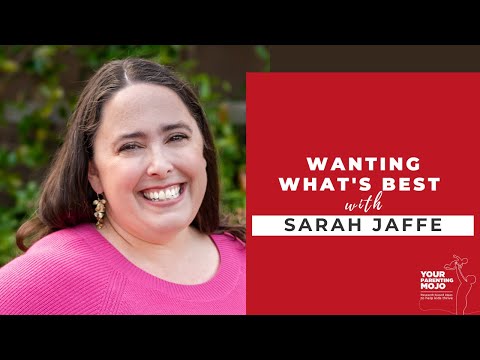
0:00 [Music] hello and welcome to the your parenting mojo podcast i have hannah and kelsea upbringing to thank for connecting me with today's guest who is the author of the new book wanting what's best parenting privilege and building a just world and that is sarah w jaffe and it turns out that w was kind of important because there's a lot of sarah jaffe's in the world i just realized sarah was an attorney for children in
0:31 the foster care system but when she became a parent she realized the stark differences between the children she was representing and the children that her own child was interacting with and she wondered what her role in this system was to make sure her daughter got the best possible start in life or to try to support all all children and if it was the latter as a white parent what was her role in perpetuating systems that can harm some children and how could she
0:57 do things differently sarah has written about parenting foster care and inequities in the healthcare system for slate catapult the rumpus lithub and romper welcome sarah it's so great to have you here thank you so much for having me okay i was super excited to read this book i have to thank you and so i guess i want to start out with why did you write this book why did you think it was needed well i think i've heard it said that you
1:23 should write the books that you want to read and i think that that holds true for my journey to writing this book um there were a lot of parenting books out there that i thought were great um but they were very narrowly focused sort of on what it means to raise you know a good person within the walls of your own home you know teaching your kids politeness and compassion and all these other things and those are that's that's great and i
1:55 do hope to do that as a parent certainly um but i didn't feel like there was something that really spoke to what uh what you do outside of your home how you engage in the world and even the the basic questions of you know how should you equitably set up a child care arrangement what does it look like um to figure out what school your kids should go to when they're of school age um so that that
2:20 was where it came from i felt like there wasn't something that spoke to those concerns and i wanted to kind of figure out those answers for myself through writing it okay and i i think you really sort of get to the heart of it in the introduction when you're talking about why parents make the decisions that they do and specifically white parents and uh that we very often make decisions based on fear can you talk a little bit about
2:50 that fear and how that plays out how you've maybe seen it in your parenting decisions and how you saw in the people that you interviewed yeah absolutely i mean i think that we do we live in a very um hyper-stratified society that and and that's just a fact where the um you know the wealth inequality is huge and the the prospects for kids at the top of the income brackets versus the bottom are vastly different they
3:19 might as well not even live in the same country um and so that uh causes a lot of fear and anxiety um and some of it is you know i'm not trying to just downplay those concerns or say these disparities don't exist um but i think that we when we're ruled by our fear and when we make decisions just out of fear and just out of a concern that you know we're not
3:51 getting everything possible for our own family and our own kid um we're not that's not the best version of ourselves that's not the you know the the version of uh the best version of our parenting selves or ourselves as humans um that we want to be yeah and yeah i think it's super easy to get caught up in that that sort of capitalist idea right where where there is scarcity and i want my child to have
4:20 things to have and a relatively easy life and so if there's scarcity then that means that if my child has those things then another child can't have those things and it's not like i'm working against the other child i'm just working for my child yes right is that is that what you found in in your research and your reading well i think that the parents i talk to um by and large i look to talk to people
4:47 who may experience that feeling of scarcity but try to get beyond it and are trying to ask a question of you know how can we make the pie bigger for everyone not just how can i um make sure that my child has has the peace um yeah it's not it's not about um at all you know that not doing what you need to do for your own kid or you know just like that that's that's not even close to what these parents are
5:16 doing they're just they're just asking a slightly different question of of how can i um serve my own family but also the other families in my community so i guess i do want to be super clear about um one thing before we move on to the specific topics that your book covers and and you've you've talked about how this is sort of work facing out into the world and and um i i think what you're not saying here is we we shouldn't stop
5:41 talking about race and racism and patriarchy and capitalism to our children um and i actually also layer in a book that i'm working on is about how the interactions that we have with our children that don't even seem like they're related to those topics that seem like they're just you know how we are in the world with our children also uh have implications for the perpetuating those systems so we're not saying don't have these conversations don't look at these kinds of things but
6:08 that also we need to be looking outside our homes as well i think that's what your argument is is that right yeah absolutely um yeah and i'm really excited to um to read your book because i i think i think it's it's very true and is related to kind of what i wrote about that all of this is so baked into every interaction that once you see it you can't you can't even unsee it um but right i mean i think that
6:35 um we're kind of kidding ourselves particularly for white families if you think that we can just we can talk a lot about race um but if our child sees that the schools that you know are in their neighborhood are segregated and we don't ever address that aspect of things with them um they're going to internalize perhaps a different message than we communicated with our words to them and and that's the gap that this book is
7:06 trying to to bridge yeah absolutely okay so i the book sort of follows chronologically through a child's life and and one of the things that i i loved most about it is it's not just a manifesto right there there are a lot of manifesto-y kind of books out there um your book gives the the information but it also gives some really concrete practices that parents can do so what i'd love to do as we're talking is to maybe just
7:30 give parents just a snippet of the kinds of ideas that they can find in the book as well um so let's start with child care because i know that that's the the topic that parents happen on first as we enter the world of parenthood so what did you learn about child care as you were researching the book well i learned i i knew very little about child care it turned out um yeah i mean i had been a babysitter and a nanny
7:53 and i knew the very basics but um i didn't know anything about you know there's there's been a long history of activism in this country um particularly i uh sephora elizabeth momen dorothy lee bolden these activists um black women from the south who i had never heard their names before who have you know since the 1930s um been working for fair wages for child care um i didn't understand the extent to which
8:26 i i literally didn't know how much it cost like i just i had kind of not wanted to actually look at those numbers um so there was there was i i learned um the extent of the system's problems and failures um which i had some inkling of before but this book really brought into sharp focus yeah and i think that this is such a hard one for parents because
8:57 um we we had a nanny for a stretch of time and i mean what was yes we were paying her above minimum wage um but even that is in the bay area you know it's it that's a difficult salary to live on and yet it was a massive chunk of our of our pay um and it seems like it's it's it's very difficult to square that circle as it were to make those two things fit together
9:27 what did you find out about that well i i will quote um aijin poo who's the activist and leader of the domestic workers alliance who's been doing this work for decades um and her line about it is just that child care is not a problem the market can solve because of exactly what you're talking about it just it just doesn't work it doesn't work on the daycare level it doesn't work on the um in-home child care nannies um au
9:55 pairs are a whole other a way of trying to square the circle that also doesn't really work because it is paying someone below minimum wage um so uh we need this is a clear example where we simply need government subsidies um to make this work and while i was writing the chapter buildback better was in flux and you know maybe it was going to get passed and maybe it wasn't as we all know that unfortunately did not happen
10:28 um but i do feel like conversations that used to be sort of in the uh you know the child care activism space about child care being infrastructure about the necessity of subsidies we're suddenly in um mainstream and becoming part of people's consciousness so it was very disappointing of course like i i wish i i wanted to be able to just basically delete that whole chapter um and not that there weren't still some issues to to talk about particularly with
10:59 nannies because it didn't address that um um but we're not there yet but i i do have some hope that that moved the conversation forward yeah and i think it's super important to uh to go back to that conversation about um it means where social security came from originally right and and who that was promised to i didn't know until somewhat recently that uh there were two groups of people who were explicitly and deliberately excluded from indeed social security right you
11:27 want to tell us about those sure yes they um yeah farm farm laborers and domestic workers and who does that affect mostly i mean that was very explicitly this carved out of black workers in the south um black men were predominantly farm workers black women were predominantly domestic workers um yeah and i didn't i didn't realize that it either it's not um it's it's you know when you learn about the history of that law in class i i
11:57 don't remember learning about those rather alarming carve-outs um yeah where the the racial motivation is kind of impossible to ignore yeah yeah um and and then i guess uh as we think about well what can parents do about this um i was really encouraged by the response of the the daycare uh head the head of the daycare when one of your interviewees wrote and asked you know how much are your employees getting paid and and she basically responded
12:27 thank you for answering this question um because i when when my daughter was in daycare i kind of felt like that was something i wasn't supposed to touch right and i yeah as a white parent who was on the beginning of an anti-racist journey i touched a fair few things yeah but that was something that felt very like i i shouldn't go there and and now i'm realizing well actually probably i should have um i should have asked are
12:52 how much are they getting paid are they getting paid over minimum wage because i remember one of one of your um the the daycare uh the heads of daycare responded you know people are getting paid minimum wage which wherever they were was like 7.25 an hour but but we have a lot of love um and love is awesome and love also does not pay the rent or the mortgage so so would you advise parents start there
13:16 when when you're when you're thinking about the ways that you as a white parent as a privileged parent interact with with child care systems yeah i feel like it's a it's a very hard question and i um i do think that and things have even gotten worse since since i wrote that chapter in terms of the number of um child care facilities that have closed down during the pandemic i think it's something like 16 000 have closed across
13:45 the country um and for parents particularly in some markets there is just no choice i mean they they get on every waiting list they can they pay large sums of money to be on the waiting list if they get that call they jump at the chance um so i really want to acknowledge that reality and not pretend like we're in some utopian ideal you know beautiful world where we can
14:17 make a lot of choices about our daycare arrangements um so in many places in the country that isn't true it's not nearly as bad in new york and actually i i can't ask those questions and i and i have um and so i think that having it in your mind as um you know a question to ask as um definitely a very important factor in choosing a daycare arrangement that um you know it's if yes you want a a safe
14:49 wonderful place for your kid um but is it so important that it say montessori on the front versus versus not you know that this can be part of our decision making um in in choosing the facility yeah okay and so i once we get through the daycare years then there's some school years yes and there's a whole different set of decisions and i think that the
15:20 privileged parents tend to approach this decision-making process in in a certain way right can you tell us um what are some of the ideas that we have what are some of the stories that we tell ourselves and tell other people about schools well i think that in certain circles there's um a very uh comforting idea that if you choose a public school at all you've made some kind of amazing investment you know in our in our broader system and in in equity
15:52 and if if you can afford a private school but choose not to send one you've already done a lot of important work and i i don't really think that that's an accurate um viewpoint i think that there's plenty of public schools that raise a hell of a lot more money than private schools um and and serve a wealthier population than than some private schools um so the distinction is just not as clean as um
16:22 as we'd like to make it um so that's that's part of it okay so so there's uh there are definitely places where there's a lot of privilege uh in in in the kinds of parents the kinds of families who are in public schools and then sometimes within the same school district there are there are situations where that privilege is absent what did you find there was there was one set of parents and i don't remember their names
16:45 but they were active on their ptas in in the same district can you tell us a little bit about that story yeah so those were um biz lizzie ryan and suny cartha in um evanston illinois and they um yeah they were fantastic and had a vision of well that they belonged to a school district with i think 16 schools um and they one of them had their kids going to a
17:15 very well resourced school one of them didn't and they jointly shared a vision of what if all the fundraising that happens at our individual schools went into one pot and got redistributed to the schools on a as needed basis so we didn't have this you know enormous discrepancy of one school's building a new track and one school you know can barely keep their copier paper stocked um because even in an evidence that is a famously progressive city
17:47 um you know that's a small a small town those discrepancies still existed um and so it took them you know four years of really serious effort um but they got buy-in from their school district and from the other parents um to move to a what they call a one fund model um and that was that was an exciting story i thought where it just showed you know that that's a that it never in the history of the school district
18:18 that's never been the case there there were just always these discrepancies that maybe people noticed but didn't feel like they could do anything about it and these parents said like we don't we don't need to live like this this is this is unacceptable and unfair um and they they got the buy-in to change yeah and i think that that was that was the super exciting part of the story for me was um was that they got the buy-in they saw
18:46 how these kinds of efforts had failed in other places and i'm thinking of malibu which you quote in in the book as well which i'd heard of which is made up of uh it's one school district that has one set of very affluent schools of one set of not so affluent schools and who is it that have been fighting the one part of money um yes attempt you know movement in that direction it's the white parents who
19:09 don't want to have their resources diluted and sent to the school where there is a greater racial diversity um and so i think that in evanston these two folks were super intentional about saying yeah we could force this through we could pack our committees with people who are favorable to this idea and then all of it's going to fall apart afterwards or we can really do this slowly and hear people's concerns and really make it something that the entire community
19:40 has invested in and that's what they did um and to me that seems as though it's going to be a much more stable foundation for this to sit on and something is not going to implode in lawsuits and who knows what else in two years yeah i i hope not to and um they they did it in 2020 like in in early pandemic days um and it's still going strong and they have um a toolkit for parents who
20:07 are interested in trying to do it in their own school district um so they're they are trying to replicate the model um in in other places too oh that's really cool okay yeah um and so i guess i also want to talk a little bit about um why privileged parents and specifically white parents don't consider some schools and uh can you speak a little bit about the the racial makeup that's considered okay by privileged parents in a school and
20:39 and what's not considered okay and why you think that is yeah i mean there's sociological research about this um and that suggests that well white and privileged parents say that there's other reasons for for not considering a school you know at test scores and um it doesn't have enough outdoor time it doesn't have x y and z i'm thinking about an article recently where
21:10 this woman was quoted in the new york times saying she couldn't possibly consider such-and-such school because they didn't have a japanese program and like that was the most important thing for for her kid and then spoiler alert she sends her kid to a school without a japanese program that had a very you know significantly more um white makeup than the school that she'd rejected so that's kind of what the the sociological research tells us and it's uncomfortable i think to
21:39 confront that but that um that the racial makeup of a school does have a big part of the perception of what um white parents you know if they look at it and consider it a good school or a thriving school um the uh the color of the kids in the building plays a big role in that um and uh it doesn't it doesn't mean i mean that there and there are certainly big disparities um in the
22:12 funding and resources and you know teacher training um in schools that are more segregated i think that that's also well documented so it's it's kind of a hard to pull apart issue but i but i think that the research just being aware of that research and being aware that um of the fact that white parents and families are off it we we feel uncomfortable being um in the minority
22:43 yeah in a in any community um that causes a great sense of discomfort that then you know feeds into our perception of the school maybe not being you know the right fit for our families yeah yeah and and we also i think don't acknowledge that uh that that discomfort can exist for other folks as well right like if if there are uh if a school is majority white and there are some kids in the school who aren't
23:12 white then you know it's great and it's increasing diversity and it's exposing my child to beneficial effects and we don't acknowledge the effect that uh being one of a few not white kids in a school in a class uh can have on children and absolutely absolutely yeah that um right it's this idea that integration looks a certain way integration means you know we have we invite in a few families of color
23:43 typically who are pretty economically well-off into our um you know our school and nicole hannah jones has the line about you know then it we can brag that our school looks like the united nations but it doesn't um meaningfully um integrate our school system yeah okay and i want to quote from the book um because i i think that this this uh this parent has a really interesting perspective it's a quote from megan hester who's the director of education
24:15 justice research and organizing collaborative um and she says let me see where am i going to start this as a privileged parent you get to choose your struggle one struggle is you get thrown into making relationships with people of different classes races languages and religious backgrounds and going outside your comfort zone but if you send your school to a more homogenous school it's well now i have to make sure my kid doesn't live in a privileged bubble and internalize these
24:40 notions of superiority and entitlement that's another kind of struggle but is that really the kind of struggle you want to be engaged in do you want all the energy and effort you'll spend fighting for your child's well-being to be one and the same with fighting for other kids in your community and for equity or do you want it to just further widen the privilege gap and i love how she's thinking about this and i guess i
24:59 i'm curious as to what you think about that quote and whether you see things in the same way and um and i wonder if the the idea of a struggle is is part of what makes this difficult for parents right it's like i don't want to struggle absolutely yeah is there a way we can reframe it to not be a struggle or is that just part of doing anti-racist work is is it is a struggle yeah i mean i think i'm gonna go more
25:23 with with the latter i think um and i had the same desire certainly i i would like to just be able to you know send choose choose the local school um and it's and it's beautifully diverse and it checks all the the right boxes um and i don't really have to think about it anymore and you know and instantly my kid is friends with um a beautiful rainbow of children and you know all the parents get together and we're um we're in this
25:56 utopian society and it's just like that's just not the reality at all it is it it is going to be a struggle and and of course you know this book is aimed at parents who are already interested in anti-racist work and in you know figuring out a way to not just consolidate their own child's privilege so it's not a struggle if you don't view that as a goal you know it's like um and that that's where the
26:27 the quote is um you know it it that quote i think is true for the parents who i consider to be the audience for this book um is that in in if you are invested um in having your child you know invested in being a good citizen and a good parent basically it is a struggle it there's not just this um easy perfect way to do it yeah because
26:59 the way our uh our culture teaches us to uh be in groups of people who are like you any attempt to step outside that feels uncomfortable right yeah yeah when it's deeply aligned with your values you're going to do it anyway and it's hard yeah i think that and you know i that interview was was great that i i did with megan and and eva um and part of it that i that i didn't make it into
27:26 the book but eva was sort of lamenting that birthday parties are a lot harder um than it would be at a school where her you know the where the parent group looked more like her and um had a similar upbringing to her like birthday parties uh were not so much a thing for the you know majority immigrant community that um made up her kid's school and she was lamenting that and saying you know that i wish i wish it were different
27:58 and megan who's further along you know his kids are older was saying well it was for me for a few years but we've you know as i built the relationships it's gotten easier um and so all of that was just was good to hear i mean we i don't think um i think it's unrealistic to expect it to be um easy or instant or that you know that that there's not um stepping outside of your comfort zone is
28:28 inherently uncomfortable i guess is all i'm trying to say yeah yeah sure and so i i wonder if maybe you can give us an idea of a practice that parents can start with right like if we're we're interested in creating a school that's actually supportive of all children um what would be a practice that parents can can begin with well i think that um there's a few things i mean one is to
28:58 schools can do a lot of kind of fancy footwork with demographics and you know every school claims to profoundly value diversity on their website and you know and um and to to do xyz for low-income students um but i think it it be it's incumbent on upon parents to look behind those numbers you know and see if if they're really walking the walk or if or if it's essentially about just
29:29 um a slogan on the website so um and then and then it's a lot about you know building relationships with um lower income families with families whose children may have you know different needs than yours and finding out from them how is the school working for them because it's uh you know it might be great for for your family and your kid
29:59 and uh for your neighbor's kid it's a completely different experience and i think you know it's just part of the the spirit of the book is about trying to get out of our own household bubbles in our own isolation um and have us more of a spirit of community and um so starting there and figuring out how do other people feel you know that the school is working for them particularly if they are a foster parent are
30:31 the parent of a disabled child you know the these groups that tend to get totally left out yeah and perhaps there are things that they've been asking for asking the school for for some period of time and then we come in and if the first thing we're asking for is a japanese program yes then perhaps that's not necessarily supportive of what would actually help the most children in the school absolutely absolutely right and that's the that is the the framework of nice white
31:00 parents is that um yeah and another megan hester quote is that if you move through the world with privilege you think that what you want is what everyone else wants you assume well this would benefit everyone um and maybe you're right but if you don't actually hear from the community and hear from the people affected um you don't know if you're right yeah absolutely okay great um and so we made it through school yes go to college maybe
31:31 uh which i think it could be its own it's entirely own topic for a podcast indeed yeah yeah it is the idea particularly in the us i think i think it's less so in england where i'm from that the decision is automatically you're you're going to go to college or there's some kind of failure on somebody's part and probably on the child's part and maybe on the parent's part too um but let's just say for the sake of argument for right now
31:54 that our child is going to go to college um what should we know about that and you talk a lot about costs about college in the book specifically so what should we know about that yeah so i i thought it was very interesting to learn that um colleges priced themselves as one journalist said like airlines do or they're trying to induce you to to come to their school to bring dollars to their school and the way they do that is that a lot
32:26 of the financial aid goes to families who aren't in the most desperate need of financial aid that they instead give you know these merit scholarships to students that are sort of a discount of the full tuition um and to try to get them in the door and bring you know they're still paying 60 70 percent of the cost um so that was really interesting to learn i don't i didn't realize that you know i really thought
32:57 i and i think that families you know understandably are very proud um when they get merit scholarships uh you know if their their college-bound kid gets a scholarship that's viewed as you know a gold gold star parenting um but there's there's a whole there's a whole machine behind the curtain um that's really all about about dollars and it's about um getting the the kids who can
33:29 bring tuition dollars just they just get in to schools easier which doesn't mean that the college admission process is not incredibly competitive for for all kids it is but it um if you're a kid who needs a full ride to get in it's a much much steeper hill it just is um and i didn't i didn't realize that i i had you know i thought oh yeah need blind admissions is just the standard um but it's just it's just not it's like
34:02 yeah a few a few colleges are truly need blind and they they tout that very loudly but that's not the majority of our higher education system yeah it's not and i think ultimately it can come down to who can tell the better sub story right i mean i i was actually lucky enough to go to berkeley on a full ride scholarship i mean this was 15 years ago now um and every semester they would try and get me
34:24 for non-resident tuition but i was actually a resident of california so i could go and send them their twenty seven thousand dollar bill back and the scholarship for three thousand would cover my tuition um but ultimately i i mean i had not had uh an easy time until that point and had come out of a marriage that was uh somewhat damaging and basically you know telling that story i think was probably something that helped me to
34:51 uh to get that scholarship and you know i was financially alone of course and not making much money and um and and i think i've i've read elsewhere as well that you're basically you know it's like trauma porn right you're trying to tell the the worst possible version of your story so that you can appear needy enough to get this full ride scholarship i mean is that how we want to be judging our young people's potential
35:17 yeah i mean i i think that that brings up something really important which is that we as a culture we love the story of you know the homeless kid who gets a road scholarship or the you know the um immigrant kid whose parents worked six jobs and now he got a full ride to harvard like those are and and they're great and i'm happy for those kids um but that's not the vast majority of how you know our
35:45 populace is going to get educated those are extreme exceptions um the majority of low-income kids um either get a lot of them get snapped up by the for-profit college system which is its own um bad actor you know taking um taking kids dollars and leaving them with very little to show for it um and if they get steered the right direction of you know thousands and thousands of people go to community college um but we talk about college i think you
36:17 know in privileged circles like it's you know harvard and williams and berkeley and that's that's the that's what the system is that's what college certainly meant to me um and those are really have very little to do with the broader higher education system it's the community college and the the state universities you know the public universities um educate hundreds of thousands more kids than
36:48 the schools that um the elite colleges do so i think that writing the chapter um really helped me to see that clearly and see that that's where the investment and our attention needs to be spent and much much less attention on you know the one kid who made it into harvard stores yeah yeah and i actually acknowledged that i spent my first two years at community college and actually at four different community colleges based on what schedule you know what
37:18 which one offered night classes that would fit my schedule and i was doing it for a night absolutely um and and i know that that was looked down on at least twice uh as as i progressed through higher education oh you went to how many community colleges oh you went to community college you didn't do all those full years you know four years at berkeley um yeah and so there's still that stigma there um as you progress through absolutely yeah and
37:42 i think right and your story is just so much more common um than you know as a way to get through through school and of course ideally you would not have to have gone to four different schools we need to um you know have making college more equitable and accessible to everyone right involves real investment in community colleges more than it involves um trying to get these elite small liberal
38:13 arts colleges to um give more scholarship money yeah both both are great both are both are wonderful but in terms of where our attention has the most impact i think it's more on the former than the than the latter yeah i was always uh proud of myself for never once showing up at the wrong college on the wrong day oh wow that is very interesting yes yeah um and so i wonder are there practices that parents
38:43 who were you know most of us most of the folks are listening to the show are parents of younger children who are thinking ahead to is college in our future should we be saving for it um is it even possible for us to save for it what are what's maybe one practice that the a parent who's in that boat right now could be could be thinking about well i think that it's um doing some work to try to decouple in
39:07 our mind the idea that the end goal of our parenting journey is such and such elite college um and and that's it's challenging because that point of view is is pretty pervasive in certain circles um and accepting the idea that you know that that's just a very narrow um frankly depressing way to view your your child's life um and
39:38 broadening your picture of what you know a successful future could could look like some of it's just just about that you know about seeing seeing the bigger picture um if if you're not there yet and there's some some helpful books to read in the the further reading section of that chapter that i think have have helped me a lot there um i yeah i don't i don't think that i think i i do hope my daughter goes to college
40:07 um she has a 529 plan set up by my own parents um and that's part of what makes her a particularly privileged child is that we we have that already um and so just you know understanding um that that that's not something that everyone has and thinking about more than just um what
40:38 does her higher education look like but you know how can i be a part of supporting higher education in this country as a whole um is is a lot of it yeah yeah you're pretty open in the book about how how the extent to which higher education has played a role in your family yeah there are generations of college not just college graduates but of of leaders of colleges so this is sort of baked into the
41:05 narrative of who you are right what it means to be part of your family um and i think this idea of sort of letting go of this attachment to well my child will go to college and if they don't go to college then i have somehow failed as a parent and that maybe we could get to the point where we could think to ourselves my child could go to college my child could not go to college and
41:28 either way my child would be okay and that that doesn't reflect on my ability as a parent absolutely or that um that that the stigma you talked about about community college i mean i would love to see this next generation of parents move away from that um yeah recognize those institutions as valuable and fantastic and frankly a lot more reasonably priced than whatever you know i mean that the tuition is just getting so absurd at
42:00 private universities that i guess i have a little bit of hope that it will um that that people will eventually run screaming and and decide to you know invest and support um what the new york times calls the working-class colleges the kid the colleges where um that actually do a good job of moving kids who are from the bottom and income brackets
42:30 and 10 years later they're making more than their parents did um and that that's not the um elite private colleges they do that for a few kids um but the you know your state university system is doing that for a lot more kids yeah for sure okay um you have a chapter in the book on what it means to be a good activist what does it mean to be a good activist um well the yeah the good good bad in the in the
43:01 middle and an activist at all is um you know it's a funny label because anyone can call themselves that right and people who are uh pushing for you know books to um to make sure that their kids never encounter a gay person or a person of color in their school's library also consider themselves activists so there's um but the the activists that i talked to um
43:32 for this chapter i mean there's a few things um that i think have made them successful and i i did want to talk to people who'd you know accomplished real change um i think that the parents i talk to make um the the projects they're involved in just it's just a regular part of their life it's not kind of like it comes and goes it's it's a part of their family's identity it's a part of what they do
44:02 um they always are you know at work trying to move the ball forward whether it's getting neutral universal child care um whether it's improving the foster care system whether it's what you know whatever whatever really speaks to them um i also thought it was important to hear about you know that an activist and a savior are not the same thing and it's um it's very appealing the idea that we can
44:34 fix all the problems and we can swoop in and you know save um our community from what ails it and that's not really um how it works usually and and usually if you uh feel like you've you know been a savior then you haven't listened um to the people who are most affected by the problem um so that that was that was a lot of it it's like that yeah that
45:06 there's so many so much you know we're recording this on the day that roe v wade was overturned i mean that there's no shortage of pressing social problems um and i was inspired by the parents who kind of got things done on a local level they were still engaged with these big national conversations but they they figured out what they could actually accomplish on a local level and then they just a lot of the work was not glamorous like
45:38 a lot of what it takes to achieve social change is very much um you know about making sure the chairs and coffee are there for the meeting and less about talking to the newspaper reporter and having a picture you know for definitely having your child start their own charity right particularly that yeah i mean those are adorable but they really like that's not that's not what actual social change looks like right um right is having your child
46:11 look adorable and start the the save the rainforest charity yeah i mean and i i was that kid and my parents you know were supportive of it they were not trying to get me in the newspaper for for doing it you know they encouraged my um social justice leanings without kind of you know trumpeting it as uh some achievement for for them or me because of course i i didn't actually know what it took to
46:42 achieve social change at nine years old right no one does yeah if we if we knew that then i know yeah um and so i guess i'm wondering where does volunteering fit into this is something that i haven't been super comfortable with for a long time we actually talked with dr john powell probably a year or more ago now and he talks about the idea of othering other people and it's almost like volunteering is an invitation to other somebody
47:10 because you don't volunteer in your own community so much you just right you just do work together sometimes maybe if you if that's even part of your community you volunteer with somebody else in somebody else's community which is needy air quotes um in a way that your community is not um so do you see volunteering having a role to play here or is it more sort of uh like mutual aid is the direction we should be going
47:36 yeah i like the and i i certainly hadn't made the distinction at all before i started writing this chapter of you know you just do good work and good work is good work and who cares what you call it um but i but i do think that it is an important distinction um where mutual aid is about viewing the the community that you're serving you know that they also have things to offer you and you're all in a community together as opposed
48:05 to you are a you know beneficent person um giving your time or your money to the needy and i do think that's a it's an important um shift and framework um even if some of the work may look the same um but right volunteering does not encourage you to listen to the people who you are supposedly serving you know you're being
48:36 told by some organization like these are what these people need um and maybe they talk to the people who who have that right exactly exactly yeah and i think you know it's it's also like i'm not going to tell people not to take their kids you know to a food bank or soup kitchen i mean it's like just but but being sure that um you you do see yourself as in part of a community rather than um separate from
49:09 the people who have greater needs than you i think is is very important um and it's hard i mean i did not i did not grow up with that message at all my high school did this thing called they still they still have it they call it urban plunge where you go volunteer in the community you know and you then you come back and you talk about like how you learned how you know how much better your life
49:36 is than theirs basically yeah you plunge you've been not too long right back out yeah exactly um so those were the messages i got and that that's still i i would definitely be lying if i said that that's my brain doesn't still go there sometimes you know that that's the more comfortable place and it was only you know three years ago that i learned about mutual aid yeah okay so i think that that segues nicely into the last topic of the book
50:04 which is about money right and um and how we use that uh to benefit our own child or to benefit more than just our own child what do you want parents to know about that well i think that um some of it is about you know the messages that we give our kids um a message that is easy and comfortable is about you know that where they we're generous um we give to the less fortunate we have
50:34 we have more than they do um and i think that a less comfortable conversation to have is to say well it's it's unfair that we have more and and this is part of redistributing and making things more fair but they're still not they're still not fair i'm not i'm not engaged in such radical wealth distribution that i can tell my daughter that it's that i've made things fair certainly not um you know it's it's my family as you talked about has
51:06 generations of wealth um that are this solid foundation beneath my feet and her feet um and a lot of which was you know because we're white we're benefited from certain laws we um have been able to amass property and wealth in a way that uh other families have always been excluded from um so i'm not having those not having that conversation yet with my four-year-old but that's that's where
51:37 that's the um the ideas i have that that's the where i'm trying to to lead yeah yeah and i think that's really important because otherwise we will perpetuate the same ideas that you and i were raised with um which is basically not to talk about it right but what we have is is something that we earned that we deserve because we worked for it and implicitly other people who don't have
52:08 that didn't work as hard um don't deserve and i and i i have one friend who actually is is no longer using the phrase earn like i don't earn money because it's almost like that that implies that what i do has more value than what somebody else uh does to uh to also earn right that that it's just money that i have um and to to decouple that idea from i am doing
52:40 things that aren't that are deserving of money um and and yeah if we if we uh i think capitalism i the ideas around capitalism are so baked into every aspect of how we live our lives from our kids absolutely corner shops in their bedroom to sell us stuffies uh to starting their own lemonade stand to i mean it just yeah to the textbooks that that assume that um the the way that we want to be a good
53:08 citizen is to go out and buy more stuff um absolutely so so if we don't counter that narrative that is what that is the message our children are getting absolutely yeah i couldn't i couldn't agree more um and then there's a lot of messages that you know your your duty as a parent is to set aside a pot of money for your kid's future that's their their inheritance you know that's baked into our our laws and our
53:35 conventions and all of that um so i i thought you know interviewing the people i did about reparations work about mutual aid about moving money to people who need it now rather than waiting until the end of your life when you know people um people need it now as is the bottom line and that yeah and um and again this is not something i feel like i've you know reached some perfect place with
54:07 of figuring out what is what feels like um i can i can responsibly give and what do i still need to meet my family's needs um it's just an it's an ongoing question it's an ongoing struggle um but i'm glad to be engaged in it in a way i wasn't before writing the book mm-hmm yeah and the answer of uh avoiding all taxes that you possibly can now and and making that
54:38 part bigger and then putting your name on something at a college when you die um is is that the best possible use of the pool of money that we have access to as a society and quite possibly it is not it is perhaps not yes it is perhaps among the more absurd uses of money yeah yeah right when you think about it yes yes let's have my name carved in stone on something um i wonder is there is there one idea that
55:10 you would like to leave parents with as they are going out into the world today interacting with the world um and and of course uh going going and buying your book and digging more into each of these ideas because we just kind of gave you a nugget of what's in each chapter but what what what's one idea that you would uh want parents to take out into the world today well i think in in the introduction i
55:31 say that you know the pervasive message and the culture of modern parenting is that you owe your own child everything you owe other children nothing at all um and trying to shift that um and even even not a you know even any shift in that framework would make a big difference because it i i do think it's that extreme i think we we really get the message that we do not
56:04 owe our resources our time our advocacy our anything to a child that doesn't live in our home um and that's led us to a place of deep you know stratification and diminished opportunities and really a diminished version of all of our futures um and so if we can change that and think about fighting for own kit for other kids the way we fight for our own
56:35 um we will have a much better uh future generation than we would if we continue with this status quo yeah uh i'm just thinking about how that applies more broadly as well and how we fight for ourselves and and all of the people within our little nuclear family and ignore i mean we're taught that things nuclear families are the proper way to have family and totally totally and the nuclear family living in the next house ever from mine is different from mine
57:05 and right and i need to make sure i get what i need and and you know maybe maybe they can get what they need to but that's their struggle right that's their thing instead of seeing our needs as one and the same absolutely yeah absolutely yeah taking that idea out broadly into the world as well and and seeing uh the connections between us and everybody else around us i think it's so important absolutely yeah thank you so much for
57:31 being here sarah and for writing a book that's really i think going to uh not just explain the ideas to parents but actually give us some practices that we can take into the world and do things differently thank you so much thank you so much for having me and so listeners can find links to sarah's book uh wanting what's best parenting privilege and building a just world at your parentingmojo.com forward slash wanting what's best and there's no
57:54 punctuation and all that thanks so much and i'll see you again soon [Music]
Summary
- Jaffe highlights the stark disparities between children in different socioeconomic backgrounds, prompting her to question her role as a parent.
- The book critiques the tendency of privileged parents to make decisions based on fear and scarcity, advocating for a mindset that seeks to benefit all children.
- It emphasizes the need for parents to engage with their communities and understand the systemic issues affecting childcare and education.
- Jaffe discusses the historical context of childcare and the necessity for government subsidies to address inequities.
- The author shares stories of parents who have successfully advocated for equitable funding in schools, showcasing the power of community action.
- The book encourages parents to rethink their approach to volunteering and activism, promoting mutual aid over traditional volunteering that may perpetuate othering.
- Jaffe stresses the importance of discussing wealth and privilege with children, fostering an understanding of systemic inequities rather than just individual merit.
- Ultimately, the book calls for a shift in perspective: parents should fight for the well-being of all children, not just their own, to create a more just future.