Transcript
0:00 - My father was born in a prison in West Virginia. You and I can't fully appreciate the myriad ways in which that shapes and molds, especially a young black man growing up in the South in the 1950s. So it wasn't a total surprise when he developed addiction issues, when he had trouble being a father. He hadn't seen it, he didn't have a relationship with his father. So these ideas that I had created about the kind of dad he should be, he wasn't capable of it.
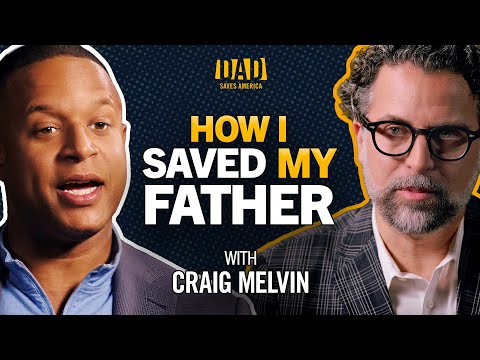
0:34 - You probably recognized Craig Melvin as a seasoned journalist and the co-host of "The Today Show" on NBC. But what you might not know is that he had to navigate addiction and generational fatherlessness in his own family to get there. Craig documents this tumultuous journey in his book "Pops," including how he learned to become a better father himself in the process. Now he uses his TV platform to celebrate fatherhood with his "Dads Got This" series. As parents, we all wanna be the best versions of ourselves for our kids, regardless of our own family circumstances.
1:06 And Craig Melvin accomplished exactly that. (upbeat music) Craig, welcome to "Dad Saves America." - John, thank you. This is beautiful, what a beautiful setup you've arranged. Thank you for allowing me into your home. - In a lot of ways what you're doing on your show predates what we're doing with Dad Saves America, and I feel like we're sort of brothers in arms trying to celebrate fatherhood. - Yes, yes, we are.
1:37 And don't you think it's high time that we start celebrating the modern Dad? - Well, this is the thing that I think is so exciting about what you're doing with Dads Got this, we need positive role models. And I feel like we don't have them. How do you think about that? How do you think about the image of dad in popular culture? You're a media guy. - Well, and it's funny you bring that up. 'cause that was part of the impetus for the series on The Today Show.
2:04 Oftentimes when fathers are portrayed it's Homer Simpson, or if you're a family guy, Peter Griffin, or in part of that ilk, in that same vein, dad's this bumbling doofus, not really that bright. - Al Bundy. - Right, right. They're not really fully engaged in the lives of their children. And it bothered me, and it still bothers me, but I thought a couple years ago, I was like, I have this platform, The Today Show typically gets watched by a few million households every morning, why don't we start using the megaphone, the platform to shine a light on the good that fathers are doing?
2:49 And it's, I have been pleasantly surprised by the response. And I think part of the reason the response has been so favorable is because there was such a void. So kudos to you as well for using the platform to shine a light on Dads doing well. - You've got this great new book, "Pops" and you paint a picture of a family history that has a lot of challenges in it, right? And I mean, your relationship with your dad, but even predating your father, your father's birth, your grandmother, tell me about that.
3:26 - Well, years ago I was taking a journalism class and the professor was talking about interviewing and, and we went through a list of questions that you could always use as crutches in an interview that typically elicit a pretty compelling response. And one of the questions was how much money, what's the most money you've ever wasted? And anytime you ask someone like, what's the most money you ever wasted? There's gonna be a pretty good story there and so.
3:56 - I'm taking notes on this, I'm taking notes. - Well, and so when I started interviewing my dad for the book, it's awkward to interview your father, as you might imagine, and especially about some sensitive subject material. And at first I was pretty nervous. And so I decided I would use that question to, to sort of break the ice. And so I started with, "So, pops, what's the most money you ever wasted?" And he thought about it and he said, "$1,600, 1986."
4:28 I was like, wow, that's- - Very precise. - It's like that's a lot of money. And clearly there's a great story here because you remember the year. So I'm like, "Well, what was the $1,600 for?" He's like, "That's how much it cost to put my father in the ground." I was like, oh, and from there, we spent a fair amount of time talking about his own childhood and how he didn't really have a relationship with his father at all.
4:53 And then all of a sudden he gets a call from his aunt one day, his dad's died and they need help burying him. And so my father, who had had this contentious relationship with his dad has to go in and pay for the funeral. And it always stayed with him. My dad didn't know who his father was until he was 12 or 13. There was this guy that used to kind of hang around and he sort of looked like him and finally worked up the audacity to, to just ask him.
5:26 And my dad. - He had to ask him, are you my dad? - Are you my dad? - This guy, so he didn't live in the house? - No, no, no. Curtis Amecker was my grandfather's name, and he never lived in the house, did not have much of a relationship with my grandmother after my father was born. And so it became glaringly obvious pretty on, pretty early on during the conversation with my dad, like he didn't have a relationship with his father.
5:56 So these ideas that I had created about the kind of dad he should be, he wasn't capable of it. And I didn't realize that until I was in my early forties, here I was angry at my dad for being mediocre at best, and it becomes pretty apparent that my expectations for him and of him were unrealistic. John, you can't expect someone to be something that they haven't seen. It's a wholly unrealistic expectation.
6:27 I think oftentimes we do that, especially with dads and moms as well. But you expect someone to be something that they haven't seen emulated in front of them. It's one thing to watch Cliff Huxtable in the Cosby Show. But it's another thing to experience that. But even before that, my dad, the first line in the book is, my father was born in a prison in West Virginia. You and I can't fully appreciate the myriad ways in which that shapes and molds, especially a young black man growing up in the south in the 1950s.
7:05 And it manifested itself throughout my father's life. And he didn't fully appreciate that until he was much older. So, it wasn't a total surprise when he developed addiction issues, when he had trouble being a father, he hadn't seen it. - This is this thing that I think is so interesting about, we don't, I think, talk about how we come to know the things we know.
7:36 Like, there's experience, I feel like there's three paths. There's firsthand experience, there's modeling. What you're talking about. Like, so we see other people live the life and then there's storytelling. Which is like this interesting, pretty, it can be pretty close to the modeling. If you've got good stories, you can find a path forward. Even if you don't have people flesh and blood. The Bible is a storytelling book. - You're right. - And you're a man of faith, you've talked about this, how did faith play a role in your childhood when you have this father who's there, but as you've said, is sort of like intentionally absent.
8:22 - Well, to be clear, my dad did not go to church on Sundays. If we saw my father in church, someone had died or someone was getting married, and he didn't make it to all the weddings and funerals. But my mother more than made up in terms of her faith development. She grew up in the church. My grandpa, everyone grew up in the church. I'm from South Carolina, I'm a Baptist guy.
8:54 - I'm Catholic, so you have a much more fun procession. - Well, my wife's Catholic. And I remember the first time I went to mass with her, we were outta there in like 35 minutes, I was like, no wonder you're Catholic, that's a pretty good gig. - Go to 12 o'clock then, you get the long, they get the long version, - But long for you guys is like an hour. - That's true. - So, no, I mean, growing up John and my, my brother and I joke about it now and my mother jokes about it with us, but at the time it was no laughing matter.
9:23 I mean, we would go to church for, Sunday school started at like 10:30. Service started at 11, and we were usually there until one. And usually a couple times a month, there was a service after that. Like there was an afternoon service that we would go back for. And then during the week there was choir practice because of course I was in the choir. - You got a good voice for choir. Did they, did you get recruited into the choir?
9:50 - No, I didn't have a choice. It was like I was drafted at a certain age, you were in the choir, there was no discussion about it. But there was a comedian years ago and it really resonated with me. I remember this bit he used to do, 'cause he grew up in similar circumstances. And one Sunday he'd been in church for like six hours and he looks up at his grandmother and finally he says to her, he said, "Grandma, just, just let me go to hell."
10:19 It can't be as bad as this. And I, that's how I grew up, I grew up the same way, there's some Sundays. And I remember thinking, my God, if this is what it takes to get to heaven, I may be up for the alternative 'cause I just assumed everyone else worshiped like that. And as I got older, I discovered that I was in the minority. But what it did do, what I did not fully appreciate until I got older and I started having struggles of my own, it helped me develop a foundation of faith.
10:52 And you don't realize sometimes what your parents are doing until you get older and you become a parent yourself. But my mother knew that I was going to need at some point in my life, this faith foundation. And I would say I probably, as they would say in the, in the Baptist church, I went astray. I was in the wilderness for a number of years. - From a faith perspective. - From a faith perspective until I started working in, in Columbia, South Carolina in my early twenties.
11:25 And I returned to the church and it is very much a part of who I am now. And we're very active at my wife and I at our church and our children. My kids will probably say the same thing about me one day. Like, oh my God, dad made us go to church for an hour and a half on Sundays. But little do they know that they go to church about half as much as I did, but they're there every Sunday sitting in the back.
11:47 - There's this really interesting statistic about dads and participation in church, like formal, like going to mass or church. And that is, I think so goes dad, so goes the kids. So you had your mom, which was awesome. But for the, like at the macro level, my understanding is you don't see the declines in church participation in families where dad goes to church. - I've seen some of that research, which is one of the reasons that we do it.
12:18 I do what we don't do. - Now, wait, so which mass do you go to though? Do you like switch it between the Catholic mass and the Baptist, what's the deal here? - So my wife will take them to Catholic mass probably once a month. And we go to a congregational church in our town every Sunday, which is, which they enjoy more because there's a playground and they get to leave the service and go hang out with the other kids for Sunday school during the actual worship service.
12:47 For me, we don't, we're not like trying to rear good Catholics or trying to rear good baptists or even good Christians necessarily, what we are trying to do very deliberately, my wife and I have talked about this. We are intentionally trying to introduce them to just the concept of belief and faith. Because what I have found, especially in these times, that when terrible things happen in life and terrible things will happen to everyone.
13:17 And when you lose a loved one or you get that cancer diagnosis or you lose the job, you've gotta have something to fall back on and believe in and help guide you through the tumult of life. That's what my faith has always done, and it's also helped me to try and make sense of things that are completely nonsensical. - It's funny because we are in the strange time, right? We've got AI and we've got all these things that sort of challenge the way we understand the world.
13:50 I feel like we're on the verge of maybe a revival in a lot of ways because there's so many people who are searching for meaning, for purpose, for some kind of void that they can fill. And I, I think the absence of dad, especially in American culture has, has played a pretty big role in that. - I think you're right. And I would maintain as well, John, that, part of what church does and when I, when I use the term church, it's the umbrella church, whatever your faith is.
14:19 - Yeah, services. - Yeah, it provides a sense of community, a sense of belonging. And there's been a slew of research done that shows that human beings, all human beings need just a few things to survive. They need food, they need shelter, and they need to feel like they belong to something larger than themselves, it's fact. And some people get it in the workplace, some people get it in their families, but some people don't. A lot of people don't.
14:50 And I think for a number of folks, church provides that. And there's always, there's also as a good Catholic, you can appreciate this. - I don't know if I'm a good Catholic. - Wow, are there good, no, I'm kidding, I'm kidding. - We're awful, we're all, we're original sin, we got it. - But you're guilty, I'll tell you that. - Well, I'm a hundred percent Italian Catholic. The guilt factor is cranked to 11. - It's, but it's, there's, my wife likes to talk about one of the aspects she enjoys in the Catholic churches, when you go in, you know what to do, you know what's coming next, there's a formality to the service, it's very predictable.
15:25 I think people like stability, people like predictability in uncertain times especially. And the church provides that. - When did you first realize that your dad was suffering from addiction? - That's a good question. Like how old were you when it went from, my dad's not around, he's like not with it to, something's something else is happening, something else has its grip over him. - It's that, it's a hard question to answer because we view addiction differently now than just a few years ago.
16:02 But certainly, when 35 years ago when I was growing up, we just thought that dad drank too much, but there were other folks in the family who drank a lot and there were other people you'd see from time to time. I mean, my dad, you talk about drinking and driving, like he would literally drink and drive. Like I remember being in the car with him, front seat '73 Pontiac LeMans, no seatbelt, he's got the Budweiser tucked between the two seats.
16:29 And he'd take a swig and he'd drive and we'd stop and he'd take a swig. He'd throw the can on the floor, he'd take another one out. So I grew up like that with dad literally drinking and driving despite my mother, like even back then saying, Lawrence, you really, you can't drink and drive with the kid. And he's like, "I'm gonna have two, I had two!" But I think we knew it had become a problem when he would drink to the point where he would throw up or, or he'd be passed out for like a day.
17:02 And that didn't start until we were probably in middle school. - And that's a hard time for that stuff to end too. - And what did not help is he would go up to this place called Tom's Party shop. And back then video poker was legal in South Carolina. And my dad, he didn't just have one vice at a time, he had multiple vices. Typically they lead to others, but, so in addition to his of alcohol addiction, he became addicted to video poker to the point where he blew pretty much his entire life savings.
17:36 - Well, I think that's what we see, right? I mean that addictive personality, that it overlaps. And a lot of times to get out of one, you've gotta replace it with another. - Right, and so he would go up to Tom's party shop, he'd have his tall boy Budweiser, and he's sitting there playing video poker. And as I get older, my friends would go into the party shop to buy chips or soda, whatever, and they'd see my dad in the back.
17:58 And by the way, he's driving this lime green 73 Pontiac LeMans, which is pretty recognizable in the late eighties. And it was a small neighborhood, so, one of my- - He's got like a Batman villain car. - Right! And so my friends would come to school, they're like, "Hey, I saw your dad up at Tom's." And he worked third shift at the post office. So he'd get off work, he'd go to Tom's, he'd drink his beer, play his video poker, and my friends would see him in there, come to school and say, "Hey, I just saw your dad."
18:25 And so imagine the embarrassment as I got older of having my friends see my dad drunk playing video poker before 10:00 AM and coming to school to tell me all about it. And it only got worse from there, he got in a little car accident when I was, I was probably in middle school, he runs into this woman's yard and he knocks over a bush and he convinces the woman not to call the police by telling the woman he would come and replace the bush with the help of his son who has to get up on a Saturday morning at 0 dark 30 to go, dig up the bush or replace it, so, we knew he had some issues in middle school, but we didn't know he was a full on addict until I was in my early twenties.
19:10 And we tried to get him some help, which we staged an intervention before we really knew how to do it. And basically the intervention consisted of us sitting him down and berating him with like, stories of his drunkenness and insisting that he get help. And so naturally that didn't work. - Yeah, what was the thing that you think worked the last time? 'Cause I understand that you did ultimately succeed in helping him. - [Craig] Yes. - Change his path.
19:42 - You can't help someone who's an addict unless they want to actually change their lives. If when someone decides, you know what, I do have a problem, I do wanna fix that problem, I am going to get help. Well, that's when you can do it. - Do they have to hit rock bottom? Is there that, is there a rock bottom thing? - You have to get pretty close. And my dad was headed for rock bottom. And the fact that, I mean, he had a couple of DUIs.
20:10 He'd been, yeah, I mean he had been detained by the police once or twice, but he had not thankfully hurt anybody. He hadn't killed anyone, he hadn't, and, but that's where it was headed, and that's what we saw as a family. So for him, he retired from the post office after 40 years as a male clerk. And what was recreational, pretty heavy drinking, quickly turned into binge drinking to a point where he would drink all day Monday, blackout, spend Tuesday, kind of hung over in recovering and do it again on Wednesday, Thursday, recovery, Friday, so this became his life.
20:53 And he was out driving on a main thoroughfare there in Columbia, South Carolina, Broad River Road, and I get a call, I'm at The Today Show, and I'd gotten a call from someone who's in law enforcement, and they said, just so you know, your dad is developing a bit of a reputation in the area for driving drunk. And it's just a matter of time before something bad's gonna happen. - So you were at Today when this has happening?
21:22 - Oh, sure, sure. - So that's also weird 'cause you're on a national stage. - Yeah, I was in the spotlight. Although that wasn't really a concern. He ends up hitting this woman, not terribly, but he, there's a fender bender. He's coming back from like Wendy's, doesn't remember any of it and he hits this woman. Fortunately, we knew the woman and we convinced her that we would take care of the damage to the car and we would get my dad some help.
21:55 The woman was fine, my dad, thankfully was fine. But my younger brother and I had a conversation after that and we we're like, you know what, forget like dad, being an embarrassment or hurting himself, like he's gonna kill somebody. - I mean, my dad was rear-ended by a drunk driver and it ended his medical career. So it's like this stuff always, this stuff hits me hard when I hear these stories. - And we didn't want that to happen.
22:21 And we knew that's where it was headed. So this time, thankfully, I had, I'd been a journalist for a while and I've done a number of stories over the years. In fact, I did a big piece a few years ago for Dateline on addiction. And how the way that we treat addiction in this country, fortunately, has changed dramatically, the ways in which we can treat it. And so I was armed with some new information and I had an assistant at the time whose stepfather ran a non-profit called Shatterproof, and they dealt with addiction.
22:57 I was talking to her, she's like, "You should talk to my stepdad." And her stepdad had some friends who'd been in that space for a while. So I call him up, I'm being a good journalist, I'm information gathering. And I, this goes on for about a week. I call my brother back, I'm like, "You know what, we've gotta bring in a professional." And we found a woman, thank God, down in Columbia, South Carolina, who talked me through the steps that we should be taking.
23:26 And step one was to sit the family down and to have a therapy session. - Without your dad? - Without my dad. And I'm like, well, this doesn't seem to make a whole lot of sense, but okay, this is part of the process. - Is that, is was that partly about trying to ring out some baggage so that you don't bring it into the room when there's that time? - Ding, ding, ding John, that was part of it.
23:49 And the other part was to just let us vent about all the ways in which his alcohol addiction had bothered us, almost destroyed our family. And we had not, and this may be true your family as well, but in my family, you don't talk about, you just, you bury it. You just pretend it didn't happen. I mean, maybe if it's huge, you might acknowledge it during the holidays, but you certainly don't go talking about it.
24:22 And so we're, I mean, it's me, it's my younger brother, it's my mom, it's my dad's nephew. Like there were like six or seven of us in this room, and the session's supposed to go like an hour. We're in there for like three hours because people had been bottling all this stuff up for years. Finally, the therapist is like, we're gonna have to probably do another session, guys. Like, I've gotta, I gotta go. And she said after the fact that she wanted us to hear how my father's alcohol addiction had, I mean, I had developed this borderline hatred for my dad that I hadn't even realized was there.
25:02 I was disgusted by him, I just. - That's something that is really a good friend of mine, Arthur Brooks has talked about this a lot, the disgust. Disgust is like this poison. It's like it's, and it's right there with contempt in relationships where you find yourself rolling your eyes at your spouse or this just like, ugh. And it's like a toxin that you ingest and it takes over the system if you don't get rid of it.
25:29 - And my mother, and we talked about it, my younger brother and I had gotten to a point with her where we used to just tell her all the time, it's like, we're older, we're fine, you're clearly miserable in your marriage. You could just leave him now. Like we, because what we had done unknowingly was we'd written him off years ago. Like we had decided he either wasn't worthy of our continued worry or that he was incapable of change.
25:58 And I left that session on Divine Street in Five point South Carolina, I remember it vividly. I left that session, it was an aha moment as Oprah would say, I left more determined than ever to save my dad. - What was the turn in that moment where you went from the disgust to the mission? - I saw in that meeting what, what he had done to my younger brother, what he had done to my mother and what he was doing to me.
26:32 And here I was again, pretty successful professionally. I'd gotten married, I was getting ready to start my own family, and I was having to grapple with these feelings that I had never really addressed before. And it became clear that this disgust, this disdain, this contempt, this borderline of hatred that I had developed, it was a cancer inside of me. And I had to save my dad, not just for my dad, I had to save him for myself.
27:05 And so the mission started and this woman, she helped us in the next meeting, develop a strategy to basically kidnap my father and sit him down in a room. And we had to write these letters to our dad because if, and she noticed, like if we were just to talk to him, we were all gonna get worked up and cry and be angry. But if we wrote the a letter and just read it to him, then he would hear us and we could make sure that our thoughts and our feelings were conveyed in a clear and concise way.
27:40 And so, on a Sunday morning, we had developed a scheme to pick up my dad to tell him that my younger brother needed some help with a project at the house. So first thing, Sunday morning- - Little white lies is part of the process. - My younger brother goes and picks him up, brings him to the house, he walks in, reeking of booze and we sit him down. And even in his drunken stupor, he realized that, that something was amiss, treachery was afoot.
28:12 And we start to read our letters. - Did he try to escape? - No, he didn't, and we thought we thought he would. And we said beforehand, we were fully prepared for this to take a few times. He sat and he listened to all of us read our letters. And my mother brought up the rear and she read hers last. And she talked openly and wept about how she, over the years had lost this man that she knew, this guy that she'd fallen in love with.
28:44 She didn't know when it happened or how it happened, but his alcohol addiction had essentially ended their marriage years ago and they were roommates. Dad sits there, we had his bag packed for this inpatient rehab facility that we had found in Statesboro, Georgia. Said, "Pops, we're gonna throw you in the car and your nephew's gonna drive you three hours to Statesboro Georgia and you're gonna be there for at least eight weeks to save your life."
29:15 I said it and the therapist was there, she said something else. Father goes, he picks up his bag, hops in the back of the SUV, he's like, "All right, guess I'm going to Georgia." And we all were looking around like, holy, that just work? - That's amazing 'cause you've been through this a couple times, and it's like, well. - John, we found out the next day when we called the rehab facility, we talked to the doctor down there who's going to oversee.
29:47 And he's like, I said, how's he doing? He's like, "Well, Mr. Melvin, this isn't uncommon. But when your father showed up, he was three to four times the legal limit in terms of his intoxication." - He was lost. - And we asked him about the intervention. He didn't remember anything. - How did that make, were you like, how did that make you feel, all this work? - He showed up, he was blackout drunk during the intervention.
30:15 He had the letters with him in his back, he read the letters, he was deeply moved by them. And, but your your dad's on the road to recovery. And that was John, what is this, 2023? That would've been 2020, hadn't had a drop a booze since. It really has been transformational. Part of the treatment program requires you to go and you have to help him make amends.
30:47 And we each had to do it individually, I flew down, I took a morning off from the show, flew down to Statesboro, Georgia, and as soon as I walked in and we hugged and he's crying and I'm crying, and I knew then he was a different person. And he was like the mayor of his treatment program. He's taking me around and introduced me to all of his his addict friends as he called him. And he was like, oh, Melvin, they call my dad by his last name.
31:18 Like, Melvin's been talking about you for weeks. He was so proud, he was so proud of me and his other two boys. And it was one of those things, John, I was only there for eight hours and we walked around. We played Frisbee golf, it was very strange. And, but I left there knowing that, he was going to be different and he has been.
31:49 I mean, he's just, it's really, it's remarkable when you think about a man who had been drinking for 40, he said 45 years pretty heavily. And we didn't realize the extent of it until he got into rehab. But he would take breaks at work and go out to the car and down a few tall boys. He also used to say, when I went down to visit him in Georgia, he developed these relationships with the other addicts.
32:21 And he said to me at one point, he's like, listen, I get it, I had a problem and it cost me a lot. And there was a lot of things I wish I had done differently. But I tell you, Craig, when you sit in some of these sessions, these guys, I mean, they're really messed up. I was like, "Dad, I don't think you're supposed to go judging your addict friends." And he is like, no, no, and he started pointing them out.
32:47 He is like that guy, he's only 16, he's been in jail three times. He can't kick the meth. He's like, this woman over here, she's 76, she's been drinking for 50 years, she's on her third husband. And I think it helped him knowing that- - I'm not so bad. - Right, that's my dad. He also had a very dark sense of humor. Still does by the way. - You've talked about this in interviews, and it's in the book forgiveness.
33:15 You've obviously, you obviously had already forgiven your dad when you were on this journey to write this book. - [Craig] Yes. - Why is forgiveness important? How did you do it? How did you take that toxicity and clean it out of your heart? - Therapy, short answer. I'm a firm believer in therapy and have been for a number of years. And over the years, my therapists have helped me, helped me understand the importance of letting things go.
33:46 And you don't forgive for the other person, you forgive for yourself. And that's for years, I've held this bitterness in, in my heart and my soul toward my father 'cause I wasn't gonna give him the satisfaction of forgiveness. I'm not going to let him take any credit for any modicum of professional success I've had. I'm not gonna have him come up to the show, I'm not gonna, no, no, no. This son of a is gonna know how much his behavior over the years disgusted me, I'm gonna carry it to the grave.
34:25 And then you grow, you grow up, you get older. You have kids of your own. And you start to realize that my dad's got fewer days ahead of him than he does behind him. That tomorrow's not promised. And that God's been very good to me, John. How dare I not forgive when I have been forgiven of so much in my life. And so I wrote the book as a love letter to him.
34:57 I wrote the book to help me heal. I wrote the book to help other addicts and other families out there who have someone in their family that they think might be too far gone as a little nudge. It's never too late, but the forgiveness aspect of it, John, I gotta be honest with you, it really has been a gift. Like when I let that go. - Yeah, what changed in your life? Like, really tangibly. - I think it was probably me having a son.
35:29 I think it was my nine year old. And you start spending time with your own kids and you realize parenting's hard. It's hard when you're sober, it's hard when you have all the tools at your disposal. And I want so much for my son to be proud of me, to respect me. I couldn't deprive my dad of that gift. And so I really do think it was when I became a dad that led to that, that road to forgiveness.
36:04 And it's just, it's been, and it hasn't just transformed my life and my dad's life, it's transformed our family. I wrote about it in the book, my father took great pride in never having a card payment. He got a, he bought a 1970- - Just paid cash? - Oh, oh yeah, and took handed down cars from other people in the family. My father, I'm 44 years old, has not had a card payment my entire life. - There's lessons in that.
36:34 - And also doesn't have a debit card mind you, he's a bit of a Luddite in a number of ways. - He's gonna outlive us all on some. - Oh, no question. But he, about about three months ago, I was on the phone with him and he's talking to me about like, being out in the yard, working on some car, and I'm like, pops not to sound whatever. It's like, "You know pops I could help you buy a car.
36:59 They pay me okay at the show, we could probably cobble some money together." He said, "No, no, no, no, no, no, no." I've offered for years to help him buy a car. And it's like a little game we play. I offer, he is like, no, no, no, I don't want your money. Calls me up three weeks ago, it's on a Saturday. Calls me up, and we talk pretty regularly. But usually it's, the game's on or there's something, we're talking about something.
37:24 He calls me outta nowhere, I said, "Pops, everything okay?" And he's had some health issues, so I thought it was related to that. He's like, nope. Hey, you know how you offered to buy that truck? I said, yeah. He's like, "I think I'm ready." And I said to him, "Are you sick?" I said, "What do you mean?" It's like, are you dying? Like, is it stage four? He was like, no, I don't think so, unless you know something I don't know.
37:51 He's like, I just think it's time. I called my younger brother. I was like, dad just called, he's like, "He called you about the truck?" I said, yeah. He's like, he was over here earlier. - He's like, I just saw this Tacoma, I'm telling you this is it, it's time. - He's like, he was over here, he was talking about wanting a new truck and he was gonna call you. I thought he'd started drinking again, that's what my younger brother said.
38:13 I said, no, he called. And I said to my younger brother, Ryan, I was like, is everything okay? He's like, "Look fine to me." So I said, Ryan, take him out before he changes his mind, take him out to look at some trucks. The next day, John, they go to some car dealerships. My brother's sending pictures. The next day he gets a white Chevy Silverado 2023. My mother calls, she said, Craig, I have, they've been married for 40 plus years.
38:45 Craig, I have never in all my life seen your father this happy. I said, "Ma, he's got three sons and grandchildren." She's like, "I know, I've never seen him this happy." - He's driving around town. My father goes three places. He goes to Walmart, my brother's house, and up to like the corner store, to like kill time to get away from my mother. She said he is been driving around town, visiting family.
39:16 I mean, it's, it really is surreal. My brother sends me this video of my, like my dad in the truck. Every conversation we've had since then, it's been about the truck. He's like, he's like- - They are like family members. - Oh, John. - And he calls me up one day, he's like, "They got these cameras in the trucks and when you back up, the closer you get the louder and faster it beeps." He's like, it's amazing.
39:42 He's got my mother in the truck, it is just, it really, and I said to my mom, if I had known it was going to bring him this much joy, we would've done it years ago. And my mom's like, Craig, you couldn't have, he wouldn't have taken it years ago. He's just at a point in his life where he wants to enjoy things. We're going to the beach in a few weeks, we go every summer, we take a week, we go to Hilton Head and I'm like, pop said, I can't wait to see you at the beach.
40:05 Oh yeah, "I'm bringing the truck." I can't, you're gonna, I'm gonna take you for a ride in the truck and show you the truck, it's surreal. - So I wanna ask a little bit of a challenging question. - Okay. - And it's one that a lot of our guests, who have had a struggle with their parents and have become successful, I think it's this interesting dynamic. You have kids now, you said. Your kids face a different set of challenges, right?
40:32 - [Craig] They face no challenges, that's the challenge. - Well, that is the challenge. How do you think about setting them up to succeed? Because in some ways, they don't face challenges. This is a big part theme in our show that we, our kids are struggling in part with mental health and all these other issues. And a lot of it is, obviously there's a lot of adversity out there, but there's also a lot of kids who are suffering from a lack of adversity.
40:58 So you had all this adversity and your kids, their dad's on TV, like they're living a totally different life. How do you navigate that as a father? - I would maintain John that has been for my wife Lindsay and I, that's been our greatest challenge. We talk about it a lot because I agree with you wholeheartedly. And I think that that part of what we're seeing as a society in terms of suicide rates and mental health struggles.
41:28 - It's like I grew, we're the same age, I didn't have any friends that were suffering from anxiety. - Well, we didn't know it, I mean, I'm sure they were there, but. - But they weren't like the numbers we have today. - No, they weren't. I mean, granted, I would contend that a lot of that has to do with the proliferation of social media, the internet. But that not withstanding, I mean, that's not going anywhere, so we've gotta figure out how to navigate that.
41:52 And rearing resilient children is, is the greatest struggle for us right now. We're doing it a number of, we've, we're trying a number of different things going back to what we're talking about a few minutes ago, faith, that's going to be one of the, one of the pillars that we're creating. We also spend a lot of time making sure that our kids are around our extended family who are of modest means. And, live like regular people drive regular cars or regular houses, lead regular lives.
42:24 They spend a lot of time around cousins and. - Yeah, that's great. - And we also don't start with yes with them, we tell our kids no a lot. And it's funny 'cause a couple of, this was last summer. It was last summer, the Olympics, Beijing was last year. And my son wanted a pair of really expensive sneakers. And I said to him, what my father always said to me, he is like, "Son, we can't afford those."
42:50 And my then eight year old son was like, "Dad, really? We can't afford those sneakers." And then he says to me, he's like, "You just got back from China. I know they paid you extra for the Olympics." - Not see these are. - But then I'm like, there's a part of me that was like, I was like a little proud that he would connect those dots. We have to deprive them of things. Not because we can't afford things, but they need to know that they're not going to get everything.
43:19 So we create artificial barriers. We also have started being selective in terms of the, the children that they hang out with. Because in our town. - Yeah, this is big. - In our town, there are a lot of kids whose, dad works at the hedge fund and they got a basketball court in the house, or they've got a tennis court in the backyard. And my daughter came back from a play date and she's going on and on, I won't use the child's name, but she's going on, on and on about this child's pantry and how their pantry is stocked with all these snacks and candy, and she is going on and on about the pantry.
43:57 I'm like, Hey, your pantry's not so bad, by the way, Sybil. But and I said to my wife when she got home and Lindsay was like, yeah, they've, they've got a gate in the front and it's a thing like they, Lynn goes over and she's like, I think they're rich. And I know the father and I'm like, no, they are, they are. So we try not to have them hang out with her too much. But we try to keep.
44:21 - No, it's, it's a weird thing, I like we. - How do you do it? - I mean, we've been pretty careful on the school front. And when we moved to Texas, one of the reasons we didn't move to Los Angeles, frankly I didn't want to raise my son in the materialism of LA. It was like, and we've opted not to send him to schools that were frankly filled with a bunch of rich kids. I mean I'm a capitalist, I'm all for wealth.
44:49 - Yes, same here. - But there's a culture challenge that I think is hard. And it's a new challenge for a lot of people. It's a new challenge, I think for the country. 'cause we are getting, we're a lot wealthier than we were 50 years ago. - Well, but the divide between, I mean the chasm between those who are and those who are not, that's also never been wider. You just brought up something that I also think is important to mention.
45:13 We deliberately seek out diversity and not just racial diversity, geographic diversity, religious diversity when they're older, orientation, sexual orientation, diversity. It's very important, especially for my wife, but me as well. That our children are surrounded by people who don't look like them, who don't think like them, who come from backgrounds who aren't like theirs. Because I would maintain that one of the great problems that we have in our society right now is we all live in these echo chambers.
45:45 We surround ourselves with like-minded people. And anytime someone challenges our worldview, we're so sensitive to it, we just don't hang out with that person anymore. I thoroughly enjoy having people over, having a nice glass of brown liquor in my basement at my bar with people who are nothing like me. And some of the best conversations that I have are with those people. And it's, I don't know, we don't do that anymore John, you do it on podcasts, maybe.
46:17 - Well, it's funny because I think that we have a lot of focus on the diversity that you can identify from across a room. And there's a lot of good in that, but there's so much diversity below the surface of what you can know from across the room that we don't spend enough time on people's background, people's perspective, people's divergence and political views. Yeah, we're in these echo chambers. And as a media guy, how are you thinking about navigating media consumption, screen time.
46:51 - Well, first of all, full disclosure, in my house, I make my children watch the commercials too. And my son is tired of hearing it 'cause he's heard it his entire life. Anytime he complains about a commercial, I'm like, "Hey, commercials paid for the TV, commercial paid for the house." - That's interesting. - We watch commercial son, anytime I catch him trying to fast forward, I'm like, no, no, no, no, no. It's like, but dad, I've seen this commercial.
47:13 I'm like, that's okay, that's all right, we're gonna watch it again. My wife and I have decided that we are going to keep those evil devices away from our children as long as humanly possible. They don't have cell phones yet obviously. Our goal is to hold off until middle school. The problem, one of the problems, John, is you've got these other parents who are giving their kids smartphones in like the fifth grade.
47:44 - Go to any restaurant, you'll find right down to a three year old holding an iPhone over dinner. - No, we, and we, we also. - And look, guilty as charged, we did it, at the worst moments, it's like Mateo's going crazy, it's like, just let him play Mario Run. - Digital pacifiers, we've done it at restaurants as well. We've since stopped. What we do now is when they do have some screen time, we limit it.
48:10 We set the timer on the phone, we're like 15 minutes, 20 minutes, whatever timer goes off, there's just not this thing, well, no, come on dad. No, no, we always know what they're watching. I actually play some video games with him. No, we monitor it and I'll tell you what else we're gonna do, and this is not gonna be a popular opinion. I'm gonna spy on my children. - 100%. - And they're gonna know that, I mean, there's enough technology now where I can see the emails that are going out, I can see what you're scrolling.
48:42 I can shut down the internet in the house. We're gonna be those parents because I would rather, I would rather err on the side of overprotection than being flat out stunned one day when I get a phone call that something terrible has happened to my son or daughter and I didn't know what they were dealing with in their lives. No, I'm gonna be the Gestapo, there will be no expectation of any semblance of privacy in my house, there won't.
49:14 Because there wasn't in my house growing up. - Right, right. What was this privacy? - Right, my mom, I remember like my, like I would have the door closed, my mom would swing the door open. She's like, why's the door closed? I'm like, well, I'm 15, I'm on the phone, I'm doing what, say we don't close doors. I'm like, all right, fine, door's wide open. - We might be conditioning them to live in a surveillance state, but I guess that's a challenge for another time.
49:40 - It's a price they're gonna have to pay in my house. - Two more questions for you. First is, I understand that you started working in television on the local news while you're still in high school. - I did, I was a high school reporter. I was an our generation reporter. I've spent some time over the years trying to get people to take some of those videos down off of YouTube. - The internet is forever. - It is, Oh, if I had known then what I know now.
50:07 - No, yeah, I did it for two years. My junior and senior year at Columbia High School, I would go down to the local TV station and work with a producer to bring stories to life that were of particular interest to teenagers. This was the station's attempt to try to reach a younger audience back in the 1990s. Yeah, I went down and auditioned. I remember vividly driving in my dad's 1973 Pontiac LeMans. I drove down to Richland Fashion Mall one afternoon and, and there were other kids there competing.
50:40 And they picked me, which was quite surprising. And then when I was there, I did a story on my favorite teacher, Mike Fanning, who's by the way, a state representative now in South Carolina. But back then he was my AP government teacher. I did a story on him and the news director, unbeknownst to me at the time, entered it into this Associated Press competition and I won. And I was 16 or 17, and I said to the news director at the time, I was like, did nobody else enter?
51:10 He's like, "No, no, it was a pretty good story, Craig." I was like, I don't think it was, but okay. And we go to this banquet, my family and I, and I'm surrounded by all these journalists and that was the first time where I thought, wow, people get paid to tell stories and ask questions? This is a career? And I was introduced to journalism and that was when the seed was planted. - One of these things that I'm gonna say I'm pro child labor on this front.
51:37 - That's right, same here. - And yeah, so are you gonna, how are you going as a dad to get your kids to engage in their interests in work context before, before they go off to college and, get lost in all this nonsense that takes forever. And you don't get, you don't become an adult until you're 26 or whatever they're saying now. - It's a good question, my daughter's still pretty young, she's six. - Yeah, you got a little bit to go.
52:01 - But my son, he's come with me. He's a huge Kansas City Chiefs fan. And I interviewed Patrick Mahomes last season with Travis Kelce, and I thought, I was like, oh, maybe he'll want to go. And I mentioned it to him and he was like, "What, are you serious?" I was like, yeah, you could come and do the, he's like, oh dad, I, I mean he was, I was like, well, you gotta get up early, you gotta, I'm thinking he'll back out.
52:27 The kid was like a pig in slop and asked him some questions and asked like, decent questions and I didn't, I didn't spoon feed him the questions. And then I brought him in a few weeks ago to bring your kid to work day. And it was the first time where I saw like a legitimate, what seemed to be a legitimate interest in like what I did. Like he, and he's always been curious and he's always been an avid reader.
52:56 - When he's at that age where this stuff's starting to really take off. - Yeah, I think so. And he did this thing with Jimmy Fallon and. - His go to work with dad day is a little. - It's a little different, true. But Lester Holt invited him to interview Jimmy Fallon with him, and he's done some stories on Nightly news Kids edition. He's done a few interviews. And so he goes and he does this thing with Jimmy and I reach out to Lester afterwards and I said, "Lester, thank you so much for being so kind to my son."
53:26 And Lester's son is in the business, he's a news anchor in Chicago. He was in New York for a while. And Lester's like, Craig, no, your son's a natural. And I know because my son used to come to work with me when he was a kid, and you see how it ended up for him. So you either keep him away or know what you're in for. So that was probably the last time he's gonna be able to come to the show because I want him to get a real job, John.
53:51 - Oh, so you're like, you know what, if you wanna, you're gonna, you're gonna have to, you're gonna have to like fight your way back. - Med school would be great, law school would be great. I guess if he ends up doing this, it's not the worst thing in the world, but I don't want him to do it because I do it, you know? I want him to discover it on his own. And if he does then that's fine.
54:13 I've enjoyed this, you should send me a bill. This has been very, this has been therapeutic, it's kinda cathartic. - You changed the course of your family's life with those, with that intervention. You played that, you played that role with your family. We ask this question of every guest, this is called Dad Saves America, because I think that dads play this role in our families, in our kids' lives, and then in our communities. And that that is the way that we ripple out to the country.
54:39 - [Craig] Oh, I like that. - It's from the bottom up, not from the top down. - [Craig] I like that. - That change, I think actually happens. How do you think about your role in the American story? - That's a big last question. I just, what motivates me? I don't really think about my role in the American story. I think about my role in my family's story, which I guess is part of the American story, so I guess you could extrapolate.
55:05 I want to be a good model for my children and my nephews and my cousins and my, I want to be the kind of person that they want to grow up to be like, not because I'm on television every morning, not because you can watch me on "The Today Show," that's not what I'm talking about. I'm talking about the life that I live when the little red light's not on. I want them to see me being a good father, being a good husband, being a good friend because I didn't, that's something that I didn't really have growing up.
55:41 So I had to find it in other places so that if I, but if I can model that to my family, that's how we break what for our family has been a generational curse. But I gotta be honest with you, as we sit here, I've never been more optimistic about it for my family and for other families as well as a result of the work that you're doing. As a result, hopefully of the work that I'm doing with the Dads Got This series, I think that we are celebrating the modern dad.
56:12 And that goes a long way, John, Dads save America. - Craig, thanks for being on the show. It's been a ton of fun and it's been great to hear your story. - This has gone a lot better than I thought it would. Well, 'cause I don't- - It's all about expectations management Craig. - Well, I don't really like to talk about, I don't really like to talk to strangers quite frankly, and so I didn't really know you and they sent an email and my assistant and the folks at NBC, they're like this John guy, he seems like he knows what he's doing.
56:44 You're right, you're good at this. - Thank you, I'm gonna use that in fundraising tapes for a long time to come, my friend. - Oh, great, great, great. Appreciate it man. - Yes. - I hope you enjoyed this conversation with Craig Melvin. Be sure to check out his book, "Pops," we'll put a link down below. My main takeaway from this conversation was the importance of forgiveness. Forgiving someone doesn't just help them, it helps you. Holding onto anger and resentment only tethers us to the past.
57:11 Forgiveness is a necessary step in that healing process so we can look forward to the future. If you enjoyed this video, please share it with your friends and family and be sure to like, subscribe and hit that notification bell. At Dad Saves America, we believe that dads are heroes that play an essential role in overcoming the challenges we all face together. And now I leave you with a newsworthy dad moment. - Well in case you guys haven't figured out, today is national take your child to work day and here it's put your kids to work day.
57:41 - Let's see your face Melvin. - West Heat Building, we're looking at severe storms down to the south and we're looking at dads sweating for the afternoon. That's what's going on around the country, nice job. Here's what's happening in your neck of the woods. (people cheering)
Summary
- Craig's father was born in prison and struggled with addiction, impacting his ability to be a father.
- Melvin's book "Pops" chronicles his family's tumultuous history and his journey to understanding and forgiving his father.
- He highlights the need for positive portrayals of fathers in media, countering stereotypes of dads as bumbling or disengaged.
- Craig emphasizes that one cannot expect someone to be a good parent if they haven't seen it modeled themselves.
- He discusses the importance of faith and community in providing a foundation for resilience and belonging.
- Melvin's father's journey to recovery began after a family intervention, which highlighted the need for professional help.
- He stresses that forgiveness is essential for personal healing and breaking generational cycles of dysfunction.
- Craig aims to raise his children with resilience by exposing them to diverse experiences and limiting material comforts.