Section Insights
Understanding the Purpose of Documentation
Who are we writing docs for?
The focus of documentation should be on providing a great developer experience, serving as a single source of truth for agents rather than just being visually appealing.
- Documentation should prioritize the needs of agents over aesthetics.
- Mintify aims to provide context and accurate information for agents.
- The effectiveness of documentation is crucial for agent efficiency.
Creating Effective Content for Agents
How do you write good content for agents?
Writing good content for agents should be approached as if writing for humans, as agents seek to understand and relay information accurately.
- Good content for humans translates well to agents.
- Avoid overthinking the content creation process.
- Providing accurate context is essential for agent efficiency.
The Role of LMTXT in Documentation
What is the significance of LMTXT and LM-full.txt?
LMTXT and LM-full.txt serve as essential tools for providing agents with comprehensive context, allowing them to access entire documentation sets efficiently.
- LM-full.txt allows agents to access all documentation in one file.
- High traffic indicates the importance of comprehensive documentation for agents.
- Mintify aims to enhance information retrieval and presentation.
Expanding Mintify's Scope
What is the future direction of Mintify?
Mintify is evolving beyond public-facing developer content to encompass a broader range of knowledge management, including internal documentation and self-updating systems.
- Mintify is expanding its focus to include help centers and internal sites.
- The goal is to create a self-healing, self-updating source of truth.
- Adapting to the fast-paced information landscape is crucial for Mintify's success.
Innovative Solutions with Browserbase
How can Browserbase improve outdated systems?
Browserbase can create bespoke tools to retrofit existing platforms, enhancing user experience and efficiency, even for outdated systems.
- Browserbase can streamline interactions with outdated systems.
- Innovative solutions can improve user experiences significantly.
- Collective knowledge from agents can be harnessed to create documentation.
Transcript
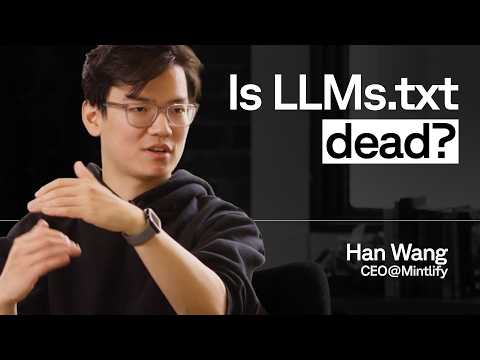
0:00 Who are we writing docs for at this point? >> If you think about what matters for a human, building a great developer experience. When an agent crawls onto that page, it could not care less on how pretty it is. >> It seems like your mission is so much bigger. It's being the single source of truth for all the information an agent needs to do its work. >> So, if we do our job right, the vision of Mintify is provide the source of truth, provide that context for all agents. When an agent actually visits a MITFI site, you actually don't see the same HTML response the human does. You just want to give agents the context in the most token efficient way possible. There's a big debate on like whether LMTXT works or not. And to be honest, we don't even fully know. Is LMS.txt dead.
0:40 Hey everybody, I'm Paul, founder of Browserbase, and I'm here on Navigators, our series where we meet with leaders building AI companies that are transforming the world. Now, a important category that I really think we should be investing more in is the context for our agents, especially as they use software in the rest of the world. But where do they get that context? Often times, it's the documentation of that software. So, who better to bring on the pod in than Han, founder of Mitlifi.
1:06 Han, thank you for coming, man. >> Oh, thanks so much for having me. It's a pleasure to be here. >> Well, Mintify is more than just docs. That I want to talk about that a little bit because that's what we said before we came on. Yeah, >> tell me more about what MFY does and what it's known for, but then where you think it's going to go in the future and what you would kind of want it to be known for.
1:22 >> Yeah, absolutely. I think a lot of people you know, very thankfully browser base included would and have used MITFI to build and power their public facing content, their public facing docs for all the users and developers. But I think one of the things that we've seen change in our market and that kind of like really leads us to rethink about the future for not just the product but the company how we want to talk about it how we think other people should be thinking about it is just the very fundamental reality that we saw across our data. So like literally like late last year you know we looked across all the traffic across all the militifi sites which like for context now is like over about 100 million. So like viewers a month and ask ourselves a very simple question like what is the percentage of human traffic versus agent traffic and since we started looking at it late like end of last year I think around the time it was like 30%.
2:21 It went to 35%. It went to 40% went to 50%. Cross that threshold about like early this year around like February or March and now we're sitting at like 65%. And that was just us looking at the data just being like asking ourselves a simple question. we feel like agents are obviously viewing the traffic like you know viewing the the sites a lot more what has actually showed up in numbers and the just the numbers were just completely surprising to us. So you can obviously make that inference and just look at the chart and we actually built a live tracking website where it literally tracks all MIFI data. It's at like minifi.com/data and you can literally see the trend and it's really hard to look at that trend and not think that we'll be looking in like a living in like a 99 one you know like agent traffic to human traffic world in literally like I don't know let's just give it like 5 months you know at most >> right and so then of course the question comes to us was like okay well what's the role of these sites what's the role of content what's the role of documentation in that world where agents are the ones primarily consuming it Right? And that kind of leads us to think about the business in a completely different way and think of it as infrastructure piece. Right?
3:27 Infrastructure for agents, context for agents, all this key information that enables the agents to do the work they do and kind of building and and messaging around that. >> When we traditionally think of documentation, we think about it being written for humans, but you know, at MITFI, a lot of what you've done is saying about how we restructure that same documentation that might still be read for humans, but also for agents. >> Yeah. How have you thought about that from a product perspective and and what are you telling your customers when they're writing docs today? Who are we who are we writing docs for at this point? I I don't think I know.
3:58 >> Yeah. So, it's really important to I think there's to make a distinction between like when you're writing content, how do you do it well for humans versus agents versus building the platform and supporting humans versus agents. I think there's a really important distinction that I I typically ask people to make there. The latter with the platform is a little bit more nuanced because if you think about right like what matters for a human right like we let's say considered let's say stripe docs as the gold standard of like best-in-class documentation you I know you work at Twilio before Twilio also had great great content as well a lot of efforts into the platform but oftent times what that really meant was just like building a great developer experience right that's all it was it was like nice pretty layout nice pretty looking site it had like an at terminal and like it like looks super pretty and like it had good layout and like information architecture and all that good stuff, right?
4:52 When an agent crawls onto that page and it basically just sees the raw dump of that markdown or HTML files, it could not care less on how pretty it is, right? It just doesn't. And so you have to ask yourself like okay well that's what matter for humans then what does it matter for agents right and to us that's the quality of the content making sure the docs are actually accurate making sure you're not confusing the agents making sure that it's actually like up todate fundamentally correct valid against other sources that it has references to so that it can actually take that information and reliably transfer it to the customer right and in terms of actually then what matters in building that platform yeah it goes away from it looking nice you need to actually build all of these agent protocols to support it, right? And that's kind of where a lot of the nuances and all the work that we're really doing at Milifi has been over the past few months. I actually what made MITFI great in terms of building like really nice looking great aesthetic content and doc sites we stopped really thinking about that to be honest you know and the market hasn't also as much right it's about making sure the content is good and making sure the the the the protocols fundamentally support agents that's on that side then the question of course becomes well how do you actually write good content for agents I think typically I've realized that I think in people ask me all this time. I think a lot of people often overthink this. I think just writing good content as if you were to a human translates the same way to an agent because an agent typically when they're looking at these kind of content, these sites, they're just like trying to understand it themselves and explain it to the person to get them the question and the answer.
6:33 So, write it like you would a human. There's no different there's no nothing apologizing bad content that would have been bad otherwise, you know, whether it's for humans or agents. Milifi plays an interesting role here because I'd argue that the context we give our agents actually will guide their token efficiency. If we give agents bad context, bad information, inaccurate docs, they're going to spin and spin and spin and waste a ton of tokens >> when they could have just used the right API in the first place. How do you think about that and quantifying that impact that good docs have on reliable agent?
7:07 >> We actually did a study on this. So we have a team of folks who are like literally like crunching through these experiments looking through numbers like what is the objective impact of right like of course on like docs or having any of that versus not having it and just having the codebase. What we found is that if you for instance give an agent let's say a codebase and then you ask just like very general questions about like how something should work and then you ask it with an like with a codebase and then a doc site. literally like the results were actually like astounding to us.
7:38 You're burning 50% less tokens and I think you get to the answer. I I don't quote me on this. We published the the the report on it. So check it on the blog. It's like 2.5x faster. So there is a very material difference when you have and able to provide very publicly well expposed information to the agents versus when you're tasking it to go and like find the ground truth from like just from scratch, right? I think that for instance illustrates as to how important context matters, right? Like why not just plug cloud into everything, right? You could there's token limits, but more importantly, it just kind of racks up tokens when in reality like oftent times what documentation does and the reason why it exists is to kind of be like this abstraction layer, this caching layer if you will, right? For humans to get to an answer faster instead of just going and doing all these things themselves. It's well the same thing applies for agents, right?
8:33 you're starting to think of like this like analogies of like, oh, it's knowledge infrastructure and then it's caching. It's like it starts to really kind of sound like like a very technical engineering problem, right? In Mify to me, I've been super bullish for a long time and I think I've told you this before, like I think it's a huge network effect to using the product because as agents are familiar with Mintify docs, you know, as that gets to the weights, the the format of these documentation websites >> that benefits your business. Have you seen tests where an agent looking at some docs that are on versus on some legacy doc software performing better?
9:08 Do you have like a sidebyside? Is it benefiting me to host my docs here? What do you see? >> We do because it is very well trained in our format. we actually work with the anthropic teams specifically for these purposes, >> right? Like there's been a number of times where right the anthropic team for instance like develops a new protocol and you know they're looking for like broader adoption to it. you know they message us and then we go ahead and build that somehow into it and then because it immediately goes live for a lot of our customers then it kind of gives it the kickstart it needs to actually go push something into production right so the the most classic example of this is like LMTXT there's a big debate on like whether LMTXT works or not and to be honest we don't even fully know >> yeah is is LMS.txt txt did.
9:50 >> Yeah, >> I think LMTXT in its truest intended form never hit it off because I don't think in like in terms of having it be like in the same use case that Google has of like a site map which again was the intended purpose of it was never used to that extent. What it did what it did actually actually help a lot with I think there were two things. Number one, and this gets into a little bit of the technical weeds of things. When an agent actually visits a Mintify site, you actually don't see the same HTML response that a human does, right?
10:27 Because like I mentioned, it's like those are the things that make it look nice. You just want to give agent the context in the most token efficient way possible. So for instance, an agent crawl like a cloud code requests, right? Browser based site and we actually talked about this on Slack. >> Oh yeah, >> it returns markdown. But that itself is kind of limiting because you actually still want to give it like navigation, what kind of like what's the actual like page hierarchy, where's the next few pages should look up, what other pages exist, what information does it have.
10:53 LMTXT and giving the agents references to that in those circumstances extremely helpful. And so across Milifi sites, LMTXT has extremely high traffic because it is used for that purpose. The other one that actually was something that we built and is kind of now like like like part of the LMS TXT protocol is this idea of LM's full. The funny story there was we launched LMTXT with Enthropic. And they were like I actually think the more useful thing that we would love is if you can build LM-full.txt and LM-fold.txt txt is literally like just a massive dump of the entire docs inside one big file, right? One big markdown file. As simple as that sounds, it has extremely high traffic because what that allows you to do is plug the entire context and the corpus of docs directly into the context window of these agents. Right? So some people design their agents with let's say smaller smaller doc sites or just less information not like you know hundreds of thousands of pages or something like that scale. You can just literally be like hey all the agents that I built on browser base just take this take this directly and that actually often has higher traffic than the LMCXT because when a company finds use of building that with agents it actually is becomes extremely powerful. When you think about Mintify and the direction you want it to go in in the future, it's this layer of information retrieval, structuring, presentation, but there's also a lot of function in this application too where I can talk to my docs. You have an embedded chat feature. You're building more agents that self-update the docs.
12:31 >> It seems like the mission is not just present my docs and have an editor for them. It's it's much more than that. Tell me where the next part of MIT journey is. >> Yeah. So I think it's important to like even just like taking a step back like see that like when we started Mintify we never thought about Docs. That's never like why we actually went ahead and built a company. If you in fact if you actually like wound back the clocks a little bit and you like I would have just chatted with like a younger version of myself that I was going to go build like a big docs platform whatever I would have been like no I'm not doing it. That seems remarkably un unexciting, unsexy. What the You know, because the younger version of Mihan wasn't really excited about docs, nor do I think, frankly, anyone really is. You know, find the person who's really excited about that. And I have so many questions, right? To me, I wake up not being excited about that, but actually about the problem that it solves. I set out to be a, you know, a founder because I really wanted to go ahead and actually solve this problem of enablement. That's what it was for me.
13:30 like I wanted to go like you know build something that could help people understand something better because to me like I selftaught you know how to code since I was 10 years old my entire career was built on Stack Overflow you know YouTube tutorials bad docs right like trying and figuring it out and I view that like the problem of enablement is as big of a problem as like the product and the functions just not being there at all if you simply don't know how to do something you can't do it in the same way of the product is just efficient. So I really want to go solve that problem and as it turns out docs has been a fantastic avenue for that right but in the world of agents where again it's agents viewing the content helping people enable then you have to think about the first order you know like the the you know the like the fundamental problem it's about enabling agents now to go ahead and actually you know get the thing done right and so as I think about the future of milifi you know I it always comes back to that core problem. How do you go and enable and in the world of agents I view that MITFI is for instance going to be like the source of truth engine like imagine like an engine where it plugs in that degree of context to all these different agents around it. So like let's say you have an agent for sales right like we for instance have a lot of like you know some agents building for help us outbound we connect our like sales playbook which is powered on mitlify into those agents we have others for marketing where our ICP docs and ICP memos for instance are plugged into that to help enable marketing messaging right branding copy all that stuff we have other agents for engineering where they're plugged into like you know like the the the engineering practices design systems like the guides the setups Right? And of course other people using militify could plug into the militifi docs and let's say like you know over an overall map you're an engine that powers like all these agents across the board.
15:28 And there's going to be a plug for humans too, right? Like there's going to be one that's serving the static sites and serving the content so that humans could still effectively read it. But make no make no mistake, it's like in the future it's going to be like that one plug for humans and like 99 other ones connected to agents. but building that core source of truth, that core platform, that core engine is what we care about and what you know we're building towards.
15:51 >> So you're saying in the future I will build an agent and plug in Mitlifi which will then grab all the relevant source of information which might not be like application documentation but also like here's how my team does sales. >> It seems like your mission is so much bigger. It's being the single source of truth for all the information an agent needs to do its work. >> Exactly. Yeah. So if we do our job right like the vision of MILifi is like in a few years to be able to provide the source of truth provide that context for all agents.
16:17 >> What do we have to do to get from here to there? Because the current business you have is working really well. It's growing a lot. >> A lot of products, right? I think I think like you know like basically providing knowledge I is is is in our opinion like a you know requires getting the form factor right in a bunch of different ways, right? Like we started with the smallest and most niche wedge of like hey it's public facing developer content. right? That's like the bread and butter of what we've done. And so, but over time as we've grown, it's very clear that, you know, we have to kind of expand our horizons if we were to go try to truly capture like, you know, the source of truth and be like the the knowledge market to kind of grow outside of that, which means, hey, you got to scrap the developers part a little bit, right? So, as a consequence, we power a lot of help centers. Like, if you go to Lovable's help center, if you go to Granola's help center for instance, right? us using Milifi where it's not fundamentally for a technical audience and over time people have also asked us for internal sites right because there's a lot of internal information right we use militifi and notion to power a lot of like the content that we have and so how do you go ahead and erase the public side like the public facing side of the the original wedge and overall like all these things eventually grow into like just kind of like more surface area more like opportunities for us to kind of really help enable empower the source of truth and I I think that in the in this day and age, it's especially important and kind of like why I'm so bullish in our direction for it is because we deeply believe that given how quick things are moving, that source of truth needs to be self-healing, self-updating.
17:48 And that's like such a core part of what the company is betting into, right? Like just given the fact that I'm sure for you guys like PRs are coming just flying off the walls >> every day, >> every day, right? Like thousands and thousands of PRs. How the hell are you going to basically be able to update the the right guides for, you know, for your users, the people, you know, the company internally on best practices, the know-hows, all that good stuff. Like, how the heck are you going to do it, right? It's just got to be with agents now. And that's of course a big part of not only our focus, but I fundamentally believe is what's going to be, you know, the future as well.
18:25 >> And I I understand that you're building a lot more now, too. How are you building with agents at MITFI? and tell me a little bit more about how Mintify uses Mintify or even builds the company itself to get to these kind of lofty goals that you have longer term. >> 100%. So, first and foremost, like I feel like I've had such a amazing time over the past like six, seven months. because I think the threshold of agent intelligence and like the reliability of it has gotten to a stage where it is it often surpasses the ability of another person, right?
18:57 Whereas I think like maybe like prior to Opus 45 as an example, like I don't know like the trade-off just wasn't there. Like now like I can like I can on an average bet that it's better at responding to my emails, better at sorting through my you know emails, like better at like doing kind of like a lot of the operation stuff, better at making purchasing decisions as an example. And so I've just been having like an absolute like kind of like blast just over the past few months just building all sorts of these agents, trying what's new, trying what could be done and and really it's like the sky's is the limit is what I'm finding. It's like there's anything that you can think of as regional problem you can kind of build an agent to kind of help improve. and so I have it like handling all different parts of my life right now that might be shameful to admit, right?
19:42 many aspects of the business have agents you know giving either engineers salespeople marketer superpowers. One of the reason and going back to your last question about like how we use it for ourselves a lot of those agents plug into the milify source truth. So we specifically designed it so that like either the agents we build or the agents that we use are really well connected to the MITFI so that like so that for instance you know like if you have a question on how do you like send let's say like a Twitter copy it references that source of truth in terms of the brand messaging the copy and if you ever need to revise it it's easy to update that as well. I wonder about the mintify agent has access to all this information but also has to take actions on the web and then maybe a point worth debating for a second is that like it seems clear to me that the internet's information might benefit from restructuring to be more token efficient >> y >> but I I don't think I'm convinced that the internet itself will be rebuilt for the action taking side that's the bet that browser base has made >> when you think about the internal agents you built at minifi like the one to check in guests to our building >> how much of it is, you know, read or write driven. And how do you think about making agents that work really well for your day-to-day life?
20:56 >> Yeah, that's a good question. I mean, I I think it it's it comes down to >> like the work that's being that actually needs to be done. I I I don't know if I I necessarily make the distinction on like the read and write as much. I'm curious to hear your thoughts on it. I think that there was a long time I would say like maybe like till the start of last year where it felt like agents were predominantly redriven answer driven right and I think the advent of like you know obviously MTPs tools all these companies building connectors into these agents has now given the agents the arms and legs to go do everything and even when like like my order of thought when I typically think about automating something that like actually produces an action. It goes like, "Okay, well, is there an integration?" Like 90% of the time there typically are, right?
21:46 Like go and manage like my schedule or go and write me an email or go and make an order. Like there's usually like these kind of things for it. And if there isn't, well, that's where that's where browser base comes in, right? You can think of the ways of building bespoke tooling to kind of like to retrofit an existing platform for it. So to you know, as you mentioned about that like the visiting thing that you know we have in our office, right? Like we have an agent that every time someone is invited to come to our office, they need to be checked into our system, but that system was built in like I want to say like the 90s or whatever.
22:17 >> It's bad. >> It's really bad. >> There's no MCB for that one. >> There's no MCB for that one. And I don't think there ever will be, right? So we we spun up, right, using browser base to go ahead and like click through the things, log in with the credentials, and then actually go and like mark a user as they're here and they can be checked in. and made our lives so much easier because my god that UI is just unspeakably bad.
22:39 >> We launched something recently that's kind of interesting which we called browse.sh. >> Okay. >> Which is like a repository of skills for websites. >> Yeah. >> I almost imagine like there's a lot of websites that won't have integrations and maybe won't have like an LLM.ext. >> But what if an agent has gone to that website before and can write down the steps it took to use that website and publish it some central place? >> It's almost like a reverse lefy. instead of the website publishing their own docs like people agents are writing docs at websites they visit.
23:03 >> It's kind of interesting to see like how is the like collective trajectories of agents can be shared across different types of agents. I think there's a gap for that >> and militifi is one area where I can have my agents write my docs because my agents are using my product and they can try it and improve it and I think you have that in the product every day. What about the rest of the internet and how can we share that information and some really interesting stuff there.
23:25 >> Yeah. And and one thing that actually we find really exciting is is like actually also even exposing ways for agents to give you feedback, right? It's like if for instance someone used cloud code to try and go and build an SDK with browser base, but let's say like it didn't work perfectly, right? There was like some misconfigured or like part of the docs or there wasn't explained. How do you give agents the way to actually leave that feedback to you guys so that you guys can go ahead and you know either fix that or spin up another agent to go, you know, like get that resolved.
23:53 and that's like a lot of things that we're actually building, experimenting, and toying around at Milifi. And, some with more success than others, but even from the kind of the information that we have right now, like if actually agents even stuff that we're dog fooding for instance ourselves is like when an agent crawls into Milifi's site, we actually give the agent ability to call an endpoint and like leave a piece of feedback. There's a lot of feedback as it turns out and the quality of that feedback has been just absolutely remarkable. Like an agent goes and tries to implement these various forms of components. Oh, this documentation is terrible. A person would literally look at that and mark it like give it the thumbs down or whatever, write some generic complaint. An agent has such an articulate ability to go in and actually write like a very detailed descriptive prescriptive response and exactly what the user had the issues with in very depth and description and it actually has been some of the best feedback we've been getting in terms of actually reworking our content and then reworking the product and so some food for thought that's also kind of an area of product development for us that we're also exploring too. So Han, I have to ask, you know, three and a half years later after starting Mint Lefi, >> yeah, >> models have improved so much and at a really rapid pace, >> yeah, >> it seems inevitable that models are going to keep getting better and keep getting closer to human capabilities.
25:13 >> Yeah. >> How does it impact your business and what's the next opportunity for the business that you're building? >> Yeah, >> I think the first thing that we've seen is that model capability correlates to just jumps in traffic. In fact, if you actually were to like look at, let's say, like humans and total traffic across Mintify, you can literally like find in the lines exactly like when like Fable came out and then it was, you know, and then it was out of fashion. When Opus 45 launched, when Sonnet 35 launched, you can literally see like these spikes and the kind of like almost like step function curves.
25:47 And what that tells us right that's obviously driven this whole like you know like you know like newborn traffic on the web that's from agents is that as agents get better and it unlocks more capability more people are trusting it to do more things on their behalf and as a consequence in order to do those things their agents require more information and then fundamentally leads us back into MITFI obviously kind of providing and helping assisting with that information. as of like recently since 47 and then since Fable, like just agent traffic has just gone absolutely haywire. In fact, I actually invite you guys to go check out for yourselves, there's like a little analytics agents tab. I'd be shocked if you guys are finding that like your agent traffic is now 4x that of humans now. It was maybe 50/50 like 2 months ago. And as these models get better, obviously, you know, more agents are able to do things, require more information, and so forth and so forth.
26:43 >> Yeah, it's funny. you guys actually have the best data to prove out the browserbased thesis in some ways because you see the agentic traffic of the web yeah going up and up and up and I think it's really insightful to have these data sources that really can inform >> what's happening in the world and and seeing model quality drive numbers every single month I think it's really inspiring. So I'm so happy you came on the conversation today. I'm very thankful for you and I'm excited to keep following along with what you're building.
27:10 >> Likewise. Likewise. Big fan of browser base. off. Boom.
Summary
- Mintify's mission is to serve as the single source of truth for information needed by AI agents, emphasizing the importance of accurate and up-to-date documentation.
- The platform is witnessing a significant rise in agent traffic, with agents now accounting for 65% of site visits, indicating a shift in how documentation is consumed.
- Effective documentation for agents requires a focus on content quality rather than aesthetics, as agents prioritize accurate information over presentation.
- Mintify is developing tools to facilitate agent feedback on documentation, improving content quality through detailed insights from agent interactions.
- The company is expanding its scope beyond developer documentation to include internal resources and help centers, aiming to be a comprehensive knowledge management solution.
- As AI models improve, Mintify anticipates increased demand for information, driving further traffic and reliance on its platform by agents.
- The future vision includes creating a self-updating knowledge infrastructure that supports various agents across different business functions, enhancing overall operational efficiency.
Questions Answered
Who are we writing docs for?
The focus of documentation should be on providing a great developer experience, serving as a single source of truth for agents rather than just being visually appealing.
How do you write good content for agents?
Writing good content for agents should be approached as if writing for humans, as agents seek to understand and relay information accurately.
What is the significance of LMTXT and LM-full.txt?
LMTXT and LM-full.txt serve as essential tools for providing agents with comprehensive context, allowing them to access entire documentation sets efficiently.
What is the future direction of Mintify?
Mintify is evolving beyond public-facing developer content to encompass a broader range of knowledge management, including internal documentation and self-updating systems.
How can Browserbase improve outdated systems?
Browserbase can create bespoke tools to retrofit existing platforms, enhancing user experience and efficiency, even for outdated systems.