Transcript
0:00 I built my personal brand on LinkedIn going from 4,000 to 140,000 followers in 24 months. And I used that audience to grow my SAS from 0ero to 6 million ARR in 18 months with just three employees and zero funding. The truth is LinkedIn isn't just another marketing channel anymore. For B2B founders, it's become the highest ROI growth engine that exists today. So today, I'm giving away my complete LinkedIn course for free. It covers the exact system I use to build an audience that generates millions in revenue every year for all of my startups. Enjoy.
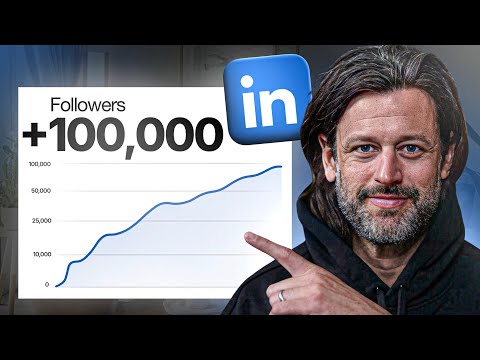
0:46 Building a personal brand on LinkedIn is the fastest, most efficient, and highest leverage way to grow a startup that has ever existed. I'm living proof of it. In 18 months, I've gone from zero to 100,000 followers. And over the past six months, I've launched and grown a brand new SAS company called RB2B and gone from 0 to 3 million ARR with zero funding 100% through LinkedIn. Why is LinkedIn so powerful all of a sudden? Because today, the ability to create great organic social media content levels the playing field between the largest companies in the world and a soloreneur in their basement. How? If you can create great organic social content that your target market loves and consumes daily, those are free ads.
1:31 Large companies have to pay for those impressions. Your content creates a humanto human connection at scale, which a large company's ad simply does not. Over time, your prospects feel like they know you as a person, and you can open conversations with thousands of prospects a year who trust you so much that they'll do anything you ask them to. Creating great social media content is hard work. But the good news is that the key to cutting through the noise and growing on LinkedIn is so surprisingly simple. Anyone can do it. So, what's the secret? You have to be unapologetically authentic and tell your story clearly, consistently, and constantly. This course will teach you my six-step launch on LinkedIn framework for creating explosive audience, community, and revenue growth. Step one is developing your story so that your target market has a clear understanding of who you are, the niche you serve, and what you stand for. Step two is perfecting your profile to maximize your professional credibility. Step three is my system for consistently creating some of the best content on the platform. Step four is the strategies and tactics I use to grow my audience from zero to 100,000 followers in just 18 months. Step five is how you can use commenting to build a community that you can eventually move off the platform. Step six is how I use video to create an even deeper humanto human connection.
2:57 Before we start, I want to make a gentleman's agreement with you. Follow my guidelines for 30 days, which is just 16 total posts and 20 outbound connection requests per day. And at the end of 30 days, you'll start getting several types of inbound that you were not getting before. Number one, you'll have created a pull recruiting mechanism, meaning people will want to work with you and they'll check you out on LinkedIn. They'll read your posts and they will have pre-sold themselves before they even interview. Number two, you'll have investors banging down the door to invest in your company.
3:28 Although, I recommend you avoid this at all costs because I'm a bootstrapper and I think that VC is the enemy of the founder. Number three, you'll have potential partners in your ecosystem reaching out with you to explore different types of partnership opportunities. And number four, if you're lucky, you'll get inbound leads for your business. But these four things are not actually why you should stick with it for 30 days. The biggest reason to start posting and to keep it up for 30 days is because you'll be 30 days closer to finding your voice on LinkedIn. And once you found your voice, you'll have unlocked what I've unlocked.
4:00 You'll be able to create great organic content for your target audience that is literally impossible for your large customers to spend their way to competing with. And that is the secret to 0 to 3 million AR R in 6 months with five people and zero funding and staying bootstrapped all the way to 25 million ARR. Do I have your attention? I am Adam Robinson, founder and CEO of Retention.com and RB2B and this is my course LinkedIn secrets. Let's get started.
4:39 To take your first step towards dominating on LinkedIn, there's a mindset shift that you have to make. Today, people do business with people, not companies. People are on social media to connect with people, not companies. I know you've heard this before. Many of you brushed off as common sense or just a feel-good line for people trying to build tiny businesses. But right now, I want you to believe this to your core. It's the most powerful truth of our time. There's never been a moment in the history of human communication like today. You have just as much access to the platforms where people are paying attention as any big company, no matter how deep their pockets are. But access is only part of it. If you show up as your unapologetically authentic self, you'll outperform any brand heads down because people are on social media to connect with people, not with brands. Don't believe me? Take a look at these two LinkedIn posts. One from my competitor and the market leader Six Sense and one from me. The engagement numbers tell the whole story. But even if you didn't see those numbers, which post would you rather engage with? That's the power of LinkedIn. It lets you scale human to human connection. Your customers humans.
5:52 The decision makers buying your product humans. And if you hold their attention, you've already won 80% of the game. The result of all this, personal profiles grow 10 times faster than company pages and get exponentially more engagement. Let's talk about how you can beat your big company competitors on social. The worst thing you could do is try to look like those large companies. Don't make some slick, sterile brand for yourself. Don't create a logo with the same colors everyone else is using. And don't even think about making a pukeworthy statement like this. Six sense revenue AI reimagines the way revenue teams create, manage, and convert pipeline into revenue. Reimagines. Do you really think your prospects are waking up today thinking they need to reimagine something? Give me a break. You already have an advantage over any big company out there. Your humanity, your flaws, the adversity you face, and your beliefs. You get to decide who the world knows you as. So, choose wisely. Let's dive in to how you can create that person using the three C's. Number one, you must be incredibly clear about who you are. Number two, you must be consistent about who that person is. And number three, you must constantly reinforce that story. And here's the secret. The more authentic and human that message is, the more vulnerable, flawed, and relatable, the more your message will cut through. Why? Because big companies talk like that six cents vomit I shared earlier. They just have to. And small players are completely unwilling to share their biggest mistakes. This is true for all social platforms, but it's especially true for LinkedIn because it's a professional network and people are always trying to impress. To reiterate, no one is willing to talk about the real problems they encounter. If you're able to, you'll be able to do something that less than 1% of creators on LinkedIn can do, and that will cut through. Here's an extreme example of what I'm talking about. I did a post about a big layoff we did, and there are very few founders who would post this. My executive team told me not to. When I said I was going to, they begged me to soften it by cutting out the parts of the post about how we'd fallen out of product market fit and that we'd been unable to fix our churn over the prior 18 months. I refused to change it. Why? Because this is a level of brutal honesty that few CEOs are even willing to admit to themselves about their business. And being able to be this candid about our situation is one of the things that makes my content resonate so much with people. Did my employees love it? They didn't love reading it, but I want them to understand the reality of the business and why we did what we did as hard as it is to read because I think it leads to better long-term decision-making in the end. Again, this is an extreme example.
8:43 If you have investors, you won't be able to write stuff like this. If you have a co-founder, you probably won't either. But this is an example of being vulnerable and authentic. If you can say things to LinkedIn that you would say to your spouse behind closed doors, it will do better than anything any large company could ever post. Why? Because it's relatable and it's the actual experience other people are having. And here's a bonus, a little pro tip I got from a prolific LinkedIn influencer named Devin Reid. People behave on LinkedIn like they behave at work. If you can be a bit inappropriate on LinkedIn, it really stands out.
9:25 Let's talk about developing your voice. How you speak, how you write on social, and what you choose to talk about. The way you create your voice will decide who cares about what you say and how much they care. As prolific entrepreneur and content creator Alex Ramoszi says, "Do then talk about it." You may not have an audience in the beginning, but it will come over time as you exercise the three C's. Again, you must be incredibly clear about who you are.
9:52 You must be consistent about who that person is, and you must constantly reinforce that story. Here's another reason people follow you. If you're willing to share financial info, you'll absolutely crush. Building in public becomes way more interesting when you're transparent with your finances. Next, create one or two pillars around building in public to really develop your voice. I like to focus on topics that are tangential to the problem that you're solving. Meaning, all the prospects who have the problem you're solving also have the problems you're talking about. These should be things you can talk about easily because you've got experience with them. You do them daily. You think about them more than other people and you're more excited about them than basically anyone else.
10:34 You're not limited to this list. Your pillars should make sense together based upon the message you want to share with your audience, but they don't have to be super obvious. For example, if your business was a CRM for salespeople at auto dealerships, your pillars could be building in public, how to attract, train, and retain salespeople. And the future of dealership sales, how AI is going to change the way cars are sold. But you could also do something like this. Build in public, how to attract, train, and retain salespeople. And life lessons from the greatest salespeople of all time and how it applies to car sales. The key is that they're connected in a way that makes sense. The pillars that have worked so far for me are build and public, the future of BDR, SDR, and go to market, and bootstrapping versus VC. Now, here's the secret that makes these pillars magic. You can't just pick pillars, start posting bland, down-the-middle stuff, and expect people to care about it. The most effective way to stand out in any kind of media, LinkedIn included, is to be polarizing.
11:39 How do you become polarizing? Russell Brunson, one of the best content creators of all time, explains it through his prolific index framework. If you're regurgitating mainstream ideas, that's no good. You just get mixed up with all the noise. If what you're saying is too far out there in either direction, people are just going to say you're crazy. But if you can find a sweet spot between mainstream and crazy where people on your side love you but on the other side hate you, that's where the prolific content lives. My real life experience with prolific content came last year around Labor Day when I started talking about how I got rid of my BDR team and our pipeline generation sped up. At the same time, all of SAS was watching the effectiveness of their own BDR teams go down month after month after month. But it was too painful to think about eliminating those massive teams and the people that managed them and the lives that depended on them. I proposed the prolific idea that the predictable revenue model was born in 2012 and died in 2023. That demand was no longer created by SDRs and it was merely captured by them. I said SAS startups that focused on driving traffic to their site and retargeting site visitors every way possible was a new way that was wildly more efficient but far less predictable. The result, my content has been living in the prolific zone ever since. So what can you expect from your initial efforts? The point isn't to create a massive lead engine initially. The point is to create a landing page that creates an inbound trustb buildinging machine. My friend Curtis Matzco has a hundred million dollar a year handbag business called Portland Leathergoods. He spends 30 minutes per week recording videos on his laptop that his assistant posts daily on his feed. He gets under 10% of the engagement I do and has never connected the sale of a purse to his LinkedIn presence. But his last three executive hires have come from people who got to know him by watching his quirky videos and came directly to him. He's also got an investment banker doing free finance work for him because they want to sell his company someday who got to know him through those videos. Posting a few times per week will give anybody and everybody who wants to know about your company a place to go that will make them feel like they know, like, and trust you. Then over time, you'll find your voice, and that's where things get really fun because you'll unlock the true superpower of creating organic social content that your prospects love.
14:10 So make a commitment. Start with 30 days. Watch yourself come alive on LinkedIn and feel the benefit of the automated trust building machine that you create. Then as you continue one year from now, you'll be in your stride with a clear voice and a strong message and an audience you're actively moving into your pipeline. A great place to start is building in public. As Alex Ramoszi, probably the most popular entrepreneur on the internet, says, "Do then talk about it.
14:49 Your profile page is everything. When people see your original content, spot you engaging on influencers posts, or get a connection invite from you, they're going to click on your profile and check you out. Don't blow that chance to make a great first impression and deliver your message. My LinkedIn profile alone drives hundreds of inbound leads for RB2B every month. That wouldn't happen if I didn't have it set up the right way. So, how do you set up your profile to make the biggest impact on your audience? Here's the thing. Most of these changes are simple. Each one boosts your profile's effectiveness just a little. But when you add them all together, the effect is massive. Here are some tips I've been given along the way about how to build a high value, high trust LinkedIn profile page. First is the headsh shot. Get a professional head shot. Look straight at the camera and have a solid background. It's best if you're smiling. Banner. Create a branded banner with a very clear value proposition or offer and a call to action. You can use Canva to do this, even the free version. If you don't feel like you have the skills or eye to make it appealing, you can outsource it with your favorite design site like Fiverr or Upwork.
16:01 Headline. Create a clear description that maximizes credibility and accurately reflects what you do. Link. You can set this up in the very top section of your profile. You can use a link or a custom button. Point it to your website. If you have a special page for cold traffic to convert them into a front-end offer, even better. The about section. Create an extremely detailed about section that highlights your professional accomplishments and area of expertise. Do site very specific professional accomplishments. Your highlight reel. Use numbers when you can. Build as much credibility as humanly possible in the first line which is above the fold. Do not be vague. This is not a place to talk about who you aspire to be. This is where you talk about what you have done and why you are a total badass. The featured section.
16:52 Put links that are direct response call to action in your featured post section. Build out your roles section. The more detail about each role, the better. Include detailed descriptions of your past and present roles in companies. Add any investments or advisory roles if that applies. Add any professional networks if you're a member of any of them. Education. Add your education. Any advanced degrees or certifications. These still matter even though you're an entrepreneur. Recommendations. Make sure you have a recommendations from at least three to four people. Do a swap with them if necessary. Look, these are all checkbox items. I'm not asking you to reinvent the wheel here. Just make sure you're using this real estate to its full potential because your potential customers are passing through. Don't miss the chance to make an impression that will lead to the next stage in your relationship. So, how do you turn your profile page into actual leads for your business? With LinkedIn Premium, you can actually see who looked at it. Those are warm leads. Opening conversations with these people will be exponentially easier than opening a conversation with a cold contact. This alone is a great power of LinkedIn and one that you should use to get your company started.
18:06 Before I continue, if you want to know who's actually visiting your website right now, install RB2B for free using the first link below. We'll identify your anonymous visitors and send their LinkedIn profiles to your Slack so you can connect with them while they're hot. So again, click the link below and start using RB2B for free. Now, back to the course. Writing consistently great posts, the kind that rise above the sea of mediocre gladhanding noise on LinkedIn, is your superpower that most of your competitors will never master. It's not easy, but there's a method to it. It's not just luck. Once you nail the method, you'll be in a whole different league. Here's how to write consistently great posts.
18:56 First things first, you got to get your mindset right. You're not writing for an algorithm. You're writing for an audience. Sure, the algorithm isn't totally irrelevant, but remember this, the algorithm is designed to serve your audience. So, focus on them. Always write for your audience first. If you can throw in a little something for the algorithm to boost your exposure, great. Make this the foundation of your LinkedIn posting mindset. No matter how the algorithm changes, the only solution is to make better content.
19:30 I took this idea hunting 101 concept from Andy Muborn, who runs a LinkedIn 30-day training program called Brand 30. Idea Hunting 101 helps you figure out what to write about. You know your niche, which you have to post about consistently and constantly. Here's a little secret about posting on LinkedIn. The best LinkedIn post answer questions that people have about your niche. So, you just need to find places where people are asking questions about your niche and figure out what they're asking. Let's say I'm in the cold email niche. I'll walk you through the five ways I would generate ideas for things to post about. The first thing I do is study the best creators in the space.
20:11 For cold email, it's two guys named Michael Lieben and Jesse Oollette. I'd spend several hours looking through their last 90 days of posts. I'd write down all the topics they're posting about in a spreadsheet. I would then figure out which topics I could muster up a prolific polarizing take about. I would never take all of their ideas. I'd come up with my own version of the post of the topics they're talking about, then follow my postwriting tactics to come up with a great hook, use a good template, and have a strong close. After I got a handful of ideas from the best creators, I'd turn to AI. I'd go to Gemini, which is powered by Google Search and YouTube search. I'd type the following into the search bar. What are the most common questions people have about cold email? The response it gives back to me. How do I write a compelling subject line? What should I write about in the body of my cold email? How often should I follow up on a cold email? How can I improve my cold email reply rates?
21:09 If you actually were in the cold email niche, you should have extensive knowledge and data about each of these questions. And if you can get into the prolific zone, they will make great LinkedIn post. I'd add this to my spreadsheet with a list of topics to write about. Then I'd go to Reddit and do the same thing. I'd search for Reddit threads about cold email. Then go through the questions and see what people are asking. Between these three sources alone, you should have more than enough post ideas for your first 30 days. If you don't, dig back into the leading creators in the space. Go back a year to see what they were writing then and resurface some of their top content from a year ago with your spin on it.
21:53 Posts are about nailing a hook, using a template, delivering a takeaway, and wrapping it up with a close that's either koi, compelling, controversial, or emotional. Something that drives engagement. There's not just one way to create a great LinkedIn post. You want to experiment and find what works best for you and your audience. That said, I recommend you stick with one approach for a while and get consistent with it. Then once you see it's working, you can start mixing things up. The first step, study a great LinkedIn creator and create a swipe file. Spend two hours straight digging into the best LinkedIn post from influencers in your space. And I'm not talking about mindless scrolling. I'm talking about finding the best examples you can use as inspiration. If you're not familiar with the term swipe file, it's meant to save you from the pain of staring at the blank screen wondering what to write.
22:44 When you have a swipe file, you'll have some examples of your favorite hooks, expressions of your brand, killer closes, and strong calls to action all in one place. Take those two hours to build version one of your swipe file. If you're looking for places to start, I look to Chris Walker for hooks, Nigel Thomas for templates, and my own posts for closes. By the way, a hook is what grabs attention at the top of your post. On LinkedIn, it's everything before the more button. Writing a great hook is the most important part of posting on LinkedIn. It's what shows LinkedIn that people want to read your post. The goal of the hook, to get them to click more.
23:28 Hooks are about establishing credibility and saying something bold enough so that they have to keep reading. Always write like no one's ever heard of you before and try to build the most credibility possible because most people seeing your posts don't have any idea who you are. What are some hooks that I use to build credibility with people who don't know me? Here's an example. I spoke to 20 CEOs over the past 30 days. Anybody can use some version of this hook. It gives you credibility because you're speaking to important people and you're now a broker of information. Another example is I bootstrapped 20 million ARR in three and a half years. This gives me credibility because very few people have bootstrapped 20 million ARR and even fewer have done it in three and a half years. Another is I just audited a 50 million AR SAS with monthly ad spend of X. This is a Chris Walker hook. 50 million is a big number and it's credible because he's on the inside of a very successful business and everybody wants the inside scoop. You'll also notice that I try to use as many numbers as possible in my LinkedIn hooks because LinkedIn loves numbers.
24:38 Templates help you write content in a way that LinkedIn likes. I use the list plus two sentences or it could be bullets template a lot. It looks like this. For more templates, check out Nigel Thomas's posts. He uses several different templates on repeat. Now, once you've really mastered the art of writing post, you can ditch the templates altogether. Chris Walker, for example, he just writes, but until you reach that level, lean on your templates. Within your template, here's what you should do every single time.
25:12 Agitate a specific painoint in the post. Offer a solution and tie it together with a strong takeaway. That's how you create a mini hero's journey, all within the post. For example, I often talk about how BDR isn't working anymore. I agitate that pain by describing the frustration founders and sales leaders are feeling watching their companies and teams stall or even go backwards. I tap into that fear that this is a problem that they can't solve. And then I offer them a new way forward. Inbound, let outbound.
25:50 End each post with a koi close that gives people a dopamine hit, meaning you agitated their pain. You provided a takeaway that offers a solution. And the last line is clever and gives them a warm and fuzzy feeling that inspires them to engage with the post. Here's a takeaway and close of a post I call the great SAS pipeline crisis of 2023 to 24. Takeaway: The predictable revenue model, born in 2012, died in 2023. Anything your reps did to create pipeline 24 months ago produces 50% of the result.
26:24 Luckily, certain pipeline generation tactics are working better than ever. There's a new model centered around seale executives creating content that cuts through, which builds trust over months, if not years, directly with the market. Signalbased selling allows you to nudge prospects down the funnel, capturing them when they're ready to buy. You close more ARR, grow faster because your reps are senior, can handle more, and have been around a long time, and make fewer mistakes. Plus, sales cycles are twothirds shorter because your reps aren't spending time with people who aren't ready to buy. Your company culture improves dramatically because hyperefficient companies are fun to work in, and you don't have a single person who isn't crushing it. It's a push model versus a pull model. One side of the equation isn't feeling the pipeline crisis. In 2024, poll wins. Do not say let's continue the conversation in the comments or ask some stupid question. This isn't 2012.
27:31 Writing posts is only part of the magic of LinkedIn, although it's probably the most important. Those posts will drive the effectiveness of the other things you do to build your audience and create pipeline for your business. In this section, we're going to talk about some of those other things like how you do a connect campaign. Campaign step one, create your prospect list. Create a list of 100 to 250 of your absolute best prospects. Campaign step two, connect with your prospect list. Starting with 10 to 20 per day, send outbound connection requests with no message. We see very high accept rates on those requests. Your connect rate may go up as you grow your audience. The more active and familiar you are to these people, the more likely they'll be to accept your connection request. And by the way, you can work up to 50 per day, but be careful with automation because it's technically against LinkedIn terms and you can get booted. Step three, engage with your prospect list. When a prospect accepts, they'll start getting served your content. Wait for them to engage in something you've written, then DM them.
28:37 Hey, first name, thanks for the like or comment, depending on it was. How are things going at whatever their company is? The response rate will be very high, usually north of 60%. This is the most effective way to open conversations at scale. Once your audience gets larger and your content gets better, you'll get so many inbound connection requests that you'll stop doing outbound. Only accept ideal customer profile contact requests. You'll get a lot of requests from people who are going to want to sell you. Learn to recognize them. Don't accept them not to be a jerk, but because you want to start building a concentrated audience of people in your ICP. After accepting a connection request, message them and ask, "Hey, first name, what caught your attention?
29:23 Follow up with, "How are things going at their company?" Have patience. Don't start pitching. Wait 60 days. This patience is what will separate you from the people who connect and then pitch 10 minutes later. They think they're being patient if they wait 48 hours or even 5 days. You wait 60 days. Let this person see your content, get to know you, and feel comfortable with your intentions. When you reach out to ask for a meeting, they'll say yes because by then you'll be famous to them from all the content they've seen in their feed.
30:10 Step five in this process is to create a community. Community is a powerful concept because of the relationships people build inside community are built upon shared values and ideas that brought them together. When you build a community on LinkedIn, those values and ideas are what you share in your organic social media posts and your comments on other people's posts. The platform doesn't matter. We're talking about LinkedIn, but community building works the same on any platform. Once you build audience around your ideas, probably the pillars we talked about in step one three, you can move that community to another platform. LinkedIn is an incredible place to build your community through comments. In my world, this now happens in comments on my posts. I try to answer every single comment that gets left for me, and it's typically 100 comments per post or more. As a result of the dialogue that I've created with people in my comments, when I go to in real life events, I meet tons of people I already know online. These commenters also help me figure out RB2B's pricing.
31:13 We had a massive problem where we had 3,000 free signups and only 13 paying customers. I posted about it constantly and the commenters helped me find pricing that got us to a 10% free to paid conversion rate and helped us grow from 0 to 3 million ARR in 6 months with just five people. Creating community through comments is one of the most important features on LinkedIn. You won't have 100 comments on your posts when you start out. So, what should you do? You should make a list of influential people in your space and comment at least 100 times per week on their posts. Do not use an AI tool to write regurgitations of a post and ask a question at the end. I hate that and so do they. The more thoughtful and consistent your comments are, the more you'll start to be remembered by the creator and the more their audience will eventually be attracted to your content.
32:06 Spend as much or more time commenting every week as you spend writing. This is the key to coming alive on the platform and will pay off big over the long run. You should also be connecting with 10 to 20 people in your ICP every day, no matter what. My friend Megan Bowen has spent the last four years connecting to 20 people in her ICP every single day manually. Over four years, she's connected to virtually every single one of her prospects, thousands of them. At the same time, she's been posting great content, which drives inbound connection requests from the same ICP. And what's the result? Four years later, she has 30,000 followers and has created the automated trust building machine that generates leads, partnerships, and investment opportunities for her agency month in and month out. LinkedIn is the single best conversation opening tool that has ever existed. You should feel free to connect with and start conversations with anyone who one has viewed your profile page, two has viewed your company page, three has engaged, either liked or commented on a post you made, or four has replied to a comment that you made in their post. But when you reach out, do not pitch slap them.
33:21 The idea is that you start relationships with hundreds of people at a time and over time your content will allow you to make that thousands and even tens of thousands of relationships. That is when LinkedIn goes from a great tool to truly magical. Now, this next step, it's a next level tactic. At the time I'm recording this, it's not a requirement for getting started. But here's the thing. Pay very close attention to LinkedIn's mobile video feed feature that's currently in testing. It's clear that LinkedIn's thinking more and more about video, and this could soon be something that you have to do as part of your strategy as they continue to push video content. If you're in the community, stay plugged in. If you're not in the community yet, join us because we'll be keeping a close eye on this trend and developing the best tactics for the everchanging LinkedIn landscape. I believe there's immense power in getting people to watch and listen to you talk about anything intelligent. Your status will go up in their head. Period. I've tried to emulate Chris Walker's video format because he has massive success posting video on LinkedIn. I think his videos done so well because it's a step up from someone in their bedroom filming on their iPhone, but it's not super produced. Chris is also an engaging speaker and he has a strong polarizing view and it's also fun to listen to his takes on issues that he speaks about.
34:55 Here's how I create my videos. It's important that you have a process because adding video does create a lot of extra work. I'll write my post first. that gets the topic in my head and it's much easier for me to talk about it in an intelligent way. Then I record a free flowing monologue where I look through the bullet points on my post and elaborate on them whatever way I feel is the most interesting. The video content and the post content end up being slightly different, which I think is a good thing. What tools do I use? I record on Riverside and get them edited on Upwork for 250 bucks each. Video is not a requirement. I would recommend holding off on video until you found your voice and you're getting strong engagement. Like I said earlier, stay active in the community. The LinkedIn video situation is evolving fast, and we're going to be right there figuring it all out as it happens.
35:53 As you finish this course, I need to be straight with you. Here's what usually happens. You close your laptop, walk away fired up, fully intending to put everything into action. But life happens. Other things start feeling urgent and a year from now, you're still in the same place you are today. No more social leverage, no extra fuel driving your growth. Don't let that be you. Make a commitment right now. Lock it in your calendar. If it's not too late already, do it today before you go to bed.
36:23 Protect that time. Stick to the process. Keep learning and growing for the next 12 months. And remember, you don't have to do this alone. Dive into the community, share what you're learning, and get real feedback from me and others walking the same path. I've given you everything I can up to this point. Now, it's your turn. I'll see you in the community. Now, if you're serious about using LinkedIn to grow your SAS, then you need to know exactly who's engaging with your content and visiting your website.
36:54 That's where RB2B comes in. We identify your anonymous website visitors at the person level and send their LinkedIn profiles straight to your Slack completely free. Think about it. You're spending all this time building your LinkedIn presence, driving your traffic to your site. But 97% of those visitors leave without a trace. RB2B lets you see exactly who they are, connect with them on LinkedIn, and message them when your brand is fresh in their mind. You can install RB2B for free using the first link in the description and you'll start identifying your website visitors in under five minutes. So, click that link below and start turning your LinkedIn traffic into actual revenue. And if you want to see how I generate over $160,000 per month for my SAS with cold email, watch this video
Summary
- LinkedIn is the highest ROI growth engine for B2B founders, enabling rapid audience and revenue growth.
- Authentic storytelling and consistent content creation are crucial for building a personal brand.
- The speaker outlines a six-step framework for success on LinkedIn, including developing a personal story and optimizing profile visibility.
- Engaging with prospects through comments and direct messages fosters trust and opens doors for business opportunities.
- Building a community around shared values and ideas enhances engagement and can lead to partnerships and investments.
- Video content is becoming increasingly important on LinkedIn, with a focus on authenticity over production quality.
- Consistent posting and thoughtful engagement with others' content are essential for establishing a strong presence.
- The speaker encourages a commitment to a 30-day posting challenge to discover one's voice and build an audience.