Transcript
0:00 see if you've experienced any of these situations so someone's criticizing you and so you criticize them back you seem defensive I'm not being defensive you're the one who's being defensive why is it always the other person who's being defensive you've asked yourself that or here's another someone's talking to you and then the middle of them talking you stop listening or even worse you cross your arms or someone tells you that they don't like something that you did or
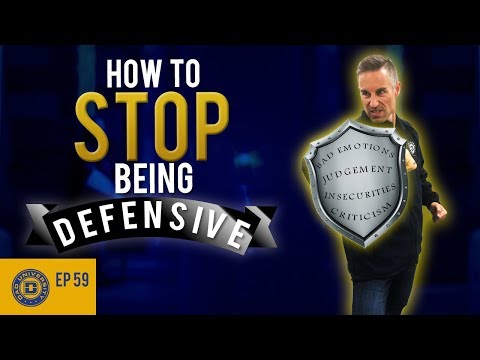
0:31 said so you justify your behavior or you explain why you said what you said if any of these situations sound familiar you're probably being defensive we all do it we just have different levels of how much we do it or how often but it's not helping us so in this video we're reviewing why we get defensive and then how we can stop it [Music]
1:09 hey guys I'm Jason Kreitman and welcome to another episode of dad University we cover a different topic every Thursday so be sure to subscribe to the channel and click on that notification bell so you don't miss any of our videos we're all guilty of being defensive in some aspect of our lives it can happen in our personal relationships with our friends and our family or it can happen at work being defensive typically involves us justifying our actions or our words we
1:40 try to protect ourselves from looking bad or being wrong the problem is that it's not constructive at all and it usually eats away at the relationships so while you are trying to make yourself look better in a situation you're actually coming across as insecure overly emotional and close-minded I'm not sure about you but I don't want to look like that so those are a few good reasons on why you'd want to stop being defensive but how do we stop it let's go
2:09 over some ways on how we can stop being defensive first admit it acknowledgement is the first step with many things but if you can admit it you are on the road to stop being defensive number two notice the feelings coming on do you begin to feel a different way I notice for myself my heart rate goes up maybe my voice gets a little louder so I can feel my defenses coming up so it's important to be in tune with your body
2:39 so that you can know what's going on number three pause and breathe this one is so important our gut reaction is typically to respond quickly and often aggressively if we can pause and breathe it gives us a chance to step back and assess the situation after you feel those triggers pause and breathe so whether somebody is attacking you verbally or you're getting criticized for something at work the pause and
3:12 breath will allow you to think before you act number four acknowledge the person's perspective listen you don't have to agree with someone who's saying something to you that you don't want to hear but you can be empathetic or acknowledge what they are saying listen to what they are saying and you may say something like I noticed that this was really hard for you or I saw that you got really upset at that if this was something at work you might say
3:41 I understand the report is not what you wanted again you are not agreeing with them you're simply acknowledging what they are saying this one can be really hard to do especially if the situation is an argument but if you get really good at this you begin to control the conversation it's really a Power Move rather than a weakness number five look for the truth in the criticism so it might only be a small part but is there
4:09 any truth to what they are saying maybe you could have said something a little nicer or done something a different way if it was at work maybe you could have handled the situation differently and there would have been a different outcome we usually don't want to look inside as it's really hard to do I mean taking responsibility for your own actions that's not easy but if you learn to do that you can drastically improve your relationships so many arguments breakups
4:39 and divorces could be avoided if people were just willing to look inside themselves see what part they have in the situation and stop blaming other people number six if appropriate apologize an apology can go a really long way especially if you mean it if you're not going to apologize then you can say something like I'm sorry that what I did affected you it's not a real apology but for many it's better than
5:09 nothing but if you did do something wrong or you can see a little bit of the truth in what they're saying go ahead and apologize number seven tell them how the information could be better conveyed if you care about the relationship then you can tell them how you would have liked them to say it for example instead of saying you always make a mess in the kitchen I would have appreciate you saying hey if you're going to make
5:35 your lunch I'd appreciate you cleaning up the counter afterwards we are all guilty of being defensive and hey it's hard not to be when somebody's pointing out your insecurities or telling you something that you're doing wrong or that you've done bad it's not easy but if you can remember these tips you can come out on top I'd love to hear from you what's something that you are defensive about let's get it out get rid of it leave your feedback in the comment
6:04 section below be sure to give this episode a thumbs up subscribe to the channel click on that notification bell and share this video on social media we thank you for watching and we'll see you next week [Music]
Summary
- Defensiveness often manifests as justifying actions, interrupting, or dismissing criticism.
- It can damage relationships by making individuals appear insecure and close-minded.
- Acknowledgment of defensiveness is the first step toward change.
- Recognizing physical cues (e.g., increased heart rate) can help identify when defensiveness is rising.
- Pausing and breathing before responding allows for thoughtful reactions rather than impulsive ones.
- Acknowledging the other person's perspective fosters empathy and can help de-escalate conflicts.
- Looking for truth in criticism, even if minimal, can lead to personal growth and improved relationships.
- Apologizing sincerely when appropriate can mend relationships and demonstrate accountability.