Section Insights
AI Adoption Challenges
What are the challenges in AI adoption?
The heterogeneity of investor demands complicates AI adoption, but increased competition leads to more options and lower prices. The transition from older models to newer ones like Fable and Soul signifies a shift from simple Q&A to more complex work mechanisms.
- Investor demands are diverse, complicating AI adoption.
- Increased competition benefits users with more choices and lower costs.
- New AI models are evolving from basic answer engines to sophisticated work tools.
Local AI Running and Wall Street Implications
What does local AI running mean for Wall Street professionals?
Running AI locally allows professionals to work flexibly and access tools from mobile devices, enhancing productivity. The shift towards local AI raises questions about the future of cloud fluency among Wall Street professionals.
- Local AI enhances flexibility and productivity for professionals.
- Accessing AI tools from mobile devices reduces constraints.
- The transition to local AI may impact the importance of cloud fluency.
Advancements in AI Models
How do new AI models compare to previous ones?
New models like Fable and Soul offer significantly more capabilities than earlier models like Prior LLMs, enabling users to create complex work mechanisms rather than just answer questions.
- Fable and Soul models provide advanced capabilities over previous LLMs.
- Users can now build complex work mechanisms with new AI tools.
- The evolution of AI models reflects a shift towards more practical applications.
Expansion of the MCP Universe
What is the current state of the MCP landscape for investment firms?
The MCP universe has rapidly expanded, with numerous new tools emerging for investment firms, including those for expert calls and transcripts. This growth reflects a dynamic landscape that investment professionals must navigate.
- The MCP landscape has seen significant growth in recent months.
- New tools are being developed for various investment-related tasks.
- Investment firms need to adapt to the evolving MCP environment.
Integration of Research and Data Dashboards
How can integrated dashboards enhance investment research?
Integrated dashboards that compile research, calls, and data can significantly improve the investment decision-making process by providing relevant information in one place, thus enhancing efficiency and accuracy.
- Integrated dashboards streamline access to research and data.
- They enhance the efficiency of the investment decision-making process.
- Consolidating information helps avoid errors and improves outcomes.
Transcript
0:00 The challenge in AI adoption has been the heterogeneity of what investors want.
0:05 More competition, it's good for us. More options, more choice, lower prices, a lot of them power Mac Mini users that were using it for OpenClaw. Most have moved over to codecs.
0:18 I think to me what has been so, so exciting and I think we're at a real inflection point on these tools on Wall street is the Fable and Soul class of models have gone from answer engines like Prior LLMs were like Q and A. Give me an answer to actual work mechanism. Hello and welcome to the next episode of Invest with AI where we explore the intersection of artificial intelligence and fundamental investing.
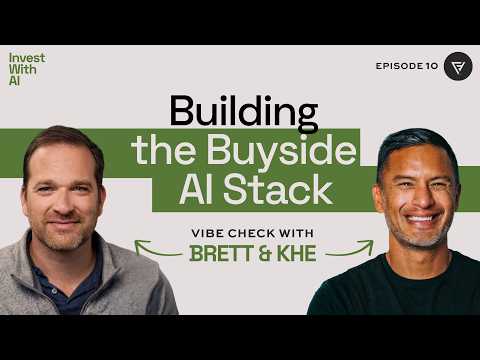
0:53 This is the no guest episode where Kay and I will, will chop it up and sort of do a little distillation of what we've been thinking about and what we've been been working on recently. So K, what have you been thinking about and working on recently when it comes to AI and the craft of investing?
1:13 Yeah. Great to be here. Great to see you Brett. So the, the most recent. Well this will come up in, in another episode but Grokbot. So as you know I'm a big kind of personal agent, want to use it from my phone, want to really kind of always be interacting with, you know, a personalized harness. I have not downloaded Grok Bot yet but it's kind of on my list. And it's interesting man, because you know, Grok was kind of written out, written off two months ago.
1:47 SpaceX goes public, they buy Cursor with that, you know that rich stock Cursor has been crushing it on the kind of very narrow pre trained models. Right. For coding, SpaceX got the data center and the compute. It's like a, you know, it's a three horse race now again and I have not spent a lot of time on Grok. This has all happened the past couple of weeks. But it's nice that it's a three horse race and it feels like Google is out of the picture temporarily and then you had that like massive exodus of demos or you know, the organizational change of Demis and then Jeff Dean and Sanj, his partner Sanjay, I think like the legendary ML programmers leaving.
2:37 So be interesting to see but you know, for from my perspective and our perspective, I'm like more, more competition. It's good for us, right? More options, more choice, lower prices. So I did have something on Codex but I don't know if you had any quick thoughts on.
2:54 Yeah, it's remarkable how, how fast things change in this landscape. And it wasn't so many months ago that people were setting up their open clause and buying, buying Mac Minis. Like what's your sense of that? Like are those mothballed now? Are we going to see like thousands of Mac Minis show up on Facebook? Facebook Marketplace?
3:14 So I looked and it's still hard to find them. Like they're still sold out from Apple as of a few weeks ago. I think that. So it went open claw to Hermes, which I never tried, but I've heard very good things. But then, and then as of two days ago, Grok bot is just blowing up and there is a little bit of the kind of SpaceX Elon mafia kind of pumping it up right now. So in my mind I'm gonna wait till like a few of the normies come out and, and have a few weeks with it because it definitely seems like there's an influencer campaign happening as we speak on Grockbot.
3:54 But the, and this is actually a really good, good segue. The, the Mac Mini question, it's the thing that I wanted to talk about today is that a lot of the power Mac Mini users that were using it for openclaw, most of have moved over to Codex which I guess there's so many naming problems, but ChatGPT for work or basically like Claude Code for OpenAI. They've got a massive product confusion right now, but I'm gonna call it Codex so people know that's like the Claude code for OpenAI.
4:34 So Codex comes out and at first it was pretty bad. This was six months ago or four months ago, it was lagging Claude code and then they did a massive redesign of the app. 5.6 Sol came out maybe, I don't know, four weeks ago, six weeks ago. And a few things happened. One kind of Saul reached parity ish with Opus. So that was a like a big step up. But more importantly, the Codex app leapfrogged the chat.
5:09 The Claude code. Claude app, from a lot of people's perspective it was easier to use, it was faster, it's cheaper. It just seems like an overall better experience functionally. Some of the screens change so it's just an enjoyable app to use. So you had user experience, cost and performance all kind of like leapfrog. This was probably six weeks ago.
5:43 The other thing that codecs seems to have done well on that I haven't really had the time to explore. I actually don't know where I would explore it but their memory seems to be much better. Like it just seems to remember stuff and so now I do things in skills, I do things in scheduled tasks. Like I don't even know which one's a skill, which one is just sometimes it's just a chat, it's just like just do this.
6:08 And the memory on Codex seems to have gotten a lot better. And so here's where the real kind of separation all that was step one, step two, and this is where the Mac Minis come in is that Codecs obviously works on your local machine, kind of like cloud code. And it has access to your browser and it can use your computer and it has access to your cookies and all that stuff.
6:39 That was really good. But it required your computer to be always on, right? So that's where the Mac Minis came in is that people basically repurpose their Mac mini to just be Codex hosts and codecs. You know it can, can run really well on your computer, right? Can like everything we got used to with cloud code. But the thing that's a big difference maker is that you can directly access all of your Claude.
7:12 I'm sorry, all of your codec sessions on your physical machine through your phone. So you basically have a mirror of your physical computer on your phone. So let's say you're logged into a site like you know, Deal Cloud. DealCloud doesn't have an MCP yet. I think they just added one. And it's like pipeline management for private equity and some public investors use it and you want to update your, your deal tagging your pipeline.
7:45 And you're doing that using the browser, right? Your logged in browser because you don't have an mcp, right? So you say like hey Codex, go in and you know there's deal A, we passed on deal B, we send an LOI and deal C, we're still diligencing. Go update Deal Cloud. So, so what happens is that because it doesn't have an MCP it would pull up your Chrome browser, you'd be logged into DealCloud and it would start clicking around doing what you needed to do.
8:16 Obviously you can only do that on your local machine cause it has your logged in credential. Here's where Codex comes in. Now you can initiate that from your phone. You could just be like, hey, update my deal cloud. Or maybe like a more simple example would be like going to all my bookmark tweets and summarize them for me, right? Something that requires your logged in machine and that's where the Mac Minis come in is because then you want that machine to be always on.
8:47 You don't want it if your laptop's closed and sleeping or so on. So that ecosystem, and for folks that are very into like personal agents, customizable agents that are always on and that are mobile first, that kind of, that's where all the, that's where all the open cloud people went, because it hit almost every problem, scheduled tasks being a big one. Right. Like, schedule tasks on Claude code require your computer to be on.
9:18 So, you know, it's kind of, kind of running locally. So basically you're still running a machine. You're still, you're still running all these things locally, but because you can access them from your mobile phone, your iPhone, it doesn't feel like you're constrained anymore. Like you could just be on the go, just doing, doing your work. So that's. I said a lot there, but let me. I'll pause and let you react and ask questions.
9:44 No, it's interesting. I mean, the one fundamental question I have is what does this mean for Wall street people who've been working to build fluency in the tools? I mean, a core part of, A core part of AI training on Wall street, the last 18 months has been really, last nine months has been cloud fluency. Right. And even a core part of your practice has been helping firms get up to speed on Claude code and Claude cowork.
10:11 What does that, what does that mean now? Like, what's, what's the sort of next step as, as Claude gets decommissioned in some of these instances?
10:20 Yeah, I don't think it's going to get decommissioned, at least right now. I think people are just adding because a lot of people kept ChatGPT, so they're just turning codecs on and giving people two options. But the thing is that it requires. Now, assuming all the systems are equal, then it's like, what system are you designing? And so I think that what I've noticed in my training was a lot of the training, I'd say until like two months ago, was just like, show me how to use these things, show me use cases and so on.
10:58 In the last two months, though, as people have gotten more fluent, it's like, it's what's the art of possible, right? Like, what is possible? So, you know, I think of one of the great advantages of Claude code and coworkers was the ability to schedule tasks, right? Because that's where you could say, like, hey, every morning, you know, I'm a consumer analyst, I'm tracking inflation. You know, go to Dick's, go to Amazon, go to, you know, go to Adidas, dot com and pull up the price of, you know, Stan Smith's sneakers and save it in an Excel spreadsheet.
11:37 Right. And so the original. So that was the first time you could start doing these things, like really automating agentic work was with a trigger. And so then the question though is, well, what do we want to automate? Right. That's actually a harder question than how do I automate something.
11:57 Yeah.
11:59 And once you figure out like, well, you know, some folks will go through the Wayback machine to look at like the number of stores that existed across, you know, going back quarters at a time using the Internet Archive, using the Chrome extension. Right. All Codex does like you. Codex makes the idea, what do they say, that execution is cheap. Ideas are precious or rare. And so now the execution, I would argue has just been flattened.
12:31 Right. It's just, it's got an even there. You have no excuse now, maybe before you had any excuse, like, well, I'm not going to scrape because I don't know cloud code or we haven't set up the Chrome browser or what have you. You don't have an excuse anymore. What data are you going to go look up in your remit, in your landscape that was not possible for and what are you going to do with it? Right.
12:54 And so I think it's the, you know, kind of, it's like another, the, the abstraction is moving up to like what's the hard problem to solve now?
13:05 Yeah, yeah. That's where I like, I would chuckle, I would chuckle when I watch these youtubes on like setting up an open claw or an Hermes agent and it's like all of this futuristic approach. And then at the end the use case was creating a podcast summarizer or something. It's like, all right, like, okay, how is that?
13:24 Totally.
13:25 And this sort of like tension to me in long running tasks and people would, oh, I have 20 agents overnight.
13:33 Yeah.
13:33 And I always be like, on what? Like, to me, to me we're not even at that point for. And I certainly, I come at this from a institutional grade, you know, bottoms up, fundamental research perspective where the individual components of that process are still not good enough. Getting closer. Yeah. But just let an agent rip for 24 hours on doing a full deep dive due diligence process. It's just going to be this long running slop, chain burns, a lot of tokens.
14:06 Yeah, no, I hear you. And one of the things I'd be curious how you're approaching this with your clients is I feel like we're entering this era where I call it the Faster Horse era, where you do something like an earnings preview and it would take you a couple hours and then you used AI to make it better and faster. Like you built a faster horse. And the Faster Horse era of AI, it's easier because you just like, you look at everything you do and you're like, how do I make it faster and cheaper?
14:42 But then there's another question that's like, now that you have this resource that's different and very powerful and has a different cost structure, what are you going to do with it? One of the things that's interesting with private equity is they're constantly receiving sims, confidential information memorandums. These are deal opportunities. They could have hundreds.
15:13 The firm could see dozens of them a week, maybe more, depending on the firm size. So in the old days, what you do, an analyst would review it and like, this is worth spending more time on. Let's take it to phase two, right? But these are also like really information rich documents and pretty like opaque private markets. What if you could have a bunch of agents that go in and like basically scrape every KPI from every SIM and categorize it for you?
15:46 Like it never made sense to do that before because you'd have to pay an associate, you know, 100 grand to do that. It's not a good use of their time. But if it costs you, you know, $20 of fable tokens, maybe it's worth doing right? Maybe it's worth. So I'm curious like how people are if you're seeing that like faster horse to like expanded art of possible.
16:13 Yeah, I love this question because I think like, you know, as a, as a, as a Wall street user, we stare at this blinking context window and it's actually like harder than it would seem to figure out how to, how to enact that context window to be helpful in your investment process. Worse than that, I think the knee jerk reaction of most investors is to use it the wrong way. Is a sort of, hey, I used to read the 10k, let me do a 10k summary now.
16:43 And speed read through that. The artisanal process of comprehending the company and then sort of, you know, or the expression layer, like, here's a bunch of notes. Create a bull thesis for me, right? And it's sort of an AI slop thesis. So I think, I don't know what it is about AI, but it causes probably late. Like it helps elevate the sort of lazy predispositions in all of us that sort of just want to like sit on the couch and eat Cheetos versus apply real rigor.
17:13 And it makes, makes the sort of transmission mechanism to laziness much easier because it sort of looks good enough.
17:19 Yeah, yeah.
17:20 That to me is a very important force to fight against.
17:24 Yeah, yeah.
17:25 So I think it like we, we, we, we think about as sort of five layers of like the triage layer, the execution layer, the decision decision, decision support layer, the sort of rigor enforcement layer, and then the idea tracking layer. So like it really is to me like building a system around it to your specific question, the decision support layer, you know, something like that where you could build a headless RMS to sort of go into all of the prior operating memorandum, all of the prior deals, pattern recognize as sort of the best deals, the worst deals, that is, you know, the errors you've made in the past and have that in a dashboard while you're sort of doing the evaluation of a new operating memorandum that comes.
18:09 That to me is like that decision support layer is the real, it's not some AI slop summary, right? It's hey, go and actually run and analyze, you know, sort of a real institutional grade process on this om. And part of it is, you know, pulling in the lessons of history. I think to me what has been so exciting and I think we're at a real inflection point on these tools on Wall street is the Fable and Soul class of models have gone from answer engines like Prior LLMs were like Q and A.
18:44 Give me an answer to actual work mechanisms. Like to me, what you can build with Fable and Soul is so much more impressive than what you could build with Opus or GPT 4.5, et cetera. So, so the ability to actually, you know, ramble max into a context window and have it build the first version of, you know, some architectural thing.
19:11 Yeah.
19:12 Is I think that we were sort of going through this diffusion mechanism where more people are realizing how powerful this latest class of models and probably then sort of looping that back into the work you're doing with codecs that you probably ramble into codex and build that, build that decision support layer on the OM analysis in a way that's like much more frictionless than it was six months ago.
19:36 Yeah, yeah, absolutely. And I think part of this question though, it comes back to context and data. Right. And so, and again, you know, I've been spending a little bit more time with private company, private equity, but they have mountains of data from their portfolio companies. Right. And this is again, I think this is the, a lot of that data falls into the category of if a human were paid seven figure, six figures to analyze this, we wouldn't do it, but now we can pay a hundred bucks.
20:14 What's the question you want to ask? Right. Are you doing a cohort analysis that didn't make sense to do because it would have taken someone hours to do. And now maybe it's not as good as a human, but let's say it's 90 there and it's going to cost you 20 bucks, right? And I think that, you know, and people really, people are really struggling with this. I think. I, I'm, I'm, I'm surprised. I'm surprised and I'm not surprised.
20:38 I just take it, take you on a side tangent here. It's like I was an early user of Notion, and Notion was like, oh, you could do a database, you could do this, you could do a spreadsheet, you could do a, to do. You know, like, it was a little bit like AI, but then you open it and it was just a, it looked like a Google Doc. You're like, wait a minute, you're telling me I could categorize like all the Pokemon in the world, but all I see is a flashing cursor and like notion, as a like notion still struggles that people can't see all of the tools that they're giving you and then like map it to how they see the world and the problems they're trying to solve and do it.
21:20 So they still, like, they still hire Notion consultant, right? They hire these intermediary that acts as this, like, bridge between them. And I've been wondering, I've been trying to like, ask my, you know, prompt my clients in different ways. Like, you know, even things like, you know, if you hired not even a new analyst, but you hired someone senior like yourself, what would you have them do? Right? And sometimes they don't. They have to like, step back.
21:49 Like, well, I'm not exactly sure. Like, okay, well, you know, and so if you're not sure what you would do with another person, you're going to be even less sure what you're going to tell like a powerful AI to do. And so there is that process that again, I don't know, I haven't found an easy way to get around it other than spending time with people who truly understand what they want out of an investment process, like what the end game is and that are willing to be weird about it.
22:24 I think you nailed it. And I think certainly for public markets, investors, the challenge in AI adoption has been the heterogeneity of what investors want. Right. You could have two investor, two hedge funds. One will make an investment because they like the management team and like the product. Another will invest solely on revisions to revenue guidance over the next three quarters.
22:50 Right.
22:51 And so that has been very, very difficult for both internal builders and product builders for public market AI tools because it's been very hard to design something that, that crosses the bar, pass passes the bar for all investors. That's why this sort of like mass personalization engine that's possible now with these tools like so exciting the ability to actually spin that up and like to some degree maybe make, make a custom customizations of the harness, but certainly customizations to the skills layer and the context layer and the dashboard layer.
23:33 Like that's now becoming very possible. And so I think very like I've been more and more bullish on the application layer for a number of reasons. But I think you're gonna very soon all you have to do is sort of go to a fund, give them logins and you pre configured a dashboard to them very specific to their investment process. It's going to be really sort of a wow, A wow factor.
23:58 And, and the skills as well. Right? How, how have you been finding. Are your clients finding it easy to like creating a skill is relatively easy, but it's imagining what skills you need and how they might fit together. Like the kind of what we've been discussing before the art of the possible. How have, how has skill building evolved or shown up in, in your work?
24:24 Yeah, it's, it's, it's constantly changing like everything. Right. And I'll give you sort of one example. You know, I had a, I had a deep dive Skill that created 100 page primer and you have to you know, sort of prior the prior model iterations. You know, you sort of go through like hey, These are the 12 analyses I want to do on this company. Right. And it would run the same 12 analyses on every company. It would, it would adhere to those skills.
24:52 One of those analyses may be balance sheet and liquidity, which could be important for a leveraged company, but not that important for a company that has net cash. But in sifting through that primer, I'm still reading those sections for every company. So there's sort of like the concision dimension was just not that satisfying. Right. This is one of the things that unlocked with Fable and Soul is sort of ability to sort of rethink that operating system.
25:19 So one, one shift I've made to that Sort of simple primer skill is this concept of, I call it 20, 60, 20 where it's like it's 20 pages of standardized sort of business overview, setup overview. But then like a good senior analyst that that front end is actually trying to understand what the key debates are in this situation and spending the meat of the primer actually going in and doing analyses. Right. And so it's identifying what matters in the first 20 pages and then it's going to give like a deep, you know, custom bespoke analysis of each of those factors.
25:57 And this has been like a complete unlock for me in terms of the quality of the primer that you can create with this sort of skill. But it's also creates a totally different system. You have to create the pool of deep of key driver workflows that the digital analyst can call from. So it's like I'm kind of like decommissioning the old structure to create a new structure that, that really leans on the new capability.
26:28 The sort of end, more end to end capability. The exciting thing is you're getting to the point with Excel fluency. These new models are much more Excel fluent. Where after you've identified the key driver, say I'm looking at, say I'm looking at you know, Brunswick that has a, you know, a boat business and I want to spin up a price like an aftermarket pricing, secondhand pricing tracker to go scrape, you know, boat trader, etc, you can start to sort of build into the system, hey, this you know, aftermarket boat pricing is a key driver because it sort of impacts a price gap of new.
27:05 Etc. Do you want me to sort of create that for you? Right, yeah. So you're almost like spoon feeding, you're creating this system for people that to me is very close to, you know, something that's going to wow a lot like all they need to do is sit in the cockpit and almost you just have to press the right, press right buttons rather than, you know, think through some complex prompt that we had to do, you know, 12 months ago.
27:30 So that's I think what the, that's, that's what the, the new models have unlocked. That's what the connectivity, we can talk a little bit about connectivity. Systems have a lock, the sort of ability to more seamlessly integrate MCP structures but also the headless RMS movement which is like so exciting because I've always hated RMS systems so much are so clunky. That to me is sort of connectivity overcomes one of the biggest fundamental issues that AI systems have had for Investors and that's the sort of context quality.
28:02 Yeah. So let me on that context point, it seems like, and you're closer to this than me, it seems like the MCP universe has completely expanded in the past six months.
28:16 Right.
28:17 Every day someone emails me about a new mcp, whether it's for expert calls or investor transcripts or you know, we're talking about Blue Matrix or Aria. I always pronounce that one wrong. FactSet and so on is I'd love for you, because I don't know this world that well, I'd love for you to kind of give a couple minutes state of play of the MCP landscape for investment firms.
28:46 Yeah, yeah. And I'll sort of tell it, I'll tell it with the FactSet stock chart up on the left left terminal, my left screen. You know the facts. FactSet stock went from, went from sort of, you know, the high four hundreds to you know, the low two hundreds during the Claude kerfuffle
29:11 and almost 50 down.
29:12 Almost 50 down. Even though the fundamentals have sort of been pretty good. And I think, you know, sort of principal, principal concern has been the shifting interface for, for investors and, and deal makers and I'm a Faxa subscriber. I even noticed that like I very rarely log into the FactSet terminal any anymore. So this is sort of the setup I think for all vendors of the platform is burning. Right. But what's the sort of next thing now?
29:45 Yeah, the facts at MCP is really good actually and it's very sort of critical in a number of the workflows that I'm building to make them institutional grade. Because if you go to chat, GPT or Claude out of the box and you ask for primer on a company, it is going to pull principally from the retail aggregators, the Zachs and Motley Fools. And I think we sort of seeking alpha like no shade to all of those.
30:11 They're fine businesses. But it's not institutional grade quality for hedge fund quality research. And I think we all know like the training corpus of the foundation models themselves are highly influenced by Reddit and Wikipedia and blogs, et cetera. So it's like two layers of low quality context. For even if the reasoning engine of the LLM itself is strong, you're sort of the underlying quality and so improving the quality of the data has been critical.
30:43 That has been very hard to do for the first two or three years of AI firms had to create data lakes, whether it's snowflake or databricks and API heavy systems. And it was very difficult to do to ingest clean the data expensive to do. The APIs were very expensive. That has been rapidly abstracted as you know. I think the whole ecosystem has seen this trajectory towards MCP which sort of Tom Lee in our session explained is like an MCP with the.
31:19 With like good instructions up front or sort of an API with good instructions up front. But the MCP ecosystem has really been expanding. You can start to get you know a very good baseline level of institutional grade research in an MCP stack now it's not inexpensive. We could talk about that. I think that's a problem that needs to be solved. So that's sort of layer one these
31:45 the second layer for equity research. It's coming mostly from FactSet and then the, the. The aggregators like Blue Matrix and air. Is it area or air?
31:57 Yeah. Equity research has been a tough. That's more of like a commercial rather than a technical I Blue Matrix and era on if anyone from those terms listening to this podcast please email me to sort of talk about the, the transition of the. Of the sort of economic and commercial structures. So I think that's something that's a missing piece but certainly you've seen big players like a third bridge, even like a Coleman GLG really become MCP native.
32:27 We'll have alpha sense on and they're sort of you know, know taken a wall. More of a wall garden approach.
32:31 Got it.
32:32 Rather than an MCP approach. I think almost all other vendors have taken the MCP approach where you, you can ingest that into whatever your interface is very very easily. I'd say the second piece that's moving in an interesting way is this headless RMS where and I'm sort of curious what you're seeing Kay because you do a lot of this sort of work of in the past public market investors adopted sorry the OG tamale rms yeah Tickerize and then sort of more recently a Bipsync and Mackie.
33:08 As the RM says the. The user interface of an RMS system is really clunky. It's hard to. It's hard to enforce time constrained investors to put all their notes and research into the user interface. And so the reality is most of the research context that hedge fund sits in onenote, Slack, Bloomberg, IB Outlook, you know, PDFs, messy drives and heretofore the sort of I Remember when Chat GPT first had the Connect your OneDrive Connect your SharePoint I'm like holy crap, this is amazing.
33:41 And I tried it. I'm like this doesn't even Close. Close to work. Right.
33:46 Do you know what I heard about that, by the way? Side note is that the off the shelf Microsoft 365 connector can't read spreadsheets with more than 16 columns.
33:56 Okay.
33:58 And there's a row limit too. I don't know what, it's obviously bigger than 16, but. But yeah, there's all this and there's no documentation on this anywhere. Like you just got to figure it out.
34:09 But I think like some, some of the more interesting startups I've seen talked to recently are focusing on this headless RMS where they're basically going into firms, they're connecting with one note, you know, Outlook in some instances, scraping Bloomberg, IB chats, etc to create this knowledge graph, this sort of internal brain which I'm so happy about because it's sort of like notion Obsidian, no shade to those firms. But like the sort of creating your second brain felt so cumbersome.
34:42 Yeah.
34:43 To do like. I think the vision of the headless RMS is like almost scraping and creating your internal brain, but it's an agent layer that does that for you.
34:52 Yeah, right.
34:53 To me that feels like a huge unlock that probably people aren't going to trust OpenAI and Anthropic to do. They'll need some application layer to do that.
35:02 That's, that's, that's super cool because we were saying before, I've been working with a few folks as a, as a, like a, an FD or you know, of sorts between an investment firm and a software and an AI engineering firm, software development firm where it's a headless CRM. So here it's for, it's for the LP and biz dev function of the house. So. But same similar concept. Right. It's all, I mean some, you're, you know, it's not in text and stuff, but it's all an email.
35:35 And like yes, you send the new deck to 50 LPs, someone's got to go into Dynamo and like click two flags and then type in the firm name. Right. And then people, busy people aren't going to do that. Right. And so I think it is, I think this is super cool and I think you're already. This is where Codex and all these like they have. The more hacker types are. They're already doing versions of this where they have a skill that's like every day go through my email and look for X on names and put them into a markdown file just with a date, you know, and then go through my slack, do it with you Know, same thing, put it.
36:18 And then at a minimum, you just have like a daily markdown file of everything you ever communicated on the name or the idea. And then you can throw a cloud at that markdown, series of markdown files. It's so much better than mcp, like a generalized MCP or some off the shelf RMS vendor that no one has time to figure out. And I'm with you. I mean headless. And it maybe bears repeating because I know some people on my side that are.
36:47 They're like, what do you mean by headless? And so headless, meaning that there's no user interface. Right. It's just, it is acting on your raw materials, your granola transcripts and just creating artifacts, creating infrastructure. But the point is that you can't. You don't have to click anything. It's just happening in like a background session. So, yeah, I'm super excited about that.
37:12 Yeah. Imagine this. K. Imagine I'm looking at, you know, DraftKings, right? And all I have to do is put the ticker in my inter. In my sort of dashboard and it populates all of my research and notes and, and news and podcasts right into one dashboard and it shows. Here's a series of calls you've had with management. Here's a sort of. Here's the granola recording of the internal Bulbert debate you had on the name. Here's the, you know, sort of the six sell side notes that you start is sort of particularly, you know, you sort of grade sell side notes as sort of relevancy.
37:47 You know, here's a sort of data dashboard of, you know, historical correlations of KPIs. And it has a dashboard where you're seeing all of the work. Like that, to me is the unlock. It's not this open claw. That's like if I ask an open claw or a grock pot to go, you know, build an investment thesis on DraftKings, it's going to do the wrong things and it's going to pull from the wrong data and it's going to give me slop and burn a lot of tokens.
38:15 But if I can create this headless system around me with the right context, it's surfacing the right signal right when I need to see that signal. To me, that's like the future that is here now.
38:31 Yeah, yeah.
38:32 Let me ask you this problem.
38:34 What if you did like, what if you had a skill? Let's just use DraftKings as an example. And you have email, you have something on mcp, you have your internal notes and you have your granola calls. What if you had a skill like DIY Codex or Claude Cowork and you have four skills. You have like draft, you know, granola scraper, you know, granola extractor, email email extractor and notes extractor.
39:05 And you just say every, at the end of every day, look at the emails from the last 24 hours that, that mentioned DraftKings. And then this is where your skill comes in. You're like, I really think Goldman really understands this name. Well, you might see some public betting data from the state data in the body of an email and just save it on markdown, put some little metadata who it's from, what's the date, DraftKings, save it as a markdown file in the folder called DraftKings.
39:40 You do that for three skills across three different channels of data. At the end of a month, you've got 90 plus pieces of data that's pretty like again, it's curated because you created the skill, you told it what to look for. And these models are pretty smart too. They can, they can figure things out. And then whenever you have a DraftKings question, you just point your folder, you know, your co worker Codex at that markdown folder and you're like, hey, give me the bull bear thesis just off of my extracted knowledge, right?
40:20 And you're gonna have systems that do this. But people are like, we're helping clients do this. And I think, who said it? It was Doug who's like, you know, you get a, you get a few power users that like, this is my use case and I'm gonna kind of chop wood to make it work for me. And then, you know, the knowledge graph vendor comes in and like, hey, like we know that, you know, Brett in the corner has got these skills that every night he makes sure that this and that and, and here's his markdown folder.
40:50 And then, then the, the markdown the knowledge graph vendor comes in is like, yeah, we could do that and we could do this across a hundred names, across your cloud, across your Excel models, across, you know, and, and so that's where you're kind of seeing this, like, nice interplay between kind of the Tinkerer and the app layer. Like, I, I don't think they're in isolation from one another totally.
41:17 And I, that's my sense. And you're closer to the technical backbone of how that's done. But this sort of concept of knowledge graph is ascendant right now. And it's sort of a Chuck supposes against the sort of first order use case of if I want to do a DraftKings earnings preview, I just ask Claude and it's web searching for all the right information. That's not a, that's not a one, that's token inefficient. Two, you're going to get your reasoning on low quality context.
41:45 You know, it's not an output you can trust. The skill layer is important too for sort of like the breakdown. But if you can start to create this knowledge graph of internal external research and data then actually like assembling that into an earnings preview with your structured skill, like that's pretty token efficient. You can almost have that always on running earnings preview, ingesting your model architecture in to say, hey, based on what's happening, it looks like DraftKings is tracking ahead of revenue guidance by X amount.
42:17 And you can see that like that's in a passive dashboard. That's not an, that's not a chat.
42:21 Yeah.
42:22 You know, that's not a chat interface where I have to think about, oh, maybe I should, maybe I should ask questions about this. No, I have that dashboard amongst all of my portfolio into a portfolio thing where it has sort of alerts of what's happening. Hey, which companies are tracking ahead or behind which key drivers are sort of improving, deteriorating, etc. That to me is like the real, not holy grail, but that's the, I don't know, you call it the codex moment for public equity AI like that to me is within, within reach and more of an assembly problem rather than a technology.
42:56 Absolutely. And I think that's the phase we're in now. Right. Because even in the example you described, there's still a big problem there which is the Microsoft 365 connector or the bip sync or tamales lack thereof. Right. It's like in that example with a 365 connector, it's still running a search across your entire firms for like DraftKings. Right. DraftKings earnings DraftKings 2026 and trying to guess there's probably 100.
43:26 If there's 50 word documents on DraftKings is trying to guess which one do I want to open? Which one? There's V7 final. Is that the one with it? And so that knowledge graph and the skills that build a knowledge graph is like, yeah, there's seven memos of Q2 2026, but this is the one. But not only this is the one, these are the parts of the one that really matter to the analyses.
43:52 Yeah, yeah, yeah. Sort of like I had this discussion, we had it before is like, you know, we're almost sort of in the Napster era where like you can, with a lot of work and architecture and steps, you can get something interesting and time and expense, you can get something interesting out of the back end, you know, are the tools abstracting a lot of those steps and you can all of a sudden now you can hit any button on your, for those, for those Gen zers on the phone.
44:16 You used to have to wait three hours to download one song on Napster, now any song at the touch of a button on Spotify. So if you believe the Elon Musk maximalist view of the world like you, the game hasn't even started for the fluency and power of these tools. But totally bring it back to something UK said is like you have to sort of really think about the pro, the right problem to, to solve. Yeah, yeah.
44:43 And like that, that's hard man. Like there's so many moving parts like, like what's the right, like that's what's the right problem to solve. And, and it's not just you know, generate alpha. Like yes, that is a problem but like inside that there's so many sub problems. And I think that that's like the people that are really thinking through. Someone told me they're like we used to hire or were we on a, this might have been on a podcast together.
45:08 I've had so many conversations but it was like we used to hire. Yeah, I think Thomas Lee said it, I forget it was something about like looking for people that are really going to process.
45:22 Yeah, yeah, yeah. This will be a conversation for another day. But some interesting movements on AI hedge fund approaches too. And it's the exact, I think it's the exact same question of you know, one shot doesn't work or most likely won't work. But actually breaking down the, you know, breaking down the alpha generation process into the sub problems, you're starting to sort of see an architecture that I, I personally think could be quite promising.
45:53 So things are moving, things are moving, things are moving I think at a sort of accelerated pace. I don't think people, most people I talked to don't realize how big the sort of mid summer inflection was and how important sort of improvement in foundation models, the sort of economic implications of open source models and then what's happening in the connectivity ecosystem. Those three pillars to me conspire to. You're really putting us at a really interesting inflection point in the application layer and AI usefulness more broadly for Wall street use cases.
46:27 Yeah.
46:31 Exciting and scary times we live in.
46:34 Yes. Well, thanks, Brett. This is always fun. I like these one on ones.
46:40 Awesome. All right, thanks a lot.
46:41 Okay, thanks, everyone.
Summary
- AI adoption in finance faces challenges due to diverse investor needs and preferences.
- Increased competition among AI tools is beneficial, leading to more options and lower costs.
- Recent advancements in AI models, such as Fable and Soul, have transformed them from simple answer engines to complex work mechanisms.
- The transition from using Mac Minis for OpenClaw to Codex reflects a shift in user preferences towards more efficient tools.
- The importance of context and data quality in AI outputs is critical for effective investment analysis.
- The concept of a knowledge graph is emerging as a powerful tool for organizing and accessing relevant investment data.
- The future of AI in finance lies in creating customized systems that streamline research and analysis processes.
- Investors must focus on identifying the right problems to solve with AI to maximize its potential benefits.
Questions Answered
What are the challenges in AI adoption?
The heterogeneity of investor demands complicates AI adoption, but increased competition leads to more options and lower prices. The transition from older models to newer ones like Fable and Soul signifies a shift from simple Q&A to more complex work mechanisms.
What does local AI running mean for Wall Street professionals?
Running AI locally allows professionals to work flexibly and access tools from mobile devices, enhancing productivity. The shift towards local AI raises questions about the future of cloud fluency among Wall Street professionals.
How do new AI models compare to previous ones?
New models like Fable and Soul offer significantly more capabilities than earlier models like Prior LLMs, enabling users to create complex work mechanisms rather than just answer questions.
What is the current state of the MCP landscape for investment firms?
The MCP universe has rapidly expanded, with numerous new tools emerging for investment firms, including those for expert calls and transcripts. This growth reflects a dynamic landscape that investment professionals must navigate.
How can integrated dashboards enhance investment research?
Integrated dashboards that compile research, calls, and data can significantly improve the investment decision-making process by providing relevant information in one place, thus enhancing efficiency and accuracy.