Section Insights
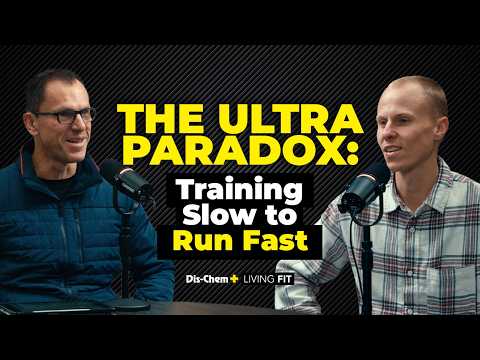
George Cusher's Comrades Uprun Experience
What insights can George Cusher share about his experience running the Comrades Uprun?
George Cusher discusses his average pace during the Comrades Uprun and reflects on his previous mistakes in the 2025 race. He emphasizes the importance of nutrition and strength training for distance running, particularly the differences between the up and down runs.
- Mistakes are valuable learning experiences for runners.
- Proper nutrition is crucial; you can't outrun a bad diet.
- Strength training is essential for building endurance and strength.
- The up run requires more aerobic efficiency compared to the down run.
Self-Coaching and Training Philosophy
How does George Cusher stay motivated while training alone?
George explains that he does not rely on motivation but instead sets clear goals. He prefers training alone to avoid the dynamics of group training, which can push him to run faster than he prefers.
- Setting clear goals is more effective than relying on motivation.
- Training alone allows for a more personalized and comfortable pace.
- Group dynamics can negatively impact training for slower runners.
The Role of Strength Training
What is the significance of strength training in George's running regimen?
George acknowledges the importance of strength training but admits he neglected it before the 2026 Comrades. He focuses on compound movements and low reps with high weights to build strength rather than muscular endurance.
- Strength training is crucial for distance runners to enhance overall strength.
- George emphasizes low volume and high weight for effective strength training.
- He believes strength training should not focus solely on endurance.
Returning to South Africa and Its Impact
What motivated George to return to South Africa after studying in the US?
George and his wife decided to return to South Africa to start their life together, prioritizing her career. He feels that the move was not a sacrifice but a privilege, appreciating the training environment and lifestyle in South Africa.
- George's decision to return was influenced by his wife's career opportunities.
- He views living in South Africa as a privilege rather than a sacrifice.
- The local environment offers excellent training conditions for runners.
Shoe Selection and Training Preferences
What insights does George provide about his shoe rotation and preferences?
George shares his shoe rotation, primarily using the Nike Vimero for most training and the Vaporfly for racing. He plans to incorporate more training in the Vaporfly to adapt to its support and feels it suits him well for racing.
- George uses the Nike Vimero for various training sessions due to its versatility.
- He prefers the Vaporfly for racing, finding it more natural and effective.
- Adapting to different shoes is important for performance in races.
Transcript
0:00 3 minutes 40 per kilometer. That's the average pace that my guest today, George Cusher, ran for just over 5 hours for the 2026 Comrades Uprun. >> I made a lot of mistakes for the 2025 Comets. It's good to make mistakes. That's the only way you learn. You can't outrun a bad diet. Both in terms of under fueling and overfeeding. I rely very much on the lead carb range, you know, that constant drip of carbs. It just helps to buffer that fatigue. On the down run, I would focus less on threshold and more just on pure durability. What is the point of strength training for distance running? It's for you to become stronger.
0:37 >> 3 minutes 40 per kilometer. That's the average pace that my guest today, George Cusher, ran for just over 5 hours for the for the 2026 uprun, Comrades Uprun on Sunday the 14th of June. George, welcome. Tell us how does it feel to be named alongside runners like Wally Hayward, Jackie Meccler, Arthur Newton as some of the the best athletes to ever win their first upr run. >> Thanks. I think I still have a long way to go before I can justify being named alongside them. But I think 2026 was a good start.
1:15 >> Yeah. I It's your second, so you're back to back. I maybe we start off with what's what's your favorite, the down or the up? Oh, the up. Easy answer. The up. Yeah, the down and the up. It's obviously two very different races. >> but the up suits me very well. I think I've got some work to do with the down. I think I can master it, but at this stage, definitely the up. >> Okay. And what what do you think the the major difference is?
1:40 >> Yeah. So, the up requires much more aerobic efficiency because you're running up a hill and so it's much more taxing on your aerobic system. so fitness in that sense plays a big part. Now the down you need to be fit as well but when you're running downhill your heart rate doesn't spike into 180 190. So what what keeps you from running faster is your legs and your the muscles in your legs start giving up. So you need to focus on that endurance component much more for the down than for the up.
2:11 >> All right. So it's a lot of eccentric loading. It's not the type of kind of strength work you'd normally do in the gym. actually it's it's you know you need to be loading your muscles in an extension phase not in a contraction phase. Okay. Yeah. It's an interesting dynamic. So before we get into the interview we've got some really interesting questions and we're keen to understand your approach. but to put it into perspective because you know 5 hours 15 for the average runner that doesn't really mean much but 340 per kilometer you know that equates to 18 minutes and 20 seconds for a 5k an hour 17 for a half marathon. and 2 hours 34 for a marathon and you did that back to back. I mean that's just phenomenal.
2:51 tell us did you I mean did you have that that 5 hour 15 time in mind when you set off from from Durban this year? >> No, not at all. I never approach especially an ultra race. I never approach an ultra race with a time in mind. I I believe it's too complex for me to predict what time I can run. so I run on fuel and then the time is just a natural byproduct of running on fuel.
3:17 >> Okay. And how much of that is dictated by the the group that you know obviously the lead pack that you're running in? >> Yeah, very much. I'd say the first half my pace is almost entirely dictated by the group because my strategy was to sit with the group, you know. So if the group hypothetically ran 10 seconds a kilometer slower, then I would have run 10 seconds a kilometer slower as well. but then the second half is where I ran my own pacing strategy. and so that was not dictated by the group.
3:48 >> Okay. Well, I think that's a a good segue into a bit of your background. I mean, you're a data scientist by trade. you still work a full-time job. you're a a husband and a father. and what I want to know is you know people speak to you about how you manage to do 250 km a week and you explain that it's takes a lot of dedication and two training sessions a day but beyond just getting the sessions done I I would like to understand how it is that you are your best self at work in training as a husband and as a father because I mean to to run that volume is just is just in insane, you know. What what is your secret to you know, being your best in every facet of life?
4:39 >> well, the the first thing that comes to mind is sleep. I do take my sleep seriously. So I I don't get 9 hours in a night. I'd say if I hit 7 hours, I'm happy, but I do get that consistently in. So I sleep at the same time and I wake up at the same time. but it is a up until this point it's been a it's been a juggle. so the running typically I try to get it done very early in the morning so that I can have my day open for other responsibilities but you know it's it's it's not always easy. and you need I need to be very clear as to what my my priorities are and in what order they are. because everything can't be equally important.
5:20 >> Oh couldn't agree more. I think that's a great take on it. Can can you take us through a bit about your day a little bit like you know what time you wake up, what time you go to bed, you know when you're working and you know how you allocate time to to your family and the other important things in your life. >> Yes. so it's let's call this pre-comrades and post comrades. My routine has has been shaken up a bit post comrades. but I'd say typically if I'm in a in the thick of things in my training in preparation for a big race such as Comrades, I typically wake up at about 4:00 a.m. and then either drive to Johannesburg closer to work if I have to go into the office and then start my run anywhere from 4:30 to 5 especially if I have to get in a longer effort. And then I'd run until about 7:30. and then shower at the gym and then head to work. complete the workday and then head home after that.
6:18 If I have to do a double workout, I do that, you know, maybe 7:30, 8:00 p.m. after after some family time and dinner and bathing time. but mostly I try to get my runs done in a single single run. >> Okay. And do you you've mentioned you do runs in the evening. Would that be on the treadmill or do you are you on the road the whole time? >> Yeah, I I I like the road. I think there are benefits to using a treadmill. I just personally don't like that boredom of being on a treadmill.
6:47 >> I couldn't agree more. It takes a a special kind of mental fortitude to to do that mileage on on it. so I mean I mentioned briefly you were averaging 250ks a week. you know what that that is big even for a comrade or an ultramarathon runner. I mean, most most elite athletes from the marathon up would be we're looking at about 100 miles or 160 ks a week up to maybe 220. How did you come to that number? I mean, you're you you've mentioned you're self-trained. What is it that that got you to that kind of like target, if you want to call it that?
7:24 >> Yes, it's a good question. so I've I've always been very curious about training and what goes into elite performance. and so I did not just look at running training. I looked at triathlon and I looked at cycling and swimming. And when you look at these other endurance sports, you start to realize that running doesn't require as much time as the other sports. If you look at elite cyclists, if the totally total weekly time they spend in aerobic state is much more than the typical elite runner. So when you compare 100 miles a week to the in hours now, what that's probably what 10 to 12 hours a week.
8:06 >> Yeah. Well, I guess depends on your pace, but yeah, at the elite level, I would Yeah, they say. Yeah. >> And then when you compare that to cycling, they put in 25 to 30 hours a week easy. >> so when we think about high mileage, you know, we think about a number in terms of like 250 km, >> but I would say you should rather think about it in terms of the time you spend. >> Okay. and then you you'd say 250 km a week isn't that much, especially if you compare it to to sports like cycling. Now, where it where the difference comes in obviously is running is a much more harder on your body that pounding on your legs. And that's why you can't be putting in 30 hours of running a week. But if your body can handle high mileage, then you should be doing high mileage in my opinion because it's aerobic in that aerobic state you spent.
8:54 and so that's kind of the philosophy I adapted. And you'll see I'd say 88 to 92% of that 250 km a week is extremely easy. My heart rate is from 100 to 120. So it's very low. >> Zone one, zone 2. >> Yeah, very easy. lots of people would say it's too slow and I would disagree with them vehemly. >> No, sure. I mean, well, look, it's it's clearly worked. But you mentioned the mechanical stress, you know, the loading and and the the wear and tear on your on your muscle and tendon. So you've mentioned how important sleep is in your equation. not just to function in life, but I would assume also in terms of that recovery. How else are you supporting your recovery with such high mileage weeks?
9:39 >> Yeah. So diet is extremely important. you you just can't you can't outrun a bad diet both in terms of underfueling and overfeeding and both sides in my opinion can cause damage. so when I do those high mileage weeks I always on the side of a surplus. So I I I do eat maybe maintenance and to a slight surplus. and I think that's important because if you're running, if you're putting that amount of load on your body, you can't be severely underfueled. and so I take that very seriously. I've historically not been an expert on nutrition and diet, but I'd say the last few months I've become I've become very interested in that field, and it's a fascinating field, what you put into your body.
10:28 >> Okay. And and so what are a few things that you've you've learned? I mean can you give us some insight into I would assume you get quite detailed in the macronutrient ratios and you know protein timing elements like that. >> Yeah, one thing that I found is the tracking your macros is important to get a sense of how much protein you consume and how much carbs you consume. but then I've also found the timing of carbohydrates are extremely important as well. So, I try to load before a big run, right before the run, during the run, and right after the run, I prioritize carbohydrates. And then for the rest of the day, I prioritize protein. now whether that's scientifically sound, I don't know, but I found that that's a formula that's worked for me.
11:14 >> Okay. And how are you consuming those macronutrients? Is it predominantly whole food? Are you getting support from from supplements? >> yeah. So, it's a hybrid. It's a bit of both. before the run, I I I'd eat like a rusk and a and a bagel, like a plain bagel with some honey on it. and that's a good amount of carbs. It's about 50 g for the bagel itself and then some honey added onto that. And then during my runs, I rely very much on the lead carb range of biotin. I started using that in earlier this year, probably February. and it's worked extremely well. especially the unflavored elite carb drink goes down easy. It doesn't, you know, there's no foreign tastes in my mouth. So, I really like that. And then right after the run, typically like a a breakfast, you know, like toast again, eggs, which aren't protein, but they aren't carbs.
12:13 and then maybe a protein shake and then protein for for the rest of the day. >> Okay. And any like supplementary recovery methods? Are you going for massages? Do you foam roll, stretch, mobility work, anything like that? >> No, not at all. I I'm not against that. I just haven't had time to say you fit it all. Yeah, it's hard to fit it all in. Okay. >> But I am I would say if I can say I've never really placed importance on stretching. I I don't believe in stretching. I I don't think you need to be stretching if you want to compete in distance running events. I don't think you need that, you know, u stimulus. I think it might even be bad.
12:57 >> Okay. I I would agree with that. I think it comes in for the maybe the average sedentary person who's probably not biomechanically optimized in terms of, you know, their hip strength or the hip mobility and things like that. So, yeah, if you don't need it, you don't you don't have to have to do it. I would have to agree with that. so you we've mentioned that you're self coached. so you don't train with a group. You do most if not all of your training on your own.
13:25 so what makes you hardwired to get through all of that mileage on your own? Like what, you know, what is your motivation and and how do you actually get through that 10 hours a week on your own? >> Yeah. So I'd say my the weekly hours I spent training before Commerce it was about 18 hours a week which is a significant amount of time. and you you briefly mentioned motivation. I I I don't rely on motivation. It motivation comes and goes. So to me it's I set a goal and then you know I I decide if I really want that goal and if I do then you know >> it's what it's going to take.
14:03 >> Yeah. the work is then just something you know you have to do that to to reach your goal. so I found that works better than motivation. but I do prefer training on my own. I think when you train in a group there's a lot of dynamics terms of competing with teammates and you know I I don't like that because as I say most of my runs are extremely slow and so when you run in a group you would have to maybe run faster when you're tired and things like that. So training alone works for me quite well. that being said I I don't mind doing individual runs in groups or with other people. I think that's good, especially, you know, to break up the monot monotony of running.
14:45 but as a general rule, coaching myself, it works well. >> Well, with your new found celebrity, I think you're going to be invited to do a lot more group runs. >> That's good. okay. Going back to your your approach, I mean it's as a self- coached athlete, what do you use as a sounding board to kind of test your theories or you know, how do you what do you do when you think that things aren't working? Where do you go to to kind of change course correct?
15:16 >> It's a good question. And you know I track a lot of metrics just to be aware of how my training affects things my heart rate, resting heart rate, HRV, how it affects my sleep quality. and so I can usually pick up on those metrics if I'm doing something wrong. and then if I have to, I'd ask people who's been through what I'm trying to do. for example, you know, Netbank's club manager, Nick, he's obviously run multiple comrades. and so if I'm uncertain, I'll ask his advice and use that as a sounding board. But I found that, you know, if you want a a good training program, it's never you should never base your philosophy on one text or one person. You take a bit from various materials, various persons, and you form that into your own philosophy.
16:09 And that's worked quite well for me. Okay. And what have what are a few of those kind of philosophies that you've you've taken? I mean you know we spoke a little bit offline about some of the approaches that some YouTube influencers are taking and you know this Japanese marathon method is you know becoming popularized so to speak by a few people online and I mean they advocate like high mileage like 280ks a week you know are there you know where have you drawn from for your your approach? Yeah, various I'd say influences. I'd say the biggest one is Arthur Liard, which his philosophy would agree with the Japanese method as well.
16:48 and then another philosophy or text that I enjoyed is Peter Co. Sebco's father, he wrote a book, better training for distance runners. I bought that many years ago. went through it and reread it again end of last year. and he was an engineer and he approached training and coaching SEP from an engineering kind of standpoint. and I very much I like the approach he took because everything he did you know it was based on kind of scientific principles and hypothesis that he developed and tested and so I I draw a lot of inspiration from his book and then lastly Jack Daniels read some of his material as well and there's a lot of similarities luckily but those are the three big influences I'd say >> Jack is very big on that low aerobic zone one zone two high mileage base training. So okay that makes a lot of sense. to go back up quickly I mean you mentioned HRV you know that that's explain that to us in terms of you know an indicator of how you're recovering and how you're responding to your training.
18:04 >> Yeah. So so to me I differentiate between chronic load and acute load. So chronic load obviously is high mileage. so that's more a long-term trend in my HRV. Acute load is if I had a very hard workout the day before and wake up the next morning and then I I I check that my HRV tank, you know, and I don't like that because I don't like I like consistency more than you know big heroic efforts. and so I typically adapt my hard workouts so that the acute load isn't so severe that my HRV, for example, tanks. and then I found that over time I can increase that acute load to a point where I can do pretty good workouts without, you know, compromising that short-term recovery.
18:53 >> Okay. So I mean for HRV which is heart rate variability is basically the you know the the difference in your your peak and your your trough of your heart rate overnight or during the day. So the amplitude so what you're saying is that if you you've obviously got a high level of base mileage and if you do a really hard workout like a zone 5 your the amplitude is going to narrow. So it means that your you your body's struggling to recover from that or bounce back from that training load or that training input.
19:26 >> So would you then are you saying you would maybe dial down your next hard workout to like a zone four like a threshold effort rather than a kind of a zone five effort? >> Yeah, I'd say in the six months leading up to Comrades, I didn't touch zone five. The fastest pace I ran was threshold. >> Okay. which for me that was about 160 beats per minute. And let's assume my max heart rate is about 200. So that's about 80% of my my max heart rate.
19:54 and I I just I didn't see the point in in doing faster work than that for a 85 km 86 km race. and so I found that you know I can recover quite well. I can do high volume off threshold and still recover quite well. Now, if I were focusing on a 10 km race, I would have introduced faster and harder efforts. but I just didn't see the point in doing that for a for a ultramarathon like Comrades. I >> I would agree. I mean, I must say I've I've I've run a couple of comrades, not not nearly at your level, but I must say I found that dialing it back you know, there's some many schools of thought and one of my coaches previously said a fast runner is a is a good Comrades runner. And so I was doing a lot of marathon type work and then trying to add the volume and it just it just I was always kind of running in a broken down or a depleted state and as you say you just can't sustain that for 6 months because that's basically the block you need for comrades. So I I would I would agree. I I've enjoyed dialing back the you know the intervals and the hill reps to like a zone four maybe touching zone five but you know it just gives you that consistency to constantly wake up and be able to take the next day's training. how how would you structure your your intensity then? I know a lot of people would follow the kind of Tuesday Thursday intensity and maybe some additional intensity on the weekend built into your long run. How do you like to structure your training week? Yeah, I always find it interesting when people add intensity to their long runs. I I I personally I don't do that. My long runs are extremely easy. but to answer your question, I I like the Tuesday, Friday structure. So on Tuesday, specifically for comrades, on Tuesday, I did hills. But when I say hills, I don't mean, you know, 10 I don't mean yeah sprinting at all. I mean jogging up a hill and down for 2 and a half to three hours. Very easy. and then naturally as you jog up a steep hill your heart rate would climb. So you don't have to be running fast paces up a hill especially not for comrades. and then Friday I typically do like a 20 km tempo. either that or a half marathon which I I I consider threshold running.
22:15 and then Sunday was my long run. But as I say, Sunday long runs, apart from the six weeks out from Comrades, my long runs were extremely easy. Yeah. >> And so you you you talk these long tempo or threshold sessions. You weren't doing any kind of intervals, you know, miles, 2ks, 1k, anything like that? >> Typically, no. I'd say in the final 6 weeks before Comrades, instead of doing one continuous 20 km tempo, I did 6* 3K.
22:48 >> Okay. >> and then I'd say I picked the pace up a bit, but again it was never faster than a threshold true threshold effort. >> Okay. so you've you've mentioned resting heart rates and and heart rate variability or HRV. Are there any other kind of bio feedback or metrics that that you track to inform you know your your training or your recovery needs? >> no so those are the two main metrics and then my sleep quality you know using Garmin.
23:23 >> Okay. I was going to ask which device you use. Okay. >> But I did recently get an URA or Aura Ring. The >> ring not sure how to pronounce that. >> and so I'm excited to see if that can add some value. >> Okay. But again, these metrics are important, but you should never become too attached to it. It's more of something I I view like almost like from a third person perspective. I look at it and it is important, but it should never dictate your training completely. You know, sometimes you're going to wake up with a low HRV and you still have to do a hard workout. You know, it's still better than skipping workouts entirely.
23:57 now there is a point as I say a balance that you have to find for yourself but it's it shouldn't dictate your whole philosophy on training. It's an interesting point because I think a lot of, you know, modern life, we've we've become maybe addicted to kind of these, you know, quantifying everything. And I think there's a lot of conversation happening now about this loss of intuition. Like you might say like, I feel okay, but my my heart rate's telling me something else. Like, so I might do something differently. But how much how much you know, you're still relatively young as an athlete, but how much does intuition play in in your decision or decision-m process? based on the experience you have to to this point.
24:39 >> No, it's extremely important. I' I'd say intuition still trumps all these metrics. these metrics are useful. I mean, we we're in 2026 and we have some extremely wonderful tech to our disposal, but intuition will never be beaten. you have to keep in mind you're still competing with other people, you know, and the goal of training is to maximize performance on race day and beat other people. And to an extent, you would need to wake up sometimes and you're going to feel bad or your metrics at least are going to say that you're not ready for a workout and you still need to do it. yeah, that's that's the philosophy I carry at least.
25:20 >> Okay. And and and in in this whole process, what what role, if any, does does strength training play for you? We we mentioned the the difference between the up and the down run. you know, do do you do a lot of strength training? You mentioned you don't have a lot of time, you know, for mobility work and so on, but do you do you do some core work or do you get to the gym at all?
25:41 >> yeah, strength training is important. unfortunately, I I skipped it the 3 months before 2026, comrades. but it's not because it's not important. It's just because my schedule didn't allow it and I've started it back up again. yeah, I'd say it's very important. I I keep it very simple. I focus on compound movements. the book I read about that was starting strength from Mark Ripto. now obviously Mark Ripto's philosophy is applied to pure strength athletes. but to me I found that you know what is the point of of strength training for distance running? It's not to improve your muscle endurance or muscular endurance. it's for you to become stronger. And so I' I've taken his philosophy quite literally and I've applied that to my own training. So what I do now typically is very low reps low volume and high >> weight >> weight. Yeah.
26:43 >> And do you does that include plyometrics or anything? I mean that's maybe not for comrades, but if you were preparing for a marathon or a a half marathon, would you include plyometrics in that? >> No. Is it? >> it might be beneficial, but I've just never in your >> Okay. so you you broke the Comrades uprun record on your first attempt. in data science terms, I believe that's called achieving maximum optimization. You can correct me if I'm wrong. how much faster do you think you can go? And you know, do you have a plan to to break that record again or go even faster?
27:19 >> Yeah. I think I can go faster. And this is not scientific. It's just I think there's lots of areas I can still improve in. one area is is my diet and nutrition. It's been a lot better than last year, but I still think I have room for growth. that's one aspect. And then the other aspect I still think I can improve in is is spending more hours training a week. So, currently I've I've used running a lot, but I think I can add a lot of value by cross trainining. If I can get my hours up to the same amount of hours cyclist train for in a week or triathletes, I think I can make a lot of improvements, especially in my aerobic efficiency.
27:58 so I believe I can go faster. I don't think I've maximized all the different areas going into training. that being said, I I'm curious. yeah, I I can't put a number to it. I can't tell you I think I can run 510. That would be silly for me to say, but I I can say I think I can go faster. >> Okay. And what how would you cross trainin then? Like are you looking to add cycling or any other type of of cardio, vascular exercise that doesn't add to the mechanical load necessarily?
28:31 >> Yeah. Elliptical. I like elliptical. I I >> Okay. >> I think you can use any tool. I think cycling can have its place as well, but to me, elliptical seems natural and I I've used it before and it works for me. >> Okay. Adam. Adam Lipshitz, who's a quite a prolific marathon runner, advocates that a lot as well. I think it does it does does make sense and does does have a a place. This episode is sponsored by Bien, South Africa's most tested and trusted sports nutrition brand. Whenever you're training towards a goal, whether it's getting stronger, running your first race, or just being more consistent, it's not about one great session. It's about the standard you set for yourself every day. the way you train, the way you recover, the choices you make when no one's watching.
29:16 If you're serious about your goals, set the standard and stick to it. So, we've spoken a little a lot about kind of the the fundamentals of training. Let's get into the the mental side a little bit. if if if you're happy with that. you know, when you hit a dark patch on in comrades on the up run or the down run, which everybody does, I'm sure, including you, you know, do you rely on your your data scientist logic to kind of work through it? or do you kind of try and shut down that analytical part of the mind and and try and just run on basic instinct? Yeah, if I if I can be blunt, sometimes you you just need to be a dog. and push through.
29:57 It's simple as it's there's always going to be pain in a 86 km race when you're running up and down hills. I yeah, you you need to be tough and you need to push through and I think that aspect of ultramarathons is extremely important. I think for this commerce especially I think there were many people fitter and faster than I I was on paper. but I don't know how many people would have been willing to endure the pain I had to endure and I think that's important in an ultramarathon.
30:30 >> Okay. Where does where does this grit and mental toughness come from in you? >> I'd say you develop it over time. you know, if if you tell yourself you're going to wake up at 4:00 a.m. to go run 50 km and then you do it, that's a small victory. and I think that builds mental resilience over time. I don't think you're born with mental toughness. I think we're all born weak in a sense and then you develop it as you go and you can lose it as well, you know, if you >> the mind is a muscle.
31:01 >> Yeah. A good example I use is Conor McGregor. if you look at his rise, the principles he applied, it's it was inspiring and then obviously his downfall which he self admits as well. So it's something you can build and it's something you can lose again and luckily you can build it up again. >> Okay. And and so what have you have you actively gone out to? Is this something you actively try and build? Do you have you read books or have you done you know anything to get a better understanding of the mental development that you need as an elite endurance athlete?
31:34 yeah, I'd say one component is you know when you lose often you start getting tired of losing and then you start thinking well how can I stop losing and then you realize it's an immense amount of work over a long period of time and so I I don't think I've read books on mental resilience necessarily. I've read what's his name? The endurance athlete in the US. Former Navy Seal. >> Oh Gobians.
32:05 >> Yeahve I've read his book. I think it's Can't Hurt Me. I think two years ago I read that. but it it all comes down to doing hard things on a regular basis. It's as simple as I don't think there are complex theories can make you mentally tough. I think you need to wake up, do hard things, go to bed and do it all over again. And I think over time that's where the value comes in.
32:27 >> Okay. And I mean so you you've got a very like defined view of of what grit is. And I mean you let's take a step back. You your athletic career really progressed when you went to the US. you went you were first at the University of Nebraska Lincoln Lincoln and then at Northern Arizona University but as a track athlete not not as a marathon or anything like that. I mean so tell us how kind of that that track environment has and maybe you know the the doggedness and the and the intense competition of the US collegiate you know track competitions. How much of that has played into your your grit and determination to be keep becoming a better athlete?
33:16 >> I think it's contributed to the athlete I am for sure. I spent 5 years in the NCAA system. now apart from the mental aspect I think what added a lot of value from the NCAA system is the structure and the scientific principles that that elite coaching and training in the NCAA system uses. I think historically ultramarathons like the comets have not been scientifically optimized. it's it's as much as track has you know I think there's a lot of u say experts in their various fields that has you know tried to solve this track equation and I think that hasn't always been applied to ultramarathons and I think that's changing now you can see more talented athletes moving to ultramarathons you can see sponsorships and brands placing more emphasis on on ultramarathons and I think that's going to shift the whole landscape of ultramarines. I think we're going to see much faster times in the next few years.
34:21 much more, you know, detailed approaches with nutrition, with training. and I think it's going to become more scientific. as for the mental aspect of the NCAA, I think it's good to do part of a system. You know, it's very competitive and I lost much more races than I won. and I think that that helps to build you in a more developed athlete. yeah, I'd say I I'm not sure how it added to the mental resilience, but I think losing often does build mental resilience.
34:54 >> Yeah, that's a key takeaway. Okay. I mean, your Mike Smith was your coach. He's known for his focus on running biomechanics. How how if at all has that changed moving off the track into ultramarathons given the fact that you haven't really had the natural progression. You've basically gone from the track to you know preparing for for comrades and you haven't had a a very long road racing transition. Has it changed at all and how you approach your your biomechanics or your your kind of running economy and efficiency?
35:31 I think if you're running high volume your your biomechanics will sort of sort itself out. because you've got these neural pathways in your brain and if you do something repetitively very often then you know that solidifies those neural pathways and it finds your most efficient style. So I don't believe you know in doing too much biomechanics like I know what we did when I was in university. is the cones you place on the track and you would stride and sprint over that. I think that's good.
36:03 But again, it's an 86 km race, you know, I don't I don't think that's as important as, you know, pure base. so I think there is a place for that. But if you have a limited schedule, it's it won't get preference. >> and it helps that you've built that that base like you you've developed those those newer pathways from that training. So now it carries over into you know, into your running. I mean, do you have any form cues that you kind of tell yourself if you if you feel like you're starting to break down or you know, fatigue over comrades distance?
36:36 >> No. No. I think the the repetitive training you've been doing kicks in. but there's no conscious >> just let the dog out and >> Yeah. Yeah. Keep going. >> so when your collision track career ended, you you took a year off or so. was that correct? Okay. So tell us like what what was the transition like? Obviously it's it's hard for elite athletes to transition back into normal life so to speak. I mean what what was that that year off like for you?
37:09 >> Yeah, that was 2023. So let's say January 2023 to about October 2023. yeah, you know, you when you train hard, you think, "Oh, it it would be so nice if I don't have to train and I can just do what I want." And then when you get the opportunity to not train and do what you want, it's not as enjoyable as you thought it would be. and so that 10 months, I think it was great for me. I if I can go back in time, I would probably take that time off again.
37:39 but I missed running and I missed having that purpose, you know, where you go to bed early and you're a bit nervous for your long run coming up the next morning. and so after 10 months, I I realized, you know, it it's going to be tough to run. It's going to take, you know, some sacrifices and some time. but it's much tougher not to run. and so obviously when it gets tough now I just think about the time I didn't run and I think >> yeah it's much more yeah it's much more enjoyable to be running.
38:10 >> Okay. And and what was was it an intentional decision to come back to South Africa after finishing college in the US? >> Yes. so my wife we've been friends since I was in high school and yeah we decided we want to start our life in in South Africa. especially she's a lawyer and she's very very good at her job and so for her to have gone to the US she would have to have sacrificed her career and so we we figured you know I can start a career in South Africa without sacrificing too much the only problem was the actuarial exams I would have had to start from scratch and I did but I think the sacrifice from my part was far less than it would have been for my wife so I made the decision to come back and you know we have a beautiful country. So, I don't even consider it a sacrifice to come back. yeah, it's definitely a privilege. Our weather, our people, it's yeah, I I I'm very happy where we are.
39:07 >> It is a great place to train and and there's so many options. I mean, you've got mountains in the Draensburg. You've got high altitude at Dstrom. what I find funny is a lot of the US athletes train at altitude at like Boulder and these places and they're not even close to 2,000 mters above sea level. It's like 16 which is basically where you're at at Johannesburg and Victoria. >> So, okay. And then so you mentioned that you know the year year off was was good for you. Is it do you think it you mentioned you realized how important running was for you. Do you think there was a physiological benefit to you know giving your body time to rebuild or just recover from from your track career?
39:51 >> No. I think that 10 months was very bad for me physically. >> Yeah, I wasn't living a healthy lifestyle. I gained a lot of weight. >> Okay. >> I I lifted a lot of weights. I I could squat and bench press a lot, but I don't think that's I don't think it was good for my running career. No, I think the the the benefit came from the mental aspect. >> Okay. All right. And then so then tell me what has Comrades always captivated you? But why the decision to kind of leaprog from track and not necessarily spend a lot of time building up and improving your marathon times before t tackling comrades?
40:31 >> Yeah, it's I don't think you need to be I don't think you need to progress and focus on marathons before going to Comrades. I think it's a completely different stimulus. I don't think you need to be running two or five to win the Comrades because the Comrades is it's more than twice the distance of a of a marathon. So, it's a different stimulus. and so, you know, for me, I was better off just making the jump and focusing on Comrades than I would have been trying to focus on the marathon. but that being said, my marathon times did come down naturally as I was building my volume. I ran 213 at the Peninsula Marathon and that was on my own into a headwind. I'm confident I could have gone a lot faster in better conditions. so there are similarities, but yeah, I don't think it's a clean cut formula. Focus on the marathon and then progress to to to the Comrades.
41:19 >> Okay. And tell us, you mentioned Nick Besta and the Nedbank running team. What how did you connect with him and join and join the team? >> Yeah, it's a funny story. let's say September, October 2023 when I started thinking about running again. I I I know in South Africa there's a lot of importance on club. you need to be part of a club to run or to compete in local road races. it's not the case like that in the US. but so I I I sat and I thought you know I need to find a club and so what club first comes to mind when you think about running in South Africa? It's definitely Net Bank.
42:02 yeah, at least. Yeah. and so I asked around and people mentioned, you know, Nick is the guy to call if you want to be part of NetBank. And I found his number somehow. called him and he I I expected him to offer some resistance and say, "No, you know, you haven't been running." But he just said, "Yeah, please join the club." he he yeah, he helped me. so I was actually blown away. and that trust he placed in me kind of also motiv motivated me in a sense to you know train a bit more structured and that helped a lot and so I've been with NetBank ever since.
42:40 >> Okay. And like you mentioned earlier it's a good sounding board somebody who's so experienced and a previous comrades winner as well who knows what it takes to win and to you know what type of training works and what doesn't. >> Yeah exactly. >> Okay. and so the Nedbank running team is backed by Bayen. and you mentioned you used the elite carb range. if I correct me if I'm wrong, but you you relied purely on the drink for this comrades. You were taking you mentioned one sache every 10 km.
43:10 Why did you choose to rely purely on liquid feeds when you know there bars and gels and other options available? Yeah, I I trained with the drink first and foremost. so I was used to that, but it's I tried I tried using the gels in the race as well, but it just it was too sticky and it just didn't go down well. So I just relied on the drink. It you know, it's it's a liquid. You can just kind of pour it down your throat. and so that that worked well for me. and it's been a game changer, the the carbs. Last year I I think I consumed like 20 to 30 grams an hour. I just didn't think it's important. I was naive. that didn't have a lot of knowledge. and so that's one aspect that I've improved a lot in the past year. and I think that helped a lot. I could feel you know with 30 km to go in the comrades I could feel my body you know throwing some warning lights. My left calf started cramping a bit. my legs just, you know, you I could feel fatigue setting in and I think, you know, that constant drip of carbs, it just helps to buffer that fatigue. You know, I could I could feel I was getting progressively more tired, but it was very contained. and so that gave me confidence to continue pushing.
44:27 >> Yeah. And was it was it just purely carbs? Were you taking anything else like electrolytes or any salts, anything like that on the >> Yeah, just just eat carb. I I I did take, you know, the water sachets next to the road. >> Okay. And sometimes I think it was like a blue sache. I'm assuming some like power or something but nothing official. No. >> Okay. All right. And I mean so you mentioned you you you've been working on this fueling strategy. So were you were you using it in your long training runs this you know one elite car sachet every 10ks?
45:00 >> Yeah. So during my long runs I used the gels I think that's 45 grams of carbs. >> Yeah. 40. Yeah. So I typically started my run with >> okay >> let's say two or three gels in my hands. >> Okay. >> and then my wife would join me say two hours in the run and she'd bring the elite cop rink and then I'd start using that. >> Okay. And you you say you struggled with the palatability of the the gels at comrades. Was it pull then it wasn't necessarily in training?
45:26 >> Yeah. >> So would you think it's a difference in intensity then? >> Yeah for sure. because in in my long runs I obviously run extremely easy >> and then all of a sudden in comrades you are a but you're under stress and it's it's far and you're tired. I think that made an impact. >> Okay. So then having gone through this process what you know what what have you learned and what do you think you're going to change for comrades next year >> or even for your next marathon for that for that matter because that's also a different type of fueling strategy.
45:55 >> Yeah. I'd say I'd simulate race conditions a bit more. My long runs were very easy. and I wore my training shoes, not my racing shoes. I think I I'll do more runs in the shoes I intend to race in. I think my cough that cramped. >> It was a conditioning thing. >> Yeah, it could be that I just wasn't used to running long distances in a in a Vaporfly instead of a bumro. so that's something I'll change for sure.
46:23 And then the nutrition, I think I'll just continue training my gut. I need to improve that as well. but that's just time and and practice. Yeah. >> Okay. And I mean in terms of in terms of targets, I mean, you know, people are throwing out around a lot of numbers like 120 grams an hour. Do you have you refined it to that level? or again, do you just try and maximize what you can take in in an hour without feeling too uncomfortable? Yeah, that's exactly that. Yeah, the numbers are are a byproduct. I just you just need to train your gut. and whatever number you get to is fine, but trying to synthetically target 120 exactly, I don't see the benefit in that.
47:06 >> Not a lot in comrades, I would agree because again, you get that point where you just, you know, you got that sloshing in your stomach and you just can't get anything down. Do you think you you'd be a little bit more kind of focused on a number for your next marathon? >> No. I'd keep it pretty similar. Okay. >> I don't think you need to fuel that aggressively for a marathon. Again, I I don't want to focus on numbers, but I don't think I need 120. I think I need 80 to 100 for a marathon.
47:36 yeah, I don't feel that level of fatigue in a marathon that I do in the Comrades. >> Okay. I mean what so what was your average heart rate for comrades if >> get into that? >> I don't know. I'd love to go check on Strava, but it had to be I think it was like 150 to 160 something like that. >> You you're close to thresholds. You're not but you're not necessarily at threshold the whole time whereas a marathon you'd probably be closer to that. Okay. The reason I ask is because I mean also trying to find the right balance. And I mean I've I've been doing comrades for a few years now and still haven't quite worked it out. But I mean I'm targeting like 60 grams an hour and that was even too much for me. Okay, >> you know and my heart rate is like 130 average. So I think going lower can definitely starting on the lower end and working your way up rather than the higher end and working down is probably a little bit more a little bit of a safer bet for a comrades runner because then you you lower your risk of that that gastrointestinal stress.
48:36 >> Okay. So I mean do you have any other tips that you might based on your experience you know what what the average comrades runner could do to improve their fueling strategy for the race? I mean you've mentioned race simulations you know trying different things but perfecting it you know before race day. Is there anything else that you you would add to that for anyone listening that wants to to improve their comrades time? Yeah, I think I think a lot of people make the mistake of overfueling easy runs. I don't think you need to be using 100 grams of carbs on on a 2-hour run or less. you can rely on fat for those for those runs, fat oxidation. so yeah, I'd say, you know, focus on your long runs, fueling your long runs properly. but be mindful not to overfuel on easy runs.
49:27 yeah, I think that's a bit of an overkill. and then in terms of training tips I can give, it's I've heard lots of social runners telling me, you know, quality is more important than quantity. And I'm not saying it's the complete opposite, but you know, there's there is a you you'll probably make more strides in your training by increasing your your total load than you would by increasing your intensity. >> Especially Yeah. Especially for comrades. Yeah. agree with >> So if you want to if you want long-term improvement, you start thinking about quantity.
50:01 >> Okay. And I mean I think a lot of people get caught up in this like, you know, taking a full rest day. I think I found at least that motion is lotion. I mean I know it's a it's a it's a funny phrase used in in the industry a lot, but there's nothing wrong. You run seven days a week, you know, but your recovery is a very easy run and perhaps a shorter one. And I think a lot of people lose lose sight of the importance of continually moving. Might not need to be a run, but you know, if you don't take a full rest day because then everything kind of tightens up. You know, go for a walk.
50:35 >> Yeah. >> You know, and that that consistency in movement is also important because you still building volume and still getting some aerobic benefit. >> Yeah. >> All right. so you you you spoke briefly about shoes. give us an insight into your shoe rotation. you mentioned the Nike Vimero and and the Knight Vaporfly that you raced in. Do you alternate just between those two or do you have kind of a bit of a broader range? >> No, it's I'd say I do everything in virus.
51:02 >> Okay. >> Except for the Friday tempo. >> Okay. >> Yeah. >> And that was that was that in your race. The vapor fly. >> I used alpha flies for that. >> Oh, the off fly. Okay. And then but you raced in the vapor. >> Vapor flies. Yeah. >> Okay. All right. So, you say one thing that you're going to do differently is is do a lot more training in in the Vaporfly then or or your chosen ratio?
51:21 >> Yeah. Yeah. >> Okay. Would you consider the Alpha Fly or would you change anything for the down run? >> I I like the Vaporfly more. It feels more natural. The Alpha Fly I think is a bit more support. But for racing, I just the Vaporfly just suits me very well. It feels good. and especially if I do intervals on the track, the Vapor Fly feels perfect. yeah. So, I'd maybe try to do some tempos, longer tempos in my in my vapor flies just to condition myself with some less support. but yeah, the Vimeo works so well for me. I I do everything in the Vimeo, my hill workouts, my long runs, easy runs. It just it's a very all round good shoe.
52:02 >> and so I use the Vimera Plus, but I'm a bit of a heavier runner, so the extra cushioning >> really helps me. You're just using the standard Vimeira. Okay. >> I used the standard V mirror up until 2 months before Commerce and then I got a pair of plus. I used the plus and the plus worked extremely well as well. >> I the technology is amazing. Heather the lightness of the foam and to have that much cushioning in a shoe that's under 300 g I think is just is just phenomenal. I I chose to also for the first time run I actually ran Comrades in my Vimera Plus instead of Vapor Flies for the first time. I think that also helped with with the cramps. okay.
52:38 So, if you had to start over and do it all over again, is there anything that you'd change? And if so, what what would that be? >> When you say start over, like >> basically, if you had to go back to square one and, you know, build towards a comrade again, is there anything that you you you do differently from the start of your career? I mean, >> yeah. Yeah, I made a lot of mistakes for the 2025 comed. but I think it's good to make mistakes. That's the only way you learn. there's a difference between learning something in theory and and learning it because you learned a practical life lesson. and so 2025 to me was a practical life lesson. I I I arrived on the starting line much too fit. I was aerobically very fit, but my body certainly wasn't conditioned to run what was at 90 km. so that's something I would have changed if I could go back in time. But then again then maybe I wouldn't have learned valuable lessons that I did. and especially something that I learned is in the 2025 comrades I would say that last 30 km my body almost completely shut down and I had to really deep to finish but in the 2026 comrades I I I leaned on that experience because I obviously I was tired as well with 30 km to go for this year's comrades. but I kept thinking, you know, last year it was way worse. and so I kept thinking, well, there's I'm I'm not even close to giving up yet because last year that that was real pain. and so that was also just such a a valuable lesson.
54:16 but again, I had to go through that to learn that. I couldn't learn that in a book. but if I had to go back, yeah, I would focus less on the down run. I would focus less on threshold and more just on pure durability. >> Okay. It's interesting you say that that that I think the the mental barrier is so huge for runners but once you go through something you know that you can do it and you so that when you're at that point again you know that I have been here I I have gotten through this and I can get through it again. And I think that's why you know people you know they might break a barrier like a you know sub 4 hour 3 hour on the marathon and then all of a sudden you just take like 5 10 minutes off your time because all of a sudden you just thought like it is possible.
55:02 >> Yeah. Exactly. >> So no I think that you do learn the most from your mistakes. There's no doubt about that. and I think for me as kind of like a a midpack, comrades runner, it's every year you learn something new. And I think that's a lot of the the allure of comrades is that it's such a challenge because so many things can happen during the race that every year you build on the previous race to say, "Okay, well, here's another piece of the puzzle." Obviously, some people like yourself, you know, solve the puzzle a lot quicker on your second attempt, but I think that's some of the allure. but I mean to to to build on that, I think, you know, what do you think the the the cap the what captivates South African runners by and large, but also like you mentioned a growing number of international runners? What it is about the Comrades that that is so alluring? What is it that draws so many people and and captivates such the imagination of runners so much?
56:04 >> That's a good question because South Africa as far as I know is the only country that places such a great emphasis on ultra running >> or road running it like UTMB and those things are huge but a road ultra there's not many of them around the world. >> No, not with the le of comrades at least. I know western states what is that the 100 mileer? >> Yeah, but that's also not even road that's trail.
56:26 >> Oh, is it? Okay. Yeah. so South Africa is just extremely fond of of the Comrades. It's culturally significant. I mean I I'm very happy that it is cuz I I love running and I love the Comrades certainly. but I think it's maybe because it's commerce is a good reminder, you know, that as a country we're got so much potential. and we're actually capable of of greatness. You know, think about all that unity we have on the day of comrades. It's lovely to see. and I think people love the challenge. You know, it's such a hard thing to do. I think that's maybe their lure. people are reminded that they are capable of running and doing hard things.
57:10 but yeah, I'm I'm certainly grateful that it's big. I I don't know why that is, but I'm grateful that it is. >> Oh, definitely. I mean that that kind of brings me to to what I wanted to to wrap up this this chat with you about is I mean it's it's it's a significant sporting event for the country and it is >> massive prize money. I mean to to give the listeners and viewers some idea I mean the first place prize money is 925,000.
57:41 There's a bonus for the first South African across the line. there was a a bonus on top of that for breaking the record and the average pace record. So I think overall you know yourself and and walked away with I think over 2 million rand. I mean that you can build a career on that. you know do you do you see this as are are you going to go pro so to speak? Are you going to dedicate full-time to this or do you still plan on on, you know, keeping running as something you do in addition to to your day job?
58:17 >> Yeah, it's a good question. I I like my job and the company I work for is extremely supportive, but you know, there are some logistical barriers like commuting to and from Joberg takes about 2 to three hours every time I do it and that takes away from training, recovering, family. so those aspects are bad, I'd say, for running. so if I can get a good deal to run full-time, I think I can make a career out of it.
58:43 I'm certainly looking at the moment. I'm open to running full-time. I think I've got a lot of room for growth. And, you know, I always say to my wife, you know, if I decide to do this full-time, I know it's not a mistake because I love this. It's like, it's so clear to me. It's like, you know, I've been doing it long enough to know whether I like it or not, and I'm confident that I do. and I think there's much there's a lot of room outside of the running aspect. you know, there's there's ways you can give back to to other people. You know, I I certainly wish someone could have helped me when I was younger just with structure of training and and doing not making mistakes. so I think in that sense I can give back a bit to the sports that Sydney has given me a lot.
59:31 I mean I even met my wife through running. >> So this about that. >> Yeah we we were trained at the same the same coach when I was in high school when she was in university. >> Okay. >> And so she gave me rides or lifts to and from training you know. So even my wife I met through running you know. So, the sport is it's ingrained into who I am and yeah, so I would love the opportunity to run full-time if I can get the right opportunity.
60:00 >> Okay. It's I can see from the smile on your face every time you talk about running that your ultimate passion. That's wonderful. >> Yeah. >> Okay. And I mean, so what's what's next for you then? Like you've you mentioned before we started this chat that you've got your sight set on a on a faster marathon. I assuming that you're going to come back next year and defend your title and take your first downrun win. have you thought of anything beyond that or you know is it comrades for the foreseeable future?
60:29 >> Yeah so the comrades will be my main focus for the next 15 years. I'm 27 now so in 15 years I'll be 42. I think that's a decent career. but with the exception of the Olympic years, I would I would very much like to try and see if I can qualify for the Olympic Games. Now, you know, it might seem unrealistic, but 3 years ago, winning comrades also seemed very unrealistic. so I think if I can focus on on a fast marathon in the Olympic years, I would love to to to see if I can get there.
61:02 >> Yeah. >> Okay. And are you considering two oceans the the ultra? I would, but it's so close to Comrades and I I take a long time to recover from these harder efforts. I don't know if it's because I maybe I push harder during the race or what for whatever reason, but it takes me a while to recover. So, I know if I push really hard in two oceans, you know, for 3 to four weeks after that, I won't be able to put in quality training and then you're a month away from Comrades, almost time to taper again. I I I just don't know if I'm capable of doing both.
61:36 But certainly if if I get to a point where I'm strong enough to recover quickly, I I would definitely try it out. Yeah. >> Okay, George. Well, thank you so much. It's been wonderful chatting to you. I mentioned earlier that your stra is open, which is not very common among pro athletes. do you want to just share where people can follow you and find out more information and track your progress and your career? >> Yeah, so you can just look my name up on Strava, George Kusha. yeah, my Strava is open. I I just don't see a point in keeping it private.
62:09 >> you know, at at the very least someone could go look at it, maybe improve their own training methodology. I mean, where's the harm in that? So, yeah, hopefully someone can benefit from that. So, if you want, you can go follow me on Strava and then on Instagram as well. you can just look up my name or Kusha Kusha George is my handle. and then I've recently co-founded a online coaching platform. which it's very close to be, you know, fully live. We've opened the site to the public where you can put in your contact details and very very soon we'll offer some products that you can go in and and purchase if you want.
62:52 >> where can that what's the URL for that? >> That's gorunmore.com. >> Okay. and so I use this platform to structure my own training as well. I think it's really cool. and I think many people will be able to benefit from that. But that's something we'll build a lot in the upcoming few years. >> Okay. Awesome. Well, thank you very much for joining us today. >> Cool. Thank you.
Summary
- Cusher ran the 2026 Comrades Uprun in 5 hours and 15 minutes, showcasing exceptional endurance and pacing strategies.
- He believes that mistakes are crucial for growth and emphasizes the importance of learning from past experiences, particularly from the 2025 Comrades.
- Nutrition plays a vital role in his training; he focuses on a constant intake of carbohydrates to manage fatigue during long runs.
- Cusher prefers the uphill Comrades run due to its emphasis on aerobic efficiency, while he acknowledges the need for durability in the downhill run.
- He trains approximately 250 km per week, prioritizing low-intensity runs to build a strong aerobic base.
- Mental resilience is developed through consistent training and overcoming challenges, which he believes is essential for success in ultramarathons.
- Cusher is open to pursuing a professional running career and aims to qualify for the Olympics while continuing to focus on the Comrades.
- He has co-founded an online coaching platform, GoRunMore, to help others improve their training methodologies.
Questions Answered
What insights can George Cusher share about his experience running the Comrades Uprun?
George Cusher discusses his average pace during the Comrades Uprun and reflects on his previous mistakes in the 2025 race. He emphasizes the importance of nutrition and strength training for distance running, particularly the differences between the up and down runs.
How does George Cusher stay motivated while training alone?
George explains that he does not rely on motivation but instead sets clear goals. He prefers training alone to avoid the dynamics of group training, which can push him to run faster than he prefers.
What is the significance of strength training in George's running regimen?
George acknowledges the importance of strength training but admits he neglected it before the 2026 Comrades. He focuses on compound movements and low reps with high weights to build strength rather than muscular endurance.
What motivated George to return to South Africa after studying in the US?
George and his wife decided to return to South Africa to start their life together, prioritizing her career. He feels that the move was not a sacrifice but a privilege, appreciating the training environment and lifestyle in South Africa.
What insights does George provide about his shoe rotation and preferences?
George shares his shoe rotation, primarily using the Nike Vimero for most training and the Vaporfly for racing. He plans to incorporate more training in the Vaporfly to adapt to its support and feels it suits him well for racing.