Transcript
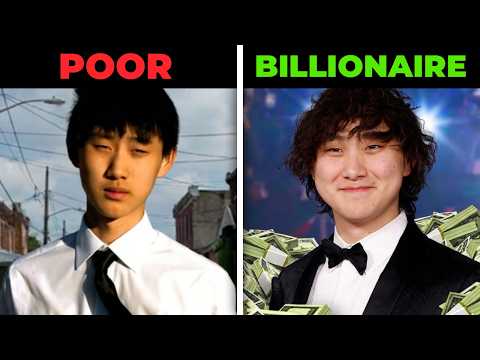
0:00 So the other day I was watching a video by fire ship where he was talking about Meta Connect 2026 which is basically like the big conference that Meta does to announce all their new products and all their new inventions for developers whatever. It's kind of like the conferences that Steve Jobs used to do where he would like show the new iPhone and stuff like that. Well, something like that but for Meta. And in that video he mentioned a guy called Alexander Wang and he showed this picture right here. So when I saw that $14 billion number and the fact that he was only 28 years old, I was like, who is that guy? I need to know. And then I looked up his net worth and I saw it was like $3 billion. And at that point, I started feeling really like about myself because I'm 26 years old and I don't even have $1 billion. But anyways, let's put that aside. So at that point, I had to do some research because I needed to figure out how this guy made so much money. So, join me as we explore the rise of Alexander Wang. So, first of all, his name is actually Alexander with like missing a letter. This is not a typo. It's because his parents, they're Chinese. And apparently in Chinese culture, eight is a lucky number. So, they wanted his first name to be eight letters. That's why they gave him that name. But he was born in the United States. He was born in the town where all the scientists came together to create the atomic bomb in World War II.
1:23 So, if you guys remember the Manhattan Project where that's where it happened basically. If you've ever watched the Openheimer movie, it was there. That's where the Openheimer movie was filmed and everything. The town is called Los Alamos, New Mexico. Both of his parents were literally physicists and a lot of people in that town were scientists, physicists, all that kind of stuff. So for example like most of his friends parents they were also scientists and they were always working like some crazy science projects whatever. So he grew up around a culture of a lot of science basically and as you can imagine he was basically the typical nerdy kid growing up you know like he the hobbies that he had were like math science and physics those were his hobbies you know he wasn't like most normal kids where your hobbies might be like I don't know playing video games playing sports you know doing drugs whatever you know like normal people things but this guy was just all about math science physics everything he also grew up in that environment so it kind of makes sense probably there were probably a lot kids like that in that area. You know, he said that growing up, his parents actually taught him a lot of math when he was very young. So, for example, at 8 years old, he was already learning algebra. So, then in fourth grade, so about 9 years old, that's when he entered his first math competition and he actually scored the best out of every fourth grader in the whole state of New Mexico, which is pretty impressive. So, you could see that this guy had potential already. So, after that, he just became super obsessed with math. He became super competitive about it, you know, that was his sport basically. So instead of playing basketball or playing football, he played math. That was his his thing, you know, and he just kept doing that, you know. He would do a bunch of math competitions, he would go to like math summer camp in the summers and yeah, like he said that his life as a kid was literally going to school and then he when he went home, he would do math, science, physics. It's pretty crazy because most kids don't do that.
3:20 Like most kids go home and they play video games, you know, watch TV, whatever. This guy was like doing math all day, like, you know, pretty crazy stuff. I certainly didn't didn't do that when I was young, you know. I was doing other things, you know, but I was doing like drawing, making videos, you know, doing animations, playing the guitar, more artistic stuff like that, but also playing video games as well. Like definitely wasted a lot of time growing up. But anyways, when he was in middle school, he was already doing college level math. So he was pretty advanced on the math category. So now let's enter the new chapter, which is the chapter of coding because throughout his whole childhood, he was all about math and science, right? But then when he entered high school, he actually discovered computers, he discovered coding, you know, and that was like his new thing.
4:08 That became his new obsession. He now became obsessed with coding just like he did with math but now it was coding, programming, building projects, stuff like that. And he said that he actually liked coding more because yeah like the math and the science was cool but with coding he could actually build things and that's what he wanted to do you know he wanted to build things. So from there he also started doing coding competitions you know just like he did with math he started doing like all these competitive programming competitions and stuff like that. And actually by doing this coding competitions he started getting recruiters reaching out to him trying to hire him to work as a software engineer at companies like he was still in high school and he was getting offers to go work for tech companies as a software engineer which is pretty cool. So at that point he decided to drop out of high school and go work as a software engineer and he worked at like a startup and then he started working at Quora and at Quora he was working on a bunch of machine learning stuff you know he was basically working on the on the algorithm you know like everything with machine learning right and that's where he got really interested in the whole concept of AI and machine learning but he realized that he didn't actually have a lot of knowledge about it like he knew about coding but he didn't really know much about machine learning and he wanted to really learn learn a lot more about it. He wanted to go deeper into it. And so he decided, you know what?
5:22 What I'm going to do is I'm just going to I'm going to quit this job and I'm going to go back to school so I can go to college and I can study basically machine learning and AI because he wanted to really become an expert in that, you know. So that's what he did, you know. He started applying to colleges trying to get accepted and he actually got accepted into MIT. And if you don't know, MIT is like the most prestigious school when it comes to engineering and computer science and everything like that. It's kind of like the Harvard of engineering, you know, it's the the top school for that. And it's obviously very difficult to get into it. You know, only a small percentage of people get accepted. But this guy, he was obviously like the perfect candidate, you know, like all those math competitions that he did when he was a kid and all those coding competitions and everything like that, they really helped him get into MIT because he literally said that in the MIT application, they ask for your competitive math scores. So all those math competitions he did as a kid, they ended up paying off. He was able to go to MIT. And let's get into the next chapter of the story, MIT. So now in college, he focused on getting as many AI and machine learning classes as possible because that was like his whole goal of going to college. It was to learn more about those topics. So for example, he said he took like a really advanced class on AI and the teacher told him like this class is actually too hard. You're not prepared for this class yet. But he actually he managed to convince the teacher to let him in. And the first test that they had, he got one of the highest grades in in the class.
6:56 So the teacher let him take the rest of the class as well. So yeah, he was in college. He was learning a lot. He was building all these different projects and everything was going great. So for example, one of the projects that he tried to build for one of his classes was a camera that he put inside of the fridge to figure out when his roommates were stealing his food. And he was trying to do that with machine learning, you know, using machine learning to figure out if somebody was stealing his food, whatever. But building that project, he realized that it was very difficult. and he actually he wasn't able to make it work in the end because he realized that he didn't have enough data to be able to train the AI for it to work properly. And this is a very important moment in the story that you're going to realize later why it's so important. So remember this part also while he was at MIT something happened in the AI world that had never happened before you know. So there's this board game called Go, which is kind of like chess. And AI was able to beat the world champion at Go for the first time ever.
7:56 And this was a AI that was created by Google DeepMind called Alph Go, if you want to look it up. And basically when Alexander saw that, he knew that something really big was happening in the AI world because up to this point, people had been talking about AI for a long time, but it never really kind of happened. But when he saw this, he realized like, "Oh, this is actually happening now for the first time." So he started getting really impatient. And what he did was literally like, "Okay, I'm just going to drop out of school in the first year or whatever, drop out of MIT. I'm going to buy a plane ticket to San Francisco and I'm just going to go there and figure it out and build a company." So that's what he did. You know, at 19 years old, he quit college.
8:41 He moved to San Francisco and the rest is history, you know. Okay. So, let's get into the next chapter which is building a company. So, now he's already in San Francisco. He starts his own company from scratch and he actually got accepted into Y Combinator. So for those of you who don't know what white combinator is, it's like the most important startup accelerator in the world and they basically invest in early stage startups and help them grow, help them like with the whole business, right? So for example, some of the companies that have come out of Y Combinator are companies like Airbnb, Stripe, OpenAI, Coinbase, Door Dash, Dropbox, Reddit, Twitch, GitLab, etc., etc. So like I said there's been some really big companies that have come out of white combinator. So this is like a very big deal. And so yeah, so he started this company and the first idea that he had, the first product that he was building was not the winning product. You know, he didn't find like the right idea right away. He had to pivot multiple times until he found that idea. And actually I want to make like a parenthesis here in the story because this is a very common pattern that I see with successful companies, successful people, etc. is that 99% of the time they don't just start with the winning idea with the winning idea right away.
10:03 It usually takes them a long time to figure out the right thing to do. They usually the way that usually goes is like this. They start a business and then the business fails but they realize like oh I'm actually quite good at this thing. So maybe I can build another business focusing on that and they start building a business. it starts going a little bit better and then they realize like, oh, actually we get most of our customers that are asking for for this specific thing. What if you just focus on that? And then they start focusing on that and the business starts going a little bit better. Maybe they meet somebody at some random event and they partner up. Like it just goes through like a lot of iterations until they actually find like the winning idea that actually makes them super successful.
10:43 And like I said, bro, I've I've been watching like podcasts or like biographies of successful people and successful companies for a long time. Like I've watched thousands of them. And like I said, 99% of the time this is the case. Success is not like a linear progression like, oh, just start a company, just start with the perfect idea right away, and it just goes up like linearly. No, it's more like a it goes like this all over the place until they finally find something that works and then it goes up. That's usually how it goes. And there's actually a really interesting book called Range by David Epstein, not Jeffrey Epstein, by the way. There's no connection there. And the book basically talks about the same idea. Like most people who become successful, they have a sampling period where they try a bunch of different things before they pick what they actually want to do for the rest of their life, right? So anyways, now back to the story. So when they first started building the company, he tried building like a class pass for clubbing that would make it easier for people to access different nightclubs. That didn't work. So then he tried building like a product for medical assistants. That didn't work either. Then he tried building like an AI virtual assistant.
11:52 He quit that as well. And then he actually built something called scale API. So his company now is called scale AI but at the beginning it was called scale API which is a different thing, right? because it was basically like a platform to connect businesses with people who could do tasks that couldn't be automated with computers or with AI. And but the way that it would work is like you call an API and then somebody would actually do the task. Like it was like an actual person doing the task, but it it worked kind of like an API. So it was kind of automated, but not really. And that's basically how the the platform worked, right? And I'm actually going to include a interesting clip where he talks about that.
12:32 >> Okay. In the future, clearly we're going to orchestrate human compute much more dynamically and much more like we orchestrate any other resource like we orchestrate compute today. And so you're going to get to a state where human computation so to speak is is as easy to use an API as anything else. And that API doesn't exist. And so you know that was sort of the original idea for scale. So by doing this business model he realized that there were a lot of companies that wanted to train machine learning models and they actually needed a lot of data and they needed lots of people to like create the data and label the data etc to be able to train these models. So for example self-driving car companies they had like thousands and thousands of hours of footage of like driving footage and they needed people to look at the footage and be able to label it correctly so that they can use that to train the AI. And so at that point he decided, okay, why not just focus on this? Let's focus on that use case specifically. And he started like building a platform for that and helping those self-driving car companies specifically. And that's kind of like where the idea from that's kind of like where the idea for scale AI came from.
13:43 So in where it went from scale API to scale AI because now it was specifically focused on training AI, right? So as you can see, like I said, like he didn't just come up with the genius idea from the beginning. He actually had to try like a bunch of random stuff until he actually found the right path. Knowledge. >> Knowledge. >> Now, let's go into the next section. Let's talk about the business model. So, basically the way that he explained it is that there's basically three pieces to AI. You have the chips, you have the algorithms, and you have the data, right? So, the chips is like the actual hardware, the actual like GPUs, whatever, the actual hardware where the AI runs. Then you have the algorithms which is the math and the code that makes the AI work all the all the magic you know and then you have the data and to train the AI models you actually need like tons and tons of data. So remember back when he was in college and he was trying to build a project to figure out when his roommates were stealing his food with machine learning and stuff like that and the reason he wasn't able to do it is because he didn't have enough data to train the AI. Well, that's what we're talking about. And so at that point he realized that there were a lot of companies that were focusing on the chips and the compute, you know, companies like Nvidia for example. And there were a lot of companies focusing on building better AI algorithms. But there were not a lot of companies focusing on on the data. And he realized like there was a gap in the market there because guess what? Like the AI companies need tons and tons of data to be able to train the algor the actual AI, right? So he noticed that gap in the market and he focused on that. He says his company is kind of like the Uber of data because you have like people who need data and people who can create or label the data. You know, you have Uber drivers and passengers and you're kind of like connecting the two.
15:33 They can making money from that. So that was kind of his his analogy. And so now he has a platform called Outlier where contributors can go in there and they can create data or label data or whatever and get paid for it. So that's kind of like how the business model works. At the beginning, like I said, they focused mostly on self-driving cars. And he got some big customers like Toyota, General Motors, Whimo, etc. Because, like I said, like these companies have thousands of hours of footage, and they need people to be able to label that footage so they can train the AI, right? But it's not only footage. There's more to a story. It's not just video, right? There's data from other sensors like for example lidar which users uses like lasers and stuff like that or other types of sensors as well like you know the self-driving cars they have a bunch of different type of sensors and he says that for self-driving cars it's actually better to have multiple types of sensors not only cameras so not relying only on on video footage but also have things like LAR or other types of sensors because they're all good at different things right so for example If you're in an environment where there's a lot of fog or there's a lot of smoke or snow, the lighter actually doesn't work very well because those things kind of like mess up with the lighter. So, in that case, you would rely more on the cameras. So, it's better to have both, you know, the cameras and the lighter and that's how you build a better model of what's actually happening on the road. So, I thought that part was quite interesting if you're interested in in this technology. And like I said at the beginning he started focusing on self-driving cars but then later on he started diversifying or like expanding into other use cases as well. So for example defense. So he worked with the department of defense and they helped them do image recognition on satellite satellite imagery because they had the same problem with the data right they had like the satellites where they could take images but they didn't have enough data to be able to train the AI. So he was able to help them with to train the image recognition models etc. Or for example they also help automate parts of the military planning process using AI so that the military can plan much faster more efficiently. So for something that might take multiple days it might take them a couple hours. So yeah like I said then he started expanding into more different use cases.
17:49 Now let's talk a little bit about hiring. Another thing that he mentioned was that in the beginning when he started the company remember that he was 19 years old. So it was very difficult to hire people at that point. So most of the people that he hired were people that he knew from college because think about it at 19 years old. You don't have no credibility. It's very difficult to hire older people than you because imagine if you're like 25 and you walk into an interview and the owner is like 19 years old. you probably wouldn't have a lot of confidence in that in that company, right? You wouldn't inspire a lot of confidence. But anyways, when he once he got into like white combinator and he started getting different investors and everything, he said that the investors they really helped him to hire people and to build a team and this is kind of like how the company grew. So in the first year they were only like one to three people. Then on the second year they were like 15 people and then by the third year they were like a 100 people and then it just kept growing from there. But yeah, as you can see like the company started very small with just like two to three one or three people, right? Okay guys, so some final words just to close out the video.
19:00 Obviously, there's a lot of criticisms online about Alexander Wang, but I'm not going to get too much into the specifics because that's not what this video is about. And you don't get to the top of the Forbes list without being a little bit ruthless or like doing some questionable things, whatever. Like, that's just how it is. Like, there's no saints on the Forbes list. I'm not saying you should look up to these people to be like, "Oh, they're perfect.
19:22 They're they're saints." Like, they're certainly not. They're all ruthless to a certain extent to be able to get to that point. But like I said, that's not the point of the video. If you're trying to learn about business, you want to learn from the people who are good at business. So even if you don't agree with like certain things that they did ethically or morally or whatever, like you can still learn from them when it comes to the business side of things.
19:46 You know what I'm saying? So that that's what this video is about. This video is about looking at the success journey, looking at how he became successful, how he made all this money. And that's what you should be looking at. I mean, try to learn, try to learn those lessons and try to apply them to your own journey. Try to apply them to your own business. And hopefully, you can be more successful as well, you know. So, yeah, that's what this video is about at the end of the day. So, I hope you guys enjoyed it. I think I might be doing more videos like this in the future. So, subscribe to the channel.