Section Insights
Introduction to Nasim Taleb
Who is Nasim Taleb and what is his perspective?
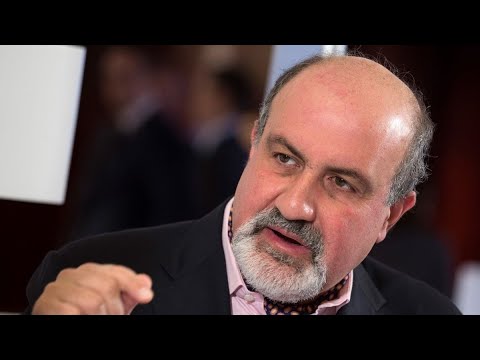
Nasim Taleb is introduced as a prominent thinker in risk and probability, known for his contrarian views and philosophical approach to volatility. He emphasizes his role as someone who deals with risk rather than fitting into traditional categories like strategist or analyst.
- Nasim Taleb is recognized for his independent thinking and philosophical insights.
- He focuses on risk and probability, particularly tail risks.
- Taleb does not identify as a contrarian, but rather as someone who agrees with many perspectives.
Economic Behavior During COVID-19
What factors are influencing economic activity during the pandemic?
The slowdown in economic activity is attributed more to risk aversion among individuals rather than direct government actions. People are opting for safety, which has led to changes in consumer behavior, such as preferring to work and eat at home.
- Risk aversion is a significant factor affecting economic behavior during the pandemic.
- Government actions are not solely responsible for economic slowdowns; individual choices play a crucial role.
- Consumer preferences have shifted towards safety and remote options.
Reorganization of Globalization
How is globalization being affected by the pandemic?
The pandemic is prompting a reconsideration of globalization, with companies looking to simplify and shorten supply chains. While some view this as a negative trend, Taleb suggests it could lead to a smarter reorganization that balances local safety needs with the benefits of specialization.
- The pandemic may lead to a reorganization of globalization rather than a complete reversal.
- Local production may become more important for safety and stability.
- Specialization remains crucial, but certain industries may need to localize their supply chains.
Market Dynamics and Risk Management
Why should investors consider hedging their risks despite market support?
Taleb emphasizes that no entity, including the Federal Reserve, is bigger than the market. Investors should hedge against tail risks because reliance on market support is not sustainable in the long term, and unforeseen events can disrupt the economy.
- Investors should not underestimate the importance of hedging against risks.
- Market support from entities like the Fed is not a guarantee of stability.
- Long-term sustainability requires awareness of potential market disruptions.
Misconceptions in Private Equity
What are common misconceptions about private equity investments?
Many investors mistakenly believe that private equity guarantees long-term returns insulated from market fluctuations. However, some may use private equity to hide poor performance or engage in risky debt practices without immediate accountability.
- Private equity can be misunderstood as a safe long-term investment vehicle.
- Investors should be cautious of the potential for hidden risks in private equity.
- Accountability and transparency are crucial in private equity investments.
Transcript
0:00 welcome ladies and gentlemen to the latest installment in our series the bloomberg global asset owners forum we aren't delighted you could join us today my name is eric schatzker i'm an editor-at-large bloomberg here in new york city and our guest today is none other than nasim talib you may know nasim as the options trader he once was or perhaps as a distinguished professor of risk engineering at new york university or more likely as the author
0:31 of best-selling books including the black swan nasim welcome are you there thank you nice to have a conversation with you again great to see you as always naseem i want to tell everybody that not only are you not here with me in new york city you're in northern lebanon and you've taken time out of your busy schedule to be with us and we're very grateful thank you i'm going to be conducting a virtual
1:01 fireside chat with naseem and on your screen you'll see there is a way to submit questions please do and i will do my best to incorporate them into our conversation there will be no portion set aside for explicit audience q a i want to see these they're going to pop up on my screen and as i say i'll try to work them into our conversation naseem i want to begin by reminding people what you are not you're not a strategist you're not
1:32 an analyst you're not a soothsayer more than anything else i think of you as an independent thinker some people might call you a contrarian i'd also describe you as a philosopher a mathematician a logician and a student of volatility and risk tell me how would you describe yourself as someone who deals with probability definitely not a contrarian a lot of things i agree with but i would say someone who deals with risk and probability tail risk
2:02 and probability and also as an advisor to universal investments investments is a firm that specializes in providing tail risk protection to investors and that's the subject we're going to delve into a little bit later in our conversation but right now i want to remind people across the planet tail risk across disciplines has been my specialty forever and when i look at kovid i think
2:35 in terms of going in terms of tail risk and i came from finance and of course became a little more multi-disciplinary later multi-disciplinary is an understatement naseem one of your gifts is revealing to people the fallacies of their assumptions right assumptions about predictability assumptions about resiliency assumptions about authority let's say and and of course prompting them to look at the world they inhabit in a different and often
3:06 surprising way you've written about the misconceptions i might call them the fallacies in fact you've called them the fallacies that sprung up to explain the pandemic and to predict its course and your criticism is directed at academics but it applies much more broadly and my question to you is this what is it that people are getting so wrong about the epidemic this will summarized because we engaged in a public scientific debate with professor johan edis at stanford
3:37 who was taking you know the early on the position that kovid was was there was no evidence was covered was harmful and and and therefore we had to argue from the standpoint of logical fallacies that there's there's a difference between absence of evidence evidence of absence and this of course grew into a full-fledged scientific debate that covers many many aspects the first fallacy is of course that you should not react early you see our point is the
4:09 cheaper is much cheaper to react very early to the pandemic then wait people don't realize that second point is that pandemics have the fattest tailed attributes you can find in anything in other words most of them are going to be of no big consequence and and a few of them maybe just one will be a monstrous consequence so you really cannot ignore them it's what we call the tail white and the dog that's the second misconception
4:39 a third misconception and that's a very severe one is to think there's a trade-off between the economy and the pandemic in other words that the closing you know that reacting to the pandemic has an economic cost for getting the the pandemic it's a pandemic itself that's inflicting these costs on us on society and a series of things that flow from this misunderstanding and we managed to publish in nature physics pmas you know the main journals part of that
5:08 debate and it's still going on scientifically with a group of friends and collaborators to try to explain to people that just as you deal with a portfolio and it's tail risk just like you would deal with your house and the tail risk of losing your house you should react early when it's very cheap okay and have built-in natural insurance against pandemics so so let's let's bring in a real world example the united states as you know has has
5:40 attracted a great deal of attention for the failings of of its response to the pandemic where would you say the misconceptions of the fallacies that that you've just described were evident in the way that this country responded to the pandemic we started reacting in january and in january the trump administration took it seriously by shutting down the border with china but they did not follow through with that you do not need a full lockdown or anything you need
6:11 to find the most efficient way to reduce the multiplicative growth effect of a pandemic and at the time there was that prevailing thinking to compare you know numbers like so many people died of covet and how many people are dying drowning in a swimming pool so that why are we paying so much attention to something that doesn't kill a lot of people and the way we explained it is no things scale differently if i drown in my swimming pool my
6:41 neighbor is not likely to drown in her or his swimming pool but if i die of kovid my neighbor is vastly more likely to die of covid and the third neighbor is even more likely to die for it because i have multiplicative growth now what do you do in the presence of something that has such multiplicative effects you try to bring down the multiplication it turned out and we started suggesting face masks and and there was a lot of mistakes with
7:09 face max initially instead of studying how the biology of face mask works because you're not going to get it easily that way it will take you years before you figure out we looked at the data in countries where face masks are custom and we also looked at something very simple that and i said it on your program if i were a face mask and you were face mask we don't reduce probabilities by and the face mask protects you by say
7:34 50 we reduce the priority infection by 75 percent and then furthermore if a face mass produces a viral load by only half only half you may reduce the probability of infection by 99 because of nonlinearities because the virus is very viral low dependence so so you had to do anything to cut the viral load at a local level and to cut the super spreaders and and that was a tactical strategy cut the super spreaders face masks
8:06 and constrained some movement and the governments worldwide were very slow outside of china of course in asia where they have a lot more i would say risk more of a risk culture the governments were slow and then the more you wait the more it's going to be costly had we had firsthand smashed in in february i think we'll be having this conversation we'll be talking now about the election or the bull market or something else because there wouldn't have been a thing
8:36 here just like it's no longer a thing in asia if we had face masks so so you have to focus strategically and what can de-multiply and cause the multiplicative effect to be less acute and there are simple solutions super spreader events everything fat tailed come from super spread events i.e a urologist conference not something not very glamorous but these bring a lot of people from all around the world to las vegas where they come in and re-spread so
9:06 these kind of things so it doesn't take much to figure out the small little tactical effects that you have to do that you need to to to very very very small technical measures that you need to to to to weaken the effect of the pandemic if we think about things in probabilistic terms the same are firms such as jp morgan and goldman sachs doing the right thing by ordering traders back to the office
9:37 i mean i i mean i don't think it makes a big difference because overall you need the confidence of restaurant door you see you need the confidence of the regular citizen who you know will no longer rent a department on 44th floor of the building with only two elevators or three elevators you see it'll take one hour and 45 minutes to get to your place once in a while so you have to bring that back people have the illusion
10:08 that government actions are causing the slowdown of economic activity but you can see the numbers in sweden in sweden the government you know just gave fake guidelines and and nothing meant that i mean few things were mandatory and and sure enough restaurants were empty and new york city it's not the government or the local government then bankrupted the restaurant it's a risk aversion of government workers so there is one effect here that that we realize is running covet it
10:38 is a legal system as well so what happened is that when you ask when we ask hey why are we reacting so much you know for you know kovet when when when maybe it's not as much of a killer as as other diseases we've had in history i'll tell you the times are different every time a plane crashes you see billions and hundreds of billions are spent by to make you know the the flying safer
11:10 so so we are we so they are classes of things for which because the consumer can switch from flying to driving although it's not wise they can still do it and it's the same thing the consumer prefers to work from home then or prefer to eat at home than eat in the restaurant and and the individual the employee prefer to work from from home than work on a thing so office safety is something quite central in determining the behavior of people
11:41 and that risk aversion is greater today than it was 20 30 40 years ago and that's very costly economically so it's not the thought of governments it's just how the system is built so all we have to do go ahead so we have to do now is imagine a system that's more robust to these kind of shocks rather than try to patch around things that are existing so you know our viewers and listeners may be familiar
12:14 with a concept that you coined naseem anti-fragility yes and as you point out right this pandemic is putting many of our systems our social systems our political systems our economic systems under extreme stress which of those systems in your mind is passing talib's anti-fragile test and which systems are failing so i'm going to have a a a positive answer and then a sort of less positive answer so let me
12:44 start with the the good news to me an antifragile system is a system that is better off after a shock okay and it looks like the world today is vastly more robust to the next pandemic than it was a year a year ago so should we get that lab you know or that weird disease okay or that antibiotic resistant you know bacteria that escaped from some hospital and that we can't control
13:15 this should we get that one we are really equipped to face it you see so we are better off in that sense in other words that you have you you we we did the dress rehearsal and now we train like some people are trained to face the next pandemic so that's that's a good news another good news is that but the parts of the economy that are fragile very fragile have been sort of like wrecked by i mean not
13:47 fully because there is a fed but there their businesses are not robust that that have been shaken by the the pandemic sometimes you know not enough for example airlines they liked you know they like to spend their cash instead of you know keeping it for the rainy day they like to spend their cash buying back their stock and they were stuck with no cash so or less cash than they would like to have they didn't face that possibility
14:15 so anyway so there are sectors that are now better off you know and then of course we have we're using this platform and i don't think that you and i would have ever imagined having a you know using you know these zoom or other techniques and then so many conferences are taking place offline and the educational system is improving and at much cheaper costs there are so there are like some benefits from the shock but the way i explain anti-fragility is
14:46 as follows if i jump one meter it's very good for my bones it's very good for me for for my my my system it's a very good stressor or it will make me stronger for the next time but if i jump 100 meters or it's not that good so what you want is prevent yours you know prevent that big shock you see and and it looks like like people aren't aware of the need to do that
15:15 and and they're still in the discourse having gone how to handle such a pandemic like it's much easier to kill it in the egg than have to deal with it later and and also that the cost of the pandemic may be greater i'm not talking about economically health-wise then we think because we have so many unknowns like mainly morbidities we don't know how they play out in the future by people who have very mild symptoms but seem to have something
15:43 you know that stays in the system and and we don't know you know the long term health cost and even economic cost of that so they are sort of bigger risk other than mortality in that pandemic that we don't see and and then and we're still fragile to that and the discourse doesn't seem to have incorporated it can we extend some of that thinking or or explore the consequences or implications of that thinking to seem for investments and what i mean
16:14 specifically is is if we're better prepared for a pandemic because we understand that not being prepared is too costly is that going to it it seems that what flows logically from that is that the money that was previously used saved by airlines to buy back stock or to pay dividends or whatever the case may be is now going to be saved held back to prepare for the next disaster exactly and because that money because that money won't circulate as it
16:45 might have otherwise it's going to have a depressive impact on growth and a constraining impact on financial returns is that is is is it logical to think that way no i know i don't think so because i think that the companies sometimes i mean people have the illusion that increasing debt and avoiding having cash is good in the long run for companies because it you know allows more spurring economic activity in fact it creates fake growth
17:15 because it grows back by that is not really the stable growth but but i would say a few things about i mean what what is what's happening in the economy there's positive look around you and let's classify things in three categories number one companies and countries and areas and whatever and pursuits and organizations and whatever activities that were helped by the pandemic the list is endless okay
17:47 that's the first category the second category is things that were harmed by the pandemic but odds are in a non-permanent way say if you're a dentist or a hair stylist you know there are a lot of things that that of course would come back as they were before because there's no substitute i mean i can't cut my own i don't have a lot of hair but i can cut my own hair or drill my own teeth so that second
18:13 category and then the third category of industries and companies that are permanently maimed okay by the pandemic you see so so so to to to go back to your and of course the third category is new york city's office space and to go back and this links now i can really fully answer or complete the answer to jp morgan and other firms forcing employees back
18:44 they're trying to give lip service to new york city but but i i don't think that it would be like it was before you see cities are very fragile they depend on very little i mean some few things can go wrong can make a city not desirable anymore and then of course starts a a bad cycle of you know higher taxes and more people leaving and i think that places like new york city i mean where we're both based in the
19:16 area all right are going to suffer and telecommuting or whatever we call remote work whatever name they're giving now is definitely going to mean these places so so these are the three categories in general and of course we can talk about countries we can talk about cities we can run locations we can talk about areas or we can talk about industries that's a nice classification see where are you in that classification i'm sure bloomberg isn't the first one
19:45 because you know you you don't deliver physical services and of course your business has benefited or should you know benefit from the the in the aftermath so now see one of the consequences of the pandemic appears to be a reversal of globalization you know companies and countries are shortening and simplifying supply chains trying to bring production back on shore
20:15 from offshore and unless i'm woefully mistaken you know based on our past conversations and your past writings you would see that as a big positive am i correct i've seen some okay so what happened that when people say i'm against globalization they probably don't know what they're talking about i mean the civilization pulled billion to two million people out of poverty you see and and and the second thing that against civilization what does it
20:45 mean you mean you want to live in autarky or somewhere in a farm on a farm or like like trade with with your next with a town nearby or something so i've used it as degrees there's degrees of globalization and and someone you know identified in the category of very pro globalization would be a little more to the right and some people more to the left of that some benchmark in there so what i think will happen
21:16 is a smart reorganization of globalization we need specialization very badly specialization but there are things that for example you may need to have locally just simply out of safety and and the the the supply chain is very fragile so it matters a lot if you're dealing with medication if you're dealing with with things that are necessary for your local industry because a little glitch somewhere stops the
21:47 whole process it's fragile but but it doesn't matter much if you're dealing with toys or things that are less essential so i think that we're gonna have a reorganization what we call globalization to preserve the system the whole idea is how can we preserve the system by making it more robust by identifying the source of the fragility i like this 80 20 rule that 20 of the things you know contribute to eighty percent of fragility and within that it's one percent
22:16 contributes to fifty percent of fragility has come from one percent of things so that one percent of saying is is is nothing it's a it's small and that's what we should you know focus on and it's not a big deal where where are those we talked a bit about them already but where would you say you know the locus of that fragility is right now what have you been able to a lesson if you will of the pandemic
22:43 what has it taught us about fertility i mean there's one one one thing that was that was completely absolutely absurd is to have one single country and within that country in one single area produce anyone in the country nor do you guess produce such a high ratio of essential antibiotics okay and so that's already concentration so and it's not a big deal you know you have three four countries and produce some locally
23:13 if once you make a list of essential medication and the second one is that supply chain got both too fragile because you have you know companies located in different places each one specializing in sub-component and there is a fragility if one of them collapses everybody collapses so based on that it's like you identify them but that's not the job of the government to do that companies who were relying on a fragile
23:45 supply chain okay got harmed and the problem with those who did not will thrive and and so we have a darwinistic process by which companies that are wiser will survive and and and do better in the long run naseem you've explained to me and no doubt to countless others why it's essential for investors to buy tailor-risk protection yes and as i understand it the reasons are two-fold one is of course to ensure against catastrophic loss
24:17 and the second is to comfortably take market risk in the pursuit of maximum returns knowing of course that you're protected against catastrophic loss have i got that right exactly so so the the idea behind you know everything i've done all my life it started when i when i began as a trader and mark from universe i had the same experience you know when when when he started traders to be told take all the risks you can
24:44 but make sure you're here tomorrow which is exactly the opposite of the culture in modern finance as taught in schools and used by quant you know you know theorists but effectively applied by every trader is that you want to make sure you can survive and take a lot of risks rather than you have a tail risk like black banks in 1983 then 1980 2007 now the government is supporting them but they have the huge tail risks in
25:14 other words you have stable income but you go bankrupt okay rather have more you know partake of the returns but make sure you never go bust because you have a floor of that so that's a general idea but again do not advocate unconditional and foolish tale risk it's very hard to do and and and and sometimes it makes no sense to do it it depends i mean the way i mean the example because i want to a shared
25:41 universa of a specific form of tail risk hedging a sub-specialty tailored scheduling where you focus on the tail and then of course there's the experience of two decades of we've been doing this but so so the yeah so i i don't just advocate to go just do taylor schedule blindly but nevertheless i will tell you it is necessary to do it just like i tell you yeah i have a question for you about monetary policy isn't monetary policy as
26:11 it's being practiced by today's fed in effect trying to provide catastrophe insurance because what we have seen happen is that unlimited liquidity has reflated asset prices over the past six months yes and it has encouraged so much risk taking that until recently stock market indices were at record highs okay yes so let everyone i mean you can
26:42 hear a lot of people complaining about just i mean printing money has you know the general process of printing money and this of course i share their concern but there's something few are seeing in it and that's the antifragility aspect is that what is a crisis for a crisis is there just like a forest fire to eliminate firms early that shouldn't be you know should you know not be there to accelerate the evolutionary process
27:13 so a firm that should go bust okay early should go bust now when the cost will not be high on their shareholders on their owners on the employees on everyone and you start you started so they give you a chance as they say in california to start again and start again and start again so you fail early so that's the process by which those who need to fail you're doing them a favor by allowing to fail early
27:36 what the fed has been doing is the reverse is injecting tons of money to keep afloat firms that should not be should not be around okay and then delay that failure eventually will happen you see eventually they're gonna stop doing that and that's that's not part of the discussion this country got strong because we had the highest rate of count bankruptcy you see because there's a higher rate of bankruptcy in america in the rhythm you're speaking of course about the
28:07 united states and not lebanon yes no no no no that's not a problem but the events i forgot that was i was in the 12th century monastery here so the the the united states and particularly within the united states the the tech sector okay has the highest rate of bankruptcy you can find so by by by fiddling with this plus the other thing is we i don't know if if i on one of your shows when we were discussing the election
28:37 years ago and and two three four five years ago and donald trump and and if if if i told you listen the gentleman may bring socialism to america he would have never spoken to me again donald trump is the first is because i noticed kovit kovitz in its ways donald trump the first american president to do universal basic income as you saw and acquire stakes in corporations because the fed
29:08 bought paper okay the fact that they did not or overtly buy stocks okay it's irrelevant they bought paper from companies that's so if that's not socialism acquisition of the tools of production and making sure everybody has an income and florida income these are some of the central aspects of of of socialism regardless of what government we've had in america socialist on the right on the left anything covid ran ran the show
29:38 and what policies were enacted by the u.s government were driven by kovit so driven by the environment so so which is quite which is something quite quite unpredictable and quite unpredicted so but we're still in the middle of the pandemic and the investor you know will ask himself or herself yes and and perhaps with good reason why should i buy catastrophe insurance why should i
30:08 hedge my tail risk when the fed is underwriting the market because again i'm going to give you a second saying that i received 30 some years ago 35 sorry i'm getting old now we've lost you seems just hang on a second hang on a second we're going to wait till your audio connection comes back it came back the last time i'm assuming it's going to come back again
30:39 all right let's just talk you and me are you can you hear me yeah i can hear you okay okay so you were answering my question about and you were about to tell me what you learned 35 or 40 years ago and you were lamenting your advancing age but what is the point that you were going to make no no so that i was told nobody is bigger than the market even the fed that's the point even the
31:07 fed eventually nobody's bigger than the market think about it you're gonna the policy of the fed is gonna i mean it would be too easy if you just have a fed by you know you have paradise it doesn't work that way eventually you may put you may not lose control of black month's interest rates you may find no bias for your bonds and i mean you cannot in the economy you know where just based on that kind of purchasing of paper
31:34 by the those who print money is not sustainable so there are a couple of questions i've been getting over the course of this conversation from some of the people who have tuned in and they concern things like you know the point that you made about zombie companies for example and they concern things such as the accumulation of enormous amounts of federal debt and the monetization by central banks such as the fed that's happening right now zombie companies exist the federal
32:07 government is incurring more and more debt it's being monetized by the fed what happens what what what is the precipitating event or series of events that causes that construct to begin to collapse i mean first let's say that covet state one scenario covered stays and one scenario is covet is out okay if kovit continues at some point you may see a very weird case of stagflation coming from these
32:39 policies you see because there's no free money as they say there's no free lunch speculation coming from these and if call it stays and let's say that growths will come from that i believe that even if covet continues we'll have we'll find ways to adapt to have huge growths in some places okay and we have had growth in a lot of places so we may have adaptation to profit but second case coveted stops okay now their policies are going to be
33:08 inflationary they realize it's inflationary what do you do either they will try to control interest rates to put it at the level okay where to fight inflation or under pressure from pension funds you know what i work all my life not to earn zero interest rates on my money that can vanish so they start raising interest rate and we'll witness what we witnessed and at some point like third or fourth semester during the trump administration you know when they start
33:35 raising rates we witness something like that would stop having volatility and the biggest danger is back months bonds who's going to buy a bond knowing you have inflation you see nobody would buy the bank once phones so the the so what happens you know if they they will bring money to buy their own bonds many countries have tried that and and history gives you 20 or 30 episodes of such failures one difference is that so far
34:05 the reserve currency in many countries is u.s dollar this is not a permanent situation see so i mean at some point the reserve currency was the tyrion shekel okay and and last time i checked it's no longer a reserved current currency anyway it was the reserve currency at the time of price you see where people paid an interior shekel well that's no longer the case so so you've got to realize that this is not a permanent solution
34:33 look what happened to the the british pound and you know what it was at some point the currency and and so you have a lot and so i think that that there's so many things that can go bad that you can explain and probably other things that we haven't seen that it's not a wise situation and it's not wise to be in stock without tail hedge it's not wise to not be in stock this is what
34:56 it was even more interesting is that if you're not in stock you know you think inflate around you and if you're in stocks and you know so you have high uncertainty and high tail uncertainty it's not like if you say higher certainty and stocks can only go up that's fine that's not uncertainty uncertainty is when you you may have a compensating effect that goes the other way and i remember if that was so easy to rewind
35:20 a thing i remember when i started trading where interest rates were and paul volcker spent years years years to bring down inflation it's not easy to contain inflation our neighborhood turkey yeah that raises an important question it's not as if monetary policy makers are ignorant to the risks of inflation even the fed is talking about the possibility of inflation but my question to you on that subject is this when inflation comes will it be
35:52 a linear which is to say manageable event or will it be a non-linear event so if if we look at history and all it takes is a couple of google searches and you look at history and inflation very often it's deflation in the beginning and then you have hyperinflation it's like it jumps sort of like it's very non-linear and i've seen many people including mark from there's much mistake from universal you give the case of the ketchup model where
36:24 nothing comes out nothing of that and then you splash ketchup everywhere so you have a lot of nonlinearity in finance and inflation usually is a very weird non-linear response but let me now answer you again about the tail risk in that situation and typically if you believe that you don't need tail risk hedges because the fed is giving you that tail risk edge and if you believe that okay and people believe that then the terrorist hedging
36:50 pricing should be considerably favorable you know for the buyer even right now well if you believe that yeah of course if it's priced then so so there is a paradox there that that if you think you don't need it it'd be cheaper so just get it if you think you don't need it and the reason i asked that question is because many people don't come to the conclusion that they need taylorist protection until after the catastrophic
37:20 event march was a catastrophic event tail risk hedges paid off massively and then people the light bulb went off and some investors thought oh i didn't have any tail risk protection i'm down 30 on the month i need to buy tail risk protection but lo and behold at the beginning of april tail risk protection was exorbitantly expensive less expensive now exactly so so i always advise people to buy insurance before the fire fire insurance before the fire then
37:47 during the fire you see or don't buy insurance don't try to buy insurance the day before the hurricane you know lands in texas well or exactly or during the hurricane hurricane or after the hurricane naseem one of these strategies investors have adopted in part in an effort to insulate themselves from some of the risk that has and the volatility more precisely that has played out in public markets is
38:18 to allocate more money a greater share of the money that they oversee to private equity private credit other forms of private investments such as infrastructure let's say you know can we talk about the the importance of the distinction between the kind of risks that one undertakes in private markets and the kinds of risks that one undertakes in public markets okay so the the i have again two answers the positive one that private markets
38:48 have a huge virtue is to insulate you from the analyst the wall street analyst who fails to understand risk so so let's say that we have two sisters and one of them is making four dollars a share and none of the plants have insurance okay and her sister had identical business she makes three dollars a share but she has you know everything is insured she has lines of credit she has cash in the bank and everything
39:20 wall street will favor the first sister the the bad risk manager in the short run okay and then of course the banners the and that's unavoidable and and of course no company will come in i would always favor that because of lack skinned game that was my last book that analysts don't really are not survivors they're not part of darwinistic process of surviving risk-taking and then they like cosmetic things and a good story so you you escape that
39:51 by being insulated from the market where you can do good things okay and you can see survival of family businesses and businesses that go in the market and now viciously if you're going to stock s p 500 the median duration in the s p 500 today is 11 years and shrinking okay so so it makes sense to me in private equity now the bad news the bad news is that many people engage in going to private equity but
40:21 not for that reason is you see they go into private equity because they can lock up investors for a while and engage in losses leverage and then and what kind of things so so here we have to be a little careful when we talk about i see so the let's just if you don't mind cover that one more time the the misconception the the main misconception about most people who put money into private equity or or private credit or whatever
40:49 is is what exactly the misconception is that the the i mean the the the private equity is a great vehicle for long-term returns okay insulated from the vagaries of the stock market okay so that's commendable but the thing is sometimes people do that to hide because you can you can make a mistake for five years you lock up investors for a while you don't compromise credit to either engage in monstrous
41:20 you know debt which is harmful in the long run or in been insulated from you know the the accountability to investors for a while so that that's a bad part of of private private equity but again i'm not an expert private actor i get it i'm a tail risk person but some strategies you can only do in private equity right that doesn't all private equity is good and nasim
41:51 another question from our audience what would you say is the most underestimated or perhaps i might say under-appreciated risk in financial markets today i would say that the dollar ceases to be a currency a reserve currency that would be a risk or it would be less of a reserve currency so not recognizing that not recognizing the possibility that the us dollar will cease to be the world's reserve currency
42:22 is is the underappreciated risk exactly because then then we'd have a law tougher time borrowing you see we have a long witch would have a tougher time borrowing sure speaking of the us government or anybody you know who needs to borrow money in u.s dollars but it may bring financial discipline at what cost of course at what cost but it may bring financial discipline nasim we have to talk about politics a
42:54 little bit at least because in 42 days the united states will be holding a federal election it's a it's an event of great consequence not just to this country but to the entire globe you told me back in 2017 that president trump was misunderstood in fact you said and i'm quoting you directly there's a logic to trump do you still see the same logic to trump today as you did then i would say less so but
43:20 at a time i was seeing some logic to the deal maker he's a deal maker he likes to make deals and that continued i mean he doesn't think in terms of you know running you know in administration as much as like to do deals and and that continued visibly he made being a real estate developer he made an offer or tried to make an offer to my green one or porsche's greenland well that was part of the deal-making thing
43:48 and and he engaged in some deal making in the middle east nearby not far from here you know between israel and and a few so that was some deal-making that has been taking place he of course failed in the deal-making of the iranians because the initial the idea was the iranians was hey you're going to cancel the deal i'm going to bully them into a better deal for america and visibly that did not happen so there's a
44:14 deal-making aspect of trump that continued and you can see the logic there but also there's some erratic things you see in that that i do not understand so less understandable such as make some observations what kinds of observations would you make about trump today so for example you you come in and you want to destroy the military this whatever it's called the military industrial military establishment but then increase defense spending
44:45 there's something not very logical you want to pull troops out of syria but you want to kill the president you want to pull troops out of afghanistan which is good but then you know they're still there and and you want to you know make the big i mean peace between the uae and israel have never been you know neighbors that they're like you know from israel i think to rome is probably you know the the short much shorter
45:14 distance than it is to uae so making peace between countries that far apart isn't as big a deal we need the big central thing between the iranians and the israelis and then a lot of people will be happier then and and we're no way close to that so but i think so what i mean is i could see a logic in trump and then i started seeing contradiction i did not see before and and they were bothersome also
45:38 hiring a hawk i mean someone who wants to peace pull troops and stuff hiring a hawk as a national security adviser that i couldn't understand that firing him to hire someone who's a little more balanced why hire a hawk i mean there's some contradiction that appeared after our conversation and made me a little queasy about predicting what he would do i mean you still see the general behavior but there's some erratic component there and there's no like administration or
46:08 party behind to see what's next and then also the attitude towards i mean we when we issued our memo in chapter 26 they were the administration was extremely favorable to closing the borders you see and they did close the borders from china initially and then after that started having a relaxed attitude towards the thing so there are contradictions i don't understand naseem we've almost run out of time but i want to close with something a little bit different
46:38 i'm not sure if you saw but recently john cleese a name that might pop into your head of monty python fame right the british comedian of monty python fame said that he adores everything that you write now this is a guy who loves philosophy loves david hume he loves playwrights he's clearly a very literate individual but it's not what most people would expect from a british comedian such as john cleese to say that he loves everything that nassim talib writes
47:10 this pandemic has given people an opportunity because they're not traveling as much to do a lot more reading they've obviously lost watched a lot more netflix as well but i want you to take john cleese's role tell us what you're reading what you've read lately that excites you give people something to take away from this conversation other than your insights give them give them something to read okay so i'm i've been reading a lot of history okay
47:35 so mostly it started with kovid and then when you learn when you read the history particularly the one of ottman empire because we're talking about this area that was on a silk road and that's where both played justinian's plague and the great plague went through so you you have an idea about the human behavior and wisdom that that the ancient had dealing with pandemics that was lost today
48:06 so you know so i've been reading history books or history papers or history accounts about that period starting with justinian's plague and then all the way to now and i'm you know that's what i'm reading a lot of history and i think it's solid to read history i stopped reading fiction years ago i just speak once in a while italian no you know just to improve my italian but i've been focusing on history and when you study history it makes you wiser
48:35 because you can you can you can see a logic through sort of the behavior of those who really did well and and we didn't do well with this pandemic but the ancients did very well they know how to handle it immediately to just build so-called lazarettos and quarantines and to try to help the business people do business as usual on the minimum constraint but nevertheless protect the population from the pandemic and they were much more successful than we
49:04 are today well i hope people take your advice in the scene because we could all use a little more wisdom naseem i want to take this opportunity to thank you very much for joining me here at this latest installment of bloomberg global asset owners form ladies and gentlemen we're so glad you could be with us hope you enjoyed the conversation and that you will join us the next time
Summary
- Taleb identifies fallacies in pandemic responses, such as the belief that early reactions are unnecessary and the misconception of a trade-off between economic activity and health measures.
- He argues that pandemics exhibit fat-tailed distributions, meaning most are inconsequential, but a few can have catastrophic impacts.
- The U.S. response to COVID-19 was hampered by misconceptions about the virus's multiplicative effects on transmission.
- Taleb highlights the importance of anti-fragility, where systems should improve after shocks, and notes that the world is now better prepared for future pandemics.
- He warns against the fragility of supply chains and the risks of relying on single-source production for essential goods.
- Taleb advocates for tail risk protection in investments, emphasizing that it allows investors to take risks while safeguarding against catastrophic losses.
- He critiques current monetary policies, suggesting they may delay necessary market corrections and create zombie companies.
- Taleb concludes that understanding historical responses to pandemics can provide valuable insights for managing current and future crises.
Questions Answered
Who is Nasim Taleb and what is his perspective?
Nasim Taleb is introduced as a prominent thinker in risk and probability, known for his contrarian views and philosophical approach to volatility. He emphasizes his role as someone who deals with risk rather than fitting into traditional categories like strategist or analyst.
What factors are influencing economic activity during the pandemic?
The slowdown in economic activity is attributed more to risk aversion among individuals rather than direct government actions. People are opting for safety, which has led to changes in consumer behavior, such as preferring to work and eat at home.
How is globalization being affected by the pandemic?
The pandemic is prompting a reconsideration of globalization, with companies looking to simplify and shorten supply chains. While some view this as a negative trend, Taleb suggests it could lead to a smarter reorganization that balances local safety needs with the benefits of specialization.
Why should investors consider hedging their risks despite market support?
Taleb emphasizes that no entity, including the Federal Reserve, is bigger than the market. Investors should hedge against tail risks because reliance on market support is not sustainable in the long term, and unforeseen events can disrupt the economy.
What are common misconceptions about private equity investments?
Many investors mistakenly believe that private equity guarantees long-term returns insulated from market fluctuations. However, some may use private equity to hide poor performance or engage in risky debt practices without immediate accountability.