Transcript
0:00 (bright music) - Hey, everybody. My name's John Papola. I'm the CEO and executive creative director of Emergent Order Foundation. And one of the things we do is produce a podcast and a YouTube series called "Dad Saves America". So, what is that? Well, it's a show dedicated to celebrating the heroic role of fathers in our lives and trying to use inspirational and motivational storytelling to do that.
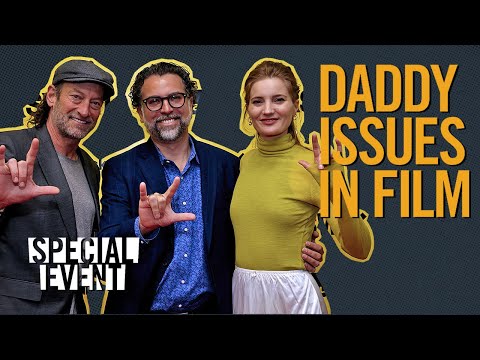
0:31 And I'm really excited to share this conversation with you all. We have some really great people to come on board. So, I wanna first introduce Emma Westenberg. She is the director (attendees clapping) of "You Sing Loud, I Sing Louder", which premiered here (attendees clapping) at South by Southwest. (attendees clapping) It's a beautiful, beautiful movie. I was very fortunate and had to see the film on Saturday night, and I'm really glad I did. And also, I wanna introduce someone I can really call a friend, Troy Kotsur.
1:04 He is the Oscar-winning actor who played Frank Rossi on the movie "CODA". (attendees clapping) And Troy's interpreter, Justin, who's gonna help us have this conversation. Before we get started, Troy just presented at the Oscars and so we figured why not share a little Oscars-like video that I think will set the stage and the tone for our conversation. So, let's go ahead and roll the clip. (hopeful music) - [Howard] When your kid was born, were you nervous?
1:37 Did you feel qualified? Like you had any idea how to successfully operate that thing? - [Tony] I literally pieced it together as I went along. I thought about what my dad did. - [Lydie] It's your job to be our father. - No, it's not a job. It's a joy of being your father. - I had a lot of time to think about what does it make somebody a good parent. You know, it has to do with constancy.
1:58 It has to do with, with, with patience. It has to do with listening to 'em, It has to do with pretending to listen to 'em when you can't even listen anymore. It has to do with love. (dramatic music) - Thanks, daddy. - Did you hear that? I just got my first daddy. - You spend time with your family? A man who doesn't spend time with his family can never be a real man. - Can I just keep pretending I'm your son?
2:23 - You are my son. - [Tony] I have a little girl. - [Howard] A girl would be nice. Less of a chance she'd turned out exactly like me. - What would be so awful about that? (dramatic music) - Don't be scared about me being a dad, because I will not fail at that. I can't. I love this kid too much. - Talk to me. What is so hard to answer about what sculpture are you making? - It's abstract.
2:51 - Okay. Okay, that's good. See? That's... I didn't, I didn't, I didn't know that. I didn't know you were even interested in abstract art. - I'm not. They make us do it. - I'm not your little boy anymore, dad. I've grown up. I've got my own life now. - I know that. I just wanted to be part of it. - Go. - [Noah] Come on and give your old man a hug. (palm slaps) - I am your father.
3:27 - Trey, you may think I'm being hard on you right now, but I'm not. What I'm doing is I'm trying to teach you how to be responsible. - I'm just trying to be the best dad I can be. - Well, you are. - I love you, dad. - Love you too. - Have I ever failed you? - I am not ready to be without you. - You'll stay with me? - Until the end. - [Rafiki] You see, he lives in you.
3:55 - My son. - My dad. (gentle piano music) - Yes. That gets me started. 'Cause now this is going on. (Emma laughing) (attendees clapping) I wanna first, I wanna thank South by Southwest for offering tickets for our kids from the Texas School for the Deaf here. It's a pleasure to share Troy with the deaf community here in Austin.
4:27 We have a great deaf community in Texas and in Austin. And I also wanna thank Chris Benning who provided the clips for this sequence on short notice, so that I could cry every time I watch it. (Emma laughing) So, I think first, for those in the audience who aren't deaf, Troy, can you just explain what is a CODA? - [Justin] Well, CODA is an acronym standing for child of a deaf adult.
4:58 And specifically, children who grow up with deaf culture, they of course are exposed to sign language at an early age. And a CODA is a great example of bridging two worlds and two cultures. And so, CODAs are able to code switch between the deaf community and the hearing communities. And they go through two worlds their entire life. That's a part of their experience. And so, in our film, "CODA", we show those two communities finally being bridged and it's important to collaborate and bridge those communities.
5:27 And so, that's why we shared the story of CODA. And so, it was great to have that as a... So, we had so many team members and cast members who were CODAs. And especially, a CODA who loves music in our film, and so she had this goal of singing at Berkeley School of Music. And so, of course, we as a deaf family depended on our CODA daughter for so many things, because folks in the outside world don't know sign language.
5:53 And so, many deaf people coming in from small communities and rural areas don't have access to communication. So, that's basically the story and that's what a CODA is. - Troy, one of the things, at the heart of the story is this conflict between you and your daughter. And it's a conflict on a couple levels. Do you wanna expand on what was the central tension there? What created that challenge between you and your daughter in the movie?
6:26 - Well, it's interesting, because of course a father has to support his family and bring money home. And it's quite interesting, because really as a deaf parent, this deaf parent didn't ever bother to hear about music. But it just so happened that his daughter loves music. So, there's a conflict there of the father trying to enter his daughter's world and understand it. And at that moment, when you see the father and daughter sitting on the back of that flatbed pickup truck, there's just a few moments to make a connection.
6:59 And for the rest of the film, they're often on their separate journeys. And so, that was their opportunity to finally connect. And it's really hard to let go as a parent. That's the second conflict. And so, the first conflict is communication. The second conflict is letting go, because my character needed his daughter to help run his family business on the fishing boat. So, without their access to communication in the outside world, that was part of the challenge.
7:23 So, we needed to find a different way to run our business. And so, we end up running our own co-op, our own fishing co-op, which is a decision, a huge decision and choice that that family makes. And you see what those parents go through. - And then, you have a mirror, because you have a daughter yourself who is a CODA, and she even looks a little - Yes, I have one. - like the actress in the movie.
7:47 - So- - Yes, almost exactly right. So, she reminded me so much of my daughter, Emilia Jones reminded me of my daughter, Kyra. And so, specifically, it's interesting. So, my daughter who is a CODA said, "Hey, it's really cool that the deaf community is collaborating with hearing people, but it's really cool that the hearing community is collaborating with CODAs too." And I was like, I didn't really think of that. We really, the outside world increased their awareness of CODAs.
8:13 And many folks aren't aware of what CODAs are. And CODAs have to explain their identities their entire lives. So, it's like, okay, once you accept my deaf father, then I can explain who I am. And they have to think twice, because often, - Yeah. - we as deaf parents have to connect with our hearing CODAs friend's parents. And so, we have to think about what's best for our child. And my daughter, she was pretty shy at first.
8:38 And then, seeing the movie "CODA", it was like how the character was a bit shy too in the film. And it takes time for them to open up and accept their own identities. And after winning an Oscar, I saw that my daughter was a bit more open about her CODA identity. And in my wife's ASL class, she had a lot of lazy students. And then, after her students found out her father was an Oscar award winner, they started to become much more serious in studying (John and Emma laughing) and much more respectful of my wife in the classroom.
9:03 So, that made a good- - Good. (laughs) - And of course Justin here is also a CODA, so we've got a great CODA representation here on this stage. Emma, so I saw your movie on Saturday and it was just beautiful. And at the center of it is this relationship between a father and a daughter, much like "CODA", but in a very different story in a different context. We've now had two screenings, this was the premiere. Could you summarize the movie so people can understand?
9:33 - Yeah- - Hopefully they'll get to see very soon. - It's a movie about father and a daughter that reconnect on a road trip and they haven't seen each other for a while. And during the road trip, you find out why they haven't seen each other for a while. And you see them come back together, reunite in a way that they haven't before. And she's 20 and he's 47. So, it's also about for her, becoming an adult and accepting your parents for who they are, changing from the child idea that you have about them to the person that they are.
10:10 - They have two different goals in a way or different paths they have to cross and obstacles they have to overcome internally on this trip. Can you unpack that for us a little bit? Because they're together and yet they are on two parallel journeys. - Yeah, she is just trying to get away and to hide and not... Her father has been absent for most of her life and suddenly he reappears and she has, yeah, doesn't want to let him back in, because he doesn't trust him.
10:46 And he's just really trying to make up for lost time and make up for mistakes that he's made. And while she's really needs to, yeah, heal herself more than anything. Yeah. - So, at the heart of both of these movies is a father-daughter relationship. - Yeah. - And I guess, Troy, what makes this relationship so special? Each is different, father and son, father-daughter. What makes the father-daughter relationship unique?
11:24 - [Justin] Well, when my wife was pregnant, I was thinking about having a son and I was thinking, hey, sports are my thing. I'd love to teach my son football or basketball or golf. And then, I had a daughter (John laughing) and she taught me about female things like makeup and dressing up. And I have to learn about all those things I knew nothing about. And that was part of her life and her culture. I saw a new perspective and I had a better understanding and connection with my wife.
11:53 I go shopping with my daughter, I don't know about bra sizes or anything like that, (John laughing) and I was uncomfortable asking those questions. (Emma laughing) But as she grew, I really could see why they have that expression, daddy's girl. We really do have that special bond. With the son, it's like, yeah, I understand. I'm a man, we're the same. Yeah, you're gonna get in trouble. But with my daughter, I feel like I really cherish her, that she's so sweet and I need to protect her.
12:17 So, it's really interesting. I feel a really strong connection with my daughter. - Emma, same question. How do you understand this relationship? You have a father and your movie is about this so much. How do you think about what's special about the father-daughter? - Yeah. Well, it's interesting, because I think when I read the script for the first time, I really related to it, because my father is the most forming person in my life. And I always really looked up to being more like him than my mom, because he was the person that was working and ambitious and had his own life, and I wanted that.
13:00 So, I think it's interesting, 'cause it's the reverse of what you're saying that maybe because it is different, you kind of, yeah, there's more aspiration or something - What- - in the relationship. - What did your dad do? What does your dad do? - He's a psychologist. Yeah. (John laughing) - Did you bring any of that? Did you get soaked in psychological conversations growing up? And do you bring that to your filmmaking? There's a rich inner world in the characters and- - Yeah, yeah, no, he's definitely very observant and I do think that I have that from him.
13:37 I love watching people. I think that's why I became a director is because human interactions and raw patterns and behaviors just endlessly interesting to me. (chuckles) - Well, it's in a way, it's like the actor's fundamental question to the director, what's my motivation. is like the ultimate - Yeah. - psychological question. - Yeah, yeah. (John laughing) - Why am I doing this in this scene right now? - Yeah. - I wanna touch on something else in the movie that is powerful and you alluded to it, which is the movie deals with addiction.
14:04 And one of the things, and you heard this, we all got together last night and you heard this, that I think your movie captures that moment of dealing with addiction with a loved one and trying to overcome it in a way that's really raw and authentic. How did you grapple with that? How did you bring that realism to life as a director? And how are you thinking about what this particular challenge means, so that it is authentic, and so that it feels real for the viewer?
14:36 - Yeah. I think, I grew up in a family with a lot of addiction issues. And in developing the movie and developing the script, I was reading a lot about addiction and trying to understand it. And I think what I try to do in the movie is that it's not about the substance, the addiction, it's about fear of loss or absence, and then that gets substituted with abuse of some kind, be it substance or behavior.
15:13 And that was what I tried to weave together in the movie that she responds by subduing herself every time she feels that he's leaving her again, that it's more this sense of absence or loss that she's trying to fill with other things. And I think that that's why in the end, we show that their connection and him being there for her can be healing, can heal these kind of things.
15:47 - I- - It's hard to do it by yourself, I think, getting over addiction. That's why it's so hard when people say like, it's a choice that you make for yourself. It is not like that. Some people just... Yeah, you just get further and further isolated and you need people to yeah, help you out, yeah. - It's one of the beautiful things about the movie that we're actually along for a ride that is a healing redemptive journey.
16:14 - Yeah. - It's a very positive film, I think. - Yeah. - One other question. So, this is your second feature film? - Yes, I made one yeah, before. - And you've produced, you've directed beautiful, very art-inspired music videos and commercials. And one of the things when I saw that before coming into the movie was like, I hope this is gonna be a natural, a naturalistic film, (Emma laughing) because sometimes music video and commercial directors, they can be more styled than substance, and that was not the case.
16:47 In fact, how did you balance your flair that you bring to music videos with what really is a very naturalistic movie? The movie feels very grounded. It lives in the environment, which is this New Mexico drive. How much of it was a function of budget? Was there a bunch of crazy stuff you didn't get to do? - No. - Or tell me about the style. - No, it really, I mean, also my music videos and other work, it really is all about for me, character.
17:19 And in the music videos, it's obviously an artist, so they're musical and they have a big personality that they want to show. So, it is in that way, the visual serves the character as well. But in this movie, because it is so much about this intimate relationship, I never wanted the visuals to take away from that. And always, they serve to be as a platform for the characters and not so much, yeah, to take away from it.
17:47 - Yeah, you really feel it. - So, yeah. But we talked a lot with a production designer, with the DP as well about creating this world which has the wonderment of the absurdity of reality, where, reality can be so wonderfully weird and- - And your movie has some wonderfully weird things in. - Yeah. And I love that about life. And I think that the surprise and the wonder also is something that can get you out of dark moments.
18:17 And that is something that I really wanted to fill this world with, that all these alive and interesting people and places and yeah. - Troy, same question. So, your performance in "CODA" is very realistic. And it's so accessible to every viewer. And it's really the anchor of the movie for me. How do you do that? How do you approach embodying a character in a way that feels real?
18:48 How much of it is you being you? How much of it is work and preparation, so that... Because in the film, you have to do a very physical job and you have to be authentic in that role. Well, yeah, what did you do? How did you make it happen? - [Justin] Well, when I found out that I got the role of playing the father, I met our director on Zoom or FaceTime, and we were discussing my appearance, and she said, "Don't shave or cut your hair, Troy, for five months before the shoot."
19:23 And so, that affected my character. I'd look in the mirror and see myself changing and my beard, I felt like more of a redneck, (John laughing) and my hair began to grow long as well as my beard. And she was sending me a few videos that showed real fishermen out on the fishing boat and how they pulled in the nets and pulled in all these fish. So, I began to study those videos. And before the first day of the shoot, we flew about two weeks early to rehearse.
19:49 And so, we all got out onto a fishing boat. We got up at three o'clock in the morning and we learned how to fish. And so, how to sort the fish, how to weigh them. There was monkfish, there was those fish with real sharp teeth with the light bulb thing coming over their head. And I remember one time I cut my finger and it really affected me, and the smell and how slimy they were. When you pick up a squid, it's so hard to hold, (Emma laughing) and it's just popping outta your hand.
20:14 And these live lobsters, and I'm picking them up and (laughs) with their claws and I'm setting them down very carefully. And then, I became very skilled at that and sorting the fish. And that really influenced my character, as well as sign language on the ship. So, we had to invent these signs that don't really exist in ASL regarding these fishing tools. And so, that affected our sign. We're like, okay, where's the hook? The wooden hook that has a nail on the end with a spike for sorting the fish?
20:39 We made that sign up and we documented these signs. And it really influenced our characters. Hey, where's that tool? Okay, here, let's grab it. Boom, boom, let's get these fish, let's sort 'em. And I really got used to it out in the fishing boat for two weeks. And of course, I stunk. When I got home, I'd go to the bar afterwards and I'd hang out with real fishermen. And I saw their behavior, how they walked, how they talked.
21:01 They'd passed out beers. They'd start drinking pretty early in the afternoon. They'd get into bar fights. And all of that stuck to me and influenced my character, Frank Rossi. So, I made it through. And so, after we finished the shoot, it almost took me about six months to let go of my character. It's really hard for me. And growing up, I wasn't a fisherman. I don't even eat seafood myself, I never have. But for my character, (John laughing) I had to dive right into that role.
21:26 And I guess I'm a good liar. (John and Emma laughing) I'm a good actor. I fooled you, right? (John laughing) - One of the things as we've gotten to know each other is, and it's one of the beautiful things about "CODA" is for those of us that have not experienced deaf culture and the language, you see it here. All I can think of is, you have so much more beautiful language than I do. (laughs) It's so rich with expression, not just audibly, but visually.
21:55 And I feel like that's a big part of what the movie shares with the world is a chance to experience ASL as a language, like the languages that exist out there. I think in some ways, I didn't think about that before, that ASL is a language, and that it brings with it the culture of language like French or Italian or Chinese. So, it's something... That completely changed the way I think about your world.
22:27 - [Justin] When I read the script initially, I was thrilled. I saw all this dirty language in ASL and I said, hey, I was thrilled. This is our opportunity (John laughing) to show what dirty sign language looks like on stage and that vulgarity, because as deaf people, we've already seen all your hearing movies and all your swear words and we read 'em with the caption, and all the insults, (Emma laughing) but where was our opportunity to share that part of our language and our culture?
22:51 So, finally, (attendee laughing) it was about time to really unveil our rich culture. It was really fun. And sometimes, we would play around with the English script and sometimes the sign language can be even more vulgar and even more over the top (John laughing) than what was written in English. So, it was fun to play around with an improv. - Yep, yep, yep. (attendee laughing) Very different in ASL than spoken. - [Justin] That's right. But you can use your imagination, because sign language (John laughing) is so visual, you can see it, and then you really imagine it.
23:20 - So, in both the movies, but I think also in our culture, our panel is called daddy issues, and that has a particular meaning to it. Your movie embodies this very much so. - Yeah. - The lead has daddy issues. It's about overcoming them. But why do you think this role and daddy issues in the relationship with fathers and their kids loom so large in our storytelling? Emma?
23:52 - I guess because just culturally, fathers are like the leader of the family. So, it's just like the person that you look up to. Of course, you also look up to your mother, but - Yeah, of course. - yeah, it is, I think that then translates to storytelling that they are this kind of all-knowing beacon. It's like where they're going, that's where we're going. And I think that that's why it's so, yeah, Impressive as a kid, child.
24:18 Yeah. - Troy, how about you? Why do you think dad looms large in stories? - When I was a child, I felt like my father was the protector of my family. My father was a policeman and it really felt like he was protecting the family as well as taking us out camping, fishing, water skiing, golfing, and so on. And it really, every time I would go to my father's presentations, he was very involved with the City of Mesa, Arizona, and he knew the mayor and he was an icon.
24:50 And he eventually became the police chief of Mesa. And he was very well-respected. And then, he was in a car accident. He had to live in a wheelchair and was paralyzed from the neck down. But that didn't stop him. He persisted, he kept going. And so, looking at myself as being deaf, I was like, being deaf is nothing. So what? I can still play golf, I can drive, I can go water skiing, but my father couldn't anymore.
25:14 But he kept persisting and he was so strong and that really inspired me, and that's why my dad was my hero. And I felt like being deaf isn't a big deal. I don't care what people think about me because I'm deaf. I just keep going in my life and moving forward. So, my father really inspired me and I really looked up to him. And I witnessed everything that happened to him from the beginning to the end, from him being strong physically from him deteriorating.
25:37 And he didn't let that stop him. - It reminds me of a role that I think dads play in a particular way. And this is not to take away from mothers, but I think dads play this role of pushing us to take more risks. We're more inclined on average to let our kids climb to that higher branch on the tree and to maybe take us out and sneak out of the house to do something that's a little naughty.
26:07 And both of you have done things that are really risk fields to act, to direct, to go into this highly competitive environment where you really put your heart out there to get stomped on by a lot of people the whole time. Do you feel like your dad played a big role in enabling you to do that? I'll start with you, Troy. - [Justin] My father encouraged me, but he also wanted to, encouraged me to have a side job to make sure I could pay the bills.
26:37 (John and Emma laughing) You know? And as I moved forward, I realized my dad was right. I needed to support myself and my family. And he was a bit worried. It was really rare to have opportunities for deaf actors in film or TV, because when I got a bit older and wiser, when I was young, I was like in fantasy land and I was frustrated myself. And my dad let me fall and get back up. And that taught me to grow.
27:04 - [Attendee] Oh my god. - [Justin] And my dad, he never missed any theater production I had. He would drive hours and hours to see me perform on stage as a theater actor. And so, if my father was still alive, I'm sure he'd be so proud to see me with an Oscar today. And I wish he could. He passed away, but I know his spirit is still around and I know that. And I was so blessed to have my father be a part of my life.
27:27 - Emma, how about you? Do you feel like your dad, you already said you looked up to him - Yeah. - as a provider, as someone who had a career. Did he play a role in you having an appetite for risk? - I think so, yeah. He definitely, he was like, "There's gonna be two things that you spend most of your time with in life. One is work and one is your partner. So, it's good if you choose both of them.
27:59 That you want to spend time there and that it feels natural, that you don't have to feel like you are struggling while you are doing it." So, I think that in that way, 'cause I didn't know what I wanted to be and I just figured it out along the way in what feels natural. So, I think that that was definitely, yeah, he... And my mom was like, "Oh, you're going to art school? Well, you can always go back to school (Emma and John laughing) if it doesn't work out."
28:27 - We'll keep that spare bedroom - Yeah, yeah, yeah. - ready for you. - Yeah. And I think, it is also the two of them, it's nice to have the two perspectives, because it is now, it's changing a lot, for different people to take the stage. But for her generation, it also maybe wasn't a great... She would've had less opportunities than I have now as a woman, - 100%. - a filmmaker. So, I also really understand her perspective.
28:54 And my dad and I sometimes will get into arguments, because he's like, "Sexism, that's not a thing." And I'm like, oh, well, (John laughing) maybe not from your perspective. (laughs) So, that's, yeah. I think he also, fathers are able to take more risks, because they're not women. (chuckles) - Yeah, there's definitely, one of the things that I've learned from my wife frankly is I don't have to worry when I go out into a parking lot.
29:26 I just don't think about it and she does. Something so basic is how do I think about my own safety is completely, it's a perspective that I don't have as a man that my wife and my mother and women have. And that in and of itself is a radical foundation on which you try to build your understanding of yourself. - Yeah. - So, okay, I- - Troy. I had something to add. - Please, Troy. - So, when I was a child, I didn't realize that my father put me in risky situations.
29:59 Like we would go hunting for example. And so, I'd have a shotgun and I had two brothers, and so I'd be carrying a shotgun. Of course you see the bird and you try and shoot the bird. And looking back, I was like, wow, my dad let me have a shotgun and he trusted me with this dangerous weapon? That's pretty risky. And looking back on that, I'm thinking about what he did. But it was amazing that he let me, because being deaf, imagine back in the 1970s just putting a gun in a deaf boy's hands. (attendee coughing) Okay, this is safe, go ahead.
30:26 And so, but I was fine. But looking back, I was like, that's one example of the risks that my father put me into to get out of my comfort zone. - That just reminds me of something I think so powerful is, and I have a 17-year-old like you, Troy. So, when we don't trust our kids to do a thing, we are basically saying, we don't believe they can do it, even if we don't say that explicitly.
30:51 So, that is really beautiful that your dad was telling you, you can do this, you can do something difficult, you can do something dangerous. - [Justin] And water skiing too. Think about that. Just being on the back of a speedboat and I was okay, but I'm glad my dad made the effort to put me in those risky situations, and hey, I'm still in one piece. Knock on wood. (Emma and John laughing) - So, I wanna change gears a little bit.
31:16 We have these, I think this is even more true in television than in film. We have these characters, Al Bundy, Homer Simpson, Phil Dunphy, the self-deprecating, goofy, idiot dad. And they're funny and they make for great comedy. Do you think they've maybe in some ways, played a negative role in the way we think about fathers and fatherhood? Or do you think it's just fun and it's fine?
31:47 What do you think? Emma? (John laughing) - I don't know. I love "The Simpsons". (laughs) I don't know. - [Justin] I'll give you time to think. I think that... So, if you see your father to have that type of behavior, then you'll never have a daughter-in-law, (John laughing) because I can't get married, I can't date, 'cause I have a weird dad. So, you can't bring your partner home, because your dad is so embarrassing.
32:20 And so, if you have embarrassing behavior, you might be affecting your kids. (laughs) (Emma and John laughing) - Did you have anything you wanted to... - No, I do think that films, books, movies, or shows are very, they do have an effect and they do change your perspective, sometimes behavior on things. But I also really think that comedy and characters that are less than perfect are really important, because that makes it relatable and makes you also maybe feel better in how you navigate your own life.
33:01 - Yeah, I think it speak... My next question really speaks to that, which is, in the US in particular, we have this thing that doesn't get, it's getting more conversations around it than it used to, which is one in four American children are being raised in a home without a father, a father, a father figure, biological, step, or adopted. And so, as filmmakers, we face this interesting challenge in the United States in particular, which is at least a quarter of our audience has had the absence of that relationship, that important relationship.
33:36 And they're looking to us and our stories. And I think even more so, for inspiration or maybe even for gaps to be filled. So, how do you think about our responsibility as storytellers? And I'm putting a lot of weight on us here. But to take it seriously for a moment, how do you think about that? The responsibility, the opportunity from a social justice perspective, let's say? - Yeah. - To navigate portraying the father figure in a way that is either cautionary or inspirational.
34:10 And I think with yours film, yours does both. He's both a cautionary character and an inspirational character, because he's there and he's come back and he's worked through things. So, how do you think about this? - It takes a lot of work to make something. - Yeah. - And it takes a lot of effort from a lot of different people and it costs a lot of money. And I think in making anything, I do think about like, what does this put in the world?
34:34 Is it something that people can take solace out of or laugh about or that it adds something, I think positive or aspirational or hope for, celebratory. And in that case, in my movie, I really thought it was important to show that the father maybe has made some mistakes, but that that is okay and you can still come to love each other and still come to find healing with each other. Yeah, and then, what that then does, hopefully it will touch some people and people can then think like, okay, maybe I can reconnect with my parent or with my child, because I do believe that some people are scared to make those decisions and maybe a movie can help.
35:19 I hope. - I definitely, I know your movie will touch a lot of people in that way. And, Troy, same question for you. Your movie is such an inspirational portrayal of a family and a father who really loves his daughter. How do you think about the responsibility and the opportunity as a storyteller to bring those kind of stories to life? - [Justin] When I was growing up, I saw all these hearing stories. Well, I heard stories about language deprivation for deaf children.
35:52 And so, hearing parents were making decisions based on fear regarding their deaf children and their education. There was so much controversy regarding that. And so, when our film came out, I'm seeing perspectives begin to change and awareness of deaf children, and CODA children beginning to increase as well. And so, I think our film was very important and it connected them with this message that it was a better way than preaching. By just showing them and letting hearing people become flies on the wall and see into our deaf culture and show them how much language and communication are important.
36:27 And that's what we're often missing. And so, for those families that don't have a father, and especially when communication is gone, what's important is love. So, your father's a symbol of not giving up and not letting anything stop you. And no matter what type of communication you use, and you always have to find a way to communicate, you have to find a way to love. And language is the way to show your love. And so, it's really important to have these families.
36:51 When their fathers pass away, how can they carry on that tradition? What type of memories will keep you alive after your father is gone? And when my father is gone, what's so nice is to have those memories. It's like having a library of memories on your shelf and you can always pull that book or that VHS tape out and really appreciate those memories and see what everyone went through. Nobody's perfect. None of these fathers are perfect, you know?
37:16 - Yeah. - [Justin] But love never stops. And you can always find a way to heal and communicate. Like in your story, like you mentioned, your father had to fight with his own demons and come back and show his daughter that love. And so, it didn't matter what situation they were in or how many years it took, that's a really touching message. - All right. Last question. Favorite dad in the movies? Emma? - Ooh, let me think about that one.
37:45 I love you as dad in the movie. (laughs) - Several. - Yeah. (John laughing) I have several. First of all, Darth Vader. - Yeah, yeah, yeah. - It's Darth Vader in "Star Wars". - Yep. - Secondly, "It's a Wonderful Life". - Oh, yeah. - [Justin] Jimmy Stewart. That was beautiful. A beautiful story about family and fatherhood. And I liked "Indiana Jones and the Last Crusade" with Sean Connery portraying Indiana Jones' father. - Junior. - [Justin] Junior. Junior, right.
38:12 Junior. Yep. (John laughing) And so, you see that struggle between father and son, but they have to support and save each other. And one last one, I liked "Mrs. Doubtfire". - Oh. (John laughing) I love "Mrs. Doubtfire". - And, he's trying to be as close to his kids as possible by putting on this costume. And it's really touching. - Yeah. - All right, Emma. You had some time to think. - Oh, yeah, I really, in the "Beginners".
38:37 - The "Beginners"? - Yeah, it's also with you and McGregor. - Oh, yes, yes. - And is- - Why? - I think because it is so much about the mirror that your parent is of you and where you are different from them. And trying to figure out that tension I think is really interesting and beautiful in that movie. - I can't help, but say "The Godfather" for me. (Emma and John laughing) - Interesting. (John laughing) - It's probably- - Italian.
39:08 - I'm Italian. - Yeah, yeah, yeah. - I got brainwashed. It's part of the upbringing. (Emma laughing) It's like you're going to watch "The Godfather". I know you're nine, it's going to be fine. (laughs) Our time is up. I wanna thank my awesome guests and panelists today. Troy, thank you for coming. Thank you for coming back to Austin. Emma, thank you so much for participating in this. - Thank you. Yes, (faintly speaks) - You can see "CODA" (attendees clapping) on Apple TV+.
39:35 It's available. It's awesome. And I hope you'll all get to see "You Sing Loud, I Sing Louder" in theaters and streamers very soon. Thank you, everybody. - Thank you. Thank you, John. (attendees clapping) Thank you. (transition music)
Summary
- "CODA" portrays the life of a child of deaf adults, emphasizing the unique challenges and cultural dynamics faced by CODAs.
- The film highlights the conflict between a deaf father and his daughter who loves music, illustrating the struggle for connection and understanding.
- Emma's film focuses on a father-daughter road trip that serves as a backdrop for reconnection and healing after years of absence.
- Both films explore themes of addiction, loss, and the journey toward reconciliation in parent-child relationships.
- The panelists discuss the societal impact of father figures in storytelling, emphasizing the importance of portraying complex, relatable characters.
- Troy shares insights about his preparation for his role in "CODA," including immersing himself in the fishing culture to enhance authenticity.
- The conversation touches on the representation of fathers in media, contrasting comedic portrayals with the deeper, often more serious narratives of fatherhood.
- Both filmmakers express a commitment to using their platforms to inspire connection and understanding among families, particularly in the context of absent father figures.