Transcript
0:00 You wrote the first ever TypeScript book with O'Reilly. Yeah. I found that book translated in Japanese in this little town in Japan. That was just the coolest moment. And then I realized I don't remember TypeScript at all. Now we're at the point where Claude Code writes, I think, something like 80% of the code at Anthropic on average. I wrote maybe 10, 20 pull requests every day. Opus 4.5 and Claude Code wrote 100% of every single one. I didn't edit a single line manually.
0:20 >> Andrew Carpet posted that he's never felt as much behind as a programmer as he is now. This is something I really struggle with. The model is improving so quickly that the ideas that worked with the old model might not work with the new model. One metaphor I have for this moment in time is the printing press in the 1400s because there was a group of scribes that knew how to write. Some of the kings were illiterate who were employing the scribes. And if you think about what happened to the scribes, they ceased to become scribes, but now there's a category of writers and authors. These people now exist. And the reason they exist is because the market for literature just expanded a ton.
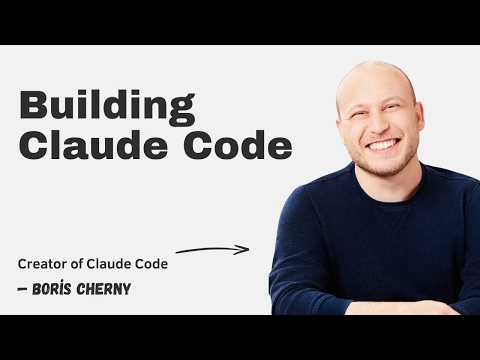
0:58 What happens when you join one of the top AI labs in the world and your first pull request gets rejected? Not because the code was bad, but because you wrote it by hand. This is exactly what happened to Boris Cherney when he joined Anthropic. Boris is the creator and engineering lead behind Claude Code. Before joining Anthropic, he spent seven years at Meta where he led code quality across Instagram, Facebook, WhatsApp, and Messenger and was one of the most prolific code authors and code reviewers at the company. In today's episode, we cover how Claude Code went from a side project to one of the fastest growing developer tools and the internal debate at Anthropic whether to release it at all. Boris's daily workflow of shipping 20, 30 pull requests a day with zero handwritten code and how code review works when AI writes everything. Why Boris believes we're living through a time as transformative as a printing press and which engineering skills matter more now and which ones do not.
1:48 If you want to understand how one of the people closest to AI coding agents actually build software today and what that means for the rest of us engineers, this episode is for you. This episode is presented by Statsig, the unified platform for flags, analytics, experiments, and more. Check out the show notes to learn more about them and our other season sponsors, Sonar and WorkOS. How did you get into tech, software engineering, and and coding in general?
2:12 It starts a while back. I think there was kind of like two parallel paths that crossed. So, when I was maybe 13 or something like this, I started selling my old Pokémon cards on eBay. And I realized that on on eBay you can actually like write HTML. And I was looking at other people's Pokémon card listings, and I realized like some of them have like big colors and fonts and stuff like this. And then I discovered the blink tag.
2:37 And I What was the name? Was blink tag? >> I put the blink tag on it, I could sell my card, you know, for like 99 cents instead of 49 cents or whatever. So, I kind of learned about HTML this way, then I got an HTML book and kind of learned about HTML. And then uh the second thing was this was also, I think, sometime in middle school. We had these old TI-83 uh graphing calculators. And we used them for math.
3:00 And what I realized is I can get a better answer on the math test if I just program the answers to the math test into my calculator. And so, I wrote these little programs. You just program the answers, and then the test got harder, so then I had to program solvers instead of the actual questions cuz I didn't know what what, you know, the coefficients and stuff would be ahead of time. And then the math got more advanced like the next year. And so, I had to drop down from basic to assembly to just make the program run a little bit faster. Oh, so you got in the high school you dropped down to assembly? I think this is like middle school or high school. It may be like eighth or ninth grade or something something like this. Then the the thing I realized is uh everyone in my class was starting to realize that I had the solver, and they got kind of jealous. And so, I bought this little serial cable so I can give it to them, too.
3:43 And then the next math test, everyone in the class just got A's. And the teacher was like, "What's going on?" And then eventually she realized it. It was just like, "Okay, you get away with it once, and and uh knock it off. But for me it was it was very practical. So, you know, in school I studied economics. I actually dropped out to to start startups. And I never thought that coding would be a career at all. It was always very practical to me. Coding is a means to build things and to to make useful things. This startup the first one was I think it's like my friends and I were trying to get weed.
4:18 And so we started this like weed review startup. We made like a website. We called kind of different dispensaries I I think. And then we just tried to get kind of like weed samples so we could like review it for them. And it actually kind of blew up. And then I actually got more interested in at the time no one was like testing this stuff. And so I got into kind of the like chemical testing kind of chemical analysis. And then after this I kind of did a bunch of other startups. And then I joined YC actually pretty early.
4:47 And I was the first hire of this YC startup up up in up in Palo Alto after. How did you decide to go go to one startup after the other? Kind of vibes. Vibes I'd say. Cuz you know you know like you know startups it's it's never a linear path. You always kind of pivot pivot pivot. You have to figure out what the market wants and what users want. And it's never the thing that you think.
5:07 You you always try thing but the the idea is always a hypothesis and then almost always you have to pivot once twice three times. You know at this at this medical software company this is called Agile Diagnosis. This was kind of a early YC company. This was back in maybe 2011 2012 something like that. It was medical software for doctors. And the idea was there's these like clinical decision protocols. They vary a lot hospital to hospital. And our idea was there's one hospital in Chicago that had a really great protocol specifically for cardiac symptoms.
5:38 And so we're like wouldn't outcomes be great if every hospital in the US would use the same protocol? And so we tried to standardize it. And we made this like decision tree software for doctors to use. And I wrote, you know, some of the software. The team was like it it was it was a it was just a few of us. It was a pretty small team. And I wrote the software. It was in a web browser. And I remember this was back in the like the Internet Explorer 6 days. That's what hospitals were using.
6:03 And I wrote this like SVG renderer because it was this visual decision tree. And we launched it and then we had a DAU chart and the DAUs were flat and couldn't figure it out. And we were piloting it with a few hospitals at the time. And at the time we were based in Palo Alto, we were piloting it with you know, a few hospitals including UCSF. And I rode a motorcycle at the time. So I rode my motorcycle up to you know, UCSF and I shadowed doctors for a couple days just to see how how do they actually use this.
6:31 And I realized that actually doctors don't have time to sit down and use a computer because you're seeing a patient then you have maybe 5 minutes until the next patient. And in those 5 minutes you have to walk down the hall, you have to go to the computer station, you have to open up this totally legacy computer. By the time it boots up that's like 3 minutes. Then you open up Internet Explorer 6. That takes like 30 seconds. Then you have to open up this like app that we built. You have to sign in. And your 5 minutes are up. You don't even have time to use it. And so we rewrote everything to run on Android and they still weren't using it.
7:05 And the thing we realized is doctors are walking around with a bunch of residents behind them. In this kind of situation it's like a social situation, right? Like the thing that matters is they're seen as an authority. They don't want to be seen on their phones. And then we pivoted again. So at that point we were like, okay, so maybe the doctor isn't the target user. Actually we want it to be used by maybe nurses or x-ray technicians or something like this. At that point I left because I was like this is actually pretty far off from kind of what I wanted to do.
7:32 This is like the most fun thing for me is finding this this product market fit cuz it's always surprising. You can't have one big idea because the idea is probably going to be wrong. So, you kind of form hypotheses, you you follow down, and and you see what's right. Also, I find it's so interesting how you're telling us this story, cuz I feel behind a lot of sort of success stories, we hear the success story, we hear the path of how it went. But, first of all, a lot of startups are like this, and second of all, what struck me is you you were hired as a software engineer, right? And this was back before product engineers or anything was a thing, which we're now talking about. But, you just like you rode your motorbike, and you went there, and you shadowed the people, and you understood how they're using it, why they're not using it, getting getting ideas.
8:18 I I feel, you know, this this is what makes a great software engineer back then and and even today, right? You you you weren't Doesn't seem to me that you were focused on the technology, you were focused on the outcome, though. Yeah, I mean, look, there there's different kinds of engineers, and there's different ways to do it. And, you know, I even even on our team right now, I look at an engineer like Jared Sumner, and he's just incredible technical mind. He understands systems better than anyone I've met.
8:44 And, you know, you need you need people like this. You need people with this kind of depth. For me, engineering has always been a practical thing. Uh and, you know, for me, I've always been a generalist. And like, it doesn't matter if I'm doing you know, like design, or you know, if I'm doing engineering, or user research, or whatever. The investment thesis for AI and software engineering is straightforward. As AI writes more code, more code needs to be verified. But, there's a catch.
9:11 AI-generated code is, on average, harder to verify than human-written code. This is why there's Sonar, the makers of SonarQube. As a critical verification layer for the AI-enabled world, Sonar ensures that speed and volume with AI does not compromise your codebase. Sonar's competitive position is built on 17 years of specialized expertise that no foundational model can replicate. We're talking about deep analysis engines, like symbolic execution and cross-repository data flow tracking that simulate how code actually behaves, not just what it says. To bridge the divide between AI productivity and code quality, Sonar has released the SonarCube MCP server. This tool acts as a universal translator between AI applications and the SonarCube platform.
9:55 By using the model context protocol, it gives AI tools like Cloud Code, GitHub Copilot, and Cursor direct access to SonarCube's analysis capabilities. Instead of context switching, your AI agent becomes a full-fledged code review and quality assurance copilot capable of analyzing code syntax for issues, filtering bugs by severity, and even checking your project's quality gate status before you ever commit code. Whether you're working with coding assistance or scaling up with full agenda workflows, Sonar provides the automated verification that 75% of the Fortune 100 rely on. It's about giving your developers the freedom to innovate without the fear of breaking the code base. Head to sonarsource.com/pragmatic to learn more about how Sonar enables the confidence to develop at the speed of AI. With this, let's get back to Boris's career and what he learned working at startups.
10:43 My first job I ever had, I was like, I think I was 16. And I just wanted to buy an electric guitar. And so what I did was I I started I just started freelancing. And so I was like, okay, I guess I'll make websites. And I think Fiverr was not a thing back then, so there were some other freelancing websites. So I just started like I put up a website, I started bidding on stuff. And my first paycheck, I just spent the entire thing on an electric guitar. But it But it was very practical. Right? Cuz it's like when you're in this kind of setup, you have to you have to do the engineering, you have to do kind of the accounting, you have to do the the design, you have to talk to customers.
11:13 So it it's just always been like that for me. After a couple of these startups, you ended up at Facebook, now now now called Meta. And there you spent 7 years there. Can you just talk us through what you worked there, what what you've learned there? You've also had a very remarkable career growth in terms of four promotions over over over 7 years. And what do you take away from that that experience? Yeah, so I started on Facebook groups. That was the first time I worked on Vlad Kolesnikov hired me. I think I think he's actually still at Facebook.
11:45 Um I think he's on some other team now. And it was cool actually. There there's a big group of people that I worked with that were these kind of early JavaScript people too. And you know, like I did I did a bunch of JavaScript stuff and it's funny like I kept crossing paths with these people. And so Vlad, he worked on Bolt JS, which was the software it was the framework that powered Ads Manager, which later became React JS. I kept crossing paths with these people. And later on for Yeah, later on there there was a bunch more people like this. But anyway, so I I was working on Facebook groups. Um I was really excited about it because the because of this mission of connecting people to their community.
12:22 This is the thing that drew me in. And at the time I was a big Reddit user. I became a Reddit user back when I was a teenager because I didn't know anyone else that coded. Even in college I didn't really know anyone that coded. Hm. And honestly, I was always kind of embarrassed about it cuz I thought it was this nerdy thing. And I thought it was kind of the this this thing that I knew how to do, but I wanted you know, I wanted to be like a cool kid and you know, like I I couldn't like tell people that I coded. It was like it was very nerdy.
12:49 Um and and at some point I discovered it was some like programming community on Reddit. And I was I was just shocked. Like there's other people that are into this thing. It's like such a weird hobby. It's so niche. And it was just so exciting to find like-minded people like this and get this connection. And so I just wanted to work on this. I wanted to kind of contribute to this in in some way. So I worked on Facebook groups for a while. Um and then, you know, there there's a bunch of different projects happy to to kind of get it get into details for any of these. Eventually I became the the tech lead for for Facebook groups.
13:22 And kind of grew grew into this and the the work grew. The work really we It changed from kind of building to a lot of like doc writing and coordination and kind of delegating to others. The culture was changing at the time. So, you know, this early Facebook culture was disappearing. The docs were coming in, the you know, alignment meetings were coming in. Uh there was a lot of a lot more work around this kind of foundational stuff like privacy, security, things like this that I think honestly early on a lot of corners were cut in order to grow, but at some point you just have to pay that debt. And that was the time when that happened. Then I spent a few years at Instagram after. Um and that was also a funny story. My wife got a got a job offer and she was just really excited about it and she came to me and was like, "Hey, like I got this offer, but we're going to move. Is that okay?"
14:06 And I was like, "Yeah, that's fine, you know, like I've I work in tech. We can work remotely anywhere. Where's the job?" And she was like, "It's in Nara." And I was like, "Where where's that?" And uh Nara is like rural Japan. And this was a >> Different time zone, yeah. This was >> 12 hours or something difference or something like that. Something like that, yeah. It was like 2021. Wow. >> Um and then I I tried to kind of find a team that would sponsor me cuz there was there was these kind of arcane HR rules about like the time zone you have to be in and the team you have to be co-located with and so on. And so uh there was a little kind of nascent team uh for Instagram in Tokyo. And Will Bailey was running the team. He was also the guy that made Instagram stories.
14:43 And uh so he was my manager for a while. And so we decided to grow that team together and I worked remotely from Nara and then most of the team was in Tokyo. And uh during this time I I sort of hacking on Instagram and the stack was just insane. Like Facebook was the single best web serving stack in the world. The the way that HH everything is optimized like from from the hack language to the HHVM runtime to the to GraphQL as the transport layer to like the client libraries like relay and and all the stuff. It was just and and React it was just amazing. There there's no other dev stack in the world that was this good.
15:18 And it is just fully optimized. And then I went to Instagram and it's like, you know, Python where the type checker didn't work. Click click to definition didn't work. And it was this like kind of hack together Django, and then like a fork of, you know, the CPython runtime. And just nothing really worked. And so, I came to Instagram, I joined the Labs team, you know, in in Japan. And the idea was to find the next big thing for Instagram.
15:42 We tried some stuff, but what I very quickly realized is that I was just not effective at working on the stack because it was such a terrible stack. And so, I just went and started working on Dev Infra because we we needed to fix it. And there's a few projects that we worked on. So, one was migrating from Python to the big Facebook monolith. Another one was migrating from Instagram GraphQL. And these projects they're they're actually in progress, you know, like these are things that involve It takes hundreds of engineers many years to do this. It's a big code base. It's a big migration.
16:12 Now it's it's faster. Yeah, with with with these tools that we have, the AI AI tools, and migrations are pretty good use case for them, though. Yeah, it's like the it's the perfect use case for it. And then I I just started getting kind of deeper into this. And by the end by the time I left Instagram, so I was working on this on Dev Infra and kind of leading a bunch of these migrations. That's also where I intersected with Fiona Fung, who is now the manager for the Quad Code team. I just worked with her, and she was just such an amazing leader. This incredible depth and kind of history in tech. And I just thought like there's no better there's no better manager for this team.
16:44 And then I I also started working on code quality. And so, the the work on Instagram kind of expanded a bit. And by the time I left, I was leading code quality for all of Meta. And so, I was responsible for the quality of the code bases across Instagram, Facebook, Messenger, WhatsApp, Reality Labs, kind of all these code bases. At Meta, it was it was this program called Better Engineering. And the idea was, I think it started like 2016 or 2018 or something. But Zuck mandated that every engineer at the company 20% of their time has to be spent fixing tech debt.
17:16 Oh, interesting. And we call this better engineering. >> Mhm. And some of this is kind of bottom-up where, you know, a team knows best the tech debt that they have to fix, and then some of it is top-down where you need to do, you know, very big migrations, you need to migrate to new language features, new frameworks, things like this. And at Facebook scale, you know, there is tens of thousands of these migrations every year. Um and so I I just sort of leading all this and I realized very quick that it just need a little bit more order to it.
17:45 There was no goals, no one knew kind of like what the outcomes were, there were there wasn't any tracking. Um and so we developed a bunch of stuff. Uh one of the ideas was a centralized way to prioritize the different kind of code quality efforts. The second thing was figuring out the impact of code quality on the engineering productivity, which turned out to be significant. How how did you measure? What did you find there? There was a bunch of stuff. I think some of this has been published. I don't know if all of it has, but essentially you try to do like causal analysis and causal inference. This is the methodology.
18:14 You try to figure out like what what are the factors that make it so engineers are more productive. Some of it is code quality, some of it is outside of code quality. So for example, Meta went back to uh you know, return to office instead of work from home. That was partially driven by this. Because we just found some, you know, fairly strong correlations that we thought were causal. Yep. Um about this. The code quality actually contributes like, you know, double-digit percent to to productivity. It turns out even even at the biggest scale. This is kind of comforting to hear because I I think it's it's rare to have a place where you actually measure this, but I think we feel it. Like when you have a clean code base modular or it can get easier to work with and I think, you know, reasoning could it also be easier for LLMs to to work with it and my hint would be yes, it should be, right? But I I think there's just very little data, but that's the feeling that I I would have. Yeah, I think a lot of the big companies have published about this.
19:05 Like I think Facebook published something, Microsoft publishes a bunch about this, Google does. But yeah, totally. If If every time that you build a feature, you have to think about do I use framework X or Y or Z? These are all options that you can consider because the code base is in a partially migrated state where all of these are around the code somewhere. As an engineer, you're going to have a bad time. As a new hire, you're going to have a bad time. As a model, you might just pick the wrong thing. And then, you know, like the user has to course correct you. So, actually, you know, the better thing to do is just always have, you know, a a clean code base. Always make sure that when you when you start a migration, you finish the migration. And this is great for engineers, and nowadays, it's it's great for models, too. And then you joined Anthropic, and I've heard the story which you can confirm or give more color to it that your first pull request was rejected by Adam Wolf.
19:53 >> He was my ramp up buddy. So, I joined Anthropic. I was trying to figure out kind of like what to do next, and you know, I I met a bunch of people at all the different labs, and Anthropic was just the obvious choice for me because of the mission. This is the thing that personally I know that I need the most. Um and also just kind of seeing all this change that's happening, it's important to have some sort of framework to think about this and to think about our role in it. I'm also a really big sci-fi reader. Like, that's definitely my genre. Um I'm I'm a big reader. I have like, you know, a giant bookshelf at home and stuff.
20:22 And I just know how bad this thing can go. And I just felt like this is a place that has serious thinkers. People are taking this very seriously and thinking about what it what what can we do to make this thing go better. So, when I joined Anthropic, I did a bunch of ramp up projects, uh just, you know, various stuff that that I was hacking on. And I wrote my first pull request by hand because I thought that's how you write code. That used to be how you write code. That used to be how you write code.
20:46 But even at the time at Anthropic, there was this thing called Claude, and it was the it was the predecessor to Claude code. It was it was super janky. It was like it was Python, you know, it took like 40 seconds to start up. It was research code. It was not agentic. But if you prompt it very carefully and hold the tool just right, it can write code for you. And so, Adam rejected my PR, and and he was like, "Actually, you should use this Clyde thing for it instead."
21:10 And I was like, "Okay, cool." It took me like half a day to figure out how to use this tool cuz you have to like pass in a bunch of flags and like use it correctly. Um but then it it's better out a working PR. It just one-shotted it. Oh. And this was like 2024. It's like September 2024 or August. Something like that. And I think for me this was my first feel the AI moment. Anthropic cuz I was just oh my god. Like I didn't know the model could do this.
21:38 Like I I was used to these like kind of tab completions, line level completions in an IDE. I had no idea that it could just make a working pull request for me. War just talked about how he had a true wow moment at work using their AI model. A very different wow moment is when you use a tool at work that makes things so much easier than before. And this leads us nicely to our presenting sponsor, Statsig.
22:01 Statsig offers engineering teams a tooling for experimentation and feature flagging that used to require years of internal work to build. It's the kind of tool that was so complex to build that only large companies like Meta or Uber had their own custom advanced tooling for it. Here's what Statsig looked like in practice. You ship a change behind a feature gate and roll it out gradually, say to 1% or 10% of users at first. You watch what happens. Not just did it crash, but what did it do to the metrics you care about? Conversion, retention, error rates, latency. If something looks off, you turn it off quickly. If it's trending the right way, you keep it rolling forward. And the key is that measurement is part of the workflow.
22:38 You're not switching between three tools and trying to match up segments and dashboards after the fact. Feature flags, experiments, and analytics are all in one place using the same underlying user assignments and data. This is why teams at companies like Notion, Brex, and Atlassian use Statsig. Statsig has a generous free tier to get started, and pro pricing for teams starts at $150 per month. To learn more and get a 30-day enterprise trial, go to static.com/pragmatic. And with this, let's get back to Boris and the origin story of Claude code.
23:08 Yeah, and and then when you when you joined Anthropic, we we've covered this in in a deep dive, but we could recap briefly on how Claude code came to be out of out of what seemed like a side project or just a cool hack. So, yeah, I I I started hacking on a bunch of different stuff. Um I was working on some things in product. Um I worked on reinforcement learning for a little bit just to kind of understand the layer under the layer of which I was building. This is still advice that I give to a lot of engineers is always understand the layer under. It's really important because that just gives you the depth and you kind of like you have a little bit more levers to to work at the layer that you actually work at.
23:44 This was the advice 10 years ago. It's still the advice today. Um but the layer under is a little bit different now. You know, before it was like understand, you know, the Java if you're writing JavaScript, understand the JavaScript VM and frameworks and stuff. Yeah. Now it's like understand the model. So, I was hacking on a bunch of different stuff. Uh some things shipped, some things uh didn't ship. And at some point I I just wanted to understand the public Anthropic API cuz I'd never used it before.
24:06 Um and I didn't want to build a UI. I just wanted to, you know, hack something up quite quickly cuz we didn't have Claude code back then. We're still writing code by hand. And I wrote this little bash tool that um all all it did was it hit the Anthropic API and it it it was essentially like a chat-based application um but just in the terminal cuz that's what AI used to be. And you know, I I still think about it like engineers are the first adopters.
24:31 And so, when we started to move out of conversational AI to agentic AI, it took a little bit, but engineers understood it pretty quick. And I I think now when you ask non-engineers about like what is AI, they would say it's this conversational AI. It's like it's a chatbot or something. And that's why I'm actually very excited for, you know, co-work, this new product that we launched because it's going to bring the same thing that engineers saw very early to everyone else.
24:59 But when I think about, you know, co-work, I I think back to this moment that we're talking about like very early on. Quad code originally wasn't quad code. It was a chatbot. Because that's what I thought AI was. Um but we had to kind of figure out kind of what is the next thing. And so I I at the time I I built this chatbot. It was somewhat useful, but it was just a chatbot. And the next thing that I tried was I I wanted it to use tools.
25:23 Because tool use just came out and I didn't know what it was. And I was like, what's the experiment? And and I I gave it a single tool, which was the bash tool, and I didn't know what to do with the bash tool. And so I asked her, you know, like I I actually didn't know if it could even do this, but I asked her like, what music am I listening to? And uh it just wrote a little Apple script program using like said or whatever to uh open up my music player and then like query it to see what music it's listening to. And it just one-shotted this with sauna 3.5. This is actually my second AGI field AGI moment very quickly after the first one.
25:58 And uh the model just wants to use tools. That That's That's That's just what I realized. Like they this thing like if you give it a tool, it will figure out how to use it to get the thing done. And I think at the time when when I think about the way that people were approaching AI and coding, everyone essentially had this mental model of you take the model and you put it in a box. And you figure out like, what is the interface? Like what how how do you want to interact with this model? What do you need it to do?
26:25 Essentially, it's like if if you have a program, you you stub out some module, stub out some function, and you say, "Okay, this is now AI." But otherwise, the rest of the program is just a program. And so this is just not the way to think about the model. The way to think about it is the model is its own thing. You give it tools. You give it programs that it can run. You let it run programs. You let it write programs. But you don't make it a component of this larger system in this way. And I think there's just like, you know, this is a version of the bitter lesson.
26:52 There's The bitter lesson is a very specific framing, but there's many corollaries to it. This is one of the corollaries is just let the model do it do its thing. Don't try to put it in a box. Don't try to force it to behave a particular way. What are the first ways you saw it was giving it tools, giving access to the bash, and then later to the file system, and then to more tools, right? That's right. Yeah, we we give it uh we give it bash, then uh I say we it it was just me the first 3 months, but then the team grew. So, it was it was bash, it was uh and and file edit those was the second one. And one of the interesting thing we talked about uh last time for the deep dive is when you built it and it started to actually write code with with the tool all the all tools that you had, you've had an internal debate inside Anthropic, should we just keep it to ourselves? Cuz it's making suddenly it spread across engineering and it was making all of you a lot more productive, right? Yeah, that's right. In the end, the decision was to release so that we can study safety in the wild.
27:48 Because when you think about safety and you know, I keep talking about the word safety. The reason Anthropic exists as a lab is safety. This is the reason it was founded. This is the reason it exists. If you ask anyone at Anthropic why they're chose it, it's because of safety. And so, if you think about model safety, you know, there's different layers at which to think about it. There's kind of alignment and mechanistic interpretability. This is at the model layer. Then there's evals and this is kind of like it's kind of putting the model in a petri dish and synthetically studying it in this way.
28:14 Um and then you can study it in the wild and you can see how it actually behaves. You can see how users talk about it. You can you you can see like what are the risks in the wild and you actually learn a lot this way. And by doing this, we we've been able to make the model much safer. So, in in hindsight, it was it was totally the right decision. It's amusing to hear about it from your perspective because from the outside what what I saw and what a lot of engineers saw was like, oh, Anthropic released Claude code. Oh, wow. This for the first release with I I it was with Sonnet 4 release. Was Was Did it come out with Sonnet 4 originally or Sonnet 4.5? I think it was for It was for That That was the general availability in February, but I think it was research preview before that. Yeah, but when it came out, my interpretation was like, "Oh, this thing can write code pretty well." And over time it became a lot more capable. So, from from our perspective, it was like this really capable coding tool that we just started to adopt and use and use for all sorts of increasingly productive productive part. And it has become, I believe, one of the fastest-growing developer tools.
29:19 And I'm always surprised to hear the story that it actually comes from research and the goal to understand how people use the model. Because on the other hand, like some startups have been trying to build developer tools deliberately to to get adoption. And yet this research tool is getting a lot more adoption. I mean, this is a you know, Anthropic we're we're research lab. We're a safety lab. And you know, product is this kind of thing tacked onto the side. Product exists so that we can serve research better and so we can make the model safer. And this this is kind of how we think about everything.
29:50 There There was this There's also this funny moment early on when we we had this launch review. And we were deciding whether to launch it. I remember this moment cuz we were in the room. I think it there was like There was Mike Krieger, there was Dario, there were some other folks in the room and we were deciding what should we do. We were looking at the internal adoption chart. Which was just vertical. Like this was just It was just insane.
30:10 It was you know, like nowadays it's 100% right? Just Just 100% like nowadays everyone at Anthropic every technical employee at Anthropic uses Claude code every day. It's pretty much 100%. For non-technical employees, it's also like it's actually getting quite close to 100%. It's It's increasing very quickly. Like, you know, like half of the sales team uses Claude code. Um and I think that's increasing. It's just It's crazy. Dario had this question about like how how did it grow this fast? Are you like forcing people to use it?
30:37 And I was like, "No." We offer this tool. People vote with their feet. And you know, we just like let people use the tool that they prefer. Yeah, you you don't seem like you don't seem like the person who's act exactly forcing people to to use your tool. Yeah, yeah. I mean, the way the way we did it, we just we launched the thing, and then we just like listened to the users, and we talked to people, we saw how they use it, we followed up, we made it better. And yeah, I mean, now now we're at the point where quad code writes, I think, something like 80% of the code in Anthropic on average. And you know, it writes all my code, for sure. Yeah, and this started for you it started the first time you mentioned, I think it was in November when it started to write all of your code.
31:14 When did that switch come? And what what happened to make you trust it to to write your code, or how much do you trust it? How much do you review that code, for example? So, the switch was instant when we started using Opus 4.5. This was before it before it came out, you know, we we were dogfooding it for a little bit. And it was just right away. Um it's such a more capable model, I just found that I didn't have to open my IDE anymore. I just uninstalled my IDE.
31:40 Cuz cuz I just didn't need it at that point. I actually did that like a month later, cuz I I I just didn't even realize that I wasn't using it anymore. Yeah, a lot of us had similar experiences once Opus 4.5 was out in the public, and especially over the winter break. I I had a similar experience, I just realized that this thing it actually writes if I'm being honest with myself, as good code as I would have written in the stack that I'm very familiar with in my code base, my side projects where I know it, and just a lot better than what I could for code base that I'm not as familiar with, or technologies that I'm not as familiar with. Yeah, I'll be honest, it writes better code than I do.
32:14 I I I don't want to go there. I I still like to keep my pride, but probably true. Yeah, yeah. I I realized this cuz also in December I was traveling a little bit. I was like on a I was on a coding vacation. We we're talking about this before, but I I I went to Europe. We were just in a different time zone, kind of nomading around. And it was so fun, cuz I was just coding all day, every day, which is my favorite thing to do.
32:35 And uh I wrote maybe, you know, like 10, 20 pull requests every day, something like that. Opus 4.5 and quad code wrote 100% of every single one. I didn't edit a single line manually. And I realized at the end of that month, Opus introduced me maybe two bugs. Whereas if I'd written that by hand, that would have been, you know, like 20 bucks or something like that. Can we talk about your development workflow? You have written some threads about this, which is awesome. It's on It's on social media on threads and on on X. But can you tell us how you use today quad code in terms of, you know, parallelism and and tips and tricks that you and the team have kind of learned and share across the across the team?
33:13 >> Yeah, I mean, look, there's no one right way to use quad code. So I can share some tips and things, but I think the wrong conclusion to draw would be to just copy copy these and and use it. The way we built quad code is we build it to be hackable. Because we know every engineer's workflow is different. There's no one way to do things. There's no two engineers that have the same workflow. It's just every every engineer is different.
33:37 >> Workstation setup, right? Like keyboards, monitor placement, all that everyone has it differently. >> Yeah, it's like we're like crafts people, right? Like you choose you choose your tools. Like we care deeply about it. So there's no one right way to do it. So for me, the way that I do it generally is I have five terminal tabs. Each one of them has a checkout of the repository. So it's five parallel checkouts. And usually I'll kind of round robin and start quad code in each one. Almost every time I start in plain mode, so that's like shift tab twice in the terminal.
34:06 And I also overflow as I run out of tabs. There's only so many terminal tabs. I used to use web a lot for this, so like quad.ai/code. That's the place that I overflow to. Nowadays I actually use the desktop app. It's more convenient. So quad code, you know, it's been in our desktop app for, you know, for many months. It's just a code tab in the quad app. And I actually really like it cuz it has built-in work tree support. So that's existed for a while.
34:32 Um and that that's quite nice for parallelism. So, you have multiple You don't need multiple checkouts. You just have one, and then we automatically set up Git worktrees for you. So, you get this kind of environment isolation. The reason I do that is I actually just really hate fiddling with Git worktrees on the command line cuz it it's kind of fiddly. Like, you need to know to CD and >> worktree for those of who are not as familiar with it? It's It's when you can check out and instead of having a separate local folder, it's almost like checks out separate branch, right? And then you can work on it separately, but not have the comp have the conflicts only at that merge time. That's right.
35:06 Imagine that you you have a folder, but you have maybe like Git makes five copies of that folder in a way that's very cheap and kind of easy to throw away. So, you get this kind of isolation. You can work in parallel and the quads don't interfere. Yeah, so you know how support for this, which I I think you recently added like native support, but like for for your workflow, you just stuck with the old one of checking out on separate folders, right?
35:28 >> Yeah, exactly. I I I actually Over time, I'm using the desktop app more and more for this. Mhm. Um just cuz I don't need these separate checkouts and you know, I I just have a bunch of quads running in parallel and I don't have to think about it. The other surprise hit is the iOS app for me. Every day, I start like I wake up and I just start a few agents on my phone. Oh, the the native one, yeah?
35:46 The native one, yeah. It's just like it's the quad app. It's the code tab in the in the quad app, and it it's the same exact quad code. Yeah, except it's it runs in the cloud, right? It runs in the cloud. Yeah, so you have to kind of configure the environment. Like, your environment's pretty simple, so you know, um and it we just use hooks for it. So, you just use the session start hook and configure it. This is kind of one of the benefits of making quad code really hackable is it's very easy to do to do this kind of configuration.
36:09 And this is something, honestly, I would never have predicted because, you know, like I I I code on a computer. If you told me 6 months ago I'd be writing, I don't know, a third I haven't pulled the data, maybe like a third, half, something like this of my code on a phone, that's crazy. But, that's that's what I'm doing today. And you're using parallel agents. At what point did you start using them and how has it changed your work? Cuz one thing that I noticed on myself, I don't really use that many parallel agents. I may be like two at a time, but I'm someone who like well, I I like to be in charge and especially with Claude. Claude is is is a tool that you can follow it along. It tells you what it's doing. It you can also have for example, learn mode, which this was shipped a lot earlier where where you can actually follow along. It it gives you tasks. I I feel that like staying in one tab and following along, the model's pretty fast as well. I can kind of keep in touch. I'm assuming at some point you must have done this, but then what happened when you changed to parallel and or do you feel you're losing any control or it doesn't really matter that much?
37:12 Yeah, I I I I think there's kind of like two modes to think about or a kind of like two two two kind of workflows to think about. So, when you're new to a code base, highly learn mode is awesome. Highly recommend it. For people that are onboarding to the Quack Co team, people that onboard to Anthropic, um the thing that we recommend is so you do for people that haven't tried it, you do slash config. In Quack Co, you pick the output style and you can do learn or explanatory. We usually recommend explanatory cuz that tends to be better for new code bases um that you kind of haven't been in before. For me, once you're familiar with a code base, you just want to be productive, right? Like you just want to ship as much as you can and you want to kind of be effective doing that.
37:51 Um so, the role really switches. I don't really go deep into tasks anymore. I start a Claude in plan mode. I'll have it kick something off. With Opus 4.5, I think it got there. With 4.6, it just really really does it. Once there's a good plan, it just it will one-shot the implementation almost every time. So, the most important thing is to go back and forth a little bit to get the plan right. So, what I do is I I start one.
38:15 I enter plan mode. I give it a prompt. As it's chugging along, I'll go to my second tab and I'll start the second Claude also in plan mode. Get it chugging along, then go to the third tab, go to the fourth one. Then maybe I'll go back to the first one when I get notified that it's done. Uh and then I'll kind of keep track of that. >> on or do you turn them off? I actually operate in both modes. Um sometimes I do like, you know, focus mode on the Mac.
38:36 Um so I just have it off, but also sometimes I use the system notifications. And you're very very productive with with PRs. I mean, I I think it was very visible even around the holiday breaks uh on social media, you actually were responding to I think someone reported a bug or or feature request. I'm not sure which one it was. And then an hour or two later, it was done cuz cuz you did it. You've also talked about like number of pull requests you've done on a day, not to like show off, but just as context. What what does a pull request typically involve in terms of complexity? Are these like are some some super trivial or some actually like larger pieces of work as well? Yeah, pull requests uh each one varies a lot.
39:16 Um sometimes it's a few lines, sometimes it's a few hundred or a few thousand lines. They're all just very, very different. It It's changed so much. Like back when I was at Instagram, I think I was one of the uh top two, maybe top three most productive engineers at Instagram just by volume of code written. Oh, wow. Um so I've always, you know, for me I've I've always just coded a lot. Like this is uh coding is like a way that I can express myself and it's just like it's a way that my brain thinks also. And so now I just get to do it, but I think with quad code the the kind of code that you write, if you are very productive, it it tends to be even it's just the number of PRs sort of undersells what what's happening.
39:54 Because I I think people that used to be very productive in the old days before AI assistants, a lot of the code maybe was like code migrations or something like this. So like people that shipped, you know, 20, 30 PRs every day, a lot of it was like pretty, you know, like a one-liner or kind of migrating A to B or whatever. Nowadays, I ship, you know, 20, 30 PRs every day, but every PR is just completely different. Some of them are thousands of lines, some of them are hundreds, some of them are dozens, some of them are one-liners. It's None of these are kind of code migrations cuz actually Quad just does those and I don't I don't need to be part of that.
40:25 Shipping this much code or this much of production, the obvious question that comes up for any I guess software professional is well, the review. What The way teams used to work and I'm not sure if Instagram did this, but a lot of other companies did this is you make a pull request, you put it up there, there's a mandatory human reviewer. At Google, there's actually two cuz there's one on code quality as well. How has this workflow changed? How does the Quad Code team think about code review and how has it changed over time?
40:53 Yeah, I'll start by thinking I'll I'll start by talking about how code review used to work for me. So, the the way that I used to do it is every time I I also used to be one of the most prolific code reviewers. Oh, okay. So, both. >> I I might have Yeah, yeah. Writers and code reviewers. It That's actually That's one of the benefits of being in a different time zone. Like, I'm not superhuman, I just didn't have any meetings. And the way that I approach code review is every time that I would have to comment about something, I would drop it in a spreadsheet.
41:19 And I would like describe the issue. So, let's say, you know, like someone named a parameter, you know, in a function badly, I would like put that in a spreadsheet. If someone did some bad React pattern or something, I would I would put that in a spreadsheet. And then over time, I would just kind of tally up the spreadsheet and anytime that a particular row had more than three or four instances, I would write a lint rule for it. So, just automate it with kind of static analysis. And so, that's what it used to look like. For me, I've always tried to automate myself away because there's just so many things to do. Um and this is one of our superpowers as engineers is we are able to automate all of the tedious work.
41:51 There's very few other fields where you're able to do this thing. This is a thing uniquely that we're able to do. Um and this is a thing that I I've just always enjoyed cuz it gives me more free time. And I get to do the work I actually enjoy. And so, today the way this looks is a little different, but it it mirrors this a little bit. So, when Quad Code writes code, it generally it will run tests locally and this is something Claude just often decides to do when it's relevant or it'll write new tests. So you kind of do this this kind of verification.
42:19 When we make changes to Claude code, Claude will also test itself. So it'll launch itself kind of in a sub process, it'll verify itself and it'll test itself end-to-end. This is for the your internal Claude code implementation. So you have like this test suite so they can test itself. Yeah, that's right. That's right. But it'll literally launch itself just in a bash process and kind of just see like, "Hey, do I still work?" So it'll do this. And this this is something that we we just didn't code in. Like it just with Opus 4.5 especially, it just started spontaneously doing this. It just wants to kind of check. So so we do this and then we also run Claude-P. So this is the Claude agent SDK in CI. So every pull request at Anthropic is code reviewed by Claude code. And that actually catches maybe like 80% of bugs, something like this.
43:04 And it's the first round of kind of code review. Claude will automatically address some of these. Some of them some of them it'll leave to a human cuz it's not sure what to do. There's always an engineer that does the second pass of code review. And you know, there there always has to be a person in the loop approving the change. Mhm. So on on on the team before anything goes into production if you will, an engineer does look at it. Yes. As you think of code review, would you do this for every type of project or this is specifically because you now know that this actually has real world impact, people depend on it, you know, there's a lot of users. Let me put it the other way around. Like can you see places where you would just not have an engineer review code? What situations would that be in? I think it depends how how how it's used. Yeah, I'd agree with that. Like you know, if you're building some personal side project, like you you can just YOLO straight to main, you know, like Even before AI, you would have not reviewed. You just trust yourself or you know, you just shipped up production or SSH into production and do some changes. You get that kind of stuff, right? Exactly. Exactly.
44:04 The very first versions of Claude code that were internal like, you know, I committed straight to main. But then, you know, as soon as you have users, and you know, for Anthropic, our main customer base is enterprises, this is what we care about the most. For us, for safety reasons, security is really important, privacy is important. These are These are all related. It's also very important for our customers. And so, because this is an enterprise product, it has to be secure, it has to be We have to make sure that it meets a certain bar. So, we definitely use a lot of automation, but at least for now, there has to be a human in the loop just to make sure.
44:35 One thing that is just known about LLMs is they're non-deterministic. And by putting LLM as a reviewer, Claude, doing a review, like, it will give good feedback, but how would you deal with the fact that you can be sure if it's always giving the feedback, you cannot be sure that it even if it's capable of catching an issue that it will necessarily catch that. Are you doing anything in in this loop to do deterministic thing? For example, linting is very deterministic, as you will very well know. Like, you thought of marrying some of these ideas, or are you using, for example, are you using linters on the code base, or you found no need to for it? Yeah, absolutely, absolutely. Yeah, you you would >> this is just a Yeah. Yeah, we we have type checkers, we have linters, we run the build. Claude is actually so good at writing lint rules. So, actually, what I do now, I used to tally stuff up in a spreadsheet. Now, what I do is when a coworker puts up a pull request, and I'm like, this is lintable, I'll just be at Claude, please write a lint rule for this in that PR on their PR.
45:31 And we have, you know, you just run like slash, I think it's like set up GitHub or something like this. You can do this in QuadCode, and it'll install the GitHub app, which then makes it so you can tag at Claude on any pull request, any issue. I use this every single day. Um, so, very, very useful. So, you want these deterministic steps. Also, though, there are there are ways to get Claude to be a little bit more deterministic. So, for example, you can do best of N, you can have it do multiple passes. Mhm.
45:59 >> And And this is actually quite easy to do. So, you know, for example, the code review skill that we use internally, it's open source. Um and it's available in the Quad Code repo. And so, all we do is, you know, we launch parallel agents to do stuff, and then we launch parallel deduping agents to check for false positives. But essentially, best of end, the way you implement it is is all you say is, "Quad start three agents to do this." And that's it. Boris just talked about building that enterprise infrastructure layer. The auth, the permissions, the security, that has to all work before you can ship to real customers.
46:31 This makes it a great time to speak about our season sponsor, WorkOS. If you're building any SaaS, especially AI product one, then authentication, permissions, security, and enterprise identity can quietly turn into a long-term investment. SAML, edge cases, directory sync, audit logs, and all the things enterprise customers expect. It's a lot of work to build these mission-critical parts, and then some more to maintain them. But you don't have to. WorkOS provides these building blocks as infrastructure, so your team can stay focused on what actually makes your product unique. That's why companies like Anthropic, OpenAI, and Cursor already run on WorkOS. Great engineers know what not to build. If identity is one of those things for you, visit workos.com.
47:13 And with this, let's get back to building Quad Code with Boris. How does Quad Code work in terms of arc- architecture? So, as as an engineer, how can I imagine it's set up? It's We we covered some of this in the the deep dive, and I think you told me that you had some pretty complex ideas when you started, and you just simplified a lot of it? Yeah, yeah. It's very simple. Like, you know, there there's not much to it. There's like there's a core query loop. Uh there's a few tools that it use that it uses. We we delete these tools all the time. We add new tools all the time. We're just always experimenting with it. So, there's kind of this core kind of agent part of it. Then there's the the 2E part of it. Uh and then there's there's actually a ton of different pieces around security. Um and making sure that everything that Quad Code does is safe and that there's a human in the loop for when it happens.
48:01 Mhm. And by safety, do you mean as as a user what one is doing stuff on my computer or also as Anthropic monitoring use cases that that could be deemed unsafe? Yeah, there's kind of a couple versions of this. Safety, there's just many many layers and for things like safety and security, there's no one perfect answer. So, you know, it's always a Swiss cheese model. You just need a bunch of layers and with enough layers, the probability of catching anything goes up. And so, you just have to kind of count the number of nines in that probability and pick the threshold that you want. And so, for something like prompt injection, for example, we do this generally at three different layers. So, let's think about something like web fetch. So, Claude fetches a URL and it reads the contents of of that web page and then it does something in in Claude code. So, one of the risks for something like this is prompt injection.
48:48 Maybe there's an instruction on that website to be like, "Hey Claude, delete all the folders." or something like that. So, we think about this in a number of ways. The The most basic way is it's an alignment problem. And so, Opus 4.6 is the most aligned model we've ever released because we've taught the model how to be more resistant to prompt injection. And so, you can read about this on the model card and I I think it was part of the release.
49:10 The second part is that we have classifiers at runtime where if there is a request that seems to be prompt injected, we block it. Um and we just make the model try again. And then the third layer is for something like web fetch, we actually summarize the results in using a sub agent. And then we return that summary back to the main agent. So again, this kind of reduces the probability of prompt injection. And so, you can kind of see how this isn't just one mechanism. It's It's a layer and by by having a bunch of these different layers, it just reduces the probability a lot. One interesting technical choice that you also mentioned is is using rag or not. Rag retrieve retrieval augmented generation. And you mentioned how in the earlier version of Claude code, you use the vector database to to get some to to speed up search and you layer through this away. Can you talk about how this one cuz this was another example where I guess did the model get better? Yeah, I mean this is one of those things where we try so many different things. We try so many different tools and just statistically most of them we throw away.
50:11 Even something like the spinner in quad code, I think it's gone through like a hundred iterations I want to say. Wow. Just the spinner and you know out of those we landed maybe like 10 or 20 in production and like 80 of them I probably just threw away cuz it didn't feel good enough. So just statistically almost all the code we write we throw away because it's just so easy to write this code and try stuff and see what feels good.
50:34 So if for something like rag we tried a bunch of different approaches early on. So the the first one was rag for retrieval cuz I think this I was just like reading up like how people were doing retrieval and it seemed like all the papers were talking about rag. And so the way I did it was it was like a local vector database. I think it was like written in typescript and it just lived on the user machine and then I was using some like embedding model that was in in the cloud to compute embeddings before storing it.
51:00 And that that worked like pretty good. But there's a lot of issues with rag. So for example I was finding that the code drifted out of sync. Like if I make a local function it's not yet indexed and so rag isn't going to find it. There's also this question of like how exactly is the index permissions. So who can access it? I can access it but then how do we like encode that in kind of permission policies? How do we make sure no one else can access it? How do we make sure that like if there's a rogue IT person within the company they can't access someone else's data. This is really really important that we think about this. Yeah.
51:32 And so we just decided like it was sort of working but it was it also has a lot of downsides. And so we tried a bunch of other stuff. One of them was just using the model to kind of index everything recursively. That was kind of a cool idea. There was another version where um, we just tried glob and grep. We tried a bunch of different stuff. It It turned out that Agent-X search just outperformed everything.
51:54 And what And what is Agent-X search? It's just a fancy word for glob and grep. That's all it is. Nice. So, so the the model both got good enough and you realized that they can use these tools pretty efficiently. Yeah. And this was a It was partially inspired honestly by my experience at Instagram. Because at at Instagram click-to-definition didn't work because the the dev stack was just broken like half the time. And I think now it's better. And so, what engineers were into do instead is let's say you're looking for the definition of the function foo.
52:24 Instead of click-to-definition, what you would do is you would use the global index, which is quite good at Meta, and then you would search for foo opening parenthesis. And this worked pretty well. And it It's funny because like this works for the model pretty well, too. Interesting how one one idea from one area can come to the other. One of the more advanced parts of Clockwork that we also previously talked about is the permission system. Can you talk about what was complex about it? And also you recently open-sourced sandboxing, right?
52:56 Permissioning is really complex. Um, there's like everything else that has to do with security, it's a Swiss cheese model. There are a number of classifiers that run to make sure the command is safe. Um, and there's also static analysis that we do to make sure the command is safe. As a user, you can also allow list particular patterns that you know to be safe. So, for example, um, some standard Unix utilities we pre-allow because we know they're read-only, because we know they can't exfiltrate data or anything like this. So, we'll we just won't prompt you for permission. But actually quite few tools fall into this category because even something like the find command, there's actually a way to execute arbitrary code as part of that command because there's there's like system flags they you use for this. Or even something like the set command, there's ways to use this. So, there's just like all this like arcania about these various Unix utilities where it's actually not as safe as you think.
53:51 And so, we want to be by default fairly conservative about what we allow by default. As a user though, you can configure an allow list. So, you can say for example like the these patterns are allowed, these patterns are not allowed. Uh and so, we we let you define that and we also check this allow list to to make sure that it's safe. Yeah, and then you you have this like neat permission system where uh every time you run a command that needs permission, you can decide to run it once, to run it for either the session or whatever it makes sense, or just a globally allow it to go forward, right?
54:21 That's right. This is a funny artifact. This was actually in the very very first version of quad code. This is the way permissions worked. This is the very first release. This was like September 2024, the first internal release. I remember at the time we weren't sure whether agentic safety could be even be solved. And so, there was actually a lot of pushback internally from safety teams because they were like, "Okay, like you can't just run let the model run bash commands. Like that's unsafe. So, like what do you do? Like this is not a solvable problem. So, like we can't launch this." I I brainstormed with Ben Mann, and Ben was He started the labs team. He's one of the founders at Anthropic.
54:55 Um he's actually he's the the person that hired me to Anthropic. We just come up with permission prompts as the way to do this. You put the If you're not sure, just ask the human and then they can decide. Yeah. I want to ask you about how software engineering is done in general in terms of Anthropic. And uh one of the first questions, which is a I guess a more formal one but or from the outside, is titles or lack of them. Everyone at Anthropic has the same title, member of technical staff. Why did this happen and what does this result in? This kind of like everyone basically no titles, right? Except for one. I think it's kind of an acknowledgement that um everyone just is figuring stuff out. And um he if if you kind of squint and look at the work people are doing it's all quite similar and it's it's kind of quite generalist and if you talk to the average software engineer they might not just be doing coding they might also be doing a little design.
55:51 They might also be talking to users. They might be writing their own product requirements. They might be writing software and also you know doing research. They might be writing product code and also infrastructure code. At Anthropic there's a lot of generalists. This is also so you know from my background this is one of the reasons that I gravitated towards it. And I I I think member of technical staff just kind of encodes this in in the way that people talk to each other even if they don't know each other. With without this title the default would have been I see your name on Slack and under your name it says software engineer.
56:22 And then I'm like well okay I guess you're like you're the coding person and so I'm not going to ask you like product questions. But when everyone's title is member of technical staff by default you assume everyone does everything. And so it kind of inverts this this relationship between people even if you don't know each other well yeah. In in a way it's kind of this like optimism built into the built into the structure. I think it's also a glimpse of the future because I think this is where software engineering is going. I think this is where every discipline is going is more of this generalist model.
56:52 Definitely it feels like it in in software engineering and I've I heard this a funny comment by Mark Andreessen how he said that there's this Mexican standoff happening in the tech world where the the designers are are saying that they're actually now doing like PM and engineering work. The engineers are saying that we're doing design and and like everyone thinks they're doing the work of the others and they're kind of standing there like I'm doing your work as well. But in the reality is everyone's role is expanding most of it thanks to AI because it makes easier for an engineer to do product work or for product person to engineer work and so on. So just what what you've said. I I remember back in the back in June or July of last year I walked into the office and the data sci- There's a row of data scientists that sit right next to the Quadcode team, at least at least at the time.
57:38 And I walked in and our data scientist for the Quadcode team had Quadcode up on on his monitor. And um he he was using it and I was like, "This is interesting cuz you're a you're a data scientist. Did you have like why are you using a terminal? Like you didn't have Node.js installed cuz we depended on Node.js back then. I I was like, "Are you are you dogfooding it? Like are you just like trying to like figure out how this thing works or something?" He's like, "No, no, like I'm I'm I'm using it to run queries." He was just like using it to run SQL and it had like little like ASCII visualizations in the terminal.
58:07 Uh and then the next week the entire row of data scientists had Quadcode running on their computers. And and this expanded. And so if you look at the team today, on the Quadcode team, everyone codes. The engineers code, our engineering manager codes, designers code, uh data scientists code, uh our finance guy codes. Everyone on the team codes. And I think part of it is Quadcode just make it so easy. So you don't really have to understand the code base, you can just like dive in and and kind of make small changes quite easily. But I think another thing is uh people are able to use Quadcode to do their jobs more, whether it's, you know, financial forecasts or, you know, data science or whatever. And by doing this it's actually quite an easy crossover to just use it to write a little bit of code also. So it's just a way to dip your toe in the water. One other interesting thing about how you work is uh Katwo was talking about she is I guess you you title is the same but people might gravitate for role a little bit bit more and I understand she's a little bit more on a product role. But you said that PRDs are just not really written inside Anthropic. And PRDs, product requirement document, it's a well-known artifact across big tech and increasingly over larger startups where you write a spec and the idea is that you write down your thoughts, people align, you send it over, and now you know what to build.
59:26 But apparently you're not doing much of this or at all. Some of this I think is because Anthropic is still, you know, it's still a startup. So you don't actually have to align with that many people. Usually you can just kind of talk about it or do it in Slack or whatever. Um but yeah, also part of it is, you know, like Kat used to be an engineering manager. She's she's extremely technical. And I think this is this is the way that, you know, our product team thinks about it, too, is you know, better just send a PR. You're you're doing a lot of prototyping instead. So like that that's also something where when we talked about how you were building Claude core early on, you were showing actually you had a whole thread about the number I think you did like 15 or 20 prototypes for the the to-do list and all of them interactive working. And what surprised me compared to my past tech experience, and you said that well, you did this in like a day and a half.
60:12 All all 20, tried it out, got a feeling for it, which incomprehensible for me. It would have taken a week or 2 weeks and people would have not done 20. They would have done three. Yeah. So like are are are you seeing this is there an increase in in prototyping and in building and showing instead of, you know, writing things? Yeah, absolutely. I mean on our team the culture is we don't really write stuff. We just we show. It's a little hard to to reflect back on the time before cuz I I think now just prototyping everything is so baked into the way that we build.
60:41 It just everything is prototyped multiple times. Like you know, we launched agent teams over this week. This is our implementation of swarms. It it's very exciting cuz it just lets Claude do more work for longer more autonomously. You have a bunch of different uncorrelated context windows and you have this kind of communication between agents. They can just do more. This is something that Daisy and Suzanne and other folks on the team and and Karen they they prototyped this for months. And they tried I all in all probably hundreds of versions of this before they got a user experience that felt really good.
61:15 Um it was just really really hard to get right. There's just no way we could have shipped this if if we started with, you know, like static mocks in Figma or if we started with a pure D or something like this. It's a thing that you have to build and you have to feel and you have to see how it feels. And to me one of the big takeaways even from there was like we probably should prototype more and just be more daring or just release your priors of how long it took to build a prototype or who needed to build. Back then it was always an engineer that needed to build, but it's probably not true anymore. Yeah, that's right. I mean, we're in this world right now also where we just we don't know what the right answer is. You know, like I I I think back in the old way of building you the cost of building was high and so you had to actually spend a lot of effort to aim very carefully before you take your shot. Because after you take your shot, um it it's very hard to course correct. You can only take so few shots.
62:03 But now it has changed. The cost of building is very low, um but also we don't know where we're aiming. So we just have to like we have to try and we have to see what feels good. And it it's just very very exploratory. And I think also a big part of it is humility where, you know, personally I'm wrong like half the time. I'd say like most of my ideas are bad. At least half of them are bad. And I don't know which half until I try it. Mhm. And then get feedback from others as well sometimes.
62:29 That's right. It's like I I have to try it myself and then I have to see what others think cuz, you know, my intuition does not always match others. When you were showing these prototypes of just how the the tasks were built, you were telling me that you built the prototypes and then your process was always you first like looked at it, you tried it out, you got a feel for it, and then for the ones that you felt were good, you showed it to others and sometimes they give you feedback like nah, this doesn't work.
62:53 And then sometimes when it felt good, then you shared it even broader. So I feel like, you know, like it it's it's a mix, right? Where like sometimes you can decide already and then sometimes you get feedback and then eventually some good ideas come out of it. Yeah, and there's a lot of examples of this. Like we we launched this kind of condensed view for file reads and file search just cuz the the model is just so agentic now, like I felt like half the screen is these like file reads and I actually don't care. Like I, you know, I read a thing. I don't really care what it is.
63:18 And so, we condensed this down to make the output a little bit more readable. I really liked it after probably 30 prototypes or something like this. It took It took so much effort to make that feel really good and clean. We rolled it out to employees at Anthropic for about a month, and we had everyone dogfood it, and I fixed another probably dozen dozen bugs, dozen tweaks based on all this feedback. We launched it externally, and you know, almost all users liked it, but there were a few users that didn't because they want more expanded output.
63:45 Um and so, on the GitHub issue, I was just going back and forth with people to be like, you know, what like what don't you like? And people give a lot of feedback. I shipped another version. Then, some people liked it, some people didn't. And so, I iterated it again, and kind of made it good. And it it's actually I think almost there where people can configure it the way that they want, but still the default is really good.
64:04 But, this is just the process. You know, we we get it right some of the time. We have to learn from our users. We want to hear from people so we can get it right. Do you use ticketing systems for your work? Where are you know, where where you capture like, all right, here's the work. Okay, I want to or do you just pretty much do the work as as it comes in? So, at Anthropic, we we leave it up to teams. On the Quad Code team, we leave it up to every person.
64:23 Uh different people use uh use this differently. For example, I don't use a ticketing system. Some people like to use Asana or notes or something like this. One of the coolest things that I saw, this was maybe like 3 months ago or something, we launched plugins. And the way we launched that is uh Daisy for a weekend. She had a very early version of Swarms. And she let the swarm run, and she told it, "Your job is to build plugins. You have to come up with a spec, then you have to make a Asana board and split up into tasks. And then, all the different agents have to build it."
64:55 And uh she set up a container, and she set up a Claude in dangerous mode. And she let it run for the entire weekend. It spawned a couple hundred agents. They made 100 tasks on the Asana board. Uh and then, they implemented it. And that's pretty much the version of plugins that we shipped. These kind of coordination systems are to be for humans, but um I think nowadays it's just as much for models. Let's let's talk about Claude Colab. Uh it's one of the very important things about this it looks great. So I tried it out.
65:23 It's inside Claude you have the Colab tab there and then you can I feel it's a lot more visual way of running agents and interacting with them. One of the surprising things I heard that it was built in 10 days. Can can you take us through like what it took to build it and what does actually mean? Was it from the idea or like from the decision of of building it and how how big was a team building it? The team was really small. It was just a few people. For a long time we felt that there is some product to be built for non-engineers. The reason we felt this is for a long time people that were using Claude Code are non-engineers.
65:58 Um and so you know in the product world when you see latent demand, you see people jumping through hoops to use a product that was not designed for them. That's a really good sign it's time to build another product that is built just for them. There's all these people on Twitter that there's this one guy that was using Claude Code to like monitor his tomato plants. I just I loved this. It was like he had like a webcam set up and the Claude was like, "Oh my god, I'm so happy that our plant is budding." And because it was it had like a webcam and just like everyday was like monitoring it and it was so happy that the tomatoes were growing. There was someone that was using Claude Code to you know recover photos off of a corrupted hard drive and it was like his wedding photos. Wow. Um you know like I said our entire finance team at Anthropic uses Claude Code, our sales team uses Claude Code.
66:42 So there there's all these people that are non-engineers that were using it. And at that point Claude Code is available in a lot of form factors, right? Like we started in a terminal. Then we expanded and we added support for IDEs. So we have extensions for you know every VS Code based IDE, every JetBrains based IDE. There is also iOS and Android apps. There's the desktop app. There's web. So uh then like Slack and GitHub apps. So, we can expand it to all these places to make Squad code easier for engineers.
67:12 But, ultimately none of these are built still for non-engineers. And so, Squad code evolved a lot, but it still felt like there's a there's kind of a gap and there's a product that could make this even easier for people. And so, that for the last couple months the team was kind of hacking around and just seeing like what is the right product. And at some point someone came up with this idea of like what if we just take Squad code, add some guardrails. So, for example, Squad works with a virtual machine. This is one of the many ways that we make sure it's really safe.
67:39 Um especially for non-technical users that don't want to read like bash commands to figure out what it what it's doing. And they were hacking on this, I think it was something like 10 days and 10 or something. It was just fully built with Squad code. Uh and then we shipped it. And can you give us a sense of like the complexity behind an app like this and if if we can walk through like what parts needed to be built because from the outside it's a little bit hard to tell like is this just a nice UI wrapper or that's you know like I don't know like a few hundred lines of code.
68:08 I'm just being obviously I'm I'm provocative here or behind the scenes it's actually really complex piece of software. And the reason I ask is like Uber is a great example where people look at the app it looks really simple. I worked there and I know it's it's really really complex because you don't see a lot of the complexity. There's a lot of regional things. There's a lot of back-end things that are all hidden. So, from just from looking at it Squad code work it's it's hard to tell how much of this is is additional business logic that needed to be carefully thought out versus it's actually just a nice little thin wrapper on top of the the model. The in in some places I think there's less complexity than you would think in some places there's more complexity. So, on the product side it's quite simple um cuz it's just the Squad desktop app. So, you know, you download the Squad app. It's what it's a single desktop app. It has a tab for co-work. It has a tab for code.
68:54 It has a tab for chat. So, it is just one app and we're able to inherit a lot of that product logic. There's some UI rendering code. Under Under hood, you know, it's just the same Squad code running. It's the same quad agent SDK that powers quad code. A lot of the complexity actually is about safety. Because we know, like I said, we know the user is non-technical, and so we just want to make sure they have a good experience.
69:14 And so, for example, if someone launches the app and then, you know, like they delete a bunch of family photos, that's really not good. And so, we wanted to make sure that we protect against this, so you can't accidentally do that. And so, that's where a lot of the guardrails came from. So, there's a bunch of classifiers running on the back end. This is for safety and again, extra mitigations for things like prompt injection and, you know, risks like this around security.
69:36 On the front end, there's an entire virtual machine that we ship. There's a bunch of operating system system-level integrations to make sure people don't accidentally delete things. So, just around safety, there's a lot there. And then, we also have to rethink the permission system because we inherit the permission system from quad code. Um but also, for co-work, actually a big part of the value is not just running locally, but it's using all of your tools the way that quad code uses it.
70:02 But the thing is, for non-technical users, your tools aren't really available as CLIs. Some of them are available over MCP. Many of them are available in a browser. And so, co-work is really, really good when you pair it with a Chrome extension. And this is the way that I usually use it. So, you know, for example, I use it every week to do uh project management for the team. We have like We have a spreadsheet that tracks kind of at a really high level what everyone's working on. And this is kind of my personal way of project managing.
70:27 You know, other people, like I said, use Asana or other people use notes or whatever. For my own tasks, I don't use anything, but kind of for the team overall, I have the spreadsheet. And I have co-work kind of check in. And I I just ask co-work every week, "Hey, can you look at the rows for any status that has not been filled out? Can you just ping the engineer on Slack?" And so, it'll open one tab in Chrome for the spreadsheet. It'll open another tab with Slack. And then, it'll just start messaging engineers in Slack. And it just one-shots it. There's like one engineer's name, for some reason, it can't auto-complete. Um but every every everything else it just gets. And so this is actually like from a safety point of view, we also thought pretty deeply about this Chrome extension and how this works and how the permissioning model should interact with this local permissioning model. So there's also a bunch of code to kind of make sure that that's that feels smooth. And what's the tech stack behind this? I assume a lot of it will be similar to the the Cloud app, but is it is it Electron, TypeScript, those kind of things or or something else? Yeah, yeah. Just Electron and TypeScript. Actually, some of the people working on it are are early Electron folks. So Felix, who's you know, the creator of of Cowerk, he was a really early engineer on Electron and he helped build it. Oh, amazing. And Cowerk launched macOS only.
71:38 Uh what was the reason for both for choosing this platform first and for now only choosing this platform? Yeah, so Windows coming soon. Um I think probably by the time this podcast comes out, we will have Windows support. Uh we just wanted to start early and start learning. You know, like everything we do it at Anthropic, it's kind of like the way that I told my own story, the one of the things I like about Anthropic is it just really really matches the way that people here think about it. You know, back to this point where like we don't have high certainty about the things that we build. And our intuition is often wrong, and so we just have to like learn from users and figure out what people actually want and you spend a lot of time listening to people and understanding the feedback deeply.
72:18 This is the way that we build a product. And so we always launch a little bit before it's ready. Um we did this for Cloud Code. When we launched Cloud Code initially, it didn't even support Windows. Also, it didn't support, you know, like a lot of different stacks, and then over the coming weeks we added support for every stack. Now Cloud Code supports every single stack. Um you know, like Windows, whatever weird Linux distro you use, macOS, we support everything.
72:41 And so for Cowerk also, we just wanted to launch early. We wanted to start with Mac as that was just the starting point. But um yeah, it's it's going to support everything. What one thing you mentioned is is getting feedback. I'm curious both for Claude Code and for Claude Co-work, how do you go about things like observability, monitoring, when you are rolling out do you use any feature flags? And I'm more interested in like did you build custom tools for this or did you decide to use certain vendors because especially for observability, I'm sure that this is this is both important but it also sounds like pretty high scale in terms of the number of users that we can derive or is this will not be a small operation? Yeah, there's There's some off-the-shelf vendors that we use, there's some custom code that we use.
73:22 So, um it's actually it's a mix of both. There's nothing too surprising about it. There's one thing about Anthropic that's kind of interesting is because we're an enterprise company and we care a lot about privacy and security, we can't see people's data. Um and so, you know, like if someone reports a bug like I I actually can't pull up your logs to kind of see what's going on. A lot of work goes into kind of figuring out how to log events and things like this in a privacy-preserving way.
73:46 Um this is just very important to the way that we operate. For Co-work, what kind of learnings have you had so far? It's it's it's it's been out for I think a a few weeks now. Did you see something unexpected? Uh are you shaping the product based on feedback that you're getting? Yeah, uh every day the team is landing so many fixes. The most surprising thing is just how much people are loving it to be honest.
74:08 When Claude Code first came out, it actually wasn't an overnight hit. This is something people think it was but it was sort of a slow take-off at the beginning and I think the first big inflection was in May when we released Opus 4 and Sonnet 4, that's when it really clicked and that's when our growth became exponential. But at the beginning, it was sort of a research preview, people didn't really know how to use it. Some people got it immediately but most people didn't. It took it took a little while. For Co-work, it's a much steeper growth trajectory than Claude Code was at the beginning.
74:36 So, it it's just been an instant hit and that that's actually been very surprising. I I didn't really expect that. One of your new releases which came out just very recently, it was I think yesterday or the day before when we're recording this podcast was agent teams. And I as I understand the idea with what agent teams agent swarms instead of a single agent, you can have a lead agent and it can delegate to its different teammates. How do you start experimenting with this and how did you decide to to ship it now? We're always doing experiments, right? There's There's There's all sorts of ways to get more mileage out of out of quad code. Um one way you can do it is by extending context. Another way is auto compacting context, so it's essentially infinite context and that's what we have right now. Another way is using sub agents, so you have multiple agents kind of working together.
75:26 Um There's just like a lot of different approaches to get a little bit more mileage out of the context window. There's this one idea called uncorrelated context windows. That's what we call it and the idea is you have multiple context windows, um but they essentially start fresh. So, they don't know about each other. And so, an example of this is like a correlated context window is if you have one if you have the model and it does a task and then you have it just do a second task in that same context window.
75:52 Um and in this case the the second task knows about the first one cuz it's in the same window. But for something like a sub agent, it's uncorrelated because the main agent prompts the sub agent, but the sub agent's context window is fresh. Besides that prompt, it doesn't know what's in the parent context window. And you can see this actually a little bit in uh for example like sub agents versus uh skills. Because when you run a skill, uh you know, or slash command, it sees the parent context window versus for a sub agent, it doesn't. So, it's uncorrelated. There's some cases where you want that context. There's some cases when you don't. Um and there's this kind of interesting thing where uncorrelated context windows and just throwing more context at the problem and throwing more tokens at it, when the windows are uncorrelated, gives you better results. Um it's actually a form of test time compute to do this. And for something like teams, we've been experimenting with this for a while, I think since maybe like October or September or something like this.
76:46 And it really just felt like with Opus 4.6, it clicked. Where the model figured out really how to use this. And sometimes you see these kind of cute exchanges where the agents are talking to each other and they're like discussing something and it's just very cool to see. It's very like humanistic in a way. But there's other times where you just get very good results. And so we had a bunch of internal evaluations for example where we have quad build something very, very complex. Something more complex than what a single quad would build. And we saw the results just really, really improve with Opus 4.6 with teams.
77:17 And that's why we felt it's the right time to release it. We also wanted to be careful. Um and the reason you have to opt into it, the reason it's a research preview is it uses a ton of tokens. Cuz it's just a bunch of quads that are running. Um not everyone wants this all the time. So it's just excited to see how people use it and uh you know, to to hear the feedback. It's It's something you want for fairly complex tasks. You don't probably want this for every task.
77:40 The main quad decides the rules for the sub quads. We don't have a kind of a regimented way to do this. It's It's context specific. I wouldn't say there's one right way to do it. I think actually a lot of the magic of this comes out of this idea of uncorrelated context windows. It's less about the specific configuration of the agents. But it you know, it's something that people should experiment with. I don't think there's a one-size-fits-all.
78:00 Have you seen use cases even in even I I know it's it's still research but have you seen use cases where it could look it it looks promising this approach, this swarm approach? Well, you know, I guess I said before plugins were fully built with swarms. There There's a bunch of other features since that are built in this way. So yeah, I I I think for anything where you see a single quad struggling, the swarms can help. It's It's an interesting to to look at.
78:22 Talking about change in in general. With Andrej Karpathy you had a really interesting exchange back in December where when he posted that he's never felt as much behind as as a programmer as he is now because of the progress with AI. And then you shared the story about how you started to debug a memory leak the old-fashioned way and then Claude just one shot at it. I think it was a reflection of like how everyone is feeling that things are changing so fast and in the in the holiday break I started to feel that things have have really shifted. How did you I guess come to terms with this or or start to embrace this change? This is something I really struggle with. The model is improving so quickly that the ideas that worked with the old model might not work with a new model.
79:10 The things that didn't work with a new model might work or with the old model might work with a new model. And it it's weird because there's just not a lot a lot of other technologies like this. So I I just don't really have a lot of experience to draw on to figure out how I should approach this. And it it's been this new skill that I've had to learn. In a way it's like you just always have to bring this beginner mindset. Honestly like I'm I'm using the word humility a lot but you always just have to bring this kind of intellectual humility.
79:39 Because just all of these ideas that were bad before are now good and and and the inverse. I I think that's honestly it. It's something I constantly have to remind myself about. And back in the it's funny back in the old world when someone tries an idea again and we've tried it in the past and it didn't work usually the feedback is like why are you doing this again? Yeah yeah the you should run. This used I mean we used to call it a bit of a gatekeeping but it was somewhat valid where I know with architecture someone came and said like why don't we do microservices and someone said we tried it and it didn't work and if you tried it a year or two or three years ago it was kind of valid right cuz not much has changed. Yeah that's right that's right.
80:15 And it's something like microservices is funny cuz it's like every 10 years it goes in and out of in and out of style. But yeah now it's now it's I think the first time ever where it's actually not crazy to just try the same idea every few months because the model improves and it just works. And I I actually see this with engineers on the team like new people that are newer to the team, people that are newer to engineering sometimes do things in a better way than than I do.
80:39 Um and I just have to like look at them and I have to learn and I have to adjust my expectations. You know, like an an example of this is, you know, when when we release features sometimes I'll like screenshot myself using them on, you know, on X or on threads or whatever just to kind of talk about it. Um but recently Tariq, our um you know, our devrel guy, he actually coded a lot. Um he's amazing. And he just started automating this. So, he's having like hot code generate its own videos for for its launches and he just started doing this.
81:06 And you know, this is something like I thought would be, you know, maybe it's possible. It's not something I would have tried cuz I wouldn't have thought the model was ready, but he just he just did it and it just kind of worked. One thing that I've I felt like just a bit like odd about and I think a lot of developers can relate is I've come to terms with this starting from Opus 4.5 the and and also similar models like I think GPT 5.2 gave me similar vibe as well. The models have been just really good at writing code and I I realize that I don't think I will handwrite the code when I'm get I when I want to get stuff done. If if I actually want to, you know, get the pleasure of writing it, I can still do it. But one thing I reflected on is it's just been so much effort to get good at coding. I I remember when I when I was learning when I I started from like kind of hacking around to go into university to learning C and then C++ and it was just bloody hard. And actually, you know, going through my my first few jobs where I started to become better at it, I become better at debugging. And there's a point where like a lot of my identity was tied to being good at coding. That's how we used to get jobs or higher paying jobs. When I was an entry manager, when we designed the interview loop at Uber, we we had talk with managers of what we need to screen for and we we talk like, well, what do developers do most of their time? About 50% of the time they code.
82:23 Therefore, we place about 50% of the signal was all about coding. So, there was a lot of things tied into coding because it it is just hard. I think we all know that it takes grit. It takes some level of intelligence to get good at it. And there's a sense of loss of like, well, I I think it's great on one end that the model can do it, but it feels that something really quickly got taken away that I don't think I personally thought it would happen this quickly.
82:48 And I'm I think a lot of other people are are feeling that. So, some people move on a bit easier, but there's definitely this the sense of of grief. How did you think about it because again, you're you're an example of you you wrote so much code at at Facebook also outside of it. I know it was just a tool of doing it, but not many people could do it what you did. And now the models can also work as good as you have or if not better. That's the challenge.
83:15 Yeah, I I think it's it's something that used to be a thing that we do as software engineers. It's becoming a thing that everyone is able to do. There was a moment, you know, like when I started coding, it was a very practical thing and it was a way to get things done. And at some point I just fell in love with the art of coding and like languages and kind of the the the tools themselves.
83:37 And at some point I I kind of fell down this rabbit hole. I wrote this like I wrote I wrote a book about, you know, a programming language. TypeScript. You were the first ever TypeScript book at with O'Reilly. Yeah, yeah, yeah. That's right. Um It was It was funny actually. There was there was this like There's this amazing moment for me in my little town in Japan. I went to the bookstore and I I found that book translated in Japanese.
83:57 No. In this tiny town and that was just like the coolest moment. And then I actually realized I actually I don't remember TypeScript at all cuz I was only writing Python for a couple years at that point. Yeah, and then like at some point I started the the first the the biggest TypeScript meetup in the world. That was in That was in SF and I got to meet kind of a lot of my heroes. There was like Chris Kowal who wrote like General Theory of Reactivity. There was a Ryan Dahl, the guy that made Node. One of the first times that I I went really deep into this this community and um just the language itself and the tools themselves.
84:29 And for something like TypeScript, there's this beauty in the types in the type system cuz Heilsberg is just like he he he's just brilliant. Like the idea of like conditional types and just like anything can be a literal type. And there's there's these very deep ideas that even the most hardcore functional languages do not have. Like even in something like Haskell, like it doesn't go this far and Anders just took it and he pushed it much further than than it had had been pushed. And it would you know like Joe Pamer and a bunch of other folks kind of exported a lot of these ideas and thought of this. And I think for them it was also very practical, right? Because they had these large untyped JavaScript code bases. How do you gradually migrate to something typed and you have to come up with these very beautiful ideas to to do this. For me, Scala was another kind of rabbit hole that I fell into and kind of like the this functional programming world and still when I write code and when the model writes code, I always think in the types first. That's that's what matters is what it what is the type signature.
85:25 That matters more than the code itself and getting that right. So, there is this beauty to it. There's a there's an art to it, for sure. But in the end, it's a practical thing. And in the end, this is a thing that we use to to build things and you know, it it's a means. It's a means to an end. It's not an it's not an end to itself. I I think one metaphor I have for kind of the this moment in time that we're in is the the printing press in you know like the the 1400s or whatever.
85:55 >> Mhm. Because at that moment it was it was actually quite similar, right? Like there was a group of scribes that you know knew how to write. And it it it was, as I understand, of course we never lived it, but as I imagine it was it was a hard process to learn. You need to like you need to get the equipment. You probably needed some sponsorship or being selected. Practicing because you needed to produce the same thing over and over again and few people could do that, and I assume it was either high prestige or highly paid or who knows.
86:21 Let's assume it was. But then the printing press came along. Yeah. Yeah, and at least in Europe, like you had to like a lord or a king or something had to had to employ you, and then you had to go through, you know, years of training. And there was this class of scribes that knew how to write. They were employed by someone like this. Often the king themselves like or, you know, the queen it was it was not literate. So, it was this very, very niche skill, and it was like less than 1% of the population was literate in Europe, you know, back back then.
86:49 And then the printing press came out, and what happened? So, the cost of printed material went down something like 100x over the next, I think, 30 years, 50 years, or something. The quantity of printed materials went up like 10,000x in the next 50-100 years. This was the first effect. Literacy, it took a little while for it to catch up. So, I think global literacy went up to something like 70%, but that took like another 200 years, 300 years, because learning learning to read is just very hard.
87:18 Learning to write is hard. It takes a lot of effort. It takes education system. It takes, you know, infrastructure to have paper and ink in the free time to do this instead of working on a farm. So, it kind of it took early stage of of of industrialization to actually get there. But it But I think this effect of making it so this thing that was locked away in an ivory tower, and now it's accessible to everyone, this is just, you know, like none of the things around us would exist today without this. Like if if we weren't literate, if the people that built, you know, this microphone weren't weren't literate, it would have just been very hard to have a modern economy. None of these things would exist.
87:54 And I I just kind of think about back then, if people had to predict what would happen when the printing press came out, no one would have predicted that the microphone would become a thing. So, I I just feel like this is uh this is the best the best uh analog for for the moment that we're in right now. And it's interesting that you say that uh some of the kings were illiterate who are employing the scribes because if we're being honest with ourselves, we have business owners who know what they want to build and they're are employing software engineers because they themselves cannot write code and I think we we like to mock the CEOs who are coming there coming to the scene.
88:33 They they might even have a drawn prototype or whiteboard and saying this should be easy, but of course they don't understand how difficult it is. But there seems to be a bit of analogy where where there's a person who wants what they want, but until now they needed to hire a software a specialist who can build that and there's always that disconnect between the idea and the person. And just like with the printing press, like what would happen if they could actually express them? Like the king could actually read or write their own letters. They wouldn't need that middle man and it things become more efficient.
89:03 I mean, of course for the scribe it's not the best news necessarily, but I mean the smart scribes can also do yes, so someone needs to like write the books, run the press, etc. Yeah, exactly. And if you think about what happened to the scribes, right? Like they ceased to become scribes, but now there's a category of writers and and authors. Like the these people now exist. And the reason they exist is because the market for literature just expanded a ton.
89:28 And I I guess also if we think about like back then a scribes work was read by a few people and with the printing press an author there's a lot more authors and some of them are not really read, but some of them have wider reach than than they could imagine. There's new careers out that exist because of that. Yeah, I love the analogy. And the most exciting thing for me is it's just so impossible to say today what will happen after this happens and after this transition happens.
89:58 Just, you know, the the economy as we know it would not have existed without it. So what's next? Like what what what What the thing that we can't even predict today that will exist? Because anyone can do this. Well, we cannot predict, but I think we can look at what is working right now. If you look around in your environment, may that be the team across on traffic, who are software engineers or or builders or members of technical staff, however we call them, who to you are standout? What are they doing? What skills have they built up and and how have they changed the way they they work? It's hard to name individuals because honestly, this is just the strongest These are the strongest people I've ever worked with in my career.
90:39 There's all sorts of different archetypes. There are some people that are really amazing prototypers. Um so, take something from 0 to 0.5. Just, you know, figure out like what are some cool ideas, what is the technology unlock. There's other people that are amazing at finding product product market fit. So, kind of 0.5 to 1 or maybe 0 to 1. There's other people that span different disciplines and I I'm just seeing more and more of these people. Like I said, like people that span uh product engineering and infrastructure structure engineering or, you know, product and design or design and engineering. I I think I'm just seeing a lot more of these of these hybrids. What's a belief that changed from last year to this year? Something that, you know, like you either believed or or a conviction that you had that you've either revised or completely threw away. I think one thing I wasn't sure about is how big a problem is safety, to be totally honest.
91:30 Um I jo- I joined Anthropic because, like I said, I read a lot of sci-fi and I kind of I know how bad this thing can go if it goes bad. It wasn't something I was sure about. Um but seeing it from the inside and then seeing how the new risks that have arisen in the last year, it just makes me much much more worried about it. Um so, I I think it's it was kind of an important thing for me. Now, it's just the most important thing for is how do we make sure this thing goes well? I think it's safe to say you you were a really great software engineer even before all all the AI things started and you seem to be a very productive engineer, of course part of a team as well, but but also individually.
92:09 What are some skills of like, you know, before being a software engineer that are are still as valuable or maybe even more valuable than before and what are ones that are maybe just not as much and then they're best left behind. Probably Okay, so the stuff that's left behind is uh best left behind is maybe like very strong opinions about like code style and languages and things like this. Like I I can't wait to get past like these endless language debates and framework debates and all this stuff.
92:37 Because the model can just like, you know, use whatever language and framework and if you don't like it, it can just rewrite it for you. So it just doesn't matter anymore. I think something that still matters a lot today is thing it it it's being methodical and hypothesis-driven. This matters both in product design in this world where everything is being disrupted and we need to figure out what to build next and this is something everyone is thinking about.
93:00 Um but it also matters for engineering day-to-day, you know, like something like debugging. You just have to be very methodical about it. And the model can can do this and it can help a lot. Um but I think still we're in this transition point where you still need to have the skill. I don't know if you'll you're you're still going to need to have it in 6 months. Other skills that I think are more valuable are being curious and being open to doing things beyond your swim lane. So, you know, if you're working on engineering, but you really understand the business side, you can just build really awesome products and I and I think the next, you know, billion-dollar product, you know, like after Quad Code, whatever the next startup is that, you know, becomes the next trillion-dollar startup, it might just be like one person that has some cool idea and their brain just is able to think across, you know, engineering and product and business or, you know, like design and finance and something else. Like it's People are going to become more and more multi-disciplined and this will become more and more rewarded. So, in in some ways I think this will be the year of the generalist. I think the other skill that's actually been been rewarded of it is having a short attention span.
94:08 I've seen rewarded now. Oh, yeah. It's you know, like people you know, like teenagers are using you know, like like Tik Tok and and all this stuff and I think in some ways it's kind of dangerous for society because like you want people that can think deeply and can contemplate ideas and aren't just moving on to the next idea very quick. But in some ways I think this year is kind of the year that is going to reward it's like the year of ADHD.
94:35 Because the work for me has become jumping between clouds. It's become managing clouds. And so it's not so much about deep work. It's about how good am I about context switching and you know, jumping across multiple different contexts very quickly. Could I add that from what I under what all you said, maybe you could add one thing which is adaptability because you're saying of course that ADHD and and you can jump across but of course earlier you were very good at focusing deeply on one thing as well. And what strikes me about you and maybe this is true for other people as well, you you're just kind of very open to adapting your working style and seeing what works well for this stage especially when things are changing. I think the one certain thing we can be sure is whatever the next model comes out it will change again and you need to be curious and open to adapting how you work, right? Yeah. And as closing, what's a book or books that that you would recommend? I've gone down a Cixin Liu rabbit hole. So, he's the Three-Body Problem guy but he actually has like a lot of other really good books. I really love his short stories.
95:35 He has a couple books of short stories. I'm a big fan. For people that are new to sci-fi and you want like a little bit like harder sci-fi I really love Accelerando by Stross. This is a book I would totally recommend. It's like essentially the product roadmap for the next 50 years. It it with takeoff kind of starting to happen and kind of AI singularity. And then it ends up with like this kind of like group lobster consciousnesses orbiting Jupiter. And it's just like amazing and the thing that I think it really captures is just the pace, this like quickening quickening quickening pace of how this feels. It really matches the feeling right now. And then on the technical side, I would strongly recommend functional programming in Scala. Even if language choice just doesn't matter as much anymore, I think there is this arts to functional programming that just teaches you how to code better.
96:25 Um, and it'll just teach you how to think in types. If you read this book, I think what's really important is to do the exercises also and I've gone through and I've done all of them probably like three times over and it's just amazing. It it it really just like knocks this idea of functional types into your head and it's just a thing you can't stop thinking about. Boris, thanks so much. This was awesome. Yeah, thanks Greg.
96:47 This was a really interesting conversation and the thing that I keep coming back to is to Boris's printing press analogy. The idea that medieval scribes were this tiny elite who could write employed by kings who themselves were often illiterate and that we software engineers might be in a similar position today. We are the scribes. We spent years mastering this craft and now the printing press is arriving. But what Boris told me is that the scribes did not disappear. They became writers and authors and the entire market for written work expanded beyond anything anyone could have predicted. I do find this hopeful and also appreciate that Boris didn't sugarcoat it. The other thing that stuck with me is just how differently the cloth code team built software. No PRDs, no mandatory ticketing system, designers and data scientists and finance people all writing code and building dozens or hundreds of prototypes before shipping a feature. And Boris is shipping 20 to 30 pull requests a day without editing a single line by hand.
97:41 And there are different verification systems in place. Cloth code reviewing its code, automated lint rules, best of end passes, and human code review. If you've enjoyed this podcast, please do subscribe on your favorite podcast platform and on YouTube. A special thank you if you also leave a rating on the show. Thanks, and see you on the next one.
Summary
- Claude Code now writes around 80% of the code at Anthropic, significantly changing the role of software engineers.
- The rapid advancement of AI tools has led to feelings of inadequacy among programmers, as traditional skills become less relevant.
- Boris emphasizes the importance of adaptability, curiosity, and a multidisciplinary approach in the evolving tech landscape.
- The development process at Anthropic is characterized by rapid prototyping, minimal reliance on formal documentation, and cross-functional collaboration.
- Safety and security are paramount in AI development, with multiple layers of verification and human oversight in place.
- The analogy of the printing press illustrates how AI tools may expand the field of software engineering, similar to how literacy expanded after the invention of printing.
- Boris advocates for a mindset shift, encouraging engineers to embrace new methods and tools while remaining open to learning and exploring beyond their traditional roles.