Section Insights
The Case for Co-Founders vs. Solo Founding
Why is having a co-founder beneficial, and what are the advantages of solo founding?
While co-founders can bring complementary skills and expertise, solo founding allows for quicker decision-making and a clearer leadership structure. Founders should focus on starting their ventures rather than getting caught up in co-founder matchmaking.
- Co-founders can provide diverse expertise for complex businesses.
- Solo founders can make faster decisions, leading to potential outlier outcomes.
- Starting a business should take precedence over finding a co-founder.
Knowing When to Move On
What factors should entrepreneurs consider when deciding to move on from a project?
Entrepreneurs should assess the viability of their business model, particularly in terms of customer acquisition costs and scalability. If the economics don't work out after significant effort, it may be time to pivot or move on.
- Evaluate the cost per acquisition and its impact on business viability.
- Recognizing when a business model isn't working is crucial for growth.
- Persistence is important, but knowing when to pivot is equally vital.
Making Bold Decisions as a Founder
How should founders approach making significant changes within their companies?
Founders must be willing to make bold, sometimes controversial decisions to steer their companies in new directions. These decisions can lead to outlier outcomes, but they also require strong communication and team buy-in.
- Bold decisions are essential for achieving exceptional outcomes.
- Effective communication is key to gaining team support for major changes.
- Founders should embrace risk to drive innovation and growth.
Action-Oriented Company Culture
What practices can foster an action-oriented culture in a company?
To create an action-oriented culture, limit the number of people involved in discussions, focus on proposing solutions quickly, and aim for final actions. This minimizes unnecessary debate and encourages decisive action.
- Limit discussion participants to streamline decision-making.
- Encourage quick proposals and actions to maintain momentum.
- Fostering an action-oriented culture can lead to more efficient operations.
Core Mission and Strategic Expansion
How should companies approach expansion while staying true to their core mission?
Companies should expand into areas that align with their core mission of producing predictable and abundant intelligence improvements. This includes exploring various technologies and sectors that support their foundational goals.
- Expansion should align with the company's core mission.
- Diverse areas like robotics and enterprise solutions can enhance the mission.
- Staying focused on the core mission allows for strategic growth.
Transcript
0:00 Why do you need a co-founder? I couldn't come to any good reason, frankly. I just thought you just start a company and you're running it. We lost about 60% of our revenue overnight. And we were like very close to actually not surviving that. What we do at Micro One is we build environments for labs to train their models. We have about 150 companies that are signing up every single day right now to partner with us. >> What's the case against solo founding?
0:21 >> If you're building a really difficult company, then there's potentially a case for co-ounding with a couple of folks that have these different expertise that are complimentary. What's the case for Solar Founding? >> You can make a lot faster decisions. There's sort of one person like clearly leading and I think there's a lot of value to that. If you don't make these what I would call kind of like outlier decisions, you're going to have a pretty like normal return. You're not going to have an outlier outcome. Sometimes I hear from some founders that are starting something and they're like, you know, I'm going through a process of like co-founder matchmaking and I'm like, what are you talking about? Just start the thing, right?
0:52 I'd love it if we could just talk about the first thing that you sold online sort of and sort of what that felt like and sort of what that meant to you at the time. >> Yeah. Yeah. Absolutely. This is a Yeah, it's a bit of a funny story. I I I I was I think it was maybe like 12 years old, 12, 13 years old. And I was, you know, using my phone a ton, just like constantly, you know, got a new phone, was basically constantly on it. And my mom said something which was, you know, very simple, which is like, "Hey, you're on your phone a bunch. Why don't you try to make some money on it?" And I was like, "Okay, great. You know, let me try. Sounds good." we found out what what eBay is and I was like, "Okay, we can, you know, kind of use the the automated listing process that they have. I just go on there and like list anything I want and try to sell it." So, I did exactly that. and I actually listed my dad's shoes as the first first ever you know, item. And I I remember I you know, I took his shoes.
1:49 It was like some some branded shoes. I don't remember exactly what it was, but I just put some like arbitrary price and the price was well under what what it was worth. So, it sold right away. And And then I And then I went to my mom and dad. I was like, "This is like super easy. I just made it was like 70 bucks or something." I was like, "Oh, I just made like $70. Like, why is why is making money so hard? It's it's actually that was like very frictionless." And and then my dad's like, "Why are you why are you selling my shoes?" Like, so >> So, this was not this was not a shoe that you had gotten permission to sell.
2:21 >> No, no. I just like randomly took it and and listed it and then and then it sold. And then I realized, you know, ve very obviously that like I can't like list everything around the house. We're going to run out of, you know, the the house inventory. and so I I I, you know, quickly learned learned the concept of like, okay, I got to, you know, figure out things to buy and then and then and then resell. So I I started going to garage sales and basically just buying stuff and and kind of flipping them on on eBay. And then my the thing that I kind of found a little bit of a a niche in was was textbooks. And the reason for this niche was I would bike to garage sales and and as I would bike I would carry a backpack and you know the thing that would fit well in backpacks was was textbooks. So I would just focus on buying and and reselling textbooks at at garage sales. And this was kind of my first you know first steps towards the entrepreneurial journey which is like very random. And I I I always look back and I'm like this very random event could have not happened. And I'm so grateful that it did because it just like started the the process of learning for a decade before you know before the first first thing ever ever started working which is you know which is micro one. So >> and you said you were doing this this was something you started maybe when you were 12 years old or something along those lines. What did you have any sort of entrepreneurial kind of or like business mind do you feel like before that? or was that something that you literally it was more of this thing with the internet and kind of being exposed to it and getting sort of turned on to the idea and then having that initial sort of reward that that ultimately drove you to realize, wow, this is really fun, this is exciting.
3:55 >> Yeah. So I I think I'm I'm realizing in retrospect that that like there probably is a little bit something in terms of like entrepreneurial kind of spirits that that that that perhaps I have innately. I think it comes from it comes from my parents. My my dad actually in Iran he he ran a kitchen remodeling company and he had you know like 20 30 employees and basically would design and and and build kitchens for for newly built houses and and then also my my mom when we moved to the US, she basically right away opened up her own daycare and she would take care of kids and it was like you know small kind of local business. So, in retrospect, I realized that like, okay, may maybe there's maybe the family's kind of, you know, likes running businesses. And then my my grandpa as well, he had a he had a company in Iran. but but that wasn't like a that wasn't clear to me back then at all. I mean, like it sort of becomes a little bit more clear over time. But I I do remember before before this like garage sale, you know, reselling on eBay endeavors. There was there was some of like the typical like you know selling stuff at school lemonade stands and trying to flip you know buy cookies and go go to go to door by door to the apartment building that I lived in and just like sell cookies at the door. So I did a bunch of random stuff like that. But the the the books effort at garage sales was like the first thing that was like, "Okay, here's a bit of a niche and maybe I can like build this into like a quoteunquote startup." So that was the that was the first real thing I would say.
5:30 >> If you're a kid nowadays, you know, 12 years old, what do you what do you think? I mean, do you think do you think that starting on eBay is still like is still the thing, selling things that have already been made. I mean, obviously it's so much easier to build things now, but it feels like so many people I know and you probably you as well got their start with eBay or, you know, selling things, you know, selling sneakers online, that sort of thing. I'm curious like how you think about that now if you're a kid starting out.
5:56 >> I think there's a a huge value in selling anything. This this is like when when people ask me like, "What's your advice to starting a company? Should I go and like form a, you know, LLC or do these like random things?" I'm like, "No, no, ju just get somebody to pay you for something that that that you're selling. Like just m make exchange hands with someone with a product or service and and and get some money as a result of that." There's there's a lot of value in in u in getting to that point and there's a lot of learnings in getting to that point. So I think today the the motion of selling something is probably you know maybe it's better to kind of focus a bit more on software because it's software is you know a lot more a lot easier to build now.
6:42 maybe it's yeah maybe it's like digital goods instead but but just going through the motion of getting someone to pay you for something has tremendous learning opportunities. So, so that's what I've optimized for. And it's not about like, you know, you it's not about the the money that you get. It's about the learnings that comes from g getting getting someone to pay you for something. >> I would love it if you could take take the audience on this sort of journey from you you start this textbook resale business through to kind of the point where you were building the thing that kind of became Micro One.
7:17 because I think that's a really interesting journey and we could we could talk about you know a few things along the way there but if you could just sort of draw that timeline for folks. >> Yeah absolutely. So the first step was this garage sale effort which was buying and reselling textbooks at garage sales. And then that became I was trying to like scale up that effort. and basically I ended up developing this website called cashbooks now which would essentially allow the college students to go to the website and sell back their textbook instead of selling at a at a garage sale. and they would get they would go on the website, they would they would put the ISBN number of their textbook. They would get a instant quote of how much we pay for the textbook and I would use Amazon's API to basically you know give an instant quote based on the price of the book as well as the sales rank which like how fast is the book going to sell. and this was the first like you know quoteunquote startup that I that I had. It was obviously you know very small scale in my room. The books would just be stored in my room. I had like a I had a Sharpie that I that I wrote on the wall with a on the left is books that are not listed on the right are books that are that are listed on on on Amazon and eBay. And so that was that was like the you know this the supply chain that that existed. but essentially this was my first you know startup. I ended up selling few thousand books did you know had a lot of learnings from it. and then I ended up selling the inventory of books as a whole and basically ended up kind of moving on from this and it was you know I was working on this for for for a couple of years and then at this point when I ended up kind of selling inventory books as a whole it was I think it was around the time of sophomore year of high school I believe or maybe yeah I think towards the end of freshman year or or early sophomore year in high school where I ended up starting another company called Pure Link, which was basically a tutoring company. And the quick backstory of this is I I was in this club called Science Bowl in in high school, which is basically like a math and physics competitions club. It was like a you you hit the buzzer, you ask very quickly, and it's you know, it's fun competitions with other high schools. And I my my my my thesis was like I think maybe others want to learn about this like math competitions and like physics competitions and so forth. so I took my friends in in this in this science book club and we we opened up a center in in in Woodland Hills on near u in near Topanga. And basically the goal was we get other students to learn from their peers about math competitions specifically. And turns out this this market is very small. It's basically non-existent. No, nobody wants to learn math competitions.
10:06 So, we had to we had to kind of like generalize the model and started to build just like math tutoring in general. and the model continued to be this like peer-to-peer dynamic where the the tutors were like couple years older than than than the students. So, the students would it's where they want to be in a couple years and they sort of look up to them and it's it was a it was a very nice dynamic. So, that was my sort of second company. and I ended up working on that for some time. got it to roughly like six figure run rate in in high school. And basically the model was parents would u subscribe to the platform to get access to a to kind of a pool of prevetted tutors and then we had we built this u at first was inerson location but then after it was like a virtual tutoring you know whiteboards and these these these sort of technologies that that allowed the ting such as app. That was my second company.
10:59 worked on it for some time and then I had a a very small acquisition on that and then I and then I started Mtech at Berkeley. Minech was and this is this gets to the origin story of of Micro One which is essentially Moonch was a a software development agency. It was very very serviceoriented nothing too nothing too special. We basically just built websites and apps for other companies. and one of the kind of one of the limiting factors of this company was every time projects would come in, I had to assign engineers to these projects and basically like scale up the engineering team. So, a lot of my days was spent interviewing candidates and basically vetting engineers and and hiring them. And so, I ended up building this internal tool that helped me vet engineers. And it was you could think of it as like it was essentially an AI screener that that helped me you know talk to the engineers and it would give me a report on how they did and I would take those reports and use them to qualify the the sort of like top top candidates. That was that was the origin story of Micro One which is that tool became the the version one of of what we were building at Micro One. And I I ended up spinning it out and focusing on building the first ever kind of AI recruiter in the market which essentially allowed companies to source and vet talent for whatever talent they're hiring for. It was mainly focused on software engineers but but they could also vet other types of talent. and that was that was sort of the beginning and and essentially the we also had built we we realized that like we can use this tool this AI recruiter tool to build a marketplace of prevetted talents and there's you know similarities to like the the pure link the the touring company that I had and essentially we started to build a really massive marketplace because people would be in an autonomous fashion prevetted and then startups would would be able to hire from this marketplace. So that that became sort of the model the sort of version one of the model and we and then yeah and we you know we got it to a few million kind of in the in the first first first year or so and then we we piv pivoted the business which we can get into if you if you >> so there's so many places I want to take this but I think the first thing is is is this concept of when to move on when to stop when to when to sort of pull the thread on one concept but leave a lot of it behind. you know, I think that oftentimes people talk about people giving up too early or or or maybe not going for long enough. but I think there's also just something to be said about you know, when to when to move on. And you've you've worked on so many different things over a relatively compact period of time. Some people, you can imagine sticking with the tutoring thing for far too long. So, what were some of the things you've learned about, you know, when to when to move on? what what were the actual because I know you kind of talked about hey like we got a small acquisition offer or something like that but I think practically speaking a lot of people would probably try to figure this out themselves like when should I move to the next thing >> there there's actually two two two very specific things here that that that resulted in moving on for each of the companies so for Cashbooks now it was it was u I remember very specifically that the the main way that we would the college students to go on the website and sell back their textbooks was keywords on Google ads and and basically like the Google ad optimizations and and if we were not able to get enough if the cost was too high per user that would sell back their book through Google ads the business simply wouldn't work. And we we got to a certain scale where, you know, we had we had a few people a day that would be selling selling back their their textbooks. And and and as we I say we it was just me as as I as I tried to scale the the Google ads, it it it basically like it wouldn't work. the the cost per acquisition would would wouldn't scale and and there was no and of course there was like a ton of other experiments with you know other other methods of getting folks to sign up.
15:16 which which also like the economics ended up not working out and and I I decided okay makes sense to let's let's let's just sort of I've been at it for a couple of years you know learned a ton let's sell the inventory books as a whole and and move on. So, and you know, there's probably pro probably could have kept going at it for for a bit longer and but but that was that was sort of the catalyst >> for Pure Link and I'll the these three I think these three specifics will will allow me to sort of convey the the sort of learnings from them. But but but but the >> the Pure Link was actually this one was interesting because a very interesting one because I I was going going at Purink for for too long actually. I I started it sophomore year ear early sophomore year of high school and and I you know I got it to like a okay revenue scale but then it was flat for for a long time. I think it was flat for like over a year. And I remember very very specifically I had one of my one of my mentors which is actually the my one of my best friends dad his name is Hamid Cohen. He he runs a company called Legaloft and huge shout out to Hamid. He I remember I I sat down with him and we were just like discussing Pure Link and like how things are going and and just like getting his advice. he had scaled the company to like few hundred employees and it was a you know great great company and he he basically told me like right away he was like why are you working on this this is like it's not like an interesting interesting thing to work on and and to me back then I was like this is the most interesting thing ever I mean h how could you say this like it's it's you know it's the most it was it was my baby and it was like the most interesting product to me right but but but that moment made me realize that like okay maybe it's not actually the most interesting product or or business and like maybe maybe maybe there's there are other things that could be much larger scale maybe there are harder problems to solve and and so forth.
17:15 and and I basically ended up that that moment of of him sort of saying that I ended up it ended up resulting in me going forward the this small acquisition that that that was there and and essentially just just moving on. And that was one of the best decisions I ever made because if I kept going with that, I mean now with AI, I mean it could it could could be a cool company to build like AI tutors now. But but you know before that it it was I think it's just hard market to be in. and and you know just like overall less interesting product is sort of the reality. So that was the catalyst there.
17:51 And I think that the third is like for for Moonche it was very clear that like this tool that we built by accident can be a can be a company on its own and it's and it just solved a really important pain point for me and a services company software development agency good you know there's sort of good good cash cow components to it but but it's not really anything that scales up massively but this tool could be so so when I saw that catalyst says all right great like we we got to make the move fast. So, I think all these three things they they they point me to to one one like major learning. And of course, there's a ton of like I think there's a ton of learnings, but like there there's one thing that's that's that that that would that I would emphasize, which is the market really matters.
18:38 And I think like super early entrepreneurs where they start their their first company, they sort of they they don't care about the market. They they sort of ignore that. they just like build something which which by the way I think is is actually probably the right approach because you got to just do something and like you got to go through some learning motions but at some point you got to really decide the market and take take a lot of time to decide the right market and and of course like you know our growth at micro one has been has been great and we're very grateful for that but also like we can't take so much credit like the market is just incredible and we're so happy to be in this market and of course we have to execute well but but like the market has a lot to do with it. so so that that is like a a huge learning for me which is like you you got to be in the right market when you're when you're building a company >> that transfer over from sort of what you're doing with interview tech and and then building sort of a a marketplace of talent to actually building what micro one is now sort of that transition some people might call it a pivot I don't know if you would it feels to me like it's an informed learning that causes you to sort of refine and kind of reorient the the company so maybe there is a pivot there. I'm curious how you define it, but the the thing that's really like really interesting about it is you you are like you're saying you're moving towards a better market because you know in some ways it felt like when I was reading about sort of the history of the company when you were doing talent in that way and sort of the hiring side of things, recruiting side of things, sure like that's something that could work, but is it the best use of the technology? Is is it the best thing to meet the moment? And it seems like what you were saying just now is that, you know, you were you if you can find a way to move away from bad markets and and move into a great one. Ideally, if it's not even necessarily ripping everything up and starting over, but actually taking some knowledge or something you developed and applying it towards an even better market, magical things could happen. Is that is that accurate? And sort of how would you how would you talk about that learning there?
20:36 >> That's 100% accurate. And I think pivot is is is like a a little bit of a wrong framing which I I appreciate you you framed it as like an evolution of >> the product we built and it's like a kind of a learning of learning of a better market that this product that we built can be like applied to it. That's exactly what happened which is >> we took the AI recruiter product and we about a year and a half into building the company we got a a customer that was a massive customer of ours. It was like they became our largest customer within within about a week.
21:09 >> They were hiring like you know it was like five six00 engineers and >> we were used to like serving startups where like they hired one or two people and maybe five and if they hire five there was top 10 account for us. So this account you know came in and and hired 500 people in like literally a week or two and so we were like you know what's happening here? what's what's we were curious on like what they're building this this is has to be some like really crazy software if you need this this many engineers and of course what they were doing is is training models and and we were sort of going we're transitioning in the data market from from the generalist talent to expert talent to to train models and so we saw an opportunity because of this transition that was happening in the data market this transition was it resulted in a new kind of limiting factor which was you need to recruit experts Yeah.
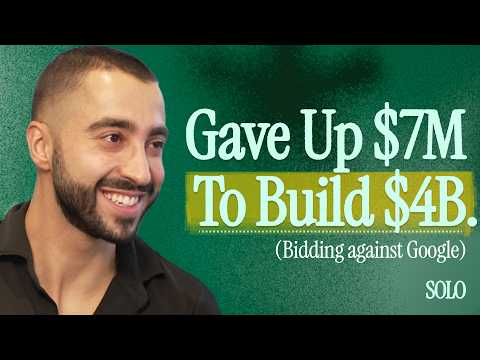
22:00 >> And and we had built the perfect product for that, which is an AI recruiter that can recruit experts at the largest scale ever, right? And and and and this this company that became our customer was like a perfect point of proof for us that like this is this is going to work and we can we can definitely get into this market oursel. And so we made the decision pretty quickly. we didn't go all in right away. It was it was a it actually took longer than I you know obviously in retrospect we should have done it right away but but we we took a little bit of time we took it was actually like a probably almost a year sort of like iteration towards going allin >> and essentially the first step was like okay let's work with more of these data providers which of course are now now competitors but at first we're just serving other data providers that were just using our tool to recruit experts and then they would serve the labs as as their customers but then we started to realize that like we can build the rest of the infrastructure which is you know well well beyond the AI recruiter and build data platform build our research team you know build our pipeline performance management system all these different platforms that are as as part of our data infrastructure kind of play that we have now and just go and serve the labs and enterprises oursel and it's like too important too important of a market too massive of a market to to not take this to to to take take this leap of faith. So, we did exactly that. and when we when we took this this all-in kind of strategy, which again like took took a little bit too long, I remember I made this loom for the team and I said the title was like Micro One is going all in on data and and and that resulted in us having to like basically shut down the first version of Micro One, which was a lot of revenue as well and just essentially like delete the revenue.
23:57 and and there's a lot of folks that were like, you know, are we are we sure about this? Like we're like literally giving up like, you know, I think it was like seven or eight million in run rates like this is, you know, we could continue to grow this, etc. But but we had to make the decision of go going all in and and that was like, you know, that was the moment that the massive inflection point for micro one be gone. So, >> so did that that Loom video that you made did that come sort of in towards the tail end of that transition period where you were kind of iterating towards it or was that more like at the beginning and you said we're going to start this iteration just a >> it was it it was it was it was the end of it the very end it was the final ending of the transition I was like all right now we are all in >> forget about the forget about the AI recruiter forget about talent business let's let's go all in on data that's all we're going to focus on and of course everything we had built ended up becoming amazing amazing internal tools for us to serve our customers. So, so the the you know the Zara AI recruiter to this day is an important part of our tooling.
24:54 >> but but there's like so much more now that allows us to serve our customers. But but yeah, that video was the last the sort of last step in in the transition. >> So can you give a a little bit of a picture of what the team looked like before you started that transition? Like how many people were there? You had a was it a distributed team at that point? Because I think that something that a lot of people who I talk to who are solo founders or even have co-founders there are these moments in a company where you have a good amount of revenue.
25:23 Things are in some ways going well. but there's an opportunity sometimes to go in a different direction or or or take an insight. It would in your case it was what you know an anomalous thing right to have one company come on and look for 700 roles or make 700 hires in two weeks. I think you said that's that's remarkable and I think that there's sometimes a temptation to to ignore those things or or say well that's that's an edge case but you know we're we're things are going well over here. What what would you say the company looked like at that point and what was sort of the process of getting other folks on board and and sort of like excited about this and also yourself in in in the process? It it was a really difficult time frankly because before we did this and this is this was a you know a couple of months before we made this like kind of all-in decision.
26:18 We actually went through a really difficult period where we lost about 60% of our revenue overnight because of this one company that ended up kind of seeing that we might get into the space and basically you know ended up u terminating w with us. and and we were like very close to to to actually not surviving that. and and so this you know evolution of the company and going all in it sort of became a little it became a bit personal like okay we we must win in this space now u because we we almost lost pretty badly because of one of our future competitors right at at that point and and so the decision was becoming very clear to a lot of to a lot of folks But but for the broader company, it was still still not clear and and and we and we had to just kind of peel off the band-aid and and and send the send the loom, do do sort of an emergency all hands and say, "Look, we're going all in on data. We're now a data company." and it was a tough couple of weeks for folks to understand what this means. you know what what what's sort of happening but but I think these are the moments where and I you know I don't want to toot my own horn too much but like these are the moments where like the founder can only make these decisions and and like take the leap of faith and and and and really like try to try your best to convince the team to to follow suit which is which is of course a very important part part of keeping the team intact and if you don't make these what I would call kind of like outlier decisions you're you're going to have a pretty like normal return. You're you're you're going to have a you're not going to have an outlier outcome. I think an outlier outcome comes from these really like odd actions that the team is like, "What the hell are you doing? Like this, you know, are you are you crazy? You know, this doesn't make sense." If you don't do a bunch of those things throughout the company's trajectory, it's not even just early on. Like, we need to keep doing things like this, then then I think you're you're going to build you might build a reasonably good company, but but you can't build a multiundred billion dollar generational company. That's sort of what we're aiming to do. And of course, some of these moves don't go well. There's a lot of examples of these moves that that that I've made that that our folks in management have made that that that also like don't go well. And you got to you got to recognize that as well. But but if you have if you have a if you have a few and you have enough that go well, you will build enough confidence to do more of these outlier actions, which which I think are are very important. and and and this relates to this relates to to to to a point that that I think I sort of remind myself of which is only the founding team can inject risk into the company in the in these ways and you must inject risk into the company for for for for these sort of outcomes to be possible. And so you I I enjoy these moments. They're they're they're difficult, but I think it's what makes it fun. And there's another I'll give you one more of these moments which was which was I think yeah it was maybe also like two-ish years ago where we where we ended up when we were using our AI recruiter Zara we we we had a a human interview process after as well in a lot of cases not in every case but in a lot of cases where Zara would give a report and there was like a 15-minute human interview and then so there was still a fundamental bottleneck of of human time that was spent I remember a couple years ago where we had it had this moment where we said, "Okay, the product is the product is now good enough. Let's take the leap of faith." And our recruiters no longer do any interviews. We It was like overnight. I we again we did this like emergency all hands. Everyone thought everyone thought I'm going crazy again.
30:14 And I I told him like cancel all of your calls this week. We we we don't we don't do a single screening call after today. And this was this was like a decision that resulted in like there's a few folks that were like about to leave and it was it was you know it was a it was a time where I had I had to make sure to keep the team intact. And this was another decision where our our expert pool ended up growing way faster and and if you look at the there's a there's a very you know there's a sort of a funny chart where it's like our expert pool growing very much matches our revenue growing. and and so if we if we didn't remove this constraint, our export pool would not be grown the same and and and probably revenue would would would follow that. So there's a ton of these hard decisions that that must be made and I think only the only the founding team can can just make these with with conviction.
31:02 >> Let's talk about solar founding in that regard then because I think that I read that one of the first companies you started you did you did work with other people as co-founders, right? Is that is that accurate or is this have you always been a solo founder with everything you've worked on? Yeah, only solo founder. >> Okay, interesting. So, what what what was it sort of that that kind of caused you to be solo? Like it were were there ever people who kind of pushed you to to have a co-founder or said you should have one? And I also realized that and this could be part of the the conversation here too. you know, you were starting a lot of these things while you were still in school, in high school, and while I guess like through college and, you know, at least when you're getting started, you were in LA, you were in Woodland Hills area.
31:45 it's not a place necessarily where you're as exposed to like the culture of Silicon Valley, which in some ways is probably a really good thing, right? Because you're not you're not being indoctrinated with random things that you should that you should supposedly do that really there isn't necessarily a reason to do. So I I'd be very curious to hear kind of your perspective on solo founding. >> We'll also talk about founding team because founding team is so important especially for solo founded companies.
32:11 But can you just share a little bit more about kind of how you've thought about being a solo founder or maybe not thought about it considering it wasn't a thing that was maybe top of mind at any point early on? is is exactly the last thing you said which is I didn't realize there's a concept of like co-founders even like I when I started my fir first you know couple of companies when I was in high school and you know in LA and so forth I I just thought you just start a company and you're running it and there's no you know I didn't know what a co-founder is so so and and yeah so it was more of like a out of you know out of just not knowing I think and and and then when I when I I remember the first time where I you know of course I I I learned about the concept, you know, later on, but but the first time where I like heard this concept really emphasized is when I was applying to YC for for one of the one of the previous companies and and I think they my understanding is like they don't say it explicitly on the applications or anything, but but like everyone sort of knows that like oh you you sort of need a co-founder and they look for that. And I was so confused that like why why do you need a co-founder? what's the like I was trying to reason through why this makes sense and and I couldn't come to I I I couldn't come to any any like good reason frankly and and I the thing I came to is is that that I think investors are trying to derisk in terms of if if one founder like quits there's there's more that you could sort of rely on. So I think that that maybe could be maybe a reasonable explanation on why certain investors and and why C pushes for it so much. But but you know I don't think it's something that is is required but but I do say this with with I think for for Micro One it's it's very important to note that our founding team is is is incredible and I think like I I I don't I don't I don't even consider myself a soul founder for Micro One to be honest. the the founding team is so good that and and you know there's there's a bunch of folks but but the one I'll name is like Will our CRO he joined us a couple months in and he's he's been just incredible and and and also Joshua Browder one of our early investors that put in you know first ever check there are folks like that that are like feel like co-founders are effectively co-founders and and so I think it's really important to optimize for people like that very early on but I don't think you should look at it as like I'm not going start the company until I do like a found co-founder matchmaking all this like nonsense. I I think like just just start the thing get somebody to pay you something and and learn and then and then and then once you build you know the MVP or or or or you start building it there are folks that be interested in potentially joining you and whether they're co-founder or founding team whatever you whatever label you put on it. I don't think you should look at it as a constraint of starting like that. That's what pains me is like sometimes I hear from some some founders that are starting something and they're like you know I'm going through a process of like co co-founder matchmaking and I'm like what are you talking about just just start just start the thing right so that's the I think that that's the thing I would say but but it doesn't I think like these the thing that you cannot the thing that you cannot kind of the way to misinterpret this is that that like founding team is doesn't matter and stuff like that I think in fact it is so important important to have an amazing founding team if you're if you're a solo founder u but but you shouldn't like wait on a co-founder is my is my learning >> totally and you know my friend Eugenia who's building a company called Wabby right now she talks about how when she started she started her prior company solo too she thinks that there's this real beauty of of the solo founder and the founding team that that you don't have when you have co-founders necessarily because there's sort of like the co-founder and CEO there's the co-founders and then there's the founding team, but there's so much more closeness between, you know, a solo founder and the founding team. It also allows the founding team to just have so much more ability to have influence within it versus having that sort of maybe co-founder is like the middle layer hierarchy type thing, which I think which I think is is is some ways maybe there's value in it. but in other ways it's, you know, it might constrain the founding team. I'm also really curious about sort of as you were as you were going through this process of essentially we call I call it pulling the thread like instead instead of pivoting it's like it's like pulling the thread on an idea. I'm curious sort of what it's what it was like with the founding team and also kind of how you think about you know what what what what it was actually like for them to go through this process too of kind of like consistently evolving because I I imagine there are some people who stayed from when you were building sort of the recruiting like recruitment analysis sort of thing all the way through to micro one. Can you talk a little bit about that journey for the team and how how it was like with you sort of like leading people through and having them work with you through the all these different transitions?
36:58 >> Yeah, so very grateful for most of the folks that were very early almost all have have are are still part of the journey even though the journey is like you know we it's changed quite a bit right >> >> and and it's I think I think the reason is It's it's similar to similar to what you were saying which is like there's less of a hierarchy and there's like very quick decision- making from the you know from the founder and and that decision-m is is as a result of really good and close debates that happen with with the the founding team.
37:38 and so the so the founding team is like very involved in all these decisions. So it's not like, you know, we're sort of iterating and they're now there's like a new new thing that we're working on that they sort of just have to adapt to. They're they're part of the process of of those iterations and they're they're they're a huge part of the process. So I think that that's an important part. I think the the other thing that I'm very l lucky for is that a lot of the folks from my previous company when we were doing the agency actually ended up transitioning into like working working at Micro One.
38:13 And there there was a couple months there was like a few months period where we where I was sort of running both before I shut down the agency. And so there's some folks like working at the agency and and then and then you know some new folks at Micro One. And once we once we shut it down, mo most of the people that that that I was working with at at that at the previous company ended up joining Micro One is like basically the founding team and and and they're yeah group of very very special special humans that are that are with us to this day and I think a big part of it is what what you said which is the the closeness of of me with with the founding team and and the fact that they're super involved in all the decisions that we make and and it's really you know it's really our it's it's our company. It's not, you know, they're all material shareholders.
38:57 So, >> can you say more about the sort of debate culture and sort of and and also more just like company culture in general? How you think about it, what you've learned, mistakes that have been made, like successes that you've had? >> I think there there's a couple of things that we really emphasize in our company culture. One is we built a bit of a unique remote by default and asynchronous by default culture which for a company like ours that's like you know I say like pretty hardcore like everyone works like super hard you you would not you would not think remote when you when you think of those when when you think of this industry and you think of the the sort of the hardcore nature of micro one but but we've we've set up in a way where where it just it just works and and it's like the the the the the the the the joke I make is like, you know, you can have you can have this this 996 stuff, which I think is like very cheesy and and and you know, yeah, very cringey overall or you can not have those like arbitrary constraints and and and you can just sort of inspire the team to work weekends versus like forcing it and everyone will work all the time because there's a lot of interesting problems to work on. And if and if somebody's working from their couch at 2 a.m. versus like being forced at the office, that's fine. like they're probably more productive there anyways, right? So, so we we we look at these like we question these arbitrary constraints and and we think questioning arbitrary constraints allows us to get really good talent that aligns with that. That could be global, it could be NSF, location is basically not a constraint. and it also allows us to move very fast because it we when we have discussions and debates, they're very targeted. There's no, you know, we don't, we sort of avoid the small talk that that that that might happen at a large scale at an office, right? We we open a thread, very clear problem. We the person that opens it presents the solutions that they're they're thinking about. The only people that need to be involved are involved. We limit the number of people that are involved in discussions. and we try we we we try to close we try to close the thread as fast as possible with what we call final actions, which are >> minimize the minimize the the the number of messages until you get to a final action is is what we sort of aim for.
41:10 >> And and so the company ends up being very actionoriented. And of course, like saying, you know, saying this idea of like being actionoriented is is is easier to say, but but you have to be very specific about it. And the way that we're specific is is, you know, what I just said earlier, which is you open a thread, you propose a solution, you minimize the number of messages, and you get to the final actions. And the person that opens the thread, in most cases owns the final actions. And and the the most the most honorable thing you can do is is act, not not give a arbitrary opinion. And and and of course, a lot of opinions are not arbitrary, but if you if you believe your opinion is not going to add value to the discussion, then we we we avoid we avoid giving the opinion is is sort of our our culture. Because if if you it's it's really fun to to have like long discussions about really cool cool things, but but the the ultimate actions that come as a result if you if you if you 10x the length of the discussion, you you will probably converge to the same set of actions. So you might as well you you might as well converge much earlier and and basically like you know stop the discussion, right? So that's one thing that we care a lot about. The other thing is and and this this will sound a little bit cheesy but but it's important which is our culture is very hardcore but we're also very kind >> and we emphasize this every day which is like we move fast and things get very stressful but we cannot forget to just be pleasant to each other and like just have a good time working and I think I think this is maybe undermined at at at you know sometimes and and we make sure to to really take this take this as a core core principle. so yeah, I think these are the two things that come to mind.
42:50 >> I'm really curious to hear about sort of the the actionoriented nature of this. How do you because ultimately there are lots of people coming from all over the world, all sorts of cultures, different company cultures, different places that they grew up. how do you actually help people sort of go in that direction? because I think that some people might want to, but maybe they haven't experienced a company like that before. where you're trying to minimize the amount of back and forth before a decision is made. Some places it seems like it's the opposite. They're trying they're trying unintentionally maybe trying to maximize the amount of discussion. So, how do you actually do that from a from an actual like tactical perspective?
43:27 >> I think there's two things. One is you you have to reason through it with the with the team. Like when we have all hands, we remind folks of this and there's always new of course new people in the all hands. So we got to like kind of reason through from from from from first principles on why we set this the way it is. And and the reason is it goes back to you know this idea of like you the the length of the discussion being much longer will convert to the same actions. you should you should you should stop that discussion sooner so that we can just act and and and the second component is the the the velocity of your actions matters matters a lot because I I look at it as like progress is sort of u you know sort of I'm simplifying it a little bit but but it's sort of like the the the the quality and accuracy of actions times the the amount of actions right that that's sort of like the basic formula the quality of actions come from these discussions but also it just keeps improveving improving over time as the company gets more more sophisticated. It's a variable that you can that you can control with again these threads that that that you open but but you can't control it beyond like you can't like fundamentally change the quality for for for all the actions that you have. You can you can you can sort of iterate on them based on these discussions a little bit but but you must you must just act and and so for you to make progress the variable that you can control even more so is is is the velocity part is the velocity of actions. So, so we just reason through it with the team and and this makes sense. If everyone, you know, if anyone wants any counters, we we sort of like discuss it. and yeah, I think it's hard to sort of debate debate against it. And and then the the other thing is like we when when folks join us, it's it's a bit of a shocking thing because like a lot of folks are are they they they're used to meetings and they they you know, they like discussing things and maybe like hanging out a little bit in these meetings and and we we don't we don't do that. We we just and and we just remind them of that. I think like whenever whenever there's new people that join us and we realize like they're sort of they're sort of suggesting a meeting in a thread too too many times like so sometimes a thread can't close because it's too complex and you got to do a meeting. But but if you default to like let's do a meeting and discuss this live and let's do it next week or something. We call it out like you should you should never you should never suggest circling back next week like these are these are phrases that we avoid. And and I think if for for new people like if if you just if you just remind them a few times you just build a feedback loop and it and and they they they end up doing the doing the same thing.
45:55 >> They get to see the results of what this culture drives and motivates them and helps them sort of adapt to it. >> Exactly. >> That's really cool. What what are some things that if somebody joined the company you know today and they were experiencing their first maybe 30 days, things that would surprise them in a positive way? because I I'm curious, you know, that that would ultimately be probably some interesting things for us to discuss. I think the first would be the we have a lot of really cool clients like and we're very you know it's always an honor that we that we get to work with these clients and and not every not every new team member gets to gets to see like exactly all all the clients because you know we have like silos and so forth but but but but once you get a good good picture of like all all the companies we work with it's like I mean to me it's like to me it's also unbelievable that we get to work with all these these companies so that's always a bit of a surprising it's a bit of a nice surprise where where like especially a lot of like great researchers that end up working at some of these labs, they they realize that if they join Micro One, they can they can work at they can basically work at multiple labs, you know, in in in in sort of indirect ways. And so I think there's there's really nice nuances to that.
47:08 I think the other thing is like there's and this one might be you this one's more of a neutral thing which is they realize how how fast-paced micro one is and and of course it this is easy to say and everyone says it but but we people people often describe micro one as it it redefineses their perception of fast pace and it and this goes back to just this idea of acting and and and and reducing and minimizing discussions.
47:36 So that's that that comes as a a nice, you know, nice surprise. and I think the third thing is like even though we're even though everything's crazy and stressful and so forth, everyone's very supportive and the the the thing that we emphasize like when somebody joins us as a new team member is like we we got to make sure the feel they feel the micro one culture in terms of how how like difficult and hardcore it's going to be, they need to feel that right away because you can't get the wrong perception. So we make sure that like >> you know they feel a bit of pressure right away and then and then the other thing is like we want to make sure they feel very well supported. Those those two things need to be true at the same time. So I think that the kindness and the support that that that team members see right away is is is hopefully not a surprise but but I think it's a little bit of a surprise because it's it's a it's like more than what you would expect.
48:23 >> Now you're in a massive market. in fact you're in many massive markets. something that's really cool about Micro One is just how many different types of customers you serve. I think that often case with startups when they have something that's working they have lots of opportunities that come with that and there's some sometimes you know a debate as to which opportunities to choose right maybe just internally as the as the founder then you start to have other teammates involved in making decisions as well but I'm very curious to hear kind of what you've learned about about which opportunities to choose how to how to stage and sequence opportunities And then, you know, maybe we could also talk about Spirit Airlines because Spirit Airlines is this is this crazy sort of opportunity that seemingly just kind of appeared and it wasn't necessarily I can't I can't imagine was on your opportunity set. and it so maybe we could use that as sort of a case study as sort of an anomalous opportunity. And then we could also talk about, you know, the the more sort of standard thing, which is, you know, you're building at a fairly broad you have a fairly broad potential market to sell to. I'm curious if we can talk about that as well, but maybe Spirit Airlines as a case study.
49:36 >> Yeah, Spirit is a is is a is definitely an outlier. So spirit is there's essentially so let me let me backtrack actually. So what we do at Micro One, which I realize we haven't talked about, is is we we build environments, right? We we build environments for for labs to train their models. >> And what's included in these environments is is is is seating data, tooling, and tasks. And the tasks are what agents or models are prompted to do. And then there's verifiers that determine whether they do a good job. So So there's a bunch of ingredients in an environment. And one of the things that matters a lot which we sort of like look at it as like a bit of a bit of a scaling law. It's like you know you can sort of scale on on this which is which is the realism of the environment. How realistic are the tasks? How realistic is the seeding data, the tooling etc. And the way that you make environments more realistic is you is well you need real data, right?
50:36 and and and real data comes from companies that have that have operated in in a production setting. And and so we we have this function which we call company data partnerships which is we call CDP which partners with lots of companies. It's it's it's a bit of a crazy thing actually. It's a we have about 150 companies that are signing up every single day right now to partner with us and it's the funnel is wild. and we essentially partner with these companies. We license their data. We anonymize it and then we use it for for training. We we use it to seed the environments that we have. We build verifiers on top of them and then we train models with them. And the thing that matters a lot here is again the realistic nature of these environments and company operational data allows us to make it very realistic. Spirit is just one another example of that.
51:26 it's you know it's an outlier example. the one that makes the news and and so forth, but but it's just another company that in this case is very very massive that that that we're buying that we're attempting to buy to to seed many different environments to to to help train models. so that that's kind of the TLDDR and there's a there's a hearing coming up on the September 30th that that I think will u will probably give the outcome of of this of of this of this bid, but but it might go a little bit longer as well.
51:54 So, we'll see. >> So, okay. So that's that's really interesting and sort of how it fits into the broader scheme of things. but I'm really curious as we talk about sort of you know what's going on with with the various types of customers you work with. you you know and this is actually ties into something you just announced I think yesterday which is you know you're you're building out you know an office and a space in in Malibu right? so maybe you can talk about what's going on there when to decide as a founder when to decide to move into sort of adjacencies because robotics I think you know maybe a year ago wasn't something that was immediately on the road map. So I'm curious how you think about that how founders should think about that when to when to do it what's the right time.
52:38 >> Yeah. Yeah. So I I I think what what's important to to us at Micro One is we we need to have a a very clear core focus and that core focus is everything around the data stack and what I mean by that is you know there there's sort of three ingredients to improve models right there's data comput and algorithms and and and it's not just models it's it's just improving intelligent systems is the way to think about it it's agents models hardware embodiment of models you all these different intelligence systems that can act in in in the world. So our our entire focus is everything around the data stack which is really the key ingredient that allows models and agents to to improve. So anything that that is around that we we can we can we can expand into that that that's sort of the way we think about it and and and and so and like the sort of like abstract way to explain you know micro one which which which which gives us which will which will convey the the way that we decide these these different businesses to get into is we're in the business of providing what we call units of intelligence improvement. So similar to how labs provide units of intelligence, they provide tokens which is like just intelligence. We provide intelligence improvement units. So it's a very very clear distinction and today that comes in the form factor of data sets and environments that we're building. But the form factor will change over time. The form factor will will at some point probably be rollouts as a service or it might be reward model as a service where we're moving up the stack, right? It might be post training as a service and and also like the areas the the the the sort of models and agents and and intelligence systems that that require this improvement are also very different. It could be models. It could be agents within the enterprise.
54:25 It could be a humanoid robots. It could be different hardware embodiment that look nothing like a humanoid. So as long as we have a core mission which is we want to build predictable and abundant we want to build a data engine that produces predictable and and abundant units of intelligence improvement. Anything that's related to that core mission that we think we need to expand to we can expand to and LLM of course serving LLM companies is a clear you know clear area to be in. Serving enterprises is another clear area to be in because if enterprises want to own their own intelligence they need to build their eval stack. Robotics is if you want to build u models that can act in the physical world, you need to go into robotics where there's a ton of value to be had there. So, so all of these these areas that we're in, they they're under the umb umbrella of of of a data engine that can that can produce these intelligence improvement units.
55:16 That that's sort of how we how we think about it. >> It's really cool. And specifically Malibu, why Malibu? What's the what's the what's the idea there is? Right now we're we're filming at your space in San Francisco. you have most of the team is distributed. U so you've got some incredible folks who I we we all got to meet as we were setting up but you most people are you know not in SF. So what what about Malibu? I think that the the right the right question is why not Malibu and why >> well sure I agree with no the funny oneliner is like we you know who doesn't want to train robots at the beach right that that's a that that's sort of the the funny way to think about it but >> but but there's a couple reasons one is getting researchers is is very difficult and and and and in robotics it's maybe even more difficult and and we need a very unique angle to to attract researchers and this one is like is very unique. You got to you join us and you can you can train robots at the beach and it's it'll be a good time. That that's the first thing. The second thing is our team is distributed anyways and and we we're not like we're not set on any location. Of course, our main HQ is in SF. We have good good amount of folks here, but but we can be anywhere.
56:27 So, and and and one of our a couple of our key folks in robotics team is actually are actually in LA. So, so why not why not have it in in LA? And then the third component is LA is known for hardware broadly. of course like the humanoid robotics companies are not necessarily in LA but but there's a lot of other hardware companies that are we believe in a world where there's going to be a ton of policy models that are built for many different hardware embodiment not just humanoids. And so I think the the hardware companies that are in LA are going to be very important for the work that we do. So we want to be closer to them as well. So that's another you know another reason. So, and it's just like it's just cool like you know it's going to be I think it's going to be a lot of fun to to to train robots at the at the beach. So before we ask sort of the the customary closing questions, I had one one more question for you. which is about sort of values. because I I think that you know one thing I I read you talk about is about sort of you know the state of the world and sort of like working with the US and the ally or allies or and some people potentially selling data to you know adversarial countries or and I'm curious you know what your perspective is on this kind of how you're trying to build the c the the company as a way to you know help help the US and help our allies grow.
57:46 Yeah. I yeah I really appreciate this question. The approach we take at Micro One generally is everything we do we we take a very long-term outlook and and a very principled approach. And a lot of times the principled approaches that we take, they do not result in hundreds of millions in run rates increases immediately. And in other words, they don't result in us necessarily being the number one player in terms of revenue in the short and medium term. But but they do in the long term that that that that that that's that's the that's sort of the high level reason for these decisions. And the decision of working with only US and allies is is is a is is simply a good example of of of this this this idea of like being very principled in the way that we in the way that we work even if it means short-term or medium-term revenue losses.
58:45 And we think winning the AI race is the single most important thing that that that any country can do. And you know I I love the US. I'm very grateful for the US. I I when I moved from Iran when my family won that green card lottery, I we were we were like so excited to move and and and the opportunities that this country gave me and and and my family is is just like I can't put into words how grateful I am for it. And the absolute least I can do is is is help this country win what I think is the most important race to win, which is AI. and and I think winning the AI race, and of course I'm, you know, biased when I say this, but but I think data is the most important part of winning the AI race.
59:33 And and if you work with US labs and you know exactly the type of data that works well, the texonomies, the domains, the data sets overall that work well and you build largecale off-the-shelf data sets and you go and you sell them to adversarial nations, I think you're doing a huge disservice to to to this country. And we are not in the business of of doing that. and and and and again it hurts us with potentially nine figure run rate right in in revenue but but but that doesn't matter because these are these are the decisions that allow us to win long term and we're very very proud of these very proud of these very proud of these decisions and I think you know I've said this before and I'm more than happy to say it now data companies that work with adversarial nations they should just be ashamed. I think it's a very shameful act and and I think they're they're helping with with they're essentially helping with the the distilling of of US models is is is the reality of it. And and I and I hope this changes and and I and I hope that there's there's some there's some government agencies that look into to building frameworks around regulating this because if you again exporting data is is at a at a large scale in a very structured way because if you think about what an environment is it's it's just structured intelligence at a large scale is what it is like that's literally what it is and and especially if you include company operational data it's structure ructured intelligence at a large scale and company data from US companies. If you if you package that into environments and you sell it to adversarial nations, you're exporting American intelligence. And that is like that's absurd to me that that that that that companies are are are able to do that. so anyways, bit of a bit of a speech, but but I I think again like I'm grateful for the US and I and I and I just want to do what's what's what's right for this country and and and and that's that's that's that's our reasoning for this approach.
61:40 >> It's a really it's really stirring way that you put it. I don't think I've ever heard it put quite that way. The idea that this is like the collective intelligence of America that is being sold literally wholesale to our adversaries. It's not just, you know, and a lot of these folks, a lot of the intelligence comes from the educational systems in this country, which is our taxpayer money. It's it's like all of these all these things kind of add up to be something that, you know, is you want to see this country win. and and it's it's a shame that some people are, you know, maybe maybe taking short-term sort of short-term decisions maybe at very real consequences to us as a nation. 100%.
62:25 >> Well, well, listen. this is this has been amazing. We have we have two sort of final closing questions we always go with. The first one is the case against solo founding, like the bare case. Why maybe somebody should maybe consider not being a solo founder. Now, I know for you, it wasn't even ever a consideration, which I think is great. in fact some of the best solar founders we met they come from different places where they didn't have sort of the doctrination of Silicon Valley which I think has helped many companies get started but probably caused many great potential companies to fail through through these various beliefs. I'm curious sort of what your what your take is though on reasons people should be cautious about being a solo founder before we get into preview the the the final question which is the case for solo founding. So, I think the bear case is it's definitely a lot more lonely.
63:19 but but but to be honest, I don't think for too long. Like if you if you if you build a good founding team, it's not actually going to be that lonely for that long. So, it's a little bit of a bare case in terms of being being more lonely. I think the the other thing is if if you're building a really like difficult company like if you're in like you know like hard mode hardware or maybe you're building some I don't know something that like really requires a ton of specialty expertise that that all needs to be deeply committed to that thing for it to work from the beginning.
63:57 Then then there's there's potentially a case for soul for for co-founding with with a couple of folks that have these different expertise that are complimentary. But I think this is more of like a once you build a couple of companies that work and you go in like hard mode for for your for your like ultimate company or or or whatever at that point like maybe it's good to to explore. Yeah. I think those are those are the two things that come to mind which like are not strong arguments to be honest. So >> yeah. Well, I mean, especially because once you start to have a business with customers and you start to really bring on the team, you said the loneliness starts to go away really quickly if you actually have a true team that you're treating like a founding team. Exactly.
64:33 If you don't, then that's kind of your fault I think at that point if you're if you're still lonely after that. And the other thing about sort of the the deep tech sort of hard hardbo startups, I've been surprised by just how many companies out of Elsagundo for instance are solo founded. these these are these are companies that you would kind of think might require co-founders but I think perhaps this is what I've heard from some is that some of the people that you want to hire early on they wouldn't want to be co-founders they have different incentive mechanisms in terms of what they care about and sort of when they want to join. So that's that's been interesting to see.
65:06 >> I this has been amazing. Thank you so much for doing this. Let's let's close it out. What's the case for solo founding? >> Yeah, I think there's a lot there's a lot I I think the first is you can make a lot a lot faster decisions. you know there's there's sort of one person like clearly leading and I think there's there's a lot of value to that there's no arbitrary constraints of like let me do co-founder matching and you know you don't have to wait for that you just start start the thing you get to control you get to control the board more which which I think is is important and this is something that you know we can get into in maybe the second episode if we don't where it's like we you know I I care a lot about and I look at it as like company control board it's like, oh, I I you know, I control. It's more of like company controls the board and and and again, it goes back to like we are so in the weeds of these like really difficult decisions that make this outlier outcome. We must be the ones that makes them and we can't have, you know, folks that that that are less in the weeds be too involved. So, so yeah, I think that's another thing.
66:08 The third is I think if you build if you sort of build something if you get something to a reasonable stage for for you know for a few months on your on your own you actually are there there's there's an argument to be made that you can get there faster and and you can also attract the founding team that you need potentially faster as well which is what really allows you to kind of kick things off and and have things kind of take off. So, I think that's that's that's the other thing that I would refer to.
66:43 and then I mean the last part is like you get to own more of the more of the company and you know this was a selfish one, but like it's it's just the reality of it. >> This has been amazing. Thank you so much for doing this. I'm excited to do the next one where we talk about governance and all sorts of Yeah, it's going to be great. thank you. Thank you so much and excited for people to listen to this.
67:04 >> Yeah, thank you very much. It was awesome. Thanks for having me. If you enjoyed this conversation, we would love it if you could share solo founders with everyone you know, particularly people who are considering starting companies solo or who are already doing it. You know, the entire goal of what we do is to normalize solo founding, encourage more people to solo found instead of end up with co-founders of convenience. If you'd like, and we'd really appreciate it, you can go leave a review on Apple.
67:27 You can go give us a thumbs up. You can subscribe on the YouTube channel. Anything helps. And of course, if you are starting a company or considering starting a company, you should go look at the solo founders program. We work together with you in San Francisco alongside of a bunch of other solo founders. The idea is it's much better to be solo together than to be solo alone. I'll spend a lot of time helping you. And we also invest $100,000 in your company. So, if you're excited to learn more about that, go check out solofounders.com/program.
Summary
- Solo founding allows for faster decision-making and more control over company direction without the need for co-founder matchmaking.
- The founder emphasizes the importance of building a strong founding team, even if not officially labeled as co-founders.
- Early entrepreneurial experiences included reselling textbooks and tutoring, leading to the eventual creation of Micro One.
- The company has pivoted from a talent recruitment focus to a data-centric approach, driven by market demands and opportunities.
- A unique remote and asynchronous work culture fosters efficiency and minimizes unnecessary meetings.
- The founder believes in a principled approach to business, prioritizing long-term goals over short-term revenue, especially regarding ethical data practices.
- The decision to expand into robotics and other areas aligns with the company's core mission of providing intelligence improvement units.
- The Malibu office aims to attract talent in robotics and leverage the area's hardware expertise while offering a unique work environment.
Questions Answered
Why is having a co-founder beneficial, and what are the advantages of solo founding?
While co-founders can bring complementary skills and expertise, solo founding allows for quicker decision-making and a clearer leadership structure. Founders should focus on starting their ventures rather than getting caught up in co-founder matchmaking.
What factors should entrepreneurs consider when deciding to move on from a project?
Entrepreneurs should assess the viability of their business model, particularly in terms of customer acquisition costs and scalability. If the economics don't work out after significant effort, it may be time to pivot or move on.
How should founders approach making significant changes within their companies?
Founders must be willing to make bold, sometimes controversial decisions to steer their companies in new directions. These decisions can lead to outlier outcomes, but they also require strong communication and team buy-in.
What practices can foster an action-oriented culture in a company?
To create an action-oriented culture, limit the number of people involved in discussions, focus on proposing solutions quickly, and aim for final actions. This minimizes unnecessary debate and encourages decisive action.
How should companies approach expansion while staying true to their core mission?
Companies should expand into areas that align with their core mission of producing predictable and abundant intelligence improvements. This includes exploring various technologies and sectors that support their foundational goals.