Transcript
0:03 Behavior is providing us with important information. It's not just a source of irritation. It's telling you something. All behavior is communication. Say that with me. All behavior is communication. That's right. So even when it's something that you think is just unacceptable, there's something that lies underneath it. And you just got to be a little bit curious about it to figure out what it is. Because if you don't deal with it, it'll persist. And don't deal if not dealing with it.
0:43 Sending people away is not dealing with it. Sending children away, that's not dealing with it. So, if you have someone like this in your life, just ask the question, "Huh, what's going on with him today?" And then take the time to figure it out. Now, this picture is my son. This is Sean when he was two. And this is his second birthday party. And during the party, and my husband's here, he's in the back. You can ask him. Birthday parties, big deal at my house. It takes me a couple of months to plan them. He goes, "Is the party for you or for Sean?" And I'm like, "Who cares?
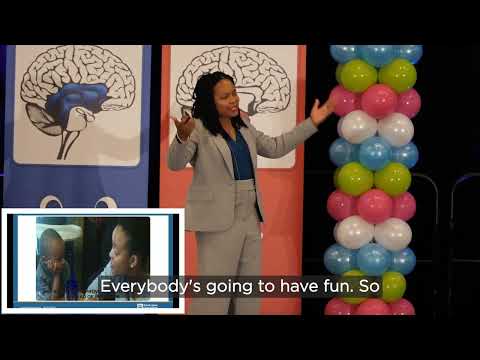
1:19 Everybody's going to have fun. So, at this party, I've taken all this time to plan, right? The little two-year-old goes and sits at the card table that's for the adults. So, I could have said, "What is Sean's problem? I didn't spend all this money on this party. I know he better get his little self up out of that seat and go play with his friends and have fun, right? But instead, I walked over to him and I sat at the table and we just talked and my best friend was standing nearby and she took this picture and she sent it to me.
2:01 Sometimes you just have to pause for a moment and figure out, hey, what's up with you? If I hadn't done that, I would have missed a wonderful mother son moment with my little baby. He's eight now. He won't even let me walk him into the school anymore. So, this is a big deal. But what I'm trying to convey is this. Always, always, always when you want to step into the power of change, don't be afraid of conflict. Embrace it a little. It's all right. Just step into it. See what's going on because it might not be as bad as you think. But everything is not always going to be a Hallmark moment.
2:45 There are going to be times when it's gross and it's hard and it's heavy. But if you care about that person and you ever want to stop being back to back and get front to front again, you're going to have have to have some type of conversation. You're going to have to dig a little deep. Figure out, is it me? Because sometimes y'all, it's us. It's not always somebody else. Figure out what it is and then you can recognize that power that comes in conflict. You can widen that aperture that we were talking about and start to think, "Oh, their perspective isn't necessarily mine. So, let me just chill out for a little bit and see if there's something that we can work out in all of this.
Summary
- All behavior communicates something; it's essential to be curious about it.
- Avoid dismissing or sending away individuals exhibiting challenging behaviors; this does not resolve the underlying issues.
- Engage directly with the person to understand their perspective and feelings.
- Personal anecdote: A mother shares a moment with her son during a birthday party, emphasizing the importance of pausing to connect rather than reacting negatively.
- Embrace conflict as a potential pathway to understanding and change.
- Recognize that sometimes the issue may lie within ourselves, not just with others.
- Acknowledge that not all interactions will be positive, but they can still lead to growth and connection.
- Expanding your perspective can help in finding common ground and resolving conflicts effectively.