Transcript
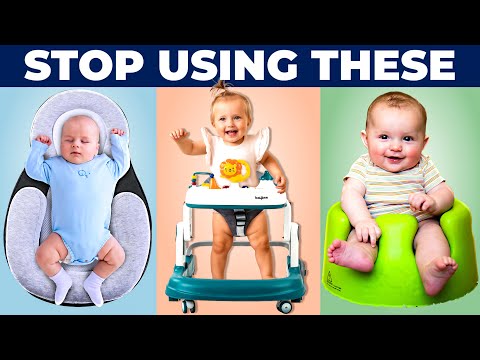
0:00 The American Academy of Pediatrics has called for a complete ban on one of the most popular baby products in America. Not a warning, a ban. And it's probably sitting in a garage or basement near you right now. I'm talking about baby walkers. But here's what's really wild. They're just one of seven products that parents [music] buy thinking they're helping when they're actually creating delays that show up months or even years later. And number five on [music] this list, it's marketed as a safety device.
0:28 It's in 90% of nurseries and pediatricians are begging parents to stop using it. By the end of this video, you'll look at your baby's nursery completely differently. Not because you're a bad parent, but because nobody's telling you what these products actually do [music] to developing bodies and brains. Let's start with the ones stealing your baby's movement. Number one, baby walkers. Here's what the research actually shows about baby walkers, and this isn't [music] debatable. A study of 190 infants found that babies who used walkers walked 3 to 4 weeks later than babies who [music] didn't. They also scored measurably lower on developmental assessments at [music] 10 and 14 months. But it gets worse. When a baby's in a walker, they're not learning to walk. They're learning a completely different movement pattern. They're pushing off with their toes and rolling. No balance required, no core strength needed, [music] no problem solving about how to shift their weight without falling. And here's [music] what parents don't realize. All that floor time, the struggling, the wobbling, the falling [music] on their padded diaper and trying again, that's not frustration. That's their nervous system building the neural pathways for independent movement. Every time [music] your baby catches themselves before falling, that's their cerebellum learning. Every time they pull up on the couch and their legs shake from the [music] effort, that's muscle memory being encoded. But the walker skips all of it. Now add the safety issue. Walkers [music] give babies mobility before they have judgment. Suddenly, your eight-month-old can reach [music] the stairs, the stove, the table with the hot coffee. The AAP reviewed the data and said, "This product shouldn't exist." And yet, still sold in every major retailer, still given [music] as gifts, still marketed to exhausted parents who just want 10 minutes of hands-free time. [music] So, here's what actually works. Floor play. Hold their hands and let them walk with you. Get them a [music] sturdy push toy that doesn't roll away easily. when they have to work to move. Your baby will walk when their body's ready, [music] and they'll do it better without the walker.
2:29 Number two, [music] Bumbo seats or early situp chairs. Quick question. How many of you have seen those molded foam seats [music] that hold babies upright before they can sit independently? Now, here's the part nobody tells you. [music] Sitting isn't something you teach. It's something that develops from the inside out. When babies spend time on their tummies rolling, pushing up on their arms, they're building the deep core [music] muscles that eventually make sitting possible. But when we prop them up artificially, [music] we're putting pressure on a spine that isn't ready.
3:01 We're skipping the muscle development that has to happen [music] first. Think about it like this. Imagine someone locked you into a position you didn't have the strength to hold and walked away. That's what these [music] seats do. The fix floor time. Let your baby figure out sitting the way nature designed. They'll push up from their tummy into side [music] sitting first, then sit with their hands forward for support. Eventually, they'll sit independently because their body earned it. And that's when sitting becomes actually [music] functional. But delaying your baby's physical milestones, that might not be the most damaging thing on this list, [music] because the next two products interfere with something even more fundamental.
3:41 How [music] your baby's brain learns to think. Number three, screens and educational baby videos. All right, deep breath because I'm about to talk about screens [music] and I can already feel half of you getting defensive. Stay with me. Here's what the research shows. [music] And I mean actual peerreed studies, not opinions. For babies under two, screens don't teach. [music] They delay language and social development. But my baby loves watching videos. They're so focused.
4:12 Exactly. [music] That's the problem. Your baby's eyes track the bright colors. Their attention is captured by the rapid movement. But that's not learning. That's just hijacked attention. [music] And here's the crucial difference. Babies learn language from back and forth human interaction. [music] They need to babble and have you respond. They need to point at something and hear you name it. [music] They need to watch your face change expression when you talk. Videos can't do that. Even interactive videos can't respond [music] to your specific baby's specific sounds in real time. But there's something else happening.
4:45 [music] That rapid fire stimulation, the quick cuts, the flashing colors, the constant sensory input, makes real life seem boring by comparison. [music] Real conversations are slower. Real play is quieter. And babies [music] can start craving that intense stimulation, which makes it harder for them to engage with the patient. responsive interactions their brain actually needs. Now, I'm not saying your baby's ruined if they've seen a screen. But here's what [music] I am saying. Every minute in front of a screen is a minute not spent in the kind of interaction [music] that actually builds language. A baby who watches 2 hours of educational videos a day will hear thousands of words. [music] But a baby who spends that same 2 hours with a responsive caregiver being talked [music] to, sung to, read to, will not only hear more words, they'll hear them in context [music] with emotional tone, with facial expressions, with back and forth rhythm. That's where language lives, [music] not in videos. So, what do you do when you need a break? Because you're human, and sometimes you need 10 minutes [music] to make dinner without a baby on your hip. a safe play space where your baby can explore [music] toys independently. Even if they're fussing, they're learning to entertain themselves. [music] They're developing attention span. They're using their imagination. Better yet, talk to them while you cook. Narrate what you're doing. I'm cutting the carrots now.
6:08 [music] Hear that crunching sound? Now the carrots are going in the pot. It feels silly. [music] It's actually language gold. Number four, overly noisy and flashing [music] toys. Speaking of hijacked attention, let's talk about the toys that light up, play [music] music, and basically perform for your child. These toys don't nurture curiosity, they demand it. Watch what happens when a child plays with a toy that does everything. [music] The toy makes the noise. The toy performs the action. The toy dictates the play. Your child becomes an audience member, not a creator. Now, watch what happens with [music] simple toys.
6:46 Blocks, a wooden spoon, and a pot. a cardboard box. Suddenly, your child has to imagine what it becomes. They create [music] the story line. They figure out how pieces fit together. That's where executive function develops. That's where creativity is born. [music] That's problem solving in real time. Plus, and this matters, simple toys are naturally calming. There's no competing for attention. [music] Play becomes focused and intentional. I'm not saying throw out every electronic toy, [music] but notice what your child gravitates toward when given a choice. You might be surprised to find that the $50 lightup toy sits in the corner while they [music] spend an hour with the box it came in. That's not a failure of the toy. That's your child's brain craving the open-ended play [music] it needs.
7:31 Now, everything we've covered so far affects your baby's development over months and years. But this next category, parents need to know about this today because unlike the other products, these can be dangerous right now. Number five, [music] infant sleep positioners and cushion sleep pods. Okay, we need to pause here because I'm about to tell you about a product that health organizations have issued urgent warnings about. And yet, I guarantee you've seen it recommended in parenting groups this week. Infant sleep [music] positioners, cushion sleep pods, those cozy looking nests that promise better sleep and reduced [music] reflux. This is the one product on this list that genuinely scares me. Not frustrates me, not concerns [music] me, scares me. The American Academy of Pediatrics is crystal clear. [music] Babies should sleep on a firm, flat surface with nothing else in the crib. Not soft [music] cushions, not positioning devices, nothing. And there are two reasons. First, the immediate safety risk. Soft surfaces restrict natural movement [music] and increase suffocation risk. Even if your baby seems comfortable, these products create dangerous situations. [music] But here's what's talked about less. The developmental impact. When babies sleep on firm, flat surfaces, they naturally move during sleep. [music] They turn their heads, shift their weight, adjust position. Those small movements strengthen muscles, and develop motor skills. [music] Cushion pods restrict all of that. There's also a sensory component. A bare crib allows your baby to see their environment, [music] track light and shadows, hear sounds clearly.
9:02 It's gently stimulating. Cushion pods create a visually monotonous enclosed space that reduces sensory input. But what about [music] flat spots on their head? That's a valid concern. The solution isn't a sleep positioner. [music] It's more tummy time when awake, varying the direction they face in the crib, and holding them more. Bottom [music] line, a firm, bare crib is a safe crib. Use a fitted sheet, a wearable blanket for warmth, and [music] nothing else. I know it looks stark, but it's what keeps your baby safest.
9:32 Now, let's talk about devices that rock or vibrate to soo your [music] baby. And look, I understand when you're holding a crying baby for the third hour [music] straight, a swing that can take over feels like answered prayer. These products promise relief. But here's what we trade away. [music] Attunement. Attunement is when you learn your baby's rhythms. When you can tell their hungry cry from their tired [music] cry. When you figure out that your baby calms with a specific swaying motion or a particular humming sound you [music] make, that learning goes both ways. Your baby is learning your rhythm, too. how you hold them, your [music] scent, your heartbeat. That's how secure attachment forms. When a machine does the soothing, [music] that reciprocal learning doesn't happen. Babies become dependent on mechanical motion. They need the swing to sleep. They can't settle without the vibration. Here's the thing [music] about human soothing. It's irregular.
10:25 Your breathing changes. Your swaying isn't perfectly rhythmic. And that variability helps babies learn to regulate their own systems. [music] They're not maintained at a constant state. They're learning to modulate between states. [music] Now, if you're using a swing for a 5-minute break to use the bathroom, reasonable. But if the swing becomes the primary way your baby falls asleep, we're creating [music] a dependency that makes everything harder longterm. The alternative, baby wearing, gentle rocking in your arms, skin-to-skin contact, consistent bedtime [music] routines, more work upfront, but it builds something lasting. a baby who [music] feels secure with you and develops their own capacity for self soothing. Your presence is more powerful than any machine. We've covered movement, brain development, [music] and sleep. But there's one last product category that touches all three, and it's sitting in your diaper bag right now. Number seven, [music] food pouches and delayed self-feeding tools. Food pouches are everywhere. No mess, [music] no prep, perfectly portioned, easy to travel with, and for occasional use, they're fine. [music] But here's the issue. When pouches become the primary way a child eats, we rob them of crucial developmental experiences. [music] Let me paint you a picture of what your baby is supposed to be learning during meal times. They're learning to use their hands to pick up [music] different textures. The force needed to grasp a slippery banana versus a firm cracker.
11:48 [music] They're developing fine motor skills by bringing food to their mouth. They're strengthening oral muscles needed for chewing and [music] eventually clear speech. They're also learning about food through all their senses. What does a blueberry feel like when [music] you squeeze it? What does sweet potato smell like? What happens when I smash this avocado? [music] But when everything comes from a pouch, that sensory exploration doesn't happen. Food becomes a uniform, smooth [music] texture, requiring no chewing, no manipulation, no discovery. And there's something else. Self-feeding builds confidence. [music] When your baby successfully gets a piece of food into their mouth, they light up with pride.
12:24 [music] I did this. I'm capable. Pouches keep children dependent. Even toddlers who could be using utensils stay on pouches because it's easier and cleaner. Now, before [music] you start feeling guilty, I completely understand the appeal. Mess is exhausting. But here's what I want you to consider. That mess, it's learning. Those smashed peas on the high chair, [music] that's your baby figuring out cause and effect. That banana in their hair, that's sensory [music] exploration and fine motor practice. So, start with finger foods they can grasp. Offer different textures and temperatures. [music] Let them explore with their hands before they even try eating. Give them a spoon to hold, even if they can't use it effectively yet. Yes, it will [music] be messy. Put a mat under the high chair.
13:09 Dress them in clothes you don't care about. Take a photo and laugh because [music] that mess is temporary. The skills they're building, those last forever. Now, here's what's wild about everything on [music] this list. Every single one of these products was invented in the last 40 years. Baby walkers, 1950s, [music] bumbo seats, early 2000s, food pouches, last 15 years. Meaning millions of babies, including your parents, your grandparents, developed [music] just fine without any of them. So why do we suddenly need them now? We don't. But the baby [music] product industry is a 67 billion industry, and they're very, very good at making you think you do.
13:48 So, here's what I want you to understand. These products [music] weren't created with bad intentions. The companies genuinely believe they're helping, [music] and the parents who buy them are doing their absolute best. But remember at the start when I said these products were quietly holding your child back. Here's what I mean by quietly. [music] These delays don't announce themselves. You don't get a notification that your baby's core strength isn't developing. [music] There's no pop-up warning that language skills are lagging. It just happens slowly, [music] invisibly, until suddenly you're at the 18-month checkup and the pediatrician is asking questions [music] you weren't expecting. Is she walking steadily? How many words is he saying? Can she feed herself with a spoon? And you're thinking, [music] "Wait, I thought we were doing everything right." Here's the truth.
14:38 Real development happens through movement, [music] connection, touch, exploration, and time. It happens on the floor, in your arms, with simple toys, through messy meals, [music] and during those ordinary moments that feel unremarkable. You don't need every trending product. You don't need the most expensive gear. What you need is to trust the [music] process, to believe your baby's body and brain know what they need to provide opportunities for natural development rather than trying to accelerate it. [music] So, here's what I want you to do. Don't go throw out everything in your nursery, [music] but tonight after you put your baby down, take 5 minutes, walk through your home, and ask yourself [music] one question. Is this product doing something my baby should be learning to do themselves? That's it. One question.
15:20 [music] It will change everything. Drop a comment right now and tell me which product on this list surprised you most. Was it the baby walker, the screens, the sleep positioners? And if this video changed [music] how you see these products, share it with another parent. Because sometimes the most helpful thing we can do is help each [music] other make more informed choices. Your presence, your patience, your willingness to let development unfold at its own pace. That's more powerful [music] than anything money can buy.
Summary
- Baby walkers delay walking by 3-4 weeks and negatively affect developmental assessments.
- Bumbo seats interfere with natural muscle development necessary for sitting.
- Screens and educational videos hinder language and social development in babies under two.
- Overly noisy and flashy toys detract from creativity and problem-solving skills.
- Infant sleep positioners pose safety risks and restrict natural movement during sleep.
- Devices that rock or vibrate can create dependency, hindering attunement and self-soothing skills.
- Food pouches limit sensory exploration and fine motor skill development in infants.
- Real development occurs through movement, connection, and exploration rather than through reliance on commercial baby products.