Transcript
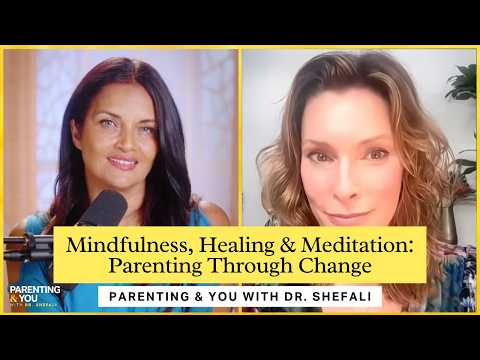
0:01 Hey everyone, welcome to today's episode of Parenting and You with me, Dr. [music] Shafali. I'm thrilled to welcome a dear friend and a trusted mentor, Emily Fletcher. She's a former Broadway performer who found a life-changing cure to her own anxiety and insomnia through meditation. After studying ancient techniques in India, Emily founded Zea Meditation to share these powerful tools with the world. and she has an amazing subsection of that called Zea Kids, which is amazing for all parents of young kids. She's an international speaker, bestselling author, trusted teacher at places like Harvard and Google. Get ready to learn how to stress less [music] and accomplish more and manifest your dreams with Emily.
0:46 I'm now joined by Emily Fletcher, former Broadway performer turned meditation expert, mother and founder of Zea Meditation and Zeva Kids Meditation. Emily has been a dear friend and a mentor, you know, her own journey curing her own anxiety and insomnia through meditation. She made it her mission to bring these life-changing tools to others. And she's now an international speaker, best-selling author, helping people stress less and accomplish more. Hey Emily, welcome to my podcast.
1:19 >> Wow, I'm so delighted to be reunited with you. I love you so much and I'm so grateful to get to share these tools that we've birthed together with the world. It's so fun. >> I know. Tell us about Zeva Kids. I know I was part of the original inception and I want you to share with the world. Why did you create Zea Kids? What is its core mission? Yeah, it's to help kids feeling their feelings and using these tools like mindfulness and meditation and manifesting. You don't have to wait until there's something wrong. Like there's nothing wrong with you if you're having feelings. There's nothing wrong with you if you're feeling stressed.
1:55 That actually your feelings can be your superpowers. And that learning things like mindfulness and meditation and how to feel your feelings can help you to be better at whatever it is that you love. So, like if your kid's trying out for the soccer team, it's like, "Hey, do you know there's this thing that you could do that's going to help you feel like you have superpowers versus like, oh no, you're stressed. There's something wrong with you. I need to fix you. You need to meditate." It's like a shared vocabulary that kids, adults, parents can have this common language of how to talk about big feelings, how to express big feelings and then utilize these inner tools so that we all feel happier. We all feel more connected and that we are better at life because I believe that we meditate to get good at life, not to get good at meditation.
2:39 >> Okay. I love it. I love it. So, explain to parents how that would really look. How old is your kid now? >> He's going to be seven on Tuesday. >> Amazing. So, your seven-year-old comes to you screaming, "I hate Rebecca. I hate her. I hate her. She's the worst person." She could be. Rebecca could be the sister, the neighbor. It doesn't matter. >> And I don't want to be with her and I hate my life. He's got big raging emotions. Tell us in the moment, what is the first thing the parent should do?
3:05 And then the second and the third. >> Well, I'll say what I would do, right? Is that one I got to regulate myself, right? And so, good thing I've been meditating now every day, twice a day for 18 years cuz that sucks. Like when your kid is upset, it hurts. When your kid is mad, we immediately think that we've done something wrong. We want to blame ourselves. We get disregulated. And so I immediately have to call on my tools and my ability to regulate myself.
3:28 So that's step one. And then step two, I would get on his eye level, not as close to him, but on his level. And then sports cast of like, man, you hate Rebecca. I get it. Rebecca said something mean to you. Like you're mad. Like I would just reflect back what I'm seeing without trying to project onto him, right? Not making assumptions, just like you're yelling, you're angry, like saying back what I heard. And then once he has a minute to just express it with no judgment, no trying to fix it, no trying to change it, but just like witnessing, getting in it with him, being like, "Yeah, it sucks when you don't get what you want. It sucks when people are mean to you." Like, so he doesn't feel alone in it. Then I might ask him, "Hey, like how would you love to feel?" Like once he's a little bit more regulated, once he's had some time to express what I call the stormies. So in Zeba Kids, we talk about the stormies, which is like there's mad stormies, there's scared stormies, and there's sad stormies. Once he's gotten a moment to move through his stormies, then I'm like, "Hey, how would you love to feel?" Like, "How do you want to act towards Rebecca?" And then I let him answer that question. And then depending on where he is and what he wants, then I might use one of the tools from Zeva Kids. And one of them is just like shaking like just like animals do. We just shake through the stories. and I would put on a song like maybe even a mad song and we would just shake together. And because he's seen me do this work, he sees me do zebra magic and like the somatic alchemical work. He's used to doing mad songs with me. He's used to doing sad songs with me. He's used to doing happy songs with me. So, I think the trick is introducing the tools in a time of calm, introducing the practices in a time where they're regulated so that when the proverbial is hits the fan, they know like, "Oh, yeah, mommy and I can shake together. Mommy and I can punch the pillow together."
5:10 And I'll say things like, "You know, you are so allowed to be mad. Your anger is so welcome here, but you're not allowed to be mean, right? You can't be mean to Rebecca. You can't be mean to me. You can't be mean to your little sister." So, it's not about just letting kids do whatever they want whenever they want. They still need those boundaries, but it is about letting them know that their feelings are welcome. And this is a bit of a soap box for me, and I'm sure you've experienced this as well. I feel like we live in a society that trains us not to feel our feelings since the moment we're born. It's like from the moment the infant comes out of the womb, it's like, "Sh, don't cry. Have a toy.
5:43 Have a bottle. Have some iPad. Have some booze. Have some pot. Have some numbing. Have some pills. But don't feel. don't feel. And mostly I think that comes from and I'd love to hear your perspective on this, but it's like we don't have the ability as parents and adults to feel and hold space for our own uncomfortable emotions. And so when our kids have them, we immediately try to stop them. And so I think that step one is always clean your own house. You start a meditation practice. You learn how to feel your own feelings. And then you have more capacity to be in it with your children.
6:14 >> Yeah. So, let's just pay attention to what Emily said because nowhere did she take the child into their head and nowhere did she start arguing, going back and forth, making it an intellectual debate about Rebecca. She didn't even care about Rebecca. I mean, no offense to Rebecca, but you didn't even go there. You just were there to help your child go through his feelings. That's it. And so, by mirroring him, you made him feel less alone. You also reflect it back and validate it which automatically just calms the nervous system because they don't feel like they need to be in their head and defensive.
6:50 They can just feel it. Then you let him feel it some more and then you work it through the body and you didn't take him up in the escalator to his mind and you didn't make it about Rebecca at all. And even you didn't get scared. Even the be mad don't be mean you'll do later. If you immediately come at like, "What about Rebecca and that's so mean. >> That's so rude." I mean, you're not even allowing the feelings to be felt. And then >> the child doesn't ever learn how to feel feelings, right? And the point of life is not to prevent our kids from experiencing negative experiences. The point of life or parenting is about helping them navigate those difficult experiences when they show up.
7:33 >> Yes. I love that. Like Glennon Doyle has a quote in her book Untamed when she's like, you know, new memo to parents, let your kids experience everything. Stay close. >> Yeah. >> Right. Like the memo used to be like protect them from feelings, protect them from adversity, protect them from danger, protect them from anger, protect them from sadness. And it's like that's not what we signed up for as humans. >> Yeah. >> Right. Like the human experience is all 88 keys on the keyboard. And yes, it's uncomfortable, but that's why we as adults need to meditate. That's why we as adults need to practice where do I go when I'm feeling disregulated? What do I do to feel and move my feelings? Yeah.
8:09 >> And then it's like if they see because again they're never going to do what we say. They're going to do what we do. >> And so that's what I'm trying to practice too. And I'm not I'm admittedly, you know, this is uncomfortable for me. But if I'm sad, I'm actually flexing. I'm walking to my edge of letting my son see me be sad and then communicating to him like, "Yeah, I'm feeling sad right now. This is not your fault. You didn't do anything wrong. I'm just feeling some sad stormies right now. I'm feeling some big feelings. And then he gets to see me feel it and move through to the other side without making him wrong or without having him be responsible for it. And I feel like that's something we could all get a little bit better at because I think because we've been shamed and blamed about having anything other than happiness, right? That I'm lovable when I'm happy, but anything other than that, I might not get mommy or daddy's love.
8:57 And so then we accidentally do that to our kids. We only let them see us when we're happy or regulated or of calm. >> Yeah. >> Now, I get that there's a line here like obviously if you're, you know, on substances or have anger issues or and the child doesn't feel safe because you are disregulated, that's a different story. But what I'm practicing is if I'm regulated and I'm having a feeling that has nothing to do with him, can I trust him enough to witness me go through that feeling on my own? And so that he gets to learn by seeing, you know, because we can only be something if we can see it.
9:29 Even though it's uncomfortable for me, because I definitely grew up with a belief that I'm lovable when I'm happy and perfect and performing well and, you know, bliss, that if he can see me in my sadness and know that it's not his fault, that that's going to be a gift to him. >> Right. [clears throat] And that the sadness is a part of what you're experiencing, it's not the all of you. >> Yes. >> Right. That it's okay to go through something. You know, you can just say, "I'm going through something." As long as they see that it's not overtaking you, then they can go through something and they're not afraid of that something.
9:59 >> Yes. Exactly. And then they get to see, yeah, a part of me is sad right now. It doesn't mean I am sadness itself. A part of me is angry. That doesn't mean I am anger. And so, you know, just like in the Suzuki method, like, you know, in order for a child to learn violin, the the teacher or the parent would have to learn to play like one or two songs on violin before they ever teach the child.
10:20 And I think the same >> is true of emotional regulation because, you know, as children, our parents are gods and goddesses, right? Like they are the divine all knowing beings that our survival is dependent on. And so, we're going to emulate them whether we like it or not, whether that's healthy or not. And so that's why I'm such a fan of Z Kids because it gives not just the kids, but also there's a whole training in it for the adults, for the caretakers to help them not be the meditation police, but actually give them a shared vocabulary of like, yeah, there's some mad stormies here. Let's shake it through. Yeah, there's some voice here.
10:56 Yeah. >> So, Emily, let's go to a really personal place. I know that you went through a divorce and you had to reconfigure your family. You left Brooklyn, came to upstate New York kicking and screaming. It wasn't something you wanted, but now you find that it's so healing for you. Walk us through that utter dread when you realize that your marriage isn't what you wanted it to be. What am I going to do with my child? How am I going to raise him with healing and health? I know every mother goes through that dark tunnel.
11:28 >> Yeah. Can you just take us back there so people who are listening will feel reassured that look, she did it. She walked through. She's at the other end and she's better today. She's more strong, more empowered, more powerful. >> So, take us to that other side and then bring us through the tunnel. And what did the tunnel look like? >> Yeah, thank you for asking that. Um, and I'll say that thank you to you because I found a video of yours talking about divorce and children and I like played it on repeat and I shared it to some friends and I think in that video you said divorce is not bad for children.
12:01 Adversity is bad for children. >> And so it's like if you can walk through a separation with love and respect and yes you might get triggered, yes you might do something that you're not proud of, but can you make amends? Can you use the conflict as an opportunity for greater intimacy? Then ultimately living the truth is good for children. Living a lie in the name of children I don't think is healthy. And so what became true for me in my experience this is in 2020 so it's you know deep pandemic New York City lockdown sharing an apartment with this amazing man like my son's father is an amazing man an amazing father and he was the CTO and CFO of my company. So it was not a light decision that I made. It was a big scary terrifying decision and one that I felt that I was rendered choiceless where it was like nature was very clear that in order for me to be the best mother and the best human that I could be, I had to choose myself and it was terrifying and heartbreaking and the last thing I wanted to do was to hurt him or to break up our family. And I won't pretend that my son has not paid a price for that.
13:06 Like it's hard to have two homes. It's hard to have back and forth. So, I'm not saying that it's all sunshine and roses. However, I know, and again, I'll quote Glennon Doyle because I read Untamed on repeat when I was going through this process, and she said, "The braver I am, the luckier I become." And that's something that I want my son to know is that, yeah, if I make brave choices that are in alignment with my highest self, that life will support me in that. And that certainly happened for me that I made this brave choice and like life just showed up with all of this magic, all of this serendipity. I mean, I really shifted my career path from exclusively meditation to performance to a lot more somatic healing and using pleasure practices and embodied manifesting and I besa kids in this time actually. So all this creativity came online when I ultimately chose my highest truth like the brave choice. And so you know a real testament to my son's father. I like to call him my husband.
14:05 >> You know we had hard times and it was challenging but we always prioritized our son's experience. So we we did the change really gradually. He would you know spend a night here, spend a night there. I wrote him a book. Oh this is a really good one. We were working with a co-parenting counselor and she recommended that we write a book that was age appropriate because my son was two and a half when it first started. By the time it was complete, he was about three and a half and he was really into cars. And so I wrote him a book about like the story of Jasper. It was the story of his life and it was how his father and I met and fell in love and got married and decided to have him and how it was the best thing we had ever done. And then I said, you know, at some point we realized that we were changing and that mommy was more like a car and daddy was more like a boat and cars like to go on the road and boats like to go on the water. And so we realized that it would be better for all of us if we got two homes. And so that it was just like going into like the real 3D of like where's the toothbrush, where's the backpack, like where's the where am I sleeping at night? Keeping it really 3D and not like there's something wrong, there's anything to fix. And I loved hearing a quote too where you say that divorce can be a graduation.
15:10 >> My son asked me, "What is divorce?" And I was like, "Yeah, it's a graduation." >> Just like you don't want to stay in first grade for the rest of your life. >> You know, you go you learn what you need to learn and then you go to second grade. >> So those are some of the tools that helped me. And I'll say that now we've moved and it like you said, it was not my choice to move. I didn't want to leave the city, but ultimately this is the decision that we made for our expanded family. My son's father now has another child. They're having a third in a few weeks. So, you know, they needed space and yard. And now that I'm here, even though it wasn't my choice to move, I know that nature has my back, right?
15:45 That like ultimately nature has put me here. And it's really in my highest good and that my son has a yard and a lake. And so there's a lot of blessings even in the ones where you feel like you're making a compromise. >> Yeah. What a transformation. And you know, so many women hold themselves to such a high standard that they're supposed to martyr themselves and sacrifice themselves and not choose themselves. So you made that choice to choose you.
16:13 >> But that is the ultimate, right? Like how did you come to that bravery and you know silence those voices that tell women they're not supposed to choose themselves? >> Well, it's a funny story because we had been working so hard. every coach, every therapist, every modal. I mean, for three years, we were just deep like giving it our all. We did everything we knew to do to save this marriage. And finally, I had done, you know, medicine ceremonies. I mean, Estair PL like I think at one point we had seven therapists and I was like, someone just tell me it's okay to stay like someone tell because I wanted to stay. My mind wanted me to stay. My conditioning wanted me to stay. I had all those stories about like sacrifice for your son. Do what's best for the family. And then finally it was a tarot card reader.
16:56 I'm so embarrassed to even say that, but I went to a tarot card reader and we're an hour and a half in and she's talking about my career and my creativity and and finally I was like, "Can I ask about my marriage?" And she goes, "What marriage?" And I was like, "The one that I'm in." And she's like, "Oh, no. That ended 3 years ago." And I was like, "That is the truth." Like everything in my body was like, "That is true. This is already over.
17:20 >> You got to go." And then that was Thursday and I asked for the divorce on Sunday. It was there someone reflecting back to me this is already over. And then the deep resonant truth that happened in my body that was what ultimately was like this is just a lie if you stay at this point. >> Yeah. And it doesn't mean that people can't go back into a marriage but they will not go back the same way. Like you can never go back in the water the same way. It's okay to kind of end a chapter and it doesn't have to be the end of the book. You could come back to that book.
17:49 >> Yeah. We're so afraid to even confront that, you know, who I was in that version has now come to a close. We fight it. You fight it for three years. You fight it for lifetimes. But it's been over. It's been gone. So, we're holding on to this idea of who we were, right? That's the hardest thing to transition from is who we once were. We who we once were. >> Yes. And like I also don't believe in one way liberation. Like what if I had sacrificed? What if I had been a martyr and he hadn't met his new wife? He didn't have these new children, you know, like I would have been robbing him of this new joy, this better alignment, this new family if I had stayed in something that wasn't my full truth. And so it's like there really is no such thing as one way liberation.
18:35 >> Yeah. And there's no such thing as children who don't go through a divorce necessarily are healthier. That's not true either because that's a myth, right? And I'm not we're not advocating for divorce, but there's this real fear what's going to happen to my kids. And yes, they struggle. It's not convenient. It is a transition. It is hard, especially when the egos are involved. >> But it doesn't mean that if I had stayed, my child would have been a superstar, super success, and super together, you know, >> or that they would have avoided adversity.
19:05 >> Yeah. >> They're going to have heartbreak and sadness and anger and neurosis regardless of if their parents stay married or get divorced. Yeah. >> Again, it's like how are we helping them navigate the inevitable challenges of whatever their soul chose. >> We're going to take a quick break, but don't go anywhere. When we come back, we'll have more with Emily. One of the mistakes I make is whenever my daughter is struggling, I'm hard on myself. I go, "Oh, maybe this is because of me. Maybe because this is because of the divorce." But, you know, it's in a way shortsighted and narrow-minded to put everything on the divorce. And the second thing is I center myself. And I think women do that. Must be something [clears throat] I did. I'm such a bad mom. But it's actually not seeing the whole picture, you know? Yes, there is a part of me. There is a part of the divorce. But then there's so much else.
19:53 Like it's that child's temperament. It's their friend group. It's their moment in time and culture. And I think women put too much of the blame on their shoulders. Have you found yourself getting into that sometimes? And then how do you deal with that? Um, I think the thing that's coming up now, and I'm very open to your guidance and counsel on this because it's heartbreaking, is like right now he's in a phase where he doesn't want to come to my house.
20:21 Like he really wants to be with his dad and stepmom and he's only six. So, like I anticipated that happening, you know, like 10, 11, 12, like of course that's like daddy time, but like at 6, him being like, I don't want to come to your house and I'm just like like I just feel like I've got punched in the gut and I feel so sad. And then I'm like, have I done something wrong? Am I a bad mom? Is he mad at me? And I think the honest answer is he just gets unlimited iPad over there, but we can talk about that in another conversation. And like it's just like if you have unlimited sugar and iPad somewhere and you're six and then you don't have any of it at mom's house, like that's tough. You know, he kind of goes into withdrawal and detox when he's with me. And so that's been a really hard one to not center myself around or to not like take it personally of like, oh maybe, you know, maybe I'm a bad mom. And then I just have to like I know I'm not a bad mom. Like I am a great mom.
21:16 >> So a couple things, you know, to help you with. Number one, there is a positive for a son to be with his father. There's a magnetic attraction. However, it's very important in his development for him to be with maternal figure as well. So, even if he hates you, even if he doesn't like your hair or your nose or your house, it doesn't matter. Take yourself out of Emily and just go, I'm the maternal figure that he also needs to offset that and I'm just going to be that. So if you can take Emily out of the picture because Emily you know or the mother could get very you know take it very personally and go okay if you don't like me then don't come you know if you don't like me it's okay thinking that >> fine I'll just give you iPads and sugar here too give you iPad and sugar either we bribe him or we relinquish our power by saying if you like your dad thinking we're being very conscious and chill right just go it's okay I'm not going to fight for you but it's not about you it's not about you fighting for you shouldn't didn't fight for you. It's about the maternal figure that is very important. So, sorry. I'm sorry you like everybody but me, but I'm your mother and I need to be there in your life till you're 18 or 21. Then you can discard me. I'm not going anywhere just because you don't like me. Like, hello. What do you mean you don't like me? I'm just going to go away. I'm not going away.
22:34 This is the mother you got. So, sorry. Right now, if you were an addict or abusive, of course, we would be like, it's better for him to be with the dad. But given you are a you know quite you know normal healthy mother sorry he's got to learn to deal with your imperfections and I think you need to just go sorry this is the mother you got right this is all you have and I say that to my daughter all the time I'm so sorry but this is who you have and let's make it work because >> this is the house you got this is the city we are in so sorry like this is it this is the body you have right tomorrow your child could hate the body they have right now what are we going to do replace the body right we can't like Sorry, this is the body you got. Let's try to love it. Let's try to celebrate it. Let's try to make you feel safe in it. In the same way, you know, I'm so sorry you want to be with your dad.
23:21 Sorry, it's mommy's time. Mommy wants you. You have to come, >> you know. >> Yeah. As you're saying that, it feels like if you're in a relationship and someone's avoidant, right? And they want to pull back. They actually want that person to be like, "Come after me. Like, I love you." >> And so, he wants me to be like, "Yeah, I get it." And so, it's like I said with Rebecca, like, "I get it. Rebecca sucks." Like, "Yep, mommy sucks." right now is boring. There's no iPads here and it sucks. I get it. And I'm your mom.
23:48 >> Yeah. And I want you and I need you. So, >> and I love you. >> Yes. And I love you and I'm sorry. Because that teaches him a model that we can't just avoid people who are essential to us because of our women, our fancy. Now, again, if you were damaged, if you were abusive, of course, >> but you're not. So, he's going to have to learn to be okay with you. And looking back, were you to go along with his story now and like let him be with the dad, he's going to turn around and go to his therapist and go, she abandoned me, you know, so don't do that because he's going to turn it around.
24:19 >> Yeah. Not an option. I won't do that. And I I But that's really helpful. Take my ego out of it. I am your maternal figure. >> Yeah. >> I get that it's hard. I get that it's tough and I'm here. >> Yeah. You're the figure. You're the maternal figure motif that's going to be steady. So take Emily out of it and go, he needs that maternal bonding and I'm going to give that otherwise where is he going to get it from? Sure, his stepmother will give it, but it's not her job. So he's going to have to deal with you. Yes, >> she's great and he needs his mom, you know, his soul chose mate. He's also a Gemini, so he has this like it's interesting that he's like this twin archetype and he has these two lives.
24:57 >> So that's been helpful too of like the soul on some level is choosing, you know, like I said, the karmic syllabus. And so, you know, how can I empower him >> to learn what he's meant to learn in this ride? >> Yeah. And if we take that rejection personally, then when he comes over, we're a little pissy. We're a little moody. Now we're playing games, you know. But tomorrow he's going to change his mind and not like the other person.
25:21 It's so whimsical. >> Yeah. >> And it's so great that he loves his dad. What a lucky person you are that he loves his dad. >> Thank the stars for his and his dad's amazing. So, >> yeah. It's like being at, you know, his best friend's house, but he needs to come back home. >> Yes. That's right. That's right. >> Yeah. Yeah. So, feel empowered in that. So, Emily, what's your biggest struggle right now as a woman mother setting up her global business? Where do you find yourself hitting, you know, against some barriers?
25:52 >> Well, there is a real question mark for me right now where it's like my son is six. I feel like I have probably six or seven years where it's like really like you know this like cuddly squishy like all hands on deck mommy time like once he goes into adolescence and teenagers it'll be just a different relationship. >> Yes. >> And so I'm finding myself of like do I just go all in and really prioritize motherhood and being with him?
26:17 >> And it also there's a part of me that's like it's go time for my career. You know I'm like at this like peak of my midlife you know I have 16 years of experience. The world needs these tools of meditation and manifesting and feeling their feelings like more than ever. We need these human technologies in the age of AI. And so I'm feeling this like lack of real clarity of like what's my number one? And right now I'm trying to make both motherhood and career number one. And I think that it's creating unnecessary strain inside of my body and a lack of like if you don't know what your number one priority is, how do you make decisions about everything else? And ultimately, yes, being a mom is my number one priority, but that's going to show up differently for everyone. Like for me, being a full-time mom actually wouldn't be being the best mom for him. So, it's like what is my time allocation? How much time am I willing to dedicate to Zea right now?
27:09 And I am lucky because I do co-parent. He does have an amazing father. So, I do have these like week, you know, week at a time where I can go and run a retreat or speak at a conference or buckle down and write a book. There's little pockets of time that I know a lot of full-time parents are not afforded. And that's sort of like the dirty little secret about co-arenting that no one talks about is that once you move through, there really is a beauty to like when I'm with him, I am with him, right? And I'm like savoring it because it's so precious. And then when he's with his dad, I have some spaciousness and some freedom. And I'm a double Aries. I like what I do. And I have a tendency to just light that fire. And I know, you know, you know, where you're just like, let me just light that fire and work. And so, I guess a thing that I'm bumping up against is what's my ratio, right? Like, what is the split that feels good for me and for my son right now and that serves my dharma?
28:00 >> Yeah. And I think you're going to constantly figure that out. It's not going to be clear to you, you know, because in a way, like you said, your co-parenting formula actually gives you time to ignite that fire. Then how do you turn it off, right? It's really hard. If he was at home all the time, it may not even be a question. You'd be like, I have to put that down low. But now you've set it to like a roaring flame when he's not there. How do you then dampen it?
28:25 >> Right. You can't be like, "Oh, I'm just not going to take any meetings this week." >> Yeah. I was great last week. Yeah. >> Yeah. You're right. >> It's really hard, you know. And 6 to 12, he's in an in between phase two of push and pull and then it's going to be more. And yeah, I think it's just something you just keep in your awareness and you keep doing it already. I don't know whether you need to have a number one priority because no matter what he will be the number one he is, you know, >> yeah, I think what I'm saying is like the time allocation.
28:53 >> Yeah. You can't manage this creativity and you're like where do I put this when now I have to play trucks on the floor? >> You know, I'm in the middle of a big inspiring, you know, movement in my head. I'm creating a revolution and now he wants me to like look at him play with frogs. Like it feels like a big thing. But I I think and what I can offer you is in that moment you put the fire there like because it's that playing with the frog is going to directly feed you back again. So it's not like two things like that is actually the fertilizer for that. So you go oh my source is taking me here. My manifesting is taking me here. what is this frog and this moment with this child that feels like it's pointless going to tell me and I'm going to take it right back. So it's actually a continuation I think you know if you can look at it that way though it feels like so pointless playing with frogs.
29:45 >> It's more like a dopamine addiction right of just like the next email the next talk the next thing on Instagram more than like I feel bored playing with him. It's more I think just like the incessant news social media cycle that a lot of I'll just speak for myself that my brain gets addicted to. and then slowing it all the way down to like yeah let's play with roly poly >> but then he's your meditation you don't need to meditate twice a day know that this is it right here like oh okay I'm here I'm here I'm present >> oh presence >> right and then the difficulty you have in transitioning is how you'll help all the people in your retreat to transition because they're having a hard time too like you are the boring frog for them they're like why are we sitting here right why is she making us sit she should make us dance she should make us move but now you're telling them to sit their transition is you're going to the frog right it's same thing like you are really practicing it you know >> that's really beautiful and I will just say that like yes I teach meditation but I do just want to name that there's a whole new body of work that's coming out that's actually maybe was seated by Ziva kids of like the stormies and giving kids the ability to feel their feelings now I'm doing that with Z diva magic >> where we are dancing the rage we are dancing the sorrow and we're kind of sprinkling a little bit of pleasure on top >> alchemize it.
31:00 >> Yeah. >> And it's like it's clearing the channel and like it's sort of like the antidote >> to what many of us received in childhood about that not feeling our feelings. It's like, oh, now we get to dance it, rage it, and sprinkle a little turn on on top. >> Yeah. >> Yeah. So, you're moving. You're really very much in your body. That's what you're doing. So, tell people about Zea magic before we go. >> It's an embodied manifesting formula where, you know, because a lot of people say, you know, thoughts become things.
31:25 What we put our attention on grows. And that's true, right? Like you can manifest with your mind. But what I'm teaching is like can we get the head, the heart, and the body all in coherence with each other and pointed towards the dream. And so the formula is really simple. It's visualized, alchemized, magnetized. So I get clear on what's your dream. And that could be like I want to be super present playing with frogs with my son. I want to be the best mom I possibly could be. I want a coherent family. Whatever your vision is. And then we tune into anything that's not already a match for that.
31:56 like, "Oh, my mom wasn't present with me or I don't know how to sit still and when my son's playing with frogs." Like, anything that's not a match and we feel the sadness of that. We move the rage of that, which can be terrifying. I'll just name that. But if you have a great playlist and you have an accountability buddy and you have a community and that's sort of the game that we're playing is feeling and moving the feelings, it actually can become fun.
32:19 And then we sprinkle just a tiny bit of pleasure on top, which is like, you know, nature installed this whole cocktail of oxytocin and norepinephrine and dopamine and serotonin. And it's like, well, why would we not use the pleasure cocktail that nature has installed inside of us? And what I found is that when you start to feel good, that can shift the very thing that was keeping you from your dream, and it can turn that into fuel for the dream. And then the magnetized portion is that we turn on the generator and the magnet of the body which is at our root. Right?
32:49 It's this creation energy. It's the very energy that allowed us to make the babies to begin with and allow us to have the kids to begin with. But we can use that to manifest anything we want. So that's what we do inside of Z. Magic. We visualize, alchemize, magnetize, and I don't know when this is going to come out, but I'm doing a big free event on July 22nd called Magic Maker, which I'm so excited about where people can come and just experience it. And then this is the thing where it's like my son sees me do I'm not the pleasure part but like he sees me dance my rage or dance my sadness and then he'll join in.
33:19 >> So it's like again it's the same vocabulary just different ages. >> Yeah. I love it. I mean I will tell you that when I saw you go through your divorce I mean I really saw you transform. I mean you really lit up. I mean you were always lit up but man now you're lit up at some other level. You feel it too don't you? >> Yeah. I feel like a totally different person. like more true, more embodied.
33:41 And it was yes that choosing the truth, but also these tools of like being willing to go into the darkness, being willing to feel the rage and the sorrow and then having the pleasure to like fill up that spaciousness. I mean, it's just life force, right? It's just pure creation. We can create whatever we want with it. >> It's loud. It's clear. It's vibrant. And it's so, you know, attractive. So, thank you for all you do, Emily. I adore you, and I love what you do in the world. I'm always here to support you. You know that.
34:10 >> Thank you. I really appreciate it and I'm so grateful for your contributions to Zea Kids and I'm so grateful to get to talk about these things I never talk about. So, thank you. >> So, I hope you enjoyed that conversation as much as I did and really took away the power of helping our children stay in their feelings, feel their feelings without taking them to their minds and disconnecting them from their bodies. [music] Thank you so much for listening.
34:34 We'll see you on the next episode of Parenting and You with me, Dr. Shafali. Parenting and You with Dr. Shafali [music] is for educational andformational purposes only. It is not intended as a substitute for professional medical, psychological, psychotherrapeutic, coaching, health care, or other qualified professional advice, diagnosis, or treatment.
Summary
- Zeva Kids aims to teach children mindfulness and emotional expression, helping them view feelings as superpowers rather than problems.
- Parents should first regulate their own emotions before addressing their children's feelings to create a supportive environment.
- Acknowledging and validating children's emotions can help them feel less alone and more understood.
- The importance of introducing emotional tools during calm moments so children can use them when they are upset.
- The conversation highlights the need for parents to model emotional experiences, showing that it’s okay to feel sad or angry.
- Emily shares her personal experience with divorce, emphasizing that living authentically is beneficial for children, even amidst challenges.
- The discussion touches on the balance between motherhood and career, exploring how to prioritize both effectively.
- Emily introduces her new program, Ziva Magic, which combines visualization, emotional processing, and pleasure to help individuals manifest their dreams.