Transcript
0:00 He said even if you have to spend 100 crores go ahead and do it. I don't care. The nation needs us. Every time I say this I get goop pumps. In defense tech nobody gives you state of art. Everybody would give you something which is 10 years 15 years old technology not the latest state of the art. We gathered some scraps bought a few things made a drone and sent the pictures to a couple of people in India. Why don't you come and build it? Which was added by my brother meeting PM when he was an official visit where they meet students.
0:25 They said oh this is amazing. Why don't you guys come down and we will have a presentation. Why do you think this could be the best time to be building in India? >> The kind of impact that you can make with your work, you will not find it in the US. You're not allowed to enter a few rooms, not allowed to touch a certain systems. A scientist in you is cribbing. But here since the mindset of the government and the security forces has been changed towards spiral development, see the fruits of it very soon. Right now we are manufacturing this at onetenth the cost. I sometimes get a letter from a commanding officer saying that it has made their life easy and this is what makes us feel at peace that whatever we are doing is helping our nation.
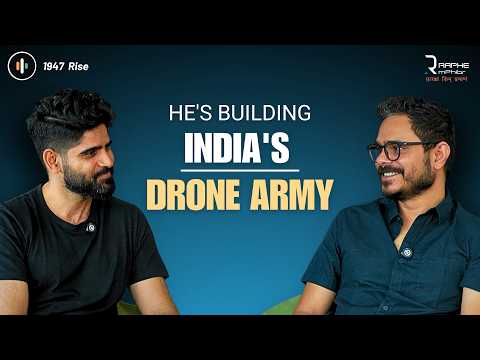
1:01 >> During operation synindor refi was at work. >> During opsendor we were getting calls saying that you send systems we'll see about payment. Uh right now there's no time. >> What's the magical outcome that you hold for refi? >> One thing that that we want to do in the short term which is say 5 to 10 years is provide unmanned and manned fighter jets to India. This is this is our next digger milestone I would say but non-stop >> from a coal mining town in MP to building the drones that flew in operation SNU Mishra's story is not your typical founder story he turned down the Silicon Valley playbook came back to India and spent 4 years just talking to Javans in the field before writing a single line of code today Refi is 900 people near a billion dollar valuation and Vive says they are still at 1%. This one will give you goosebumps. Now I bring you Vive >> Vive. Excited to have you on the 1947 Rise Show.
1:57 >> Thank you. Thank you for inviting me here. >> As I was telling you earlier, I've been very curious and excited to uh learn more about you >> and what you've been building at Rafi. Look, it's one of the most important company you've built for India. You were you were in the US. You've come back and you've done that. Uh we'll get into Refi in a bit. But before that, uh I want to go back a bit. Uh Vive, uh what was early life was for you? uh you know what were the conversations at home around success around uh ambition. Who were you growing up?
2:47 >> See we me and my brother we grew up together and uh from a very humble background not related to business companies anything at all. Um we grew up in a we were born in Priyagra and then our father uh who is retired now who used to work in Singali which is a very small town in uh Madhya Pradesh where u lot of coal mines are there. So he used to work there. We grew up there.
3:22 >> Mhm. It was a good time because see in that time and that place you we didn't have a lot of information from around the world. We didn't know a lot of things that was happening around the world and that time was so as well. I mean there was no social media and stuff like that. So growing up we were like a was normal how Indian lower middle class grows. we were uh into studying with both of us. One thing was that we were into everything except I mean including studying.
3:59 >> Mhm. >> So we used to take part in co-curricular activities um sports, drama, cultural activities and whatnot. So we were heavily involved in everything and I think that gives you a lot of uh confidence um personality building teamwork all those things happen. So I think one one good thing there was um we took part in everything >> and uh we were both good at studies and uh conversations used to be about uh if we used to go and play we both thought that we'll be amazing cricketers like every teenager does.
4:45 >> Yeah. >> So all these I mean I would say just a average normal u middle class environment and how we grew up. >> Mhm. >> But we we did almost everything that there was to be. >> Yeah. So when you were getting closer to uh undergrad, what college did you go to? Uh why did you decide on that college? And I know that you did work at Bharat Petroleum before you moved to US.
5:18 >> Uh so again one one good thing that happened because I was involved in a lot of things other than studying as well. I mean I got really serious about studying after 9th I started uh that time the physics as a subject was introduced and I loved it. >> So before that I used to like read before the exams or something like that but from nth standards I really started loving physics and math.
5:50 >> Mhm. And um after 12th um like every other kid I also gave AIE E and IIT exams got into both but uh I was not getting really good u major in IITs. So I picked up NIT Bopal >> where I was uh getting uh electrical engineering. So I wanted to do one of the I would say core uh engineering aspects. So chose electrical engineering did my bachelor's there and then got placed in Bharat petroleum.
6:28 >> Mhm. >> Um at that time during our thing PSUs would come and take whoever was top of the class. >> Mhm. >> No questions asked. So um don't want to get into details of this but yeah I mean um the conversation was about that uh we have a lot of technical work in Bharat patrol in why don't you come and join us and >> um went there joined >> for a couple of years but it was more of a managerial work than technical work I could do >> a lot of technical things I won't say that I did not do I was handling a plant there got into machines repaired a lot of machines but after a year I knew almost everything about the machines that they were in. So started getting bored.
7:14 >> Mhm. >> And that that was the time I decided I should go do some studies maybe do a PhD >> and then started looking for options. My brother was already in the US at that time. So he helped a lot in getting information about what good colleges are, how to apply and stuff like that. >> Mhm. So got into Georgia Tech and started my masters and then did my PhD. >> Uh and uh and what was your PhD about uh in Georgia Tech?
7:43 >> Um so it was controls. So controls is um applied mathematics. >> So we study about systems. We study about >> how to mathematically model a system. Say for example, if you have a car, then how do you model the whole car as uh using physics and math >> and do analysis on it? Design controllers, design something called estimators. So it's all about systems in general and how you can automate things.
8:16 So uh that is a major part of robotics and automation. So whatever you see flying autonomously, there is a controls engineer working on controllers, working on estimators, making sure that nothing fails. >> Mhm. >> So it's mostly applied mathematics field. >> U so that was my PhD. >> Yeah. And when you landed there and you did your masters, you were doing your PhD. What were few things uh Vive that really kind of like just involved you or surprised you? Whether it was the culture, whe whether it was the ambition there, what was it like?
8:52 >> See, the first thing that that were very surprising and refreshing was the environment in a classroom. >> So, uh you would see that professors encourage you to ask questions which was not the case when I did u my studies in India. And I mean to a point where you would ask questions in a in the class and your uh classmates will start hating you.
9:25 >> I used to get a lot of um feedbacks from my classmates saying that you ask a lot of questions you should stop. So I think couple of years into my uh undergrad I that that thing was suppressed. So I would not ask questions and >> um when I went to the US my first class it was an amazing controls professor of linear systems he would actually stop every 5 10 minutes and wait for 2 3 minutes and uh ask you to ask questions.
9:58 >> Mhm. >> Saying that if you're not asking it means that you don't understand. >> So that was one good refreshing thing. Second about the professors I mean they are very candid uh in the sense that if you don't if you ask a question they don't know about it they will say that I don't know about it I will uh read it get back to you >> that was it was a shock for me >> to be honest that uh how can a professor not know about things we are asking so the environment in a in the university was more towards learning more towards um how can you improve things? How can you learn a topic and use it at a certain level through projects? There are a lot of research projects flowing around where undergrads could also take part. So those that environment is uh quite good for technical understanding and getting a growth out of an engineer or a scientist. Mhm.
11:03 >> So that that was quite good. >> Yeah. And typically Vive you know once someone has done PhD you can basically get a job >> at any of these top companies and that's what traditionally has been uh you know top Indians they would go move to US uh do their PhD join you know one of these top Microsoft Google and others and just build a career over there. for you. Uh why Riiffy? Uh did I pronounce it right?
11:33 >> Yeah. >> Okay. Why RFI? Why did you move back uh to India and wanted to build Rify in India? >> See, we always wanted to move back both of us and uh I went there when when I was I think 22 or 23 years of age. >> So initially when you're that young it feels nice. I mean uh the infrastructure, the environment, things to do.
12:04 >> Mhm. >> But um after a couple of years I was I was done. >> I was uh a I started missing home. >> Second is uh both of us worked on projects where we were not allowed to work on certain things. So initially when I went my I think second year I was working on a project which was sponsored by Dhaka and me being an Indian citizen I I had to do a very small section of work which was not related to everything and access was was restricted and my brother has similar experience with while when he was working in a national lab in um in the US as well where you get a different pass and then you're not allowed to enter a few rooms.
12:55 certain systems and scientist but you're not allowed to do this and that I think that was one more thing where uh we thought that whatever I'll do I'll be an alien. >> Mhm. And at the same time while discussing things we understood that we with a kind of work that we want to do we can make a much much bigger impact in India than in the US and u honestly there was no I mean while initially there was no plan of starting a company or doing a business because I told you about our background.
13:39 >> Mhm. we were very far off from we initially as we didn't know uh what a balance sheet is what a company is and whatever >> u I mean 3 days back I was talking to somebody um >> and they they said about this word uh product market fit and I told them that I got to know about this from Shark Tank we didn't know what product market fit is >> so the the drive has been to work on new technology ies develop something and both of us are patriotic. We want to help people and you would see a lot of people almost all everybody who joins us has that uh patriotic strain in them >> that they want to help the country in some way or the other.
14:25 >> Mhm. >> So those are the driving factors. Those were the driving factors at uh that time and the formation of the company was uh again incidental. we developed something and um some officials told that this is a this is something that we would require >> and why don't you uh come and build it which was added by uh my brother meeting uh PM when he was an official visit where they meet students. >> Mhm.
14:55 >> So that a lot of encouragement was given to come back and start something in India. >> Mhm. So uh few things added together we started the company. >> Mhm. Mhm. So maybe dig a bit deeper into this the phase of discovering. So one you mentioned that you know you both of you always wanted to come back and you knew the impact that you would create would be much bigger in India than just staying in the US. So when you already knew uh about what you going to build while you were in US or you were or you figured this after landing uh in India >> see I mean because of the background we didn't have money to come back to India.
15:45 So even during vacations. So what we used to do is either my brother would come uh to Atlanta or I'll go to Boston during the uh summer breaks or winter breaks. And breaks used to be 15 20 days. And you know uh we don't talk a lot. I mean uh >> Mhm. >> guys don't talk a lot, brothers don't talk a lot in the sense that our topics get over in couple of days. >> So we had nothing to do. We were like what to do? Um I was working on a similar micro aerial vehicle project of DARPA. So we were thinking about things and we thought let's make a drone.
16:26 >> So we gathered and I I was there in Boston with him. So we gathered some scraps, bought a few things, made a drone. >> Mhm. and uh flew it and sent the uh pictures to a couple of people uh in India and uh they said oh this is amazing why don't you guys come down and we will have a presentation and we were like okay we have we we are getting a chance free of cost to go to India why don't we go >> so came here did the presentation and uh a few government officials uh really really liked it >> and they said that you need to uh develop this particular thing for me.
17:11 >> Mhm. >> And in order for us to do that we had to form a company. So we formed a company because we wanted to work on this particular amazing tech and the only way to do it was forming a company. So we formed a company. >> So as I said we we didn't have an inclination towards oh company is a thing and we need to start a business or whatever. >> Mhm. >> So that is how the company got formed.
17:34 Mhm. >> And then we started working on it >> u the first system that we did >> um and uh within a year we we came up with the system we delivered the system and it's still being used. >> Mhm. So the that is how the company started as in the idea of the company started and >> then things started. I mean we took a first uh first of our building which was not a building a space 2,000 ft² face a space where we started hiring a few people and uh getting the work done training them >> stuff like that.
18:15 >> Mhm. Mhm. So uh we were talking about product market fit. I believe uh the government official asking you we want this come build this for us. What was a product market fit? >> Yes. And and that is why I tell everybody see we never knew that uh product market fit is something but whatever we develop has been um told to us by the Indian security forces. So we never develop something and go market it saying that hey this is an amazing thing why don't you use it?
18:50 >> It's always has been the other way around. >> Mhm. >> We've always um communicated with the Indian security forces they tell us that this is the need why don't you do it and it is always driven by a requirement. >> So whatever we develop is always a product market fit by design of how we develop the things. Mhm. >> So that has been our u way of working from the day one. >> From day one. Yeah. Yeah. You know you mentioned uh you know you started from 2,000 square ft office. Today we are sitting at what 7 lakh >> uh square ft² office uh one of the nicest offices I've been to in India.
19:29 And uh so I read about it that I think initially you spent almost 3 to four years to really understand the pain points of uh you know the uh uh the problems of the uh defense >> uh in India. uh you know feel free whatever you can share uh how was that journey like and also for the audience and you know there'll be many people who probably don't understand what refeed does what kind of products it basically offers so we can get into that as well >> yeah I mean I can share whatever I can share >> um so like I said initially 3 4 years um we have traveled across Ross every um place in India where security forces are and uh why was it so is because see Indian terrains are very different and um we have everything. We have uh deserts, we have mountains, we have uh rainforests, we have uh snow. So uh and then we have uh coastal reasons.
20:44 >> Mhm. So u the systems that you develop that is one one thing about the terrain and second thing for any um system to work you need to know what are the operational challenges and where does it fit and then if if a person say if a security force wants to achieve a particular operation then what does it take where are the gaps >> what are the uh difficulties And as soon as you get to know all this and you formulated a plan about operational scenario and how this particular thing will help them whether it is required or not.
21:25 >> Mhm. >> Then you can formulate this into physics and math. So initial 3 four years we were studying all this and developing our uh the science behind how a UAV would work. Um what is the science behind it? What happens when terrain change? What happens with when environment changes? What happens if user wants this? >> Um what does it translate to? >> So initial 3 four years were all about this and at the same time we got to do a lot of iterations um of the product as well. Um so that that initial phase was very important and um because again um there's when you talk to a scientist or an engineer um we have grown a lot as well in that aspect because we as a scientist we would want to take every problem as a technical problem. So if you talk to a electronics guy he wants to solve every world's problem with electronics. If you talk to a software guy, you tell them hey this is a problem, he'll be like okay let me make an application for it.
22:38 >> So the difference is that hey you need to think from the user perspective as well whether he wants the application whether it will help him or not. >> Mhm. >> So that that uh particular perspective we got through these iterations that does what kind of system and what kind of things would actually help the user in their day-to-day life. We're not only talking about when there is a conflict. >> Feel free to give some examples as well.
23:06 >> See, okay, I can give you one example. So, it's a more recent one. I mean 2019, I think it's not that recent. So, uh say for example, logistics is a uh challenge which has been a challenge for a long time. Mhm. >> Now when we went uh to these areas where this operational challenge was there that when you have a lot of snow then um it takes weeks to deliver anything even critical things like medicines.
23:38 >> Mhm. >> So developing a logistics solution and aerial logistics solution was a challenge there so that you can deliver things within 5 minutes within 10 minutes. M um so we did a lot of study about how we can design a system that can be operated by a javan because you can't expect an officer uh which are lower in number >> that every post and they have lot of work to do they have uh plannings to execute uh day in and day out so it should be as simple as you hitting a button uh saying that this is the area where you want things to be delivered loading things hit a button it should go deliver it and come back.
24:22 >> Mhm. >> So we did a lot of study with the uh with user about um how do they want say for example uh there was a lot of conversation uh about that when a UAV goes now you could have um things with a fragile >> so earlier we used to just drop stuff and come back. >> Mhm. >> Now you can't drop everything. It needs to land. Now when it lands it needs to come back as well. Now when to start when do you start that UAV should come back.
24:53 >> Uh if you put a timer >> and what is UAV? >> Oh uh drone unmanned uh aerial vehicle. Sorry >> for the audience. >> Yeah. >> So um now it has landed. If you put a timer on it then um because we discussed this internally and we came up with amazing idea that we'll put a timer on it. Mhm. >> They have 2 minutes, 5 minutes to take it out and then it should come back.
25:20 >> Now this was all engineers perspective. Now when you talk to uh the person who's actually deployed there, it might happen that it has landed and within 2 minutes uh it started raining >> or it started snowing >> or something has happened which doesn't allow them to take out the load. Now what do do you do in that case? Mhm. >> So that perspective can only come when you talk to the user and tell them that hey this is something that I'm uh providing uh as an input.
25:50 >> Mhm. >> So then they said not not feasible timerbased system will not work for us. Then we came up with other sol thought about other solutions safety and everything and now the things are that now you've taken things out you hit a button it starts announcing you have time for clearance and it takes off and come back. Mhm. >> Similarly, a lot of inputs have been provided about automating these things. How can you make it more safe, more secure? So, uh that continuous dialogue with the user helped us design a logistic system which has been now been used um for last 3 years in hundreds of numbers. Mhm.
26:30 >> So, and I sometimes get a letter from a commanding officer or a officer who has used it saying that it has made their life easy and this is what >> makes us feel at peace that whatever we are doing is helping uh our nation. >> Mhm. And uh and today uh uh Vive what all products uh or solutions do you offer to uh to the defense in India?
27:00 We provide everything that is required by the defense of India and as I said it is driven by the user what uh I mean we are in in every space um mostly say surveillance platforms logistics platforms and other platforms which which are acquired by the users. >> Mhm. >> So it's as I said it's mostly driven by them. >> Mhm. They tell us that this is the need, this is the operational need and uh we want this kind of system and we develop and provide them the system and uh and we hear that uh you know during operation Synindor uh Refi was at work.
27:45 >> Mhm. And uh and when you got to know about this or or you or or you know the government asked you you know we need you here. What was the feeling like for you? >> See we have been actively participating in operations since 2018. >> Mhm. >> So this was nothing new for us. >> Yeah. So I mean we we don't publicize these things because uh operations are supposed to be confidential operations are supposed to be which are a property of >> um the users themselves. So uh we have been participating in this from back in 2018. So this was nothing new.
28:34 >> Mhm. So we got u commendation from chief of army staff and that is how everybody got to know that we were also involved. Um so to be honest it was nothing new and we know that every time there is something we are a part of it. >> Mhm. So uh of course it was a great honor and it always is and um every year we take part in a lot of a lot of these things and uh as I said this companies to support um India right now we are supporting uh security forces. We might be in future supporting other um industries as well but um our our alignment is in the sense that how can we >> contribute towards the development of India and this is why you would see we are >> we are not only restricted to I mean the product finally which everybody knows is UAV >> but it it's not only about UAVs we are developing subsystems we are developing um other things that are required by the security forces which um may be very low in volume which doesn't bring a lot of business >> but if it in some way supports India or Indian ecosystem >> Mhm.
29:58 >> we are happy to do that. So operation is a part of it. >> Mhm. >> Because right now the uh the concept of UAVs and right now it's catching up. But imagine 2018 when it was not a big deal. >> Mhm. >> Now UAVs are everywhere and everybody talks about UAVs. Back in 2018 nobody used to talk about >> this and the tech was quite new. So it was natural for us to support um the security forces on how to use it because again operationally if you have it's like a tool you have a tool if you have not used the tool you don't know how to use it and the way you have been planning needs to change. So somebody who understands the system, what are the uh benefits, what are the constraints, where it will fail, where it can help.
30:44 >> Then that kind of input can help you in planning the operation in a much uh seamless way. >> Mhm. >> So this has been um the our our part that have we have been playing >> um since almost now 8 years >> and we'll keep playing that part. >> Yeah. >> So yeah. >> Mhm. So today we see you know we hear about the success stories at Rifi but uh let's talk about the early days uh Vive uh you know I hear that you are fully vertically integrated so in simple language everything is built inhouse.
31:22 >> Yeah. >> Uh and you know what was the thought process? My understanding is uh historically India has mostly been importing parts. uh and you've taken a different approach. So maybe start from there. Why did you take that different approach? Why did you wanted to build everything inhouse? And then we'll get into the uh the later part. >> See the major factor has been our uh the scientist inside us.
31:54 >> Mhm. And um if if see if the idea was to integrate everything and uh provide it then it doesn't give us joy to be to be very honest and that is the case with everybody who has joined us. >> So we wanted to develop something of value and uh the thought process has always been to be world class. um if not state-of-the-art then cross the state-of-the-art. So this is this is what has been the thought process and you would know in in defense tech nobody gives you state-of-art everybody would give you something which is 10 years uh 15 years old technology >> not the latest state-of-the-art because again it's a it's a competition >> and um we wanted to develop these systems inhouse and honestly it's not that we wanted to do everything so we were a bit uh spoiled in the US in the terms of um having a good amazing research facility in the college and good manufacturing facilities in the college. I mean >> in the U you've been you've studied in the US so you you'll know that um even for the undergrads there are labs so there'll be machines if I want to say use a water jet cutter if I want to go use an oscilloscope or um a spectrum analyzer it's available.
33:25 >> Mhm. So you can at night go do your thing uh complete your project and come back. >> We thought that similar things will will be in India but uh it was not and similarly for manufacturing as well. If you want to get a defense grade or a space grade things uh manufactured from the ecosystem it's lacking it's still still we are uh growing there. So a lot of uh decisions to vertically integrate other components was also because we were not getting good quality or if we were getting good quality it would be more than twice the cost of the bird itself. M >> so for example the IC engine the IC engine that we uh we started manufacturing was because we were trying to take a certain European engine and um that was costing more than the cost what we wanted to give it to the user. So we asked them that why don't you reduce the cost >> and they said oh why don't you build your own. We said okay we will be in that wrong and we right now we are manufacturing this at onetenth the cost of their system. So similarly a lot of things were driven by a uh multiple factors one being the cost second being not having a good enough ecosystem which can do it here and third uh we wanted to surpass the state-of-the-art. So the first one was always there that say if I'm getting a autopilot from abroad, it has certain capabilities but I know that I can make 2x better autopilot. So why not make it?
35:08 >> Mhm. So these combination of things has led it led us to make everything in house now because one or the other factor would kick in and uh we would have to do it because it doesn't make sense to double the cost of the UAV just because you're not able to make it. >> Mhm. And uh that that has now led to making almost everything here. I mean except for >> uh right now radars and uh full camera systems everything is done here. Now we are moving towards both of them as well.
35:43 Got it. So naturally you know why would uh other countries give you their best technology? uh and if they were going to give you their best technology, they were going to charge you so much wherein they would force you to build it in-house versus you know uh buying from them and and you mentioned a very good point uh where you know it a lot of the time it comes down to the ecosystem. >> Yeah. and you've been creating that and I'm sure you know through what you have created other uh you know companies would uh get emerged through the ecosystem you're providing now um so talking about uh atmaar given what's going on geopolitically uh and other things just you know kind of like give a sense uh vive historically uh you know I'm hearing that we've been importing ing a lot now that's changing you know you are one of the driving forces behind that >> uh where are we where were we before where are we today and what do you see next uh when it comes to completely going at and not just aturbar you're actually leading the way wherein other countries are importing from India >> yeah I mean uh things has started I mean It's it's too early right now um to say that we will be completely atma because again it depends on what scale are you talking about. It's a it's a complicated situation. So what do you consider as um being completely self-sufficient?
37:30 >> Mhm. >> Um that would take a lot of time. So and you can't just stop everything and then say that okay let's start making chipsets because if if you talk about levels of this earlier I mean the one problem that we have had and which has been a good thing for us as well I'm talking about India >> Mhm. is uh in India as a country we have been amazing at integration that has led to a lot of good things but it has led to a lot of bad things as well. Now since >> integrations can be done faster and uh minimum capital, minimum uh resources um minimum skill development >> and you can get profits. Now this has led to a such a I would say it's not bad but uh it's not good for the long term.
38:33 M >> the mindset is such that let's integrate and get profits and that that particular mindset does not allow you to innovate because at the end of the day if you want to be world class or best in the world >> you can't be integrators >> because you are taking subsystems from somewhere and integrating them. So your product would be as good as the subsystem.
39:03 >> Mhm. >> And as we talked about that nobody would give you the state-of-the-art subsystem. So you can't beat anybody in the world. You will always be one notch two notch below the world class. >> Mhm. So I think a lot of push that's why has been given uh over last 10 15 years to innovate more to make more because making in India if you see how um our prime minister and other uh uh ministers and government agencies have been talking that making India is not only assembling or making parts it's also about innovating it's also alo about development of subsystems. It's also about designing, developing and manufacturing in India. So this is I think we are on the right track from the last I would say 10 15 years but uh we need to have I mean at least 100 times more people who are doing research and who are doing development and then manufacturing to be able to come to a level where we are doing everything. So for example carbon fibers now uh if you want to get aerospace carbon fiber aerospace grade carbon fiber in India uh manufacture those because ultimately somebody can say that okay your fiber is coming from abroad >> so you're not completely making it in India. So if you want to go to that level >> Mhm. it it so many forces needs to come together because it's it's always about at the end of the day people start talking about demand and uh profitability.
40:48 Now uh something needs to change where a push is given that hey you have to do this even if you are if you lose money please do it >> and you promote uh the culture of development because it's a chicken and uh egg game. >> Mhm. So if you talk about this to people because this is a very big investment. If you start talking to people about this they will say that hey there is no uh demand in India for carbon fiber that much that if I start a factory then I will be able to gain profit because there is no demand where will I sell.
41:23 >> Mhm. >> Now why is why are people not doing it? because when I import carbon fiber, people import carbon fiber products. Um it costs a lot to them. Now if you have supply of this in India where you can beat the cost of uh say other countries where you get carbon fiber from and when people start taking carbon fiber from here they start manufacturing they'll be able to sell it at a lower cost >> and then a lot of people will come because they will see that hey uh we have a profit here.
42:02 >> Mhm. The other way around also works. But then somebody needs to put their foot down and say that I'll do it. I will uh sustain this for 10 15 years. Let the ecosystem grow. >> Yeah. >> And it will catch up. >> Similar things with chipsets. Again, we've not caught up with chipsets because again the same problem. >> Uh there are companies who can afford this but then again they don't have visibility of if I make a chipset whether it will be used, whether it will be profitable in 10 years, 15 years, 20 years. M >> but somebody needs to step up and do this >> irrespective of the business case.
42:38 >> Um this particular thing that I said is not appreciated at a lot of places >> but then um as a as a uh person who is a patriot I think this this makes sense and and we have been aligned to people like this in in our continuous journey as well. Our investors have the same um I would say ideology during you talked about opsendur during opsendor we had um we were in constant touch with people with forces and uh we were getting calls saying that hey see I need systems you send systems I don't know if uh we'll see we'll see about payment uh right now there is no time so during the whole time we were here I called up my investor uh Mr. Mr. Ramul Parik is the lead investor. I told them sir uh it's been asked I'm giving giving systems. Um there may we get we may get the money or may not get the money. He said even if you have to spend 100 crores go ahead and do it. I don't care.
43:44 >> So it's about right now the nation needs us. Every time I say this I get goosebumps. So if he said right now the nation needs us. you should go ahead and do it. If it's a loss, it's a loss. I don't care. So these are the kind of thought processes that we get aligned to people who want to work for the nation. Um I mean we have seen and especially from the technological perspective if you develop something amazing.
44:14 >> From the investment point of it, it always pays off. It might happen that it took 20 years but in those 20 years you might gain uh 200x or 400x of your investment. Mhm. >> So that is why it's a it's a complex situation but yes um people need to step up uh we need to have a mentality of development design manufacturing for continued for next 10 15 20 years more investing uh investments needs to come investors need to take change their mindset about R&D because they have that kind of mindset in the US or in the Europe where a gestation time of 15 20 years is provided for a technology to develop and be deployed. So all these things put together >> will lead to atma.
45:08 >> We need to change all these things one by one or parallelly to get to a place where everything is being done in India. So it's the uh the patient mindset from the founders and then the patient capital from the investor side. >> Yeah. And that's what you've been doing you know for many years 4 years there was basically just research and talking to customers and then you started developing products and of course now we see the uh the results and uh and we were discussing about this earlier Vive that >> uh and you just mentioned also we need 100x more researchers >> or or folks who are working you know in this domain and and you mentioned you know there's about 20 or more uh Indians who are abroad they've come back and they've started working with you here and not just in uh Indians who moved to US also the ones who were born and grew up in US have come back so maybe we can talk about that aspect and also the talent that you're uh you know struggling with or looking to hire >> see we have got multiple projects and we need multiple people to execute them parallelly and uh we have been getting people making them part of the family training them and then after a while they start contributing. Um but there are people across the world who are domain experts and or have been working on specific tech. The problem which has been with with our ecosystem again is the uh good uh that we are good at integration and that has led to um a lot of companies being here u who are not working on R&D on deep tech and that is why we don't have people who are specialized in specific skill set now things are changing and this is where we want to get to people to come here um work on amazing projects from the scratch. Uh and since we are vertically integrated so uh there is no der of how deep or how broad you can go in in a specific scenario. Say for example if you if you are a material scientist you are able to work on composites uh which which involves uh fibers carbon fibers glass fibers kevlars I mean they you just name it.
47:49 Mhm. >> Similarly, um if you're a electronics engineer, then you get to work on plethora of systems including analog systems, uh digital systems, mix signals, uh RF, all these things. Since a UAV is a system and we are working on everything here. So an aerial system comprises of all kinds of subsystems that the UAV will have. what a airplane carrying passengers will have except for the seats.
48:22 >> So um and in addition to that the autonomy part where uh the artificial intelligence comes in. So there is there's lot of work >> there is a good broad scope of work and deep scope of work that exists here. Then to accomplish that we have been um we have been approached by and we are also approaching people from all over the world. So either be it Indians who have moved abroad or citizens there to come here and join us so that they can fulfill the technical desire within them.
49:02 >> Mhm. Mhm. And uh and for those uh Vive uh you know be it somebody who's one of the best at material science uh someone who's working at you know uh let's say Tesla in their uh uh what do you call it autopilot uh or folks working in deep research in AI why do you think this could be the best time uh to be building in India?
49:33 what advice would you give to them? >> See the major advantage is that you get the kind of freedom um to work on systems and subsystems that you don't find anywhere across the world. Second is the kind of impact that you can make with your work. Um will you will not find it in the US or or Europe because you must be designing a very small part of the autopilot uh that will be released in some time and then there are um challenges regarding um authorizations, government regulations.
50:15 Um but here what is happening is that since um the mindset of the government and uh the security forces has been uh changed towards spiral development. So there is lot of um scope about getting a system, deploying it, improving it and that spiral development actually helps in getting to a level u where the system is resilient, robust >> much faster >> compared to other sectors which are very mature because in in that scenario what happens is there are set of specific rules you will see if you see the uh shape of a car you won't see very different I mean vastly different shape of a car uh on the road >> that is because there are restrictions on the design of the car >> now the UAV is a field which is nent >> and um you can let your imagination fly anywhere >> like the UAV and >> and you're able to work on different kind of subsystems different kind of systems um and see the fruits of it very soon.
51:36 >> Yeah. >> And in India again um especially at Rafi we are um we build a culture where uh we are able to do a research turnar around within 4 to 6 months. So it's not that you have uh developed a particular subsystem and then you have to wait for 2 years to see whether it works or not. >> Mhm. >> On the platform itself. So these are a few few advantages that you can get uh when you join.
52:06 >> Mhm. So look uh today refi employees over 600 uh >> now over 900 >> over 900. my my research was outdated uh over 900 and you know we are sitting at uh over 7 7 lakh square ft facility uh you know you've come a long way and I feel uh for you it's still 1% uh what's the magical outcome that you hold for uh Riy Vive moving forward >> oh wow see there is there's no stopping point. We don't we don't talk about stopping point because there are a lot of things that uh we can work on and as I said the goal is not related to a materialistic milestone or a technological milestone.
53:00 It's related to helping the nation. Now as I said earlier right now it's security forces um it could diversify into a lot of different areas. So one thing that that we want to do in the short term which is say 5 to 10 years is provide um unmanned and manned fighter jets to India. This is this is our next bigger milestone I would say but not a stopping point >> and uh things keep on keep on changing as the use of the uh sorry needs of the user changes and uh and you are seeing that technology is now uh evolving very fast. So as far as the UAVs are concerned or unmanned systems are concerned ground uh surface underwater or aerial >> um the number of use cases application autonomy things are changing so fast.
54:01 >> So you don't know in 8 months um what user wants in what application. So we are we are we are always prepared to take on a challenge and make sure that we are able to help our user and that that is the mindset I mean we we don't think about uh a stopping point because there is none. >> Yeah. Yeah. Now I forgot to mention uh during our conversation I think audience should also know the scale of uh refi. I think the last round that you did was around uh 900 million valuation uh and uh and you're right I mean you know you're just starting uh you know eventually we would love to see uh Rifi getting to you know 100 billion plus uh valuation just building a generational company out of India >> and uh uh Vive uh you know we'll get into uh or before we get into our final part Uh I think China has done a phenomenal job and we were discussing about this earlier. Uh they've done a phenomenal job in attracting their best talent >> back to China.
55:15 >> Yeah. >> And it was largely led by the government. Uh in your opinion uh Vive what are a few things that government could do which becomes very attractive for the best of the best people to come back and build and you rightly said uh you know uh at the end of the day people would actually have a larger impact if they build it here versus you know they are working on some technology that may or may not get implemented in some company.
55:48 >> See the onus is barely on the government because I I I was talking to some panel some other day and they were talking about government should do this to promote research and government should do this. Um I think last 15 15 years government has done so much to promote uh making India and research. It's um us the industry who are not catching up. See anywhere around the world you won't see uh when government leading the research part or government doing all the work um even if say government starts um funding things right it's ultimately going to go from your taxes.
56:38 So um it's it's the industry now who has to step up. We if they are doing 1x we have to do 100x. >> Mhm. >> And it's the other way around at this point of time. I mean they have been providing more grants for research to uh private agencies than um the industry has been doing. I mean we should spend 5 to 10% um every year if not more. I think we should do 40% 50%. Mhm.
57:08 >> to invest in R&D and manufacturing so that um we are able to catch up first and then cross. Now attracting talent again um most of the people most of the engineers and scientists don't care about a lot of salary to be honest. If they're satisfied with the work they are doing then they would definitely want to come back. they would definitely want to work and grow with uh uh with India. While in the US uh I used to go to uh some gatherings of people who were living living in the US. Everybody wants to come back.
57:53 >> The common topic would be that oh I miss India so much. It's been so long. I wish I could go back. And um if you provide good enough opportunities >> mh >> um and if you are doing research and manufacturing trust me you will have um good profits >> Mhm. >> to give the kind of uh salaries as well like they are getting in the US. So it it's about founders and uh industry stepping up and doing their part in terms of research and manufacturing and this is this is what is required >> and government has been doing well >> from last 101 15 years they've been promoting they've been trying to do everything they can >> more things could be done >> but I think at least we should come to a proportion where they are doing >> Mhm. M if if not more >> much more can be done at a industry level at this point in time.
58:52 >> Mhm. Industry should uh step up and uh and invest. I mean we it's barely investing in R&D as we all know. Uh Vive look uh we know you as an entrepreneur and working uh in a you know in a very interesting domain building a very interesting company. What do your friends know you for? Who are you outside of work? Uh what happens when the laptop is shut down? It it doesn't shut down from the last one two years. I mean um sometimes I catch up. I mean I've not gotten time to catch up to be to be very honest. I have good friends from college uh from my undergrad and even from from US I have a couple of friends.
59:40 >> Mhm. Um, once in a while I mean I talk to them. I mean it it it's sounding really bad but that has been the case to be honest. I mean I have uh three four I call all of them my best friends. >> Mhm. >> Um I have three four really really good friends and sadly one of them used to live in Gurao and I've not been able to meet him from last two years. M >> so we chat sometimes we call but uh it's been a bit difficult because of the the scale that we are trying to do.
60:17 >> Mhm. Yeah. >> But how they see me you should ask them not. >> Yeah. And what are you obsessed about outside of work? >> Obsessed is a is a big thing. I mean >> or your something that interests you a lot outside of work. I mean music something music is something that that interests me and back in the day I used to be quite involved in music. I was in a band sometimes >> a guitar over there.
60:48 >> Yeah. Yeah. So I've not gotten a time to touch it for last I think four or five months but uh when I'm very stressed or >> I'm too much frustrated can't do anything then I pick that up and play it. >> Uhhuh. >> Yeah. Thank you so much Vive. Thanks for doing it. It was fun. >> Thank you. Thank you. Thank you for a great interview. It was a good talk. Um I think quite relaxed, not a not a lot of questions and uh you gave me my time to explain things as well. So >> yeah. Yeah.
Summary
- Refi aims to provide unmanned and manned fighter jets to India within the next 5-10 years.
- The company has grown from a small team to over 900 employees, with a valuation nearing $1 billion.
- Mishra highlights the unique opportunity in India for engineers to make a significant impact, unlike in more regulated environments like the US.
- The company focuses on understanding user needs through extensive field research with security forces before developing products.
- Refi has been involved in various operations since 2018, providing critical support to Indian defense efforts.
- The company prioritizes vertical integration to ensure high-quality, cost-effective solutions, reducing reliance on foreign technology.
- Mishra advocates for increased investment in R&D from the industry to foster innovation and attract talent back to India.
- He believes that a supportive ecosystem for research and development is essential for India to achieve self-sufficiency in defense technology.