Section Insights
Introduction to Innovation in Education
What is the current context of innovation in education?
The discussion highlights the need for universities to collaborate and innovate in response to the challenges posed by AI and other external factors. It emphasizes the importance of seizing the moment to drive meaningful change rather than retreating in the face of crisis.
- Universities face a collective challenge due to demographic and external pressures.
- There is a call for collaboration among universities to foster innovation.
- The current moment presents both challenges and opportunities for growth.
Challenges in Course and Credit Sharing
What barriers exist for universities in collaborating on course offerings?
Regulatory hurdles and a 'not invented here' mentality hinder effective course and credit sharing among universities. Despite some successful partnerships, the need for innovation in teaching methods remains critical as traditional courses may not meet future educational needs.
- Academic governance regulations complicate collaboration on course sharing.
- A mindset of exclusivity can prevent universities from leveraging shared resources.
- The relevance of traditional courses is being questioned in light of AI advancements.
Internal Collaboration for Enhanced Learning
How can universities improve internal collaboration among faculty?
There is potential for faculty to share expertise and integrate it into various courses, which is currently underutilized. AI could facilitate this process, allowing for a more dynamic and responsive educational experience.
- Internal collaboration among faculty is currently limited but has significant potential.
- AI can enhance the sharing of expertise across courses.
- Creating digital certificates for non-degree seekers could broaden access to learning.
The Future of Courses in Education
Are traditional courses still relevant in the future of education?
There is skepticism about the long-term viability of traditional courses as the educational landscape evolves. New methods and technologies are emerging, but the challenge remains to create meaningful and interactive learning experiences.
- Traditional courses may not be sustainable in the long run.
- Innovation is rapidly changing the educational landscape.
- Interactive learning methods are essential for effective education.
Industry Partnerships and Skill Development
How can universities better align with industry needs?
Partnerships with industry need to deepen and broaden to effectively address the skills gap. While employers may recognize the skills they need, there is a disconnect with HR departments, highlighting the need for co-design in educational programs.
- Industry partnerships are crucial for aligning education with workforce needs.
- There is a gap between employer expectations and HR capabilities.
- Co-designing educational programs with industry can enhance relevance and effectiveness.
Transcript
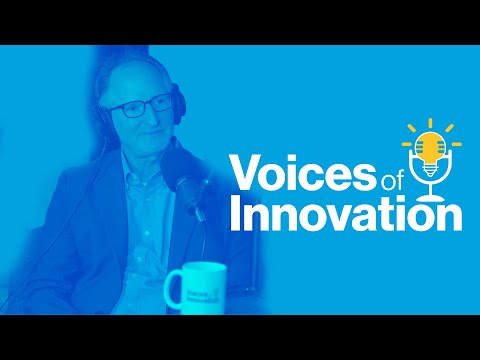
0:00 Today we have Kem Jonah from the University of Virginia. Welcome to Voices of Innovation. Welcome, Chem. Great to see you. Voices of Innovation invites big thinkers with bold ideas who are here at the ASU GSV Summit to talk about the influence of technology in today's society and our future of education. I'm your host, Lev Gonic, from Arizona State University. Let's jump in. Great to see you, Lev. This is always a highlight of my year seeing you at GSP.
0:29 Thanks so much. Let's get right into it. You know, obviously this is a gathering where we were all drinking the Kool-Aid around innovation, but as long as we've known each other, we really need to unpack the innovation question in the context of what can we do both together as universities to take the moment around AI and all of the excitement and and of course a lot of the hype and turn it meaningfully into innovation. How do you think about this moment in terms of how universities might work with each other?
1:06 Well, it's interesting life because you know all universities right now and we're you know two and a half years into this journey, right? Two and a half years into some journey and two months into the current administration. Uhhuh. and you know every university now it used to just be the small ones and the rural ones that we were worried about in terms of demographic cliff and other right external factors but now everybody is in the hot seat in some ways and you know as you know Rahm Emanuel used to say no never let a good crisis go to waste and I do think that we're starting to see leaders across all institutions ions really start to reexamine what what can we do, right? Can we just hunker down or do we want to try to innovate and grow our way out of the current situation? I think to me there's a lot of cognitive dissonance because if you're at a research intensive university, right?
2:07 You've got the big research enterprise, then you've got the teaching enterprise. And on the research side, our faculty, all they do is collaborate across institutions, right? I mean, you can't win a big center grant or anything else unless you've got, you know, the best thinkers in that field, right? Pull together. And so, but ironically, when it comes to building solutions for disruptive technology like AI, we seem to misplace that insight 100%. Right? And so, then you're thinking, well, if we can do that, you know, naturally, organically, and and successfully on the research side, why is there sort of like crickets on the other side, right? Why are we all competing with each other or trying to be first to market with some big announcement on, you know, AI and we're better than whoever else? So, where do you see the opportunity specifically as opposed to sort of generically because I think we we're going to rat, you know, we're going to violently agree with each other that this would be a great thing to try to do differently this time, but in the current moment across all the opportunity sets that are there, where could where do you think we should begin or where is the lowhanging fruit for universities to explore partnering together to deliver value to our students?
3:18 Well, right now because of all the academic governance regulations, it's really hard, you know, to do course and credit sharing. There are some examples of that and you know, ASU has been a leader in working with Instride, working with Cintana to to you know, share it. But beyond that, there's sort of this not invented here issue that most universities have that always puts up a barrier to that. so I I think that's a challenge. I mean I think the bigger concern that faces all of us is are courses going to be the best way to do teaching and learning or are we going to get disintermediated by chat GPT where just like any other website you don't need to go to the website anymore right they won't need to come take a course and we've seen some private sector companies in the space really take a beating in the last few months So I think I hear you saying listen both for defensive purposes as well as for the need to be intentional about the offensive opportunities to again bring value to our students. whether you're motivated by the fear of being disruptive or you want to as the case of ASU certainly to try to not only be first to market but also trying to do it in an intentional way. I think that you know we haven't cracked the code for collaborating together but it's not like we haven't had some successes along the way and I don't mean just as you mentioned you know creating new ventures like the Santana venture or the Instrat Knoxville right so so again we've done a lot of interesting things to to partner with create value for institutions who want to for example get in the online game with the University of Tennessee at Knoxville but also you know in things that are kind of building blocks So you know turns out of course that you know more than 60% of students in this country transfer during their careers.
5:18 Could we be building out an a architecture that leverages AI to make it actually easier for our students to actually succeed in moving their transfers rather than one out of every two credits actually getting lost in the trans. Can could we do something together because no one in the market really cares about that right now and it's actually very complicated to do. Well, I it's great that you mentioned that because a good friend of both of ours Phil Kumari at Mville is actually building some technology leveraging AI to do that kind of work.
5:51 And I mean I would push back gently, love, I mean I do think that push back gently. Go for it. you know, the universities do care about that because when the students, and we're talking primarily either, you know, transfer students or working adult students, when they're looking to take their credit somewhere, they absolutely are shopping for the school that is going to recognize most of their transfer credit so that obviously they have the less there's a ton. There's a ton of friction in the in the marketplace. friction and also we get bad rap for it because like we're just even within a particular state you have transfer issues right so so there's that I would say one area that I'm interested in right in term it's less about cross university partnerships but let's just even look within our university right let's just start at home right charity begins at home and ask ourselves well like could we have faculty sharing expertise and having it embedded in other faculty courses like that seems eminently doable today with or without AI AI does make it easier to do some of this automatically right but that doesn't happen much if at all right why not right like why can't we solve for that and allow sort of the best expertise in the university to all be embedded within a particular learning experience either on demand using AI on the fly which would be super cool right or in other ways but ASU one of the things that we have been been doing to create interesting collaboration in the way that you've just outlined essentially inside is that we've been taking I would say you know really exciting degree related course material which we know how to do very well and that's what all of us know how to do very well and using AI and using basically our workflows to begin to draft. How would you make that available for folks who aren't interested in a degree but are interested in ways of getting a digital certificate in whatever the topic is.
8:07 And you have to translate an academically rigorous course delivery framework to one that is of general interest to the broad public or to somebody who's trying to reskill or upskill along the way. And rather than what we found is it's incredibly difficult as humans to actually edit. Now for our faculty who have pride of ownership of their original very welldeserved scholarly material almost impossible for them to translate that and AI is kind of an interesting way of repurposing internal content which again could not only be used for the immediate delivery for a different audience but could also be used by other faculty. to your point are are there examples that you know inside you know at Virginia that you think of that way like let's just talk about notebook LM right where you can drop a a PDF of an article in there and it makes a podcast for you that you can listen to in the c in the car or on your bike right just to interrupt you for a second what hap what's very interesting about notebook LM is that Josh and the team from the Google labs came to ASU with some original concepts for what is now notebook and they got feedback from the market they got feedback from our students to actually say, "Well, if we could synthesize all of this material, how would you want to actually experience it?" And it wasn't in a course. They said, "It's in a podcast." 100%. And that and Google said, "Right, we're going to pivot to that environment." So I I see that as kind of an an example of sort of the value of us being sensitive to kind of where the market is and and trying to use these tools in ways that do support repurposing because I agree with your premise from a couple minutes ago which is that the courses may not actually be the thing for the long run. Yeah, I don't think so. I mean look I think you know the work that you've been leading lab at ASU right I mean we're I don't think there's any question we're there's a lot of hype but also there's a Cambrian explosion happening right now right of innovation but I still take a lot of energy away from this explosion of new ideas and new methods right like a podcast like we didn't have that a year ago and notebook LM is like okay that's the new table stakes so now everyone's everyone's got a version of that and you know it's not as interesting as it be pedagogically, but it's certainly giving us some insight. Now you can ask it questions.
10:25 So now it's not just passive, it can be interactive. And we know from learning sciences that the more interactive you make it, the better, right? How are you reading sort of the interest? Is the market getting any more mature in its ability to articulate what skills they need from the university community to create less friction in the translation between the university journey and what happens quote unquote next although again the linear path is less well that's exactly it right like you just stumbled onto the exact problem right which is we have this sort of very transactional throw it overthe-wall mentality right and we've had it for decades and I think it's fair to say it's not working. Hasn't worked for a while.
11:13 and even, you know, I was at Nor Eastern University before and you know, everyone talks about, okay, co-op, it's amazing. And it, look, it definitely is meeting the need, but that is still only two bites at the apple, right? You only get two co-ops, usually, sometimes three, but usually two. Well, first of all, co-ops don't work for working adult learners, right? I had 200 working adult learners, bachelor completion, and we're like, okay, we have a pause on that. Wait, we got right, we have gold standard co-op for our residential students and we've got like nothing upus for, you know, and I'm like, that that's not right. That's not equitable. And so, what else can we do, right? But I think the the key point that that you hinted at in your question, Lev, is that the this sort of siloed model, right, where we each each side, employers and higher ed, keep pointing the finger at each other for this quote unquote skills gap. I just did a webinar last week about their skills gap. And it's like I went back and asked Google to find like, you know, an old article on it, you know, 2013.
12:15 They're still like, when are we going to solve the skills gap, you know, and here we are. skills gap still here you know and so you know I think the model itself is fundamentally broken this idea that four years in dawn or four and a half years in dawn is going to serve you at all well and we know the halflife of skills is turning over you know every four years so you know you can start as a freshman let's say you know you want to be a computer science major which a lot of kids don't but let's say you have the benefit you walk across the stage for graduation four years later and something like 3/4 of the skills that were in demand the top 20 skills for that role software engineering have changed in those four years right so and again and just to be what are we going to do making it obvious yeah AI is no small contributor to that well it's making it worse and that's only been the last two years right so that doesn't even take that that AI thing into account so so my view live is that the partnership work that we do with industry has to get much deeper and much broader right we have and who who among our industry partners is most interested in taking a bite at the couple as you say you know we've been around this particular conversation for many decades actually and I frame the question in terms of do you think industry is getting more mature in its ability to articulate so your general view is not not as much as we hope I think employers know what skills they need I think the line managers do right but I don't think HR does in any clear sense look the skills are changing underneath them as fast as what we just talked about so we're both in kind of a pickle here right which is We're not our our structures and systems haven't caught up to the reality of what the clock speed is today on on these changing scales and AI we're still trying to figure it out although it looks like it's like hockey stick the rate of change right right and I don't think it's just for coders I don't know for sure it's everywhere you know I think manufact that that is out there so that that's why partnerships are so key love is that we're never going to figure this out it's standing in our own corners right the Only way to do this is through really deep co-design, right? And if you can co-instruction, right? Because the best way to make sure that you're synced up is to have a professor of practice from industry co-eing with your faculty member and keeping everybody in sync and up to date. I'd like you to look in your crystal ball. You've been coming to ASU GSV for many years. I I wonder if you look in your crystal ball and you think about the opportunities to leverage partners a year from now when we get back together in San Diego, where do you think we might actually realize in the next 12 months some opportunities to say, you know what, we're building in the right direction these kinds of activities which we were successful in doing because we managed to articulate what some of the needs are to help our students. Might what might we see in the next 12 months from where you sit?
15:12 Well, it's a great question. I mean, on the one hand, I worry that a lot of the startups that we're seeing, as creative as they are, don't have much of a moat around, you know, chat GPT or Claude or whatever, sort of taking over whatever they're doing. I do think that the innovators that have deep educational experience are going to win because they understand the context of the learning and the students. but I I think, you know, the Cambrian explosion thing comes to mind. I mean, how many more notebook LM style innovations are we going to see between now and next year that, you know, broaden the toolbox that we have at our disposal and make us think differently about and are you are you betting on that? Are you betting that there will be a couple more breakthroughs like that?
15:58 Oh, absolutely. All right, Cammy, we're going to leave it right there. Optimistic on the on the at the back end as a guy who I know and and actually deeply respect for your insights. Thanks for taking a little bit of time with us on Voices of Innovation.
Summary
- Universities face a demographic crisis and must innovate to grow rather than hunker down.
- Collaboration in research is common, but universities often compete rather than cooperate in developing AI solutions.
- There is a significant challenge in course and credit sharing due to academic governance regulations.
- AI could help streamline the transfer process for students, addressing the loss of credits during transfers.
- Internal collaboration among faculty to share expertise and resources is currently underutilized.
- The traditional four-year degree model is becoming less relevant as skills rapidly evolve, necessitating deeper partnerships with industry.
- Industry partners need to articulate their skill requirements better, but HR departments often lag behind in understanding these needs.
- The next year may see further innovations in educational technology, particularly from startups with a strong educational background.
Questions Answered
What is the current context of innovation in education?
The discussion highlights the need for universities to collaborate and innovate in response to the challenges posed by AI and other external factors. It emphasizes the importance of seizing the moment to drive meaningful change rather than retreating in the face of crisis.
What barriers exist for universities in collaborating on course offerings?
Regulatory hurdles and a 'not invented here' mentality hinder effective course and credit sharing among universities. Despite some successful partnerships, the need for innovation in teaching methods remains critical as traditional courses may not meet future educational needs.
How can universities improve internal collaboration among faculty?
There is potential for faculty to share expertise and integrate it into various courses, which is currently underutilized. AI could facilitate this process, allowing for a more dynamic and responsive educational experience.
Are traditional courses still relevant in the future of education?
There is skepticism about the long-term viability of traditional courses as the educational landscape evolves. New methods and technologies are emerging, but the challenge remains to create meaningful and interactive learning experiences.
How can universities better align with industry needs?
Partnerships with industry need to deepen and broaden to effectively address the skills gap. While employers may recognize the skills they need, there is a disconnect with HR departments, highlighting the need for co-design in educational programs.