Transcript
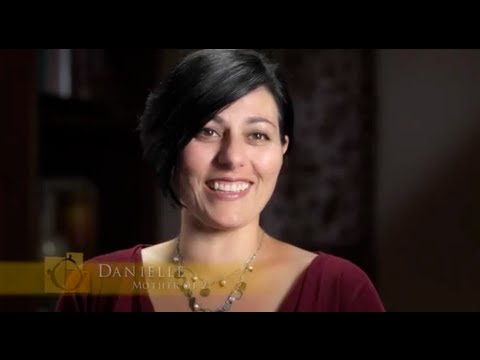
0:00 [Music] We ran through all the regular stuff that you do with kids. Time out. She's not stupid. She didn't spend one minute in her room. She like chase me around the house because that didn't work. We tried letting the tantrum pass. There was like a lot of mixed feelings of is it like too much? Are we spoiling her? She's getting everything she wants by crying. you know, all those like regular notions of how to not spoil your kids, which was actually very painful. I feel like I'm paying a big price for not knowing um what I know now. So, I'm happy that I did find hand in hand because I feel like, you know, I missed out an amazing opportunity to be with uh you know, with my to raise my my children the way I could raise them. What's amazing about Hanging Hand, I feel like a lot of stuff is repairable and you just give kids and adults the opportunity to to have a great connection. They're just going to leap immediately into your arms. Sorry, just immediately into your arms. They're going to be like, "Yay, mommy's here.
1:13 Let's play." Right? I think another part that start to really alarm me, start to feel sad because they're like, "My son is 15, my daughter is 11." Then I started to feel like, wow, you know, that's it. Still going to be in college. It's like, am I missing my train? And then, you know, I'm kind of feeling now that we actually can be together. We can have a great relationship as adults. So, you know, that that's a wonderful feeling because part of me was starting to give up.
1:45 [Music] When parents concentrate on connecting rather than concentrating on controlling, children respond beautifully. Basically, what hand inhand brings to the world is a way for families to thrive. When he was about 18 or 19 months old, Jonah started um tantruming. They got bigger and bigger and bigger, and he was having between five and seven tantrums a day that would last at least 20 minutes. I grew up uh with my mom and she's mentally ill and was prone to large outbursts of anger and so it's always been really really frightening for me. The hardest part was realizing in the middle of this when Jonah was tantruming and when I couldn't fix it and I was already depressed and and just feeling really nervous about having a second child. Um, I found these outbursts of anger coming out in me, which was really, really terrifying. My mom eventually went on to commit a crime, and so she's actually still in prison. I saw myself uh heading down a road that was exactly what I was completely terrified of. I found myself so full of rage so often. I knew I needed something and I didn't know what it was.
3:02 Trying to raise kids is already a complex work. Try moving to another culture where everything is new to you. You don't understand a lot of what's going on. One of the things that we do in hand in hand is treat people with complete respect. And I don't care where you came from. When you are treated with respect, you can you can feel it. You can sense it. And you're going to be more open to learning. I don't care how hard you're struggling at home with this business of parenting. I know you're trying to do the very best you can figure out so far. Now, I have this little tools that I can give you that it's going to make your life or your work a little easier and more enjoyable. So, once you you go into a class with that attitude, people just open up and they able to tell you where they struggle.
3:56 They are able to take what they learned tonight and go try it at home and come back and tell you, you know what, Martin, it really worked. A little boy came over and he was having a huge upset. I didn't know what to do. And I was like, oh, should we go away? Should we come close? I thought maybe the mom would need some privacy. I don't know. I've never done it like in a group or with anybody else. and and my son within, you know, 10 seconds of it starting, grabbed my finger and led me over to where this little boy was and sat down right beside him and just sat there and stared at him. And he kept looking at me going, "He's crying?" I'm like, "Yeah." And he goes, "Why?" And I said, "Well, he's just having some feelings." And he's like, "Oh, let's check on him." I'm like, "Okay, let's check on him." And we stayed there the whole time. He knew how to hold that space for somebody else. and he knew how to just be there and be present and listen and that everything was okay and that there was nothing to fix and there was no problem and there was nothing wrong. It was just that this little other little person had all these feelings that needed to come out. And for me as a mom to be sitting there and giving these two children this opportunity to see each other and witness each other in this way, I just felt like the world would be a different place if everybody had this opportunity as a child and to grow up with that. It gets me so excited. I have taught classes for the child protective services. this man came into my class and he said the work that you're doing is pathetic and you're not being helpful and and I explained to him that I was not the system that I knew that he cared about his child that I knew that he was a good parent that I knew that he was struggling and I knew that things have happened that he was not very proud of but that I was there to tell him that you can move beyond that. I asked him to do a special time with his daughter. He said, "Well, what would that look like?" And I just said, "Well, let's do it. You be your daughter and I will be you." We did this um little, you know, demonstration and he got up and he said, "I'll be back." And when he came back, he was just so grateful at the end of the 10 classes. He said, "I'm so glad I'm not going to come back over here cuz I know what to do." The comment that most parents tell us is, "My whole family is different. Everything has changed." And I would just really love to see that kind of change be possible for in every family. Um it parenting doesn't need to be as hard as it is. It's hard because feelings build up and we don't know what to do. We have no idea that there's something you could do. And I am out to change that for everybody. And I think we can do it.
6:46 [Music] [Music]
Summary
- Traditional parenting methods often fail to address emotional needs, leading to frustration for both parents and children.
- The Hand in Hand program focuses on building connections, allowing children to feel secure and understood.
- Parents often struggle with feelings of inadequacy and fear of repeating negative patterns from their own childhood.
- Respectful treatment of parents and children fosters openness and willingness to learn.
- Real-life examples illustrate the positive impact of emotional support and presence during children's emotional outbursts.
- Many parents report transformative changes in their family dynamics after participating in the program.
- The speaker advocates for a shift in parenting approaches to prioritize emotional well-being, making parenting less challenging.