Transcript
0:00 When I told my dad in in ninth grade that I don't want to go to school because I wanted to build apps at home. >> Yeah. >> It's like fine do that. >> Yeah. If you are 18 and you are just got enrolled as a Stanford freshman going to study computer science and the curriculum is what it was 8 years ago. Does it still make sense? >> No. Even what the curriculum is today doesn't make sense. I don't think anybody should study computer science.
0:23 In the previous era of SAS, your company grew revenues like 3x one year, 3x another year, and then when you grow bigger, it's like 20 30% per year. Whisper has been growing at 40% month over month, which means we double our revenue every 2 months. More higher pressures. That's a good question. I've been around starter for 30 years and people keep you know when they ask why you do what you do and why do you need to do one more startup is because it allows me to learn about something totally new which I will not otherwise.
0:51 learning is a is a linguary drug. You know >> what OpenAI did caused their own issues and they called a big kind of red alert within the company. They killed Sora. They moved a lot more resources back into coding. And this is a clear reminder to everybody company. All right, T, welcome to Sparks. Uh, it's good to have see this this uh keyboard right behind you, giant keyboard. And the reason it's interesting for me to see is I have always hated typing. And I want to tell you a story. You know, this is probably you may not have even heard of this, >> but when I was growing up in high school days, the one key decision everyone had to make whether you want to learn typing or not. There used to be typing schools in every neighborhood and you sign up for a course >> and they will measure on you know this speed per minute and then people will brag that I am I don't know 100. This is like 1980s.
1:50 >> This is ' 80s, even early '90s. >> Yeah. >> And for some reason, I decided to not go to that school. And I started computer science later. But I was always terrible at typing. Even when programming, if you see me typing, I type like this, you know, two fingers. >> Yeah. >> And last 3 months, I just got into whisper flow just 3 months ago. It's changed my life. Like literally changed my life. I stopped typing. It's on my devices now. I just And now I look like a strange, you know, person who is always talking to a device.
2:15 >> Yeah. But it's like it's uh so it's created so much freedom for me. I just feel like finally I can communicate with machines. So just just just walk me through a thought process behind whisper flow and how it seems like it's some very simple idea. You press a button and talk to machine. It doesn't look like a big idea. It's almost like a feature but you build a like you know incredible company out of it and looks like now people can't get enough of it. Just how did you land at this spot where you know this seemed like a right product to build?
2:44 >> That's a really good question. So initially when we started off we this is we're talking 2022 >> we are looking to build different agents at that time it was called agents it was just using AI to take actions and we build all of these workflows where I could say like hey I'm meeting MKkesh for coffee can you make a reservation find a good coffee stop nearby and then also send him a message about it >> we built a number of things like this but the problem was at the end of the day >> I used it maybe once a week and then I forgot this thing existed Yeah.
3:15 >> And so that got me to one of the core insights about building consumer software, which is if you want to change habits, you need to have a high frequency of action. And so then the way I usually build products, I just sit beside people, >> just look at what they do. And the thing that I just noticed one day that caught my eye as a non-obvious thing is like, hey, you're just typing. And if you can actually build a product that makes that better, >> then you have something that people are using not once, not 10 times, but hundreds of times a day, every single day across all of their tools.
3:49 >> And that seemed like from a habit building perspective, the right wedge to get started with voice. >> Outstanding. That's an incredible insight because if you're a knowledge worker, you probably hands on keyboard pretty much >> all the average is like 5 to 6 hours a day, which is a lot. >> Incredible. Yeah, if you take out of the you know waking hours almost you're saying oneird of the waking hours your hands are literally touching a keyboard on phone and this is also very interesting history I today you know as I was like kind of going through my notes to prepare for this I thought let me look up the history of the keyboard and some seems like it was designed 150 years ago to keep the keys as far as possible >> so that you know the keyboard doesn't jam or whatever and >> they want to make you genuinely slow >> genuinely slow yeah >> right so How has the experience been now? It's like what do you hear from people who are using whisper pro day in day out? You know how it's changing how people work?
4:43 >> For me I dwell for me it is dramatically changed by how I work is different but yeah in general here >> across all the things that you do on your computer or phone let's say what percentage of it happens with whisper flow versus your keyboard >> for me. >> Yeah nearly 100%. >> That's amazing. I just I try not to type unless you know I'm in a position room where >> I can't speak up then I very grudgingly go back to my two finger typing but otherwise you know I would rather speak all the time.
5:11 >> Yeah. So the median across millions of users is 72%. Means like on everything they're doing on your phone or computer 72% is done with whisper flow >> and about a quarter is done with your keyboard. And the change happens over a couple of months because you need you need some weeks to build the behavior. >> But that has been >> I would say for me one of the most shocking things that I've seen is how quickly people build a behavior >> cuz a lot of us grew up with keyboards, right? Like especially everybody who's between say like 15 and and 35 40 years old like this is what you did as a child and then in school and then in college >> and then mostly for work. Sort of seeing people for the first time break that habit.
5:54 >> Yeah. and move on to something new. Uh has I would say like been what people describe as like this has changed my life. But I want to ask you a question uh on every time you use your product. I also one two thing I noticed on your phone Apple makes it very hard to use. >> Yeah. So that's uh second thing is I the second question that obviously Apple will want to add it because for them you know this is like enabling somebody else from the keyboard is some ways you know just probably not good for Apple. So I don't know how you think about that and how do you think of building NF mode so that you know as and when Apple tries to introd I'm sure it's it's inevitable they will do I'm sure you think about it. Yeah, they actually had the WWDC this morning and they announced that there's going to have they're going to have dictation working across all the applications.
6:42 >> Whatever it is, right now is very crappy the Apple version. So, >> yeah. No, they released a new one this morning. >> Okay. >> So, but mostly it's one of the things that we expect like when when we were raising our most recent round >> there was a whole section in the deck that was just like what happens when Google and Apple release something that's 70% as good, >> right? >> And >> that's 70% as good.
7:01 >> Even 70% as good, right? because people are getting it for free. They don't need to install something. You just have it natively accessible. >> And so you can imagine people would just say like, hey, why don't I just use this thing? Why do I pay extra money to get whisper flow on? >> It's very fair. >> And so the way I really think about building the business is this is what whisper does today for you. want to increase the value that it gets to people so much that you can just give a lot more of the product available to people without the pay wall.
7:31 >> And then the reason Whisper wins is not just because it's the best dictation app. It is because >> the one app that just understands you. It has context on you across all your different systems across your phone and your Google Suite and everything else. >> It's a system that you trust. you trust to have it secure your data >> and you trust it to do things for you. >> That's the next phase of things that we're building >> cuz dictation for us great starting point build a really good brand for the company and now everything is focused on what comes next. But let me ask you a product question is today the way product works it's mostly still literal uh uh what's the word writing of what I'm speaking but sometimes I don't want to write exactly what I'm saying because I'm the more you talk convers naturally you are thinking out loud you have a >> you know stream of consciousness kind of thing you want it to translate in some ways like keep the essence of everything I'm saying keep it as accurate as possible but make it better formatted it, but that it doesn't do today.
8:39 >> So, that one actually is a new thing we just launched in beta a few weeks ago. >> So, if you go into the app, there is a setting called auto cleanup. And what auto cleanup does is you can go rambling for a while >> and as soon as you're done, it looks at the the context of, hey, where is this going into? >> And it writes it in that style with a good level of conciseness.
8:59 >> There's another thing that's going to come out in a couple of weeks, which we're just internally calling write me x. But in this like hey just tell Mkesh I'm running 5 minutes late and it'll just do that or like you know tell this uh person that really enjoy chatting with them and like thank them for their time and it'll just write a fully drafted email just like you would and so this is what we're realizing that there's so many people who use chat GPT for this primary thing >> and they are in their email they go to charge GPT they talk to it for 5 minutes they copy paste the stuff back they make some changes they finally press send this is such a painful full flow >> and so for us we just solve it one button say the thing and it gets done. I think you are in a in some very cool spot but also tough spot cuz from here on I think there is a you are you could be a primary interface for a lot of people when they're talking these devices and that transl you know humongous company but then the the the giants will not like happen very easily so it'll be very interesting few years a few years ahead of you but I think >> I can totally see a potential for a like >> meaningfully large company if you managed to because I mean there's from what you just described there all kind of personal assistant uh type of opportunities there's a lot of things here I just speak and things then I don't care what's behind it you know what device is behind it or what's happening what even more is behind it I just stop work yeah >> this is incredible I mean it's a pretty what's the environment like you know describe you know you guys are I think from what I understand grown tremendously somewhere 100x or something last 12 months you know what is a pace of work just describe a day in your office.
10:44 >> So a very funny anecdote that my co-founder told me this morning. So sahed messaged me last night and he said I just went skydiving for the first time and the adrenaline I felt when I was free falling through the sky >> was literally how I feel like in the office every day >> and I don't think there's a better explanation for that. Like even right now I'm just pumping with adrenaline cuz I've just been on on all day. And you know as a founder when you're you're building a company your company's growing you have to keep growing with the company. In the previous era of SAS your company grew revenues like 3x one year 3x another year and then when you grow bigger it's like 20 30% per year.
11:22 >> Whisper has been growing at 40% month over month which means we double our revenue every 2 months. >> Just imagine how crazy that is. Like since the beginning of the year, we have now 8xed our revenue. Uh the team has 2xed in size. >> And so the amount of just personal growth that was needed >> is insane. >> And so now the main question that has also come up is >> you can increase your leverage. You can do so much more with the same person and so can I.
11:56 >> And so then I have a bunch of systems around me that let me do a lot more. Yeah, >> I don't have a system that just needs to happen, it sends me a message on Slack like hey this person messages about this thing >> here's a draft let me know if you want to send this or if you want to make any change >> and you build the system on your own >> this is something I built on my own >> so this is like an equivalent of I don't know would you call it chief of staff or probably >> it's it's the chief of staff yeah >> yeah so a lot of you know tech I've noticed they're building their own chief of staff why not somebody's building a you company. Do you think or this is like so custom that you have to do it on your own?
12:35 >> We're likely going to launch a product around this soon. >> Yeah. >> But the thing is I don't think most people approach this problem in the right way. So there's a number of companies that are launching their own like chief of staff AI products. >> But they're all kind of bad. >> At least in my personal experience. I've tried all of them >> and it doesn't hit the spot. And so there's a couple of things here. One is >> there's an incredible amount of product taste you need to actually build a really good product. Yeah.
12:59 >> And the second thing is to actually get these systems to work well, you need a very deep technical understanding, >> right? Cuz claude code, if you think about it, claude code is just prompts on top of opus. >> But the way they have architected that system and every little design decision has made it so magical to the place it is today. >> And the thing is, nobody else built anything like Claude code. We all had the same tools at our hands. And so the kinds of teams that I think are really going to succeed today are the ones that have really good product taste and very good uh technical understanding cuz when you marry these two together is when you just get an unreal advantage over anybody else.
13:40 >> The chief of stuff is some such a personal role maybe request too much taste and what I mean by that is only you can build the one that you will like versus you building somebody that something that a lot of people will like. I would say that if you build a good product, it'll adapt to the right person. >> Right? If you think of whisper flow right now, that's such a big part of whisper flow. Like how do I build something that is a completely horizontal product?
14:05 >> But for each person, it just fits their workflow. And so a founder feels like, oh, this product is fantastic. It makes me productive, but so does my 95year-old grandfather feels that, oh, this lets me talk to my family. >> Exact same product. But depending upon who you are, the product just adapts differently to you. So those are the things that we had to build in the product and that's what give us gave us so much understanding of how do you actually build for these different personas and make each of them feel like this is a product for people like me.
14:35 No, this is reminding of you know how so I my you know how much you know my career you know background but I have mostly been a product manager before starting MNRA I was a product manager and even starting a company I primary role I think I've played in my previous two companies is of that product manager and one of my approach to product is I build for myself >> my this bar is I need to be thrilled with the product >> yes >> and somehow I believe that if I'm thrilled most likely a lot of other people will also like it and that's how it has you know panned out so far as opposed to very consumer in you go talk to a lot of people I you at least you mentioned you at least watch people I I watch consumers much later in the cycle after building a product after I'm feeling I am happy I can see a lot of people around me happy then let's say you know but sometime they also find it crappy it's not doesn't work every time but I do agree with at least >> you know I have a bias of building product that way where you kind of almost build for yourself and then hopefully you have the right taste and you are representation of you know That's basically representation of the people at large. You are not you are very unique requirements.
15:40 >> Maybe other people also like >> but uh so is that kind of product obsession is a big part of culture here. >> Massive. Massive. >> How so? Product obsession is a big part of culture. I'll tell you in in in what ways. So whenever we're thinking of a new feature or somebody's proposing it could be an engineer, could be a designer, could be somebody on the marketing team. They're coming in and they're saying, "Hey, T, this is I think what we should build because this is the pain point that I was hearing from people, my friends or whoever >> and if we build this right, this is the feeling they're going to get."
16:11 >> That is basically the way you talk about a feature inside the company. >> And so, uh, right and I was like, okay, a bunch of my friends and even me myself like I feel these these these pain points and if you actually like solve this and with this way people will feel gratitude. It's like great. Now that makes for a great product spec because you have the quantitative data backing up. You have the qualitative user studies and you have the emotional aspect of it. The emotional aspect is one piece of it that I think 95% of the product leaders around the world uh just fail to address and that is so core >> to humans and if you think about all the products that you get stuck on that you like all of them are built just around emotions cuz you just got to get this thing working. And this this taste thing do you mostly hire for it or you think it's also kind of people pick it up as part of culture?
17:10 >> People pick it up. So we actually do very active uh we do very active kind of workshops in the company. a lot of them that I personally lead. Yeah. >> Which is on building taste >> and then you get people hands-on and then usually I personally >> go into particular teams and spend a lot of time there with the people to help build that taste and the >> the way to think and a lot of simple things like for example what you said is like one make sure the thing that you're building you personally would love using it >> and then you also should talk to people who are not like you to figure out >> what are the assumptions you've made >> that are great. For example, we're making a new noteaker that's going to record meetings and all for you. Now, the thing is I'm in backtoback meetings, 20 of them every day, >> but my designer has one meeting a day.
17:59 >> So, how do you build a product that's good for me and good for him? >> Completely different kind of like experiences and feelings that you're going after. But if you're able to think about a few different people and imagine what their experience is going to be like for this product, then what you're going to build towards the end is going to be a far better horizontal product >> for humans. >> Then something that might get stuck with a little TAM because you only built it for yourself which is what happens sometimes.
18:30 >> And this this workshop I'm very curious how does look like you know how how is it few hours what happens? Let's just say if if you can take us inside a workshop and describe what happens during I don't know how many hours of workshop. >> So with the workshop >> usually okay here's here's an example >> uh I start off with a half an hour presentation >> where I'm going over a few features that I built from scratch. Uh I'm very deep into the product very deep in Figma, very deep in the code and uses all the time.
19:00 >> So I talk about okay here's the problem that we were seeing from customers. this is what the current products did and so okay this is what a good solution would have >> and then this is what the solution that we came up with >> here are the design decisions that I made here are the alternatives that we decided not to have >> and from this this is the core principle that this highlights >> so now once I talk about this whole journey showing not telling a core principle >> then I tell people like okay everybody open your open the whisper flow play around with it and then describe to me a new feature that we would build that is built around this core principle.
19:40 >> Yeah. >> And then they would do that and so it's not just they're absorbing it. It's a very interactive session and then people talk about it >> and then there's a discussion that happens and so you all learn by doing and you all learn by seeing other people and getting live feedback and my hope is that by the end of that session you have learned that one core principle. >> Yeah. >> That is really helpful. Sith uh you know you are very young CEO and yet you are kind of actively taking time to train people personally. I don't think you know most CEOs take time to or be even clear about what to train actively train people for and then personally lead this workshop. I think it's uh >> quite phenomenal.
20:21 I'm trying to find the were you inspired by somebody else someone's story like how did it come to you because it's not part of your job description say as a founder CEO you know to also take these workshop and train people you know in a very hands-on manner where did it come from >> so full credit for this goes to my exact coach >> so um I I've had him for the last one and a half years and I would talk to him like him and this person like produced something that was just like not up to my bar and I'm mad >> right like of course they were like why did you do work And so the thing he told me was very interesting is like when somebody does poor work, >> don't show up with frustration. Show up with curiosity.
21:01 >> Why? Because they didn't want to do bad work. They're trying to do their best. >> And so you need to figure out with a curious mind about why did this end up in the way that it did. >> Either they were not set up for success. M >> u either the scope that was given to them wasn't clear enough >> or they didn't have the right skills to do this and once you understand that then you'll be able to just make a better decision for them. Either you move them to a different project or you need to be much more detailed in terms of what you want or you need to train them on those specific sets of skills.
21:35 >> And you're good. >> No, go ahead. >> Why did you think you needed executive coach to begin with and how do you go about finding one? So, I have always, you know, I I was I was a younger I was I was an elder sibling growing up and I just could see how much better my younger brother's life was just to have somebody who has his back, who can just, you know, answer questions >> cuz I was mostly winging it my whole life.
22:02 >> And so, I've had this craving to have somebody who I can just >> go to talk to and learn from. And it's just been a kind of a core uh need I've had. And also like we were talking about like how much I just needed to grow uh as we were building this company. And so that was again a part of it like >> I can learn from my own mistakes or I could learn from somebody else's mistakes and then make other new ones and then learn even faster.
22:29 >> And so there's this um company interestingly that we found that was just getting started that would bury you up with a with a coach. And so I talked to them. They paired me up with three people as an introductory call. >> And one of them I talked to and I was like this guy in the 1 hour we chatted like already changed my mind. >> And so he's been kind of the exact coach for me and my co-founder for the last Yeah. one and a half years. And I think I'm two to threex a better leader because of him than I would have been otherwise.
23:02 >> Do you mind uh sharing the name of this company? I'm sure a lot of people listening to this want to wonder that where >> uh so this company is called Titan >> okay >> and yeah they spend a good deep immersion time with you and then find out the right coaches based on the stage you're at your personality the way you like to be coached >> but this is also interesting that this was your own initiative somewhere you had a realization that having an executive coach having someone to talk to and kind of uh maybe neutral third party person with more experience reflecting on what's going on which kind of goes to just innate your curiosity and desire to learn and get better and maybe let me connect this question back to I think it seems I think you build an app I 10 or something which became which interesting enough in voice agent space yeah >> or something like that which Google didn't like very much that's incredible so you had like this this desire for doing things finding things out tinkering with things looks like it's been how you pretty much grew up all your I did I would say mostly been been selfdriven for for most of it and a big inherent part of what drives me is is is two core desires. The first desire is to learn.
24:18 >> There's nothing that makes me more excited than learning a new topic. >> It could genuinely be anything. Mhm. >> My fiance was recently getting into hair care >> and she wanted me to have discussions with her about it and I was like don't really care too much about it but >> I do care about the science behind it. >> So then I was studying how every single like >> chemical inside that works and the organic chemistry behind like what makes your hair shine >> and I don't know I would I just like geek out on all of these things and so that has been a big big driving factor.
24:46 And how do uh okay this is a great example you know maybe something you know in personal life you notice and you were curious about this and this is again just just organic naturally or you have a method behind learning that you say this this squad I'm going to focus on you know going very deep of this thing and these books these courses like what's your method behind >> I feel it usually changes on a weekbye basis >> uh so this hair care conditioner thing was different like 3 4 weeks ago >> that's the biggest difference in your generation mine I think you know it's still thinking in quarters and years.
25:17 You think in days and >> quarters are so long. I don't even know what was happening 3 months ago. >> Uh but yeah, right now the thing I've been very deep into is uh the mechanisms inside watches. >> Mhm. >> And so and I've been watching a lot of videos on people opening it up and explaining how every single little piece of it works. >> Has the mechanism changed a lot in last 300 years? >> Yeah.
25:37 >> Yeah. >> Quite a bit. >> Okay. With electronics. >> Both with electronics and without. And even the mechanisms from like a hundred years ago, if you've seen some watches with perpetual calendars, >> it's insane. They can track time for a hundred years, >> which means you need to bake in the logic for every February, every single leap year. The leap year that doesn't happen every uh I think 100 years or so. >> Mhm. >> And then you need to like do all of this and then put it all in the mechanics of the watch.
26:09 >> Yeah. >> Which is insane. Yeah. >> And this whole thing just works perfectly >> and part of what you're saying this is just just just joy of learning. You are not looking to learn for getting somewhere. It's just the pure inherent just joy. >> Yeah. Cuz for most things I feel like there's a deeper reason to it >> but for learning there's no deeper reason. It's just the joy of learning. >> That that resonates you know very strongly with me as well. I mean I it's been now I think I've been around startup for 30 years and people keep you know when they ask why do you do what you do and why do you need to do one more startup is because it allows me to learn about something totally new which I will not otherwise and I just find you know there's nothing better I can find to do with my time so I think it's uh I totally resonate and then I've also noticed in very un you know surprising ways these different odd things that you learn you start making connections between one domain to other and so own some mental model you picked up from here ends up being relevant 5 years down the line. It's not that that's why you learn in the first place but it has own and plus learning keeps our brain sharp which is I think when before starting this podcast we were talking about longevity and one of the biggest thing I mean you are still very young but uh after age of 15 you know the biggest sign of aging is cognitive decline and the biggest >> antidote to that is learning >> so people keep learning and that's why you know politicians you know learning all the time and they never grow old you know no matter how look old they look they are so sharp but this learning is a is a linguie drug you know unlike many which which we were talking about before which are uh just uh let's come back to I want to go back to your um your for I don't know which one to call your formative years and so much happened in your life already but your college years yeah >> so you studied computer science at Stanford you did uh in fact you were teaching you know so uh this deep learning course which I think I took at least half of it about two and a half years ago and two three years ago I thought you know machine learning is very important because you know I have computer science background know much machine learning so I picked up a little bit but fast forward today it seems like almost all of engineering AI engineering large majority of people don't really need machine learning I mean you guys do and probably very few companies building their own custom models yeah >> but most people are building on models and assuming large majority of people are going to work in that area it seems like machine learning itself has become very um uh uh uh what's the what's the right word you know >> few people need to know need to know it very well but not more of a niche subject.
28:36 >> Niche subject. Yeah. I think it goes back to you know as technology progresses my main definition of technology is like okay you just build better layers of abstraction and so earlier back in the day when you were building a model you had to actually build it from the chip level because you programming all of the circuits on the chip to actually run the neural networks then okay that got abstracted away you could >> write it as matrix multiplications then that got abstracted away you could just use tensorflow got abstracted away now you could just do like model train that got abstracted away. Now you just write English prompts and things work.
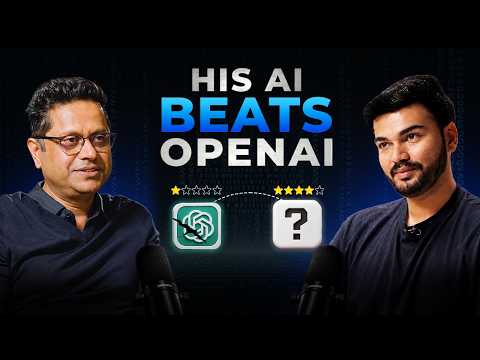
29:11 >> But the core that you realize is all the companies that you see that have made the deepest innovations. If you think about Anthropic or OpenAI, when you think about what Nvidia does and all of these companies, >> they work the entire stack cuz you need to deeply understand the entire stack to actually make advancements. And that is why when you look at whisperflow's model like right now it's about three to four times better than the second best model which is open AI. Why? Because our ML team has some of the best researchers out there who understand everything from how to train these models to adapt these models to actually do more work on the GPU kernel level to make them run faster.
29:52 >> Yeah. >> Cuz all of Whisper Flow's inference runs in under 100 milliseconds on the GPU which is like why most people don't even realize it's running on the cloud. The thing is running locally because these are all uh these are speech to text models. >> These are all speechto text models. Yeah. >> And do you have and I think whisper flow works with many different languages. So you have different models for different language or models.
30:14 >> Uh there's a there's a set of models and like there's a set of models that are very good for English and Latin languages. A set of models that are very good for English and so on. Sorry, Hindi and other Indian languages and tera. >> So what what is a bottle like? Let's say what's when okay let's say you have amazing people in your team but what are the other ingredients some level most machine learning boils down to also just the quality and quantity of data >> but I assume in speech text training I mean everyone has probably access to similar amount of data or is that I know for no there's a >> no so I'll give you one clear example which is again like another big reason why whisperflow's models end up being so much better is open air and all of these companies the data sets they train on are podcasts >> and YouTube videos.
31:06 >> The thing about podcast is you have these mics on your face that are uh recording audio at a very high quality. Only one person is usually speaking at a time >> and you are way more articulated when you're doing a podcast >> versus imagine when you're using Whisper Flow or any other tool you're talking to somebody else. you change your mind, you stutter, you stammer, there's noise. Like I literally was using uh using whisper flow sitting in an auto like uh it was in the ad, but it was like an actual thing that I was doing there.
31:34 >> Yeah. >> And it needs to work with all of those environments with multiple people speaking with the background noise, your phone is like moving farther and closer from your mouth and so everything is imperfect. That is the magic because uh 15% of our users opt into sharing their data with us to improve our models. >> At this point, we have more data, more audio data than OpenAI had when they were training their largest model. >> And this data is not YouTube, not podcast, no. It's actual data from users who want whisper to improve their model.
32:08 >> Which means we're getting different accents, different dialects. We're getting all of these different languages from around the world in their natural environments. >> The crazy thing we realized is the average noise level in Indian languages is 5x higher than most other languages because >> crowded country >> and we're just mostly outside >> and so our models needed to train uniquely for the Indian languages versus other languages that she would train it for you. India is our second largest market both by users and revenue.
32:43 >> Yeah, I think which is which is great. Uh somewhat surprising as well that so many people are starting to communicate and just what's what the language split looks like between I imagine is Hindi the largest or English is the largest in India? >> In India actually English is the largest. Okay. because most people are using it for texting, email, work and most of that happens in English. What we're starting to see as the second largest in India is English.
33:11 >> And so that also was one of the whisper was one of the first companies that built English as an AI model cuz solving that problem of switching between multiple languages as one language is called code switching is one of the hardest problems in all of voice AI. Yeah, I have not tracked this space very uh you know carefully but I'm curious whether you guys had some kind of first mover advantage or you just came at it little later but with a much better product.
33:40 >> People have been trying to build dictation for the last 20 years. >> So I wouldn't say we were the first mover. I would say in this new way of thinking about it we were >> no even then we weren't the first mover. There were a few people before us who had tried to do this. Uh I would say the one thing that we have done is just be maniacally focused on this problem >> and just building the best experience for consumers there.
34:03 >> There's a lot of times that we get you know it's like different pulls like we could do this thing we could launch an API >> we could build this into hardware things and >> the number of things I have to say no to >> keep the team focused on this singular thing that matters >> is hard and also we would die if we weren't saying no to all of these things. Well, it's very hard to say no. So what is again how do you because you may be saying no to some really good things maybe sometime you know even essential things I think from what I understand you guys were and maybe at some point we'll talk a little bit about that whole brain computer interface product you were building earlier but at the time uh your uh this dictation product was a side project you could have easily said no to so there's also >> and we almost did >> yeah so what is it you know gut instinct some framework how do you say no to The honest answer is gut. And then you develop frameworks that explain your gut >> is what it eventually ends up looking like. And so some things do come out of it which is helpful to explain to other people.
35:08 >> But at the end of it is just your gut feeling. And the most important thing is you're consistently getting data and feedback from the market. And from the market is like from other people. You have your eye on everything. You're looking at the data, you're talking to your users >> because the more data of that you ingest or at least like the more data I ingest, >> the better my gut feeling is about things and the better intuition is which is just a kind of large aggregation of all the data you've ingested and then putting a prediction out. Then one thing I can you know in this conversation you're coming across a very mature and well-aware founder not like a first time young founder is it I know you've spent a lot of time here you know last 10 years in Bay Area maybe Stanford environment and or you've been just trying to be an entrepreneur since a very young age it seems like you've been doing this job for a long period of time and not just last few years >> I have that's really kind of you to say Um, I'll say the biggest thing that got me to be this way was my parents just let me be independent.
36:20 >> Mhm. >> When I told my dad in in 9th grade that I don't want to go to school because I wanted to build apps at home. >> Yeah. >> It's like fine do that. >> Yeah. And the level of trust that they had in my own decision-m since an early age now means like okay now I'm responsible for my own decision so I better be smart and not not dumb about this >> and that got me to think this way from day zero >> and again just be a very first principles thinker again part of it was like okay I was like now I need to make my own decisions I look at my parents and how they do that >> and they've been fantastic role models for me >> and so I think a big big part of it I would give to them cuz I feel I've been this way since sixth, seventh grade. And if you talk to my brother, he's even like three steps ahead of me. He's 21 years old. He just started his own company as well.
37:14 >> Extremely mature. Yeah. Next time. >> Yeah. >> Right. >> Uh but yeah, and so again, I think having really good role models for that helps a lot. >> And okay, so you've been independent, you know, most of your life. you have kind of been thinking on your feet for a long period. How does that make Whisper Flow, let's say, different than a t typical value company? What what what were a few unique things about how you run the show here?
37:43 >> There is nothing that we copy from another company because it works at another company. Every single thing that we built is built from scratch for what Whisper needs at that point. And so some things that are different is for example like in most companies you hire a bunch of sales people and you give them a million dollar quota. >> Our sales people have their quotas between5 and $7 million. >> Why? Because it's like this is just how this should be architected and I've never built a B2B SAS company. I don't know how to do that. But as I'm deep into this I was like this is how we should build the process to maximize the kind of human relationship time that we build. And so uh this is again just very different than other companies. And so when I'm hiring for leaders as well, the first most important thing I look for is are you a first principles thinker?
38:34 >> Because I don't want you to copy paste things that have worked in the past cuz nothing that worked a year ago is going to work today and it's not going to be the best thing for whisper >> and part of it is challenging because what I'm saying is I'm not going to take the easy path. I'm going to spend time thinking deeply about every single thing >> which takes a lot of time. Yeah, >> which needs me to be deep in customer support and product and Figma and everything else.
38:57 >> Uh the metrics that we track completely different. >> Uh most voice models track word error rate. >> We don't track that. We built our own metric. Why? Because this metric just made more sense. >> Mhm. >> And so this shows up in every single part of the the company. >> Um we don't have any metric that tracks AI adoption and token usage. That honestly just feels kind of ridiculous like people do that. I can see why that is coming. But >> the metric you track drives the incentive. And so it's actually really important to figure out what metrics you're tracking within the company.
39:33 >> And so for every kind of thing where we're tracking a specific metric, there's a lot of thought that goes into why this metric, what are the first degree effects, what are the second degree effects that are going to happen. >> And uh think about that deeply before doing it. So company itself is a kind of product with requires taste >> essentially that's actually a great way to put it >> the way you're describing I have used this phrase in in my own startups I call you know org is a product I'm a product manager so I used to think like what features an organization should have and everything how you hire how you fire how you promote how everything is a feature you can design however you want so for me like just calling it or is a product as you start describing everything from principles is the that that >> was equally excited about or design as I am I'm a product designer Yeah, I can I can clearly see that because >> without that otherwise it's very easy to borrow ideas companies have been around forever. Okay, fine. And if you don't want to copy from old school companies, you have enough you can copy from Google Meta you know bunch of you know hot startup but you're saying no I think I have a unique mission and for that unique mission what kind of design serves that mission well and something you looks like you are very deliberate about about that I I want to just go back to just your computer science days because I think that's important question or if you're 18 and you are just got enrolled as a Stanford freshman want to study computer science and the curriculum is what it was 8 years ago Does it still make sense?
40:55 >> No. Even what the curriculum is today doesn't make sense. >> I don't think anybody should study computer science necessarily for the degree. >> The most important thing that you need to learn >> is um really two skills. >> The first skill is first principles thinking. >> Mhm. >> The second skill is how to take a complex problem >> and break it into simple problems. But simple problems are simple solutions. >> Yeah. And now the question is how do you learn these two skills? Usually engineering is a is a degree that teaches you that >> but most people when they approach engineering in in college they treat it more like solving problems and equations and studying for your midterms >> and not really going to a root of what engineering is really trying to teach you. It's just like >> no car is a complicated machine but hey it's just built with a few parts that move like this and the whole thing runs together.
41:48 >> Mhm. And those are the two skills I would look to develop. But the thing is there's no class that teaches you that. >> It is how you approach college that teaches you that. >> And this is what I what I did then. And this is what I told my my brother to do as well is when you're taking a specific class, make sure you go in with a very specific intention about what you're trying to get out of this class >> and why, >> which may or may not have anything to do with what the class is trying to teach you.
42:18 >> Yeah. >> But the things you can get out are very varied. >> And the two skills that I said to learn that I'm not convinced that you need to go to college. I think people should go to school and college primarily because it gives you high EQ and it builds your social skills >> which some friends of mine who did not go to school or college lack and I was like okay that's not good >> that's not good it's good to be around people your age for a while >> but in terms of the the skills uh I think most pe most places are not setting up people for success >> do you think the the college education as we know it is going to change profoundly in the coming years >> it has too. Like I feel I feel so bad about all the people coming out right now because when they entered college with their computer science degrees, they had this like massive grand vision of what the world is going to look like and four years later their job doesn't exist anymore.
43:12 >> Do you hire freshers? >> We hire freshers who are who have those two skills. >> Mhm. >> So uh there's one guy who actually started today. He has his finals. No, he has his graduation in a week >> and kid is extremely brilliant. He's absolutely brilliant. uh not in terms of having just high IQ but also very high EQ >> and so he's coming in to automate the entire post sales function for us >> because he spikes on hospitality >> and product thinking and he can do some engineering he's not an engineer by >> he didn't even do a computer science degree >> he was a PM in his last few internships but I was like if you understand the experience that we want to deliver to customers and you can give a ritzk Carlton or Taj level experience to them >> and uh you're decently familiar with claude code like great >> I have a job for you >> interesting uh yeah so I'll be very curious to see how colleges adapt and and they and if they can adapt at AI speed because I assume most college think in I don't know decades or you know four year degrees and so on those are time frames but uh the pace of change that we are witnessing is literally measured in in in days and weeks. How does your own work style is changing with AI? How much of is AI enabler for you? You talked about this AI custom chief of staff that you've built. What are all the other AI tools?
44:44 How does >> you know T as a professional augmented AI looks like today? >> That's a good question. Um, one big thing that I do is now basically uh the latest claude models >> are good enough to be a sparring partner. >> So whenever I'm starting to learn about a new phase or like solve a key problem, >> I just talk to it and so usually starts off with like giving a twominute long like voice dump >> of my thinking, my goals, what I've learned so far.
45:20 >> You have your cloud also talks back to you in English or or you read? I read reading is so much faster. Yeah. >> Uh so I speak to it and and consume content back >> and this is really helpful. And so if you open my claw like you'll see just long things like how do I think about this specific candidate? I'm thinking about this role. Like how do I think about getting this job description here? I want to communicate this to my team.
45:41 Okay, what's the best way to do that? >> And these are all high lever things. >> Yeah. And the thing I realized with Claude is not just we give it a lot of context but very specifically describe the outcome that I want. >> The outcome that I want is I want this person to go away remembering XYZ. >> I want them to feel this way after this and this is the next thing that I want them to intuitively do.
46:07 >> Now help me do that. >> Yeah. uh I realized that kind of one having that level of clarity by myself >> makes me be a better judge of if the output is good or not and then it also helps the AI model just help me a lot more. >> Yeah. >> So this is again a thing that the the difference here in what I see average like the average person do is >> you treat it as like hey like how do I hire an engineer and you just do that.
46:34 It's like no you need to spend a good amount of time thinking by yourself. Then when you're like okay I've like thought a good amount and like okay now you dump it in you get feedback then you think more and then you chat more and so what what people should not really miss out on is the actual thinking step you need to do >> even while you're talking to AI and it's doing some more thinking for you because you need to think of it as a sparring partner >> and not something you delegate stuff to.
47:01 >> You mentioned earlier you are doing up to 20 meetings a day. How much thinking time do you get? Uh okay. So this is bad. I would not recommend this. >> I have uh about 9 hours of meetings a day. Then I spend about 4 hours with my um family, fiance, parents. Then I spend 4 hours after that working at night. And then I sleep for about 6 hours after that.
47:33 >> So my 4 hours at night is my deep work. You are okay. Fair enough. You are young enough to get away with 6 hours of sleep, but sooner or later you have to bring it to 78. >> I'm enjoying I'm enjoying my late 20s while I can. >> Just you know I also missed asking you is I imagine no one is hand coding here. Uh what happens to programming? Does anyone need to learn programming anymore?
47:57 >> So programming again for me it's always programming has been an art. >> Yeah. that teaches me how to think >> because programming is all about like hey I want to build this really complex application >> how do I break it out into bite-sized chunks so I can actually do it so programming to me was one of the best ways to learn that skill >> um at whisper today >> apart from like when the like some people are working deep on archaic parts of the code base most people are not writing code by hand so I would say 99.9% of code is AI generated >> that was shocking for me cuz I spent 18 years learning how to code.
48:32 >> Uh there was probably some time where I wrote more code than I spoke words. >> And I don't feel bad anymore because guess what? Because I know how the underlying system works, >> my prompts to claude are very different. >> Which means when I want to build something, it takes me four to 5x less time than >> anybody else because I know the very specific things I wanted to change in specific area and how I wanted to structure things.
49:00 >> Yeah. uh which again goes to the point that we were talking about earlier. >> Uh you get to the end result a lot faster. >> Very similar you know my experience I I I program for almost 10 years and product manager for another you know 20 years I think as an entrepreneur mostly I've been product manager and now with this AI coding I am I'm able to build things so fast I'm incredible. I keep hoping for a lot of people around me to build at the same speed but because they lack that uh training as a programmer and training as a product manager. Yeah.
49:28 it's not very easy to translate a dream into this you know bite-siz chunk which are all kind of stitched together in a particular manner you know what needs to talk to what and so on so I think it's yeah I feel feel very lucky to have had that training and it's very liberating I mentioned you you said cloud code few times uh my own AI workflows in last 12 months I shifted from nearly 100% GPD nearly 100% cloud code this cloud in general cloud coding thing has got bit of an advantage going for itself I guess for Anthropic as a model company.
50:04 >> I think they've done a fantastic job and like Anthropic did one thing really well which is >> they said hey we're going to build the best reasoning model and we're going to build the best coding model. They both go hand in hand >> and we're going to be the best company at that. >> Yeah. >> They don't have video generation. >> Yeah. >> They don't have audio generation. >> They have a really shitty voice model >> but they don't care.
50:25 >> Yeah. They don't care at all because they want to nail these two things. And this is where I would say what OpenAI did caused their own issues where they they tried to do every single thing on the planet. >> Right. Yeah. Super app is coming. >> Yeah. And while they were doing that, they missed the core thing that they started off being really good at and this is now what you see. They also realized it and they called a big kind of red alert within the company. They killed Sora. They moved a lot more resources back into coding. They're really pushing codeex. They're building a strong team for that. really pushing for enterprise and this is a clear reminder to everybody that you could be the smallest company or the hottest company in the world >> but focus is one thing if you lose you still die.
51:11 >> Yeah. No, that's uh yeah, I mean as an entrepreneur I I'm very well aware of it but I also realize so easy to get distracted especially when things are going well because you what works for you is what comes in the way you start backing yourself a bit too much >> and you think yeah you can you can handle you know two or three or four things but before you realize it's too late and then you have to chop things back and come back to the one thing that matters >> most companies die by suicide At Sparks, we aim to bring to you stories of exponential impact. We share in-depth analysis of what goes behind success stories. If you find our conversations interesting, you can join us by subscribing to our YouTube channel. You can also listen to Sparks on Spotify, Apple Podcast or any other audio platform of your choice. If you have any suggestions on who we should invite or what topics we need to cover, just let us know in the comments. We are always listening, looking for ways to improve and keep getting better as we go along.
Summary
- The founder believes that traditional computer science education is outdated and emphasizes the need for first principles thinking and problem-solving skills.
- Whisper Flow has experienced rapid growth, doubling revenue every two months, and focuses on creating a product that enhances user experience through voice recognition.
- The company prioritizes understanding user behavior and creating high-frequency usage products to change habits effectively.
- The founder highlights the importance of product obsession within the company culture, encouraging team members to think deeply about user needs and emotional responses.
- AI tools, particularly Claude, are used as sparring partners for decision-making and problem-solving, emphasizing the need for clarity in communication with AI.
- The founder advocates for the importance of learning and curiosity, stating that continuous learning keeps the mind sharp and is essential for personal and professional growth.
- Whisper Flow differentiates itself by focusing on unique user experiences rather than copying established practices from other companies.
- The founder's independence and early entrepreneurial spirit have shaped the company's innovative approach and commitment to building a tailored product.