Transcript
0:02 Hey, good evening. Okay. So, let's uh let's start let's jump in into this topic. And let me quickly share my screen.
1:00 Okay. So, so the topic today is uh is sexuality, abuse and children. uh now that's a very interesting uh topic uh uh because uh I don't know I don't know what is what is on your mind or what are you thinking but when I was a child uh I don't know I had the only exposure let's say official exposure we I had was uh one one uh whatever class in my entire schooling where one very uncomfortable teacher came and she said something for 15 20 minutes and she finished the session whatever finish the period and went away. So that was my my exposure to to sex education so to say. I don't know what are your thoughts, experiences, um has things changed, are they same? Is this an important topic? And uh why in Jagrati we chose this topic? Any quick thoughts? Anybody?
2:19 So that's why I I pulled up this this little cartoon from somewhere because that's how the topic was dealt with in some ways. Yeah. So let's let's start let's start chitchatting and we're going to do a lot of chitchatting today. So please go ahead share whatever initial thoughts on this topic and more people on video would be nice. Yes. Then I can have a nice visual connect.
3:13 Nam is saying scary thought. Is that what he's saying? Okay. >> What is scary? What >> I don't I'm not biased or something but you know like I feel as a as a girl child mother you know so >> and looking at this generation these things are like happening at a rapid. >> Yeah. Yeah. Previous generation also said the same thing about our generation. Don't worry. Every generation thinks that the next generation is going to fall into the abyss.
3:47 >> Right. Every generation thinks like that. And >> Correct. Correct. >> And and that's very nice that the generation should think like that. At least then we know that it was not true. The generation did not fall into the abs. Okay. Um what else? What else are the thoughts this topic? Why this is the 11th session? Uh what do you want us to cover? Any any quick thoughts? How it was for you as a child? That's an interesting perspective. You know, how we grew up uh with these topics, both the sexuality topic and the abuse topic. The sexual abuse especially.
4:28 Um Oh, I forgot to start the other recording. Yeah. Right. And yes, more people on video would be nice. We have a very small number. I thought this topic at least will draw a lot of number of people. But you know like how always with most of the things I'm wrong. Uh when when we started uh working with children both me and it thought especially Aditi that this is a very important topic. Okay. We said okay awesome if this is a very important topic let's do a yeah Shika is also saying it's an important topic so let's do a workshop on it. So Adityi announced a workshop. This was way back. Uh we talking about what yeah almost uh 20 years back and uh well two people turned up then we said no we'll try again this is an important topic. Then one person came up. So this went on for some time then obviously she gave up. She said nah nobody wants. Then we said okay if people don't want to walk talk about sexuality at least they should be worried about child sexual abuse. It's their child and abuse can happen. So let's do workshops on child sexual abuse. So we we we announced workshops only on child sexual abuse. We must have around announced around 20 workshops.
5:57 Now this was all in-person workshops in Bangalore and we would have covered about 50 to 60 parents in that 20 workshops. >> Right? >> Okay. So we got fed up with it. We stopped that. Uh then there was a huge uh you know uh news of an incident that happened in one of the Bangalore schools a very famous school the the the incident blew up and then suddenly the workshop that we used to do you know once a month on child sexual abuse had 70 parents from two it went to 70 okay but that didn't last long it wasn't a good news for us that okay people are coming in because a unfortunate incident had happened. We were called to apartments.
6:41 We were called to schools to give this workshop. But that didn't last much. 3 months later it was back to two or three parents coming and then we again gave up. Then uh so to say a brilliant idea came to our mind. Let's include it in Jagriti. Poor Jagriti participants can't escape it. At least the ones who turn up and see the recording which includes you all. Okay. So there you are. That's the history. Uh nobody wants to talk about this or at least nobody wants to to have a session on it. Um we are always very very very excited to do a topic on this for the reasons I will tell you as we go along. But yeah, so that's our history.
7:24 uh especially the sexual the sexual abuse we that's a topic really really close to both mine and Aditi's uh you can say heart but then it nothing happens so we kind of you know do nothing what can we do if nobody wants to attend these okay so dear captive audience good evening uh still any thoughts Yeah, I think uh it's an important topic uh for the perspective of especially uh of about uh you know when we try to make our child understand what exactly it is uh it is an important uh we I don't you know I can't guess how do I make her understand about the uh this topic.
8:28 >> Okay. How old is your child, Shika? >> She's five right now. >> Five years. >> But in future I have to, you know, educate her. >> In future, not now. >> No. Yeah. Now the little part now, but the elaborated part after some years. >> Mhm. That's that's what it really happens. It's always later. Uh now she's five, I'll do it when she's 10. Now she's 10, I'll do after puberty. Now she's anyway a teenager. What do I do about it? So you know that's how it goes. Um well anyways uh anybody else? Lava saying topic should also be normalized. Okay. I I don't really know what the word normalized means. So I'm not very sure I understand what you are wanting. Maybe you can paraphrase it or u Oh, come on, Mike. And yeah, isn't it a normal topic?
9:31 No, it's not a normal topic. When you say it has to be normalized, I thought it was a normal topic. Anyways, >> I think it's more maybe uh I mean of course if if if we reflect back to our I mean our childhood in general you know uh of course we didn't I if I talk about myself for a prolonged period of time you don't know what exactly child I mean sexual abuse is for I mean because there's no as such a conversation whether in school or between parents or even friends or you know uncles aunts I mean because everybody is kind of uh I I think I mean when you see it now you know that it's it's because they uh because they themselves are so uncomfortable with it they can't stand to the I mean and then so they refrain from even discussing and then uh people are okay to having it I mean even if it is happening we are still I mean it's kind of you know seems stupid that we are okay when it is happening but we are not okay when to talk about it. So I think that's what uh seems a little strange uh and and in a way we actually normalize it by not talking about it and that's what you know it's too normal because because we consider that yeah I mean if it's because if it is if otherwise we would have any abnormal thing we talk about anything which is abnormal we actually talk about but that's so normal that we we don't even care about talking about so I don't know it's so yeah I mean That's what >> Yeah. Yeah.
11:12 >> Well, I I'd like to add uh that I think we're so scared of something like this happening to us or anybody in we, you know, our near and dear ones, any sexual abuse that we don't even talk about it. Like I don't remember my parents or even my teachers telling me much about it, talking about uh sexuality or sexual abuse. So it's always been a hush- hush thing throughout my life I've known. It's just that when I became an adult and I had the information at my hand on my hands that I got to know about it other than that maybe it happens with us a lot of things happen with us there you know but we don't realize we're all scared we're all the time scared we don't know what to do and then we listen to some cases something happening to someone and then also it is not talked about u with our parents or anybody we know we don't really talk about it that's the problem.
12:11 >> It's not a problem. It's a love affair. Priyanka, I have written an article called We are in love with fear. >> Yeah. Yeah. We harbor it everywhere. >> Fear of future, fear of habit, fear of this, fear of that. We love fears. >> You know, as a as a as a race, we are in love with fears. I'll remind me to share if I don't uh by myself share that article but I think we are in love with fears.
12:39 >> Okay. >> Yeah. It was just so strange. I mean even right now if you ask me I'm not comfortable talking about any such I don't know not about comfortable but I don't know how to talk about it. I don't know how to talk about it to my child. >> Mhm. when when you didn't know how to walk, you tried because you wanted to walk. Now the question Priyanka I want to ask is what do you want?
13:11 Yeah, we don't ask this question. If you really want to talk about it, you don't need to know how to talk about it. You can stammer, you can stutter, you can speak half sentences, you can make a complete mess of it, but you will do it if you want to do it. The problem is never about knowing not knowing or learning not learning or abilities not abilities or difficulty. Ah, that's a tea people love to drink.
13:41 Difficulty or easy. It's never about that. It's about wanting something, dear. We don't want it. And that's what I'm saying every time. What do we want is something we should ask every day because otherwise we don't know what we want. So we going along >> like even if we want to talk about it and like if we are open if the like suppose a situation comes or something some topic comes across we are okay to tell and we do tell but what I feel major challenges is how much to tell or how to tell in the age appropriate way.
14:28 Uh no no no no we will talk about it that's no challenge challenge >> okay if you want to talk about it let's just talk about it again we don't want to make any failures we don't want to make mistakes and then we say learning is all about making mistakes then we say empowerment is all about failures or how it doesn't make sense to me there is something else holding back it is not it is not just the fear of wrong or inappropriate or whatever yeah so let's see let's Okay, let's explore. Uh it is not just as I said it is not just the reason that this is a difficult topic or a easy topic or an important topic u oh sorry or that we don't talk about it that's part of the reason why this is the 11th session but uh the bigger part is obviously we think that it's an extremely extremely important topic. So when we were thinking hey okay we run through different uh you know sessions of jagrati and at the end let's take up a session where we can apply everything that we have explored right in jagrati what do we do what what examples do we take do we take examples of you know my child did this my child did that or I did this too much ah we thought we should take something which is important and that's why we have this session for almost the last about now 16 17 years as part of jagrati as the as the last session right because here is where we will apply what we have explored till now or at least try and apply or explore how yeah explore how to apply yeah but because it is important not because of any other reason yeah at least it's important for us yeah so okay so Let's jump in. Let's jump in. Some of you shared uh the feelings for these.
16:26 Some of Sorry, I I got little lost today. I didn't get time to copy paste all your feelings. So, let's do a quick collection. Sorry, apologies. I should have uh put on whoever had shared in the in the WhatsApp. At least I should have uh honored your sharing, but somehow I the time uh just ran out. Uh that's a good excuse. The time ran away. Okay. Anyways, so tell me quickly what are your feelings or somebody can also look up the WhatsApp group and tell me what all different people have shared. But anyways, quickly quickly let's do this very quickly.
17:06 >> How did he know about this? >> Sorry. Feeling feeling only feeling. >> Okay. >> You have to only share what you are feeling. >> Surprised. surprised. >> Surprised. Okay. >> Mhm. >> Unsurityity.
17:39 >> Unsure is a feeling or it is a thought. When you say I'm not sure, that's a thought. That's not a feeling. It's like what do I do? That's a thought. That's not a feeling. >> Sorry. Worried. Okay. >> Nervousness. Nervous. >> Nervous. Okay. >> Not confident. >> Okay. Not confident. Okay.
18:15 >> Okay. >> Confused. Confused. Okay. >> A little scared. >> Scared. Anious. Okay. Anxious.
18:49 Yep. Anybody else? Anybody else posted something in WhatsApp? >> A little bit relaxed. >> Little bit relaxed. Okay. >> Because at least he would get to know we can tell him something. >> Curious. Curious. where from where she uh >> is that curiosity the way curiosity is normally are you like happy curious or are you worried >> no worried worried curious from me I see >> so let's leave it as worried that's not really curiosity >> worried worried yeah some people had shared unsure in the group I'm also somebody shared shocked Okay.
19:43 Mhm. >> Sad. >> Sad. >> Sad because No, then >> No, there's no because if you're feeling sad, that's fine. If that's what you're feeling, that's okay. >> Okay. Okay. That's that's that's uh Yeah. Okay. Let's go to the next one. Uh in this situation, let's let's share the feelings quickly. Okay. Somebody had shared concerned also. Okay.
20:14 Uh I'll tell you in a in just a minute why we are starting with the feelings. Yeah. Tell me more quickly the feelings for this one. >> Uncomfortable. Mhm. Most of you have faced this kind of situation. I think most of us uh Deepal is saying forced. Force is not really a feeling. Feeling what do you mean by force is you're feeling that the child is being forced or what? But then you are thinking that the child is being forced. It's a thought I guess.
21:01 It's a I don't know otherwise you clarify to me. I don't think forced is a feeling feeling what whatever you are feeling see just imagine you are in this room this is happening to your child whatever you're feeling just share that feeling there I don't know why there's so much to think there's nothing to think whatever feeling is coming to your mind >> irritated okay >> yeah whatever feeling is coming to maybe you're thinking of an appropriate word for that feeling that's that I can understand that that kind of thing can happen um Yeah.
21:37 >> Angry. >> Angry. Yeah. Anxious. Yeah. Okay. I'm also looking irritated. Protective. Somebody had said though I'm not sure if protective is a feeling. Normally protective is an action.
22:07 uncomfortable. I'm I'm picking up from the WhatsApp group, skeptical. Please go ahead. Share. Share. So, so this this whole session is going to be your sharing. So you have to share as much as possible.
22:37 >> Now I'm we are talking about situation one now. >> No two. >> Two. Okay. Two. >> Yeah. This situ Whatever is on your screen. Is there a situation on your screen? Yeah. The one where the the girl's cheeks are being pulled by some >> little worried about my child's feelings. Disliking >> very disliking as as I was also saying this is one of the most common site you go to a you take your child to a marriage to a party to a whatever this is like even in trains restaurants god knows where all disrespected Okay. Disrespected, violated.
23:39 Mhm. Okay. Let's move to the third one. This situation. So here there's a slight assumption that you are think at least thinking. So see the bubble that is she going to her party dressed like that? So there's an like assumption that you are not you know okay with the dress. Obviously if you are okay with the dress then this is not the situation I'm talking about.
24:12 Talking about the situation where you're not okay where there is a question in your mind. Yeah. Go ahead. Even if you don't have a teenager you'll have to visualize it. Concerned. >> Concerned. >> Scared. >> Scared. Nervous. Worried. Mhm.
24:44 Alarming. Alarm. >> Armed. Unsafe. Protective. Okay. anxious lines.
25:17 >> Okay. Okay. Fair enough. So, uh yeah, let's let's let's uh let's spend a little time in in Now I want you to little go move on to the cognitive mode and say okay so if these are our feelings as in this group's feelings what is this telling us what are these all these feelings what are these telling us the feeling Press injection is >> you're not ready for all these things.
26:00 >> Yeah. So what is it telling us? >> We need to be ready and be aware and make them aware >> that the question is not normal. It's not normal for him to ask >> all the three. Okay, let me put it this way. Yeah, that's much better. Okay. U so it's not about one situation. And I'm saying we saw in fact the the set of feelings is almost the same you know interesting surprised worried nervous confused scared anxious anxious angry irritated skeptical worried okay worried anxious alarmed worried nervous scared you see the feelings are almost little bit here there okay so it's not about a situation what are all these feelings telling us >> our perspective on these situations is negative like >> okay >> it's also saying >> just one moment just just okay then what then what it is negative is your evaluation negative positive whatever p perspectives are neither negative or perspective is like a window how can a window be negative or positive so what is so okay okay even if you call your perspective as negative what next what is it telling You is it only telling that I'm negative? No, no, no.
27:26 Something else, this so-called negative must be telling something. >> We are wishing that these things doesn't never happen. >> Come again. >> We are wishing these things to never happen. >> But it's happening. No. >> Yeah. >> So what does it mean? >> We are alerted. Okay. We are not uh ready like we ourselves are not prepared for the situation or for the talk like for the topic. We ourselves are not >> learned or for other things we still have idea how to handle things >> but for in such cases >> Mhm. We have not done the thought work or we have >> okay >> not learned or we have not just >> so what are the feelings are the feelings saying better do some work >> yes at least do some learning >> yeah Dul was also sharing something >> I was saying like I mean what it says is that we are making it about ourselves rather than where somebody is asking like if somebody's if a child is saying what is real he may not be thinking all the stupid things that we might be thinking. So he is just for him is it could be a word it could be whatever I don't know where but we keep it because we see it through our feelings and then we have our own bubble. So it it keeps us from being calm you know or or being there in in general or to be present also.
28:52 >> So are you saying these are telling about me more than about the situation or the child? Yeah, of course. I mean >> it is not so of course most of us think it's the situation but what you are saying is no RN it's not the situation it's about me. Oh that much change happens then the the rotation of earth will change. You see it's full moon today it will start going the other way around.
29:23 But it's also about uh uh something that we don't trust the world around us with >> again it's still about us now we don't trust >> but that's like a known thing that's like >> known thing well I don't know >> uh >> known yeah meaning known to everything is unsafe yeah we associate these situations to unsafety based on past experience. I'm not so sure they're all unsafe. The child coming asking what is what is so unsafe about it. Uh mother pulling cheeks is actually half the India or maybe more than that India sees that as uh you know love and affection. Where are we talking about unsafe? Talking about love and affection.
30:28 What else? What else it is telling? >> I think we tend to see the worst sometimes. Uh instead of looking at two sides of the coin, probably just um focusing on one aspect. >> Maybe maybe we tend to do that. I don't know. Okay. So to me it is telling let's open some windows as you said maybe we tend to do certain things we tend to feel certain things fair enough which itself means let's open some new windows.
31:04 Yeah. And I've just picked up some random keywords from some random sessions and put them out there. Uh and this is not the whole of it. Just some nine keywords that I have picked up. Right. Uh so let's spend some time and I I I would invite you to you can pick up any window okay uh or any perspective that you uh connected with or enjoyed or like as we did this Jagrati 10 sessions before this session and see the situation through that.
31:42 Um how about that? So for example, obviously my favorite would always be beliefs. So if you want to start this one with beliefs, but and you can choose any other uh window also. I'm not trying to say we should only talk about beliefs. You decide which one you want to talk about, but I'm just queuing you to let's start with belief since anyway it's it's the first session. It's right up there and u yeah. So share share any thoughts from any of these windows about the first situation. So let's take let's spend some time um in each of these situation and see what happens if we look them through different windows. Yeah. Just to show you as an example that any situation that happens to me it's a good news. Uh interestingly nobody said I'm feeling happy that this is happening. I'm feeling joyous. I'm feeling it's a great news. It's a good news. Yippee. There was no yippi. But anyways, uh thank God you're still not crazy like me. So let's stay let's stay with uh okay let's go to this. Yeah. So the first situation what are your beliefs? If you want to share beliefs, if you want to share anything else um you can share that. Feelings we have already covered. But still from feelings windows we can say what was the feeling windows if you remember if you don't remember we can give importance to the child's feeling you know we can um we can what we can say it's okay to feel however we are feeling all feelings are okay and if we are feeling something we can take responsibility of that feeling so anyhow Yeah, let's start with belief.
33:37 >> We can also we can also feel uh good about the first question. >> Yeah. Yeah. We are there the first situation, right? So which which window you want to see? >> Yeah. At least the kid came to me only. It means that kid is trusting me. >> Yeah. But that's not one of these windows. We none of these windows talks about the kid should trust me. So let let's stay with any of these and say which one you want to use.
34:09 >> I would like to use the leader maybe asking them what do they think. >> Ah what do you think? What do you think about this? What do you think? I'm asking others. Deepali said this but I'm asking everybody else suppose we were to child is saying what is rape and you are feeling all of these feelings whatever you are feeling see all of these d but suppose you say ah child can be a leader so let me ask him what do you think what do you think that does who was saying I think vibi was saying Child appropriate. In one shot, Deepali has made it child appropriate. Age appropriate. Sorry. Did you Did you say Vibbuti age appropriate? See, the pali solved your problem.
35:06 You see the difference between a five-year-old and another five-year-old is that none of them are five year olds. Here, they are they and they all think differently. What is this five year old? This is okay. Age appropriate. you know 5 years, 6 months, 32 days and even at that day two children born will be totally different in their thinking. So is there anything at all as age appropriate or whatever that 5 years, 6 months, 23 day old child says is age appropriate for that child.
35:49 And whatever the another 5 years, 6 months, 23 days old child says it's age that is appropriate for that child. Isn't it? So now suddenly there's no question of age appropriate. See one question solved everything. What do you think? No problem of age appropriate. Now whatever he says that is age appropriate. He may even says it's the cousin of grape. I don't I don't know where he heard what he's thinking. Like Dal was saying you know we are operating from our own you know big big demons the monster that we are running from but for all you know he just heard it somewhere edited somewhere I don't know so is there anything like age appropriate and if at any point vibi you have the doubt is this age appropriate for this person. Ask that person. That person will tell you what is age appropriate to him or her.
37:05 >> Yeah. >> Only if we could allow the child to lead, the child is ready to lead us to whatever is age appropriate as well as many other things. Okay. So what do you think is uh is from a leader standpoint more more more thoughts what else which other windows you would like to look some beliefs I'll go I'll go keep going back to beliefs my favorite but you can decide which other window you want to use and anybody has any thought on anybody sharing something that we can have a discussion Right.
38:07 Oh, pick up. Pick up. Just randomly pick up. Even you can close your eyes and and put the finger and say I want to use this window. That's like a good game. We all like playing games. I don't know if you like playing games. I like playing games like these. Let me pick up anything and let's see what happens. Or are you thinking I need to be the perfect parent with the perfect approach to this imperfect situation?
38:40 >> Feeling I think feeling. >> Okay. So what will you do or say? What will be your >> how do you uh get to know uh this world? >> Okay, but that's not related to feeling. >> That's just a bit of information you're asking. That's actually not even required. Why do you need to know from where he got to know?
39:11 Why is that so important? But in any case, that doesn't fall in any of these windows. >> Uh, what do you what do you feel about this word? >> What do you feel feel about this word? >> But he's already feeling something, not about this word. He is feeling something. Is that more important? >> Yes. >> What is it? Take a guess. >> Yes.
39:43 Curious. He's uh curious to know the meaning of this word. >> Mhm. So what can you say to him? How can you give value to his feelings? At that point of uh time I would uh acknowledge his feeling and uh then >> what would you say to acknowledge his feeling?
40:13 >> Okay. Uh you want to know about uh this word? I'll get back. >> No, that's still that's still not acknowledged his feelings. >> I know you are curious to know about this word. Okay. You look okay. You are curious. >> You are curious. >> Yeah. Let's leave it at that. About the word I don't know. But let's say you are curious. Let's stay with the feelings. >> Yes. >> Right. >> I don't curious. >> Well, I I'm I'm just asking this group.
40:44 Is it so difficult to to say this? You are curious. We can let's say we see that the child is curious. >> Yeah. Sharia is saying I want to talk about my feeling. No, no, no. Sharia first gave importance to his feeling. He came to you. He had an agenda. He's asking and you are thinking about your feeling. Ayo. >> Uh I would take a behavior. >> Okay.
41:17 Oh, he's asking a question and I see the intention behind his >> What is the intention? >> Intention is he wants to learn about something. >> Okay. So, what would you say? >> Glad you asked you. Let's learn it. >> Let's explore about it. >> No, let's explore about is the action. Wait, wait, wait, wait, wait. We are not yet with the action. We are only with the intention. If you remember, uh we had three tools. If you want to use them very very specifically, I respect, I agree, and I appreciate. Which one you want to use?
42:00 >> I appreciate. >> Okay. I appreciate what? I appreciate that. >> I appreciate you that you want to know about this. >> Is this so difficult? Oh, I appreciate that you want to know about it. Okay. So, this is intention. Okay. Anybody else still want to Sharon is saying can I talk? Sharon, can you talk about your beliefs?
42:34 When you have listed down all your beliefs and thoughts about all the alternatives, then we'll think we we'll allow you to think about your feelings. And you have feeling it's just the bucket now. It came from the well, isn't it? So, let's inspect the well. Why are you worried about the bucket? You know, if if the if you're hanging from a rope above the well and the rope starts shaking, the first thing you should do is look into the well. Where am I going to fall?
43:05 Will I be alive or not? Isn't it? Are there sharks in there or or whatever? crocodiles there or the or nothing there just plain water and I know swimming I can just let it fall big deal so let's look at our well so so so okay come on come on one belief at least you say I feel angry right uh I I feel angry when I hear that word so what is the belief >> uh I believe that rapes are violation to be human.
43:51 >> Yeah. Yeah. But that's about that's about the word. >> That's your association with the word. We are not but the child isn't saying mama whatever is your assertion of the word that is what I want to talk about. The child is saying what is rape? So what are your beliefs which is making you angry? Is it just about the word rape or is it more than that?
44:21 Meanwhile others what do you want? Which window while Sharia still thinks this through? For me my belief is like uh so this is not to be known for the child like they should be carefree. It is the need of us to protect them or whatever to be aware but child doesn't have to be aware about it like they don't they should not be but because of circumstances things are coming up so >> child should not hear these words or use these words >> hear these word but they not for why should yeah Okay.
45:16 Because sometimes they tend to also take things into negative way also like worrying also. >> Yeah. We also all taking all of us sitting are taking in negative way only right aren't we? child might be saying tape and might be hearing rape. >> Yeah. Yeah. So, so D if you want you can jump on the possibilities uh window and say okay let's play a game. What rhymes with rape? Okay. Tape a grape whatever.
45:50 So many words I'm sure. >> Yes. >> You know ape. So we can we can list down all the rhyming words with rape and say okay let's see and which all we know which all we can see which all we don't know. >> Yeah. >> So we can play a game around it. >> Yeah we can do that also maybe. I mean uh I mean yeah that's one of instead of like which which I mean that's what came to my mind when so like if if somebody's saying a word that possibly could be something else also not necessarily is just that we are hooked up in in our head we are to go there so we always bring it and sometimes I have we have experienced that even if uh what the child is saying something else and because we are already know having that baggage of things we actually talk even throw things and and say things which are not even the point what you know the child is saying or doing so yeah >> which is why I was pushing both Sharia and Vibbouti and all that hey when you say child should not hear what's the belief which is asking you to say that that child should not hear >> it is not just the word it is much more than it it is not a word >> it is to do something with children or good children or good boys don't do these things or my child cannot do this you know my child has to be an angel only only springing fruit flowers and bubbles what what is the belief that's what I'm saying go back go back it's not just like unnecessary no um worries them so like why I'm saying this is because recently that an incident has happened somewhere Wait. So what did you say?
47:42 Unnecessary. >> It worries them. >> No, it is not worrying. Doesn't look like from the child's face and worried. Parents are worried. I can see in the visual >> here it is. Okay. But uh uh >> now again we have assumed right a lot of things >> uh after they get the answer and if we really tell the >> uh >> yeah you see what we do if they get so like know the negative feeling and negative emotion that mama why why people are like this or why people do this even >> yeah but see >> situation of war or anything. So wait wait wait wait wait. So no no no no they don't worry first of all you are worrying about it.
48:29 >> It's all there first. It's there first. And we are assuming that the child is already thinking will worry will become negative will remain negative for the next half an hour 1 year 2 years 100 years. Really in fact children switch on switch channels much much faster. Within 3 minutes he will be you know singing some other word in some other thing. We will be the one carrying it all this while.
49:01 >> No but my child does come back. >> Sorry. No no no no no. We not saying that the child will not come back. I'm not saying that the child may come back but the child is still at a curious level. The child Why do you think the child is carrying negative things? What is this negative things? As if the child doesn't know that people can hurt people. There is wars happening. There is murders happening. There is as if the child doesn't know anything about it.
49:30 There's no good or bad. In fact, all most of the children's stories are about the good and the evil. We start with that only. You know, there was a raasa we start with the raas only. We have wanted the raasa. We have told all the evil stories where there's a good and an evil and the good wins over the evil in the books. But not necessarily in real life. So again on one side we are the ones only feeding it. We are the only ones reading it and then we are the ones only scared about it. So I'm still not sure that it is just about this fear that I think there's much much more. We need to really really think through our beliefs.
50:13 That's why I keep saying we need to think through our beliefs. Okay. Okay. Maybe I'm saying it we need to I I shouldn't be saying we need to. I'm saying it's very interesting. Okay. Let me put it this way. It's very interesting to actually write down or place or talk about your beliefs. Even if you're just talking to yourself or to your spouse or to your friend, whomever you want to talk about about anything, it's very very interesting.
50:46 That's the way we can understand where we are because that's exactly what is driving us. You want to understand motivations. No, you said rat, none of your sessions is about motivation. I'm saying all of my sessions are about motivation. You know the feelings are the motivations. The images become the motivation. The beliefs become the motivation. The the intentions become the motivations. The leader becomes the motivation. Everything is my potential becomes my motivation. My intelligence has become my motivation. If you really look like a you should call Jagriti is a motivation program. Understanding what motivates us. What motivates my child? What motivates me?
51:32 And we are already building up theories when the child has just come and asked what is rape. Okay, take let's take one more window on this and then we'll move to the next situation. I can see the clock. We're going very slow today. Oh, I'm getting very scared. Okay, I hope you guys are free till 12:00 at this space. >> 100%. >> 100%. Okay, good. Uh, next, next, next. One more, one more window. Somebody tries a different window. Habits of mind. Come on. from habits of mind. uh if I don't know like if we can if if I ask the child uh I mean instead of me telling why it is important for him to know it or how to how to strategize the learning or how do we asking her or asking him how we do how we would like to learn about it or explore it or to to get his side of uh maybe thoughts or >> Yeah, that's that's a nice thought. I I like it. How how would you like to to explore this or any other word you don't know or not sure of?
52:55 >> Yeah. >> Simple. I mean, if the child came in, okay, everybody please listen to this. If the child came and says, "Mama, uh, what makes airplanes fly?" we'll be all super excited right immediately aeronautics or whatever Bernoli's theorem I don't know where all you will get into right drafts and and fluid mechanics and but the child asks what is rape and all the air went out of our balloon why who is creating this tension who is creating this burden we are the ones who are creating the child didn't create any burden for the child asking about uh whatever a torpedo or a no get forget torpedo might also scandalize whatever um uh wing of an aeroplane or an insect or anything is the same as the ra the child just wants to explore the child got to know it from somewhere and the child wants to explore now we are only putting that weight We are only saying we will we are we are going to put weight on ourselves on our child so much that we don't fly. You know there's a saying if you ask a bird how to fly probably the bird will turn around and say stop putting weight on your wings.
54:27 No that's what the bird would say probably. Stop putting this weight on your wings. Why can't we lighten it? Why can't we explore it? How would you like to explore it? However, and maybe get onto the strategy as Daval is suggesting. Okay. When you hear a new word, typically other than asking me, what are your other ways of doing it?
54:57 That's also interesting. Okay, let's switch some channels. Let's switch a channel. Okay, what about this this situation? Here are the windows again. Which window you would like to share? Come on, people who have not shared till now. Shoot something. At best, I will blast it. That's okay. I'm sure by now you are totally completely used to it.
55:30 Come on. Come on. Come on. Something. Something in this situation. Which one? Try something. Whichever. Close your eyes and place a finger. Interestingly, in this situation, you can use the window to see the child or see the auntie also. But right now, let's not get into the auntie business.
56:01 Let's stay with the child. So, you can see the child through this window and do some action then and there or later on as in because there is a party going on, you may not take an action then and there. You may take an action let's say after the party. Okay, Riti is saying I think about the previous situation. Riti, why do you want to know where he got about it? How is that important? Why is the source important?
56:33 Then we are into we already envisaging there is a problem and then we want to fix the problem. If he says that that person told me don't go to that person that person is a bad company I am putting it on slide. Ratnankal is already a bad company. Okay, but let's move to the next slide. So think about it, Riddi. Why would you want to know what you have much better windows? Okay, not say but better but much more interesting windows rather than just asking some information.
57:06 I think uh in this situation I would uh ask the child later that uh when auntie pulled your cheek how did you feel or did you like it? >> Okay. How did you feel? >> Okay. >> I would also ask uh how was her reaction to this >> to the cheek pulling? >> Yes.
57:36 Is it the same as how did you feel? >> How she behaved? How she behaved when >> that you saw now? How she behaved? What she did basically? >> Is that what you mean to say? What did you do? >> Yes. Yes. >> Okay. Assuming you didn't see it. Otherwise, why would you ask something you already saw? >> Otherwise, she'll turn around. Mama, you were there. You you saw me. >> Maybe she said something. I could have >> Okay, fair enough. Okay. What did you What did you do or say to that auntie?
58:12 To that auntie? Okay. >> Continuing to the feeling. Oh, I mean >> Mhm. >> Were you uncomfortable or something? >> Okay. Why have you loaded it as uncomfortable or disliked? Two people when somebody else also shared I think Suhila also only shared. Did you not like it or something? And you are saying uncomfortable. Why are you placing that feeling upward almost saying that you better dislike it? Why are we loading it? For all you know, auntie gave the biggest chocolate just before this and she's extremely terribly happy about it.
58:49 About the chocolate, not necessarily the cheek pulling. But then the this this little feeling of pain and discomfort is minuscule in as compared to the size of the chocolate. So are we preloading it? Why? Then that's our bias. >> True. >> So how did you feel or how were you feeling during this whole thing? Yeah. >> Can you pull back the window slide?
59:21 >> Yes, sure, sure, sure. Though it really you should start Jagriti again, but that's okay. I'm just joking. Yeah, you're free to to come back to Jagrati as many number of times. I have done it 66 times and I'm still learning. So, I hope >> needed at least a couple of more times. >> Yeah, you are much faster learner. I have taken 66 and I'm still learning. >> Okay. Yeah. Okay. Come again. Come again.
59:54 >> Is not doing or not seeing anything is also a window. Like let's say if if I let a child choose whether she felt good or bad or you know uncomfortable or whatever and I trust her for you know have considering that she has all these senses and power and whatever. >> Yeah. Yeah. That's that you can say is either the empower window or you can say that's the leader window or you can say that's the creativity window that she will create her own meaning out of this experience. So it's not that you are not using these windows. You don't have to say or do anything. You may say, I will choose the creative individual because I know the child can create her own thinking out of it. Okay, I'll give you you know so many examples where we don't do anything. We move ahead knowing that the child has a wisdom inside her and she can figure that out.
60:49 >> Yeah. I mean at least I mean more than I would say empower I mean I can consider empowerment and creativity in that sense where >> sure >> sure say your sentence so you will empower her by staying silent let's say yeah which is which is if you remember in the in the handout of spaces s was the silence Okay, fair enough.
61:21 Others, let's have a few more thoughts. What would you like to do? Maybe using creativity for let's say if I if I stretch my own cheeks in front of her or I don't know. So if if that mirroring works to if at all if there's discomfort or anything or or making something some game out of it where it's >> that's more of possibilities. Yes, I love this. I I'm a big fan of games.
62:02 Okay. So let's let's turn it into a game into a game just to explore what is what is happening with our self our bodies our thoughts our feelings our reactions and that is the possibility why not why are we so soon it into bad good then we have closed the game that way the wrestling shouldn't happen we are we are you know pinning boxing to totally should be banned and running should also be banned and whatever and formula car racing to totally Totally.
62:36 In fact, all sports should be banned because they're competitive and competition is bad. You know, good not no more T20. I'll ask the child why do people pull cheeks? So, which window are you operating from? If you are saying I want to ask why why do people pull cheeks? Which window are you operating from? As in what's the thought behind asking this? You want to know her views. So, okay.
63:18 Okay. Know her views. Why do people pull cheeks? Exactly. I've never understood it. Please let me know. But which one you think that will fall under? >> Leader. >> Leader. Okay, fair enough. Whatever you say is right. You are the leader.
63:49 One more. One more. Let's take one more window which hasn't been tried. So we have tried leader, creativity, empower. We haven't tried beliefs. Mhm. Okay. So, so what's your belief that you are cute? That's why auntie did this. But what's the belief? What's the belief behind behind this saying? Why?
64:22 That you are cute. That's why auntie did this. So, what's the belief? It's okay to pull cheeks of people who are cute. So Shika, if I think you are cute, can I pull your cheeks or will you slap me? I'm sure 100% you will slap me. So is it the sufficiency principle says you have to be just cute and you have >> when I was child my one of my >> No I'm talking about now can I pull your cheek now? No, >> no. Why? You're cute.
65:07 >> But I'm not that is protecting her cheeks. >> Why are you cute? >> No, no, there's a belief. I I'm pulling you into this because there is a belief. What's the belief? Yes, Si, it's painful. But what Shika is saying I would say n 80% of the world is at least India I don't know about abroad >> uh I haven't traveled much >> but I'm saying 80% of the India believes this thing that children are cute so we can pull their cheeks >> that's why I was kind of pulling cha not her cheeks but pulling that there's a belief there's a very strong believe. What's the belief?
66:02 >> People uh show love and >> chubby chubby cheeks. >> Yeah. Yeah. But what's the belief? Chubby cheeks is what you think at that point. >> This is the way to show love because adults think that they are entitled or they can do anything. >> They don't care for their >> Exactly. Exactly. The belief is we are entitled to violate.
66:34 You see this whole monarity of child sexual abuse emanates from one of this belief which says we are entitled to violate. Think about it. It's extremely serious this belief. And in a way we are passing this to the children because if most of us don't uh you know do something about the pulling cheek then in a way we are telling the child that and adults are entitled to violate you.
67:24 Think about it. The whole paradigm of child sex or phenomena of child sexual abuse. One of the belief behind this is adults. And I'm sure you all know this that it's not just some strangers who violate in most cases it is close relatives and friends who violate us as children. I'm saying us as children because I'm assuming out of the 21 people here probably most of us have had some violation as a child.
68:03 Not all of us. I'm sure some of us were lucky and most of the violations happened from known people like teachers, uh, relatives, uncles, aunties, cousins, friend, uncle, aunties and so on. So we are in a way building a very powerful shocking belief that adults have the entitlement to violate a child's that is why shika you are not okay being violated because now you are saying oh I should be I this is my body this is my cheek isn't We need to think about this belief because it's happening anywhere and everywhere in trains, in buses, in parties, in marriages, everywhere. And the messages that we are passing to our children is that it's okay for adults to do this. In fact, they're showing affection beta. Then where does this affection end really?
69:29 So thank you. Thank you for bringing this up. I I've added this cute but it need not be related only to cute. It could be cute or whatever. Cute, chubby, etc., etc. Whatever.
69:59 Whatever word somebody wants to believe that they have an entitlement to. Okay, let's change channel quickly. One more. This situation back to the windows. Oh, it's 9:10. Okay, let's shall we you want to take a small break at come back for this or let's finish this and then take a break whichever but it's 9 10 makes sense to take a break.
70:34 Yeahi. Okay. So, let's take a break with Riddy's thought. Riddi, it's not important what you will do, Riddhi. What is important is will you do something as if I have an answer for you then to I should have an answer for everything. No, then why are you living your life? No, it's not important what you will do. It's important that you do something about it.
71:04 Even if it's somebody whom you don't know is pulling cheeks off somebody whom you don't know. Will you do something about it? And then we say rape is a bad word. You see, we are the one feeding it and we have to take the responsibility for it if you want to. So I like when you are saying I'm wondering good please do something whatever you can do how does that matter as in we can talk about that in the second half what you can do or let me put it this way who can do something about it who can do something about it >> the child >> ah see you have an answer your answer in your hands as in your child. Your child is the power guy.
72:10 >> Yes. >> Because believe me, you can't be there everywhere. Very soon you will go for this break and you won't be in front of the TV. Oh, sorry, the screen. It's the same thing. You realize out of sight. So the only real powerful being to save this child is the child because he is with the child or she is with the child always. Isn't she with herself always? Isn't he with hers himself always? So the real powerful guy is the child. That's why I'm marketing the child to all of you.
72:50 Let's make the child powerful. Then we don't need to worry. Then all we need to do is empower is to invite. Yeah. Okay. Let's take a break. We'll talk about um the third third situation also. So 913 I'm not good at marketing. Nobody is buying. That's the problem. How muchever I sell, nobody buys. Anyways, or very few people buy. Anyways, let's pause here. Uh it's 9:13. Let's take some 5 6 minutes or Okay, 6 minutes. 9:20. That's back.
81:37 Okay. Shall we continue our others back? Maybe you need It's 9:22. Yeah. Okay. Let's start with the third situation as more people come back. Third situations. Which window would you like to explore? Uh I would go for uh behavior.
82:08 >> Mhm. >> Uh uh I would say I respect the choice that you have made for your outfit and I agree that black and red looks good. So when you say the choice you have made, you are still talking about the behavior. Mhm. But in a way you are concerned about the behavior. That's why the question is is she going to a party less like that?
82:47 >> So if wait. So let let's assume you are concerned because the situation says that you are concerned >> okay >> the situation is not that you are already okay then it's no more a situation right so let's say you are concerned and uh so do you so in a way you are saying I respect the behavior which is the choice that the child is making or do you want to respect the intention what could be the >> there is already an intention so somebody's making >> what is the intention Intention >> intention is not the choice. Choice is the act to fulfill my intention.
83:25 >> No, but the thing is I have nothing no power or even no right to even you know have anything to do with the intention of hers. So >> why not who am I to int you know give her intention right? >> No no no you are not giving the intention you are respecting the intention. You don't >> Yeah. Yeah. So I mean >> you have all the right to respect anybody's intention. >> Yeah. Yeah. I'm saying in I was referring to intention but yeah. So she can she may have a right to look good.
83:57 Uh maybe look >> right. Wait wait wait wait wait. So guess the intention and if you're respecting respect the intent because at the same time you're also concerned. >> Yeah. >> Right. So maybe you uh let's we we are not getting into whether you can appreciate or respect the choice of the choice that she made but you can at the same while you may may not be able to appreciate the choice of the dress but you can respect the intention behind whatever choice she made.
84:34 We can be it's much in fact it's much easier to be with the intention and it's much more complicated to be with the choice because you either either we end up saying it is good or it is bad you know what I mean but then we are but when you are with the intention there is no good or bad the intention is intention yeah so do you want to say something like what is saying that I respect that you want to look good for this party if that's the intention.
85:10 >> But it is really really difficult for a mother especially like me >> to what to connect with the intention >> to give the leverage whatever she wants to be. No, no, no, no, wait, wait, wait. We are not talking about We are not talking about the liberation. >> How come mother and father has anything to do withh nothing to do with mother or father, right? That means you have an image about a mother. >> Okay. Maybe today you write down mother and all the images is embedded into this motherhood or fatherhood or parent.
85:44 >> I mean both both. >> Yeah. Yeah. I I No, no. I'm not talking about mother versus father. And I'm saying this whole thing about parent is supposed to be a big image. No. Okay, let's step back. We are nowhere at least I don't think Daval is is there in terms of whether you approve or not approve. I think we are not talking about the choice. We're talking about if you're using the intentions since you said behavior I assume you're looking at the intentions unless you are looking at the inking part which is also fine in which case but since you started with I respect I'm assuming you want to connect with the intentions.
86:20 >> Yeah. Yeah. Yeah. >> Yeah. So what are the intentions according to you? >> Yes. >> To look good or to stand >> to feel confident or I don't know what. >> Okay. So I respect you want to look good. See this I respect is not something that you have to verbalize all the time. In fact I rarely verbalize it. But it's a it's a check. It's a way to know that am I with the uh with the intentions or I have gone somewhere else. So when you say I respect you want to look good or look confident whatever for the party then that's that's fine then you're with the intention and let's assume let's assume uh who had said that you are not okay with the choice shikad the motherhood came okay or fatherhood came let's assume dhal let's for a moment assume you are not comfortable with the dress choice of the dress Let's assume that it's just an assumption.
87:24 >> No, I am I mean of course see it's it's not about wait pause. So just just assume that you're not comfortable with the choice but you are comfortable or you're respectful of the intention. So let's say you would say I respect you want to look good let's say for the party. Now let's just continue this. I'm pushing you. Let's continue this statement and come up with a second statement which can also address your concern.
88:05 And this invitation is open to everybody not just the world. So I'm saying see one simple thing when you have connected or accepted somebody with their intentions once you have done that then it's much easier to invite them obviously to do what >> possibilities of >> Yeah. So what what will you invite? Yeah. Yeah. So, >> um, >> what would you say as the next sentence?
88:39 >> I wouldn't ask that. Um, would you like to uh I'm not sure, but I might say that would you like to maybe u uh take a a scarf along in case you flee cold? >> No, no. Then you are beating around the bush. No, no, no, no. That that's not the point. The point is you have a concern. Wait, one minute. You have a concern, correct? >> Uh, >> but you want to first of all, you respect the intention. The intention is to look good for the party, >> but you still have a concern that maybe within quotes the dress is not like appropriate appropriate for that's what I picked up. Whatever picture I got, it need not be this dress.
89:24 So, what can you say? How can you table your concern after you have connected with the intention? Do I try? Somebody was saying something on the mic. >> I say uh better you look uh good in another dress which is >> okay that's your view again again. Wait, wait, wait. You want to invite or you want to Okay. So there there are three parts. One can be impose, propose or invite. Which one?
90:01 >> I can. Yeah. I can uh propose another dress which look good on her. >> Yeah. But that's still your view. What if she says mama that is not fit for this party? What you want me to look like that that baggy camel? >> Can I can I say that? I I believe that you're king. >> Sorry. I believe >> I believe that you have think through it. >> I still didn't get the last two words.
90:28 >> I believe that you have to think through it like >> think through what it >> to uh >> can I Why don't you say it up? If you're concerned about the choice of the dress, why can't we say that up front that I believe you have thought through your choice of dress? >> Yeah, I meant >> Yeah, say that. What's the problem in that? You are the motherhood, fatherhood. You have all the right to say that.
90:58 So look at it this way. I respect you want to look good or look confident for the party. I believe you have thought through your choices of choices of your dress for your dress or for dressing up or whatever. >> Yeah, I can also Yeah. choice. Yeah. >> See, Briti, you're again saying we'll ask her to change. So that's what I'm saying. One is impose, one is propose and one is invite. Which one you want? You want to impose well think about when when when you would you like other to impose on you or would you like to propose which is you know another level and which you would you like to invite in a way in a way Dhal is inviting her to think through he's saying it with a with also a belief statement that I believe in your choices but I believe you have also thought through so that in a way is a to me to think through Right.
91:57 So it's it's it's a both it's a hint as well as it's a reaffirmation that I believe whatever you will take is in in the good it it's it's you know you will think through it. So he's added a belief but finally he he's inviting her to think. Okay. So Riddi is saying invite. So now you can state after respecting the intention what would you what would you say so actually speaking the indention window is an extremely good window to give an invitation. Suppose I let's say I cheated in an exam. What will you say to me? And you are the teacher. What will you say to me?
92:48 >> Cheater. Cheater. >> Yo, my intention. Ma, please motherhood. Intention. Intention. What is my intention? >> To copy. >> No, that's my behavior. >> Get good marks. Get good marks. Okay. Okay. So please say the intention to me >> to do well in exam to get good mark. >> So say RN you want to do well in exams.
93:19 Say say that say the intention >> you yeah >> or I respect if you want start with I respect that you want to get good marks in >> if you respect it if you appreciate it or if you agree with it >> I'd say I understand that you want to get good marks in this exam. >> Mhm. >> And then >> and then invite. >> Do you think you could have gone about it uh in another way?
93:46 >> Yeah. So do you think is is again going into the past invitation is always about future. Don't invite me to a past party, right? You don't say come to my dinner yesterday. >> Can can can we say may I help you? >> No, that is your proposal. That's a proposal. That's okay. I'm just saying >> uh an intention. Just one an intention. When you acknowledge an intention a be a one amazing way to follow it up with is an invite because you've already aligned with the other person. Now you are connecting with the intention. What is an intention? Begging to be fulfilled.
94:25 >> So how can we work better towards it? >> Yes. Simple. How would you like to go about it? How what how else can you go about it? Which other dress would you like to explore? or which one you think is more appropriate or whatever. You see the invitation is very simple because you have already connected with my intention. It's like it's like somebody comes to you and says I'm hungry. What will you say? So what would you like to eat?
94:54 Isn't it? Now in this particular case this the other person is saying the intention. I'm hungry as in I the hunger is my intention. I I just solved the meaning made it simple for you. Now somebody's placing the intention, we immediately come with an invite. So what can I feed you? If I have limited choices, I can say oh I have whatever dosa, paratha, rice, whatever. What which one would you want to have? Let's say I have these three choices or banana, apple, orange, whatever.
95:24 You see, but that even that is an invitation. Okay. Can we ask uh uh what kind of uh girl you want to look like? An an elegant. >> Sure. Sure. Which one is this from? Come on. Come on. Pick it up. Pick it up.
96:00 >> Propose. I'm proposing her. >> No, no, that is okay. You are you're not really proposing. You're asking which what kind of a >> whatever. >> Yeah. Either it can be of images. Yeah. Or it can be Sharia is talking about creativity depending on which one you are thinking. >> It could be about you know what kind of what kind of whatever Yeah. image do you want to look or what do you want to play with today? What which dresses would you like to play with today? You know >> so then you are into creativity. Yeah.
96:30 self-esteem. So you see we can use many different windows and and let us let's once again just for my sake you know just for me to learn more let's take a belief what what belief we have let's say in this situation what is making us see we are uncomfortable right we are concerned we are little uncomfortable that's why we are thinking is she going to our party dressed like that you know that's the thought coming in our mind so what could be our belief Come on, say your belief up front.
97:10 Sorry. >> Go ahead. >> What's your belief? Belief. Not the thought. Belief. Which belief is giving you that thought. What I could hear uh in the background were a couple of thoughts. What's your belief? Say it out. Whatever. If you're scared, say it out. If you're worried, say it out. dressing dressing like that is not safe. >> Okay. Okay. Let's say that. So what can you do? Suppose you have this belief that dressing like that is not safe. So what can you do?
97:47 >> Belief is also that uh girls just let's stay with one belief. So I don't know who said that. I think Synindhu said that right? >> Yeah. Yeah. Can you say that again? dressing like that. >> Um I believe like that is not answer. >> Okay. Okay. Okay. I believe. So you see you are acknowledging that's only a belief. So maybe I believe is little stronger. You can say I have a belief that dressing like that is not safe. Can what can you follow this up with?
98:27 But I respect your choice. But I sorry but I respect that you want to good look for this party. >> Okay. So you are but I respect that you want to look good for the party. Super. Also you can also maybe maybe I would also like to sometimes say I have a belief that dressing thy like is not safe. What are your beliefs?
98:58 >> Simple. >> Yeah. >> Yeah. >> I am I'm sharing my belief and I'm inviting your beliefs without saying that my belief rules. No no no my belief is my belief and I can have many beliefs and it's all right to have a conversation around belief. Then she might say, "Mom, you and your beliefs, we'll discuss that after the party." Which is fine. At least we've opened a window for discussion. Because unless we have opened a window for discussion, all our interjections, interventions, inter whatever interpreter will go.
99:36 You know when I I I used to live in Bangalore, there was this neighbor of mine who had a who had a teenage girl and every day I would see that when she's coming out of the house, mom will come or dad will come till the gate and they will all say bye to her and she will ride on a two-heer with a nice helmet on and then she will go down the road till the turning and at the turning she will take off her helmet, hang it in the scooter and zoom unfurl her hair and zoom.
100:07 So much for intervention. Perfectly sparred, levelheaded girl as maybe all of us were as a teenager. Isn't it? So what I'm what what I'm coming as is that if we if we invite an a conversation a discussion I with me saying hey this is my belief what are your beliefs then there's a chance that the child can freely share her beliefs but so much for imposition you know every day the mother father will check the helmet but down the road 100 m there was a turning And me and me and my wife used to take our little girl on a pram for a walk and we used to observe. Oh, every day she does this.
101:00 Both of us will just laugh at each other. But we were learning. We were learning. We're still learning. >> So here we have you done anything like that as a teenager? Maybe not with two wheel. Maybe with something else. >> Yeah. Sorry. Go ahead. Uh so can we also add to that like I respect uh your uh your you dressing up like that? >> Yeah yeah yeah you can you can do that >> but but you can since my concern is safety so please give me a call whenever needed anytime.
101:37 >> Yeah you can do anything. See I'm not there with what you do. Please do please fail. Please succeed. Please fail 50 times and succeed the 51st time. No problem. That is not the point. I'm not here to tell you what to do. I'm just trying to say can if we start using these windows now we start thinking about it in a very different way. If you like these windows go ahead and use this. If you don't like these windows still you can go ahead and use whatever you want to use including the impositions.
102:12 So impose or propose or invite or whatever >> your choice. >> I want to know would it be inviting as well like adding that at the end? >> You decide. You decide. You try. You explore. I am not the one to decide. I'm just playing around. Okay. Uh I I I need to move on. We are like terribly terribly out of time. Okay. But uh I don't know. I'm today I'm getting stuck everywhere. I had one more slide in this series. Okay. Uh what I'm going back to situation one. What if your child does not ask what is rape? Now vibbuti will be happy. My child is not asking such questions. No negativity.
102:56 Right? Let's say your child is not asking such a question. What is rape? Now what? No such questions coming in the air. All positive questions bibuti coming in the air like how does aeroplane fly? How does chutney get made in Mixie? How does uh whatever uh you know banana look like that yellow color whatever child does not ask this >> that is also >> yes >> actually that is more dangerous.
103:29 Yes. You know, we just want everything nice. No negativity. Only nice nice things. No, that's even worse. It's it's it's important that we learn how to understand that life is not about positive, negative, but it's about things happening and all kinds of things happen. Yeah. Which is why if you come to Arohi you will see fullon conflicts fights this that this that happening and that is the beauty of it. But with other things yes but this thing is even more important.
104:22 Yeah. This topic is even more important. So what are we going to do? Are we going to wait for the child to come up and say something like this or ask something like this or do we want to be more proactive? Do we want to bring up different things because different things will come up in the environment invariably? Let's say let's say a a a smooching scene is coming on the TV. What do we do? Change the channel? Well, you can do that. Not an issue. But what about a conversation around it?
105:00 What does the child think? Do you want to know? Are you curious or do you only thinking about somehow let me quickly change the channel and you know bury this below the carpet or later on husband and wife are fighting who did not grab the report faster than the other so that we could change the channel. Yeah. Yeah. They are believed by us.
105:30 Which is exactly why I'm inviting you. Do you want to work out of those beliefs of fear, shyness, whatever, whatever, whatever. Or do you want to work with understanding what you understand about it, but more importantly, what the child understands about it, how the child looks at it. And I can assure you in most cases the child will actually gift you lot of happiness and lot of relaxation. The child will only over a period of time tell you mom dad I'm prepared for life and thank you for having conversations.
106:11 Thank you for listening to my thoughts without your ding-dong dings imposing on me. The child will actually make you a relaxed parent because then you start realizing, oh, the child has a mind of his own. Oh, she can think through it. Oh, she can come and tell me about it. Oh, she can teach me what is age appropriate. Oh, she can find a solutions out of this pinch cheeks.
106:46 So, what do we want? Simple. The equation is always simple. What do we want? We want the thinking. We want the knowledge our or we want the child to develop his or her own power. Which one do we want? I've just shown three situations. There are like three million such happening on a daily basis.
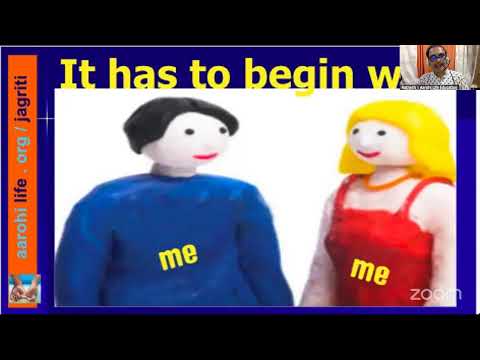
107:26 So it doesn't matter whether these topics are believed to be blah blah blah. It matters what I believe in. Let's start with I. It has to begin with me. Not there is no such society that lives out there. There is only one society. the society which is inside me and that's the one I need to work with.
108:06 Okay, I want to little shift gears towards um so I I'm not spending more time on on this aspect of sexuality assuming that uh depending on what is your want you can create conversations invite the child to share what the child thinks how the child thinks and just just enjoy just enjoy what the child is saying because the child is is saying something that's more important Right? A child is able to share his mind even if that sounds scandalous within gods. But I I want to shift gears because keeping in time minds u I I want to little jump on to to sexual abuse because that's an important topic and I want to spend a little time on it. Uh so yeah. Okay. uh so allow me that and uh in the WhatsApp group we can go back to the more sexuality kind of situations questions age appropriateness blah blah blah you can ask and we can discuss them there but let's get back to this um here's a quick true false for you u just run through the list see which one you want to quickly talk about if at all you want to talk about any of these unless you are in sync with all of these If you think any statement is true for you, Yeah.
110:06 Anybody any statement that is true for you?
110:42 Okay, Ri is saying my child will tell me. And what if your child chooses not to tell you? Is there a chance? 1% 5% 10% 20%. Or is there no chance? Absolutely. Also, I'm asking the group, how many of us actually told our parents, forget anybody else, right? If something happened to us wherever, however, um how many of us I like this Char saying everything false except that I hope my child will Yeah, it's it's it's funny. So, so these these particular statements are also not just my statement. They have been picked up from a a very extensive and a detailed research done by uh ministry of child welfare in about 12 13 years back.
111:53 It was a very extensive research. Some at least about 25,000 different children from across different social socioeconomic strata uh and geographical locations were interviewed in that research. very very extensive research uh and you can even Google for it uh if you want to uh if you want to go through it but and I I'll also share a little slideshow which has each one of them uh you know put out from there from that research so what that research showed which is also to a lot of extent a common understanding is that yes all of these are false Right.
112:37 The research shows that almost 60% of the children um get abused. That's one out of two. You know, it's one out of two children are abused. That's the percentage we are talking about. It's like a terrible percentage. No medical percentage comes even closer to that you know then well age has no aspect. Boys, girls have no aspect.
113:14 Relatives are the ones relatives and friends are the ones who abuse. Men, women both. uh in most cases the the figure is almost as high as 85% children do not tell their parents irrespective of how good the rapo is because here it's not a question of rapo with the parent but here it's it's a very complicated thing you know it's a lot to do with maybe shame maybe maybe something else maybe something else you know a lot of complications s and obviously we can't we can't prevent abuse because irrespective of how much I am vigilant the child is never in front of me all the time and the last one is actually a funny one that my child will do what I tell him to do and not do you know the helmet just comes off only after 150 m so what do we do what do we do if we are faced with such a you know bleak scene I I get stuck with only the first one if 60% of the population of children in our country get abused in one way or the other why aren't people doing something about people meaning I'm not saying people I mean parents doing something about it isn't it as simple as that each one of us needs to do something about As simple as that. That is why I was telling you that big ka about how we did so many workshops and nobody used to come because I used to think okay mean at least your parents your child's safety mean what shame and what embarrassment and what scared are we worried about in front of our child being abused. Come on we need to jump out of those and say I need to do something about it.
115:26 And you don't need research for that. Exactly. We ourselves can go to our own childhood. Talk to your spouse. Talk to your uh you know sisters and cousins and if you count talk to 10 people you will get at least eight gory stories. But we need to do something about it. So let's let's let's let's go a little step by step. I I'm not really expecting u a response right now. Uh let's go a little little step by step. Let's let's let's uh okay how all sexual abuse can happen. Fire. Fire.
116:10 Let's let's just put down few thoughts so that we know we are in sync. Verbal. >> Verbal. Okay. >> Visual as well. Like of course. >> Sorry. >> Visual like by by sight. By sight. >> Yes. Somebody showing something. >> Physical. >> Physical. You mean touch and kind of those things? >> Touch and holds. Okay.
116:41 Emotional. Uh. Okay. Okay, emotional is normally the strategy for sexual abuse. Unless you're talking about emotional abuse, but we are not talking about emotional is you sorry abuse right now. We're talking about sexual abuse. So, uh emotional blackmailing or gaming can be a a buildup to a sexual abuse. By itself, it may not be the abuse, but I've written it emotional. What else? How else can sexual abuse happen?
117:19 looking in the wrong. If someone looks at that in the wrong way, that can also be considered sexual abuse. >> Absolutely. >> How else? grooming like Yeah. grooming a >> Yeah. Yeah. But grooming is again a strategy to to get to the sexual abuse, right?
117:50 >> Yeah. >> But how in different ways can sexual abuse happen >> in the name of affection? >> Yeah. Yeah. Again, uh that is again a strategy, but I'm not talking about the strategies that uh abusers use. Yeah. Touching. We we wrote physical touch and holds. Yes. Touching is obviously >> uh can you say judgment like how we judge?
118:24 >> I would that would really not be a sexual abuse per se. It can be a racism or those kind of things. If that is what I don't know what you meant by when you said judgment. Okay, let's say this much. That's okay. We can we can always think about how we got at least some of those uh those things. Okay. Um so let us assume here I'm assuming here in in also in benefit of the time that we have is that we one one approach is obviously I do something vigilance and all of that but I'm assuming we are all in sync with that the best person to defend himself or herself is the child because I can never be always with the child or and and the abusers are too seasoned to do something in front of me right they would do it obviously uh uh they will find such opportunities so let's think of some ways of how we can empower our children now I want to give a little context here before there is a lot of work that people do in terms of good touch bad touch and uh private parts and uh you know public parts of the body these are the regular kind of stuff that's been talked about. All right. Um unfortunately at least in my view uh or my limited uh you know exposure most of these are prescriptive as in they are telling the child this is good touch this is bad touch. It is telling the child this is private this is public.
120:13 But believe me is any part of you public? No. No. Then what is this public private? Nothing is public, right? Even as somebody said, even somebody looking at me or just touching my finger can be so repulsive. So, so in a sense uh the the issue that I at least me and Aditi have against this most of these sessions or so to say around child sexual abuse is that they are normally prescriptive. They're trying to tell the child you should do this. In fact, I have a video in this series which talks about which is picked up from a YouTube which says you do this, you do this and then it shows the child actually doing it when the abuse happens. But that rarely happens. The abuser is too smart, right? Who the the abuser will not do it like that. The abuser has all the tactics in the world to trap the child.
121:18 So it's much much much more important and I'm I'm saying this as my opinion that we empower the child because if I ch tell the child do this let's say if I tell the child somebody's doing this uh shout and run away but in most many cases the child is neither able to shout nor able to run away then what now the child has lost the child was told these two things and a child is not able to do these two things. Now what now who will think?
121:55 So in a way it's important that we we empower the child which I mean is we get the child to realize that no matter what situation the child is the child can think. Can your child think? Is he capable of thinking out of the situation? Yeah. So, how do we empower?
122:26 Tell me your thoughts. >> Uh, I would say teaching self-defense. >> Selfdefense. Why do you want to teach self-defense? What is self-defense? You know, I'll give you an example. I was doing a session with children and I shared a situation with them and I was asking them. The situation was that some uncle is wanting you to sit in his lap and and and whatever whatever is happening. I gave them a a description of the situation. Uncle is touching you.
123:05 You're feeling uncomfortable. Uncle has already given you a big chocolate or something like that. I don't exactly remember the situation but it was something like that and I was asking them hey what would you like to do in such a situation you are uncomfortable so what would you like to do and they were all coming up with different options and then one child says suzu I said what he said suzu and my goodness I was completely blown and this is a 2 and a half or a threeyear-old child telling me. Uncle, the best selfdefense is to do suzu in his lap.
123:48 >> My god. >> What self-defense will we teach them? >> To punch his nose and to box his ribs and then run away. No, it won't work. In the sense I'm not saying self-defense will not work, but that's not the thing. Yes, you you please go ahead teach self-defense. I am not I'm not against that.
124:20 But I am saying there is something more stronger than self-defense techniques. I couldn't have thought of that suzu idea at all. It had to be that child who can think through that and come up with that. That's the power of their thinking. >> Okay. I have written reached. Okay. More coming back. How do we empower? One is okay. I'll take it. Teach self-defense >> while talking more about these kind of situations.
124:56 >> Okay. So, what do you do? Talk situations and then Yes. >> Yes. and ask him like ask him or her what he thinks like how you did earlier like how they're going to protect themsel discussing more about these kind of situations. >> Okay. What else? What else? So this is one. Yes. What he or she can do >> respecting >> Yeah. Yeah. Sorry. Yeah. >> Uh respecting their boundaries like not in not really insisting them. Let's say when they uh when they don't want to say hi or bye or hug hug a goodbye to some adults and all. Hey adults we have to respect them respect just do it give a bye to uncle I mean when they don't want to do it when they say no respecting their no basically >> at home >> respect their choices. Yeah, respect their choices. Point taken.
126:00 Important point. Very very important point. As I keep saying, we are the one who actually plant this adult violation while thought that belief. We are the one who in the name of whatever as you said respecting elders or blah blah blah 100 other things. One more thing I think in this situation uh that kid can uh say I want to share this chocolate with my papa.
126:33 >> Wait wait wait wait but how are you going to empower this kid? What the children can say we will leave it to them. That is one idea. How else can we empower >> also letting them know that they are entitled to a choice mean? Okay. Letting them know they are entitled to be safe or to the choice. >> Yeah. Like to the to to a choice. I mean you don't have to tow the line. You you can always uh uh make your own uh choice whether you think it's the right or the wrong thing. It doesn't >> right. Yes. Yes. Absolutely important because if we say no hitting is bad you know biting is bad. Oh, if you have told if you programmed me that hitting, biting is bad. These are one of the best weapons for me to run away. These are intuitive self-defense, you know, spitting, biting. But if all the time we have been groomed to do that, you know, there's this this this movie, what's that movie?
127:37 Uh yo I'm forgetting that movie where she where she keeps saying that all my childhood I have not been allowed to burp because burping is bad you know >> dear sigi is it >> no no where London tumagda is the song I think I sorry >> oh queen >> yeah queen queen yes yes she says that multiple times that you know that deep and embed happens Building knowledge around creating boundaries. Tipali, give us an example.
128:14 What will you do? What will you do? How do you build knowledge around creating boundaries? We'd love to do that. How do we do that? trusting the child when he says no that he doesn't like something that's being done to him or even a look okay >> I think >> just just like just like the child's choice to come and ask you what is rape right we have to if you're saying trust trust us to start from that question right if we start worrying now we are not in a relaxed state of mind we're not thinking that the child is ing you see so when you say trust okay tomorrow I'll share something about trust why I don't like this word trust okay but you the problem with trust is I don't know what is trust actually you know it takes a moment to switch the other side you know but let's let's what I'm saying is it has to be something more tangible than just saying trust trusting. Okay.
129:27 Uh because because the moment the choice looks not a good choice, then we say I that's not a good choice. Then how are you trusting? But I will write anyway trusting the child's choices. Okay. >> Uh I I think that by presenting to them that uh talking about these kind of situations or like this topic is not a taboo. uh maybe we are giving them freedom to uh express or talk about it so that we get to know about whatever is happening or in case anything happens so that >> that's what I wrote for your statement because we all started with that we have this beliefs which stops us from we are uncomfortable we are embarrassed about these topics so it's not that the topic is taboo dear it is the beliefs inside us that is holding us back.
130:20 We have to clean our wells first, isn't it? Or is that the topic is taboo? Topic is not taboo. >> No, no, not at all. Not at all. >> It is our beliefs. So I one of the things we have to do to empower them is to work on my beliefs, >> open myself up for the conversation. The children are ready for conversation. Believe me, we are not open to conversation. Not because the conversation is not good or is uncomfortable because of our beliefs.
130:55 >> But what if like we don't know how to start the conversation? >> No, no, no, no. Blah blah blah. I don't agree with you at all. Please know your beliefs. Please write the alternate beliefs. Do that tomorrow, today, tonight in the WhatsApp group. Write all your beliefs. Write alternatives to your beliefs. No knowing will come. Knowing is not a big deal, dear.
131:37 So let's let's not let's not get stuck with I don't know how. I would still say let's know what do we want and where are these beliefs coming from. If you can work on those beliefs then how do we empower list will keep on growing growing growing growing. First there should be a want to empower them. First we have to say to ourselves that the best person to defend them is the child.
132:10 Now we see the child as a capable potential warrior for his own safety or her own safety. Like somebody said, you know, as a mother, how do I hurry? The mother is not going to save her. The child is going to save her. Remove the mother from the picture. Say that my child has to be made strong. I don't need to have the role of a mother here. I don't need the role of a father. I need the role of a listener. I need the role of a of inviter.
132:45 I need the role of taking shedding all my beliefs which is just making me not do these things with the children. If your child is 5 years I would say and and if you're not empowered already I'm not saying you haven't you've already lost 5 years. Why haven't we done anything for 5 years or 7 years or 10 years or 3 years?
133:19 So it's it's important it's really really really important that according to me I'm I'm kind of taking I'm I will tell you seven simple ways of uh empowering the child prepare the child prepare the child prepare the child obviously not with our solutions for the child to think and the situations coming all around you in the next TV cal in the next story book in the next movie on the next scene on the road that you go for a walk it's all there every single day I can guarantee you but we don't ask the childh what would you do dear okay in this movie this happened this happened this happened now what would you want to do and the child will say I'll take out my gun and Good child is thinking. You may not like that. You may say violence is negative.
134:21 Violence is not negative. Dear nothing. You know all that affectionate pulling the cheek is equally violent. Okay. I I need five more minutes at least if not little more. Right? I I want to share one more slide. Sorry, I get very very charged up. In fact, um I'm still at 10% charged up today.
134:51 Right. I get very very charged up with this topic. Yeah. And I hope I'm passing some charge on to you for your child's safety. So the the most important uh preparation we need to do is first with oneself. It has to begin with me. If I still stay under the taboss and discomforts and the embarrassments and all of those things, under the wrap of this society, the trend and all of that, then I'm not prepared myself.
135:22 Then I have to prepare my child, right? By all kinds of things. As I said, these situations are there. It's not necessarily to obviously it shouldn't happen with your child, but they're all happening in different ways. Start with the simple thing. You see the word rape written on the newspaper. The child may not even know how to read it. You say this is a word rape. Have you heard about it? What do you think it is?
135:48 I think the child say I don't know. He said okay now yourself your child. But but the game doesn't stop here. It's it's important that we prepare everybody in the environment. Other adults at home, I'm sure there are more adults. Don't just count uh yourself as the adults. There are so many more adults who keep coming in out, friends, relatives, househel, neighborhood, the whole world.
136:24 You know, people come to uh Arohi with their children. I know Vibbuti came uh from this immediate video. I can say uh and so so many people come to Aroi uh over the years. All right. And they come with their children and sometimes the children stay here without the parents also. But with the parents also both ways you know take a guess how many parents have come and said to me Ratn how will you ensure that my child will be sexually safe? There will be no abuse, sexual abuse for my child.
137:04 Guess how many people, what percentage has asked this? So showing me the exactly Soa, not even one parent, not even one. In my 27 years of working with parents and families and children, when I had a center in Bangalore, uh when I have a a campus here, not even one parent has come and asked this question.
137:36 Not even one. And imagine if you come and ask this question to any place you are taking your child to. Will if you think will that sensitize Let's say your child is also with you. Will you will it sensitize your child? Will it sensitize the people of the organization maybe you carry a poster saying I want to put up this poster since you don't have a policy. Let me I brought a pre preprinted poster also.
138:08 Let's make each child sexually safe. So when people come here when we do our safety training people think safety training why do we need to do safety training but we do safety training every visitor that comes and one of the safety training is sexual safety training why not it's not written on anybody's head who is the abuser just because you like my feels don't think that I am not an abuser can we take that assumption Not at all. Nobody. We don't know.
138:51 So just don't think that says nice nice things in this jagriti. He's not an abuser. I'm not saying you have to start putting everybody down. It's not the question of that. It's question of preparing ourself. That's all. We know dangers can be anywhere. That's it. So we need to prepare. We need to talk about it. We talk about it in the neighborhood. We have to talk about it in the world. How many parties, how many get togethers, how many gatherings do people talk about sexual abuse? Nobody.
139:24 When was the last time you met some friends, relatives, cousins, and you said, "Hey, let's talk about sexual abuse. How are what are you doing in your family? I'm doing this, this, this. What are you doing?" That's not a conversation. Anybody does it anywhere. >> Uh RN sir, I have a little doubt. >> Don't put the sir. >> Sorry, >> just say RN because I can be your biggest crown drill in the world. Isn't it? This problem is with the sir. The moment you put people on the pedestal, now they have to be ser you know.
140:00 >> Oh, >> the s are the world are the one who takes the advantage. Okay. I just wanted to call uh because you're a little bit old. Sure. Sure. Sure. I know. I know. I know. I know. I'm old but not necessarily gold. Huh. Carry on. >> Yeah. So, my doubt is little I am actually uh whatever you say the person that goes to parties or goes to get togethers and that brings up the uncomfortable conversations. But every time I do it, the people that are around me or they they don't really go with the idea or talking about these kind of things.
140:30 >> So, they put me down. >> Sure. They put me down. The thing is the conversation. >> Two things. Two things. They can only put you down if you have an image because they are putting down an image. >> Okay. So, uh shed that image that and then there is no putting down. Second thing is that putting down is worth the cost. >> Think about it. Versus an abuse. Isn't it worth me getting put down in a party, in a get together, in a in a train, in wherever rather than somebody actually thinking that how many times somebody's pulling cheek in the train or in a restaurant who who's not related to you who don't you don't even know have you gone ahead and objected no we don't do that because what will people think of me and people will shout at me you mind your business I'll say yes my business. My business was to sensitize the child that nobody has the right to touch you. Thank you. I minded my business. I move away from there because I did mind my business.
141:38 So realize that's exactly what I'm trying to say. What do you want? If you really want to make our children safe, we will do it. Why not? What's the big deal? >> Well, this is good. But let us say I I'm fine with being putting down the whatever that is. But let us say I uh I'm a teacher. So I talked to my students one situation actually that is very bad. So I talked to my students about this this this uh but when they went to the parents they conveyed this.
142:07 The parents came to the school and to the principal they were like oh my god what is your >> Yeah. So find other strategies. This didn't work. So next time engage the parents. Give them a bashan that they should be doing this. give them some homework and tell them if you can't do it I will do it for you then they will come please please please rishma do it for me because I can't do it so your strategies work 80% of my strategies fail rishma but that does not stop me because like even yeah yeah even versus they go to the child and they'll be like whoever talks these kind of topics are Not right.
142:50 >> Right. Right. So, so please realize that you directly talking to the child without the parents permission is a nogo. >> Yeah. Yeah. Yeah. >> So change it. >> Get the parents only to do it and tell them if you can't do it come on Friday we'll do it together in my class or you don't come send your child we I will do it for them. >> Exactly. What I'm trying to say is we have to make it as a common talk. Start with the stakeholders.
143:17 >> Okay. like that that part we need to understand. >> Okay. >> Put up posters. Put up see start with things that you can put up a post. Put up a poster. Put up a a a message to whoever parents friends to your house help to whoever you want to. >> Okay. Got it. >> Let's start somewhere.
143:54 Yeah. So, you see the child is ringing but we are not ringing the child. We're not calling the child. Ringing looping in the child is ringing but are we ringing? But we are only singing our own beliefs, our own societies, our own denials and all of that. I'm not saying you all are doing it. I'm in general saying it.
144:28 Yeah. Yeah. Somebody wanted to share a scenario. Uh the one you mentioned where like uh many parents came to Arohi but nobody really asked that question. But what happens when they ask? Let's say I came to Aro here and I asked hey Rajesh uh what are your is my child safe here like what are your sexual abuse strategies how do you keep our child safe >> let's say I get very angry at you >> okay let's say I very well what kind what do you think what do you think blah blah blah blah blah blah hey get lost get lost or I say okay you want to send your child you send your child don't ask me such this question blah blah blah blah blah let's say this happens assume that have you sensitized Is it likely that your child will be safer that this guy is going to think about it? This guy is going to think about it. You have already planted the yeast there. You have already agitated the person, hasn't you?
145:28 >> Yes. >> You have put the yeast. You are the agitator. Again, what is the social cost to it? At worst, he will say person kind will say get lost. I don't want even want to child take you. Good. Better not take the child to such a place where they can't even respect your need to be safe for your child. >> What if you respect and say all good words and you know fancy things and then you know >> Yeah. But >> Sure. Sure. Sure. But you have sensitized me that this lady or this guy means business. Isn't that better?
146:05 >> Yeah. >> You have made me think. The problem is nobody made me think. That is what I'm pointing out. 0% zero. I must have I don't know. I don't have a count. Thousands. It is more than 10 20,000 parents I've interacted with in the last 27 years. Zero. Not even one. Which is why I'm saying we need to ring. I would do it in in front of my child. So I'm ringing in two people. I'm agitating the other person and I'm indirectly or even directly giving my child a message that your sexual safety is important.
146:46 Just because you've come to a let's say a class or a place or a friend or a wedding or whatever does not mean that you can be violated. No way. So I I want to end this with um both a request and an invitation. Um sorry, two things. So one request, one invitation. I'm not ending today with a story. This this this story is too rubbish. We need to do something about this story of sexual abuse, right? both for our children and for anybody else all your friends relatives any child but most importantly for your child if each parent says that I can empower my child things would be very very different yeah so I have two requests the first request is if you consider the WhatsApp group that is there to be a safe group please share because it has to start with me I need to let go if anything has any sexual abuse kind of a um you can say episode or episodes have happened with you let us first open ourselves up let us go ahead and tell our children even if you say I can't tell my child what happened to me because of blah blah blah at least tell it to the group take the load off you open the doors first it has to start from the core inside otherwise the core will also keep shutting you down if there is something inside you. So that's the first request. Yeah. What is the request? I'm once again repeating and thankfully previous batches people who are there in the groups from previous batches have all witnessed amazing opening up from different parents and that's been such an boost for each parent where parents have come back and said because I could share and because I could read what others could share now I feel so much more lighter and ready to to talk about that yeah that's one way to lighten my burden because if the deepest deepest inside is all closed closed closed and so many have shared that this is the first time I'm sharing outside beyond my spouse let's say or you know something like that so that's one request obviously it's it's totally just a request it's request for your good not for nothing to do with me or anybody else but it does help each other so as a group we can support each other by sharing our stories both men and women. Okay? Because it would have happened with both men and women. I will also share every batch I share my story. I Aditi shares her story. So we all share our stories. Um so that we can assure I I can assure I can still share uh my story. My my stories are on YouTube also. Don't worry. Right.
149:59 Um the the second is an invitation that if on this particular topic especially sexual abuse topic if you want us to conduct a program like this but it won't be like this it would be a simpler version of this because they haven't gone through the 10 sessions of Jagwati but if you still want us to do a a program uh I don't know how much we will be able to do an in-person program but we are always ready to do a program for any group of parents. It could be your friends, it could be a school group, it could be a apartment group. I don't know what group. If you have a group, if you think we are there and if slowly you want to get into this and you say I can I want to be a campaigner of this uh and I can I want to learn how to not learn I want to just get into doing these sessions with you so that later on I can do these kind of things with children with adults both right uh normally we don't like doing with children unless we know the children so typically the only children we'd work with are the children who are part of Yeah because uh when I do it with children whom I don't know whom I have no rapo connection with then we feel there's a that that chemistry is not really ideal for me to talk about this in which case which is why I always like to talk to the parents so that the parents already have a deep rapper with the child and the concern for the child and the and everything else related to the child. So the best person for us to empower for us to empower and if you want to join our team is to uh to empower the parents because then the parents can do it as the child grows.
151:46 Now the child is five. So you will talk to wherever the child is at child appropriate age as in wherever the child is today. But you can't just talk today and done with. You have to again talk at 6 and 7 and 8 and 9 and 10 and 11 and 18 and 20. Yeah. And things don't even stop at 20. So what I'm trying to say is that the best person to empower is the parent because then the parents can start empowering the children. So if you have any group of parents, you will be more than happy. Once again clarifying we cannot do it for the children as a policy you can call it. We only do it for our children. I will share with you videos of of me doing it. uh me and even I think Aditi is one video of doing it with children where you obviously can't see the faces of children to give you an example of how we do it with children right how and you can see all kind of age appropriateness out there how all kind of thinking power capabilities out there so that I will share as an example so once again request for you to start it has to begin with us we have to open up so that's one request And the invite is if you want to arrange a session we are more than ready to do the session.
153:06 >> Resh uh in the same can I ask something? >> Sure. >> Uh so the so the com sorry firstly I'm off video because my children are asleep. The company that I'm working for >> uh I would love to uh co-create uh not co-create I would love to offer a session on this from the uh space of wellness perspective. So uh maybe I'll get in touch with you separately but I just sprung this idea out immediately since you were >> Yeah. But usually we do it for parents.
153:39 So if your company has parents like you >> so we can form that group and talk to them rather than we we don't get into the uh what is that called the other part where it's more of the organizational safety uh you know against sexual >> harassment. Yeah. Yes. Anytime. Uh as I as I said as of now if you want to involve me or unfortunately because of Aditi's health I'm not we are not able to travel but we can do online anytime >> done >> right paid free you want us to pay we will pay our let's do this.
154:19 >> Yes. Yes. >> I'm telling you parents don't come. You guys had no option. But anyway, let's leave that aside. I don't want to uh I don't want to stop just because people whoever is ready to listen, whoever is ready to be uh you know work towards safety of the child. So let's continue this discussion in the in the channel of this particular session. Please ask as many questions, situations, whatever. Let's let's do this. The the simplest is the answers are already with you. Actually all of these and many many more windows that we talked about starting with always beliefs is is um is the answer according to me. It it's not an answer. It's just a a multiple you know you you're just increasing your options. So yeah let's work with beliefs. Let get the leaders going and there are lots and lots of possibilities in our children to keep them safe and yes happy.
155:22 >> Sometimes uh parents uh sometimes parents are also abusers like parents of other kids. >> Mhm. >> Okay. Sometimes the abusers themselves could also be a parent, right? >> Yes. Yes. Yes. Yeah. Yeah. Absolutely. But we don't know. >> We don't know. Yeah. And if our again work can let us say do something for them to move away from abusing that will be like a super duper but we will never know that but >> yeah I can't do anyway do anything about it right unless obviously we come to know then we can use the law or whatever but there are help lines and the help lines are actually helpful the the Sahanis that are there the helplines, child care help lines actually a lot of very interesting, very good, very strong people are working in those as part of social work to to work those helplines.
156:36 So salute to all of those people who are working out there. Now I think let's pause here. It's already 10:37. Uh there is as I said there is uh um okay so let me also tell you mean anyway we will also do a review session sometime we I'll announce a review session just to kind of review the whole Jagriti program and see but uh Jagriti doesn't end with this session it is actually begins after this session in a way or so there is you are automatically always part of Jagrati so you can always put in a request whether you need help onetoone, whether you need help of the whole group, whether you want to do more sessions, whether you want all our presentations, all our videos and go ahead and do something with them.
157:31 Everything is available. Yeah. Please don't think that anything is restricted here. Everything is completely open. Everything is yours. So, if you want to use anything in any which way, we'll be more than glad, especially with this topic. So I'll be more than more than happy to help you support you any topic for that matter. Yeah. So we will do a review session and but please ask openly in the groups and yeah sorry >> I request you to take one more class on this topic.
158:07 >> I would say not required. I think we have done enough. We have to start doing something dear on a day-to-day basis. We don't need classes on anything. Whether it's feeling just try just go and say I want to give importance to my child's feeling in the next 3 minutes or 30 minutes or 30 days whatever whether it's feelings whether it's sexuality whether sexuality is anyway not a topic it's a it's an application of all these windows you work with the windows automatically it will come there is no need of another class all the key points I think that I wanted to explore explored The key is this windows and not just these nine but so many more. Whichever you think you like the windows.
158:56 Yeah. So Jagat is not yet over. I'll keep posting lots and lots of messages. You decide how you want to participate. >> Thank you so much. >> Yeah. Thank you. and we'll we'll meet once again definitely in the review session and we'll keep meeting in the um in the in the WhatsApp groups. >> Thank you. >> Yeah. Thank you. Good night. >> Good night. >> Good night. >> Good night. >> Thank you very much RN.
159:27 >> Thank you everyone.
Summary
- The conversation highlights the lack of effective sex education in traditional schooling, often leaving children unprepared to discuss sexuality and abuse.
- Participants share their discomfort and fears about discussing these topics with their children, often stemming from societal norms and personal experiences.
- The speakers advocate for normalizing discussions about sexuality and abuse, emphasizing that children should be empowered to express their feelings and thoughts.
- There is a strong focus on the need for parents to examine their own beliefs and biases that may hinder open communication with their children.
- The importance of teaching children about consent, boundaries, and self-defense is emphasized, with suggestions for practical approaches to empower them.
- The discussion also addresses the prevalence of child sexual abuse, highlighting that many incidents occur within familiar environments, making awareness and education crucial.
- Participants are encouraged to share their own experiences and stories to foster a supportive community and break the silence surrounding these issues.
- The session concludes with an invitation for parents to engage in ongoing conversations and workshops to further educate themselves and their children about these critical topics.